Liao Southern Campaign
Empress Dowager Xiao and Emperor Shengzong lead 200,000 cavalry south, threatening Chanzhou.
Northern Song Dynasty (北宋) · HISTORICAL EVENT
澶渊之盟
The Chanyuan Treaty (澶渊之盟), concluded in January 1005 (the twelfth lunar month of the first year of Jingde), was a milestone bilateral peace pact established between the Northern Song Dynasty and the Khitan Liao Dynasty at the Yellow River fortress of Chanzhou (modern Puyang, Henan). In late 1004, Empress Dowager Xiao and Emperor Shengzong led an imposing host of two hundred thousand Khitan cavalry deep into Song territory, bypassing northern defensive…
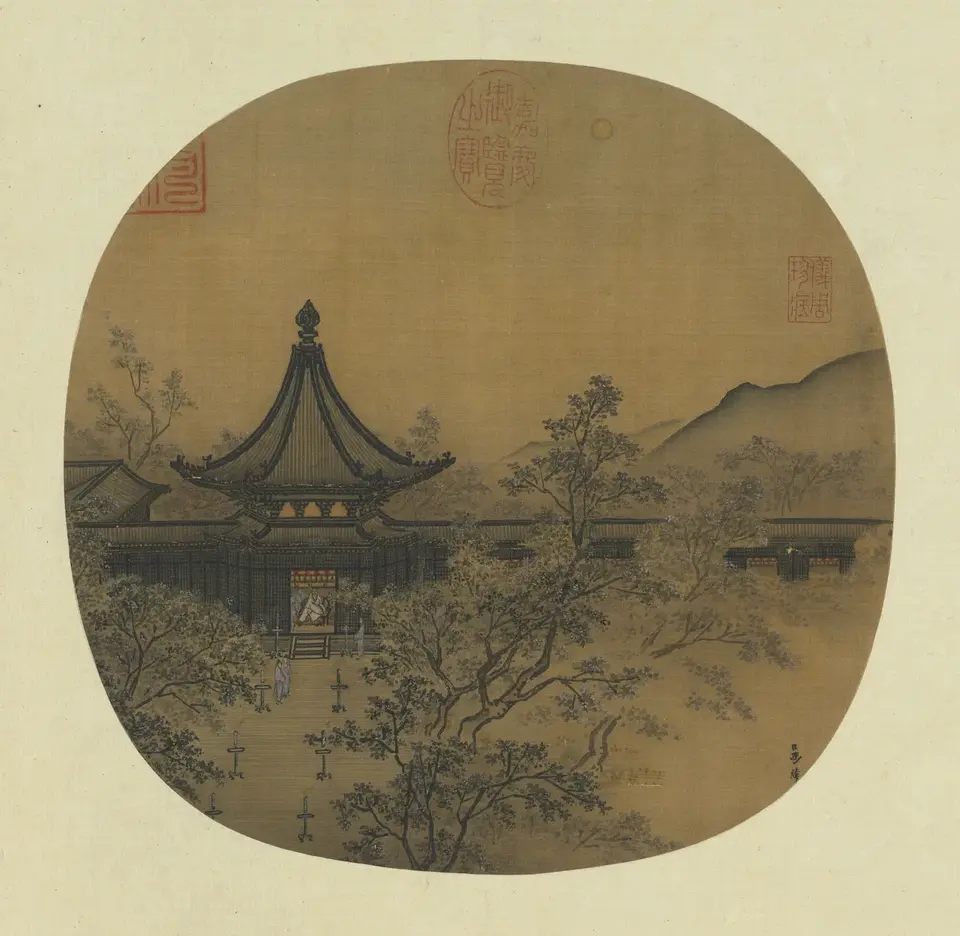
The Chanyuan Treaty (澶渊之盟), concluded in January 1005 (the twelfth lunar month of the first year of Jingde), was a milestone bilateral peace pact established between the Northern Song Dynasty and the Khitan Liao Dynasty at the Yellow River fortress of Chanzhou (modern Puyang, Henan). In late 1004, Empress Dowager Xiao and Emperor Shengzong led an imposing host of two hundred thousand Khitan cavalry deep into Song territory, bypassing northern defensive citadels to threaten the imperial capital of Kaifeng. Rejecting defeatist counsels to flee south, Chancellor Kou Zhun adamantly persuaded Emperor Zhenzong to personally lead imperial armies to the front. The arrival of the emperor at the northern citadel of Chanzhou galvanized Song morale, while Song siege crossbowmen fatally shot the Liao vanguard commander Xiao Talin with a multi-bow bed crossbow. Plunged into a tactical impasse and vulnerable to logistical cutoff, the Liao court initiated truce overtures. Negotiated by Song diplomat Cao Liyong, the resulting Chanyuan Treaty recognized the two dynasties as equal fraternal states, fixed existing borders, and committed Song China to provide an annual allowance of 200,000 bolts of silk and 100,000 ounces of silver. This historic compromise inaugurated more than a century of unbroken peace, dynamic frontier commerce, and cultural exchange across East Asia.
Empress Dowager Xiao and Emperor Shengzong lead 200,000 cavalry south, threatening Chanzhou.
Court ministers advocate flight south; Chancellor Kou Zhun insists the emperor personally lead troops.
Emperor Zhenzong departs Kaifeng under Kou Zhun's guidance, advancing to the Yellow River.
Zhenzong enters the northern citadel of Chanzhou; Song troops roar in overwhelming acclamation.
Song bed-rigged crossbows fatally strike Liao commander Xiao Talin, destroying Liao offensive morale.
Liao initiates peace contacts; Cao Liyong conducts tough negotiations in the Khitan camp.
Sworn oaths are exchanged, establishing fraternal relations and annual silk and silver payments.
Liao forces withdraw across the border, and official trading markets (Quechang) open in border towns.
Following the founding of the Song Dynasty, Emperor Taizong launched aggressive military expeditions to reclaim the Sixteen Prefectures of Yan and Yun, which had been ceded to the Khitans by Later Jin in 936. However, Song offensives suffered devastating catastrophes at the Battle of Gaoliang River in 979 and the Yongxi Northern Campaign in 986, resulting in the death of general Yang Ye. Recognizing the tactical superiority of Khitan steppe cavalry on the plains, the Song abandoned aggressive expansionism and adopted defensive border fortifications, while the Liao routinely staged autumn incursions into Hebei to plunder crops and towns.
In autumn 1004, with the Liao state stabilized under the joint regency of Emperor Shengzong and his mother Empress Dowager Xiao, the Khitan court launched a full-scale southern invasion. Bypassing heavily fortified Song garrisons at Dingzhou and Suicheng, the mobile Khitan vanguard swept south, capturing Qizhou and encamping directly across the Yellow River at Chanzhou, within striking distance of Kaifeng.
Panic gripped the imperial court in Kaifeng. Prominent ministers Wang Qinruo and Chen Yaosou proposed fleeing southward to Jinling (Nanjing) or western Sichuan. Newly appointed Chief Chancellor Kou Zhun and his colleague Bi Shi'an vigorously denounced these evacuation schemes as fatal defeatism. Kou Zhun insisted that imperial retreat would shatter civilian morale and trigger dynastic collapse, demanding that Emperor Zhenzong personally travel to the front to lead the resistance.
In December 1004, Emperor Zhenzong departed Kaifeng for the front lines. Arriving at the southern citadel of Chanzhou on the southern shore of the Yellow River, the emperor hesitated to cross the floating bridge under heavy enemy fire.
Kou Zhun confronted Imperial Palace Commander Gao Qiong, warning that failure to cross would condemn the northern garrison. Gao Qiong guided the imperial carriage across the river into the northern fortress. As Emperor Zhenzong mounted the city tower under the yellow imperial umbrella, hundreds of thousands of Song soldiers roared in deafening acclamation, their battle cries echoing across forty li and instantly reversing the psychological momentum of the campaign.
While Song forces rallied, the Liao invasion force faced severe strategic vulnerabilities. Having penetrated hundreds of miles into hostile territory without securing strongholds behind them, Liao supply columns were harassed by regional Song militias, creating the danger of encirclement.
The tactical turning point arrived during an exchange outside the northern walls of Chanzhou. South Division Chancellor and supreme Liao field commander Xiao Talin rode out with a small cavalry escort to inspect the battlefield terrain and examine Song fortifications. Song garrison officers Li Jixuan and Zhang Gui sighted the enemy commander and aimed a battery of heavy siege crossbows (known as bed-rigged crossbows or Fuyannu).
Triggering the massive mechanisms, the Song crossbowmen fired a cluster of iron-tipped bolt-shafts with devastating force. A massive bolt struck Xiao Talin directly in the head. Mortally wounded, the supreme Liao general died that night in the Khitan camp. The death of their legendary commander plunged the Liao leadership into grief and dismantled the offensive confidence of the Khitan forces.
Realizing that storming Chanzhou was impossible and that retreat through hostile Hebei posed catastrophic risks, Empress Dowager Xiao initiated secret diplomatic contacts through surrendered Song officer Wang Jizhong. Emperor Zhenzong, eager to conclude the war without further bloodshed, dispatched palace official Cao Liyong as imperial envoy to the Liao camp.
Prior to Cao's departure, Zhenzong privately whispered that an annual payment of up to one million units of silk and silver was acceptable. Overhearing this, Kou Zhun pulled Cao aside and threatened him with execution should his concession exceed three hundred thousand units.
At the bargaining table, Cao Liyong demonstrated remarkable diplomatic composure. He firmly rejected any territorial concessions in the Guannan region, arguing that economic subventions were preferable. The two sides finalized the Chanyuan Covenant in January 1005: Song and Liao recognized each other as fraternal sovereigns, with Zhenzong designated elder brother and Shengzong younger brother, while Empress Dowager Xiao was honored as maternal aunt; both sides swore to maintain existing frontiers without erecting new military fortresses or drainage moats; and the Song pledged an annual subvention of 200,000 bolts of silk and 100,000 ounces of silver. Following the exchange of sworn oaths, the Liao army began its northward retreat, and the Song court returned triumphantly to Kaifeng.
The Chanyuan Treaty was a diplomatic masterstroke for Northern Song China. The annual disbursement of 300,000 units of silk and silver represented less than two percent of Song military maintenance costs on the northern frontier. Relieved of the crushing financial and human burdens of sustained warfare, Song society redirected its immense productive energies toward agriculture, canal shipping, domestic urban commerce, and maritime trade, ushering in the cultural and economic golden age of Emperor Renzong's reign. Concurrently, the reliable inflow of Song bullion accelerated the fiscal development and cultural urbanization of the Liao state.
The treaty established mutual border markets known as Quechang at Xiongzhou, Bazhou, and Ansu. Massive quantities of Song tea, fine silks, porcelain, paper, and medical treatises were traded north in exchange for Khitan warhorses, sheep, hides, and salt. Decades of unhindered cultural and mercantile exchange dissolved ethnic enmities, fostering deep mutual assimilation between the Khitan and Han populations and creating an invaluable precedent for multi-ethnic coexistence in Chinese imperial history.