Chinese Coordinates
—
Western / Mediterranean Coordinates
From Late Roman border troops (limitanei) under Diocletian and Constantine (fourth century) to the decline of Byzantine provincial armies (themata) and the defeat at the Battle of Manzikert (1071).
TL;DR · Core Takeaways
- The Zero-Cost Defense Myth: Zhu Yuanzhang (Emperor Taizu of Ming) enrolled over two million soldiers into hereditary military registers. He used the Tuntian System to farm land. He claimed the army took no food from the common folk.
- Officer Greed and System Decay: Base officers stole public fields for their own estates. They turned free troops into bound serfs. This abuse caused massive flight across the land, leaving garrisons empty.
- False Savings, Real Ruin: When garrison lines lost all fighting skill, the court still paid nominal upkeep to stop revolts. At the same time, it hired mercenary bands with silver coin. These twin costs brought state bankruptcy.
> Historical Context
> - Chinese Historical Coordinates: Ming Dynasty (Ming Dynasty), from 1368 to 1644. The system hit its peak in the late fourteenth century. It broke apart during the Tumu Crisis in 1449. It finally collapsed under heavy fiscal debt in the early seventeenth century.
01. 1. The Perpetual-Motion Mirage: Hongwu's "Zero-Tax" Defense Model
Late in his reign, Zhu Yuanzhang (Emperor Taizu of Ming) spoke to his court. He boasted that he could feed a million troops without taking a single grain of rice from commoners. In earlier times, armies had drained state treasuries. They took most statutory land tax revenues. The Han and Tang empires sent grain to distant borders at great cost. The Song dynasty paid professional troops straight from tax vaults, falling into deep debt. The founding Ming emperor hoped to cut this tie between empire defense and statutory land tax.
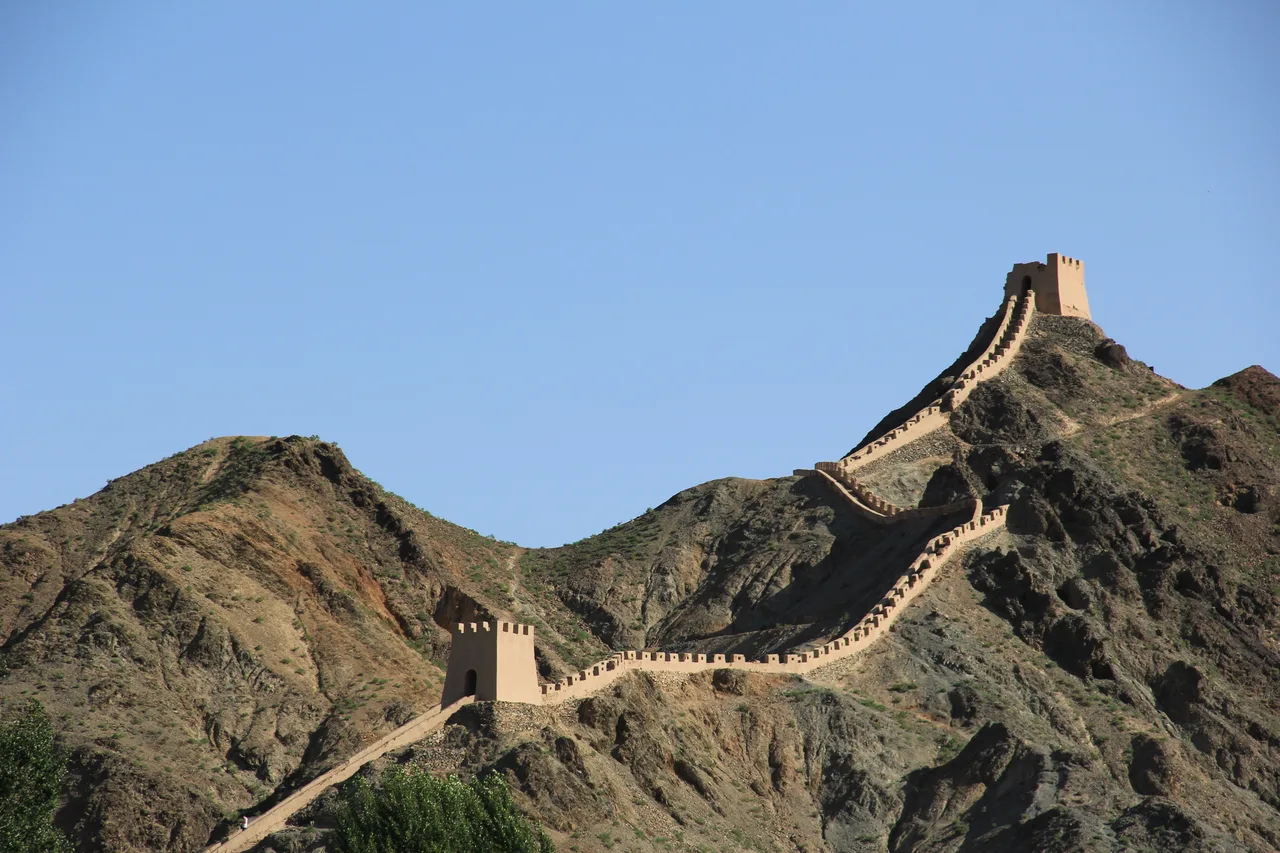
This plan rested on a strict social design: the weisuo system, joined with Military Agricultural Colonies (Juntun). The early Ming court sorted every family into fixed groups: commoners, soldiers, and artisans. Families placed on military registers kept their duty across generations. When a soldier died in battle or of sickness, his home clan sent a fresh kin to replace him. In this military administration, 5,600 men formed a Guard (wei). A Battalion held 1,120 men under a Commander of a Thousand (qianhu suo). A Company held 112 men.
To supply grain and weapons without help from the Ministry of Revenue, the emperor handed out land. The court gave reclaimed tracts, vacant frontier plots, and old state farms to the garrisons. It ordered troops to farm when they did not drill:
$$\text{Border Garrisons: Thirty percent on fortress defence, seventy percent farming}$$
$$\text{Interior Garrisons: Twenty percent on fortress defence, eighty percent farming}$$
Each soldier got between thirty and fifty mu of arable soil, along with state draft oxen and farm tools. In return, each mu owed a set tax of grain. This grain did not go to the Ministry of Revenue in the capital. It stayed inside local garrison storehouses to feed front troops. When war came, the court named a Regional Commander, also known as a zongbingguan (hereditary military rank), and the Ministry of War sent out march orders. When fights ended, generals gave back their seals, and troops went back home. This kept commanders from building private armies.
By 1393, the garrison rolls held over 1.2 million men on millions of mu of soil. They grew over 20 million shi of grain each year. On paper, this was more than the empire's total yearly grain tax. On the central books, the plan looked sound. Central military expenditure was near zero, yet strong forts lined the borders. But this plan relied on forced hereditary succession and self-sufficient farming. When the first emperor died, the system cracked under private greed.
02. 2. Autopsy of the Ledger: Micro-Exploitation and Macro-Deficits
Household Balance Sheets: How Freehold Colonists Became Manorial Serfs
The weisuo system failed at the base because officers stole land and forced men into serfdom. Zhu Yuanzhang believed officers would stay honest and troops would farm in peace. But garrisons had no checks or outside civil eyes. A base officer led troops in war, acted as judge in peace, split up colony lands, and kept the muster rolls.
Following the Yongle Emperor's Relocation of the Capital to Beijing, northern defense needs grew fast. The Northern Army faced strong foes. Garrison officers soon turned state lands into personal manors. As seen in Wenxian records and other historical sources, officers took prime state land to rent to civilian tenants. They pushed common troops onto dry, salty plots.
Common military households faced a harsh balance sheet:
- Nominal Obligations: Under early laws, each soldier worked fifty mu. He paid his unit quota and kept the rest to feed his family.
- Actual Outlays: By 1450, officers held the best soil. Soldiers had tiny, rocky plots but still owed the full harvest tax. Officers also made troops work as private serfs. Soldiers built officer houses, cut wood, hauled goods, wove cloth, and brewed wine without pay.
- Human Cost: Officers took cash fees from troops who wanted to skip daily drills. They beat those who had no silver. Soldier families lived worse than poor tenant farmers.
This cruelty ruined the garrisons. Civilian lines carried normal corvée labor, but military rolls became a prison. The only way out was flight. Between 1425 and 1449, border garrisons saw over half their men run away. The court sent a Censor to hunt down runaway troops, and their clans faced heavy fines. But when one man was dragged back, another fled, and the colonies fell apart.
Imperial Treasury Pressures: From Zero Allocations to Millions in Silver Subsidies
Mass desertion left a huge hole in the state budget. As colony crops shrank, border forts could no longer feed their men. By the mid-fifteenth century, grain yields in Shanxi and Shaanxi dropped to less than a tenth of earlier sums.
The high military expenditure that the throne thought it had erased came back in full force. To stop food riots on the border, the Ministry of Revenue sent silver and grain from the south along long supply lines to the north.
[Causal Chain: The Fiscal Collapse of the Ming Garrison System]
Hereditary officers monopolize administrative and land power
  -> Expropriation of colony land + Reduction of soldiers to bonded serfs
      -> Total impoverishment of soldiers and massive desertion waves
          -> Grain production collapses across military colonies
              -> Frontier units lose combat strength (The Tumu Crisis catastrophe)
                  -> Court hires mercenaries and personal guard detachments
                      -> Dual fiscal burdens: garrison phantom rolls + mercenary cash wages
                          -> State insolvency -> Three Frontier Surcharges -> Dynasty falls
The table below contrasts the early institutional blueprint with the harsh realities of the middle Ming period:
| Metric | Hongwu / Yongle Blueprint (c. 1393–1420) | Mid-Ming Reality (c. 1500–1560) | Fiscal and Strategic Consequence |
|---|---|---|---|
| Registered Military Roster | ~1.8 to 2+ million troops (hereditary military registers) | Book rolls list ~1 million; effective strength below 20%–30% | Rampant phantom muster rolls; officers hire street vagabonds to pass muster reviews |
| Colony Grain Harvest | 20 to 23+ million shi (near total self-sufficiency) | Shrinks to *less than 2 to 3 million shi*** | Frontier granaries sit empty; garrisons go months or years without grain rations |
| Directorate of State Finance Outlays | Negligible central cash transfers; expenses met locally | Annual frontier silver subsidies reach 3 to 5 million taels | Treasury reserves empty; court drains the Chamberlain for the Imperial Stud and palace vaults |
| Main Tactical Force | Hereditary garrison troops (coordinated cavalry and foot soldiers) | Mercenaries (e.g., Qi Jiguang's army) and general's private retainers | Privatization of military command; troops follow commanders, not the court |
| Grassroots Mobility | Households locked to land; severe penalties for flight | Garrison desertion rates regularly reach 50% to 80% | Bureaucracy exhausts resources hunting deserters; displaced migrants multiply across provinces |
The Tumu Crisis of 1449 showed how weak the army had become. Hundreds of thousands of imperial guards fell before Oirat horsemen. After this disaster, the court lost faith in its garrison forces.
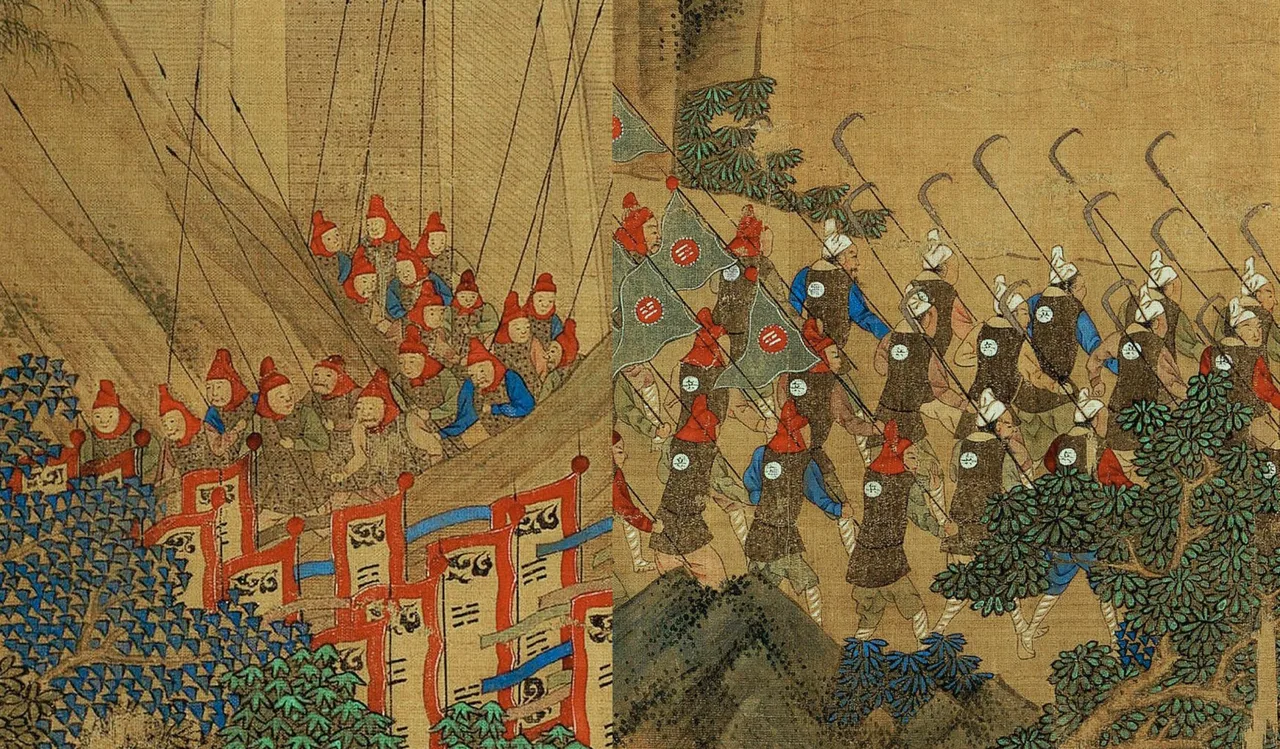
To fight northern raids and southern pirates, the court turned to a Recruitment-Based Standing Army System. Yet the state could not stop funding old garrisons. It was caught in a trap of twin expenses. The court dared not end the old registers for fear of mutiny among poor soldier kin, so it kept paying for phantom names. At the same time, it paid fresh silver every month to hire, train, and feed mercenary troops.
03. 3. Cross-Civilization Mirror: Roman Limitanei and Byzantine Themata
The fall of the weisuo system from cheap defense into a fiscal trap is not unique to China. Mediterranean empires faced the same dilemma when guarding long frontiers with small revenues. They built similar farm colonies that met the same fate.
In the fourth century, Diocletian and Constantine split the Roman army into mobile field forces (comitatenses) and border garrisons (limitanei). Rome gave border soldiers tax-free plots. It asked them to farm and guard the line across generations.
In quiet times, these troops lost their edge because they lacked silver coin for arms and drill. Local commanders bought up land and pushed soldier-farmers into debt, turning them into tenant hands. By 550, western border troops had turned into poor local watchmen who could not fight. When invaders broke through, emperors had to pay heavy gold to hire foreign mercenaries.
The Byzantine thematic system (themata) shows an even closer parallel. From the seventh century, emperors gave Anatolian land to hereditary troops (stratiotai). This checked Arab attacks at low cost. But over two centuries, rich local lords (dynatoi) bought up soldier plots and made troops into serfs. By 1053, to save cash, the emperor dropped thematic troops and hired foreign mercenaries. When these paid units broke at Manzikert in 1071, Anatolia fell.
[Institutional Mechanics: Chinese and Mediterranean Military Colonies]
Shared Trajectory:
  State-allotted military land -> Commander/Magnate encroachment -> Peasant serfdom -> Zero military capability -> Treasury shifts to mercenaries
Structural Difference:
  Mediterranean World: Agrarian property shifted to regional magnates (dynatoi),
                       dividing sovereignty and eroding the central tax base toward feudalism;
  Imperial China: Garrison land fell to hereditary military officers operating as bureaucratic predators.
                  Unable to establish autonomous feudal fiefs, officers extracted silver rents and
                  dumped the entire cost of frontier defense back onto the imperial treasury.
The difference lies in where the land went. In Europe and Byzantium, the decay of colonies built up feudal barons who took power from the crown. In Ming China, the court kept tight political control. Garrison commanders did not become independent feudal lords. Instead, they took the rents in silver to buy favor at court. The system lost its fighting teeth and threw all border costs back on the state.
04. 4. Final Balance Sheet: Bankruptcy and the Fall of the Ming
By the late Ming, the old defense plan was a total loss. The lands Zhu Yuanzhang had set aside were in the hands of rich clans and base officers. Millions of registered troops were only names on paper.

Facing the Eight Banners of the Later Jin outside the Great Wall and peasant forces rising inside, the court could not muster real battle units from the old garrisons. To feed elite troops in Liaodong and hire mercenaries to fight rebel bands, the throne turned to the Three Frontier Surcharges:
- The Liaodong Surcharge: Collected from late Wanli into the Tianqi reign, taking five to ten million taels of silver each year;
- The Bandit Suppression Surcharge: Added in the tenth year of Chongzhen to fight peasant forces, taking 2.8 million taels;
- The Military Training Surcharge: Added in the twelfth year of Chongzhen to build fresh units, taking 7.3 million taels.
These heavy extra taxes fell right onto the backs of poor farmers across the central plains. Zhu Yuanzhang's pledge never to take food from his people ended two centuries later in crushing silver levies.
To make things worse, frontier posts ran out of grain and pay. Bankrupt treasuries stopped the meager rations meant for border troops and post riders. This cut pushed hungry post workers and garrison soldiers, such as Li Zicheng and Zhang Xianzhong, into open revolt. The dream of running an army without spending state silver led to total state collapse in 1644.
Primary Sources & Historical Bibliography
- **History of Ming, Treatise on Military Affairs 2: The Garrison System (Mingshi, Vol. 90)**: Provides official records on garrison quotas during the Hongwu era, hereditary military registers, and desertion data in the early fifteenth century.
- **History of Ming, Treatise on Food and Money 1: Agrarian System (Mingshi, Vol. 77)**: Documents land grants across military colonies and records harvest numbers from 1393 alongside later decay.
- **Veritable Records of the Ming Taizu Emperor, Vols. 129 and 139**: Imperial edicts by Zhu Yuanzhang on defense planning and border farm colonies.
- *Wang Yuquan, Military Agricultural Colonies of the Ming Dynasty, Zhonghua Book Company, 1965*: A key study on garrison land systems, officer abuse, and the fall of the colonies.
- *Ray Huang, Taxation and Governmental Finance in Sixteenth-Century Ming China, Cambridge University Press, 1974*: An analysis of fiscal transfers, silver commutation, and the shift to cash-paid mercenaries.
- *Warren Treadgold, Byzantium and Its Army, 284–1081, Stanford University Press, 1995: An account of Roman limitanei and the decline of the Byzantine thematic system (themata*).