TL;DR · Core Takeaways
- Official statutes advertised light corvée and taxes to project imperial benevolence, yet competitive tax-farming auctions drove real village burdens sharply upward.
- Central Asian commercial partnerships known as Ortoq Merchants managed silver capital for Mongol nobles, converting wartime plunder into high-interest peasant loans and regional revenue contracts.
- Although Kublai Khan established state oversight bureaus to curb predatory compounding, ongoing military expenses left the treasury dependent on private tax contractors for immediate liquidity.
- Whenever peasant rebellions threatened stability, the throne executed leading finance ministers as political scapegoats while preserving the elevated tax quotas intact.
Historical Context
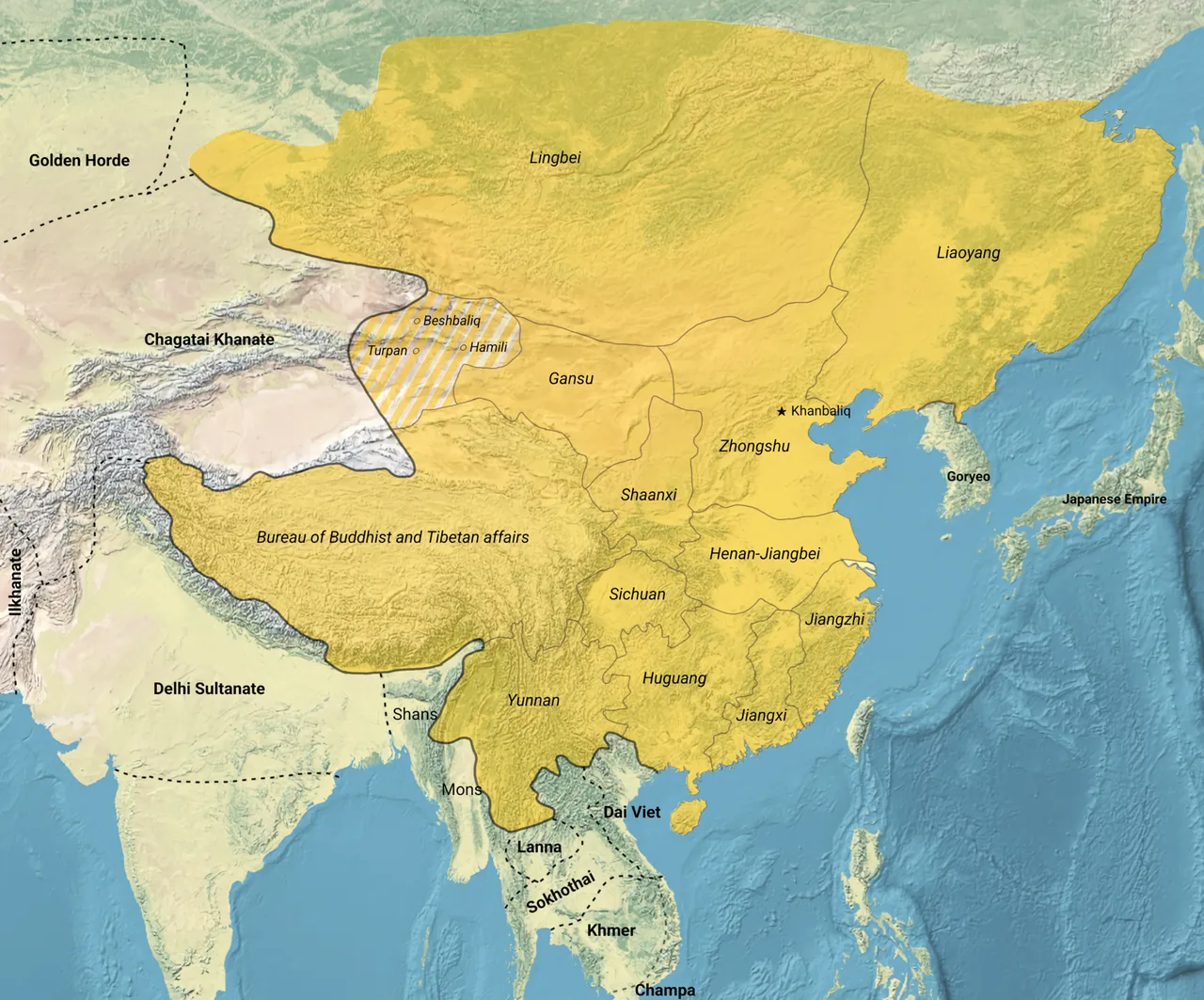
- Chinese Coordinates: From the fall of the Southern Song through the Dade era under Emperor Chengzong of Yuan (1260–1307), the Yuan Dynasty made Dadu its capital. The court split civil rule between the Secretariat and imperial fiscal offices.
- Mediterranean & Western Coordinates: The Siege of Acre ended the Crusader States in 1291. Italian city-states led sea trade, while French kings raised salt taxes and borrowed from Templar knights.
01. Paper Relief and Ground Realities: The Phantom Deficit Beneath Nominal Quotas
Historians examining the History of Yuan quickly encounter a striking institutional puzzle: on paper, early Mongol tax statutes appear remarkably moderate. After consolidating power across North China, Kublai Khan established relatively light grain assessments for farming households, modest land levies, and commercial duties hovering near three percent, promising light corvée and predictable burdens across the empire.
Yet surviving stone inscriptions and local administrative records reveal a far harsher reality across northern villages, where whole communities depopulated as desperate smallholders abandoned their fields or sold family members to settle compounding debts.
This gulf between mild statutory quotas and widespread rural ruin emerged because private financial cartels quietly captured the empire's tax machinery.
During decades of northern conquest, Mongol steppe nobles accumulated vast reserves of silver, silk, and captives without possessing the bureaucratic tools to govern sedentary agrarian districts or assess seasonal harvests. Instead, commanders demanded steady cash flows to equip the regional army, purchase weapons, and finance court patronage—opening the door for the Ortoq Merchants.
Derived from a Turkic term meaning "commercial partner," these syndicates functioned as joint-stock ventures backed directly by the imperial family. Princes, imperial consorts, and generals entrusted idle silver pools to Central Asian and Persian traders, who invested that capital along overland caravan routes and issued high-interest loans to tax-strapped villages, splitting profits with their aristocratic sponsors and turning moderate tax statutes into instruments of private extraction.
02. Calculating Two Ledgers: Deconstructing Peasant Ruin and Imperial Cash Flow
To understand Mongol taxes, we must look at two balance sheets. One was the weak ledger of simple village homes. The other was the imperial ledger run by the Great Khan in Dadu.
The Village Ledger: Lamb Interest and the Compounding Cycle of Insolvency
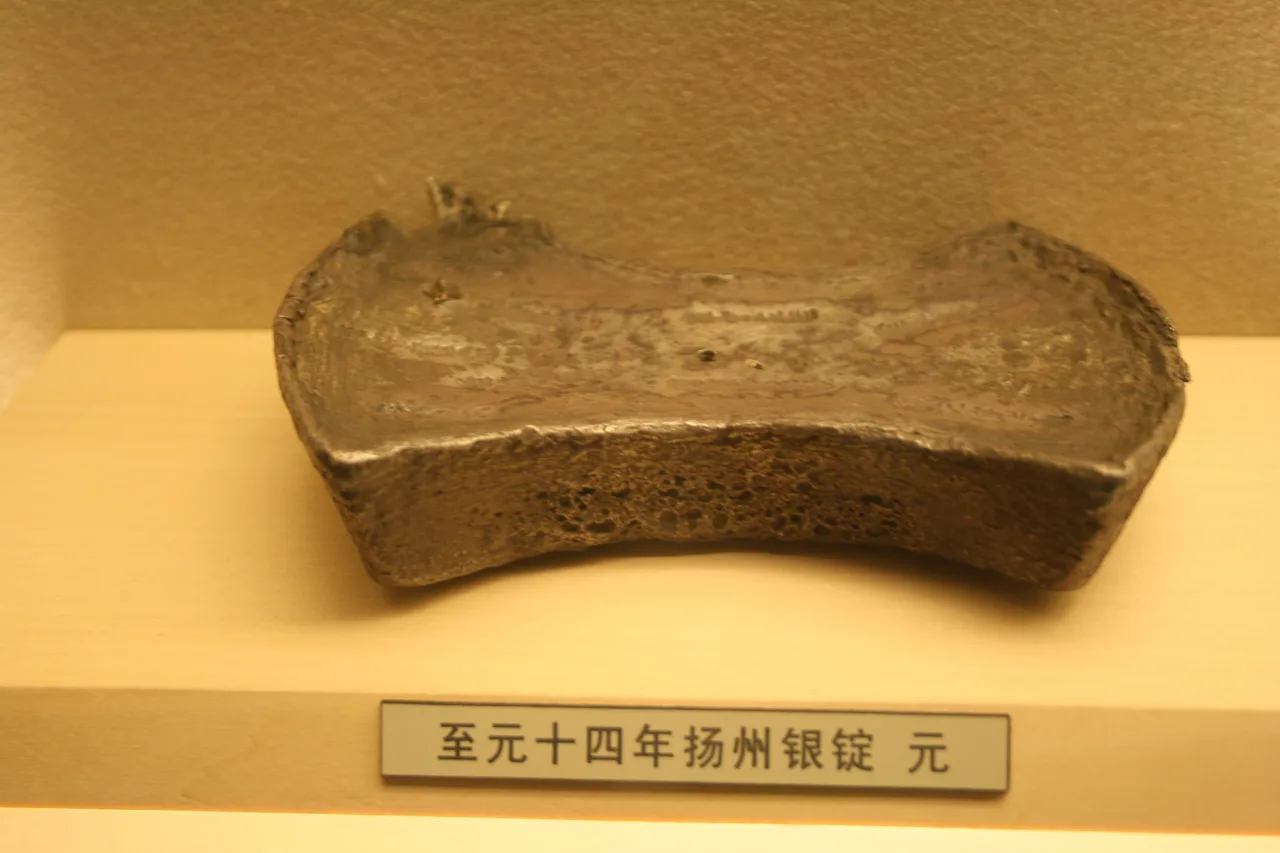
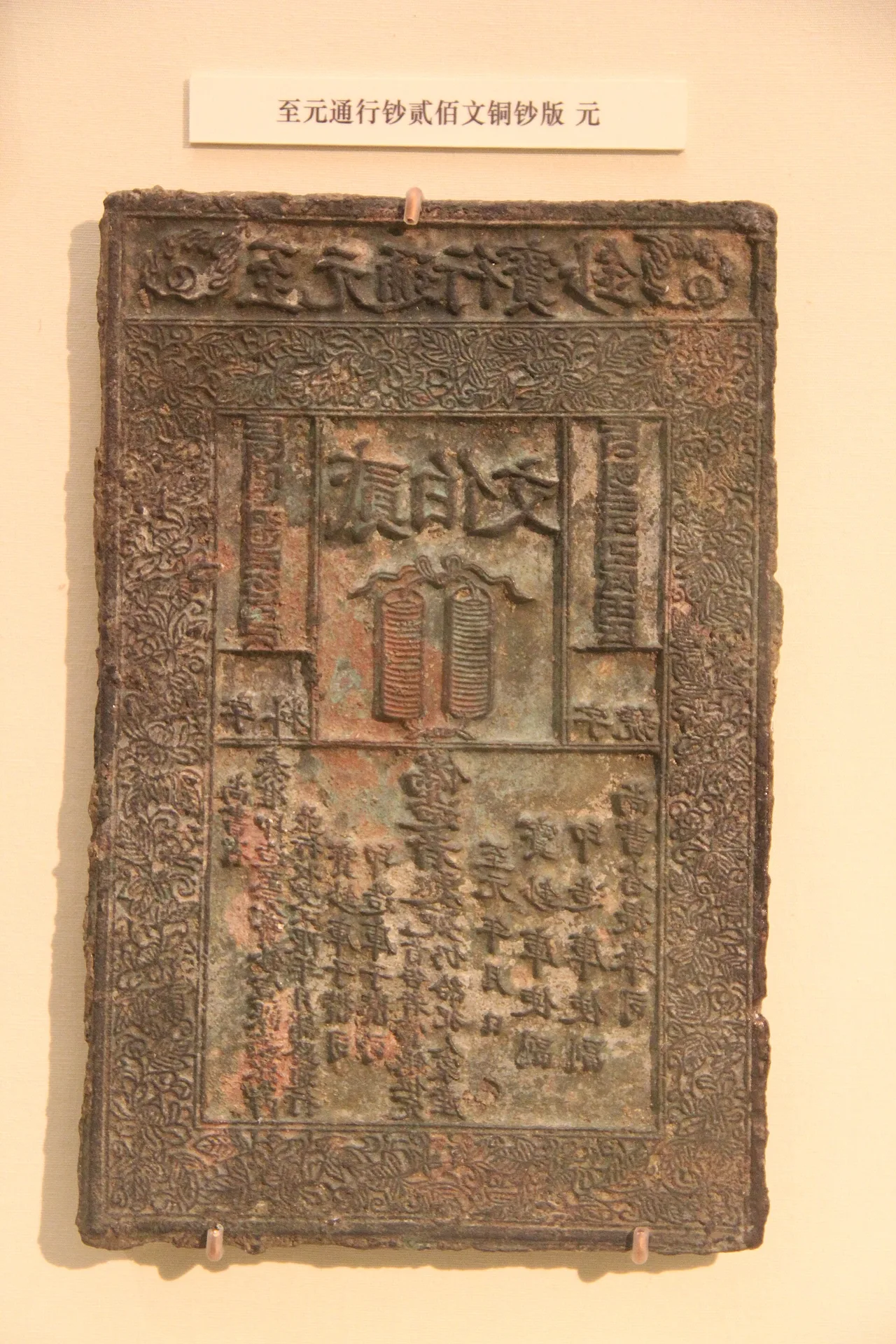
Farmers could rarely pay their taxes with grain alone. The court demanded silver ingots or paper Zhongtong Banknotes. State exchange rates were often unfair to farmers. During good harvests, crop prices fell, so farmers could not get coins. When droughts came, crops died, leaving nothing to sell. In both cases, farmers had to borrow silver.
Under these hard conditions, farmers could only get silver from traveling Ortoq merchants.
Peasant household faces silver tax levy (lacks physical bullion)
   │
   ▼
Borrows silver from Ortoq merchants (100% annual interest, monthly accrual)
   │
   ▼
Fails to settle debt at year end (interest compounds directly into new principal)
   │
   ▼
Mortgages land or enters domestic bondage -> Rural tax base collapses, forcing neighbors to cover arrears
People called this growing debt "lamb interest." The name came from sheep that gave birth each spring. The rate was one hundred percent per year. A family that borrowed fifty ounces owed one hundred ounces after one year. If they could not pay, that unpaid fifty ounces was added to the principal. The next year, interest was charged on one hundred ounces. In three years, a small loan grew into four hundred ounces of debt.
Village leaders took the blame if neighbors could not pay. The state taxed whole groups of houses together. If one family fled, the neighbors had to pay their bill.
Local leaders worked with lenders to avoid jail and beatings. Guards took farm fields, pulled down houses, and took work oxen. They also sold children into forced work. While state laws spoke of mercy, private debt ruined farming towns.
The Imperial Court Ledger: Cash Liquidity Deficits and the Leverage of Tax-Farming Bids
In Dadu, Kublai Khan had huge bills to pay. He built two capital cities at the same time. He had to pay his keshig bodyguards and dig the Grand Canal. He also spent vast sums on the eastern campaign against Japan and an attack on Java.
Using regular clerks to collect grain took too much time. Grain spoiled on boats, and crooked clerks stole half the cargo. Private tax sales fixed these supply problems in three simple ways:
- Upfront liquidity via competitive bidding: Merchant cartels made direct cash bids to the Great Khan. Under Ögedei, Abd al-Rahman doubled northern tax bids to 2.2 million silver ounces, beating the civilian minister Yelü Chucai. Later, Ahmad Fanakati leased out salt, tea, and mines through open bids. Winning cartels had to pay silver up front before they could collect local taxes.
- Elimination of state administrative overhead: The imperial treasury cut its spending on staff, granaries, and road patrols. The private syndicates paid for their own travel risks, lost cargo, and safety guards.
- Circular sovereign wealth reinvestment: The imperial palace and members of the Imperial Clan put silver into merchant groups. Merchants used this money to buy more tax rights. This cash came back to the treasury to pay for military expenditure. The crown gave prizes to princes, who put the silver right back into merchant funds.
| Dimension | Bureaucratic Tax Collection (Civilian Ideal) | Commercial Tax Farming (Financial Syndicate Reality) |
|---|---|---|
| Treasury Cash Flow Speed | Slow; dependent on seasonal harvests and year-long canal transit | Instant; syndicates advanced upfront cash down payments to secure the contract |
| Statutory Rate vs. Ground Burden | Formal rates around 3% to 5%; transit waste and customary fees added 15% to 30% | Formal rates near 3.3%; compound debt and inflated surcharges pushed real extraction to 50% or 100% |
| Allocation of Revenue Risk | The crown and counties absorbed regional losses caused by drought, flood, or insect plagues | Syndicates absorbed paper deficits, but used private guards and land seizures to shift the full loss onto peasants |
| Administrative Infrastructure | Required vast networks of degree holders, accountants, and an active Investigating Censor | Required only small auditing offices like the Quanfusi; armed private retainers handled field collection |
| Agrarian Impact | Preserved baseline family tenure, though vulnerable to gradual elite land concentration | Triggered rapid local bankruptcies, converting free cultivators into landless migrants or domestic slaves |
03. Trans-Eurasian Parallels: Yuan Ortoq Syndicates and the Roman Republic's Publicani
The tax syndicates used in the Yuan Dynasty were like those in older lands. A clear parallel appears in the Roman Republic and its publicani system.
Rome expanded across Greece, Spain, and Asia Minor. Yet the Roman Senate lacked the civil staff to run these far lands.
The Roman Senate used tax auctions just like the Great Khan did later. Rich equestrian groups formed companies to buy tax rights. They paid the state first, then took farm tithes, trade dues, and mine earnings.
Both systems shared clear traits:
- Aristocratic commercial investment: Yuan syndicates pooled silver from Mongol princes and the Imperial Clan Feudatory network. Roman syndicates sold shares to wealthy leaders who wanted war profits.
- Sovereign enforcement mechanisms: Ortoq agents used royal passes to take horses, food, and lodging. In the same way, Roman collectors used soldiers to force towns to pay debts.
However, the two systems grew apart in how they ended.
In Rome, tax companies gained too much power. They funded private armies for rival warlord commanders like Sulla, Pompey, and Caesar. This caused civil wars until Augustus ended private tax bids.
Under the Yuan Dynasty, merchants stayed under the rule of the Great Khan. In 1269, Kublai Khan set up the Quanfusi to inspect loan records. This office capped unpaid interest to keep royal power over private money.
04. Official Collusion and Institutional Purges: The Scapegoat Trap Under Imperial Centralization
Late in Kublai Khan's reign, tax policy followed a regular cycle of three steps:
First, budget crises led the court to hire outside money managers. Huge war costs and building work created big deficits. The throne gave tax jobs to foreign ministers like Ahmad Fanakati, Lu Shirong, and Sangha. These men worked with Ortoq groups to control salt sales, find hidden lands, and print paper notes to fill royal vaults.
Second, rural pain sparked political fights. Compounding debt and high prices hurt farm towns. Village elites fought back when the court taxed private estates. Protests spread through north and south lands. Civilian leaders like the Grand Master and Crown Prince Zhenjin spoke out against these harsh acts.
Finally, the crown killed its finance chiefs but kept their harsh rules. In 1282, righteous soldiers led by Wang Zhu killed Ahmad Fanakati. To calm public rage, Kublai ruined the dead minister's grave. He seized the family goods and executed the minister's allies. The court killed Lu Shirong soon after. Yet the throne did not end state monopolies or lower tax targets. The crown kept the high profits and blamed its dead agents.
Supporters defended Ortoq groups as old steppe custom, calling it royal Jiazhi. Critics used an allusive expression in state notes to decry fiscal greed without blaming the ruler. Modern Historiography shows that the Northern Han used simple levies, while the Yuan built complex credit systems to drain farm wealth.
Kublai Khan got fast cash for state needs. However, linking sovereign funds to predatory debt ruined farm towns. This weakness set the stage for the fall of the dynasty in later years.
Primary Sources & Historical Bibliography
- *Song Lian et al., History of Yuan (Yuan Shi), Treatises on Food and Money (Shihuo Zhi), Vol. 93–97*: Official records on house rolls, tax bids, paper money, and state loans to Ortoq merchants.
- *National Palace Museum, Statutes of the Yuan Dynasty (Yuan Dianzhang), Ministry of Revenue*: Legal cases and court orders through the Dade era on high interest, tax farming, and peasant debts.
- *Yelü Chucai, Collected Works of the Hermit Zhanran (Zhanran Jushi Wenji)*: Early administrative writings on the tax bids of Abd al-Rahman and court debates with civilian ministers.
- *Quan Hansheng, "Ortoq Silver in the Yuan Dynasty" (Collected Studies in Chinese Economic History)*: Modern study of the joint-venture setups of Ortoq syndicates and the math behind lamb interest.
- *Elizabeth Endicott-West, Mongolian Rule in China: Local Administration in the Yuan Dynasty (Harvard University Press, 1989)*: An institutional study detailing how the regional army, Darughachi leaders, and finance chiefs handled local revenues.