TL;DR · Core Takeaways
- The early Ming court outlawed private silver and copper transactions under penalty of execution and military exile. It attempted to enforce an unbacked fiat paper currency, the Great Ming Treasure Note, through state coercion alone.
- Built without precious metal reserves, barring citizens from redeeming notes for specie, and refusing to accept paper currency for core agricultural grain taxes, the system flooded the market while choking off redemption, wiping out over 99% of the note's purchasing power within five decades.
- This collapse wrecked the imperial bureaucracy's payroll. It drove the Imperial Court to pay civil and military officials in warehouses full of Southeast Asian pepper and sappanwood imported during Zheng He's maritime expeditions before the empire surrendered to weighed silver.
Historical Context
- Chinese Historical Coordinates: 8th year of the Hongwu reign of the Ming Dynasty (1375, establishment of the Supervisorate of Treasure Notes and imperial ban on private bullion transactions) to the 1st year of the Zhengtong reign (1436, institutional adoption of "Gold Floral Silver" tax commutation and functional abandonment of paper currency).
- Western / Mediterranean Coordinates: Late medieval restructuring of European labor and monetization of feudal rents following the Black Death (late 14th century, escalation of the Hundred Years' War) to the transatlantic silver influx from Potosí and the European Price Revolution (1550–1600).
01. Nominal Currency and Real-World Divergence: A Dead End by Imperial Decree
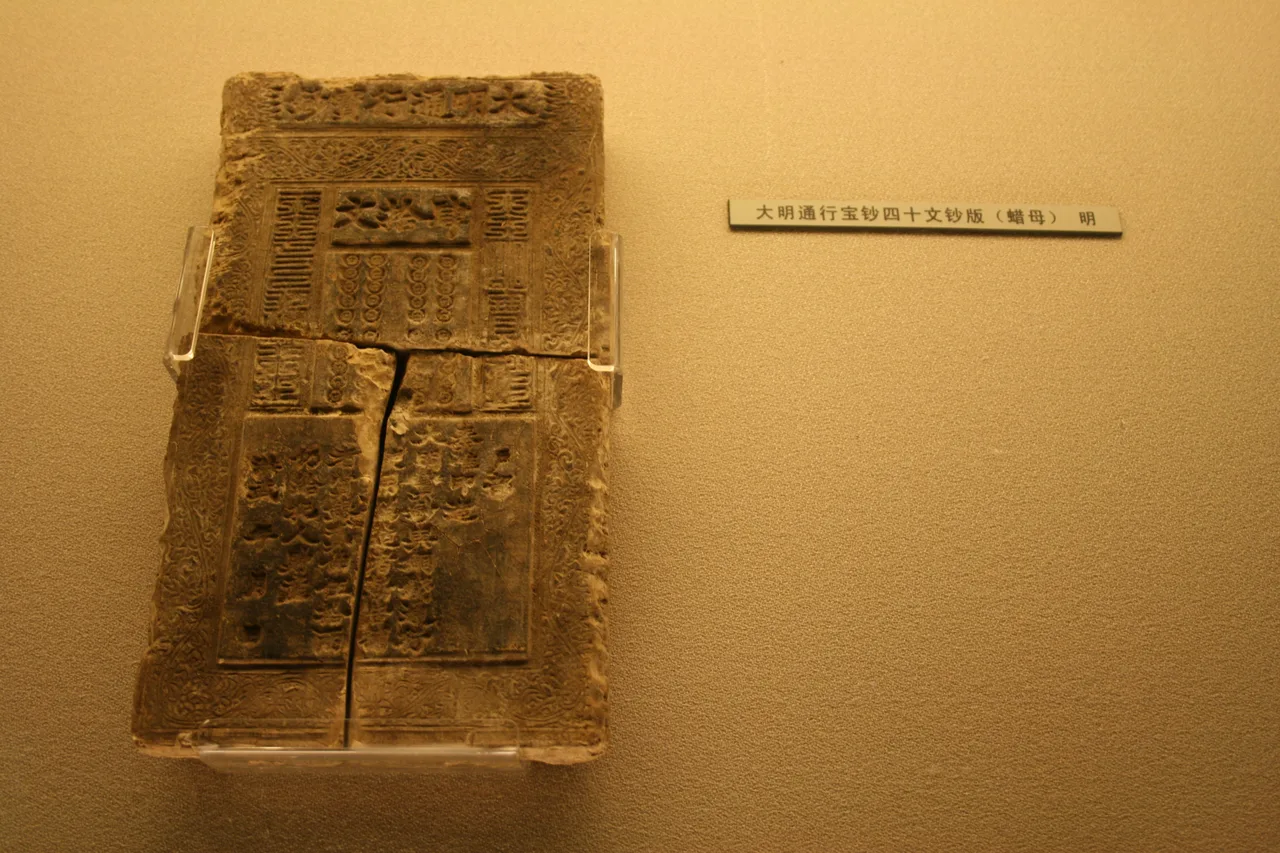
Early Ming statutes show an unbending vision of economic command. In 1375, Emperor Taizu of MingZhu Yuanzhang, Emperor Taizu of Ming, created the Supervisorate of Treasure Notes. He issued the Great Ming Treasure Note. The court enacted harsh laws. All domestic sales had to use paper notes. Trading with gold or silver carried the death penalty. State bounties rewarded informants.
Official rates looked orderly on paper. The court ruled that one guan of paper equaled one thousand copper coins, or one ounce of silver. Four guan equaled one ounce of gold. By imperial order, the state sought to rebuild an empire scarred by Yuanming warfare on a paper standard without physical metal reserves.
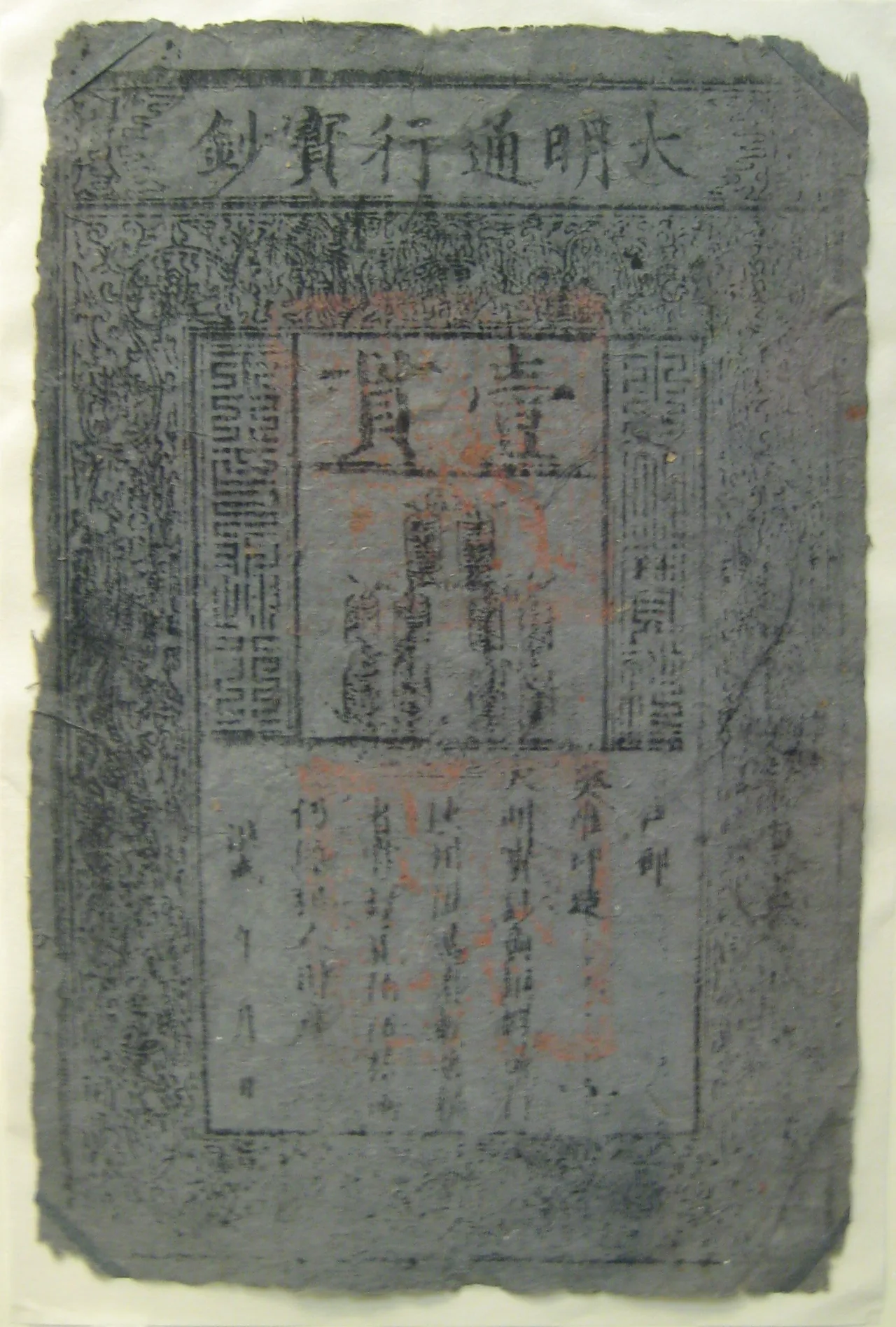
Ground accounts show a different reality. Paper money works only when an issuer honors debt redemption or accepts the notes back for taxes. The Great Ming Treasure Note lacked both foundations. When criers read edicts in market pavilions, they gave a clear warning. No subject could ever redeem paper notes for copper coins or bullion at government vaults. Even worse, the Ministry of Revenue refused paper notes when collecting its main grain taxes of thirty million shi. It demanded real grain and cloth instead.
By spending paper while demanding real grain, the crown destroyed public trust right away. Within years, the buying power of a one-guan note fell sharply. Civil and military officials took home mulberry sheets stamped with red seals. Local butchers and grain sellers turned them down. People chose to risk prison rather than trade goods for empty paper. Many hid small silver bits and rough copper coins in their robes.
02. The Imperial Ledger's Double Fracture: From Treasury Mirage to Starvation on the Ground
Money is a deferred payment contract between a government and its people. When an administration turns that contract into forced taking, fiscal strength and daily life both break down.
Household and Bureaucratic Balance Sheets: A 99% Collapse and the Pepper Salary Crisis
For everyday subjects and local officials in the Ming Dynasty, paper money caused steady wealth loss rather than easy trade.
Zhu Yuanzhang built official pay around strict limits, setting base wages far below Song levels. A rank-seven District Magistrate received five shi of rice each month, worth less than four ounces of silver. As printing grew, the Ministry of Revenue adopted commutation quotas. The treasury paid only a tiny fraction of pay in real grain. It gave out Great Ming Treasure Notes for the rest at fixed legal rates.
By the end of the Hongwu era, the real value of a one-guan note dropped to about one hundred copper coins. Under the Yongle Emperor and Emperor Xuanzong of Ming, high state spending flooded the land with paper. These costs included moving the capital to Beijing, building the Forbidden City, and waging desert campaigns. In the markets of the Southern Capital and Beijing, a one-guan note traded for only two or three copper coins. This was a loss of more than 99%. A middle-ranking official could take home cartloads of paper on payday yet fail to buy a single pig or two bags of grain. Many households faced hunger.
This wage collapse led Emperor Xuanzong's court to adopt a strange fiscal step in 1434. It replaced official wages with imported spices. Years earlier, Zheng He's maritime expeditions had brought back millions of catties of black pepper and sappanwood from ports across the Southern Seas. Sappanwood was a tropical wood used for dyes and medicine. These goods sat in damp imperial storehouses in the Southern Capital and Beijing, far beyond market demand.
The Ministry of Revenue resolved its stockpile problem by handing raw spices to officials for monthly pay. The state set pepper at one hundred guan of paper per catty and sappanwood at fifty guan. Yet private shops sold pepper for only ten copper coins. Officials received bags of goods they could not consume. To buy food, officials stood in the snow along city streets, selling raw pepper to spice merchants at steep cuts of eighty to ninety percent. They salvaged only pennies of their listed pay.
The Central Treasury Balance Sheet: The Mirage of Seigniorage and Choked Tax Absorption
Senior ministers at the Ministry of Revenue first saw unbacked fiat money as a quick path to revenue. Yet this uncontrolled seigniorage weakened state operations.
Zhu Yuanzhang printed paper notes because the empire had few accessible copper mines and silver veins. With paper notes, the state built the high walls of the Southern Capital, funded armies, and bought timber without new land taxes. In the short run, this method extracted large resources at almost no cost.
Easy seigniorage soon became an addictive habit. The state lacked spending limits. When desert wars broke out, floods ruined crops, or palace halls burned, ministers ordered more printing. Imperial historical sources show annual printing topped millions of guan under Hongwu, rising into a flood under Yongle.
The main flaw was the total lack of note redemption. Northern Song officials had backed Jiaozi Paper Money with reserve funds and clear reissue cycles. In the Yuan Dynasty, ministers under Zhenjin sustained Zhongtong Yuanbao Jiaochao and Zhiyuan notes with metal reserves in state vaults, taking paper for salt permits. Zhu Yuanzhang mistrusted private trade, basing tax intake on rural farm registries. Unlike earlier institutions where officials treated issues as Wuzhun without convertibility risks when anchored by salt, Ming policy offered no security. By refusing paper currency for grain taxes, the state built a one-way path. Paper poured into the economy, but none returned to state vaults. The treasury kept its physical grain, but graft spread, soldiers and every Commander General left garrisons, and state trust fell apart.
03. Transmission Mechanisms of Hyperinflation and Comparative Paper Systems
The failure of the Great Ming Treasure Note was predictable. It stemmed from flawed institutional choices, following a direct sequence:
Bullion shortages join with suspicion of private trade
  ↓
Issue of unbacked, inconvertible paper notes by imperial decree
  ↓
Ministry of Revenue refuses paper for land taxes, blocking return flows
  ↓
Heavy printing to fund border wars, building projects, and military expenditure
  ↓
Money loses trust, erasing more than 99% of its value
  ↓
Official salaries collapse, forcing payments in pepper and sappanwood
  ↓
Markets drop paper notes, leading to weighed silver and Gold Floral Silver reforms
To see how early Ming policy departed from historical practice, compare three dynasties that used paper currency:
| Currency / Dynastic Era | Bullion & Coin Reserve Design | Tax Absorption & State Redemption | Statutory Parity vs. Real Value After 50 Years | Exit Mechanism & Fiscal Fate |
|---|---|---|---|---|
| Northern Song: Official Jiaozi Paper Money<br>(1st year of Tiansheng, 1023) | Backed by 360,000 strings of copper coins (reserve ratio near 28%) | Convertible to coin; accepted widely for commercial taxes and state salt sales | Parity set at 1,000 cash per string; held steady through Xining and Yuanfeng eras until military expenditure caused inflation | Staggered redemption cycles with old notes traded for new series; later evolved into Qianyin |
| Yuan Dynasty: Zhiyuan Baochao<br>(24th year of Zhiyuan, 1287) | Stabilized by treasury reserves of silver and gold | Absorbed through national salt and trade duties; state redeemed worn notes | Valued at 1 guan to half-ounce of silver or 1,000 cash; held steady for nearly forty years | Inflation grew during late-reign crises without metal anchors, collapsing alongside the dynasty |
| Ming Dynasty: Great Ming Treasure Note<br>(8th year of Hongwu, 1375) | 0% (Completely unbacked by gold, silver, or copper reserves) | Redemption strictly outlawed; state refused notes for main autumn grain taxes | Pegged at 1 guan to 1 ounce of silver; traded for 2–3 copper cash fifty years later (over 99% decline) | No replacement cycles; discarded by markets; replaced by Gold Floral Silver in 1436 |
This comparison clarifies why Ming paper decayed faster than earlier notes. Zhu Yuanzhang stripped paper money of its mutual contract, turning it into state extraction. Without redemption drains or metal backing, economic reality turned imperial notes into waste paper.
04. Cross-Civilizational Parallels: Fiat Enforcement and the Price Revolution Divergence
Looking beyond China, the tension between state decrees and market value shows clear parallels across world history.
The early Ming collapse resembles the coinage debasement of the late Roman Empire. During third-century crises, Roman emperors faced large military payrolls and border wars by debasing the silver content of the denarius and antoninianus. Silver purity fell from ninety-eight percent under Augustus to under two percent under Claudius Gothicus, erasing buying power. In a manner like Emperor Xuanzong paying officials in pepper, Diocletian dropped the pretense of fiat bronze coins when markets rejected them. He turned to the annona militaris, an in-kind system distributing grain, wine, and oil to troops and clerks. Across eras and regions, whenever rulers create purchasing power by fiat without backing, markets force administrations back into barter.
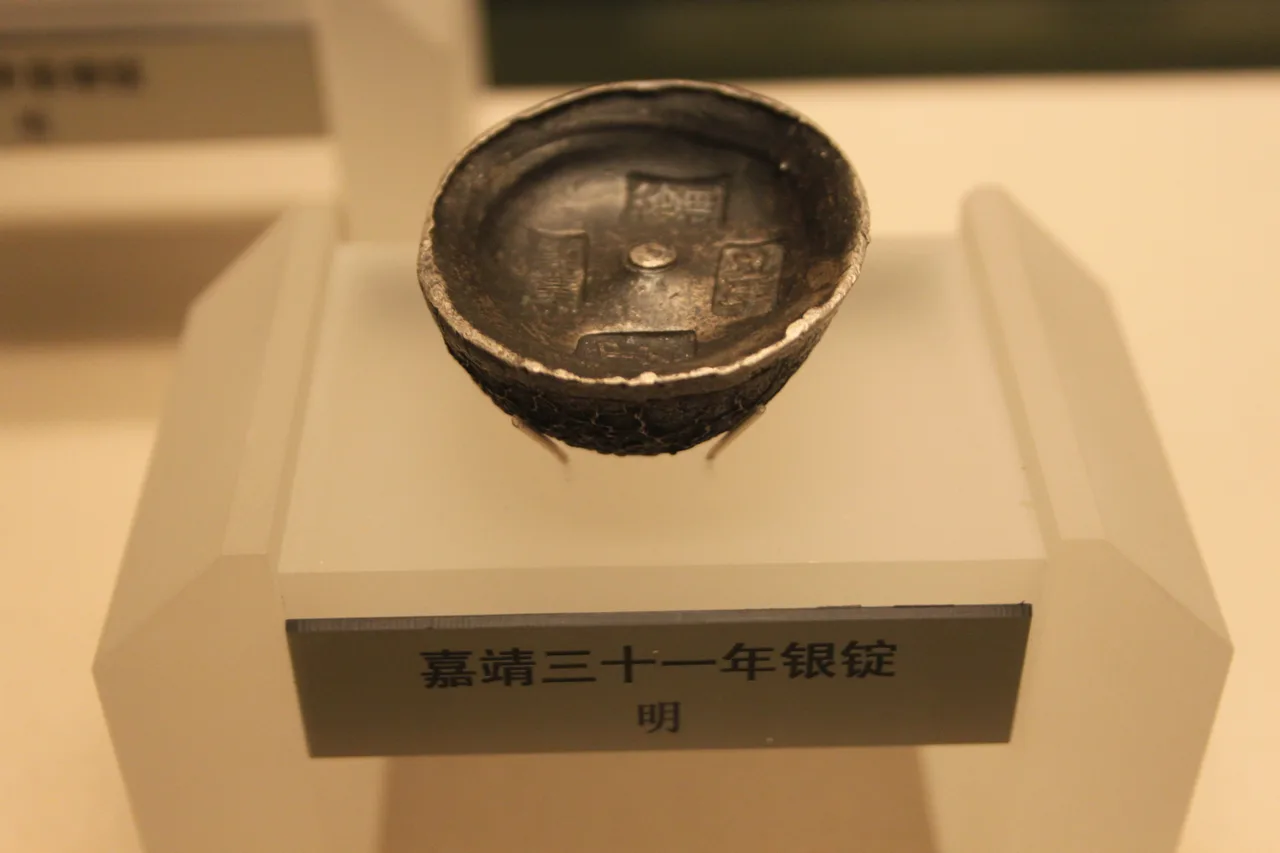
Yet the Ming path differed from Western Europe during the global silver movements of the Age of Discovery. In the sixteenth century, Spanish mining at Potosí brought large volumes of silver into Europe aboard transatlantic fleets, driving the Price Revolution. Western Europe managed a commodity-money shock from physical supply. Prices rose about six times across 150 years, averaging a modest annual inflation rate of 1.2 percent. To absorb these metallic flows, European merchants and rulers improved double-entry bookkeeping, discounted bills of exchange, and formed municipal banks.
The Ming Empire met a different problem. Its crisis came from unbacked state printing that broke public trust. When the Great Ming Treasure Note failed during the Zhengtong era, the court created neither commercial banks nor paper credit. Shaken by the failure of fiat money, the dynasty set paper currency aside.
The Imperial Court, which once managed appointments for the Chamberlain for the Imperial Clan and the Directress of Interior Maintenance Office, adjusted its financial model after the earlier mission to Jin and northern border campaigns. From the 1436 reform adopting Gold Floral Silver, to ending silver bans in 1567, and to Grand Secretary Zhang Juzheng codifying the Single Whip Law, the Ming state yielded to reality. It linked land taxes and market dues directly to weighed silver. Zhu Yuanzhang had sought to anchor imperial finances to fiat paper. In the end, the market forced the dynasty to rely on silver shipped across the Pacific from Japan and the Americas.
Primary Sources & Historical Bibliography
- History of Ming, "Treatise on Food and Money V" (Currency): Details the Hongwu year 8 edict establishing the Supervisorate of Treasure Notes, legal codes outlawing private bullion transactions, the crash of paper notes during the Xuande and Zhengtong eras, official salary commutations into pepper and sappanwood, and the formal shift to Gold Floral Silver.
- Veritable Records of the Ming Taizu Emperor, Vol. 97: Preserves the founding imperial edict from the third month of 1375 that created the Great Ming Treasure Note, detailing statutory parities between paper, copper cash, and silver, alongside capital penalties for counterfeiters.
- Peng Xinwei, A Monetary History of China (Shanghai People's Publishing House): Part III, Chapter 6 provides commodity price indices and reserve analyses across the Song, Yuan, and Ming dynasties, charting the collapse of the Great Ming Treasure Note's purchasing power by more than 99% between the Hongwu and Xuande eras.
- Chuan Han-sheng, "American Silver and the Price Revolution in Ming and Qing China" (in Collected Works on Chinese Economic History): Examines the global transmission mechanism connecting American silver production at Potosí, the Manila galleon trade, and the Ming Empire's institutional transition to silver under the Single Whip Law.