Chinese Coordinates
—
Western / Mediterranean Coordinates
The 1590s, when the Kingdom of France was consumed by the French Wars of Religion and Henry IV besieged Paris; the 1780s, when Western European Enlightenment thinkers debated the perils of Hereditary Succession in public office on the eve of the French Revolution.
TL;DR · Core Takeaways
- Cramped Physical Dimensions: An individual cell in the Jiangnan Examination Hall measured three feet wide and four feet deep. Candidates stayed locked inside for nine days and seven nights across three testing rounds. They slept curled up on two wooden boards.
- Steep Economic Outlays: A candidate traveling to the provincial capital spent eight to fifteen silver taels on gear, food, candles, and porters. This sum equaled several months of income for a skilled urban craftsman.
- Systematic Bureaucratic Isolation: Guards conducted strip searches at the outer gates. Scribes transcribed all exam essays into red ink to hide handwriting from graders.
> Spatiotemporal Coordinates
> - Chinese Historical Baseline: The eighth lunar month of autumn, the twentieth year of Wanli (1592 CE) during the Ming / the eighth lunar month of autumn, the forty-ninth year of Qianlong (1784 CE) during the Qing dynasty; the provincial examination grounds of the Jiangnan Examination Hall in Southern Capital Yingtian Prefecture.
Before dawn on the eighth day of the eighth lunar month in 1672, a cold mist hung over the Qinhuai River in the Southern Capital. Outside the gates of the Jiangnan Examination Hall in Yingtian Prefecture, over ten thousand scholars stood in line. Soldiers watched them closely. The air smelled of fried dough, wheat cakes, and pine torches. A cannon fired three times from the Dragon Gate. The massive wooden doors opened, and the scholars walked into a vast brick compound for a test of body and mind.
The test system began long ago during the Northern Song. In the Ming and Qing eras, the state ran the construction to choose civil officials. Stripped of elite romance, these tests were long, exhausting ordeals.
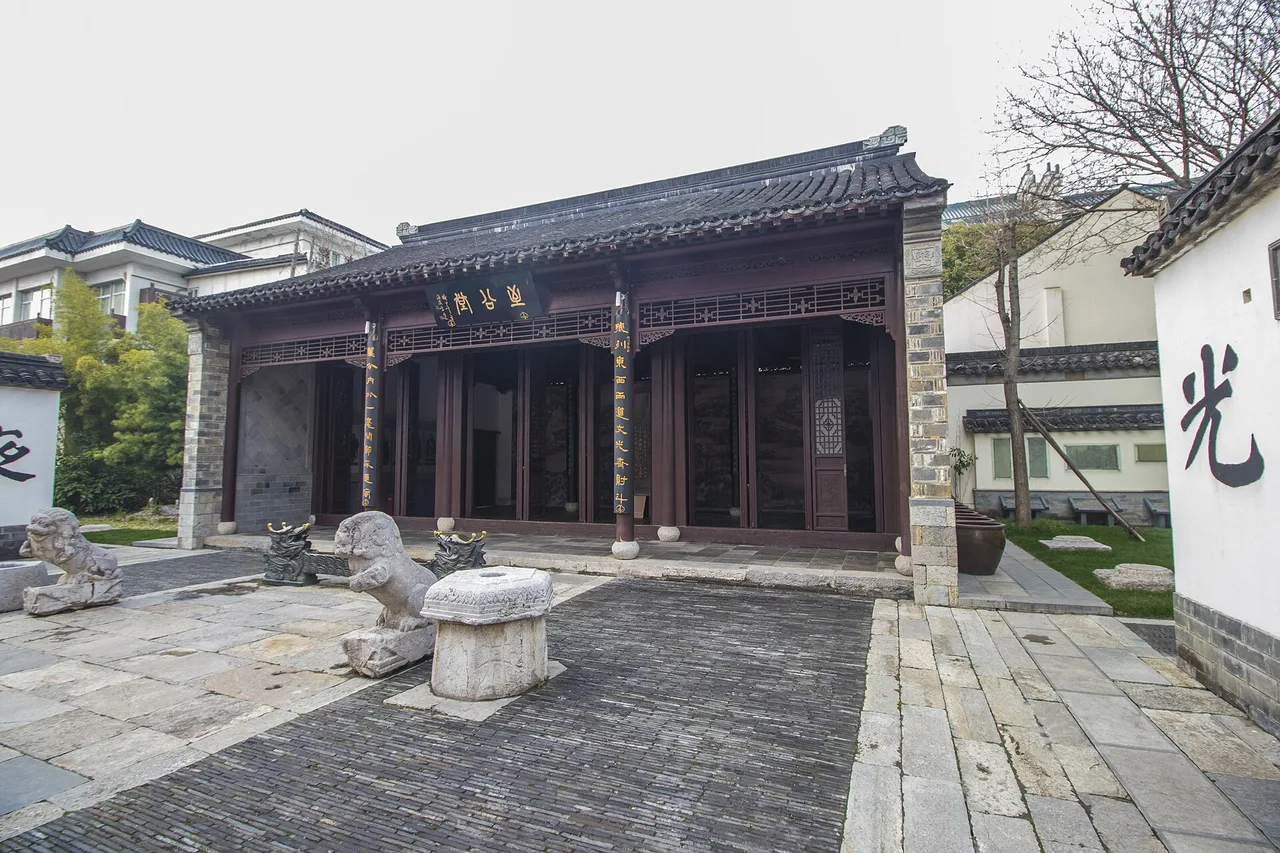
01. Physical Layout of the Grounds: Brick Cells Three Feet Wide by Four Feet Deep
Scholars entered the compound and looked for their cells. Long brick rows were named after words from the Thousand Character Classic. Each cubicle was an open brick stall.
Two Planks for Day and Night
Official records in the Precedents and Regulations of the Ministry of Rites and every Local Gazetteer recorded the stall sizes. Each booth was three Chinese feet wide and four Chinese feet deep. The back wall stood eight feet high, while the front roof sloped to six feet. The front had no door, facing an alley three to four feet wide.
Brick walls had two stone ledges along each side. Two fir boards rested on these ledges. In the daytime, the scholar sat on the lower plank and wrote on the higher plank. At night, he moved the top board down next to the bottom board. This made a short sleeping bed about 1.3 meters long.
A grown man could not stretch out straight on this bed. He had to sleep on his side with his knees bent to his chest. Rain often blew into the stall from the alleyway. When water soaked the planks, the scholar wrapped himself in an oiled sheet and sat awake against the cold wall.
Open Latrines and the Stench Cells
Each long row of stalls ended near two open toilet buckets. Workers called these booths by simple numbers, but scholars had their own names for them. Men who drew the booths nearest the toilets called them the "stench cells." In the late summer heat, foul waste from hundreds of men filled the air with a terrible smell.
Guards enforced strict silence. Soldiers walked the narrow lanes day and night. They stopped scholars from talking, trading notes, or stepping outside. When an examinee fell ill with fever or cramps, guards did not open the outer gates for a doctor. Instead, workers carried the sick man to a side shed or hauled his body through a small wicket. Officials noted in historical sources and Miscellanies that dozens of men died during every autumn exam.
02. The Candidate's Budget: Balance Sheets and Historical Price Trends
Sitting for the exam cost a lot of money. Without cash from kin groups, guildhalls, or loans, a poor scholar could rarely take the tests more than once.
A candidate had to bring all his own food, bedding, and writing tools for three separate rounds. Historical records from the nineteenth century list the standard items needed for an exam basket.
### Essential Packing List and Expenses for an 1808 (Jiaqing 13) Jiangnan Provincial Candidate

1. Examination Stationery & Tools:
   - Official draft paper, transcription ink, one She County inkstone, four rabbit-hair brushes: 0.85 tael of silver
   - Paper knife, water dropper, brass paperweight, flint and steel set: 0.32 tael of silver
2. Shelter & Bedding:
   - Heavy oiled-cloth stall curtain with hanging grommets, two sheets of moisture-proof oiled paper: 0.60 tael of silver
   - Lined quilt, coarse cotton sitting pad, folding straw mat: 1.10 taels of silver
3. Lighting & Timing:
   - Twenty thick, smokeless wind-resistant white tallow candles: 0.70 tael of silver
   - One tin windproof lantern: 0.25 tael of silver
4. Food Rations & Cookware:
   - Small purple clay charcoal brazier, twenty catties of smokeless white charcoal: 0.45 tael of silver
   - Small copper hanging kettle for boiling water and tea: 0.30 tael of silver
   - Thirty dehydrated wheat cakes, four catties of salt-cured beef or pork jerky, two drams of preserved ginseng slices, ten salted duck eggs: 1.80 taels of silver
   - Parched rice, loose tea leaves, fresh ginger roots: 0.35 tael of silver
5. Internal Hall Fees & Gratuities:
   - Service fees for assigned military laborers (water delivery and heavy carriage), curtain ties, porterage: 1.50 taels of silver
---------------------------------------------------------
Total Baseline Gear Cost: approx. 8.22 taels of silver
(Note: Adding two months of lodging in the provincial capital, literary society dues, and tutors' travel gifts brought standard outlays to 25–40 taels)
The table below contrasts candidate costs with common wages across several periods:
| Era and Year | Prevailing Daily Wage for Common Labor | Reference Costs for Core Examination Gear | Minimum Regional Outlay to Sit the Exam (Including Travel) | Equivalent Purchasing Power in Milled Rice |
|---|---|---|---|---|
| Northern Song, Yuanfeng 3 (1080 CE) | Bianjing auxiliary soldier or day laborer: 100–120 copper coins daily | Fine She County inkstone: 500 coins; oiled rain silk: 300 coins; fine pine-soot ink: 70 coins per cake | Local prefecture exam: approx. 4–6 strings of cash (guan) | Equal to 8–12 months of staple rations for an adult male |
| Ming dynasty, Wanli 20 (1592 CE) | Southern direct-rule masonry craftsman: 0.035 tael of silver daily | Woven bamboo exam basket: 0.08 tael; ten refined tallow candles: 0.12 tael; wrought-iron lantern: 0.09 tael | Provincial exam: approx. 5–7 taels of silver | Equal to 6–9 piculs (shi) of rice (approx. 500–750 kg) |
| Qing dynasty, Qianlong 49 (1784 CE) | Jiangnan skilled textile weaver: 0.05–0.06 tael of silver daily | Coarse cotton lined quilt: 0.8 tael; thirty catties of white charcoal: 0.35 tael; oiled-cloth curtain: 0.4 tael | Provincial exam: approx. 10–14 taels of silver | Equal to 7–10 piculs of rice (approx. 600–850 kg) |
| Qing dynasty, Guangxu 20 (1894 CE) | Coastal dock coolie: 150–200 copper coins daily | Imported sheet-iron exam basket: 1,200 coins; box of paraffin candles: 400 coins | Provincial exam: approx. 25,000–35,000 copper coins (approx. 25 taels of silver) | Equal to 10–13 piculs of rice |
Such heavy costs forced many families to pawn goods or land. If a student failed the exam, his relatives took months or years to pay off the debt.
03. Administrative Countermeasures: From Strip Searches to Red-Ink Desensitization
Passing the test brought high social rank and wealth. Because the stakes were so high, many tried to cheat. In response, officials set up strict security rules.
Searches at the Outer Gates
Scholars hated the body searches at the front doors. Yet everyone had to submit. Rules required two full checks before any man walked into the yard.
Guards stripped coats and robes from each scholar. They ordered men to unbind their hair and shake it out. Inspectors opened brush barrels to see if paper scrolls lay hidden inside. They banned inkstones with thick bases. Guards stabbed needle pins through bread rolls or broke them apart by hand to check for hidden notes. Bamboo baskets were split very thin to stop men from concealing sheets in false bottoms.
If guards caught a man with illegal text, they struck a gong and arrested him. The cheater lost his scholar title. He stood outside the gate wearing a heavy wooden collar for a month, and the court could banish him to distant borders. A guard who caught a cheater earned three silver taels. But if a guard let an illicit paper pass, his bosses cut his pay.
Anonymous Anonymization: Seals, Scribes, and Proofreaders
Writing the essays was only the first part of the system. Once turned in, every paper moved through a secret grading line.
Clerks folded over the top part of the sheet where the candidate wrote his name and family tree. They pasted thick brown paper over these facts and stamped the edge. Next, they marked the paper with a random code word.
Then the paper went to a hall of scribes. Hundreds of copyists copied every black-ink original using red vermilion ink. Next, a Collator pair checked the copies. One man read the black original aloud, while the other checked the red copy line by line. They marked any missed words in purple ink.
Only the red copies went to the grading judges. An examiner never saw the candidate's true brush hand, nor did he know his name. Once all scores were set, officials cut the sealed paper tabs to match the red copies with original sheets. First used during the Jingde reign of Emperor Zhenzong of Song, this system cut personal ties between judges and students.
Primary Sources & Historical Bibliography
- Official Treatises and Administrative Precedents
- Tuojin et al., eds., Collected Statutes of the Qing Dynasty (Da Qing huidian), Ministry of Rites: Civil Service Examinations, Jiaqing 23 edition (1818), vols. 54–58.
- Ministry of Rites, comp., Imperially Commissioned Precedents and Regulations of the Ministry of Rites (Qinding Libu zeli), Guangxu revised edition, vol. 60, "Regulations on Physical Searches in Provincial and Metropolitan Examinations."
- Zhang Han, Pine Window Dreams (Songchuang mengyu), vol. 3, "Accounts of Officials" (Baiguan ji), Zhonghua Book Company punctuated edition (recording physical layouts and search routines during the mid-to-late Ming dynasty).
- Microhistories, Miscellanies, and Institutional Studies
- Huang Liuhong, A Complete Book on Well-Being and Beneficence (Fuhui quanshu), vol. 12, "Assuming Office: Tax Collection and Academic Testing," Kangxi woodblock edition.
- Xu Ke, ed., Categorized Anthology of Qing Unofficial Notes (Qingbai leichao), Examination Section: "Jiangnan Examination Hall," "The Hardships of Examination Cells," and "Techniques of Smuggling Notes," Beijing: Zhonghua Book Company, 1984.
- Shang Yanying, Descriptive Account of the Qing Civil Service Examination System (Qingdai keju kaoshi shulu), Beijing: SDX Joint Publishing Company, 1958 (chapters 2–4 detailing provincial schedules, vermilion copying, and proofreading protocols).
- Wu Renshu, Taste for Luxury: Consumer Society and the Grand Master Elite in the Late Ming (Pinwei shehua: Wan-Ming de xiaofei shehui yu shidafu), Beijing: Zhonghua Book Company, 2008 (chapter 3 examining student testing costs and literati society expenditures).