TL;DR · Core Takeaways
- Delivery rooms left no procedural room for substitutions: Facing an existential succession crisis in 1010 CE, Emperor Zhenzong placed the birth under strict checks by the Palace Eunuch Service, the Hanlin Medical Office, genealogy scribes, and inner-court women of high rank. The skinned wildcat swap was a late popular fiction.
- Lineage adoption secured imperial legitimacy: Emperor Renzong was born to the palace maid Lady Li and formally adopted by Empress Liu. This granted the concubine-born prince undisputed status as legal heir. Consort Li lived with full honors among inner-court women and received a first-rank burial.
- Mercury preservation averted a dynastic purge: When Empress Dowager Liu passed away in 1033 CE during the early Renzong reign, Emperor Renzong exhumed his birth mother, posthumously honored as Empress Li, to probe murder claims. Finding her body intact and garbed in imperial robes, he dismissed rumors of foul play and averted a bloody coup.
Historical Coordinates
- Chinese Historical Frame: From the birth of Zhao Zhen in the third year of Dazhong Xiangfu under Emperor Zhenzong of Song (1010 CE) to the passing of Empress Dowager Liu and the opening of the coffin upon the start of Personal Rule under Emperor Renzong of Song in the second year of the Mingdao era (1033 CE).
- Western / Mediterranean Frame: The shift in the Holy Roman Empire from the Ottonian line to the Salian line (spanning the reigns of Henry II the Pious and Conrad II), while England weathered the North Sea realm of Cnut the Great and turbulent Anglo-Saxon dynastic successions.
In medieval grand-strategy games and old chronicles, female rule often brings chaos. When a dowager rules without a son, rivals fight for the crown. In popular lore, however, the name of Empress Liu—Empress Zhangxian Mingsu of the Northern Song—became a stage villain. For generations, traditional theater told the tale of the Wildcat for Crown Prince. In this tale, an envious consort swaps a maid's baby for a dead wildcat. The birth mother lives in poverty until an honest judge saves her.
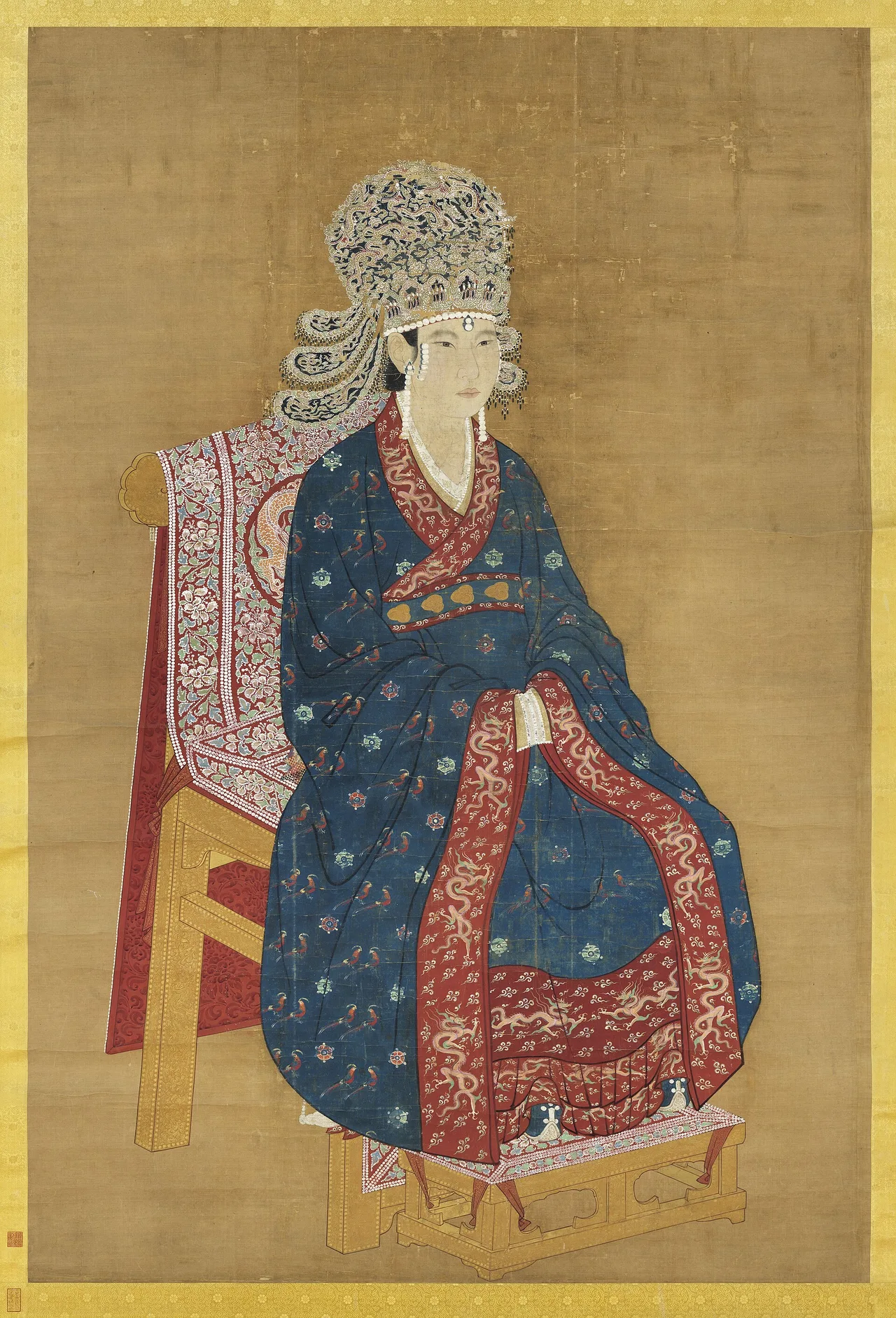
Court records and cabinet diaries from Kaifeng tell a very different truth. The stolen baby and the beggar mother never existed. Empress Liu held power for two decades without a biological son. Her rule rested on legal adoption and bureaucratic consensus, which later storytellers turned into a sensational crime story.
01. The Strata of Memory: From Bureaucratic Records to Street Entertainment
Court rumors change as societies change. The story of Emperor Renzong's birth traces the shift from civil governance to commercial theater.
| Popular Drama / Misconception | Earliest Primary Record | Societal Driver of the Legend |
|---|---|---|
| The Delivery Room Swap: Consort Liu conspires with eunuch Guo Huai to substitute a newborn boy with a skinned wildcat, declaring the infant a demonic omen. | **History of Song, biographies of empresses and consorts**: Zhenzong suffered five infant deaths; when Lady Li gave birth in 1010 CE, Zhenzong ordered Liu E and Consort Yang with the Rank Shufei to raise Zhao Zhen as the legal primary heir. | Urban oral literature from the late Southern Song to the Yuan dynasty: Storytellers, unfamiliar with early Song palace rituals, reimagined high-level lineage adoption through the folk tropes of rival village midwives. |
| The Destitute Birth Mother: Consort Li loses her sight, begs in Chenzhou for twenty years, and halts Bao Zheng's carriage to plead her case. | **Long Draft of the Continuation of the Comprehensive Mirror to Aid in Government, Vol. 111**: Li was steadily promoted to Talented Lady, Gentle Lady, and Consort Li, receiving an independent palace complex and first-rank funeral honors. | *Ming dynasty judicial novels (Baijia Gongan, The Seven Heroes and Five Gallants)*: Authors catered to popular demands for righteous officials punishing corrupt elites, inserting Bao Zheng into palace matters years before his official career began. |
| Liu E's Dynastic Usurpation: Empress Dowager Liu seeks to overthrow the throne and poisons Li, losing her ancestral temple rites after death. | **Sushui Jiwen by Sima Guang**: Liu E refused to be buried in the imperial dragon robe; Renzong opened Li's coffin to find her honored in royal mercury, rewarding the Liu lineage in gratitude. | *Ming and Qing dramas (The Golden Pellet, Striking the Dragon Robe)*: Neo-Confucian moralists weaponized female rule as a cultural taboo, demonizing Liu E to reassert patriarchal succession norms. |
The Historical Core: Lineage Adoption and Bureaucratic Co-Rule
The real events involved careful state planning rather than a secret fight. Emperor Zhenzong planned the adoption with the quiet backing of his senior chancellors.
In 1010 CE (the third year of Dazhong Xiangfu), Zhenzong was forty years old. He had lost several baby sons and needed an heir. During this tense period, Lady Li, an attendant serving Consort Liu, became pregnant by the emperor. Court rules required two things: protecting a baby born to a humble mother, and giving the empire an undisputed heir. Lady Li lacked noble allies to shield a crown prince. Meanwhile, Consort Liu managed the Southern Song inner court and held the emperor's trust, but she had no children.
When Zhao Zhen was born, officials saw no foul play. Zhenzong followed ancient custom, allowing high consorts to raise sons born to lower consorts. He gave the boy to Liu, with help from Consort Yang with the Rank Shufei. In the royal family book, the boy became the legal son of the future empress. Rather than facing exile, Lady Li won steady promotions to Talented Lady, Gentle Lady, and Consort Li. The court kept the boy from knowing his birth mother to keep succession smooth. Lady Li received generous funds and kept imperial favor until her death in 1032 CE.
How Later Storytellers Reshaped the Historical Core
This legal adoption slowly turned into the wildcat myth as public taste shifted over the centuries.
The shift began in the final decades of the Southern Song and grew during the Yuan dynasty. After the Jingkang Incident forced the court south, wartime anxiety fueled wild gossip. Storytellers in city theater halls spoke to common crowds who knew little about palace rules. They reframed formal state decisions into jealous fights between court women.
During the Wanli era of the Ming dynasty, cheap print books pushed the story even further from the facts. Popular crime tales put Bao Zheng into events from the Dazhong Xiangfu and Qianxing eras, long before he took public office. In these books, Consort Li became a blind beggar in an abandoned kiln, while Liu E became an evil killer. By the nineteenth century, plays like Striking the Dragon Robe fixed this fable in popular memory, hiding real institutional history behind a simple revenge play.
02. Defensive Protocols and Legal Reality: Why Infant Swaps Were Structurally Impossible
Old folk tales show eunuchs sneaking dead animals through dark halls, but real court security made such tricks impossible. The birth of an imperial heir involved strict checks across separate offices.
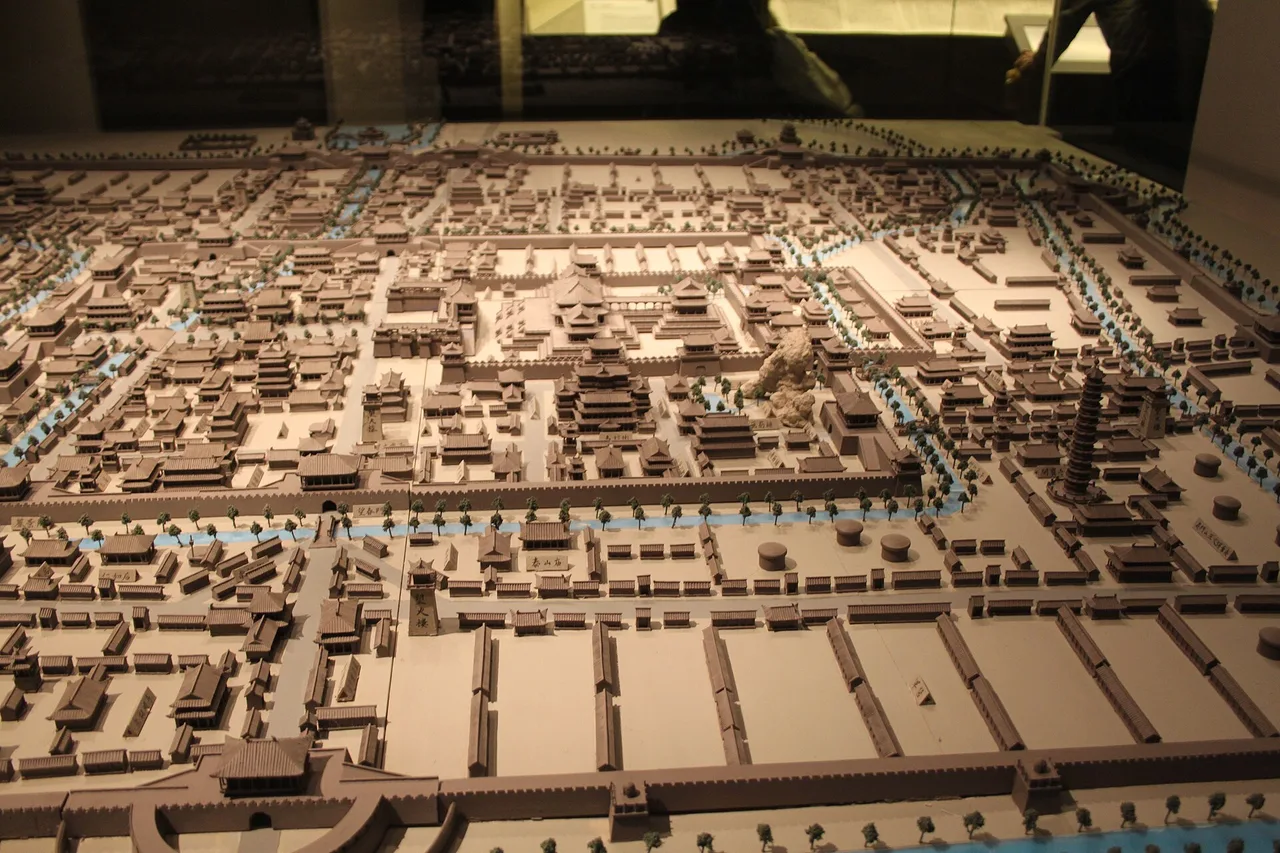
Threefold Verification: Eunuchs, Lineage Scribes, and Female Officials
Court rules and the Collected Statutes of the Song required three groups to watch over an imperial birth:
- Medical care by the Palace Eunuch Service and pharmacy: Two doctors from the Hanlin Medical Office and eunuch monitors stood outside the room. They tracked labor, medicines, and pulse rates, sending hourly notes directly to the emperor.
- Timekeeping by the Directorate of Astronomy and the Imperial Clan Court: Observers kept sundials and water clocks in the yard to record the exact birth hour for the family tree. Scribes and court matrons certified the child's sex for the Secretariat.
- Delivery help by high-ranking female officers: Attendants from the Palace Service, ranked at the sixth grade and above, stood alongside experienced midwives inside the room.
Dozens of officers from different offices watched the event. Swapping a child for an animal would mean bribing doctors, eunuchs, and court ladies, while ministers waited nearby. In an administration built on mutual checks, no one could pull off such a scheme.
Legal Legitimacy: The Bureaucratic Consensus
Liu E had no reason to steal a baby because the law already gave her full rights over the child.
Confucian family law gave principal wives legal motherhood over children born to junior consorts. The Book of Rites set this standard: when the primary branch had no son, a child born to a secondary rank gained full status through the main mother. While Lady Li gave birth to the prince, ministers did not view an inexperienced maid as a suitable tutor for a future sovereign. By contrast, Liu E had studied state craft for years. As Zhenzong grew weak, she read official memorials with care, winning the trust of top ministers.
Ministers saw Liu's adoption of the boy as a wise move that kept the throne safe. The government needed an heir with clear standing. By letting the future empress raise the boy as her own son, the court avoided succession fights. The plan followed ancient law and protected state peace.
03. The Exhumation at Hongfu Monastery: Defusing a Coup
This family secret still created real danger. While the main rulers lived, peace held. But once the dowager died, ambitious relatives could reveal the truth to start a major feud.

Lu Yijian's Intervention and the First-Rank Burial
The crisis began in the first year of the Mingdao era (1032 CE), when Consort Li fell very ill. Liu E had ruled alone for ten years, and Emperor Renzong—now twenty-two—still knew nothing of his real mother.
When Consort Li died, Liu E planned a quiet burial without an open announcement. Chancellor Lu Yijian saw the danger and asked to see the dowager in private.
Volume 111 of the Long Draft of the Continuation of the Comprehensive Mirror to Aid in Government reports their words:
"Does the Chancellor listen to palace gossip?" Liu asked after sending away her staff. "Why worry about the death of an ordinary maid?"
"As chancellor," Lu said, "every state matter is my concern. If Your Majesty does not care about the safety of the Liu house, I will say no more. But if you want to keep your family safe in the future, you must bury Consort Li with the full funeral rites of an imperial consort of the first rank."
Liu understood the warning. Consort Li had given birth to the ruling emperor. After the dowager died, a cheap grave would spark anger, driving the young emperor to crush the Liu clan.
Liu accepted the advice. She told the Palace Eunuch Service to dress Consort Li in first-rank robes and place her in a coffin filled with mercury. She rested at Hongfu Monastery, a choice that saved many lives later.
The Exhumation and Peaceful Transition
In 1033 CE, Empress Dowager Liu passed away after twenty years of wise rule. On her deathbed, she pointed to her dragon robe, asking her women to put normal empress clothes on her so she would not break ritual law after death.
Her death brought quick turmoil. Zhao Yuanyan, known as the Eighth Prince and uncle to the emperor, ran to the palace and said: "Your Majesty was born to Consort Li. Empress Dowager Liu poisoned her and hid her body without an honorable grave."
Grief-stricken and angry, Renzong left the court hall. He sent guards to surround the Liu homes and cut their ties to the city. Accompanied by soldiers and scribes, the young ruler went to Hongfu Monastery and ordered his men to open Consort Li's coffin.
The state stood on the brink of violence. If the corpse showed poison, a harsh purge of the Liu family would follow, dragging down top ministers as well.
When workers lifted the heavy lid, the crowd went quiet. Sealed in mercury, Consort Li's face looked fresh and calm, with no dark signs of poison. She wore the rich ceremonial robes of an imperial consort of the first rank, complete with pearls, a phoenix crown, jade belts, and gold treasures.
The sight wiped away all fear of murder. Renzong wept before the coffin, saying: "How can one believe careless talk? The Grand Mother treated Consort Li with honor and never broke virtue."
Renzong ordered the troops away from the Liu estates. He gave his birth mother the posthumous title of Empress Li and confirmed lands and titles for Liu E's relatives throughout his reign. This careful balance lasted across the Yuanming and later eras. A grave succession risk ended in peace thanks to Lu Yijian's warning and Liu E's foresight.
04. Conclusion: A Bureaucratic Precedent
Similar succession crises in medieval Europe often ended in bloodshed. In Tudor England, Henry VIII broke from Rome and executed wives to gain a male heir, causing decades of civil strife. In Byzantium, dowager regencies regularly brought military mutinies, blinding, and factional purges.
The Northern Song chose a calmer path. Faced with succession problems, Kaifeng avoided civil war and purges. Leaders used family law to fix the heir's status, kept delivery rooms honest through mutual checks, and relied on trust between ministers and dowagers to ensure a peaceful transfer of power.
Popular plays kept the silly wildcat tale alive because dramatic crimes thrill crowds far more than quiet state memos. Yet behind the stage myth stands the real Empress Liu (Empress Zhangxian Mingsu)—a ruler who governed for twenty years without a son, kept the realm safe, and proved the deep institutional strength of the Song state.
Primary Sources & Historical Bibliography
- Toqto'a et al., eds. History of Song, Vol. 242, biographies of empresses and consorts: Empress Zhangxian Mingsu Liu, Empress Zhangyi Li. Beijing: Zhonghua Book Company, 1977.
- Li Tao. Long Draft of the Continuation of the Comprehensive Mirror to Aid in Government, Vol. 111, "Mingdao Reign, Years 1–2." Beijing: Zhonghua Book Company, 2004.
- Sima Guang. Sushui Jiwen, Vol. 5. Beijing: Zhonghua Book Company, 1989.
- Xu Song, ed. Collected Statutes of the Song, "Empresses and Consorts I." Beijing: Zhonghua Book Company, 1957.
- Chaffee, John W. The Empress Dowager Liu (969–1033): A Study of Dynastic Politics in Northern Song China. Harvard University Asia Center, 2001.