TL;DR · Core Takeaways
- The phrase was born in 1368 CE: Neither Qin Shi Huang, Emperor Wu of Han, nor Emperor Taizong of Tang ever heard the words "mandated by Heaven." Emperor Taizu of Ming, Zhu Yuanzhang, coined this political formula sixteen centuries after the founding of the Qin Empire.
- A six-century grammatical misreading: Ming administrative syntax followed a six-plus-two formula: "The Emperor, who has received Heaven's mandate and embodies its cyclical virtue / proclaims." Popular storytelling severed this subject into an artificial four-and-four cadence.
- An administrative paper trail of sovereign power: From institutional reviews by the Chancellery in the Tang and Song to direct steppe invocations under the Yuan, every alteration in these opening lines charted an imperial drive toward unfettered autocracy.
Spatiotemporal Coordinates
- East Asian Timeline: 221 BCE (Qin Shi Huang establishes the statutory edict system) — 1368 CE (Ming Dynasty establishes the formula of the Emperor mandated by Heaven) — 1912 CE (Abdication of the Qing emperor)
- Western & Mediterranean Timeline: 27 BCE (Augustus establishes Principate imperial decrees) — 8th century CE (Carolingian Empire formalizes the "Dei Gratia" formula) — 14th century CE (Late medieval consolidation of divine-right absolutism)
Start an East Asian campaign in grand strategy games like Civilization or Europa Universalis. Open an imperial decree. The screen shows an ornate scroll with bright gold text: "By Heaven's decree, the Emperor proclaims." TV shows and gift shops make people believe this line is ancient. Many people think every royal order since 221 BCE started with these exact words. That was when King Ying Zheng took the name Qin Shi Huang.
Old records tell a very different story. Han Dynasty wood slips from desert forts show simple orders. Tang paper fragments from the Dunhuang caves show strict office notes. Song Dynasty law books show clear rules. Qin Shi Huang never opened orders with lines about Heaven. Emperor Taizong of Tang sent decrees to state offices first. He did not praise himself at the top of the page. If Zhu Yuanzhang heard modern actors break his title in half, he would tell the Hanlin Academy to fix it right away.
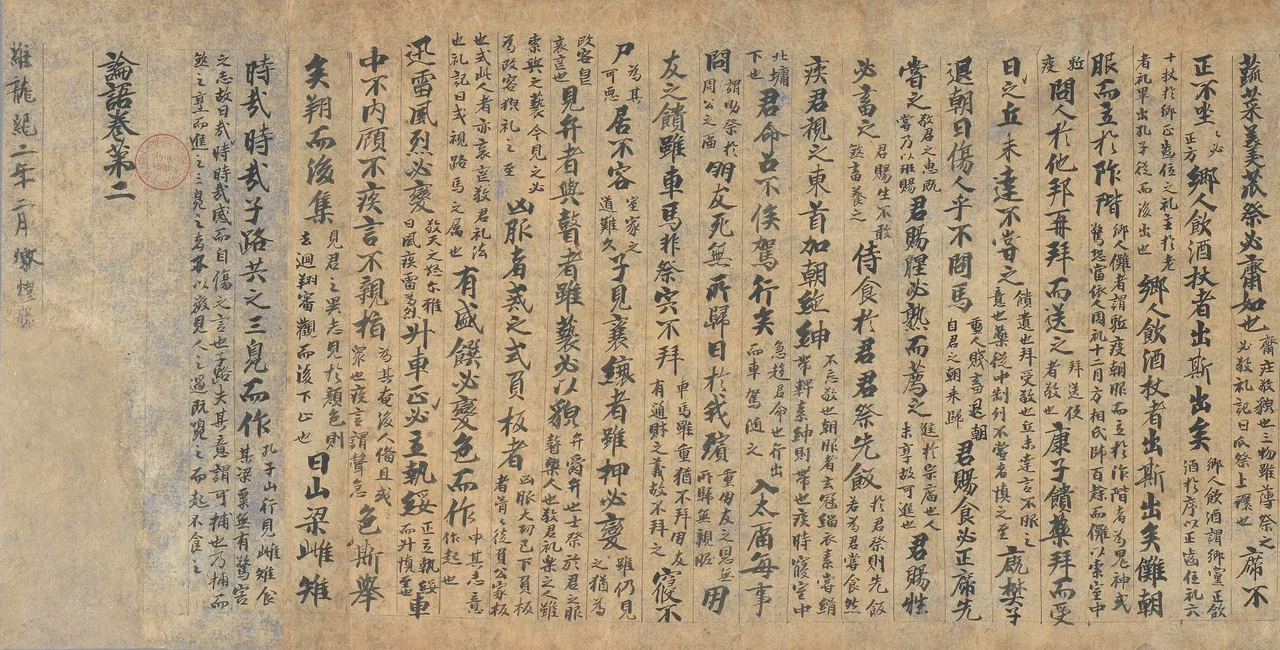
01. Myth vs. Primary Chronicle: Tracing the Historiographical Shift
People often think imperial decrees never changed. Yet real history shows big shifts across dynasties.
| Myth / Popular Conception | Primary Chronicle & Archaeology | How the Myth Evolved |
|---|---|---|
| The Universal Formula: Every Chinese emperor since the Qin and Han opened major decrees, investitures, and general amnesties with the eight-syllable "By Heaven's mandate" opening. | Juyan Han Slips, Tang-Song Decree Compilations: Early decrees favored direct formulas like "The Emperor ordains" or "Ordained decree to the Censor-in-Chief." Tang major edicts opened by addressing the Chancellery. The specific formula of the Emperor mandated by Heaven appeared in 1368 CE. | Late Ming & Qing Storytelling: Popular chapbooks such as Water Margin applied contemporary Ming bureaucratic jargon retroactively to the Northern Song and Tang dynasties to avoid archival research. |
| The Balanced Four-by-Four Cadence: The opening functions as two separate, parallel four-syllable clauses: "Carrying Heaven's mandate, the Emperor proclaims." | Ming Astronomical Calendars and Founding Decrees: Zhu Yuanzhang and the Hanlin Academy established an unbroken six-syllable royal title followed by a two-syllable transitive verb: "The Emperor, who has received Heaven's mandate... / proclaims." | Mid-Qing Opera Staging: Theatrical performers relied on balanced four-beat rhythmic units to catch their breath and synchronize with stage percussion. The six-syllable compound title proved awkward for singing meters. |
| Always Golden Brocade: Decrees were all multi-meter-long, hand-embroidered golden scrolls read aloud exclusively by palace eunuchs. | First Historical Archives of China: Daily administrative traffic was written on ordinary mulberry or Korean paper, local copies were hand-transcribed sheets, and brocade was reserved for elite aristocratic investitures. | Late Twentieth-Century Film Sets: Prop departments uniformized all royal documents as gold silk scrolls to amplify screen prestige and satisfy audiences expecting lavish imperial drama. |
02. Administrative Trajectories from Antiquity to the Steppe
To understand this opening line, we must trace how an emperor's will became law. Each royal house relied on its own distinct paperwork route.
The Bureaucratic Reality: Direct Commands, Institutional Vetoes, and Steppe Vernaculars
During the Qin and Han eras, the court kept official orders short and plain. In the Records of the Grand Historian, within the "Basic Annals of Qin Shi Huang," Sima Qian wrote down new rules for royal words. Short orders were called Zhi. Public decrees were called Zhao. Wood slips found in the dry sands of Juyan and Dunhuang show how rulers wrote to generals or to the Vice Censor-in-Chief. They skipped religious words. Instead, they began with simple phrases:
> "The Emperor ordains..." or "Ordained decree to the Censor-in-Chief:..."
These lines kept the commandery-county system running smoothly. They gave direct orders instead of long speeches about Heaven.
During the Northern and Southern Dynasties and into the Tang, authority shifted into the three-department administrative structure. Decrees could not come solely from the mouth of the monarch. The Secretariat first drafted each text. Then it went directly to the Chancellery for strict review. Court officials like the Supervising Secretary and the Gentleman Attendant at the Palace Gate had the power to reject bad orders. If an imperial instruction broke state law, the Chancellery sealed the file and sent it back to the throne.
Because of this process, major state edicts recorded in the Treatise on Officials across the New History of the Tang did not open with the word "Emperor." Instead, the top line stated:
> "Chancellery:..."
The first volume of the Great Song Collection of Imperial Decrees confirms this format. State proclamations issued during the Northern Song carried the Chancellery marker right at the top of the paper. This mark proved that the document passed formal review. The sovereign's personal title appeared further down the page. This practice placed regular law above raw monarchical power.
Tang-Song Statutory Routing Flow:
Emperor's Will ──> Secretariat (Drafts Text) ──> Chancellery (Audits/Vetoes) ──> Department of State Affairs (Executes)
                                                     │
                                                     └──> Edict Headed by "Chancellery:" as Proof of Clearance
When the Mongol empire founded the Yuan Dynasty in the thirteenth century, steppe customs reshaped court forms. The court used simple vernacular texts that matched Mongolian speech word for word. Stone inscriptions across North China preserve this direct style:
> "By the power of Eternal Heaven, by the protection of the great fortune, the imperial decree of the Emperor:..."
This line placed Tengri, the sky god, next to the dynastic fortune of Genghis Khan. Decrees closed with clear warnings to any local official who hesitated to obey: "If anyone transgresses, how can they not be terrified?" Classical literary style gave way to the strong voice of a conqueror claiming divine favor.
03. The Ming Synthesis and the Architecture of Absolute Rule
A major turning point came in 1368 CE. Zhu Yuanzhang drove the Yuan court north to found Ming Dynasty. He needed to prove his right to rule, and he wanted all state power in his own hands.
Sovereign Inventions and Grammatical Distortions
Rising from poverty, the founding emperor built his authority on classical ideas of Heaven. He built his main audience hall in the Southern Capital of Nanjing and called it the Hall of Supreme Heaven. He carved his jade seal to read "Treasured Seal of Heaven's Mandate." Then he fused these ideas into an official royal title: "The Emperor, who has received Heaven's mandate and embodies its cyclical virtue."
Court ceremonial codes and imperial files show that this opening formed a strict six-plus-two phrase:
> "The Emperor, who has received Heaven's mandate and embodies its cyclical virtue / proclaims" (or "ordains," or "commands")
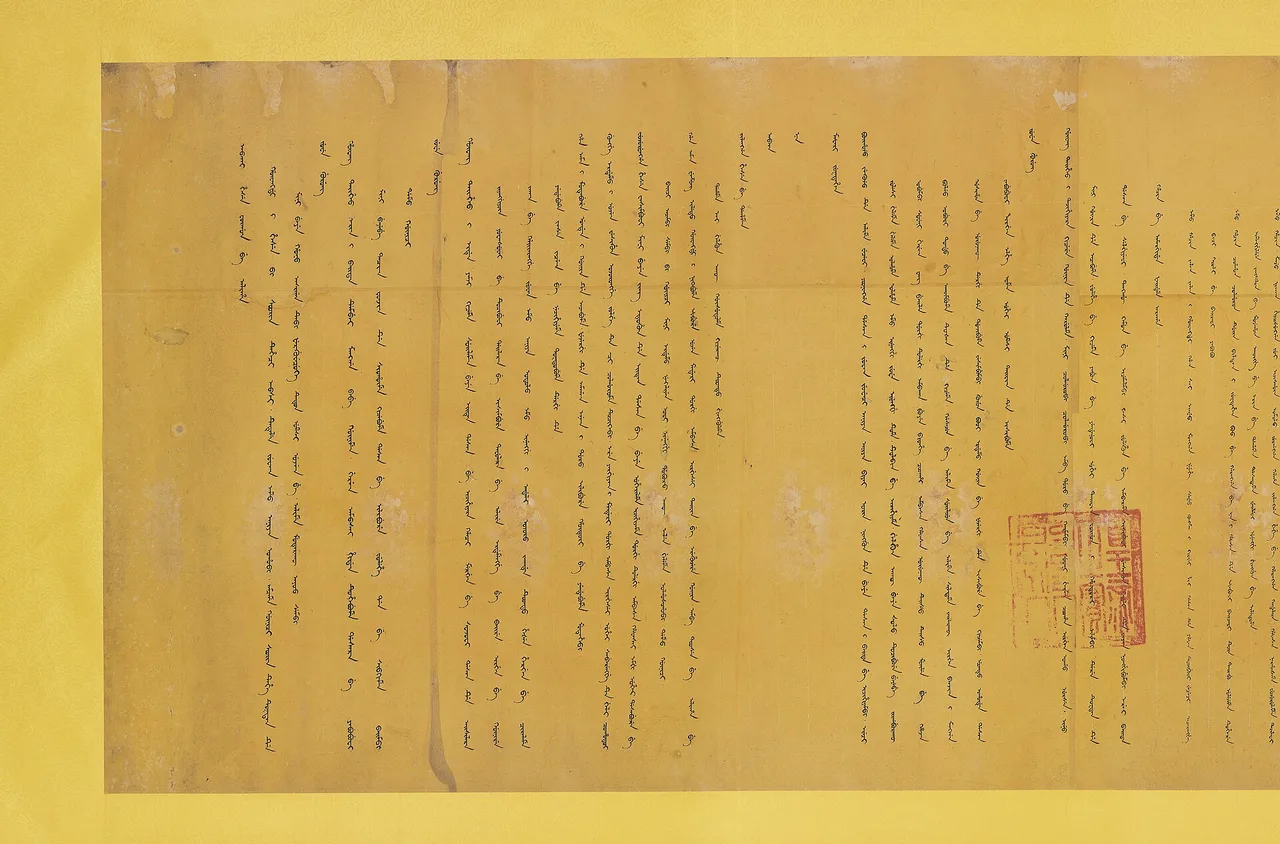
In this sentence, the six-word phrase serves as a long subject describing a ruler who carries out cosmic law. The verb changed based on the importance of the order:
- *"Proclaims" (Zhao yue)*: Used for public declarations sent across the realm, such as new accessions, royal weddings, calendar reforms, and general amnesties.
- *"Ordains" (Zhi yue)*: Used for noble titles, state posts, and grants of hereditary succession.
- *"Commands" (Chi yue)*: Used for routine instructions and moral warnings sent to serving bureaucrats.
In 1380 CE, the Case of Hu Weiyong shook the imperial court. Zhu Yuanzhang executed his Grand Councilor, abolished the Secretariat, ended the post of chief minister, and removed the review powers of the Chancellery. The six ministries now reported straight to the throne. This shift changed the layout of court documents forever. The old heading naming the Chancellery vanished. The monarch stood alone at the top of the page, issuing orders without outside review.
This phrasing mirrors monarchical formulas used across Europe. Royal charters in medieval Europe often opened with the Latin phrase "Dei Gratia Rex" ("By the Grace of God, King"). Kings in France and England appealed to divine right as they took power from local lords and parliaments. The Ming court used its opening line with the exact same goal.
Why did popular stories adopt a balanced four-by-four cadence?
The answer comes from late imperial theater. As cities grew during the late Ming and Qing eras, acting troupes staged epics like Romance of the Three Kingdoms. On stage, actors matched their lines to the beat of drums. Dividing the line into two neat parts of four beats gave actors time to catch their breath. They could easily match the rhythms of clappers and gongs. Over time, stage verse replaced real court grammar, leaving modern culture with a lasting historical myth.
04. Bureaucracy as a Mirror of Sovereign Power
Across two thousand years, the opening lines of imperial decrees show the steady rise of personal autocracy:
The plain words on Han Dynasty slips show the practical focus of an early empire. The heading used in the Tang and Song shows an orderly system where scholar-officials checked royal power. The vernacular decrees of the Yuan Dynasty show the raw command of nomadic conquerors. Zhu Yuanzhang's Ming formula shows an absolute monarch sweeping away checks and balances to rule alone under Heaven.
Looking past modern television scripts back to original documents restores grammar that was lost to centuries of storytelling. It also reveals how imperial power truly evolved.
Primary Sources & Historical Bibliography
- Dynastic Histories & Chronicles:
- Sima Qian, Records of the Grand Historian, Vol. 6, "Basic Annals of Qin Shi Huang" (Zhonghua Book Company edition): Details the foundational statute naming imperial orders and proclamations.
- Ouyang Xiu and Song Qi, New History of the Tang, Vol. 46, Treatise on Officials I (Zhonghua Book Company edition): Documents the statutory review workflows between the Secretariat and the Chancellery.
- Zhang Tingyu et al., History of the Ming, Vol. 72, Treatise on Officials I (Zhonghua Book Company edition): Outlines the institutional collapse of the Chancellery and Secretariat in the aftermath of the Case of Hu Weiyong.
- Administrative Compilations:
- Great Song Collection of Imperial Decrees (Song official compilation, Zhonghua Book Company facsimile): Serves as the primary source confirming the use of the Chancellery heading in general amnesties.
- Shen Shixing et al., Collected Statutes of the Ming Dynasty, Vol. 79, "Official Document Formats": Outlines the formal statutory headings used for imperial announcements and commissions.
- Monographs & Modern Studies:
- Luo Zhenyu, Textual Research on Han Slips from Juyan (Shanghai Bookstore Publishing House): Surveys surviving Han Dynasty frontier wood slips and early imperial instructions.
- Cai Meibiao, Collected Vernacular Stelae of the Yuan Dynasty (Science Press, 1955): Transcribes Mongolian-Chinese bilingual stele decrees using the Eternal Heaven opening formula.