Age 1 | Born on the twenty-second day of the first lunar month in Jieqiao Village, Fenyi County, Yuanzhou Prefecture, Jiangxi
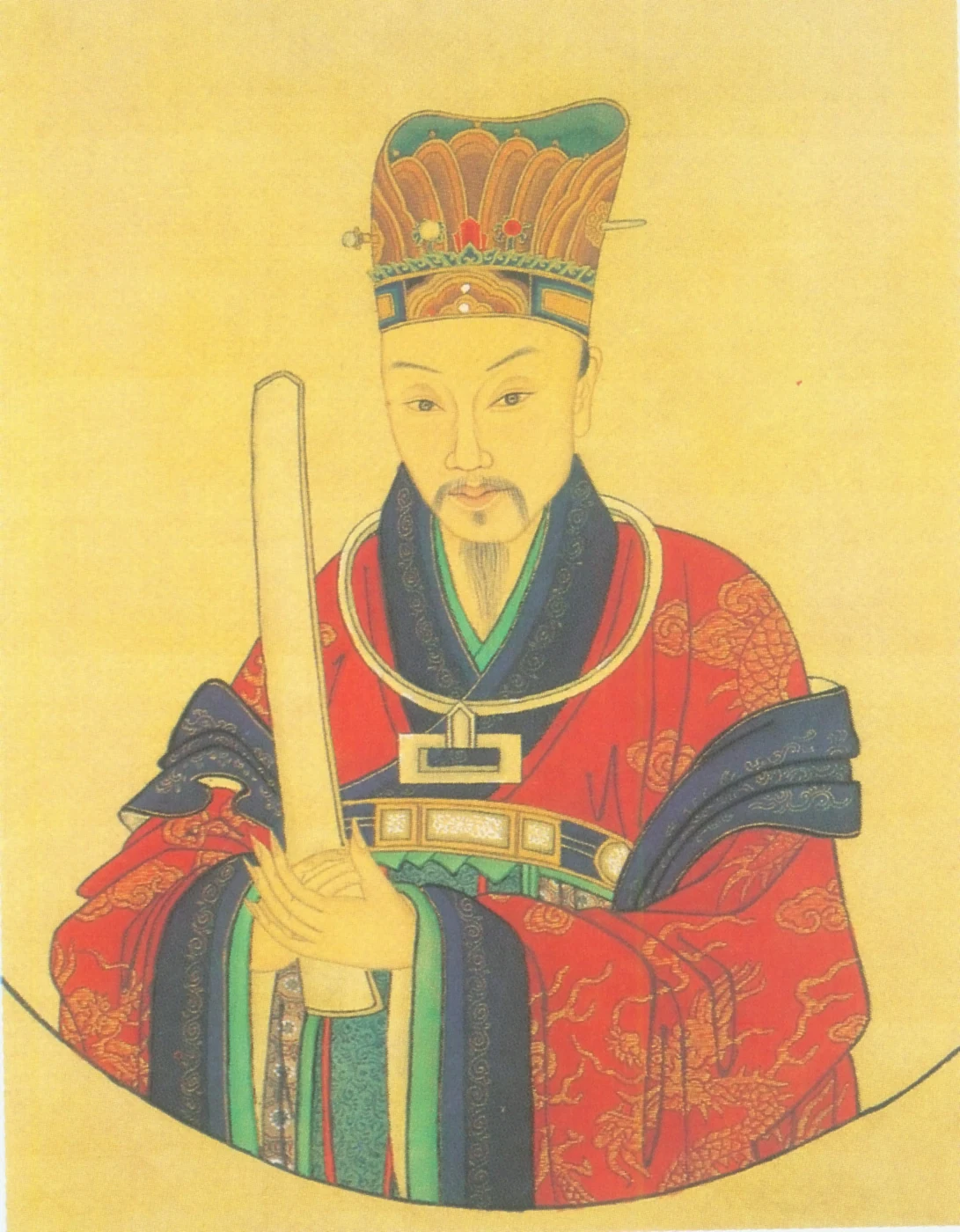
1480 CE–1567 CE
Senior Grand Secretary of the Mingpowerful minister
Yan Song
严嵩
Yan Song was the dominant senior minister of much of the Jiajing reign. Traditional historical narratives depict him as holding power for roughly twenty years, using imperial favor to control appointments, accepting corruption, attacking political opponents, and contributing to the deaths of outspoken officials. He became one of the most famous negative examples of a powerful minister in Ming historiography, although modern…
1480 CE–1567 CEMing Dynasty
PROFILE
Yan Song was the dominant senior minister of much of the Jiajing reign. Traditional historical narratives depict him as holding power for roughly twenty years, using imperial favor to control appointments, accepting corruption, attacking political opponents, and contributing to the deaths of outspoken officials. He became one of the most famous negative examples of a powerful minister in Ming historiography, although modern scholarship has also questioned parts of that inherited image and emphasized the political environment of the Jiajing court.
- Other Names
- Weizhong; Fenyi
- Courtesy Name
- Weizhong
- Art Name
- Jiexi
- Period
- Ming
- Date of Birth
- March 3 1480
- Date of Death
- May 29 1567
- Dynasty/Regime
- Ming Dynasty
- Identity
- Senior Grand Secretary of the Ming; powerful minister
- Ethnicity
- Not recorded in historical sources
- Native Place
- Jieqiao Village, Fenyi County, Yuanzhou Prefecture (present-day Fenyi County, Jiangxi)
- Place of Birth
- Not recorded in historical sources
- Place of Death
- Not recorded in historical sources
- Highest Office
- See Biography and Major Activities
- Major Achievements
- Dominated politics for roughly two decades under the Jiajing Emperor; traditionally condemned for corruption, manipulation of office, and persecution of upright officials and remembered as an archetypal treacherous minister of the Ming.
LIFE TIMELINE
Age 19 | Placed sixteenth in the Jiangxi provincial examination of the wuxu year and became a provincial graduate
Age 26 | Passed the yichou metropolitan examination, ranking second in the second class; selected as a Hanlin bachelor and appointed compiler
Age 20 | Withdrew from office after his mother's death and a serious illness; returned home and spent eight years studying at Qianshan
Age 33 | Invited by Yuanzhou Prefect Yao Ting to serve as chief compiler of the Zhengde Gazetteer of Yuanzhou Prefecture
Age 37 | Recommended by Yang Tinghe and returned north to office in Shuntian
Age 42 | Promoted to Hanlin Reader at Nanjing and temporarily placed in charge of the academy
Age 46 | Promoted to Chancellor of the Directorate of Education
Age 49 | Transferred to Vice Minister of Rites at Nanjing and ordered to report at Xianling; after returning, emphasized auspicious signs and won the emperor's favor
Age 53 | Promoted to Minister of Rites at Nanjing; two years later transferred to Minister of Personnel at Nanjing
Age 57 | Came to the capital for the imperial birthday celebrations and was retained as Minister of Rites with the concurrent title of Hanlin Academician
Age 59 | During the dispute over admitting the Jiajing Emperor's father to the imperial ancestral temple with a temple designation, abandoned his earlier position and fully accommodated the emperor's wishes, drawing up detailed rites
Age 63 | Appointed Grand Secretary of the Wuying Hall and entered the Grand Secretariat while retaining responsibility for the Ministry of Rites; Xia Yan was removed from office in the same year
Age 65 | Tatars entered the Ordos; Shaanxi commander Zeng Xian memorialized in favor of recovering the region, with Xia Yan's support
Age 66 | Emperor Shizong again employed Xia Yan; Yan Song remained outwardly deferential but inwardly resentful
Age 69 | Zeng Xian was killed in the third month and Xia Yan executed in the tenth; Yan Song became Senior Grand Secretary
Age 73 | Conflict with Qiu Luan intensified and the emperor temporarily cooled toward Yan; after Qiu died, Yan consolidated his position again
Age 74 | Shen Lian memorialized ten accusations against Yan Song and was exiled to Bao'an; Yang Jisheng submitted the Memorial Requesting the Execution of the Treacherous Minister, listing ten crimes and five forms of treachery, and was imprisoned
Age 76 | Yang Jisheng was executed; Shen Lian was also framed and killed
Age 82 | His wife Lady Ouyang died; Yan Shifan entered mourning and could no longer assist his father in government, and Yan Song increasingly struggled to answer imperial directives
Age 83 | Daoist Lan Daoxing used planchette divination to declare that “a treacherous minister is memorializing today”; the emperor grew increasingly alienated from Yan Song and his son; Yan was dismissed that year
Age 86 | Yan Shifan was executed; Yan Song was stripped of official status, his property confiscated, and he survived by relying on a hut near family graves
Age 88 | Died of illness in the graveyard shelter
BIOGRAPHY
Biography
Family Background and Early Life
Yan Song was born on the twenty-second day of the first lunar month of 1480, the sixteenth year of Chenghua, in Jieqiao Village, Fenyi County, Yuanzhou Prefecture, Jiangxi. His family had once been locally prominent but had declined by the time of his birth, and the household reportedly depended at times on support from his mother's relatives. His father Yan Huai repeatedly failed in the examinations and placed his hopes for official success in his son, educating him carefully. Yan was described as bright and quick to learn. At five he began study in the Yan ancestral hall; at eight his ability attracted the attention of the Fenyi magistrate Mo Lizhi, who arranged for him to study without charge in the county school. A provincial educational commissioner later examined him and admitted him as a stipend student. By ten he had passed the county examination and was regarded locally as a child prodigy.
Stories also describe his skill at antithetical couplets. In one anecdote a local official improvised a line on distant passes, homesickness, and fine rain, and Yan answered with a matching line about the imperial palace, the emperor's long life, and the vast heavens. In 1498 he placed sixteenth in the Jiangxi provincial examination and became a provincial graduate at nineteen.
Entry into Office and Withdrawal
In 1505 Yan passed the metropolitan examination, ranking second in the second class, with the Book of Songs as his specialized classic. He was selected as a Hanlin bachelor and then appointed compiler. Senior literati such as Li Dongyang were said to admire his talent. Soon afterward his mother died and Yan himself became seriously ill, forcing him to leave office and return home.
The eight years he spent out of office coincided with the period in which the eunuch Liu Jin dominated government. Court politics were dangerous, and Yan instead studied at Qianshan, concentrated on poetry and prose, associated with literary men, and gradually built a reputation. In 1512, when Yao Ting opened a project to compile a gazetteer of Yuanzhou, he invited Yan to be chief compiler. When Xu Lian succeeded Yao as prefect the next year, he immediately urged Yan to continue. The gazetteer was completed in 1514 and later became known as the “Jiaxu Gazetteer.”
Return to Office and Promotion
By 1516 Liu Jin and his faction had been eliminated. On Yang Tinghe's recommendation, Yan returned north and resumed office. During the next decade and more he served in the Hanlin Academy at Beijing and Nanjing, including as Hanlin Lecturer and acting head of the Nanjing academy. In 1525 he was promoted to Chancellor of the Directorate of Education. In 1528 he became Vice Minister of Rites at Nanjing and was sent to perform ritual reporting at Xianling. On his return he enthusiastically reported auspicious signs observed along the way, pleasing Emperor Shizong. He then advanced through Vice Minister of Personnel, Minister of Rites at Nanjing, and Minister of Personnel at Nanjing.
In 1536 Yan came to the capital for the imperial birthday celebration. The court was then discussing revisions to the History of Song, and he was retained in Beijing as Minister of Rites with the title of Hanlin Academician to direct the work. Because the Jiajing Emperor placed extraordinary importance on ritual controversies, the Ministry of Rites enjoyed exceptional political weight and often served as a route into the Grand Secretariat. Yan's direct contact with the emperor increased. He later recalled that the emperor sometimes summoned ministers two or three times in a day and occasionally kept them until late at night. Living about four li west of the city, Yan sometimes rode rapidly to court alone because a carriage and attendants were too slow.
Winning Imperial Favor and Turning against Xia Yan
A major turning point in Yan's rise was his cultivation of Xia Yan, another Jiangxi official who already enjoyed the emperor's confidence. Accounts say Yan repeatedly tried to ingratiate himself with Xia. In one story Xia declined an invitation to dinner, whereupon Yan went to his gate, lifted his robe, and knelt outside until Xia relented and attended. Xia then supported Yan's advancement.
Xia, however, was proud and increasingly opposed the Jiajing Emperor's immersion in Daoist ritual, while Yan learned to accommodate imperial preferences. When the emperor once gave agarwood crowns decorated with leaf motifs to Xia, Yan, and other ministers, Xia did not wear his, whereas Yan appeared in his repeatedly and even protected it with gauze, a gesture that pleased the emperor. In 1538, during the dispute over whether the emperor's father should receive a temple designation and be admitted to the imperial ancestral temple, Yan initially joined other ministers in opposition. After the emperor angrily wrote the Questions on the Mingtang to challenge them, Yan reversed himself, produced detailed ritual arrangements, and aligned fully with the emperor. This episode, a late stage of the Great Rites Controversy, strengthened imperial favor toward him.
In 1542 Xia Yan was dismissed and Yan Song was made Grand Protector, Grand Guardian of the Heir Apparent, Minister of Rites, and Grand Secretary of the Wuying Hall, entering the Grand Secretariat while retaining ritual duties. Once established there, Yan turned against Xia. In 1544 Tatar forces entered the Ordos. Shaanxi commander Zeng Xian proposed recovering the region and building frontier defenses, a plan backed by Xia Yan and initially favored by the emperor. Yan bribed or cultivated attendants close to the throne, accused Zeng of recklessly provoking frontier conflict, and encouraged Qiu Luan to allege that Zeng had concealed defeats, embezzled military funds, and bribed Xia. Yan also suggested to the emperor that Zeng and Xia had ulterior motives. In 1548 Zeng was executed and his wife exiled; Xia was imprisoned and, after further accusations, executed in the tenth month. His followers were demoted or punished. Yan returned as Senior Grand Secretary and thereafter dominated the court.
Domination of Government
As Senior Grand Secretary, Yan continued to serve Emperor Shizong with extreme caution. The source depicts him as adapting himself to the ruler's temperament—yielding before the emperor's stubbornness, careful before his arrogance, and outwardly simple and sincere before his suspicion. The emperor awarded him a silver seal reading “Loyal, Diligent, Quick, and Accomplished.” Yan's central method of survival was to tell the emperor what he wished to hear and carry out imperial desires even when they were, in the source's judgment, unreasonable.
The Jiajing Emperor devoted himself to Daoist sacrifices and the pursuit of longevity. Yan strongly supported these activities regardless of their demands on labor and resources. Ritual palaces and restricted halls were constructed simultaneously at many sites, employing tens of thousands of workers. The source reports annual costs of two to three million taels at a time when annual receipts of the capital treasury were only about two million. Daoist rituals required ornate “blue-word” prayers, and Yan's ability to compose them became a major source of favor. During his premiership, the source says, no one else could regularly produce such texts to the emperor's satisfaction. He devoted enormous effort to them, sometimes neglecting sleep and food. Even during the Gengxu Incident, when Altan Khan's forces surrounded Beijing and raided the suburbs, Yan was accused of continuing to concentrate on these compositions. When Zhao Zhenji came to present a defense proposal before carrying an imperial message to the troops, Yan reportedly refused to meet him because he was writing a prayer text, leading critics to mock him as the “Blue-Word Grand Councilor.”
In old age Yan elevated his son Yan Shifan to assist him. Yan Shifan became Vice Minister of Works and cultivated eunuchs close to the emperor, who reported details of imperial daily life to father and son. Officials called them the “great grand councilor” and the “little grand councilor,” and one saying held that the emperor could not do without Yan Song and Yan Song could not do without his son. The source describes their household as immensely wealthy and their political influence as a source of widespread resentment.
Traditional accounts summarize the period with the phrase that “government was accomplished through bribes, and offices were awarded through payments.” Posts were allegedly sold at different prices according to rank and desirability. The Chinese source gives specific examples of sums paid for various civil and military appointments, presenting the market in office as systematic and extensive.
Suppression of Opponents
After the removal of Xia Yan and later Qiu Luan, Yan faced few rivals at court. Aware of the emperor's suspicion of ministers, he retaliated harshly against officials who impeached him. The deaths of Shen Lian and Yang Jisheng became the best-known examples.
In 1553 Shen Lian submitted a memorial listing ten accusations against Yan, including selling office, using favors to build personal networks, jealousy of able men, covert control over remonstrating officials, and abuse of imperial favor. Yan answered that Shen had committed errors while serving as a magistrate and was only seeking a light punishment and a reputation for upright speech. The emperor accepted this explanation and exiled Shen beyond the passes to Bao'an. Shen continued to denounce Yan and his son from the frontier. Yan Shifan then arranged with the newly appointed investigating censor Lu Kai and the Xuanda commander Yang Shun to eliminate him. When White Lotus adherents led by Yan Hao were arrested and many names were produced under interrogation, Shen's name was added to the list. After the Ministry of War reviewed the case, Shen was executed.
The same year Yang Jisheng memorialized ten crimes and five forms of treachery attributed to Yan. He connected frontier insecurity and ominous celestial signs with Yan's domination of government and ended by asking the emperor either to consult two imperial princes or question the grand secretaries, then punish Yan severely or force him to retire. This violated important political taboos. The Jiajing Emperor did not want the princes involved in government, and feudatory princes were not supposed to intervene in court affairs. Yan seized on the reference to them and secretly portrayed it as an offense. The emperor became furious and sent Yang to the Embroidered Uniform Guard prison for interrogation. To secure his death, Yan later attached Yang's name to a group of capital cases that included Zhang Jing and Li Tianchong. The emperor approved the submission and Yang was executed.
Loss of Power and Final Years
In 1561 Yan's wife Lady Ouyang died. Yan Shifan entered mourning and could not participate in politics, and the elderly Yan Song increasingly had difficulty understanding and drafting responses to imperial directives without assistance. He had already caused the emperor repeated irritation. When Minister of Personnel Wu Peng retired, Yan influenced the selection process to promote his relative Ouyang Bijin. The emperor disliked Ouyang and angrily threw down the list. Yan privately explained that the man was a very close relative and that he wished to see him hold authority as comfort in his old age. The emperor reluctantly agreed but forced Ouyang to retire only months later, a serious warning to Yan.
In 1562 the Shandong Daoist Lan Daoxing became known in the capital for planchette divination. Xu Jie introduced him to the emperor. On one occasion Lan's divination declared that “a treacherous minister is memorializing today” just as Yan passed by. By then the emperor had grown tired of Yan and his son, and the incident hastened their fall. Yan was dismissed that year.
In 1565 Yan Shifan, already impeached and exiled, faced a new prosecution. Minister of Justice Huang Guangsheng and the head of the Court of Judicial Review Zhang Shouzhi wished to charge him with causing the deaths of Yang Jisheng and Shen Lian. Xu Jie deleted this point, fearing that it might make the emperor think the officials were blaming him. Instead, the prosecution accused Yan Shifan of connections with the coastal leader Wang Zhi and with Mongols and of plotting rebellion. According to the source, Yan Shifan understood that this allegation meant certain death. He and Luo Longwen were executed in the marketplace. Subsequent confiscations in Beijing and Jiangxi yielded large quantities of gold, silver, jade, jewelry, houses, and land; the Chinese source provides extensive itemized figures and treats the inventory as evidence of extraordinary enrichment.
Yan Song himself was stripped of official status and returned home. Without a residence, he survived near family graves and died there two years later, in 1567, the first year of Longqing, at the age of eighty-eight.
Yan Song was a native of Jieqiao village in Fenyi county, Yuanzhou prefecture, Jiangxi, born on the twenty-second day of the first month of 1480. His father, Yan Huai, having failed repeatedly in the examinations and set on power, placed all his hopes in his son and trained him carefully. Yan Song began his studies in the clan temple at five, entered the county school at nine, passed the county examination at ten and placed sixteenth in the Jiangxi provincial examination at nineteen, finally fulfilling his father's wish at twenty-five: in 1505 he passed the metropolitan examination in the second class, second place, on the Book of Songs, was chosen as a bachelor of the Hanlin and afterward appointed a compiler.
He then fell seriously ill and was forced to resign and return home; the ten years of his retirement coincided with the domination of the eunuch Liu Jin, when many officials fell to his attacks, so that Yan Song's withdrawal spared him that storm. At home the prefect of Yuanzhou, Yao Ting, opened an office to compile a gazetteer and asked Yan Song to be chief editor; Yao Ting left soon after for other business, and his successor Xu Lian at once wrote asking Yan Song to continue the work. In 1514 Yan Song served as chief editor and the book, the Yuanzhou gazetteer of the Zhengde era, was completed, known as the jiaxu gazetteer for that year. After Liu Jin and his faction were destroyed he went north and resumed office.
Yan Song thereafter held high posts, becoming minister of rites and grand secretary of the Wuying Hall under Jiajing and entering the cabinet in 1542, where he served long as senior grand secretary and with his son Yan Shifan dominated the government for nearly twenty years. He drove out rivals at court, and Xia Yan, Yang Jisheng and Shen Lian all suffered through him, Yang Jisheng, who impeached him on ten counts, being imprisoned and executed in an affair long remembered. In 1562 Xu Jie and others, using the words of the Daoist Lan Daoxing and the censors' impeachment, brought about his dismissal; in 1565 Yan Shifan was executed for treason, Yan Song was reduced to commoner status and his property confiscated. He spent his last years in a cemetery hut, living by begging, and died in 1567 at eighty-seven. His life is closely bound up with the politics of the Jiajing reign, and later discussions of Ming political corruption generally take him and his son as the type; he left the Qianshantang collection.
Yan Song's position under Jiajing was closely bound up with the relation between emperor and grand secretaries. After the Renyin coup Shizong lived long at the Western Park devoted to Daoist ritual, and the grand secretaries' real power accordingly grew; Yan Song was skilled at composing the "blue prayers" used in the rites and suited the emperor's temper, and so kept his favor for years — a circumstance the Ming called the chancellorship of blue prayers, and later discussions of Jiajing politics generally begin with ministers pandering to the ruler through literary craft.
In the twenty years in which he and his son dominated the government, factional strife and corruption were severe. He and Yan Shifan intervened in appointments, finance and frontier affairs, their partisans filling the ministries while opponents were struck down; Yang Jisheng, who impeached him on ten crimes and five deceits, was imprisoned three years and executed, an affair of great later influence that made Yang a model of the loyal official. At the same time the Mongols raided in the north and Japanese piracy afflicted the southeast, and the court's response in those two decades was weak. In 1562 Xu Jie, through the impeachments of the censors Zou Yinglong and Lin Run and the planchette words of the Daoist Lan Daoxing, brought about Yan Song's dismissal; Yan Shifan was executed in 1565, Yan Song reduced to commoner status with his property confiscated. He spent his last years begging in a cemetery hut and died in 1567. Later drama such as The Crying Phoenix made him and his son villains, spreading the episode widely among the people.
Yan Song was known early for poetry and prose, his Qianshantang collection printed in his lifetime, and his calligraphy was valued in his day, some plaques in Beijing being traditionally attributed to him. These literary accomplishments contrast with the politics of his later life, and later writers generally grant his talent while condemning his conduct.
The material on Yan Song is abundant: besides his biography in the History of Ming, there are that of his son Yan Shifan, the collections and memoirs of contemporaries, and later drama and fiction. Different bodies of material stress different things in the same events, and in using them one must distinguish the official record, the participants' perspective and later literary elaboration.
The Ming grand secretariat changed significantly under Jiajing: with Shizong long absent from court, the secretaries' power to draft responses grew, and the senior grand secretary became in effect a chancellor. It was against this institutional background that Yan Song long held power, his authority resting both on personal qualities and on institutional conditions.
His contest with Xia Yan was one of the central factional struggles of the Jiajing court. Xia Yan had been senior grand secretary, and Yan Song, at first attached to him, gradually supplanted him; Xia was finally executed on charges of improper dealings with attendants, his death bound up with Yan Song's machinations, a classic case of the feuds among grand secretaries in the middle and late Ming.
His handling of frontier and finance is much criticized by later ages: the northern defenses long neglected, Altan raiding the capital region repeatedly, and heavy expenditure on Daoist ritual and building. These charges are entangled with Shizong's own responsibility and cannot be laid wholly on one grand secretary.
The growth of cabinet power under Jiajing is inseparable from the emperor's manner of governing: Shizong worked from the Western Park, relying largely on the secretaries' drafts while using eunuchs and the guard to check them. Yan Song could hold power long in such a structure both because he knew how to please and because the structure itself gave him room.
The History of Ming places Yan Song among the treacherous ministers, a classification that has shaped his general image; yet scholars since the Ming and Qing have also noted that the deterioration of Jiajing politics had institutional and personal roots in the emperor, and that Yan Song's own part must be weighed in the particular events. Such discussion continues in the study of Ming political history.
His son Yan Shifan rose to be vice minister of works, known for his skill at divining Shizong's wishes, and the two acted in concert at court. Yan Shifan's execution was bound up with changes in the political situation at court, his case inseparable from the realignment of forces in the last years of Jiajing.
His rise and fall ran with the Jiajing reign, his dismissal and death both preceding Shizong's, after which Ming politics entered the phase of Xu Jie, Gao Gong and Zhang Juzheng in succession.
The inventory of his confiscated property and the related memorials are indirect material for studying the wealth of Ming officials and the finances of the Jiajing court.
Few of his collected writings and calligraphic works survive, scattered among colophons and inscriptions.
Major Activities
Political Activity
Traditional accounts describe Yan's roughly twenty years of influence as centered on maintaining imperial favor. He exploited, in this portrayal, the emperor's severity and sensitivity to criticism in order to destroy rivals and secure his own position. In the Ordos debate he helped bring about the deaths of Zeng Xian and Xia Yan; during the Gengxu Incident he was accused of devoting himself to Daoist prayer compositions while the capital faced attack; and his government was associated with corruption in military funds, weak frontier defense, and the sale of offices. A Korean embassy in 1558 reported that Yan held life and fortune in his hands, that his residence outside the western Chang'an Gate was called a “little imperial city,” and that appointments depended on the amount of silver paid.
Daoist Prayer Texts and Imperial Ritual
Yan's skill in composing Daoist “blue-word” prayer texts was central to his favor with Emperor Shizong. The emperor's pursuit of ritual and longevity involved expensive construction and sacrificial programs. The source presents Yan as supporting these expenditures without restraint. Because he was especially successful in producing texts that suited the emperor's taste, critics called him the “Blue-Word Grand Councilor.”
Literature and Calligraphy
Yan also had recognized literary and calligraphic ability. During his eight-year retirement at Qianshan he devoted himself to poetry and prose and gained a reputation for clean, forceful writing. He Liangjun praised Yan's poetry as elegant, polished, and alert and his prose as classical and dignified, arguing that literary merit should not be erased because of character. Ji Yun's Annotated Catalog of the Complete Imperial Library likewise stated that although Yan abused favor and power, his poetry stood out among his contemporaries. It quoted Wang Shizhen's line that a peacock may be poisonous but its literary ornament cannot be concealed. Yan's calligraphy was also valued. He wrote a forty-volume collection, the Qianshan Hall Collection.
Travels
Yan's career moved mainly between Beijing, Nanjing, and Jiangxi. He spent eight years studying at Qianshan after leaving office and helped compile the Zhengde Gazetteer of Yuanzhou Prefecture. After returning to government he served in both northern and southern Hanlin institutions and lived mainly in Beijing from 1536 onward. In 1528 he traveled to Xianling on ritual duty. After his dismissal he returned to Jiangxi, where he lived beside family graves until his death.
Personal Relations
- Yan Huai: father
- Lady Ouyang: wife
- Yan Shifan: son
- Ouyang Bijin: relative by marriage
- Li Dongyang: examination mentor who admired his talent
- Yang Tinghe: recommended his restoration to office
- He Liangjun: literary acquaintance who praised his poetry and prose
- Emperor Xiaozong of Ming, Zhu Youcheng: Yan passed the metropolitan examination in the 18th year of Hongzhi
- Emperor Wuzong of Ming, Zhu Houzhao: Yan resumed office during the Zhengde reign
- Emperor Shizong of Ming, Zhu Houcong: long ruler-subject relationship during Jiajing; eventually became alienated from Yan
- Xia Yan: fellow Jiangxi official and early patron, later political enemy whose fall and execution were tied to Yan's maneuvers
- Xu Jie: political opponent who ultimately brought down the Yan family
- Qiu Luan: once close to Yan but later turned against him
- Lu Bing: assisted Yan in removing Qiu Luan
- Xu Zan and Zhang Bi: fellow grand secretaries; the source says the emperor often consulted Yan alone
- Wu Peng: Minister of Personnel and political ally
- Zhao Zhenji: defense official whom Yan refused to receive during the Gengxu crisis
- Shen Lian: impeached Yan and was later killed
- Yang Jisheng: impeached Yan and was later killed
- Zeng Xian: frontier official destroyed in the Ordos controversy
- Lan Daoxing: Daoist whose divination accelerated Yan's loss of favor
Historical Assessment
Ming / Contemporary
- He Liangjun praised Yan's poetry as elegant and alert and his prose as classical and dignified, arguing that one should not discard the writing because of the man. (Siyouzhai Congshuo)
- Korean envoys described Yan as holding power over reward and punishment, living in a residence compared to a small imperial city, and presiding over a system in which official rank depended on silver. (records associated with the Yeonhaengnok)
- Wang Shizhen, whose father was harmed under Yan's political dominance, depicted Yan harshly in his historical writings as a minister who devoted himself to flattering the ruler and appropriating power for gain. (Biographies of the Senior Grand Secretaries since the Jiajing Reign)
Early to Mid-Qing
- The History of Ming, compiled under Zhang Tingyu, placed Yan in the “Biographies of Treacherous Ministers,” stating that he had little other strategic ability and devoted himself to flattering the ruler and pursuing profit, while also acknowledging his earlier literary reputation.
- Ji Yun's Annotated Catalog of the Complete Imperial Library judged Yan's poetry notably superior to that of many contemporaries, but retained only bibliographic notice of the collection to make a moral distinction between literary skill and conduct.
- Li Fu attempted to reassess Yan and argued that he should not have been placed among the “Treacherous Ministers,” though this did not become the mainstream view.
Late Qing and Republican Period
- The negative image inherited from the History of Ming continued and was strengthened through plays and fiction, making Yan an archetype of the corrupt court minister.
- Republican-era scholars increasingly discussed him as a product of the institutional conditions of Ming autocracy and the political interaction between emperors and powerful ministers, not solely as an individual moral failure.
Modern Scholarship
- Zhang Xianqing's Biography of Yan Song systematically reconstructs his career and argues that Yan exploited Emperor Shizong's severity and sensitivity to criticism to damage others for private purposes, embezzled military funds, weakened frontier defense, and worsened social tensions.
- Other modern scholars emphasize the complexity of Yan's record and note cases in which he selected capable officials, including the use of Hu Zongxian during campaigns against coastal raiders.
- Some researchers argue that the Veritable Records of the Jiajing reign were begun under Yan's enemy Xu Jie and completed under Zhang Juzheng, Xu's political heir, creating a strong anti-Yan tendency in source selection and interpretation. They also note that the History of Ming biography relied heavily on Wang Shizhen, whose father had been executed, and contend that some decisions traditionally blamed on Yan were in fact the Jiajing Emperor's own. In this reading, Yan's later demonization reflects political struggle and source bias as well as his actual conduct.
- In his home region of Fenyi in Jiangxi, Yan has retained a comparatively favorable local reputation. The source notes accounts of his lifelong fidelity to Lady Ouyang, lack of concubines, charitable behavior, and generosity in his native place.
FIGURES ASSOCIATED WITH THIS DYNASTY
Bibliography
- Zhang Tingyu et al., History of Ming, Biography of Yan Song