Born in Anlu Princely Residence
Born in the Prince of Xing estate in Anlu, Huguang; his mother served as wet nurse to Zhu Houcong, the future Jiajing Emperor.
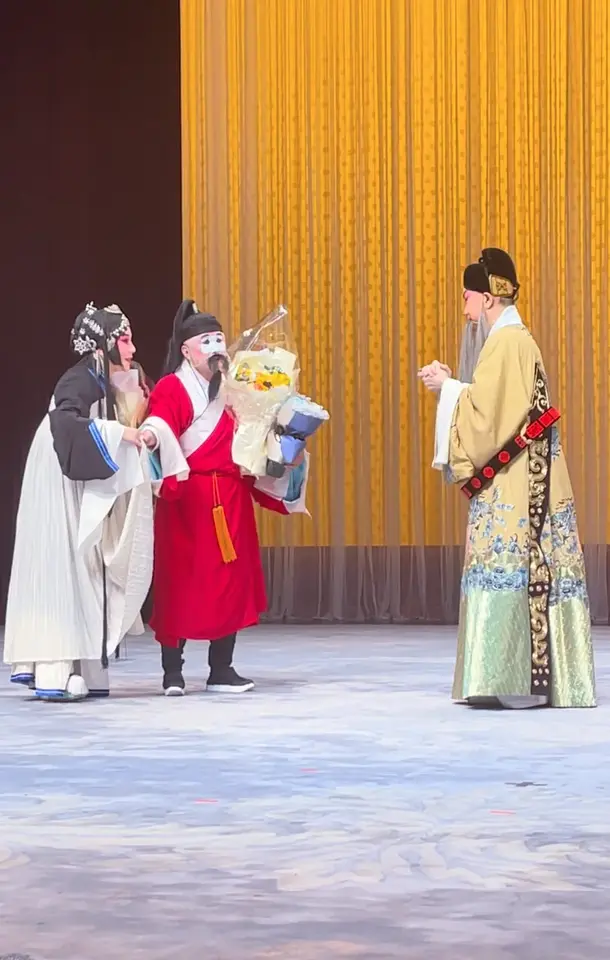
1510 CE–1560 CE
陆炳
Lu Bing (陆炳, 1510–1560), courtesy name Wenfu (文孚) and art name Donghu (东湖), was a native of Pinghu, Zhejiang, born in the Prince of Xing's princely mansion in Anlu, Huguang (present-day Zhongxiang, Hubei). He was a paramount military commander, political heavyweight, and the supreme commander of the Embroidered Uniform Guard (Jinyiwei) during the middle Ming Dynasty under the Jiajing Emperor (Emperor Shizong of Ming). Rising…
Lu Bing (陆炳, 1510–1560), courtesy name Wenfu (文孚) and art name Donghu (东湖), was a native of Pinghu, Zhejiang, born in the Prince of Xing's princely mansion in Anlu, Huguang (present-day Zhongxiang, Hubei). He was a paramount military commander, political heavyweight, and the supreme commander of the Embroidered Uniform Guard (Jinyiwei) during the middle Ming Dynasty under the Jiajing Emperor (Emperor Shizong of Ming). Rising from a hereditary military household whose mother served as wet nurse to the future Jiajing Emperor, Lu Bing forged an extraordinarily intimate bond of trust with the monarch from childhood. Passing the military imperial examination as a martial jinshi in 1532, he steadily ascended the ranks. During the imperial southern tour in 1539, when a violent inferno engulfed the temporary palace at Weihui, Lu Bing courageously broke through the flames and carried Emperor Shizong out on his back, cementing unprecedented imperial favor that surpassed all civil and military courtiers. In command of the Embroidered Uniform Guard and its Northern Pacification Office imperial prison for over two decades, Lu Bing attained the pinnacle of official rank, becoming the only military officer in the entire 276-year history of the Ming Dynasty to hold the exalted ranks of the Three Excellencies and Three Solitaries concurrently, including Grand Protector and Junior Mentor. Operating deftly within the treacherous factions of the Jiajing court, he formed tactical alliances with Grand Secretary Yan Song, facilitated the downfall of Xia Yan, unmasked the treasonous conspiracies of General Qiu Luan with the Mongols, and admitted tens of thousands of rural refugees into the capital during the Gengxu Incident of 1550 while supervising the rapid construction of the outer city wall of Beijing. Unlike notorious imperial secret police chiefs, Lu Bing was renowned for his genial temperament and benevolent treatment of the scholar-gentry, covertly sheltering the families of martyrs Shen Lian and Yang Jisheng and aiding prominent officials such as Nie Bao and Xu Jie. He died in office in 1560, after which Emperor Shizong suspended court sessions in grief and posthumously granted him the noble title Count of Zhongcheng and the posthumous name Wuhui.
Born in the Prince of Xing estate in Anlu, Huguang; his mother served as wet nurse to Zhu Houcong, the future Jiajing Emperor.
Successfully passed the imperial martial examination, appointed Guard Judge in the Embroidered Uniform Guard, aiding Jizhou border defenses.
Participated in repelling Mongol raiders at Lengzuiguan in Jizhou, personally beheaded enemy cavalry, promoted to Assistant Battalion Commander.
Upon his father Lu Song's death, Lu Bing inherited the post of Assistant Commander and was assigned to direct the Southern Pacification Office.
By special imperial decree, appointed Commander of the Imperial Bodyguard in charge of palace security and imperial investigation.
Accompanied the southern tour; breached raging flames to carry Emperor Shizong to safety during the Weihui palace fire, earning total imperial trust.
Led imperial guards during the Palace Plot of the Renyin Year, executed rebellious palace conspirators, and secured Emperor Shizong's personal safety.
Promoted to Assistant Commissioner-in-chief, formally entrusted with the official seal of the Embroidered Uniform Guard, then promoted to Associate Commissioner-in-chief.
Provided critical intelligence on the Hetao recovery campaign to assist Yan Song in eliminating Senior Grand Secretary Xia Yan; promoted to Right Commissioner-in-chief.
When Altan Khan besieged Beijing, convinced authorities to open city gates to save tens of thousands of suburban refugees, then oversaw outer wall fortification.
Denounced Grand General Qiu Luan for secret bribery and treasonous collusion with Altan Khan; rewarded with Grand Protector rank.
Impeached Directorate of Ceremonial eunuch Li Bin for embezzling imperial timber, resulting in Li's execution; attained Grand Protector and Junior Mentor.
Died suddenly from acute illness at age fifty-one; Emperor Shizong mourned deeply, conferring Count of Zhongcheng and posthumous name Wuhui.
Censors under Emperor Muzong impeached Lu Bing's legacy, leading to property forfeiture; fully rehabilitated under Grand Secretary Zhang Juzheng during early Wanli.
Lu Bing traced his ancestral lineage to Pinghu County, Jiaxing Prefecture, Zhejiang Province. His grandfather Lu Chu served as a Vice Battalion Commander in the Jinyiwei, while his father Lu Song served as an officer in the retinue guard of Prince Xian of Xing, Zhu Youyuan. In 1510, Lu Bing was born within the Prince of Xing princely mansion in Anlu, Huguang. Because his mother, Lady Fan, was selected as the wet nurse for Prince Zhu Houcong (the future Jiajing Emperor), Lu Bing was raised alongside the young prince in the inner quarters, sharing meals and study sessions and forming a fraternal intimacy.
Following the death of Emperor Wuzong in 1521, Zhu Houcong was summoned to Beijing to ascend the imperial throne as Emperor Shizong. Lu Song accompanied the new monarch north and was appointed to senior commands in the Embroidered Uniform Guard. Lu Bing displayed exceptional martial prowess and strategic intellect from youth. In 1532, he entered the military imperial examination and obtained the martial jinshi degree. He was assigned as Guard Judge in the Embroidered Uniform Guard and assigned to assist military planning in Jizhou. In 1534, during a Mongol incursions at Lengzuiguan along the northern frontier, Lu Bing personally led cavalry charges, slew an enemy warrior, and captured banners, earning promotion to Assistant Battalion Commander. Following his father's death in 1536, Lu Bing inherited hereditary rank and was placed in charge of the Southern Pacification Office, governing internal discipline within the guards.
In 1538, Emperor Shizong issued an imperial edict substantively appointing Lu Bing as Commander of the Imperial Bodyguard, conferring direct control over inner palace watchtowers and the imperial investigation network. The defining turning point of Lu Bing's life occurred in the spring of 1539 during Emperor Shizong's imperial tour to his birthplace in Anlu.
On the night of the tour's stopover at the temporary travel palace in Weihui, Henan, a devastating fire erupted inside the imperial sleeping pavilion. High winds whipped raging flames across the timber structures, choking hallways with thick smoke and collapsing beams. Court attendants and civil officials outside panicked, shouting in terror without daring to approach the inferno. Hearing the alarm, Lu Bing instantly strapped on his broadsword, kicked open the blazing palace gates, and charged through collapsing timber into the imperial bedchamber. Finding Emperor Shizong disoriented and overcome by smoke, Lu Bing hoisted the emperor onto his back, covered him with a dampened woolen cloak, and fought his way through the roaring fire to safety outside. Deeply moved, Emperor Shizong wept and embraced Lu Bing, regarding him as his life savior. From that moment forward, Emperor Shizong placed absolute, unshakeable trust in Lu Bing, surpassing all civil ministers and eunuch directors. In 1542, when the Palace Plot of the Renyin Year erupted, Lu Bing swiftly led palace guards to safeguard the sovereign.
With palace security firmly under his control, Lu Bing became entangled in high-stakes court rivalries during the middle Jiajing era. Senior Grand Secretary Xia Yan was a seasoned statesman of unbending pride who detested eunuchs and secret police. Whenever Lu Bing visited the Grand Secretariat, Xia Yan treated him with cold disdain, refusing to offer a seat and ordering attendants to place a crude wooden stool at the bottom of the steps for Lu Bing to sit upon. Once, when Lu Bing arrived slightly late on official business, Xia Yan severely berated him before the assembled civil dignitaries, forcing the supreme commander of the imperial guard to kneel on the floor in tears and beg for forgiveness. Nursing deep humiliation, Lu Bing maintained an outwardly submissive demeanor while secretly forging a political alliance with Vice Grand Secretary Yan Song.
In 1547, Supreme Commander of Sanbian Zeng Xian submitted an ambitious memorial advocating the military recovery of the Ordos (Hetao) region, a project strongly championed by Xia Yan. However, Yan Song insidiously whispered warnings to Emperor Shizong that aggressive frontier adventures would exhaust national resources. Sensing the emperor's shift toward apprehension, Yan Song collaborated with Lu Bing to fabricate treasonous allegations against Xia Yan and Zeng Xian. Lu Bing dispatched undercover agents to the northern border, intercepted correspondence, and bribed Zeng Xian's servants to allege that Zeng Xian had forwarded bribes of jade belts and gold to Xia Yan's concubine. Capitalizing on Emperor Shizong's innate paranoia, Yan Song and Lu Bing secured Xia Yan's execution at the Western Market in 1548. For his covert assistance, Lu Bing was promoted to Right Commissioner-in-chief in the Rear Military Commission.
In the autumn of 1550, Altan Khan of the Tumed Mongols led an immense cavalry army southward, breaching Gubeikou and directly besieging the outskirts of Beijing in the historic Gengxu Incident. Suburban populations fled en masse toward Beijing's city walls. Terrified court ministers urged closing all city gates and shooting anyone approaching the ramparts. Lu Bing stepped forward forcefully, petitioning the emperor that shutting out the population would drive loyal subjects into the arms of the invaders and create civil chaos. Supported by Emperor Shizong, Lu Bing personally supervised opening the city gates to admit over ten thousand suburban refugees, dispatching guard battalions to maintain order, distribute porridge, and prevent enemy spies from infiltrating the capital. Simultaneously, Lu Bing was commissioned to supervise the emergency construction of the outer city wall of Beijing, completing the monumental fortifications that permanently enhanced capital defenses.
During the Gengxu crisis, Grand General Qiu Luan relied on the favor of imperial consorts to command imperial field armies, yet secretly harbored cowardice. To avoid battle, Qiu Luan sent secret envoys bearing lavish gold, silks, and horses to Altan Khan, entreating him to withdraw north and bypass his military sector. Lu Bing deployed intelligence operatives to infiltrate Qiu Luan's camp, intercepting secret correspondence and uncovering Qiu Luan's treacherous deals. When Qiu Luan contracted illness in 1552, Lu Bing promptly delivered irrefutable documentary evidence of his treason to Emperor Shizong. The enraged emperor ordered Qiu Luan's corpse dismembered and exposed, while executing his principal conspirators. For eliminating this catastrophic national threat, Emperor Shizong bestowed upon Lu Bing the supreme civil honor of Grand Protector (Taibao).
By the middle of the 1550s, Lu Bing's authority reached an unprecedented zenith. In 1557, Lu Bing uncovered vast financial corruption committed by Directorate of Ceremonial eunuch Li Bin, who had embezzled imperial timber allocated for royal palace construction to build extravagant private estates. Defying the entrenched power of the inner palace eunuchs, Lu Bing conducted a thorough investigation, arrested Li Bin, and submitted an uncompromising memorial that led to Li Bin's public execution. This decisive act shattered the longstanding dominance of the eunuch Directorate of Ceremonial over the imperial guard, creating a unique historical era where the Embroidered Uniform Guard held supremacy over the inner court.
In recognition of his unyielding loyalty, Emperor Shizong promoted Lu Bing to Left Commissioner-in-chief and conferred upon him the concurrent titles of Grand Protector and Junior Mentor. Throughout the 276-year history of the Ming Dynasty, civilian grand secretaries occasionally achieved senior ranks, but Lu Bing was the singular military commander to hold the prestigious ranks of the Three Excellencies (Grand Preceptor, Grand Tutor, Grand Protector) and Three Solitaries (Junior Preceptor, Junior Tutor, Junior Protector). No other military officer in Ming history ever matched this level of institutional honor and imperial intimacy.
Despite commanding an intimidating secret apparatus for over twenty years and operating alongside corrupt ministers such as Yan Song, Lu Bing possessed an underlying respect for Confucian literati and consistently sought to mitigate political persecution, secretly rescuing numerous upright officials from judicial murder.
During the harrowing imprisonment of Vice Director of the Ministry of War Yang Jisheng, who had risked death to submit his famous ten crimes memorial against Yan Song, Yan Song exerted relentless pressure on Lu Bing to have Yang Jisheng beaten to death in the Northern Pacification Office prison. Lu Bing quietly instructed wardens to administer cushioned blows, arranged for surgical treatment of Yang Jisheng's festering wounds, provided clean clothing and nourishment, and deliberately stalled judicial processing for nearly three years. Although Yang Jisheng was ultimately executed on forged edicts engineered by Yan Song, his widow and young sons were shielded from harm through Lu Bing's quiet intervention. Similarly, when guard official Shen Lian submitted memorials condemning Yan Song's crimes, Lu Bing pleaded before Emperor Shizong that Shen Lian suffered from mental imbalance, thereby sparing him execution and commuting his sentence to frontier banishment. Prominent Neo-Confucian scholar Nie Bao and future Grand Secretary Xu Jie likewise received vital protection and mediation from Lu Bing during times of acute political danger.
On December 27, 1560 (the 11th day of the 12th month of the 39th year of Jiajing), Lu Bing died suddenly of illness in office at the age of fifty-one. Emperor Shizong was overcome with grief, cancelled morning audiences, and granted him the noble title Count of Zhongcheng along with the posthumous name Wuhui.
However, unchecked authority inevitably aroused court backlash. Following the death of Emperor Shizong in 1566, Emperor Muzong ascended the throne. Anxious to purge the autocratic excesses of the previous reign, censors launched sweeping impeachments against Lu Bing's estate, alleging systemic corruption and vast wealth accumulation. Emperor Muzong stripped Lu Bing's noble title and posthumous honors, confiscating his sprawling properties and imprisoning his heirs. It was not until the early Wanli reign, under the far-sighted statesmanship of Senior Grand Secretary Zhang Juzheng, that the imperial court formally rehabilitated Lu Bing, recognizing his indispensable military defense, city wall construction, and protection of upright scholars. His noble title, ranks, and ancestral properties were restored, bringing closure to a legendary chapter of Ming court history.
Lu Bing's foremost achievement was his fearless rescue of Emperor Shizong during the Weihui palace fire of 1539. Amid an inferno where civil ministers and imperial escorts fled in terror, Lu Bing single-handedly braved roaring flames and collapsing timber to rescue the sovereign on his shoulders. This courageous act of self-sacrifice established an unshakeable bond of mutual reliance between emperor and commander. Throughout thirty years of capricious and suspicious rule, Emperor Shizong regarded Lu Bing not merely as a subject, but as a trusted family member and guardian, allowing Lu Bing to stabilize imperial administration during volatile factional purges.
Directing the Embroidered Uniform Guard for more than twenty years, Lu Bing fundamentally restructured the institutional apparatus of the Ming imperial guard. He unified internal administrative oversight in the Southern Pacification Office with investigative and judicial functions in the Northern Pacification Office, transforming the guard into a premier intelligence and security command. Furthermore, Lu Bing broke the historical subservience of the guard to the Directorate of Ceremonial and Eastern Depot eunuchs. His decisive investigation and execution of corrupt eunuch chief Li Bin in 1557 reversed a century of eunuch supremacy, establishing a rare era of military command predominance in capital intelligence operations.
During the Gengxu Incident of 1550, when Mongol cavalry threatened the capital, Lu Bing demonstrated exceptional strategic vision and humanitarian leadership. He adamantly opposed the reckless advice of panicking officials to seal city gates and abandon suburban dwellers, convincing the emperor to admit tens of thousands of helpless refugees into safety within the walls. Following the siege, Lu Bing took charge of the monumental engineering task of constructing Beijing's outer wall, completing extensive perimeter defenses and gate towers that permanently fortified the imperial capital against future northern nomadic raids.
Operating in the dangerous crosscurrents between despotic imperial tyranny and Yan Song's vindictive factional dominance, Lu Bing utilized his unchecked command of the imperial prison to shelter righteous scholar-officials. He provided clandestine medical care and delayed sentences for martyrs Shen Lian and Yang Jisheng, preserved the life of Neo-Confucian philosopher Nie Bao, and shielded future Grand Secretary Xu Jie from fatal court traps. His discreet humaneness prevented the utter annihilation of upright bureaucratic leadership, earning him genuine respect and historical clemency from prominent contemporary historians such as Wang Shizhen.
Contemporary Ming scholar-officials acknowledged Lu Bing's dual nature as a ruthless secret police chief who nevertheless exercised unique restraint and benevolence toward intellectuals. Eminent historian Wang Shizhen wrote in his Yanzhou Shanren Sibu Gao: "Although Lord Lu occupied a perilous office wielding power over life and death, his innate disposition was gentle and inclined toward preserving human life. Therefore, although the empire's scholar-gentry feared his authority, they never genuinely hated him."
Senior Grand Secretary Zhang Juzheng, when recommending his rehabilitation to Emperor Shenzong, memorialized: "Lu Bing repeatedly risked his life to shield Emperor Shizong, held firm during the northern invasions of the Gengxu crisis, and consistently displayed compassion toward gentlemen of integrity. His achievements in stabilizing the state far outweigh ordinary military officers."
The official History of Ming (Ming Shi) recorded in Lu Bing's biography: "Lu Bing commanded the imperial guard for decades. He was adept at plumbing the imperial mind and maintaining sovereign favor. While he allied with Yan Song to bring about the death of Xia Yan, he also unmasked Qiu Luan's treason and restrained the excesses of secret agents. In an era rife with political terror, his willingness to shelter men of worth distinguished him from notorious inquisitors of other dynasties."
Qing historian Zhao Yi observed in his Gaiyu Congkao: "Among the commanders of secret police in the Ming Dynasty, only Lu Bing achieved the dual honors of the Three Excellencies and Three Solitaries, yet his descendants escaped utter destruction because of his unrecorded deeds in saving lives."
Modern historians evaluate Lu Bing as a quintessential product of late imperial absolute monarchy—a sophisticated courtier-commander navigating the razor-thin margin between imperial despotism, bureaucratic factionalism, and military survival. Rather than acting as a mindless instrument of terror, Lu Bing balanced ruthless political survival tactics with institutional professionalism and Confucian cultural deference. His decisive defense during the Gengxu siege and the construction of Beijing's outer city left lasting contributions to urban security, while his institutional management prevented the complete degeneration of capital intelligence into destructive eunuch tyranny.
FIGURES ASSOCIATED WITH THIS DYNASTY