Xiangyin, Huguang | Born into a scholarly family in Xiangyin; father Xia Shimin served as county school preceptor.
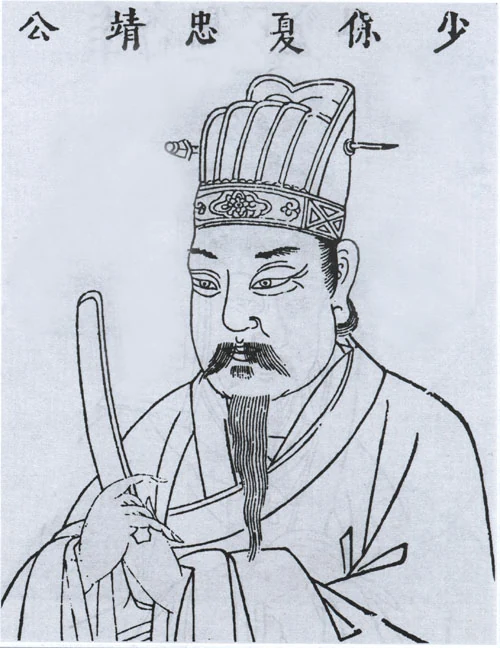
1366 CE–1430 CE
Historical figure
Xia Yuanji
夏原吉
Xia Yuanji (1366–1430), courtesy name Weizhe and art name Xiyan, was ancestral to Dexing and born in Xiangyin, Huguang (modern Xiangyin County, Hunan Province). He was an illustrious statesman, fiscal manager, and core imperial counselor of the early Ming dynasty, serving five consecutive emperors: Hongwu, Jianwen, Yongle, Hongxi, and Xuande. Entering officialdom as a student at the Imperial College (Guozijian), he won the…
1366 CE–1430 CEMing Dynasty
PROFILE
Xia Yuanji (1366–1430), courtesy name Weizhe and art name Xiyan, was ancestral to Dexing and born in Xiangyin, Huguang (modern Xiangyin County, Hunan Province). He was an illustrious statesman, fiscal manager, and core imperial counselor of the early Ming dynasty, serving five consecutive emperors: Hongwu, Jianwen, Yongle, Hongxi, and Xuande. Entering officialdom as a student at the Imperial College (Guozijian), he won the deep admiration of Emperor Taizu for his poise and precision, rising to Vice Minister of Revenue under Jianwen. Following Emperor Yongle's accession, Xia was elevated to Minister of Revenue, directing imperial finances for nearly thirty years. During this golden age, he expertly financed monumental projects—including the construction of the Forbidden City and the new capital Beijing, Zheng He’s maritime expeditions to the Indian Ocean, the compilation of the monumental Yongle Encyclopedia, and five northern military campaigns—maintaining full treasuries without overburdening the population. Imprisoned in his late years for courageously protesting excessive frontier campaigns, he was immediately released and reinstated by Emperor Hongxi, subsequently guiding the celebrated "Ren-Xuan Prosperity" alongside the Three Yangs and Jian Yi. He died in 1430 at sixty-five, posthumously honoured as Grand Preceptor with the illustrious title Zhongjing.
- Courtesy / Art Name
- Weizhe
- Era
- Ancient times
- Dynasty
- Ancient times
- Identity
- Historical figure
- Date of Birth
- 1366
- Date of Death
- 1430
- Ethnicity
- Han
- Ancestral Home
- Xiangyin, Huguang (present-day Xiangyin County, Yueyang, Hunan)
- Place of Birth
- Xiangyin, Huguang (present-day Xiangyin County, Yueyang, Hunan)
- Place of Death
- Unknown
- Lifespan
- 65 years
- Major Offices
- Minister of Revenue、Junior Guardian concurrently Junior Tutor of the Heir Apparent、Grand Preceptor (posthumously granted)
- Posthumous Name
- Zhongjing (Loyal and Serene)
- Posthumous Honors
- Xia Yuanji as grand preceptor
- Major Achievements
- Financing the Yongle era, constructing the Forbidden City and Beijing, funding Zheng He's voyages, harnessing southern rivers, guiding the Ren-Xuan Prosperity
LIFE TIMELINE
Xiangyin | His father passed away; Xia supported his widowed mother with deep filial devotion while studying classics.
Nanjing | Recommended to the Imperial College; caught Emperor Taizu's personal attention for his grave bearing and appointed Director in the Ministry of Revenue.
Nanjing | Emperor Jianwen ascended the throne; impressed by Xia's administrative genius and elevated him to Vice Minister of Revenue.
Nanjing | The Jingnan campaign ended with the fall of the capital; Xia remained in his office preserving tax records and treasuries; Emperor Yongle pardoned and promoted him to Minister of Revenue.
Suzhou, Songjiang | Dispatched as Imperial Commissioner to harness chronic flood disasters in the Taihu and Suzhou-Songjiang delta, dredging the Wusong River and building dikes.
Nanjing, Taicang | Mobilized comprehensive maritime funding and logistics for Zheng He’s inaugural expedition to the Western Oceans.
Beijing, Nanjing | Superintended all fiscal procurement and canal transport networks for the monumental construction of Beijing and the Forbidden City.
Nanjing, Steppes | Coordinated logistics and supply lines during Emperor Yongle's first personal northern military expedition against the Mongols.
Beijing | The Forbidden City and imperial palaces of Beijing reached completion; supervised the formal relocation of the capital.
Beijing | Vehemently remonstrated against another northern military expedition due to national fiscal exhaustion; Yongle had him arrested and jailed in the Embroidered Uniform Guard prison.
Beijing | Emperor Yongle died at Yumuchuan; Emperor Hongxi ascended the throne and released Xia on the same day, elevating him to Junior Guardian.
Beijing, Le'an | Encouraged Emperor Xuande to personally march on Le'an to crush the rebellion of Prince Zhu Gaoxu, ending the revolt bloodlessly.
Beijing | Passed away in office at age sixty-five; Emperor Xuande mourned deeply, conferring the posthumous title Grand Preceptor and the honorific Zhongjing.
Age 37 | ### Water Conservancy and Building Beijing In 1403 (1st year of Yongle), disastrous floods overwhelmed the Taihu Lake basin and the economic centers of Suzhou, Songjiang, Changzhou, and Zhenjiang, drowning hundreds of thousands of acres.
Aged thirty-eight | He went again to western Zhejiang and dredged the Baimao Pond, the Liujia River and the Dahuang Pu; the works were finished in the ninth month and the farmland of Suzhou and Songjiang benefited greatly.
Water Conservancy in the Yangtze Delta Harnessing the devastating floods of Taihu Lake | ### Water Conservancy in the Yangtze Delta Harnessing the devastating floods of Taihu Lake in 1403–1405 through the dredging of the Wusong and Baimao rivers, Xia established the hydraulic infrastructure that secured Jiangnan's agricultural supremacy for the rest of imperial Chinese history.
Age 39 | ### Water Conservancy in the Yangtze Delta Harnessing the devastating floods of Taihu Lake in 1403–1405 through the dredging of the Wusong and Baimao rivers, Xia established the hydraulic infrastructure that secured Jiangnan's agricultural supremacy for the rest of imperial Chinese history.
Aged forty | After Yu Xin died he was recalled to the capital to take charge of the Ministry of Revenue, where he first asked to cut superfluous expenditure, equalise taxes and corvée, tighten the salt law, clear the granaries and extend military farming.
Beginning in 1407 | Beginning in 1407, Emperor Yongle resolved to move the imperial capital north to Beijing, commissioning the construction of the Forbidden City, monumental perimeter battlements, ancestral temples, and the Changling Imperial Mausoleum.
Aged forty-two | He supervised the transport of timber to Beijing by soldiers and civilians, giving warning beforehand so that few offenders were punished.
Aged forty-three | When Emperor Chengzu toured the north he also managed the affairs of the ministries of Rites and War and the Censorate at the temporary court.
Nanjing and the northern desert | When Emperor Chengzu first led a campaign in person against the Tatars north of the desert, Xia Yuanji remained behind in overall charge of the grain routes and supplies, planning so as to secure the great victory at the front.
Aged forty-four #2 | When Emperor Chengzu campaigned north he assisted the imperial grandson Zhu Zhanji in guarding Beijing and directed the affairs of the nine ministries at the temporary court.
Aged forty-five | On the completion of his nine-year term Emperor Chengzu feasted him and called him a famous minister left by Emperor Gao.
Aged forty-six | When western Zhejiang was flooded and the transmission commissioner Zhao Juren concealed it, Xia Yuanji memorialised and had him dismissed.
For fourteen years | For fourteen years, the immense construction proceeded without bankrupting the imperial treasury or sparking popular uprisings, culminating in the formal transfer of the capital in 1420.
Age 54 | For fourteen years, the immense construction proceeded without bankrupting the imperial treasury or sparking popular uprisings, culminating in the formal transfer of the capital in 1420.
When the Three Great Halls of the Forbidden City burned down in 1421 | When the Three Great Halls of the Forbidden City burned down in 1421, and the Mongol chieftain Arughtai renewed border raids, Yongle determined to personally lead another massive expedition of hundreds of thousands of horsemen.
Age 55 | When the Three Great Halls of the Forbidden City burned down in 1421, and the Mongol chieftain Arughtai renewed border raids, Yongle determined to personally lead another massive expedition of hundreds of thousands of horsemen.
Regency of Ren-Xuan and Posthumous Glory In July 1424 | ### Regency of Ren-Xuan and Posthumous Glory In July 1424, Emperor Yongle passed away at Yumuchuan during his retreat from the steppe.
Age 58 | ### Regency of Ren-Xuan and Posthumous Glory In July 1424, Emperor Yongle passed away at Yumuchuan during his retreat from the steppe.
Aged fifty-nine | Emperor Renzong died and Emperor Xuanzong ascended the throne; Xia Yuanji received the testamentary decree and welcomed him at the Lugou Bridge.
In 1426 | In 1426, when Prince Zhu Gaoxu rebelled, Xia persuaded Emperor Xuande to march in person, breaking the rebellion bloodlessly.
Age 60 | In 1426, when Prince Zhu Gaoxu rebelled, Xia persuaded Emperor Xuande to march in person, breaking the rebellion bloodlessly.
Aged sixty-two | He accompanied Emperor Xuanzong on a northern tour and at Tu’er Mountain remonstrated against the stripping and punishment of the generals.
In January 1430 | In January 1430, Xia passed away peacefully in office at the age of sixty-five.
Age 65 | In January 1430, Xia passed away peacefully in office at the age of sixty-five.
BIOGRAPHY
Biography
Early Life and Emergence from the Imperial College Xia Yuanji, courtesy name Weizhe and art name Xiyan, traced his ancestral roots to Dexing in Jiangxi. During the upheavals of the late Yuan dynasty, his grandfather Xia Huaide relocated the family to Xiangyin in Huguang. His father, Xia Shimin, was a dedicated scholar who served as instructor at the Xiangyin county academy during the early Ming reign of Emperor Taizu (Zhu Yuanzhang). Xia Yuanji was born in 1366. From childhood, he exhibited deep filial devotion, exceptional intellect, and gravity of demeanor. When Xia was fifteen years old in 1380, his father passed away. Confronting sudden poverty, he laboriously farmed by day to sustain his mother Lady Xie, and studied the Confucian classics and statecraft by night under dim oil lamps. In 1390 (23rd year of Hongwu), he was recommended to study at the Guozijian (Imperial College) in Nanjing. At that time, many students at the college engaged in frivolous pastimes. Xia Yuanji alone sat immovably at his desk, studying tirelessly with unblemished decorum. During an unannounced imperial inspection, Emperor Zhu Yuanzhang walked through the halls and observed the students. Noticing Xia's impeccable handwriting, upright posture, and total concentration, Zhu Yuanzhang was deeply impressed. He summoned the young scholar, examined his policy proposals, and directly commissioned him as a director in the Ministry of Revenue (Hubu). ### Service under Jianwen and the Fall of Nanjing Within the Ministry of Revenue, Xia Yuanji quickly distinguished himself by his encyclopedic mastery of imperial registers, tribute records, land registers, and grain balances. In an era when accounting records were overwhelmed by complex taxation categories, Xia could calculate and balance multiregional treasuries effortlessly in his head, without ever committing an error. Upon Emperor Jianwen's accession in 1398, the court sought youthful and uncorrupted talents; Xia was elevated to Vice Minister of Revenue in 1399 at the young age of thirty-three. For four years during the brutal civil war of the Jingnan campaign, Xia bore the staggering burden of managing logistics and grain shipments to supply the imperial armies in the north, ensuring that frontlines never ran out of provisions. In June 1402, Prince of Yan Zhu Di’s forces crossed the Yangtze and breached the ramparts of Nanjing. Amidst the flames consuming the imperial palace, officials scattered in panic or rushed to kowtow to the conqueror. Xia Yuanji alone remained in the Ministry of Revenue, ordered the vaults locked, carefully cataloged every tax ledger and treasure inventory, and calmly awaited arrest. Brought before Zhu Di, Xia was interrogated as to why he had not surrendered. Xia answered serenely: "I was a minister of the Jianwen court, responsible for the revenues of the empire. These taxes represent the lifeblood of the realm. Now that Your Majesty has assumed the throne, the empire’s wealth belongs to Your Majesty. I have preserved every ledger intact and am ready to receive death." Inspecting the pristine, flawlessly preserved accounts, Zhu Di marveled at Xia's incorruptible devotion to duty, declaring: "This man embodies the supreme integrity of an imperial statesman!" Zhu Di not only pardoned him but immediately elevated him to Minister of Revenue. ### Water Conservancy and Building Beijing In 1403 (1st year of Yongle), disastrous floods overwhelmed the Taihu Lake basin and the economic centers of Suzhou, Songjiang, Changzhou, and Zhenjiang, drowning hundreds of thousands of acres. These rich commands produced half of the Ming court’s tax revenues. Emperor Yongle dispatched Xia Yuanji as Imperial Commissioner to remedy the catastrophe. Arriving in Jiangnan, Xia bypassed comfortable headquarters to trudge through dikes and marshes on foot alongside laborers. Rejecting simple damming schemes, he devised a comprehensive plan of dredging natural outlets to the sea. Over two years, mobilizing hundreds of thousands of workers while living in thatched huts at the worksites, Xia deepened the Wusong River and cleared the Baimao River, discharging floodwaters safely into the East China Sea. He also constructed formidable ring dikes, known gratefully to the populace as the "Xia Duke Dikes" (Xia Gong Di), ensuring that the Jiangnan plains remained exceptionally fertile for centuries. Beginning in 1407, Emperor Yongle resolved to move the imperial capital north to Beijing, commissioning the construction of the Forbidden City, monumental perimeter battlements, ancestral temples, and the Changling Imperial Mausoleum. The endeavor was gargantuan, requiring the labor of over one million artisans and soldiers, deep-mountain timber harvesting across Sichuan and Guizhou, and astronomical shipments of stone, brick, and grain. Yongle entrusted the entire financial and material operation to Xia Yuanji. Operating from Nanjing as supreme logistical coordinator, Xia perfected the Grand Canal grain transport network and introduced precision budgeting (liangru weichu). For fourteen years, the immense construction proceeded without bankrupting the imperial treasury or sparking popular uprisings, culminating in the formal transfer of the capital in 1420. ### Maritime Voyages and Rebuking the Northern Expeditions Concurrently, Xia managed the complex logistical allocations required for Admiral Zheng He’s seven naval expeditions across the Indian Ocean, as well as the monumental compilation of the 22,000-volume Yongle Encyclopedia. However, Emperor Yongle’s persistent personal military campaigns into the Mongolian steppe placed severe strains upon state finances. When the Three Great Halls of the Forbidden City burned down in 1421, and the Mongol chieftain Arughtai renewed border raids, Yongle determined to personally lead another massive expedition of hundreds of thousands of horsemen. Xia Yuanji knew that twenty years of monumental projects had depleted the empire’s reserves. At an imperial council, when Yongle inquired whether supplies were sufficient, other ministers cowered in silence. Xia stepped forward and boldly remonstrated: "Successive campaigns have exhausted our provisions and worn down our people. The recent fire at the imperial palaces has unsettled the realm; droughts and floods afflict Henan and Shandong. The imperial treasury is empty! Moreover, Your Majesty is advancing in years and should rest in the capital rather than risking hardship on the frontier." Furious that his senior finance minister had publicly challenged his war policy, Yongle ordered Xia arrested and thrown into the Embroidered Uniform Guard prison, confiscating his personal property. When imperial agents ransacked Xia's residence, they found only a few sets of plain clothing, earthenware dishes, and books; there was no hoarded silver or gold whatsoever. Yongle was deeply moved by his minister’s personal poverty, yet his wounded pride kept Xia locked in prison for three years. ### Regency of Ren-Xuan and Posthumous Glory In July 1424, Emperor Yongle passed away at Yumuchuan during his retreat from the steppe. Crown Prince Zhu Gaochi ascended the throne as Emperor Hongxi. On the very day of his accession, before conducting the formal ceremonies, Hongxi sent guards to unlock Xia's prison cell and received him with tears, weeping: "Had my late father listened to your words, he would never have died at Yumuchuan!" Xia was immediately reinstated as Minister of Revenue and elevated to Junior Guardian. During the reigns of Emperor Hongxi and his son Emperor Xuande, Xia collaborated seamlessly with Grand Secretaries Yang Shiqi, Yang Rong, and Yang Pu (the "Three Yangs") and Minister of Personnel Jian Yi. Together, they ended costly foreign campaigns, cancelled oppressive mining taxes, relieved flood-stricken provinces, and reestablished fiscal stability, creating the celebrated "Ren-Xuan Prosperity". In 1426, when Prince Zhu Gaoxu rebelled, Xia persuaded Emperor Xuande to march in person, breaking the rebellion bloodlessly. In January 1430, Xia passed away peacefully in office at the age of sixty-five. Emperor Xuande wept bitterly, halted court sessions for three days, and bestowed the posthumous rank of Grand Preceptor (Taishi) with the epithet Zhongjing.
Xia Yuanji was a minister of the early Ming known for his financial skill. His grandfather Xia Xizheng had held office at the end of the Yuan and his father Xia Shimin was made instructor at Xiangyin as a commoner, the family passing on its scholarly calling. Under Hongwu he entered the imperial college by provincial recommendation, was chosen to write edicts within the palace, and served afterward in the ministry of revenue, being valued by the founder for his diligence.
Through the Yongle years he was long minister of revenue, directing the dynasty's finances for more than twenty years. The great works and campaigns of that reign — the building of Beijing, the dredging of the Huitong canal, Zheng He's voyages, the five campaigns against the Mongols, the war in Annam — were largely financed and supplied under his direction. He was skilled at weighing expenditure against one another and lightening the people's burden, his methods recorded in detail in his biography. In 1421 he was imprisoned for remonstrating against the northern campaign, released after the emperor's death and restored to the ministry under Xuande.
He died in 1430 at sixty-five, granted the title of grand tutor with the posthumous name Zhongjing. With Jian Yi he was a senior minister of the Yongle, Hongxi and Xuande reigns, holding an important place in the finances and institutions of the early Ming.
Under the Hongwu emperor Xia Yuanji entered the Imperial Academy by provincial recommendation and was chosen to draft edicts in the palace. When the students laughed and shouted, he alone sat upright and unmoved; the emperor, having had him watched, thought him remarkable and promoted him to a secretaryship in the Board of Revenue. Its business was tangled and heavy, yet he handled all of it in good order, and the minister Yu Xin valued him highly. A certain director Liu, jealous of his ability, tried to destroy him through Yu Xin's impeachment of idle officials; the emperor saw through the trick and had Liu and the clerk behind him executed and exposed in the market. Early in the Jianwen reign Xia Yuanji was made a vice minister of revenue, and the next year, as a visiting commissioner, toured Fujian, where he inspected administration and inquired after the people's hardships in every district and won the goodwill of officials and populace alike; he then remained long afield and moved his station to Qizhou.
After the campaign of Jingnan, when Zhu Di came to the throne from a princedom, some urged that Xia Yuanji, a servant of the Jianwen court, should not be greatly employed. The Yongle emperor replied that he had been the Hongwu emperor's minister, faithful to Hongwu and therefore to Jianwen, and would be faithful to himself as well; he kept him as a vice minister of revenue, and in 1403 promoted him to be minister. From then on he directed water control and finance, and the taxes, granaries and grain transport of the early Ming passed largely through his hands; the achievements of his career belong, for the most part, to the Yongle reign. In the accounts of his colleagues and later scholars he is known for caution and steadiness, and he was a key figure in the passage of early Ming finance from disorder to order.
Major Activities
Master of Imperial Finance during the Yongle Era For more than twenty years under Emperor Yongle, Xia managed the treasury of the Ming empire, flawlessly funding the construction of the Forbidden City, the rebuilding of the Grand Canal, seven voyages of Zheng He, and five northern steppe expeditions without inflicting structural ruin on the agrarian economy. ### Water Conservancy in the Yangtze Delta Harnessing the devastating floods of Taihu Lake in 1403–1405 through the dredging of the Wusong and Baimao rivers, Xia established the hydraulic infrastructure that secured Jiangnan's agricultural supremacy for the rest of imperial Chinese history. ### Principled Remonstrance against Military Overreach Xia risked death and endured three years of harsh imprisonment in 1421 to protest Emperor Yongle’s economically ruinous military campaigns, preserving the moral spine of Confucian civil administration against imperial absolutism. ### Architecture of the Ren-Xuan Prosperity Working in harmonious concert with the Three Yangs and Jian Yi during the Hongxi and Xuande eras, Xia directed peaceful administrative reforms, tax reductions, and institutional rectifications that cemented the golden age of early Ming society.
Personal Relations
- Grandfather: Xia Huaide (early settler in Xiangyin)
- Father: Xia Shimin (Ming Confucian instructor at Xiangyin)
- Mother: Lady Xie (Honored as First Rank Matron)
- Son: Xia Xuan (Court official)
- Sovereigns: Emperor Taizu (Hongwu), Emperor Jianwen, Emperor Taizong (Yongle), Emperor Renzong (Hongxi), Emperor Xuanzong (Xuande)
- Colleagues & Statesmen: Yang Shiqi (Grand Secretary), Yang Rong, Yang Pu, Jian Yi (Minister of Personnel)
- Rivals: Zhu Gaoxu (Prince of Han, rebel leader)
Historical Assessment
- Emperor Yongle: "Yuanji loves me and serves the state with utmost devotion; even Xiao He of ancient times could not surpass him!"
- Emperor Hongxi: "Minister Xia is truly the pillar of the world. Had the late Emperor listened to his counsel, the tragedy of Yumuchuan would never have occurred!"
- Emperor Xuande: "A monumental elder statesman of spotless integrity, serving three reigns with unblemished loyalty."
- *History of Ming (Ming Shi)*: "Xia Yuanji possessed monumental statecraft talents, exceptionally skilled in financial administration. During the Yongle era, domestic works and foreign wars demanded staggering revenues; Xia managed provisions such that state finances never failed... The prosperity of the Ren-Xuan era owes overwhelmingly to Xia Yuanji and Jian Yi."
- Yang Shiqi: "Duke Xia was loyal, serene, and profoundly magnanimous. Confronting grave affairs and resolving momentous doubts, his determination was unshakable."
FIGURES ASSOCIATED WITH THIS DYNASTY
Bibliography
- Zhang Tingyu et al., History of Ming (Ming Shi), Volume 149, Biography 37: Xia Yuanji
- Gu Yingtai, Ming Dynasty Historical Records from Beginning to End (Mingshi Jishi Benmo), Volume 24