Age one | Born in Fuchun County, Wu Commandery; his grandfather Sun Quan gave him the childhood name “Pengzu.”
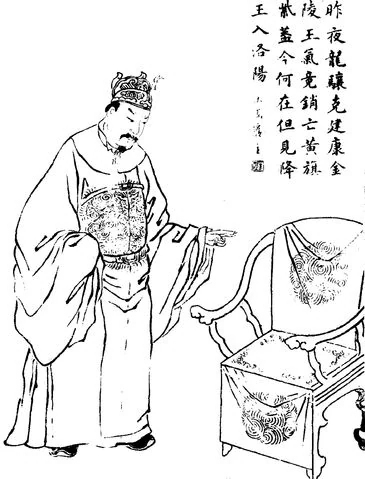
242 CE–284 CE
Emperor
Sun Hao
孙皓
Sun Hao (242–284), courtesy name Yuanzong and childhood name Pengzu, was from Fuchun County in Wu Commandery (present-day Fuyang District, Hangzhou, Zhejiang). He was a grandson of Sun Quan, Emperor Da of Eastern Wu, and a son of the deposed crown prince Sun He. He was the fourth and final emperor of Sun Wu during the Three Kingdoms period, reigning for sixteen years from 264 to 280. At the beginning of his reign, Sun Hao…
242 CE–284 CESun Wu
PROFILE
Sun Hao (242–284), courtesy name Yuanzong and childhood name Pengzu, was from Fuchun County in Wu Commandery (present-day Fuyang District, Hangzhou, Zhejiang). He was a grandson of Sun Quan, Emperor Da of Eastern Wu, and a son of the deposed crown prince Sun He. He was the fourth and final emperor of Sun Wu during the Three Kingdoms period, reigning for sixteen years from 264 to 280. At the beginning of his reign, Sun Hao adopted measures such as opening state granaries to relieve the poor and releasing palace women, and for a time was praised as an enlightened ruler. Before long, however, he displayed a violent, arrogant, hard-drinking, and murderous disposition. He forced an empress dowager to her death, executed meritorious ministers, undertook large construction projects, and repeatedly waged war. In 280, the fourth year of the Tianji era, Sun Wu was conquered by the Western Jin. After his capture, Sun Hao was taken to Luoyang and enfeoffed as Marquis Guiming. He died of illness in 284, the fifth year of the Taikang era, and was buried at Beimang Mountain.
- Also known as
- Emperor Mo of Eastern Wu; courtesy name Yuanzong
- Courtesy name
- Yuanzong
- Period
- Sun Wu
- Dynasty / regime
- Sun Wu
- Identity
- Emperor
- Ethnicity / ethnic affiliation
- Not recorded in historical sources
- Ancestral home
- Fuchun County, Wu Commandery (present-day Fuyang District, Hangzhou, Zhejiang)
- Date of birth
- 242
- Place of birth
- Not recorded in historical sources
- Date of death
- 284
- Reign
- September 10, 264 – May 1, 280
- Predecessor
- Emperor Jing of Wu (Sun Xiu)
- Successor
- Not applicable (Wu fell to Western Jin)
- Era names
- Not recorded in historical sources
- Temple name
- Courtesy name Yuanzong
- Posthumous title
- Emperor Mo of Eastern Wu
- Major achievements
- The last emperor of Eastern Wu, noted for cruelty and a fondness for killing; he built a new palace, favored Xue Ying and others, and ultimately lost the state.
LIFE TIMELINE
Age nine | His father Sun He was deposed and moved to Guzhang.
Age eleven | His grandfather Sun Quan died; his father Sun He was re-enfeoffed as Prince of Nanyang and moved to Changsha.
Age twelve | His father Sun He was ordered to commit suicide; Sun Hao and his three half-brothers were raised by the secondary consort Lady He.
Age seventeen | Sun Xiu, Emperor Jing of Eastern Wu, ascended the throne; Sun Hao was enfeoffed as Marquis of Wucheng and married Teng Fanglan, daughter of Teng Mu, as his principal wife.
Age twenty-three | After Sun Xiu died, Sun Hao was recommended by Wan Yu and enthroned by Puyang Xing and Zhang Bu; the era name was changed to Yuanxing.
Age twenty-three | Puyang Xing and Zhang Bu were executed; Sun Hao posthumously honored his father Sun He as Emperor Wen and elevated his mother Lady He to empress dowager.
Age twenty-four | Forced Empress Dowager Zhu to her death and pursued two sons of Sun Xiu; moved the capital to Wuchang in September.
Age twenty-five | Executed Wang Fan; the Shi Dan Rebellion broke out in October; the capital returned to Jianye in December.
Age twenty-six | Began construction of Zhaoming Palace at enormous expense.
Age twenty-seven | Launched a large-scale northern offensive against Jin on several routes; all forces returned without success.
Age twenty-eight | Named his eldest son Sun Jin crown prince and sent troops against the rebels in Jiaozhi.
Age thirty | Personally led a large army westward against Jin; heavy snow and collapsing morale forced a retreat.
Age thirty-one | Lu Kang suppressed Bu Chan’s rebellion at Xiling and heavily defeated the Jin army; Sun Hao became increasingly conceited.
Age thirty-three | Lu Kang died; Sun Hao divided his troops into five commands.
Age thirty-nine | Western Jin invaded Wu on six routes; Sun Hao surrendered and Sun Wu fell. He was enfeoffed as Marquis Guiming and moved to Luoyang.
Age forty-three | Died of illness in Luoyang and was buried at Beimang Mountain.
BIOGRAPHY
Biography
Family Background and Early Years
Sun Hao was the eldest son of Sun He, the deposed crown prince of Sun Quan, and was born in 242, the fifth year of the Chiwu era. His grandfather Sun Quan was very fond of this eldest grandson and personally gave him the childhood name “Pengzu.” Sun Hao’s biological mother, Lady He, was only a secondary consort of Sun He; his principal mother was Consort Zhang, daughter of Zhang Cheng. Around the time of Sun Hao’s birth, Sun He’s position as crown prince remained secure. This soon changed. In 250, the thirteenth year of the Chiwu era, Sun Quan’s late-life uncertainty over the succession led to the intense Two Palaces Dispute between Crown Prince Sun He and Sun Ba, Prince of Lu. The struggle ended with both sides ruined: Sun Ba was ordered to commit suicide, while Sun He was deposed and moved to Guzhang (present-day Anji County, Zhejiang).
In the first lunar month of 252, the second year of the Taiyuan era, Sun Quan re-enfeoffed Sun He as Prince of Nanyang and ordered him to move with his household to Changsha. Sun Quan died in the fourth month that year, and the ten-year-old Sun Liang succeeded him, with General-in-Chief Zhuge Ke acting as regent. In 253, the second year of the Jianxing era, the imperial clansman Sun Jun staged a coup and killed Zhuge Ke. He then used popular rumors that Zhuge Ke had intended to enthrone Sun He as grounds to strip Sun He of his princely title, exile him to Xindu (present-day Chun’an County, Zhejiang), and soon order his death. Sun He’s principal consort, Consort Zhang, also killed herself. Sun Hao was only twelve and had three younger half-brothers. Lady He survived, saying, “If we all follow him in death, who will raise the orphans?” She then raised the four brothers by herself.
In 258, the first year of the Yongan era, the powerful minister Sun Chen deposed Sun Liang and enthroned Sun Quan’s sixth son, Sun Xiu, as Emperor Jing of Eastern Wu. After taking the throne, Sun Xiu enfeoffed his nephew Sun Hao as Marquis of Wucheng and arranged his marriage to Teng Fanglan, daughter of Teng Mu, as his principal wife. On the way to his fief, a resident of Xihu named Jing Yang read Sun Hao’s physiognomy and said that he “would attain great eminence.” Sun Hao was secretly pleased but did not dare speak of it. While serving as Marquis of Wucheng, he became acquainted with Wan Yu, magistrate of Wucheng, and the two formed a close relationship. This later helped pave the way for Sun Hao’s succession.
Accession and the Early Reign
In the seventh month of 264, the seventh year of the Yongan era, Sun Xiu, Emperor Jing of Eastern Wu, died after entrusting the succession to Grand Councilor Puyang Xing. Shu Han had only recently fallen and Jiaozhi was in rebellion, leaving Eastern Wu under severe internal and external pressure. The ministers believed that Crown Prince Sun Wan was too young to meet the crisis and wished to install an older ruler. Wan Yu, then serving in an important court office, strongly recommended Sun Hao to Puyang Xing and Left General Zhang Bu, saying that he possessed “clear talent and judgment, comparable to Prince Huan of Changsha, and in addition is fond of learning and observes the law.” Persuaded, Puyang Xing and Zhang Bu together urged Empress Dowager Zhu to agree to Sun Hao’s enthronement. She replied: “I am a widowed woman; how can I understand the concerns of the state? So long as Wu suffers no harm and the ancestral temples are sustained, that is enough.” In the eighth month, the twenty-three-year-old Sun Hao ascended the throne and changed the era name to Yuanxing.
At first, Sun Hao adopted a series of measures to consolidate his rule. He lavishly rewarded supporters, promoting Puyang Xing to Palace Attendant and Grand Councilor, making Zhang Bu General of Agile Cavalry, and appointing Shi Ji and Ding Feng as the Left and Right Grand Marshals, thereby drawing in those who had supported his accession and senior military commanders. He also adopted relief measures, opening granaries for the poor, releasing palace women so that they could marry, and returning rare birds and animals from the imperial parks. According to Biographies from South of the Yangzi, the people “with one accord praised him as an enlightened ruler.” The favorable phase was brief. Sun Hao soon revealed a violent, arrogant, hard-drinking, and lustful nature. Puyang Xing and Zhang Bu privately regretted enthroning him. When this was reported, Sun Hao executed both men in the eleventh month and exterminated their three clans, only four months after they had placed him on the throne.
In the ninth month of 264, the first year of Yuanxing, Sun Hao posthumously honored his father Sun He as Emperor Wen, demoted Empress Dowager Zhu to Empress Jing, elevated his biological mother Lady He to empress dowager, and made Consort Teng empress. In the seventh month of 265, the first year of the Ganlu era, he forced Empress Dowager Zhu to her death and sent Sun Xiu’s four sons to a remote small city; he soon had the two older sons pursued and killed. These acts shocked officials and commoners alike. In the ninth month of the same year, influenced by diviners who claimed that “royal qi lies in Jing Province and will break Yang Province,” and also for military defensive reasons, Sun Hao moved the capital to Wuchang (present-day Ezhou, Hubei).
Move to Wuchang and Return to Jianye
In 266, the first year of the Baoding era, Sun Hao held a banquet for his ministers at Wuchang. When the Regular Attendant Wang Fan became drunk and behaved improperly, Sun Hao had him beheaded despite pleas from senior ministers including Teng Mu and Liu Ping. The incident deeply alarmed the court. In the eighth month, Sun Hao established separate Left and Right Chancellor posts, appointing Lu Kai as Left Chancellor and his confidant Wan Yu as Right Chancellor.
After the capital moved to Wuchang, the poor local soil meant that most supplies had to be shipped upstream from the lower Yangzi, placing a heavy burden on the people of Jiangdong. An old song from Sun Quan’s time again circulated: “Better to drink the water of Jianye than eat the fish of Wuchang; better to die on returning to Jianye than remain living in Wuchang.” In the tenth month, Shi Dan, a mountain resident of Yongan, gathered several thousand people in revolt, seized Sun Hao’s half-brother Sun Qian, Marquis of Yongan, and advanced toward Jianye. Their numbers grew along the way to several tens of thousands by the time they reached the outskirts of the capital. Wu generals Ding Gu and Zhuge Jing defeated them and rescued Sun Qian. Rather than being alarmed, Sun Hao regarded the event as fulfillment of the prophecy that “royal qi in Jing Province will break the bandits of Yang Province.” He sent several hundred men to Jianye to shout, “The Son of Heaven has sent the soldiers of Jing Province to destroy the bandits of Yang Province,” as a way of suppressing the ill omen. He then ordered Sun Qian and his mother poisoned and killed another half-brother, Sun Jun. In the twelfth month, Sun Hao moved the capital back to Jianye.
In the sixth month of 267, the second year of the Baoding era, Sun Hao ordered construction of a new palace, Zhaoming Palace, said to span five hundred zhang. Officials below the rank of two-thousand-shi were ordered into the mountains to supervise timber felling. The project “exhausted ingenuity and skill, and the cost of labor and service was counted in hundreds of millions.” Lu Kai, Hua He, and others submitted memorials of remonstrance, but Sun Hao ignored them.
Military Campaigns and the Middle Reign
In 268, the third year of the Baoding era, Sun Hao began launching offensive operations against the Western Jin. He personally led a large army to Dongguan (southwest of present-day Hanshan County, Anhui), ordered Shi Ji to attack Jiangxia, Wan Yu to attack Xiangyang, Ding Feng and Zhuge Jing to attack Hefei, and Liu Jun, Inspector of Jiao Province, and others to attack the rebels in Jiaozhi. All routes ended in failure: Shi Ji was defeated by the Jin general Hu Lie, Ding Feng by Sima Jun, and Liu Jun and Xiu Ze were killed.
In 269, the first year of the Jianheng era, Sun Hao sent Yu Si, Xue Xu, and Tao Huang from Jing Province, while Li Xu and Xu Cun sailed by sea from Jian’an, to launch a joint attack against the Jiaozhi rebels. In 270, the second year of Jianheng, Li Xu killed the guide Feng Fei on the grounds that the roads were impassable and returned without success. He was reported by He Ding, a palace-line commander, and both Li Xu and Xu Cun were executed. In the ninth month of the same year, He Ding led five thousand men to Xiakou on a hunt. The imperial clansman Sun Xiu feared that Sun Hao intended to move against him and defected to Western Jin with several hundred followers.
In the first month of 271, the third year of Jianheng, Sun Hao accepted a prophetic text altered by Diao Xuan stating, “When yellow banners and purple canopies appear in the southeast, the ruler of Jing and Yang will ultimately possess All Under Heaven.” Convinced that Heaven’s mandate belonged to him, he ignored opposition from his ministers, took his mother, wife, children, and more than a thousand members of the palace household, and personally led a large army westward from Niuzhu (present-day Dangtu County, Anhui) to attack Jin. The Jin general Sima Wang stationed troops at Shouchun in preparation. Heavy snow struck Sun Hao’s army on the march. Soldiers suffered from cold and hunger while also being forced to pull Sun Hao’s carriage. Talk of mutiny spread through the ranks, forcing him to retreat.
Over the next two years, Wu achieved some military successes. In 271, Xue Xu, Tao Huang, and others captured Jiaozhi, killed Jin commanders, and recovered Jiuzhen and Rinan commanderies. In 272, the first year of the Fenghuang era, Bu Chan, the commander at Xiling, defected to Western Jin out of fear that Sun Hao would harm him. Lu Kang led a punitive expedition, recovered Xiling, exterminated Bu Chan’s three clans, defeated a force of fifty thousand under the famous Jin general Yang Hu, and annihilated a thirty-thousand-man relief force led by Yang Zhao. After the major victory at Xiling, Sun Hao became still more arrogant. He summoned the diviner Shang Guang, who produced a prophecy that “in the gengzi year, a green canopy will enter Luoyang.” From then on Sun Hao devoted himself to dreams of unification and repeatedly sent troops to harass the Jin frontier, usually at great cost and with little result. Lu Kang repeatedly memorialized that Wu should cease warfare, restore the people, and strengthen defenses at Xiling and Jianping, but Sun Hao rejected his advice. In 274, the third year of the Fenghuang era, Lu Kang died and Sun Hao divided his forces into five parts under Lu Kang’s five sons.
Late Rule and the Fall of Wu
After Lu Kang’s death, Eastern Wu no longer had a leading commander capable of resisting Western Jin, while Sun Hao’s tyranny intensified. He trusted flatterers such as He Ding and Cen Hun and readily executed ministers who remonstrated. He Shao, Secretariat Director, was killed after submitting a remonstrating memorial; Sun Hao had his tongue cut apart with a red-hot saw before his execution. When Che Jun, Administrator of Kuaiji, requested famine relief after drought struck the commandery, Sun Hao accused him of trying to win popular support, executed him, and had his severed head sent around the commanderies as a warning. He also ordered the families of soldiers on campaign to be registered one by one; if a soldier deserted, his wife and children were executed. Criminals were subjected to punishments such as flaying the face and gouging out the eyes.
In the winter of 279, the third year of the Tianji era, Western Jin launched a six-pronged invasion under Sima Zhou, Wang Hun, Wang Rong, Hu Fen, Du Yu, and Wang Jun, fielding more than two hundred thousand troops. The Jin armies advanced by land and water with little resistance. Wu Yan, Administrator of Jianping, had repeatedly requested stronger defenses, but Sun Hao ignored him. In the third month of 280, the fourth year of Tianji, Wang Jun’s tower ships sailed downstream from Yi Province and broke through to Jianye. Seeing the situation was hopeless, Sun Hao followed the ritual of a conquered ruler as Liu Shan had done: dressed in plain clothes, riding a white carriage, baring his upper body, binding himself, carrying a jade disk in his mouth and leading a sheep. He went with Crown Prince Sun Jin and the court to Wang Jun’s army and surrendered. Sun Wu fell, bringing the tripartite division of the Three Kingdoms to an end.
After being taken to Luoyang, Sun Hao was enfeoffed by Emperor Wu of Jin, Sima Yan, as Marquis Guiming, granted thirty qing of land, and given annually five thousand hu of grain and five hundred thousand cash. At one banquet, Sima Yan pointed to Sun Hao’s seat and said, “I have prepared this seat for you for a long time.” Sun Hao replied, “I too prepared such a seat in the south for Your Majesty.” Sima Yan later asked, “I have heard that in the south you liked to make minced human flesh. Is this true?” Sun Hao answered, “When I was in charge, I indeed did so. If I encountered a person disloyal or unfilial, I would also treat him in this way.” Sima Yan fell silent. Sun Hao died of illness in Luoyang in 284, the fifth year of the Taikang era, at the age of forty-three, and was buried at Beimang Mountain.
His Family, His Orphaned Boyhood, and the Proposal to Set Him Up
Sun Hao was the son of Sun He, the deposed heir. Sun He, having lost his place in the strife of the two palaces, was put to death, and Sun Hao was brought up by lady He: by the biography of Sun He and his lady He in the Records of the Three Kingdoms, the heir having been deposed and afterwards made prince of Nanyang at Changsha, and Sun Liang having come to the throne with Sun Jun as regent, Sun Jun, who had always flattered the princess Quan, and the princess, who was at odds with Sun He's mother, persuaded Sun Jun to move Sun He to Xindu and send an envoy to give him death, whereupon his principal consort lady Zhang also killed herself. Lady He said that if they all followed him in death, who would rear the orphan; and so she brought up Sun Hao and his three younger brothers. In 258 Sun Hao was enfeoffed marquis of Wucheng; and on the way to his fief a man of the Western Lake named Jing Yang, having looked at his face, said that his future was beyond measure, at which Sun Hao was glad at heart but dared not let it out. In the seventh year of Yongan Sun Xiu died, and the state, Shu having just fallen and Jiaozhi being in revolt, was in alarm and "coveted an elder lord." The left commandant Wan Yu, who had once been magistrate of Wucheng and was on good terms with Sun Hao, said that he was clear-sighted and decisive and of the calibre of the prince Huan of Changsha and, moreover, fond of learning and observant of the law, and spoke of it again and again to the chancellor Puyang Xing and the general of the left Zhang Bu; and the two persuaded the empress dowager Zhu, Sun Xiu's consort, who said that as a widow she knew nothing of the counsels of state but that if Wu suffered no loss and the ancestral temple had one to rely on, it was well. So Sun Hao was brought in and set up at twenty-three.
His Early Benevolent Measures and His Rewards
On the day gengyin of the eighth month of 264 Sun Hao took the throne, changed the era name and proclaimed a pardon; he made Puyang Xing palace attendant, chancellor and governor of Qingzhou, Shi Ji, general-in-chief, left grand commandant and Ding Feng right grand commandant, Zhang Bu general of the flying cavalry and palace attendant, and advanced the ranks of all. In the ninth month he gave his father Sun He the posthumous name of Emperor Wen and degraded the empress dowager Zhu to empress of Jing, honouring his mother lady He as empress dowager; and in the tenth month he enfeoffed Sun Xiu's heir as prince of Yuzhang, his next sons as princes of Runan, Liang and Chen, and made lady Teng empress. By the Jiangbiao Zhuan, at the beginning of his reign he "issued gracious edicts, comforted the scholars and people, opened the granaries, relieved the poor, selected palace women to marry men without wives and released the birds and beasts that disturbed the parks," so that "for a time all called him an enlightened lord."
The Turn from Enlightened Lord to Tyrant, His Exchanges with Jin, and the Embassy of Ji Zhi
But after a time, his government prospering and himself satisfied, Sun Hao showed his violent, arrogant and cruel side and his fondness for wine and women, and the people were disappointed; and Puyang Xing and Zhang Bu secretly repented, and someone informed against them, and in the eleventh month both were put to death. In the same year Wei established a commandery and a governor at Jiaozhi, and Sima Zhao, prince of Jin and chancellor of Wei, sent the former Wu officers who had surrendered at Shouchun, Xu Shao and Sun Yu, with a letter setting out the rights and wrongs of the situation to admonish Sun Hao. In the third month of 265 Sun Hao sent envoys with Xu Shao and Sun Yu to Wei with his reply to Sima Zhao, saying that Sima Zhao, with talent beyond other men, held the office of chancellor and had the merit of guiding the emperor, labouring to the utmost, while he himself, wanting in virtue, had inherited the imperial line and wished with worthy men to save the age, and had sent the grand master of ceremonies Ji Zhi and the gentleman of the household in the five guards Hong Qiu to declare his sincerity. Xu Shao, coming to Ruxu, was reported by someone as praising the central plain, and Sun Hao recalled and killed him and moved his household. The answers of Ji Zhi and Hong Qiu on their embassy were notably sharp: by Gan Bao's Annals of Jin they asked the forbidden names on entering the territory and the customs on entering the state, and the general of Shouchun, Wang Bu, showed them horse-archery and asked whether the gentlemen of Wu could do as much, to which Ji Zhi answered that this was what soldiers and cavalry practise and no gentleman or great officer did, at which Wang Bu was much ashamed. The Wei emperor sent to ask how the king of Wu was when they left, and Ji Zhi answered that when they left the emperor was at the screen of audience with the hundred officials in attendance and his table undisturbed. The prince of Jin feasted them with all his officers present and had a master of ceremonies tell them which was the duke of Anle and which the shanyu of the Xiongnu; and Ji Zhi answered that the lord of the west, having lost his land, was honoured by the king as an equal of the three dynasties, so that all were moved by his righteousness, and that the Xiongnu, a frontier people hard to bind, were cherished by the king so that their chief sat at his table, "which truly shows his majesty and grace reaching far." Asked how many troops Wu kept on guard, he answered from Xiling to Jiangdu, five thousand seven hundred li; and asked whether so long a distance could be firmly held, he answered that though the boundaries were far, the vital points to be contested were no more than three or four, just as a man of eight feet has no part free of risk and yet guards against cold in only a few places; and the prince of Jin thought well of him and treated him with generous courtesy.
The Forced Death of the Empress Dowager Zhu, the Move to Wuchang, and the Rising of Shi Dan
Sweet dew having been reported to fall, the year was changed to the first of Ganlu. In the seventh month of that year Sun Hao forced the empress dowager Zhu to her death, "and she died not in the main hall but with her mourning conducted in a small house in the park, so that all knew it was no illness and none was not grieved." He then sent Sun Xiu's four sons to a distant small town and, shortly after their arrival, killed the two elder. Earlier the readers of vapours had said that Jingzhou had a royal vapour that would break Yangzhou and that the palace at Jianye was unlucky, and Sun Hao had therefore moved his capital to Wuchang, leaving the grand master of ceremonies Ding Gu and the general of the right Zhuge Liang to hold Jianye; and in the ninth month, on the memorial of the Xiling commandant Bu Chan, he moved the capital to Wuchang and proclaimed a pardon there. In the first month of 266 he sent the master of ceremonies Zhang Yan and the gentleman of the household Ding Zhong to condole at the funeral of the prince of Jin, Zhang Yan dying on the road. The Western Jin having but newly taken the throne and having no leisure for the frontier, the envoy Ding Zhong urged Sun Hao that the north had no defensive preparations and that Yiyang might be taken by surprise, and Sun Hao asked his ministers; and the general of the west Lu Kai said that arms were used only when there was no choice, that since the three states had stood as a tripod they had attacked one another with no quiet year, that the strong enemy had newly absorbed Ba and Shu and had the reality of the land while sending envoys to seek marriage and rest from arms so that it could not be called a request for help from Wu, and that with the enemy's situation strong it would be no gain to hope for a lucky victory. The general of chariots and cavalry Liu Zuan said that of the five talents Heaven had begotten none could dispense with arms, that deceit had ever been the way of the strong, and that if the enemy had a weakness it could not be let go, so that spies should be sent to watch. Sun Hao secretly took Liu Zuan's advice but did not move because Shu had just been pacified, "yet from that time he broke off relations of himself." Afterwards Shi Dan and others gathered several thousand men, carried off Sun Hao's younger half-brother Sun Qian, marquis of Yongan, from Wucheng and took away the drums and canopies from Sun He's tomb, and by the time they reached Jianye they were more than ten thousand. Sun Hao sent troops who camped at Niutun and fought a great battle; Shi Dan was beaten and fled, Sun Qian was taken and killed himself; and Sun Hao, hearing of the rising, held that his earlier move of the capital had been right, and had several hundred men beat drums and clamour into Jianye and killed Shi Dan's household, saying that the royal vapour of Jingzhou had broken the Yangzhou rebels.
The Zhaoming Palace, the Northern Campaign, and the Recovery of Jiaozhi
In the spring of 267 a pardon was proclaimed and the right chancellor Wan Yu was posted to Baqiu. In the sixth month Sun Hao built the Zhaoming palace, "five hundred zhang square"; and to build the new palace he had all officials of the two-thousand-bushel rank go into the hills to oversee the felling of timber, and tore down the camps, laid out walls, set up pavilions, terraces, stones and trees with the utmost ingenuity, "the cost of the works being reckoned in the hundred million," and Lu Kai's firm remonstrance was not taken. In the ninth month Sun Hao began his attacks on the Western Jin, and in that year he led a great host and camped in person. In the first month of 269 he made his son Sun Jin heir and his other two sons princes of Huaiyang and Dongping; in the tenth month the era name was changed and a pardon proclaimed; and in the eleventh month the left chancellor Lu Kai died. Sun Hao sent the army inspector Yu Si, the general of the southern awe Xue Xu and the governor of Cangwu Tao Huang by way of Jingzhou, and the inspector Li Xu with the commandant Xu Cun by the sea route from Jian'an, all to attack Jiaozhi from Hepu. In the spring of 270 Wan Yu returned to Jianye, and Li Xu, finding the road from Jian'an impassable, killed the guide Feng Fei and brought his troops back; in the third month a fire from heaven burned more than ten thousand houses and seven hundred people died, and in the fourth month the left grand commandant Shi Ji died; and the camp commander He Ding accused Li Xu of having killed Feng Fei unjustly and withdrawn his army without orders, so that Li Xu and Xu Cun with their households were put to death. In the ninth month He Ding went with five thousand men to hunt at Xiakou, and the commandant Sun Xiu fled to Jin. At the end of the first month of 272 Sun Hao went out in force to Huali, his mother and consorts going with him, and was brought back only by the firm remonstrance of Hua He, the director of the eastern library. In that year Yu Si and Tao Huang destroyed Jiaozhi, took and killed the commanders the Western Jin had posted there, and the commanderies of Jiuzhen and Rinan came back under Wu, after which the Fuyan barbarians were pacified and the commandery of Wuping established.
The Revolt of Bu Chan, the Eleven Princes, the Cruelties, and the Righteousness of Shao Chou
In the eighth month of 272 Sun Hao summoned the Xiling commandant Bu Chan, who, fearing to be harmed, did not answer the summons but held his city and surrendered to the Western Jin; and Sun Hao sent Lu Kang and others against him, so that Bu Chan's men all surrendered and Bu Chan with several dozen others of the plot were destroyed to the third degree. In that year the right chancellor Wan Yu, having been censured, died of grief and his sons and brothers were banished to Luling; and He Ding's wicked and filthy deeds coming to light, he confessed and was put to death, Sun Hao thinking his wickedness like Zhang Bu's and changing his name from He Ding to He Bu. In the third month of 273 Sun Hao made Lu Kang grand commandant; and in the ninth month he changed the fiefs of the prince of Huaiyang to Lu and of Dongping to Qi and enfeoffed nine of his sons as princes of Chenliu, Zhangling and others, "eleven princes in all, each prince being given three thousand troops," with a general pardon. A favourite consort of Sun Hao sent men to plunder the goods of the people in the market, and the market commandant Chen Sheng, "long a favourite of Sun Hao and relying on his favour, brought them to justice," at which the consort told Sun Hao, who in a rage used another matter as a pretext to saw off Chen Sheng's head and throw his body below the Siyang mountain. In 274 there was an evil rumour in Kuaiji that Zhang'an, marquis of Fen, should be son of Heaven, and the grand administrator of Linhai, Xi Xi, wrote to the grand administrator of Kuaiji, Guo Dan, discussing the government improperly, and Guo Dan reported Xi Xi's letter but not the rumour, and was therefore tried and sent to Jian'an to work on the ships. By the family traditions of the Shao of Kuaiji, Guo Dan, being arrested, was in such terror that he could not clear himself, and his merit clerk Shao Chou came forward saying that he himself was there and that the matter was his and the governor need not fear, and then went to the officers and declared that the failure to report the rumour was his own doing and not his governor's fault; and when the officers sent up Shao Chou's statement Sun Hao's anger was still high, and Shao Chou, fearing that Guo Dan would not escape death, killed himself to prove it, leaving a statement saying that he had grown up on the frontier without knowledge of the teachings, that he had come to office by family standing and risen above his fellows, that he could not promote the flourishing instruction nor nourish it to blessing, and that the guilt was truly his own, so that he dared not escape death but gave himself up to the officers, begging that Heaven's discernment might be extended to the case. The officers, taking his body, obtained the statement and reported it, and Sun Hao thereupon spared Guo Dan the greater punishment and sent him to Jian'an to work on the ships; Shao Chou died at forty, and Sun Hao, admiring his loyalty and righteousness, ordered the commanderies and counties to paint his likeness in the temples. In the seventh month of the same year Sun Hao sent twenty-five envoys to the several commanderies to ferret out deserters and rebels; and the grand commandant Lu Kang died, "and from the change of the era name to that year there was plague after plague."
Omens, Prophecies, and the Rising of Guo Ma
In 275 the men of Wujun reported that silver had been dug up, a foot long and three tenths broad with a date cut on it, and a pardon was proclaimed and the era name changed. In 276 it was reported in Wujun that the Linping lake, choked with weeds since the end of the Han, had now been cleared, and the elders spread it about that while the lake was choked the realm was in disorder and that when it opened the realm would be at peace; and a stone chest was found by the lake with a greenish-white stone within it four inches long and more than two broad with the two characters for "emperor" cut on it, and Sun Hao changed the era name and proclaimed a pardon. In Poyang it was said that the grain of the rock at Liyang mountain formed a text of twenty characters, that Chu should be the isle of the nine provinces and Wu their capital, that a man of Yangzhou should be son of Heaven, that four generations should govern and peace begin; and Sun Hao was greatly delighted, sent envoys again and again, cut the rock with an inscription to answer the omen, and said that Wu should be the capital of the nine provinces — that from the great emperor to himself was four generations, and who but he should be the lord of peace — and sent envoys afresh with seals and ribbons to make the wizard a prince. By the Annals of Jin, after Lu Kang had taken Bu Chan "Sun Hao's thoughts grew great, and he had Shang Guang divine by the stalks as to who should hold all under heaven, and the answer was that it was auspicious and that in the gengzi year the blue canopy would enter Luoyang," so that Sun Hao did not cultivate his government but was ever minded to peer at the upper state. By the Springs and Autumns of Han and Jin there had earlier been a prophecy that "the fall of Wu will begin in arms in the south, and he who destroys Wu will be a Gongsun," and Sun Hao, hearing it, banished to Guangzhou all who bore the surname Gongsun from the ministers down to the ranks, not letting them remain by the Yangtze. In the summer of 279 Guo Ma rebelled: he had been a commandant of retainers under the governor of Hepu, Xiu Yun, who, being transferred as governor of Guilin and falling ill at Guangzhou, had first sent Guo Ma with five hundred men to the commandery to pacify the barbarians; and when Xiu Yun died and the troops were to be divided, Guo Ma and his men, being old soldiers of many generations, were unwilling to be parted, and Sun Hao being then also registering the households of Guangzhou, Guo Ma with the commandants He Dian, Wang Zu, Wu Shu and Yin Xing stirred up the soldiers and people in their fear, gathered a host and killed the Guangzhou commandant Yu Shou. Guo Ma styled himself commander of military affairs in Jiao and Guang and general of the southern pacification, Yin Xing governor of Guangzhou and Wu Shu governor of Nanhai, while He Dian attacked Cangwu and Wang Zu attacked Shixing. Sun Hao, hearing of the rebellion, was greatly afraid and said that this was Heaven destroying him.
The Six Roads of the Jin, His Surrender, and His Death at Luoyang
In the winter of 279 the Jin sent the general of the eastern garrison Sima Zhou towards Tuzhong, the general of the southern peace Wang Hun with the governor of Yangzhou Zhou Jun towards Niuzhu, the general of established might Wang Rong towards Wuchang, the general of the southern pacification Hu Fen towards Xiakou, the general of the southern garrison Du Yu towards Jiangling, and the generals of the dragon and of wide martiality Wang Jun and Tang Bin down the river eastward, with the grand commandant Jia Chong as commander-in-chief. In the first month of 280 Sun Hao made eleven princes, of Zhongshan, Dai and others, and proclaimed a pardon. Wherever Wang Jun and Tang Bin went the defence crumbled, Du Yu killed the Jiangling commandant Wu Yan, and Wang Hun killed the chancellor Zhang Ti and the grand administrator of Danyang Shen Ying. By Gan Bao's Annals of Jin, the Wu chancellor and army counsellor Zhang Ti, the army protector Sun Zhen and the grand administrator of Danyang Shen Ying crossed the river with thirty thousand men and besieged the commandant of Chengyang, Zhang Qiao, at Yanghe bridge; and Zhang Qiao, with only seven thousand men, shut his palisade and raised a white flag of surrender. The Wu vice counsellor Zhuge Liang wished to slaughter them, and Zhang Ti said that with a strong enemy before them they should not first deal with the small and that to kill those who surrendered was inauspicious; and Zhuge Liang said that these men, because their relief had not come and their strength was small, were but pretending to surrender to delay them and were not submitting, and that to take them at a disadvantage and bury them all would raise the spirit of the three armies, whereas to leave them and go on would surely bring trouble later. Zhang Ti would not take it, comforted them and advanced, and formed against the Jin army protector Zhang Han and the governor of Yangzhou Zhou Jun. Shen Ying led five thousand picked men of Danyang with sword and shield, called the "blue-turbaned soldiers," who had broken strong lines again and again, and charged the Huainan army three times without moving it; and falling back in disorder, Xue Sheng and Jiang Ban took them at their disorder, so that the Wu army collapsed rank after rank and the generals could not stop it, and Zhang Qiao came out behind them, and the Wu army was heavily beaten at Banqiao, Zhang Ti, Sun Zhen and Shen Ying being taken. In the third month several hundred of Sun Hao's close attendants knocked their heads on the ground and asked him to kill Cen Hun, and Sun Hao in his confusion consented, and the company rose together and seized Cen Hun, so that when Sun Hao would have stopped it he was already killed. Tao Jun, returning from Wuchang, was summoned at once and asked about the fleet, and answered that the ships of Shu were all small and that if he were given twenty thousand men to fight in great ships it would be enough; and the host was gathered and Tao Jun given the staff and battle-axe, and on the night before he was to set out every man had fled. Wang Jun was already coming down the river and Sima Zhou and Wang Hun were near the border; and Sun Hao, on the plan of the master of ceremonies Xue Ying and the secretariat director Hu Chong, sent envoys separately with letters to Wang Jun, Sima Zhou and Wang Hun to divide them. On the day renyin of the third month of 280 Wang Jun arrived first at Jiankang. Earlier, after the fall of Wuchang, Sun Hao had gone out to inspect the stone city and returned, and his own guards had leapt up with drawn swords crying that they would fight to the death for him; and he was overjoyed, thinking a battle could still be fought, and gave all the gold and silver of the palace to the officers and men, who took the treasure and deserted at once, so that Sun Hao in fear resolved to surrender. But no sooner had the envoys of surrender set out than those about him began to plunder the palace, seize wives and concubines and set fire to it, and Sun Hao fled for fear of being killed; and when Wang Jun arrived he at once sent his adjutants and officers to put out the fire and save what was left of the palace, and strictly forbade the troops to disturb the people, beheading thirteen on the spot, so that discipline was exact. Sun Hao, on Hu Chong's advice, followed the rites of a fallen state: a plain cart and white horses, bare flesh and bound hands, a jade disc in his mouth and a sheep led by the hand, his great officers in mourning and his officers carrying a coffin on a cart, and came with the heir Sun Jin and twenty others to the gate of Wang Jun's camp; and Wang Jun received his surrender, untied him with his own hands, took the jade disc, burned the coffin, and sent Sun Hao and his household to Luoyang, and so Wu came to an end. By the Springs and Autumns of Jin, Wang Jun took the registers, four provinces, forty-three commanderies, three hundred and thirteen counties, five hundred and twenty-three thousand households, thirty-two thousand officials, two hundred and thirty thousand troops, two million three hundred thousand men and women, two million eight hundred thousand hu of grain, more than five thousand ships and more than five thousand palace women. Sun Hao at Luoyang was given the title of marquis of Guiming and thereafter lived there: on the day dinghai of the fifth month of 280 he moved his household west and assembled in the capital, and on the day jiashen of the fourth month an edict was issued that Sun Hao, having surrendered in extremity, should not be put to death, and that being now about to arrive he was still to be pitied, and should be given the title of marquis of Guiming with clothes, carriages, thirty qing of land, five thousand hu of grain a year, five hundred thousand cash, five hundred bolts of silk and five hundred catties of cotton, his heir Sun Jin being made a gentleman of the household and his sons who were princes being made gentlemen of the palace. In the fifth year Sun Hao died at Luoyang; by the Veritable Record of Jiankang, "five years later he died at Luoyang and was buried at Mangshan in Henan," and the empress Teng herself wrote the mourning text, "in very bitter and sorrowful words."
Major Activities
Political Activities
Sun Hao’s sixteen-year reign can broadly be divided into two phases. The first centered on consolidating his throne through rewarding supporters, posthumously honoring his father and forebears, and suppressing the line of Emperor Jing. The later phase centered on maintaining his personal authority through executions of ministers, killings within the imperial clan, and favoritism toward flatterers. He forced Empress Dowager Zhu to her death; executed Puyang Xing, Zhang Bu, Wang Fan, Li Xu, Xu Cun, He Shao, Che Jun, and others; poisoned his half-brothers Sun Qian and Sun Jun; and pursued and killed two sons of Sun Xiu. At the same time, he promoted maternal and marital relatives, granting marquisates to Teng Mu, He Hong, He Jiang, He Zhi, and others, while favoring men such as He Ding and Cen Hun. Court government increasingly deteriorated.
Military Activities
Military action was frequent during Sun Hao’s reign. Externally, he repeatedly attacked Western Jin: the large northern offensive of 268, the personal expedition toward Shouchun in 271, and later repeated raids on the Jin frontier. With the exception of the Jiaozhi campaign, most produced little result. Internally, he suppressed the Shi Dan Rebellion and the rebellion in Jiaozhi, and successfully defeated Bu Chan’s revolt at Xiling. Persistent warfare, however, consumed Wu’s already limited resources and contributed to the conditions preceding its fall.
Large-Scale Construction
In 267, the second year of the Baoding era, Sun Hao ordered construction of Zhaoming Palace, said to cover five hundred zhang, and required officials below the two-thousand-shi rank to enter the mountains and supervise timber cutting. The works were described as “destroying various encampments, greatly expanding parks, raising artificial hills, towers and pavilions, exhausting ingenuity and skill, with labor costs counted in hundreds of millions.” Lu Kai, Hua He, and others successively remonstrated, but Sun Hao refused to listen. Construction of the palace seriously disrupted the agricultural calendar, consumed large quantities of labor and material, and further worsened the people’s livelihood.
Tyranny and Cruel Punishments
Sun Hao’s tyranny left a strong mark on the history of Eastern Wu. He drank heavily and required ministers at banquets to become intoxicated. Ten Yellow Gate Gentlemen stood by specifically to observe officials’ drunken words and behavior, and any fault could bring punishment. He used multiple forms of torture: cutting tongues with red-hot saws, flaying faces, gouging eyes, and even boiling people alive. He was equally ruthless toward his own clan, forcing Empress Dowager Zhu to her death, pursuing Sun Xiu’s sons, and poisoning his half-brothers Sun Qian and Sun Jun. According to Pei Songzhi’s annotation to the Records of the Three Kingdoms, quoting the Wu lu, Sun Hao once ordered criminals decapitated, their facial skin removed, and their heads strung on iron rings and hung from a city tower as a warning. Such violence left the court and population terrified, and ministers “were all afraid and none dared speak.”
His Jealousy and Cruelties, His Household, His Accomplishments in Letters, and His Answers at Luoyang
At the beginning of his reign Sun Hao took a series of measures to secure his position: on the one hand he distributed rewards on a great scale, raising the chancellors who had helped to set him up to be left and right grand commandants, so as to bind the ministers to him; and on the other he issued grain to relieve the poor, released numbers of palace women to marry, and freed the birds and beasts penned in the palace parks, seeking the people's hearts by measures of benefit so that "for a time all called him an enlightened lord." But after a time he showed his reckless violence, his pride, his superstition and his fondness for wine and women, and set up many cruel punishments. He killed or banished several important members of the imperial house, such as Sun Feng, whose death he procured, banishing the two sons of Sun Ba, putting Sun Fen and his five sons to death and killing his younger half-brothers Sun Qian and Sun Jun; and he often inflicted heavy punishments on his ministers, of whom, taking the chancellors alone as an example, apart from Zhang Ti who fell in battle at the fall of the state, Puyang Xing was banished and executed with his kin to the third degree, Wan Yu died by his own hand after censure with his whole family banished, and Lu Kai's family was banished years after his death. He was extremely superstitious, often deciding such grave matters as the moving of the capital, the use of troops and the setting up and deposing of empresses by the reckoning of the calendar, the reading of vapours, divination and prophecy, and on that account remained confident to the end that he would unite the realm. His household arrangements are also recorded: in his reign he ordered that the daughters of ministers of the two-thousand-bushel rank be chosen for the palace, and that only those not selected might be married by their families, so that the palace already held more than a thousand women while the choosing never ceased; and by the Jiangbiao Zhuan he sent yellow-gate officers through the commanderies to take the daughters of officers and officials, the children of ministers of the two-thousand-bushel rank being required to report their names every year, to be inspected at fifteen or sixteen, and only if not selected to be allowed to marry, so that "the palace held a thousand and the choosing never ended"; while the Traditions of the Worthy Women of Kuaiji record that the chaste woman Xie Xiannü, to escape being taken into the palace, "burned her face and took strong vinegar to make herself yellow and thin," and so escaped. In letters Sun Hao had talent, could compose poems and had a certain attainment in calligraphy, being skilled in the running, clerical and small seal scripts and in flying white. His answers at Luoyang were notably sharp: asked by Jia Chong what manner of punishment this was that he gouged out men's eyes and flayed their faces in the south, he answered that such punishment was for subjects who murdered their lords or were treacherous and disloyal, at which "Jia Chong was silent and much ashamed, while Sun Hao's countenance was unruffled"; and when Emperor Wu of Jin played at chess with Wang Ji and Sun Hao stood by, and Wang Ji asked why he was so fond of flaying men's faces, he answered that he flayed the faces of those who were rude to their lord, Wang Ji having at that moment stretched his feet out under the board, so that Sun Hao was mocking him. When Emperor Wu received him he said that he had had this seat ready for him a long time, and Sun Hao answered that in the south he too had had a seat ready for the emperor; and when the emperor asked whether, as the southerners were said to be fond of the "thou-and-thee" song, he could make one, Sun Hao, who was drinking, raised his cup and urged the emperor to drink with the words that once they had been neighbours and now he was his subject, and that he offered him a cup of wine wishing him ten thousand springs — at which the emperor regretted having asked him to compose. There is besides the affair of "tea in place of wine": at Sun Hao's great feasts every guest had to drink at least seven sheng, and a certain Wei Yao could drink no more than two, so that Sun Hao, to spare him the shame of being drunk, secretly gave him tea instead of wine; and the story has been widely cited ever since.
Personal Relations
- Sun Quan: grandfather; Emperor Da of Eastern Wu; gave Sun Hao the childhood name “Pengzu.”
- Sun He: father; deposed crown prince, ordered to commit suicide, later posthumously honored as Emperor Wen.
- Consort Zhang: principal mother; principal consort of Sun He; killed herself after Sun He’s death.
- Lady He: secondary consort and Sun Hao’s biological mother; raised Sun Hao and his three brothers; later elevated to empress dowager.
- Sun Jin: eldest son; made crown prince and surrendered to Jin with Sun Hao.
- Sun Qian: younger half-brother; Marquis of Yongan; seized by Shi Dan and later poisoned by Sun Hao.
- Sun Jun: younger half-brother; killed by Sun Hao.
- Teng Fanglan: principal wife, daughter of Teng Mu, later empress.
- Sun Xiu: uncle; Emperor Jing of Eastern Wu; enfeoffed Sun Hao as Marquis of Wucheng.
- Empress Dowager Zhu: wife of Sun Xiu; forced to death by Sun Hao.
- Wan Yu: befriended Sun Hao while serving as magistrate of Wucheng; later served as Left Army Controller, strongly supported Sun Hao’s accession, became Right Chancellor, and was later suspected by Sun Hao and forced to commit suicide.
- Puyang Xing: Grand Councilor and a principal decision-maker behind Sun Hao’s accession; later executed by Sun Hao.
- Zhang Bu: Left General and one of the decision-makers behind Sun Hao’s accession; later executed by Sun Hao.
- Lu Kai: Left Chancellor who repeatedly remonstrated with Sun Hao; one of the few senior ministers willing to speak directly.
- Lu Kang: Grand Marshal and victor at Xiling; repeatedly urged Sun Hao to cease warfare and restore the people.
- Ding Feng: Right Grand Marshal and veteran general; participated in Sun Hao’s accession and later fell under suspicion.
- Wang Fan: Regular Attendant; beheaded for drunken misconduct.
- He Ding: palace-line commander and favorite of Sun Hao; later killed for wrongdoing.
- Cen Hun: favored flatterer; after Wu fell, Wu people dismembered his corpse.
- He Shao: Secretariat Director; after remonstrating, was killed after his tongue was cut with a saw.
- Sima Zhao: regent of Cao Wei; once sent Sun Hao a letter setting out the strategic situation.
- Sima Yan: Emperor Wu of Jin; after the fall of Wu, enfeoffed Sun Hao as Marquis Guiming.
- Yang Hu: famous Western Jin general; defeated by Lu Kang at Xiling.
- Wang Jun: Western Jin Inspector of Yi Province; led naval forces that broke into Jianye and accepted Sun Hao’s surrender.
- Du Yu: Western Jin general and one of the principal commanders in the conquest of Wu.
- Bu Chan: commander at Xiling; defected to Western Jin out of fear of Sun Hao, was defeated by Lu Kang, and had his three clans exterminated.
Historical Assessment
Wu / Contemporary
- Lu Kai: in a memorial compared Sun Hao’s conduct to that of a tyrant and Wang Fan to Guan Longfeng, implicitly likening Sun Hao to Jie of Xia (Records of the Three Kingdoms, biography of Lu Kai; Pei Songzhi’s annotation citing Biographies from South of the Yangzi).
- He Shao: accused Sun Hao in a memorial of making “laws and prohibitions increasingly harsh, levies increasingly heavy, the people’s strength exhausted, and the grain harvests failing” since his accession (Records of the Three Kingdoms, biography of He Shao).
- Sima Yan, Emperor Wu of Jin: described Sun Hao as “licentious and without the Way; his fall was fitting” (Book of Jin, Annals of Emperor Wu).
- Wang Jun: described Sun Hao as “cruel and without the Way, spreading poison throughout the realm” (Book of Jin, biography of Wang Jun).
Jin and Tang Periods
- Chen Shou: in the Records of the Three Kingdoms, wrote that Sun Hao “indulged in cruelty, killed loyal remonstrators, advanced flatterers, abused his people, and reached the extremes of extravagance,” treating the fall of his state as self-inflicted (Records of the Three Kingdoms, “Biographies of the Three Successive Rulers of Wu”).
- Gan Bao: in the Annals of Jin, described Sun Hao as “arrogant, violent, suspicious, and given to killing,” causing “the people of Wu all to lose heart” (Annals of Jin).
- Fang Xuanling and others: in the Book of Jin, grouped Sun Hao with Liu Shan as rulers who lost their states and described them as successive examples of “benighted cruelty” (Book of Jin, Annals of Emperor Wu).
Song and Yuan Periods
- Sima Guang: the Comprehensive Mirror in Aid of Governance records Sun Hao’s violence in detail, noting that “whenever he banqueted his ministers, none escaped drunkenness,” and that he “made ten Yellow Gate Gentlemen sit in attendance as officers recording faults; after the banquet each reported shortcomings, and offenses of disrespectful glances were punished severely” (Comprehensive Mirror in Aid of Governance, Jin section).
- Hu Sanxing: in his commentary on the Comprehensive Mirror in Aid of Governance, wrote that “Sun Hao’s cruelty exceeded Jie and Zhou,” arguing that Wu fell not because Jin was strong but because Wu brought destruction on itself.
Ming and Qing Periods
- Li Zhi: in Cangshu, wrote that Sun Hao “lost the state through cruelty; though granted the title Marquis Guiming, how could he face his grandfather and father beneath the earth?” (Cangshu, “Three Kingdoms”).
- Wang Fuzhi: in Du Tongjian Lun, held that Sun Hao “governed subordinates through suspicion and lost the people through debauchery and cruelty,” and that his fall “was self-inflicted” (vol. 11).
- Zhao Yi: in Notes on the Twenty-Two Histories, compared Sun Hao’s cruelty with Shi Hu of Later Zhao and Gao Yang of Northern Qi, saying that Sun Hao “exceeded them rather than fell short” (vol. 7).
Modern and Contemporary
- Lü Simian: in Stories from the History of the Three Kingdoms, argued that Sun Hao’s tyranny accelerated the fall of Eastern Wu, while the deeper cause lay in the unresolved conflict between the Sun regime and the great clans of Jiangdong.
- Tian Yuqing: in “Eastern Wu Politics and the Great Clans of Jiangnan,” interpreted Sun Hao’s tyranny as an expression of intensified conflict between Sun imperial power and the Jiangdong great clans, arguing that the use of harsh laws to suppress the clans instead accelerated the regime’s collapse.
- Zhang Dake: in History of the Three Kingdoms, described Sun Hao as “brave but without strategy, obstinate and self-willed, unwilling to accept loyal advice, close to petty men and distant from the worthy,” a typical ruler who lost his state.
FIGURES ASSOCIATED WITH THIS DYNASTY
Bibliography
- Chen Shou, Records of the Three Kingdoms, "Book of Wu," "Biographies of the Three Successor Rulers," punctuated edition, Zhonghua Book Company.
- Pei Songzhi, Annotated Records of the Three Kingdoms, quoting Biographies Beyond the Yangtze, Record of Wu, Spring and Autumn of Han and Jin, and others.
- Gan Bao, Annals of Jin.
- Fang Xuanling et al., Book of Jin, "Annals of Emperor Wu" and "Biography of Wang Jun."
- Sima Guang, Zizhi Tongjian, "Annals of Jin."
- Lü Simian, Talks on the Three Kingdoms, Zhonghua Book Company.