Inherited his father's title Prince of Taiyuan and went to his fief
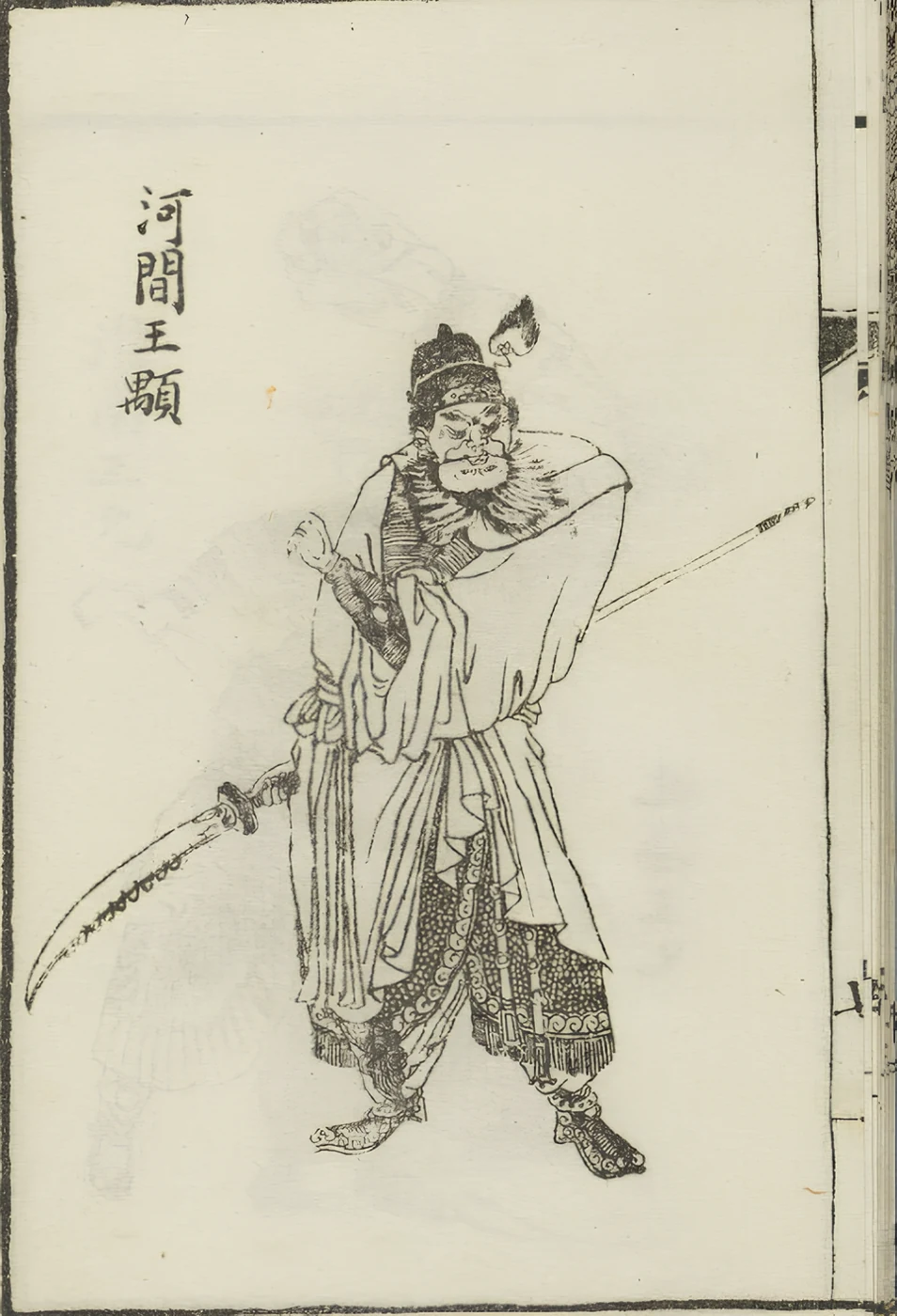
?–306 CE
Senior official
Sima Yong
司马颙
Sima Yong (birth year unknown–306), courtesy name Wenzai, was a native of Wen County, Henei, present-day Wen County, Henan. He was a Western Jin imperial prince and senior official and one of the participants in the War of the Eight Princes. He was a grandson of Sima Fu, Prince Xian of Anping and younger brother of Sima Yi, and a son of Sima Gui, Prince Lie of Taiyuan. In 277, the third year of the Xianning era, he was…
?–306 CEWestern Jin
PROFILE
Sima Yong (birth year unknown–306), courtesy name Wenzai, was a native of Wen County, Henei, present-day Wen County, Henan. He was a Western Jin imperial prince and senior official and one of the participants in the War of the Eight Princes. He was a grandson of Sima Fu, Prince Xian of Anping and younger brother of Sima Yi, and a son of Sima Gui, Prince Lie of Taiyuan. In 277, the third year of the Xianning era, he was enfeoffed as Prince of Hejian and later held commands at Ye and in Guanzhong. During the War of the Eight Princes, he used Chang'an as his base and joined Sima Ying, Prince of Chengdu, in defeating Sima Ai, Prince of Changsha. For a time he controlled Emperor Hui and dominated court politics. He was later defeated by Sima Yue, Prince of Donghai, and in 306, the first year of the Guangxi era, was killed by Liang Chen, a subordinate of Sima Mo, Prince of Nanyang, while traveling to take up an appointment as Situ.
- Alternate name
- Prince of Hejian
- Courtesy name
- Wenzai
- Period
- Western Jin
- Dynasty/Regime
- Western Jin
- Identity
- Senior official
- Ethnicity/Ethnic affiliation
- Not reliably confirmed in historical sources
- Ancestral home
- Wen County, Henei (present-day Wen County, Henan)
- Date of birth
- Unknown
- Place of birth
- Unknown
- Date of death
- 306
- Place of death
- Unknown
- Highest office
- See Biography and Major Deeds
- Major achievements
- Descendant of Sima Yi's brother; used Chang'an as a base while participating in struggles for control of the Central Plains
LIFE TIMELINE
Transferred to the title Prince of Hejian
Served as General of the North of the Household and guarded Ye
Replaced Sima Rong, Prince of Liang, as General Who Pacifies the West and guarded Guanzhong
After Sima Lun usurped the throne, first supported Sima Lun and later responded to Sima Jiong, Prince of Qi; promoted to Attendant-in-Ordinary and Grand Commandant
Adopted Li Han's plan and raised troops against Sima Jiong
Sent Zhang Fang with seventy thousand elite troops against Luoyang and Sima Ai, Prince of Changsha
After Sima Ai was killed, became Grand Preceptor, Grand Commander, and governor of Yong Province; deposed Crown Prince Sima Tan and made Sima Ying Imperial Younger Brother and Heir
Zhang Fang forced Emperor Hui to move to Chang'an; Sima Yong selected officials and controlled the government
Sima Yue raised troops; Sima Yong killed Zhang Fang in an attempt to make peace, was defeated, and fled into Mount Taibai
Returned to Chang'an, was soon defeated again by Sima Yue's forces, and was killed by Liang Chen while traveling to take up office as Situ
BIOGRAPHY
Biography
Family Background and Early Life
Sima Yong was a member of the Western Jin imperial clan. He was a grandson of Sima Fu, Prince Xian of Anping and younger brother of Sima Yi, and a son of Sima Gui, Prince Lie of Taiyuan. Sima Fu was a highly respected senior imperial clansman in the early Western Jin, having lived through both Wei and Jin and being known for caution and self-restraint. Although Sima Yong belonged to the imperial clan, his branch was relatively distant from the line of Emperor Wu Sima Yan.
Sima Yong first inherited his father's title Prince of Taiyuan and went to his fief in 276, the second year of the Xianning era. The following year he was transferred to the title Prince of Hejian. In youth he enjoyed a good reputation, was said to take wealth lightly, value capable men, and treat scholars with respect. When he attended court together with other princes, Emperor Wu Sima Yan reportedly praised him as a figure who could serve as a model for the various princely states. This judgment indicates the standing he once enjoyed within the imperial clan and helped explain why he was later entrusted with important commands.
On the ninth day of the eighth month of 291, the first year of Yuankang, Sima Yong became General of the North of the Household and took charge of Ye. Ye was an important northern stronghold, once a secondary capital of Cao Wei and still a major military position in Hebei during the early Western Jin. In the ninth month of 299, the ninth year of Yuankang, Sima Yong replaced Sima Rong, Prince of Liang, as General Who Pacifies the West and was stationed in Guanzhong. Regulations at the time normally prevented more distant imperial kinsmen from commanding Guanzhong, but Sima Yong was exceptionally selected because of his reputation for ability. Guanzhong, home to the former Western Han capital, was strategically important, and his appointment shows the court's confidence in him at that time.
Opportunism and Rise During the War of the Eight Princes
In 301, recorded here under the second year of Yongkang, Sima Lun, Prince of Zhao, usurped the throne and Sima Jiong, Prince of Qi, prepared to attack him. Xiahou Shi, a former staff officer of the General Who Pacifies the West, claimed the title Attendant Censor and assembled several thousand men at Shiping in support of Sima Jiong, then sent a messenger urging Sima Yong to rise. Following the strategy of his senior aide Li Han, Sima Yong initially watched developments. He sent registrar Fang Yang and Zhang Fang, a man of Hejian Kingdom, to attack Xiahou Shi. They captured Xiahou Shi and more than ten of his followers and cut them in half in the market at Chang'an. When Sima Jiong's proclamation arrived, Sima Yong arrested the messenger and sent him to Sima Lun. Sima Lun then called on Sima Yong for troops, and Sima Yong dispatched Zhang Fang with strong commanders from the lands west of the passes.
When Zhang Fang reached Huayin, Sima Yong learned that Sima Jiong and Sima Ying had very strong armies. He therefore additionally appointed Li Han General Who Soars Like a Dragon and sent him together with army protector Xi Wei and others to recall Zhang Fang, changing sides to support the campaign of Sima Jiong and Sima Ying against Sima Lun. By the time Zhang Fang's troops reached Tong Pass, Sima Lun and Sun Xiu had already been killed and Emperor Hui had been restored. When Sima Jiong distributed rewards, he was angered by Sima Yong's initial refusal to join him but, recognizing that Sima Yong had ultimately aided the enterprise, promoted him to Attendant-in-Ordinary and Grand Commandant and granted him the Three Bestowments.
Sima Yong's conduct in the episode showed marked opportunism: he first supported Sima Lun and then switched to the anti-Lun coalition. Although he gained high office, his tendency to change sides was already evident.
Destruction of Sima Ai and Control of Government
In 302, the second year of Yongning, Li Han was serving as Commandant Who Assists the Army. Because he had feuds with Huangfu Shang, a staff officer of Sima Jiong, and Army Adjutant Zhao Xiang, he fled to Sima Yong and falsely claimed to possess a secret imperial order to attack Sima Jiong. He laid out the advantages of doing so. Sima Yong accepted his plan, immediately raised troops, and invited Sima Ying, Prince of Chengdu, to act with him. Li Han was appointed overall commander, stationed the armies at Yinpan, and placed the vanguard at Xin'an, about 120 li from Luoyang. Sima Yong simultaneously sent a proclamation ordering Sima Ai, Prince of Changsha, to attack Sima Jiong. After Sima Jiong fell, Sima Yong appointed Li Han governor of Henan.
In 303, the second year of Tai'an, Sima Yong ordered Li Han, Feng Sun, Bian Cui, and others to plot secretly to kill Sima Ai. Huangfu Shang learned that Li Han had earlier forged an edict and was conspiring with Sima Yong and informed Sima Ai, who executed Li Han and the others. On hearing of Li Han's death, Sima Yong immediately raised troops under the pretext of punishing Huangfu Shang and appointed Zhang Fang overall commander of seventy thousand elite soldiers advancing on Luoyang. Zhang Fang attacked Huangfu Shang, who initially resisted but was defeated. Zhang then advanced to Ximing Gate. Sima Ai led the central army and the left and right guards to meet him. Zhang Fang suffered a major defeat with more than five thousand dead. He established camp west of the Jueshui bridge, built several layers of fortifications, and brought in provisions from outside. Sima Ai, accompanying Emperor Hui, also came out of the city to attack Zhang Fang but was unsuccessful.
The two sides fought for several months, continuing into 304. Sima Ai repeatedly defeated the combined armies of Sima Yong and Sima Ying and killed or captured sixty to seventy thousand men. His army, however, became short of food, though the soldiers were still willing to fight and defend Luoyang. Zhang Fang concluded that victory was difficult and proposed returning to Chang'an. At this point Sikong Sima Yue, serving at court, feared that Sima Ai's hungry army would eventually collapse. He conspired with several palace commanders, seized Sima Ai at night, confined him in Jinyong City, and opened the city to Sima Yong's forces. Sima Ai's former subordinates planned to break him out of prison. Sima Yue, frightened, secretly informed Zhang Fang, who sent three thousand men to Jinyong City, took Sima Ai back to his camp, and burned him alive.
After Sima Ai's death, Zhang Fang returned to Chang'an. Emperor Hui issued an edict appointing Sima Yong Grand Preceptor, Grand Commander, and governor of Yong Province. Sima Yong deposed Crown Prince Sima Tan, established Sima Ying, Prince of Chengdu, as Imperial Younger Brother and Heir, changed the era name, and proclaimed a general amnesty. At this point Sima Yong effectively controlled the Western Jin court.
Decline and Defeat
In 305, the second year of Yongxing, General of the Left Guard Chen Zhen accompanied Emperor Hui in a campaign against Sima Ying, and Sima Yong again sent Zhang Fang with twenty thousand soldiers to assist Ye. After Emperor Hui reached Ye and Sima Ying was later defeated by Wang Jun, Sima Ying carried the emperor back to Luoyang. Zhang Fang, stationed there, led troops into the palace, forced Emperor Hui to his camp, looted government treasuries, and intended to burn the palaces and ancestral temple so that all would lose hope of returning. Lu Zhi dissuaded him. Zhang Fang then forced Emperor Hui to go to Chang'an. Sima Yong selected and appointed officials there and renamed Qin Province as Ding Province.
Sima Yue, Prince of Donghai, raised troops in Xu Province and called for the emperor to be brought back east. Guanzhong was greatly alarmed. Zhang Fang proposed to Sima Yong: “I still command more than one hundred thousand soldiers. We should escort Emperor Hui back to his palace in Luoyang, send the Prince of Chengdu Sima Ying back to Ye, leave you to guard Guanzhong, while I attack Boling in the north. In this way the realm may become somewhat settled.” Sima Yong considered the matter too difficult and rejected the proposal. He instead issued a military tally to Liu Qiao, promoted him to General-in-Chief Who Guards the East, and sent Sima Ying to lead the armies of Lou Bao, Wang Chan, and others at the Yellow River bridge against Sima Yue. Wang Jun sent Army Protector Liu Gen with three hundred cavalry to the riverbank; Wang Chan fought him and was killed. Sima Ying camped in Zhang Fang's former fortifications, while Sima Xiao, Prince of Fanyang, sent Xianbei cavalry together with troops from Pingchang and Boling to attack the bridge. Lou Bao fled west; pursuing cavalry reached Xin'an, and countless men died along the road.
In 306, the third year of Yongxing, public resentment over Zhang Fang's abduction and relocation of Emperor Hui helped Sima Yue rally the eastern princes on an agreed date to restore the emperor. Sima Yue first sent men urging Sima Yong to return Emperor Hui to the capital and divide the realm at the Shaan divide. Sima Yong wished to agree, but Zhang Fang objected. After the eastern armies won major victories and Sima Ying's forces were defeated, Sima Yong finally ordered Zhi Fu, one of Zhang Fang's trusted commanders, to kill Zhang Fang at night and send his head to the advancing eastern army. Soon afterward Sima Yong reversed himself, sent Diao Mo to defend Tong Pass, blamed Zhi Fu for killing Zhang Fang, and executed Zhi Fu as well. Sima Yong first sent Lü Lang and others to hold Yingyang. Liu Kun, military adjutant of Sima Xiao, showed Zhang Fang's head to Lü Lang, who surrendered. The eastern army was now very strong, defeated Diao Mo, and entered the passes. Frightened, Sima Yong sent Ma Zhan and Guo Wei to resist at the Ba River; they too were defeated and fled. Sima Yong escaped alone in a single cart to Mount Taibai.
The eastern army entered Chang'an and Emperor Hui returned to Luoyang. Liang Liu, Grand Guardian of the Imperial Younger Brother, was appointed General Who Guards the West to hold Guanzhong. Ma Zhan and others came to Liang Liu and took the opportunity to kill him inside the city. Ma Zhan then joined Liang Mai, administrator of Shiping, and went to the Southern Mountains to welcome Sima Yong. At first Sima Yong refused to reenter his residence. Chang'an magistrate Su Zhong and Secretariat Supervisor Zhu Yong persuaded him to submit a memorial falsely claiming that Liang Liu had died of illness. Pei Hao, administrator of Hongnong, Jia Kan, administrator of Qin Kingdom, Jia Pi, administrator of Anding, and others raised loyalist forces against Sima Yong and killed Ma Zhan, Liang Mai, and their followers. Sima Yue sent Army Protector Mi Huang with troops from his own fief against Sima Yong. At Zheng, Sima Yong's commander Qian Xiu resisted Mi Huang, but Mi Huang killed Qian Xiu and his two sons. Loyalist forces now occupied Guanzhong, leaving Sima Yong holding only an isolated city.
In 306, the first year of Yongjia according to the source text, Sima Yue issued an edict appointing Sima Yong Situ. Sima Yong accepted the summons and set out for his new post. Sima Yue's younger brother Sima Mo, Prince of Nanyang, sent his subordinate Liang Chen to Yonggu at Xin'an, east of present-day Mianchi, Henan. Liang Chen strangled Sima Yong in his carriage and killed his three sons. An edict then appointed Sima Rong, son of Sima Zhi, Prince Yuan of Pengcheng, as Sima Yong's heir and transferred him to the title Prince of Lecheng County.
Major Activities
Political Activities
Sima Yong's political career ran through nearly the entire War of the Eight Princes. When Sima Lun usurped the throne, he first supported Sima Lun and later shifted to Sima Jiong, for which he rose to Attendant-in-Ordinary and Grand Commandant. In 302 he adopted Li Han's plan and raised troops against Sima Jiong. He later joined Sima Ying to destroy Sima Ai, deposed Crown Prince Sima Tan, made Sima Ying imperial heir, and assumed the posts of Grand Preceptor, Grand Commander, and governor of Yong Province, effectively taking control of the court. He later lost the struggle with Sima Yue and was killed.
Military Activities
While based in Guanzhong, Sima Yong relied heavily on Zhang Fang. In 303 he sent Zhang Fang with seventy thousand elite troops against Luoyang and fought Sima Ai's army for several months. In 304 Zhang Fang forced Emperor Hui to move to Chang'an, allowing Sima Yong to issue orders from there. In 305 he sent troops to aid Ye and dispatched Sima Ying to the Yellow River bridge against Sima Yue. His forces were ultimately defeated, and he fled alone into Mount Taibai.
Relations with Contemporaries
Sima Yong allied with Sima Ying, Prince of Chengdu, to destroy Sima Ai and later established Sima Ying as Imperial Younger Brother and Heir. He was an enemy of Sima Yue, Prince of Donghai, and was ultimately killed by forces under Sima Yue's younger brother Sima Mo. He relied closely on Li Han as adviser and Zhang Fang as commander. Yet he later killed Zhang Fang in an attempt to negotiate peace and then killed Zhi Fu, who had carried out the assassination, illustrating the inconsistency for which later historians criticized him.
Personal Relations
Family
- Grandfather: Sima Fu, Prince Xian of Anping
- Father: Sima Gui, Prince Lie of Taiyuan
- Son: Sima Song, Marquis of Zhending County; two other sons whose names are unknown, all killed with Sima Yong
- Adopted heir: Sima Rong, son of Sima Zhi, Prince Yuan of Pengcheng, later transferred as Prince of Lecheng County
Allies and Subordinates
- Sima Ying, Prince of Chengdu: Political ally
- Zhang Fang: Subordinate commander, later killed
- Li Han: Adviser, later killed by Sima Ai
- Zhi Fu: Trusted commander under Zhang Fang who killed Zhang Fang and was subsequently killed by Sima Yong
- Ma Zhan and Liang Mai: Former commanders who welcomed Sima Yong back to Chang'an
Enemies
- Sima Jiong, Prince of Qi: Attacked by Sima Yong
- Sima Ai, Prince of Changsha: Killed by Zhang Fang
- Sima Yue, Prince of Donghai: Ultimately defeated Sima Yong
- Sima Mo, Prince of Nanyang: Sent men who killed Sima Yong
Historical Assessment
Tang and Earlier Assessments
- Fang Xuanling and the other compilers of the Book of Jin wrote: “Yong relied on Li Han's cunning deceit and Zhang Fang's violent cruelty. Thus he caused Wumin to lose his head and Changsha to be executed, indulged his intention to ignore the ruler, and boasted of strength founded on injustice. The imperial carriage's journey north was unlike a campaign with battle; the emperor's westward progress was not a tour to inspect ranks and customs. A fire spreading across a plain may still be extinguished—how much less could such cruel endurance escape its consequences?”
- The Book of Jin also says that in youth he “had a pure reputation, took wealth lightly, and valued scholars,” acknowledging his earlier standing.
- Emperor Wu Sima Yan reportedly praised Sima Yong as someone who “could serve as a model for the various states,” showing his early reputation within the imperial clan.
Song and Yuan Periods
- Sima Guang's Comprehensive Mirror in Aid of Governance gives a detailed account of Sima Yong throughout the War of the Eight Princes and treats him as one of the important drivers of Western Jin collapse.
- Hu Sanxing, in his annotations to the Comprehensive Mirror in Aid of Governance, frequently criticized Sima Yong's repeated reversals, particularly killing Zhang Fang to seek peace and then executing Zhi Fu for carrying out the deed.
Ming and Qing Periods
- Wang Fuzhi, in Reflections on Reading the Comprehensive Mirror, discussed Sima Yong together with Sima Ying and argued that the princes each pursued private ambitions and attacked one another, gravely weakening the Western Jin and leading toward collapse.
- Zhao Yi, in Notes on the Twenty-Two Histories, observed that Sima Yong held the strategic Guanzhong region and therefore possessed substantial advantages, but poor use of personnel and repeated changes of decision ultimately brought defeat.
Modern Assessments
- Lü Simian, in History of the Jin and Northern and Southern Dynasties, treated Sima Yong as a major Guanzhong-based contender for central power during the War of the Eight Princes and attributed his defeat to strategic hesitation and internal contradictions.
- Tian Yuqing, discussing the War of the Eight Princes in Aristocratic Politics of the Eastern Jin, regarded the alliance of Sima Yong and Sima Ying as a typical example of imperial princes struggling for control of the central government.
- Modern scholars generally hold that although Sima Yong enjoyed a good reputation in his early years, his repeated reversals and killing of officials during the War of the Eight Princes made him significantly responsible for Western Jin decline.
FIGURES ASSOCIATED WITH THIS DYNASTY
Bibliography
- Book of Jin, vol. 59, “Biographies 29”
- Book of Jin, vol. 4, “Imperial Annals 4”
- Lü Simian, History of the Jin and Northern and Southern Dynasties