Age one | Born in Dongcheng, Linhuai, modern Dingyuan County, Anhui
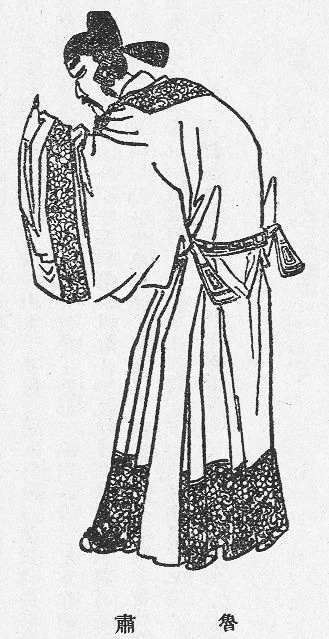
172 CE–217 CE
Generaldiplomat
Lu Su
鲁肃
Lu Su (172–217), courtesy name Zijing, was from Dongcheng in Linhuai, now Dingyuan County in Anhui. He was a strategist, diplomat, and military commander of Eastern Wu in the late Eastern Han. Born into a very wealthy household, he was generous by temperament and formed a close friendship with Zhou Yu in his youth. In 200, the fifth year of the Jian'an era, he presented Sun Quan with the "Bedside Plan," outlining a strategy…
172 CE–217 CESun Wu
PROFILE
Lu Su (172–217), courtesy name Zijing, was from Dongcheng in Linhuai, now Dingyuan County in Anhui. He was a strategist, diplomat, and military commander of Eastern Wu in the late Eastern Han. Born into a very wealthy household, he was generous by temperament and formed a close friendship with Zhou Yu in his youth. In 200, the fifth year of the Jian'an era, he presented Sun Quan with the "Bedside Plan," outlining a strategy for establishing a power base in Jiangdong and competing for control of the realm. In 208, the thirteenth year of Jian'an, he opposed the prevailing calls for submission, urged Sun Quan to ally with Liu Bei against Cao Cao, and personally went to Jing Province to establish contact with Liu Bei, helping bring about the victory at the Battle of Red Cliffs. After Zhou Yu's death, Lu Su inherited his military command, was stationed at Lukou, and worked to preserve the Sun–Liu alliance. He died of illness in 217, aged forty-six.
- Other names
- Courtesy name Zijing
- Courtesy name
- Zijing
- Period
- Wu
- Date of Birth
- 172
- Date of Death
- 217
- Dynasty/Polity
- Wu
- Identity
- General; diplomat
- Ethnicity/People
- Not reliably confirmed in historical sources
- Native place
- Dongcheng, Linhuai, modern Dingyuan County, Anhui
- Place of birth
- Dongcheng, Linhuai, modern Dingyuan County, Anhui
- Place of death
- Unknown
- Highest office
- See Biography and Major Activities
- Major achievements
- Eastern Wu strategist; advocate of the Bedside Plan and of alliance with Liu Bei against Cao Cao; a key promoter of the joint resistance that led to victory at the Battle of Red Cliffs.
- Lifespan
- 46 years
LIFE TIMELINE
Age thirteen | His father died; lived with his grandmother, distributed wealth to recruit associates, and practiced swordsmanship, riding, and archery
Age twenty-four | Zhou Yu, then magistrate of Juchao, came to ask for grain; Lu Su pointed to one of his granaries and gave it to him, beginning their close friendship
Age twenty-seven | Crossed the Yangtze eastward with Zhou Yu and joined Sun Ce, who appreciated his abilities
Age twenty-nine | After Sun Ce was assassinated, joined Sun Quan through Zhou Yu's recommendation and proposed the Bedside Plan
Age thirty-seven | Strongly advocated an alliance with Liu Bei against Cao Cao, helping create the Sun–Liu alliance and defeat Cao Cao at the Battle of Red Cliffs
Age thirty-eight | Urged Sun Quan to lend Nan Commandery to Liu Bei in order to strengthen the alliance
Age thirty-nine | After Zhou Yu's death, assumed command of his troops and became Administrator of Hanchang and General of the Household Who Attacks the Enemy
Age forty-three | Appointed General Who Crosses the River and stationed at Lukou, combining authority with benevolence
Age forty-four | Met Guan Yu in the famous Single-Sword Meeting and helped establish the Xiang River boundary, preserving the alliance
Age forty-six | Died of illness in office; Sun Quan personally attended the mourning rites
BIOGRAPHY
Biography
Family Background and Early Life Lu Su was born into a very wealthy household in Dongcheng, Linhuai, with substantial family property. His father died shortly after his birth, and he was raised by his grandmother. From youth, Lu Su was tall and striking in appearance, generous in temperament, liberal with gifts, and uninterested in household management. As the realm fell into disorder, he distributed wealth, sold land, relieved the poor, and cultivated capable men, winning broad goodwill in his locality. Lu Su displayed bold ambitions while still young and enjoyed unusual strategic ideas. Anticipating wider disorder, he studied swordsmanship, riding, and archery, gathered groups of young men, supplied them with clothing and food, hunted in the southern hills, and secretly organized and trained them in military skills. Local elders reportedly said, "The Lu clan is in decline, and yet it has produced this mad young man!" ### The Gift of a Granary and Choosing a Lord to Serve When Zhou Yu was serving as magistrate of Juchao, he heard of Lu Su's reputation and came with several hundred men to seek grain. Lu Su had two granaries containing three thousand hu of grain each. He immediately pointed to one and gave its entire contents to Zhou Yu. Zhou was astonished and recognized Lu as an extraordinary man. The two became close friends, compared in the source to the friendship between Gongsun Qiao and Jizha in the Spring and Autumn period. Yuan Shu later heard of Lu Su and appointed him magistrate of Dongcheng. Lu, however, judged Yuan Shu's government disorderly and incapable of great achievement, and led more than a hundred followers south to Juchao to join Zhou Yu. Pursuers caught up with them during the migration, but Lu drew his bow and shot through a shield, frightening them off and allowing his party to reach Juchao safely. In 198 Zhou Yu crossed the Yangtze eastward to join Sun Ce, and Lu accompanied him. Sun Ce appreciated Lu's abilities. Lu later returned to Dongcheng to mourn his grandmother. ### The Bedside Plan and Service under Sun Quan After Sun Ce was assassinated in 200, his younger brother Sun Quan succeeded him. Lu Su's friend Liu Ye wrote urging Lu to go north and join Zheng Bao. Zhou Yu learned of the plan and quoted Ma Yuan's observation that in the present age it was not only rulers who chose ministers; ministers also chose their rulers. He persuaded Lu to remain and strongly recommended him to Sun Quan. Sun Quan soon met Lu and shared a couch with him while drinking, privately discussing strategy for the realm. Lu Su then proposed what later became known as the Bedside Plan. He argued that the Han could not be restored and Cao Cao could not quickly be eliminated, so Sun Quan should establish a tripartite position in Jiangdong and watch for opportunities. While the north was preoccupied, Sun should eliminate Huang Zu, advance against Liu Biao, take control of the entire Yangtze region, and eventually assume an imperial title and contend for the realm. Sun Quan modestly replied at the time that he sought only to do his utmost in one region in support of the Han, but inwardly he approved of Lu's analysis. Zhang Zhao and others criticized Lu as young and careless, but Sun Quan ignored them, valued Lu still more, and gave rich gifts of clothing and furnishings to Lu's mother, restoring the household to its former prosperity. ### Alliance with Liu Bei and the Battle of Red Cliffs In 208 Liu Biao died. Lu Su analyzed the strategic importance of Jing Province for Sun Quan and asked permission to travel there ostensibly to offer condolences, observe the situation, and persuade Liu Bei to stabilize Liu Biao's former followers and cooperate against Cao Cao. Sun Quan approved. Lu had only reached Xiakou when he learned that Cao Cao was already advancing into Jing Province and hurried day and night. By the time he reached Nan Commandery, Liu Cong had surrendered and Liu Bei was withdrawing south. Lu met Liu Bei at Changban in Dangyang, explained the strength of Jiangdong, and urged him to combine forces with Sun Quan against Cao Cao. Liu Bei was delighted, moved to Xiakou, and sent Zhuge Liang with Lu Su to Chaisang to meet Sun Quan. When Sun Quan heard of Cao Cao's eastward advance, he summoned his commanders to deliberate. Most favored submission to Cao Cao; Lu Su alone remained silent. When Sun Quan rose to change clothes, Lu followed him beneath the eaves and explained that surrender would have very different consequences for Sun Quan than for subordinate officials. He urged Sun to decide quickly. Sun Quan replied that the arguments of the other men had deeply disappointed him and that Lu had opened up a grand strategy matching his own mind, calling Lu a gift from Heaven. Lu also urged Sun Quan to recall Zhou Yu. These discussions ultimately helped produce the alliance that defeated Cao Cao at the Battle of Red Cliffs. After the battle, Sun Quan relied on Lu even more and compared him to Deng Yu. ### Lending Jing Province and Preserving the Alliance After Red Cliffs, Liu Bei sought authority over Jing Province. Lü Fan and other commanders advised Sun Quan to detain Liu Bei, and Zhou Yu also memorialized against granting his request. Lu Su alone argued from the larger strategic situation that Nan Commandery should be lent to Liu Bei so that the Sun–Liu alliance could continue against Cao Cao. He argued that however formidable Sun Quan might be, Cao Cao remained too powerful; since Wu had only recently gained Jing and had not yet established deep goodwill there, lending territory to Liu Bei and allowing him to pacify the population would be the better policy. Cao Cao would gain another enemy and Sun Quan another ally. Sun Quan accepted the recommendation, and the source says Cao Cao was so startled on hearing the news that the writing brush fell from his hand. After Zhou Yu died, Lu Su took command of his troops. He served as Administrator of Hanchang and later General Who Crosses the River, stationed at Lukou. He combined strict authority with generosity, and his forces grew to more than ten thousand men. In 215 conflict over Jing Province brought Sun Quan and Liu Bei's side close to open rupture. Lu Su arranged a direct meeting with Guan Yu, the famous Single-Sword Meeting, and helped establish the Xiang River as a boundary dividing Jing Province, preventing the alliance from collapsing at that moment. ### Death Lu Su died of illness in 217 at the age of forty-six. Sun Quan personally attended his funeral and grieved deeply. Zhuge Liang also held mourning rites for him.
His Family, His Early Years, and His Gift of Grain to Zhou Yu
Lu Su, whose courtesy name was Zijing, was a man of Dongcheng in Linhuai; his father died when he was born and he lived with his grandmother. His family was very rich, and he "loved by nature to give"; the realm being already in disorder, he did not manage his estate but scattered his wealth, sold his land and made it his business to relieve the distressed and win the support of scholars, so that he had the goodwill of his district. The Wu Shu says that he was of remarkable build, that from youth he had a great spirit and loved strange plans, and that when the realm was about to fall into disorder he learned to fence and to shoot from horseback and gathered young men about him, giving them clothes and food and going hunting in the southern hills, secretly organizing and drilling them in arms and war, so that the elders all said that the Lu family was in decline to have produced such a mad boy. When Zhou Yu was chief of Juchao he came with several hundred men to visit Lu Su and ask his help with grain; and Lu Su's house had two round granaries of three thousand hu each, and Zhou Yu had no sooner spoken than Lu Su, without the least hesitation, pointed to one of them and gave it to him. From this Zhou Yu was sure that Lu Su was a man unlike others and sought his friendship, so that the two formed the bond of Gongsun Qiao and Ji Zha in the Spring and Autumn period. Yuan Shu, hearing of his name, made him chief of Dongcheng; but Lu Su, seeing that Yuan Shu had no order and was not a man with whom to undertake anything, took the old and weak and led more than a hundred young bravoes south to Juchao to join Zhou Yu, crossing east with him and leaving his household at Qu'a; and when his grandmother died he went back to Dongcheng to bury her. After that, as the strong men rose on every side and the central plain fell into disorder, Lu Su told his followers that the central land had lost its bonds and robbers were running wild, that the land between the Huai and the Si was no place for a seed to survive, and that he had heard that east of the river lay ten thousand li of rich fields with a wealthy people and strong soldiers where harm might be avoided; and he asked whether they would go with him to that good land and watch the turn of events. They all agreed; and he put the weak in front and the strong behind, three hundred men and women in all. When the province's horsemen came in pursuit, Lu Su and his party went slowly, drew up their men and drew their bows, telling them that they were men and should understand the situation — that with the realm in military chaos merit went unrewarded and no pursuit brought no penalty, and asking why they pressed them so; and he planted a shield himself and shot at it, the arrows going clean through. The horsemen, admiring his words and judging that they could not overcome him, went back. Lu Su crossed the river to see Sun Ce, who also thought him remarkable.
The Plan on the Couch
Sun Quan at once received Lu Su and was delighted with his conversation; and when the guests rose and withdrew and Lu Su had taken his leave, he was presently brought quietly back by Sun Quan to drink with him on the same couch. Sun Quan said that the Han house was like a great building about to fall and the four quarters were in confusion, that he had inherited the work of his father and elder brother and hoped for the achievement of a Huan of Qi or a Wen of Jin, and asked, since Lu Su had graciously come to him, what plan he could offer. Lu Su answered that the founder of Han had wished to honour and serve Emperor Yi and could not, because Xiang Yu was in the way; that Cao Cao today was as Xiang Yu then, so that how could the general achieve a Huan or a Wen; that in his own judgement the Han house could not be revived nor Cao Cao suddenly removed; and that for the general the only course was to stand as one leg of a tripod east of the river and watch for the cracks in the realm, which would draw no suspicion; and that for this reason: the north was truly full of business, and taking advantage of that business he should wipe out Huang Zu, advance against Liu Biao, and push to the farthest reach of the Yangtze and hold it all, and then take the imperial title and plan for the realm, which would be the work of the founder of Han. Sun Quan answered that he was doing his utmost in one quarter and hoped only to support the Han, and that such words were beyond him. Zhang Zhao found fault with Lu Su for want of humility and spoke ill of him, saying he was young and careless and not to be employed; but Sun Quan took no notice at all and valued him the more, giving Lu Su's mother clothes, curtains and household goods in abundance, so that she lived in wealth as before.
The Mourning for Liu Biao and the Union with Liu Bei
When Liu Biao died Lu Su told Sun Quan that Jing and Chu bordered on their own state, that the water ran northward there, that without it lay the Han and the rivers and within it mountains, so that it was as strong as a wall of metal, ten thousand li of rich fields with a prosperous people and soldiers; that to hold it would be the capital for an imperial work; that Liu Biao being newly dead his two sons were not on good terms and the generals of the army were divided; and that Liu Bei, a fierce hero of the realm at odds with Cao Cao and lodging with Liu Biao, whom Liu Biao envied and could not employ, might either be brought into agreement with the sons, in which case they should be comforted and a good league made, or might fall out with them, in which case another plan must be made to accomplish the great work. He asked to be sent to condole with Liu Biao's two sons, to comfort those in charge of the army, and to persuade Liu Bei to comfort Liu Biao's following and with one mind deal with Cao Cao, which Liu Bei would gladly do; and he said that if this could be brought about the realm might be settled, and that if they did not go quickly Cao Cao would be beforehand with them. Sun Quan sent him at once. Reaching Xiakou he heard that Cao Cao had already moved on Jingzhou, and pressed on day and night; and when he came to Nanjun, Liu Biao's son Liu Cong had already surrendered to Cao Cao, and Liu Bei, in alarm, was about to cross the river south, whereupon Lu Su went straight to meet him, came up with him at Changban in Dangyang, made known Sun Quan's intentions, set out the strength of the land east of the river, and urged Liu Bei to join forces with Sun Quan, at which Liu Bei was much pleased. Zhuge Liang being then with Liu Bei, Lu Su told him that he was a friend of his elder brother Ziyu, and the two at once made friends. Liu Bei then went to Xiakou, sent Zhuge Liang as envoy to Sun Quan, and Lu Su also returned with his report. Pei Songzhi's note observes that the joining of Liu Bei with Sun Quan to resist the central power was wholly Lu Su's own plan.
His Opposition to the General Voice and the Battle of Red Cliff
When Cao Cao came south Sun Quan assembled his generals to deliberate, and all urged him to receive Cao Cao, while Lu Su alone said nothing. Sun Quan rose to go to the privy, and Lu Su followed him under the eaves; and Sun Quan, knowing he wished to speak privately, took his hand and asked what he had to say. Lu Su answered that he had been watching the opinions of the company, which were all calculated to lead the general astray, and that they were not men with whom to plan great matters; that he himself might indeed receive Cao Cao, but that the general could not, and he gave the reason: if he surrendered, Cao Cao would send him back to his district and, weighing his name and rank, he would still not fail of a post among the lesser officials, riding in a calf-drawn cart with attendants, mixing with the gentry, and rising in time to a province or commandery; but if the general surrendered, where would he be placed? He begged him to settle the great plan early and not to use the opinions of the company. Sun Quan sighed and said that their proposals had greatly disappointed him, and that Lu Su's opening of the great plan agreed exactly with his own mind, and that Heaven had given Lu Su to him. Zhou Yu being then on mission at Poyang, Lu Su urged that he be recalled by a swift messenger; and Sun Quan put Zhou Yu in charge of the business and made Lu Su colonel of the assisting army to help plan the strategy. Another record, in the Wei Shu and the Jiuzhou Chunqiu, has it that when Cao Cao marched on Jingzhou Sun Quan was greatly afraid, and that Lu Su, really wishing to urge him to resist, provoked him by saying that Cao Cao was a stern enemy who had just absorbed Yuan Shao with very fine troops, and that riding the prestige of victory against a state in mourning and disorder he was certain to succeed, so that it would be better to send troops to help him and send the general's household to Ye, or otherwise all would be lost; at which Sun Quan was furious and would have beheaded him, whereupon Lu Su said that the matter was urgent, and that if there were another plan, why not send troops to help Liu Bei instead of beheading him — and Sun Quan agreed and sent Zhou Yu to help Liu Bei. Sun Sheng argues that this is inconsistent with the Wu Shu and the Jiangbiao Zhuan, in which Lu Su no sooner saw Sun Quan than he spoke of resisting Cao Cao and discussed imperial strategy, and that when Liu Biao died he asked to be sent to observe the turn of events, so that he cannot also have provoked Sun Quan into receiving Cao Cao; and that since many then advised receiving him, the story that Sun Quan alone wished to behead Lu Su is not his argument.
His Reception after Red Cliff, the Lending of Jingzhou, and His Taking Over the Command
After Cao Cao was beaten off Lu Su returned first, and Sun Quan had all the generals turn out to welcome him. As Lu Su was about to enter the gate and bow, Sun Quan rose and did him honour, saying: "Zijing, is it enough to display you that I hold the saddle and dismount to welcome you?" Lu Su stepped forward and answered: "Not yet." All who heard were astonished; and having taken his seat Lu Su slowly raised his whip and said that he wished the supreme honour's majesty and virtue to reach the four seas and embrace the nine provinces, to complete the imperial work, and then to summon him with a comfortable carriage and soft wheels — that would be the display. Sun Quan clapped his hands and laughed. After Liu Bei had taken Yizhou, Sun Quan asked for the three commanderies of Changsha, Lingling and Guiyang, and Liu Bei would not comply. Earlier, when Zhou Yu and Gan Ning had urged Sun Quan to take Shu while he had the chance, Sun Quan had consulted Liu Bei, who, having designs of his own, answered falsely that he and Liu Zhang were both of the imperial clan and that he hoped by the spirits of his forebears to restore the Han, that Liu Zhang had now offended everyone and that he himself was too frightened to hear of taking Shu and begged that he be spared, and that if his request were not granted he would let down his hair and retire to the hills; and Sun Quan granted his request. But afterwards Liu Bei marched west to swallow Liu Zhang, leaving Guan Yu to hold Jingzhou, at which Sun Quan said that the slippery fellow dared to play him false. When the generals urged Sun Quan to detain Liu Bei and Zhou Yu, being away, memorialized to the same effect, only Lu Su, taking the whole situation into view, urged that the Nanjun commandery of Jingzhou be lent to Liu Bei so that Sun and Liu might be joined against Cao Cao, saying that though Sun Quan was without peer in martial majesty, Cao Cao's power was too great, that they had but just taken Jingzhou and their kindness and good faith were not yet spread among the people, and that to lend Jingzhou to Liu Bei to comfort the people there was the best policy, since thus Cao Cao gained an enemy and they a friend; and Sun Quan agreed. It is said that when Cao Cao heard that Sun Quan had lent Jingzhou to Liu Bei he was in the middle of writing a letter, and in his astonishment his pen fell to the ground. When Zhou Yu lay dying he wrote to Sun Quan recommending Lu Su in his place, saying that the realm was then full of confusion and trouble, which was what he pondered day and night, and that Lu Su's wisdom and capacity were equal to the task, so that he begged that he be employed in his place, and that on the day of his death he would have nothing left to regret; and Sun Quan took his advice and at once made Lu Su colonel of the martial courage, taking over the command from Zhou Yu. Zhou Yu's private troops of more than four thousand and his four fief counties all passed to Lu Su, and Cheng Pu was made governor of Nanjun. Lu Su first held Jiangling and afterwards moved down to camp at Lukou, where "his majesty and kindness were greatly felt, and his following increased by more than ten thousand," and he was made governor of Hanchang and general of the partial guard.
The Single-Sword Meeting and His Death
Lu Su's territory bordered on Guan Yu's, and the two sides were often suspicious of one another and the marches confused, Lu Su always soothing him with friendliness. After Liu Bei had settled Yizhou and Sun Quan's request for Changsha, Lingling and Guiyang was not granted, Sun Quan sent Lü Meng with troops to take them; and Liu Bei, hearing of it, came himself from Chengdu to Gong'an and sent Guan Yu to contend for the three commanderies, while Sun Quan moved up to Lukou and sent Lu Su to camp at Yiyang against Guan Yu, so that the alliance was on the point of breaking. At this juncture Lu Su, to preserve the alliance and give Cao Cao no opening, resolved to speak with Guan Yu face to face: "Lu Su invited Guan Yu to meet him, each bringing his troops to a hundred paces off, and asked that the generals come to the meeting singly with their swords only." By the Wu Shu, the generals feared a trap and said he should not go, and Lu Su said that the matter should be plainly set out, that Liu Bei had wronged their state and right and wrong were not yet decided, and that Guan Yu would not dare to defy orders in earnest; and he went to him. In the meeting Lu Su reproached Guan Yu several times, saying that their state had lent his house the land only because his army had been beaten and come from afar with nothing to live on, and that now that they had gained Yizhou they showed no mind to return it but were asked only for the three commanderies and still would not comply; and before he had finished, one of the men of Jingzhou said that land belonged only to the virtuous and had no fixed owner, whereupon Lu Su shouted at him sternly with a very sharp countenance, and Guan Yu too rose with his hand on his sword and told the man that this was a matter of state and that he knew nothing of it, motioning him to go. Lu Su reproached Guan Yu further, saying that he held a weighty charge and yet could not plainly set out the right division and support the times by righteousness, but relied on his weak host and sought to contend by force, so that a cause that is wrong grows old and could not prosper; and Guan Yu had no answer. Afterwards, through the meeting, the tension was eased, Sun Quan and Liu Bei agreed to divide Jingzhou, "cutting the Xiang river for the boundary," and the armies were withdrawn, so that the alliance could be maintained. In the twenty-second year of Jian'an, 217, Lu Su died of illness.
Major Activities
The Bedside Plan In 200 Lu Su presented Sun Quan with the Bedside Plan, outlining a strategy of establishing an independent power base in Jiangdong and ultimately contending for the realm. The source notes that this strategic conception was formulated before Zhuge Liang's Longzhong Plan and provided an intellectual foundation for the rise of Eastern Wu. ### Alliance with Liu Bei against Cao Cao In 208, as Cao Cao advanced south, Lu Su opposed the majority view and urged Sun Quan to ally with Liu Bei. He personally traveled to Jing Province to establish contact, helped form the Sun–Liu alliance, and at the Battle of Red Cliffs served as an officer assisting in military planning alongside Zhou Yu, contributing to Cao Cao's defeat. ### Lending Jing Province and the Single-Sword Meeting After Red Cliffs, Lu Su strongly supported lending Nan Commandery to Liu Bei in order to consolidate the alliance. In 215, when conflict over Jing Province intensified, Lu met Guan Yu directly and helped bring about the Xiang River division, avoiding an immediate break in the alliance. ### Garrisoning Lukou After Zhou Yu's death, Lu Su inherited his military authority and was stationed at Lukou. He governed troops effectively, combining authority with benevolence, expanded his force to more than ten thousand men, and helped maintain stability on Eastern Wu's western frontier.
The Strategic Logic of Joining Liu against Cao, Its Reversal by His Successor, and the Judgements of Historians
At Red Cliff the two houses of Sun and Liu beat Cao Cao with the weaker force, and this was in great part due to the careful planning of Lu Su and Zhuge Liang. After Red Cliff Cao Cao's strength was still greater than that of Liu Bei or Sun Quan, and Lu Su, as a statesman of far sight, was entirely clear about it: he held that neither Sun Quan in the east nor Liu Bei holding Jingzhou was enough to withstand Cao Cao, and that before the two houses lay three roads — to join against Cao Cao, to fight separately, or to submit without fighting and go over to him — and that "only the road of joining against Cao Cao was the right choice"; and he therefore held to that strategic line unswervingly all his life and gave it all his strength. As to its continuation after him, Lü Meng succeeded to his command and "secretly set out his plan" urging the taking of Guan Yu and the holding of the whole Yangtze, which Sun Quan adopted, so that the policy of alliance with Liu turned. Later judgements of Lu Su centre on this point: Sun Quan, reckoning his merits afterwards, said that he had at once argued against receiving Cao Cao and urged him to call Zhou Yu back quickly, to give him the host and strike, which was the second of the two delights; that his framing of policy far surpassed Zhang Yi and Su Qin; and that though he afterwards urged the lending of the land to Liu Bei, that was one shortcoming and not enough to outweigh his two excellences; and that in his handling of the army his camps were never lost, his orders were obeyed and prohibitions respected, no arrears were owed in his jurisdiction and nothing was picked up on the roads, so that his methods too were fine. Sun Quan also compared him to Deng Yu, saying that Lu Su was generous and of rare plan, and that at their first conversation he had touched on imperial work, which was like Deng Yu. Wang Fuzhi argued that the man who wished to join the Sun house with Liu Bei to plan together for the central plain was Lu Su, and the man who wished to join Liu Bei with the Sun house against Cao Cao was Zhuge Liang, and that both held to it all their lives without change; and that in Wu Zhou Yu and Lü Meng wrecked Lu Su's plan, as in Shu Guan Yu and Zhang Fei wrecked Zhuge Liang's, so that "Lu Su's death was Guan Yu's defeat." Chen Shou praised him as one who "established the insight of independent decision and stood out above the common, a rare talent indeed," and the Wu Shu says he "was good at discussion, able in letters and composition, of broad and far-reaching thought, with an understanding beyond other men." Later critics have also noted that the novel Romance of the Three Kingdoms and the stage make Lu Su an honest but somewhat commonplace elder, a foil to the contests of wit between Zhou Yu and Zhuge Liang, which does not agree with the history; such artistic figures belong to invention and should not be used as a basis for judging the man.
Personal Relations
- Lu Su had a son, Lu Shu, who later served Wu as General Who Displays Martial Valor, Marquis of Duting, and Commander of Wuchang. ### Friends and Allies - Zhou Yu: close friend; Lu gave him a granary of grain in their youth and later served Sun Quan alongside him
- Liu Ye: friend who once wrote urging Lu to go north and join Zheng Bao
- Zhuge Liang: ally; Lu described himself as a friend of Zhuge Liang's elder brother Ziyu, and the two developed a relationship ### Rulers - Sun Quan: Lu's lord; Lu presented him with the Bedside Plan and enjoyed his deep trust
- Sun Ce: appreciated Lu's abilities but died before making extensive use of him ### Colleagues - Zhang Zhao: criticized Lu as young and careless and argued that he should not be heavily relied upon
- Lü Fan: disagreed with Lu over whether to lend territory in Jing Province to Liu Bei ### Opponents - Cao Cao: principal political opponent; Lu consistently advocated resistance
- Guan Yu: negotiating counterpart within the Sun–Liu alliance and central figure in the Single-Sword Meeting
Historical Assessment
Contemporary Assessments - Sun Quan said that the arguments of the others had deeply disappointed him but Lu Su had opened up a grand strategy that matched his own intentions, calling Lu a gift from Heaven. He later compared Lu to Deng Yu and praised his extraordinary insight.
- Zhou Yu stated that Lu Su possessed sufficient intelligence and strategic ability to take over his responsibilities and requested that Lu succeed him.
- Zhuge Liang is quoted in the source as praising Lu Su's loyalty, courage, and seriousness in handling affairs. ### Wei, Jin, and Northern and Southern Dynasties - Western Jin historian Chen Shou wrote in the Records of the Three Kingdoms that Lu Su possessed independent judgment beyond ordinary men and was truly an extraordinary talent.
- Eastern Jin historian Sun Sheng rejected accounts in the Book of Wei and Jiuzhou Chunqiu claiming that Lu once advised Sun Quan to submit to Cao Cao, arguing that from his first meeting with Sun Quan Lu had advocated resistance and spoken of an imperial strategy. ### Tang and Song Periods - Tang writer Du Mu is cited as calling Lu Su a first-rank figure of Eastern Wu.
- Northern Song historian Sima Guang's Comprehensive Mirror in Aid of Governance records the Bedside Plan and Lu's role in the anti-Cao alliance in detail and treats him positively. ### Ming and Qing Periods - Ming commentator Li Zhi is quoted as saying that Lu Su's talent was ten times that of Zhou Yu.
- Qing thinker Wang Fuzhi, in Du Tongjian Lun, praised Lu's decision to preserve the alliance with Liu Bei as evidence of far-reaching judgment. ### Modern Assessments - Lü Simian, in Informal History of the Three Kingdoms, describes Lu Su as Eastern Wu's most far-sighted strategist and compares the Bedside Plan with the Longzhong Plan.
- Tian Yuqing, in Explorations in Qin, Han, Wei, and Jin History, treats Lu Su as a key figure in the Sun–Liu alliance and praises his political judgment.
- Modern scholars generally argue that Lu Su's image was diminished under the influence of Romance of the Three Kingdoms and that his actual historical importance was far greater than the novel suggests.
FIGURES ASSOCIATED WITH THIS DYNASTY
Bibliography
- Chen Shou, Records of the Three Kingdoms, Book of Wu, "Biography of Lu Su"
- Lü Simian, Informal History of the Three Kingdoms
- Tian Yuqing, Explorations in Qin, Han, Wei, and Jin History