Age thirty-one | Joined his elder brother Liao Yong'an in establishing a fortified base at Chaohu for self-defense
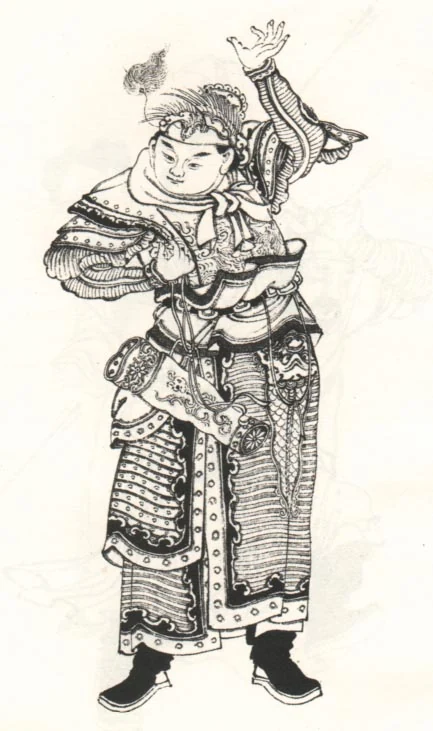
1323 CE–1375 CE
General
Liao Yongzhong
廖永忠
Liao Yongzhong (1323–1375), a native of Chaozhou (present-day Chaohu, Anhui), was a founding general of the early Ming and the younger brother of Liao Yong'an, Duke of Chu. In the late Yuan he joined his brother in establishing a fortified base at Chaohu for self-defense. He later submitted to Zhu Yuanzhang and led naval forces across the Yangtze, repeatedly earning military merit. He distinguished himself in the wars against…
1323 CE–1375 CEMing Dynasty
PROFILE
Liao Yongzhong (1323–1375), a native of Chaozhou (present-day Chaohu, Anhui), was a founding general of the early Ming and the younger brother of Liao Yong'an, Duke of Chu. In the late Yuan he joined his brother in establishing a fortified base at Chaohu for self-defense. He later submitted to Zhu Yuanzhang and led naval forces across the Yangtze, repeatedly earning military merit. He distinguished himself in the wars against Chen Youliang, Zhang Shicheng, Fang Guozhen, Chen Youding, and other rivals, later pacified Guangdong and Guangxi, and participated in the campaign that destroyed the Xia regime. He rose to Administrative Chancellor of the Secretariat and was enfeoffed Marquis of Deqing. In 1375, the eighth year of the Hongwu era, Zhu Yuanzhang ordered him to commit suicide for offenses including the unauthorized use of dragon-and-phoenix insignia. He died at the age of fifty-three. During the Hongguang reign of the Southern Ming, he was posthumously enfeoffed Duke of Qing.
- Other name
- Marquis of Deqing
- Period
- Ming
- Dynasty/Regime
- Ming
- Identity
- General
- Ethnicity/People
- Not reliably confirmed by historical sources
- Native place
- Chaozhou (present-day Chaohu, Anhui)
- Date of birth
- 1323
- Place of birth
- Place of birth unknown
- Date of death
- 1375
- Place of death
- Place of death unknown
- Highest office
- See Biography and Major Deeds
- Major achievements
- A naval commander of the uprising forces who made major contributions in pacifying eastern and western Zhejiang and in northern campaigns.
LIFE TIMELINE
Age thirty-two | Followed Liao Yong'an in submitting to Zhu Yuanzhang; led naval forces across the Yangtze and captured Caishi and Taiping
Age thirty-three | Took part in capturing Jiqing (present-day Nanjing), then Zhenjiang, Changzhou, and Chizhou
About age thirty-six | After Liao Yong'an was captured by Zhang Shicheng, inherited his position as assistant commissioner of the Privy Council and took command of his troops
Age thirty-seven | Defeated Chen Youliang’s army at the Battle of Longjiang and was promoted to co-administrator of the Privy Council
Age thirty-eight | Captured Anqing and Jiangzhou and was promoted to Right Assistant Administrator of the Branch Secretariat
Age forty | Fought fiercely in the Battle of Lake Poyang and won outstanding merit
Age forty-three | Ordered to escort Han Lin'er; Han drowned when the boat capsized at Guabu; subsequently followed Xu Da in taking eastern Huai territory
Age forty-four | Campaigned against Zhang Shicheng, captured Pingjiang, and was appointed Administrative Chancellor of the Secretariat; served as deputy general in the southern campaign, joined Tang He, induced Fang Guozhen to surrender, and captured Fuzhou
Age forty-five | Pacified central Fujian and captured Chen Youding; as General Who Conquers the South attacked Guangdong by sea, accepted He Zhen’s surrender, and pacified Guangdong and Guangxi
Age forty-six | Returned to the capital in the ninth month and was welcomed by Crown Prince Zhu Biao and the court; later again went out to pacify Quanzhou and Zhangzhou
Age forty-seven | Followed Xu Da on a northern expedition and captured Chahannao'er; enfeoffed Marquis of Deqing with an annual stipend of 1,500 shi and granted hereditary credentials
Age forty-eight | As deputy general of the western expedition followed Tang He against Shu, broke through Qutang Pass, advanced directly on Chongqing, and compelled Ming Sheng to surrender; praised in the Proclamation on the Pacification of Shu, which contained the phrase “Fu first, Liao second”
Age forty-nine | Campaigned north as far as Helin
Age fifty | Commanded naval forces at sea against wokou raiders
Age fifty-three | In the third month, ordered to commit suicide for offenses including unauthorized use of dragon-and-phoenix insignia
BIOGRAPHY
Biography
Family Background and Early Life
Liao Yongzhong came from a locally powerful family in Chaozhou, present-day Chaohu in Anhui. His elder brother Liao Yong'an was a well-known local strongman. As the Yuan dynasty collapsed and rival forces arose across the empire, the Chaohu region also descended into disorder. In 1354, Liao Yongzhong joined his elder brother in fortifying a position at Chaohu, gathering local people and establishing a naval stronghold as a regional armed force. Even when young, Liao Yongzhong was described as ambitious, intelligent, and courageous, and he showed notable military ability in the Chaohu naval force.
In 1355, as Zhu Yuanzhang’s power was rising, Liao Yong'an and Liao Yongzhong judged the situation and led their naval forces to submit to him. When Zhu Yuanzhang first met the younger Liao, he reportedly asked, “Do you also seek wealth and honor?” Liao Yongzhong replied that his wish was to serve an enlightened ruler, sweep away disorder, and leave his name in history. Zhu Yuanzhang praised the answer and thereafter regarded him highly. This began Liao Yongzhong’s long career of campaigning under Zhu Yuanzhang.
Crossing the Yangtze and Inheriting Command
After joining Zhu Yuanzhang, Liao Yongzhong assisted Liao Yong'an in leading the fleet across the Yangtze, a key step in the growth of Zhu’s power. They captured Caishi, Taiping Prefecture, Wuhu, and other places, took the Yuan commander Chen Yexian prisoner, and defeated Manzi Haiya and Chen Zhaoxian, helping clear the way for Zhu Yuanzhang’s capture of Jiqing Prefecture, present-day Nanjing. Liao Yongzhong later participated in taking Zhenjiang, Changzhou, and Chizhou and in campaigns against pirates around Jiangyin, earning merit in each operation.
Around 1359, Liao Yong'an was captured while fighting Zhang Shicheng and later died in captivity. Liao Yongzhong inherited his brother’s office as assistant commissioner of the Privy Council and took command of his troops. He attacked Zhao Pusheng’s river fortifications and recovered Zongyang. When Chen Youliang attacked Taiping and advanced toward Longjiang, Liao Yongzhong charged into the enemy formation while the main force under Zhang Desheng attacked. The other units followed, Chen Youliang’s army was heavily defeated, and Taiping was recovered. Liao Yongzhong was promoted to co-administrator of the Privy Council.
He thereafter continued campaigning against Chen Youliang. At Anqing, Zhu Yuanzhang used infantry as a diversion and ordered Liao Yongzhong to attack and capture the enemy’s naval stockade. Anqing fell, and Liao pursued as far as Xiaogushan. When attacking Jiangzhou, present-day Jiujiang, a strongly defended city on the Yangtze, he estimated the height of the walls and constructed a bridge on the stern of a ship, calling it a “heavenly bridge.” By maneuvering the vessel backward with the wind, he brought the bridge against the city wall and captured Jiangzhou in a single assault. The operation demonstrated his tactical ingenuity, and he was promoted to Right Assistant Administrator of the Branch Secretariat.
The Battle of Lake Poyang and Pacification of Jiangnan
In 1363, Chen Youliang and Zhu Yuanzhang fought their decisive battle on Lake Poyang. Liao Yongzhong distinguished himself in the fighting. When Chen Youliang’s general Zhang Dingbian drove directly at Zhu Yuanzhang’s vessel and placed it in danger, Chang Yuchun drove him back with an arrow. Liao Yongzhong pursued in a fast boat while shooting, and although struck by more than a hundred arrows, he continued fighting as Chen’s Han forces suffered heavy casualties. The next day, Liao and Yu Tonghai used seven boats loaded with reeds and brushwood to set fire to the enemy fleet with the wind, burning hundreds of tower ships. Liao also led six warships deep into the enemy formation, fought at close quarters, and then rapidly broke out, alarming the opposing forces, who thought they had encountered supernatural troops. After Chen Youliang was defeated and killed, Liao joined the campaign against Chen’s son Chen Li. He set up barriers at the four gates and linked ships into a long river stockade to cut off access, forcing Chen Li to surrender. Liao Yongzhong was promoted to Left Assistant Administrator of the Huguang Branch Secretariat.
After returning to the capital, Zhu Yuanzhang awarded him a lacquered plaque bearing the eight characters “merit surpassing the assembled generals, wisdom exceeding heroic commanders” and ordered it hung outside his home. Liao later defeated Zuo Junbi at Luzhou, relieved Anfeng, and helped pacify remaining areas of Jiangxi. In 1366, Zhu Yuanzhang sent him to Chuzhou to escort Han Lin'er back to Yingtian. At Guabu the boat capsized and Han drowned. This later became one of the grounds Zhu Yuanzhang cited against Liao Yongzhong.
Liao subsequently followed Xu Da in capturing eastern Huai territory. When Zhang Shicheng sent naval forces against Hai'an, Zhu Yuanzhang ordered Liao Yongzhong back to the naval stockade to resist them, allowing Xu Da to take the Huai prefectures. Liao then joined the campaign against Zhang Shicheng, captured Deqing, advanced on Pingjiang, and was appointed Administrative Chancellor of the Secretariat. In 1367 he became deputy general of the southern expedition, led the fleet by sea to join Tang He, induced Fang Guozhen to surrender, and captured Fuzhou. Jiangnan had by then largely been pacified.
Pacifying Fujian and Guangdong–Guangxi, Northern Campaigns, and the Conquest of Shu
In 1368, Zhu Yuanzhang proclaimed the Ming dynasty. Liao Yongzhong concurrently served in the Heir Apparent’s administration and led forces to pacify the commanderies of central Fujian. At Yanping he defeated and captured Chen Youding. He was then appointed General Who Conquers the South, with Zhu Liangzu as his deputy, and attacked Guangdong by sea. Before the campaign he wrote to the Yuan official He Zhen explaining the situation; He immediately sent a letter of submission. When Liao reached Dongguan, He Zhen came out with his subordinate officials to receive him. At Guangzhou, another Yuan official surrendered. Liao captured the pirate Shao Zongyu, publicly enumerated his cruel acts, and executed him, to the delight of the local population. He then rapidly sent proclamations to more than thirty cities in Jiuzhen, Rinan, Zhuyai, and Dan'er; their officials surrendered their seals and sought orders.
Liao then advanced into Guangxi. At Wuzhou he accepted the surrender of the Yuan darughachi Baizhu, after which Xunzhou, Liuzhou, and other routes submitted. He sent Zhu Liangzu to join Yang Jing in recovering remaining prefectures, personally captured Nanning, and accepted the surrender of Xiangzhou. Guangdong and Guangxi were fully pacified. Liao was skilled at conciliation, and local people, remembering his favor, established shrines to him. In the ninth month of 1369 he returned to Jinling. Zhu Yuanzhang ordered Crown Prince Zhu Biao to lead the court officials to Longjiang to welcome and honor him.
In 1370 Liao Yongzhong followed Grand General Xu Da on a northern expedition and captured Chahannao'er. When meritorious officers were later enfeoffed, Zhu Yuanzhang told the generals that Liao had fought selflessly at Lake Poyang and was “an extraordinary man,” but that he had sent a friendly scholar to sound out the emperor’s intentions, and therefore would receive only a marquisate rather than a dukedom. Liao was accordingly enfeoffed Marquis of Deqing, granted an annual stipend of 1,500 shi, and given hereditary credentials.
In 1371 Liao Yongzhong served as deputy general of the western expedition under Tang He and led naval forces against the Xia regime of Ming Sheng in Shu. While Tang He remained at Daxikou, Liao advanced first. At old Kuizhou Prefecture he defeated troops under Zou Xing and others. At Qutang Pass, steep mountains and swift waters protected an iron-chain barrier across the river. Liao secretly sent several hundred men with dry provisions and water containers to carry small boats over the mountains to the upper river. Because the mountains of Shu were densely vegetated, he ordered the men to wear green rain capes as they moved in single file among the cliffs. When he judged them to have reached position, he led picked troops across Moye Crossing. Before dawn he divided his forces to attack both the water and land fortifications. The naval vessels had iron-clad bows and carried fire weapons. By daybreak the Shu forces realized what was happening and sent out their best troops, but Liao had already broken the land stockade and joined with the men who had carried boats into the river. Attacking from above and below, they routed the defenders and Zou Xing was killed. Liao burned three bridges, broke the iron chains across the river, captured more than eighty officers including Jiang Da, and entered Kuizhou.
He then led the fleet directly toward Chongqing and camped at Tongluo Gorge. The Xia ruler Ming Sheng asked to surrender, but Liao refused to accept before Tang He arrived. Once Tang reached the army, the surrender was accepted and the population was reassured by imperial order. Liao strictly prohibited harassment of civilians; one soldier who took seven eggplants from a civilian was immediately executed. He also comforted the families of Dai Shou, Xiang Daheng, and others and had their sons carry letters urging them to surrender at Chengdu. Dai Shou and the others, already defeated by Fu Youde, submitted after receiving the messages. Shu was pacified. Zhu Yuanzhang composed the Proclamation on the Pacification of Shu to praise the campaign, including the phrase “Fu first, Liao second,” and rewarded Liao Yongzhong generously.
Final Years, Conviction, and Death
In 1372 Liao Yongzhong campaigned north as far as Helin. In 1373 he led naval forces out to sea in pursuit of wokou raiders and then returned to the capital. His power and military reputation had reached their height, but Zhu Yuanzhang’s suspicion of him also increased.
Zhu Yuanzhang continued to blame Liao for Han Lin'er’s drowning at Guabu. When the founding officers were enfeoffed, he again referred to the incident and also accused Liao of having a friendly scholar probe the ruler’s intentions, explaining why he had received only a marquisate. Liao had also been close to Yang Xian when Yang served as chief minister. After Yang Xian was executed, Liao escaped punishment because of his great military service.
In the third month of 1375, Liao Yongzhong was ultimately ordered to commit suicide for offenses including unauthorized use of dragon-and-phoenix insignia. He died at the age of fifty-three. During the Hongguang reign of the Southern Ming, he was posthumously enfeoffed Duke of Qing.
Major Activities
Military Contributions
Liao Yongzhong was one of the most accomplished naval commanders of the early Ming, and his military career spanned almost the entire process by which Zhu Yuanzhang unified the empire. He led naval forces across the Yangtze in the early period and helped establish Zhu’s Jiangnan base. At Longjiang he charged first into the enemy formation and defeated Chen Youliang. At Lake Poyang he continued fighting after being struck by numerous arrows and used fire ships to burn hundreds of enemy vessels. In the pacification of Guangdong and Guangxi, he used persuasion before force, inducing He Zhen to surrender and sending proclamations to more than thirty cities. In the Shu campaign, he employed innovative methods, including the stern bridge used at Jiangzhou and the transport of boats over the mountains to outflank Qutang Pass, before advancing directly on Chongqing.
Pacification of Fujian, Guangdong, and Guangxi
In 1368, as General Who Conquers the South, Liao Yongzhong attacked Guangdong by sea. He first wrote to He Zhen to explain the stakes, and He submitted. At Dongguan He Zhen came out with his officials to meet him, and Guangzhou, Xunzhou, and Huizhou were pacified. After capturing the pirate Shao Zongyu, Liao enumerated his acts of cruelty and executed him, to the delight of the people. He then advanced into Guangxi, accepted the surrender of the Yuan darughachi Baizhu, captured Nanning and Xiangzhou, and completed the pacification of both Guangxi and Guangdong. Local communities later established shrines in gratitude for his conciliatory administration.
Conquest of Xia
In 1371, serving as deputy general of the western expedition under Tang He, Liao Yongzhong campaigned against Shu. At Qutang Pass he secretly sent several hundred men carrying provisions and small boats over the mountains to reach the upper river and ordered the soldiers to wear green rain capes as camouflage among the cliffs. Before dawn, two columns attacked the water and land fortifications from different directions, routed the Shu forces, and opened the pass. Liao then advanced directly on Chongqing and compelled Ming Sheng to surrender. His military discipline was strict: a soldier who took seven eggplants from local people was executed. Zhu Yuanzhang praised him in the Proclamation on the Pacification of Shu with the phrase “Fu first, Liao second.”
The Han Lin'er Escort Incident
In 1366 Zhu Yuanzhang sent Liao Yongzhong to Chuzhou to escort Han Lin'er back to Yingtian. When they reached Guabu, the boat capsized and Han Lin'er drowned. The incident later became an important pretext used against Liao. When rewarding the founding officers, Zhu Yuanzhang explicitly cited it as one reason for not granting him a dukedom.
Personal Relations
Family
- Elder brother: Liao Yong'an, Duke of Chu under the Ming, likewise a naval commander under Zhu Yuanzhang; captured by Zhang Shicheng and died in captivity
- Son: Liao Quan, appointed an assistant commander after Liao Yongzhong’s death
- Grandson: Liao Yong, son of Liao Quan and a student of Fang Xiaoru; after Fang was killed, he and his younger brother Liao Ming buried Fang’s remains and were later executed through collective implication
- Grandson: Liao Yue, younger brother of Liao Yong
Ruler–Subject Relationships
- Zhu Yuanzhang: Liao Yongzhong’s ruler, who repeatedly rewarded his military achievements but ultimately ordered him to commit suicide amid suspicion
- Zhu Biao: crown prince; in 1369 led court officials to Longjiang to welcome Liao home
Colleagues
- Tang He: campaigned with Liao on several occasions; Liao served as deputy general in the southern expedition and Tang as commander in the Shu campaign
- Xu Da: Liao followed him on northern campaigns and in the conquest of eastern Huai territory
- Zhu Liangzu: deputy general who joined Liao in pacifying Guangdong and Guangxi
- Chang Yuchun: fought alongside him at Lake Poyang
- Yu Tonghai: joined him in the fire attack at Lake Poyang
- Fu Youde: campaigned in Shu; Zhu Yuanzhang’s phrase “Fu first, Liao second” compared their merits
- Yang Xian: close associate; Liao survived Yang’s execution because of his great merit
Adversaries
- Chen Youliang: principal opponent in the battles at Longjiang, Anqing, Jiangzhou, and Lake Poyang
- Zhang Shicheng: captured Liao’s elder brother; Liao later joined Xu Da in destroying Zhang’s regime
- Fang Guozhen: induced to surrender during the southern campaign
- Chen Youding: defeated and captured in the first year of Hongwu
- Ming Sheng: ruler of the Xia regime, compelled to surrender by the Ming forces
Historical Assessment
Ming / Contemporary
- Zhu Yuanzhang praised Liao Yongzhong as having “merit surpassing the assembled generals, wisdom exceeding heroic commanders,” and gave him a lacquered plaque bearing the phrase. He also said that Liao’s selfless fighting at Lake Poyang made him “an extraordinary man.”
- The History of Ming states that Liao was outstanding in intelligence and courage and that his achievements ranked just below those of the Dukes of Song and Ying, but that he did not end his life with his titles intact, a fate the compilers regarded as lamentable.
- The Ming scholar Huang Zuo praised Liao’s civil and military administration in the Guangdong Tongzhi, emphasizing his role in restoring the southern regions and the gratitude of the local population.
Early to Mid-Qing
- Qing historians commonly linked Liao Yongzhong’s death to his overwhelming military prestige and the Han Lin'er incident and often expressed regret over his fate.
- Gu Yingtai’s Mingshi Jishi Benmo recorded his career and generally acknowledged his military ability.
- In 1796, descendants of the Liao family moved his remains to Qingxin County, Guangdong; the tombstone was rebuilt in 1894 and recorded his native place and offices, showing continued commemoration by later generations.
Late Qing and Republican Period
- Republican-era historian Meng Sen, in his lectures on Ming history, treated Liao Yongzhong as one example of Zhu Yuanzhang’s executions of meritorious founding officers.
- Wu Han’s biography of Zhu Yuanzhang gave a detailed account of Liao and judged the praise “merit surpassing the assembled generals, wisdom exceeding heroic commanders” to be deserved, while lamenting his death under suspicion.
Modern Period
- Modern Ming historians commonly regard Liao Yongzhong as one of the finest naval commanders of the dynasty’s founding period and emphasize tactical innovations such as the bridge at Jiangzhou and the mountain outflanking maneuver at Qutang Pass.
- Some researchers argue that his death reflected Zhu Yuanzhang’s strengthening of imperial authority and removal of founding commanders, treating the charge of unauthorized dragon-and-phoenix insignia as a pretext and pointing instead to Liao’s fame and his connection with Yang Xian.
- The source notes that Liao appeared in the 2006 television drama The Legendary Emperor Zhu Yuanzhang, where he was played by Du Zhenqing, bringing his story to a broader audience.
FIGURES ASSOCIATED WITH THIS DYNASTY
Bibliography
- 《明史》卷一百二十九
- 《国朝献徵录》卷之八,焦竑撰
- 《明史纪事本末》,谷应泰撰
- 《明史讲义》,孟森著
- 《朱元璋传》,吴晗著