Birth in Haozhou
Born into a farming family in Zhongli, distinguished by towering stature and strategic poise.
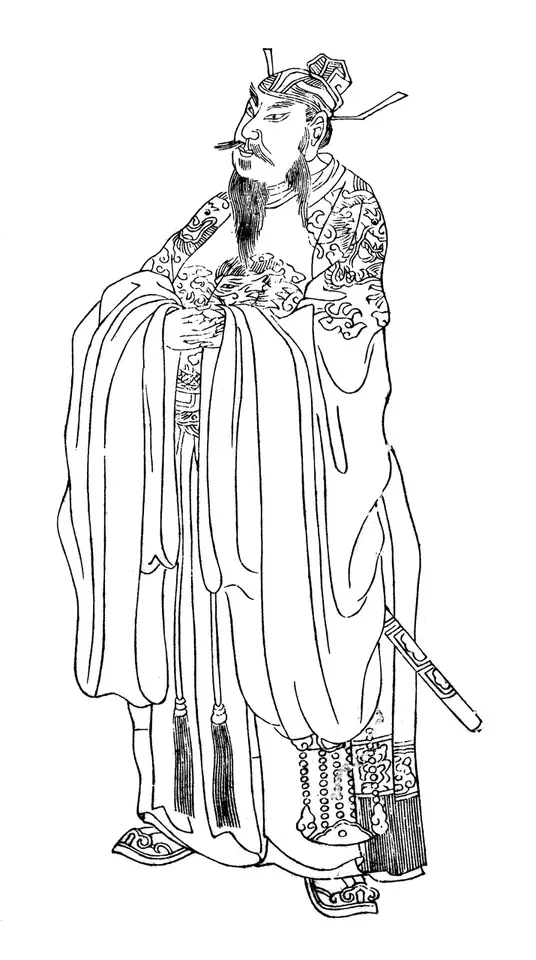
1332 CE–1385 CE
徐达
Xu Da (1332–1385 AD), courtesy name Tiande, was a native of Zhongli, Haozhou (present-day Fengyang, Anhui Province). He was the paramount founding military commander and grand strategist of the Ming Dynasty. Holding supreme military and civil posts including Grand General of Northern Conquest, Right Chancellor of the Central Secretariat, and Grand Preceptor, he was created Duke of Wei and posthumously honored as Prince of…
Xu Da (1332–1385 AD), courtesy name Tiande, was a native of Zhongli, Haozhou (present-day Fengyang, Anhui Province). He was the paramount founding military commander and grand strategist of the Ming Dynasty. Holding supreme military and civil posts including Grand General of Northern Conquest, Right Chancellor of the Central Secretariat, and Grand Preceptor, he was created Duke of Wei and posthumously honored as Prince of Zhongshan with the posthumous name "Wuning", heading the Six Founding Kings and ranking first among merit subjects in the Imperial Ancestral Temple. Originating from an agrarian family, Xu answered Zhu Yuanzhang's call to arms in 1353 AD, crossing the Yangtze River to capture Taiping and Jiqing (modern Nanjing), anchoring the territorial foundation of the Ming state. In the wars against rival warlord realms, Xu spearheaded the climactic naval Battle of Lake Poyang, destroying the vast armada of Chen Youliang, and laid siege to Pingjiang to extinguish Zhang Shicheng's kingdom. In the winter of 1367 AD, appointed Grand General of Northern Conquest alongside Vice General Chang Yuchun, Xu led twenty-five myriad troops north, liberating Shandong and Henan before capturing the Yuan capital of Dadu in August 1368 AD, ending nearly a century of Mongol rule over China and restoring Chinese rule. Subsequent expeditions pacified the northwest and repeatedly defeated the formidable northern commander Koke Temur in the steppes. Famed for iron discipline, humility, and returning supreme command immediately after campaigns, Xu died in Nanjing in 1385 AD at age fifty-four. Emperor Taizu extolled him: "For subduing northern barbarians and southern tribes with merit bridging antiquity and present, the Grand General stands alone."
Born into a farming family in Zhongli, distinguished by towering stature and strategic poise.
Responded to Zhu Yuanzhang's local recruitment, becoming Zhu's closest confidant among the early generals.
Led the amphibious assault taking Caishiji and Taiping, appointed Supreme Marshal of Campaign Forces.
Captured the regional metropolis Jiqing (Nanjing), providing Zhu Yuanzhang with an enduring capital base.
Commanded the vanguard at Lake Poyang, routing Chen Youliang's flagship fleets and securing Southern supremacy.
Concluded a ten-month siege of Pingjiang, capturing Zhang Shicheng and absorbing the wealthy Jiangnan region.
Commissioned as Grand General of Northern Conquest, leading twenty-five myriad troops to liberate the Central Plains.
Took the Yuan capital Dadu in August as Emperor Toghon Temur fled north, restoring native sovereignty.
Crushed Koke Temur's cavalry host at Dingxi, capturing over eight myriad enemy soldiers; created Duke of Wei.
Died of grave illness in Nanjing at age fifty-four; posthumously created Prince of Zhongshan and ranked first in the Ancestral Temple.
Xu Da was born into an ordinary farming family in Zhongli, Haozhou. Tall, powerful, and deliberate in thought, he possessed a natural inclination toward military organization. In 1353 AD, when Zhu Yuanzhang returned to Haozhou to recruit troops under Guo Zixing's banner, Xu Da immediately enlisted, swearing an unbreakable brotherhood with Zhu. At twenty-two, Xu embarked upon the revolutionary path, rapidly emerging as the foremost figure among Zhu Yuanzhang's legendary "Twenty-Four Generals of Huaixi."
In 1355 AD, Zhu Yuanzhang launched his amphibious campaign across the Yangtze River. Facing stubborn Yuan garrisons at Caishiji and Taiping, Xu Da spearheaded the river landing, leaping onto enemy ramparts and breaching defensive fortifications. Recognizing his exceptional battlefield competence, Zhu invested him as Supreme Marshal. In 1356 AD, Xu led the assault against Jiqing (modern Nanjing), orchestrating a multi-pronged encirclement that quickly forced the city's capitulation. Zhu Yuanzhang established Yingtian Prefecture at Jiqing, transforming it into the imperial seat of the future Ming realm. In succeeding campaigns, Xu secured Zhenjiang and Changzhou, driving back hostile regional armies and fortifying a wealthy and defensible perimeter in eastern China.
Throughout the 1360s, Zhu Yuanzhang was flanked by two lethal rivals: the Han kingdom of Chen Youliang to the west, possessing a monstrous fleet of multi-storied warships, and the Wu realm of Zhang Shicheng to the east, enriched by the immense agricultural wealth of Suzhou. In the summer of 1363 AD, Chen Youliang unleashed an armada of sixty myriad troops to besiege Hongdu (modern Nanchang). Zhu Yuanzhang led a relief army of twenty myriad, confronting Chen in the epic naval Battle of Lake Poyang.
In this titanic engagement, Xu Da served as vanguard commander. Directing his vessels directly against heavy wind and enemy cannon fire, he smashed through Chen's leading flotilla, killing enemy commanders and slaying over a myriad hostile marines. His daring maneuvers blunted the enemy's aggressive momentum, enabling Zhu Yuanzhang's fireship strategy to incinerate the bulk of Chen's fleet. Chen Youliang fell to a stray arrow, and the Han kingdom collapsed. In 1366 AD, Zhu Yuanzhang commissioned Xu Da as Grand General to eliminate Zhang Shicheng at Pingjiang (Suzhou). Xu constructed siege earthworks, elevated fighting towers, and bombarded the city around the clock with counterweight trebuchets for ten months. In September 1367 AD, Xu's assault columns scaled the walls, capturing Zhang Shicheng alive and adding the prosperous Jiangnan delta to the Ming dominions.
In October 1367 AD, Zhu Yuanzhang formally appointed Xu Da as Grand General of Northern Conquest, pairing him with the fierce Vice General Chang Yuchun at the head of twenty-five myriad elite soldiers. Zhu issued his famous proclamation to "drive out the nomadic invaders and restore China." Xu devised a brilliant, deliberate strategic blueprint: first sweep through Shandong to isolate northern approaches, next capture Henan to cut lateral reinforcements, seize Tongguan Pass to sever northwestern support, and finally execute a direct thrust against Dadu.
Xu maintained ferocious discipline across his ranks, forbidding looting or violence against civilians upon capturing cities. Ming forces advanced like an uncontainable tide, sweeping through Shandong in months before subduing Luoyang and Kaifeng. Closing Tongguan Pass, Xu sealed off the northwestern Mongol cavalry. In August 1368 AD, the victorious Ming columns reached Dadu. Yuan Emperor Toghon Temur fled northward to the Mongolian steppes. Xu Da entered Dadu in immaculate order, sealing treasury storehouses, protecting the populace, and incorporating former Yuan civil servants. After ninety-eight years of Mongol rule, the Central Plains and the Sixteen Prefectures were restored to Chinese sovereignty.
Following the fall of Dadu, Xu Da turned his armies westward to neutralize the most formidable commander of the Yuan remnant, Koke Temur (Wang Baobao). In late 1368 AD, Xu launched a daring night assault against Taiyuan, forcing Koke Temur to flee with only a handful of horsemen. Ming columns subsequently marched through Shaanxi and Gansu, securing the entire Guanzhong and Longyou regions.
In 1370 AD, Emperor Taizu dispatched Xu Da to Dingxi, where he clashed with Koke Temur in the decisive Battle of Shen'eryu. Utilizing well-drilled heavy infantry formations to absorb cavalry charges, followed by rapid flanking sweeps, Xu shattered Koke Temur's army, capturing over eight myriad soldiers, while Koke Temur escaped into the northern wastes with only his family. Upon his triumphant return, Emperor Taizu conferred upon Xu the offices of Right Chancellor of the Central Secretariat and Grand Preceptor, ennobling him as Duke of Wei with an annual stipend of five thousand bushels of grain. In 1372 AD, Xu again led an imperial host across the Gobi Desert to strike at the Karakorum redoubts of Northern Yuan.
For over three decades of campaigning, Xu Da commanded unrivaled martial prestige across East Asia, yet he was exceptionally modest, reserved, and deferential. While in camp his word was absolute law, but upon entering the capital he conducted himself with the quiet humility of a Confucian scholar. Each time he returned victorious from campaign, he surrendered the supreme seal of the Grand General on the very day of his arrival, declining lavish palaces and vast estates. In February 1385 AD, Xu Da succumbed to illness in Nanjing at the age of fifty-four. Emperor Taizu wept bitterly, suspending court business for three days and attending the rites in person. The emperor posthumously invested him as Prince of Zhongshan, granted him the posthumous title "Wuning", ordered his tomb placed on the sunny slope of Mount Zhong, and enshrined him first among all founding heroes in the Imperial Ancestral Temple.
Joining Zhu Yuanzhang at Haozhou in 1353 AD, Xu Da rose rapidly to become his chief military commander.
Leading the crossing of the Yangtze and the campaigns against Chen Youliang and Zhang Shicheng, he unified the Jiangnan region.
Appointed Grand General of Northern Conquest in 1367 AD, he swept through Shandong and Henan and captured the Yuan capital of Dadu in 1368 AD.
Advancing westward into Shanxi, Shaanxi, and Gansu, he decisively defeated Köke Temür at Shen'eryu in 1370 AD.
Stationed at Beiping for years, he fortified the northern passes and conducted expeditions into the steppe.
Returning his military seal after every campaign, he was posthumously created Prince of Zhongshan and enshrined first among the founding officials.
FIGURES ASSOCIATED WITH THIS DYNASTY