Youth | Served as Officer of Merit in Shanggu Commandery and was highly valued by Administrator Geng Kuang.
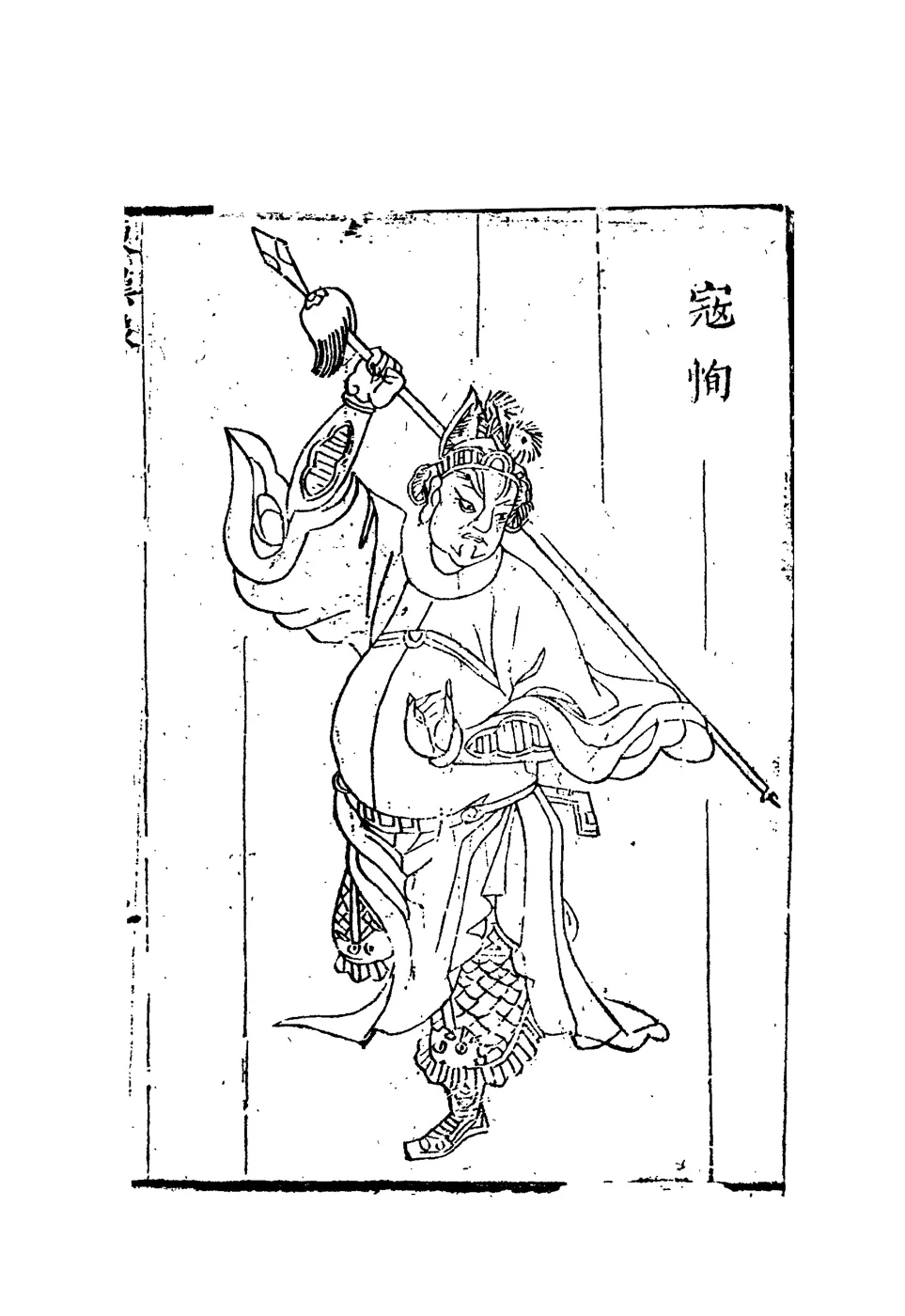
?–36 CE
General
Kou Xun
寇恂
Kou Xun was one of the Twenty-Eight Generals of the Cloud Terrace and held the title Marquis of Yongnu. He administered Henei and later Yingchuan, providing crucial logistical support and supplies for the armies of Emperor Guangwu.
?–36 CEXin dynasty
PROFILE
Kou Xun was one of the Twenty-Eight Generals of the Cloud Terrace and held the title Marquis of Yongnu. He administered Henei and later Yingchuan, providing crucial logistical support and supplies for the armies of Emperor Guangwu.
- Other name
- Courtesy name Ziyi
- Courtesy name
- Ziyi
- Period
- Eastern Han
- Date of Birth
- Not recorded in historical sources
- Date of Death
- 36 CE(12th year of the Donghanjianwu era)
- Dynasty / polity
- Eastern Han
- Identity
- General
- Ethnicity / group
- Han Chinese
- Native place
- Changping, Shanggu (present-day Changping District, Beijing)
- Place of birth
- Not recorded in historical sources
- Major achievements
- One of the Twenty-Eight Generals of the Cloud Terrace; Marquis of Yongnu; administered Henei and Yingchuan and secured provisions for the front.
LIFE TIMELINE
About age thirty | Recovered Geng Kuang's official seal by force and prevented an imperial envoy from breaking faith.
About age thirty-one | Persuaded Geng Kuang to support Liu Xiu; traveled to Yuyang to coordinate with Peng Chong; the allied forces marched south and joined Liu Xiu at Guang'e. Appointed Lieutenant General and styled Marquis of Chengyi.
About age thirty-one | Participated in the capture of Handan and destruction of Wang Lang.
About age thirty-two | Appointed Administrator of Henei and entrusted with the duties of a General-in-Chief; defended Henei and transported military supplies.
About age thirty-two | At the Battle of Wen County, decisively defeated Su Mao and killed his deputy Jia Qiang, alarming Luoyang.
About age thirty-three | Dismissed for an offense, then soon restored as Administrator of Yingchuan; suppressed Jia Qi's rebellion and was created Marquis of Yongnu with a fief of ten thousand households.
About age thirty-four | Transferred as Administrator of Runan, where he established schools and sponsored teaching.
About age thirty-eight | Entered the capital and succeeded Zhu Fu as Bearer of the Gilded Mace.
About age thirty-nine | Accompanied Emperor Guangwu on campaign in Longxi.
About age forty-one | Sent as envoy to Gaoping; executed military adviser Huangfu Wen and compelled Gao Jun to surrender.
About age forty-three | Died and received the posthumous title Marquis Wei.
Listed at Yuntai | Emperor Ming of Han ordered portraits of the restoration's meritorious officials in the Yuntai Hall of the Southern Palace, and Kou Xun was listed fifth among the twenty-eight generals.
Offered sacrifices in the Temple of the Martial King | He was included among the ancient and modern famous generals receiving sacrifice as fixed in the Tang period.
In the sacrificial list | The Song court revised the list of famous generals, and Kou Xun remained among them.
BIOGRAPHY
Biography
Family Background and Early Years
Kou Xun, courtesy name Ziyi, was from Changping in Shanggu Commandery. His family had long been a prominent local lineage. Although not as powerful as the Liu clan of Nanyang or the great families of Hebei, the Kou family had deep roots in Shanggu and generations of official service. Kou Xun's learning and conduct brought him to the attention of Geng Kuang, the Administrator of Shanggu, who appointed him Officer of Merit. In that office, which handled personnel and took part in commandery administration, Kou Xun demonstrated unusual courage and strategic judgment and earned Geng Kuang's confidence.
In 23, the first year of the Gengshi regime, Wang Mang was defeated and Liu Xuan, the Gengshi Emperor, established his regime at Luoyang. Seeking support from regional authorities, Liu Xuan announced that officials who submitted early would retain their titles and sent envoys to receive the allegiance of commanderies. Geng Kuang submitted Shanggu and, according to procedure, surrendered his administrator's seal to the envoy. The envoy kept the seal and intended to appoint one of his own associates. Kou Xun heard of this, armed troops, confronted the envoy, and rebuked him for undermining the new regime's credibility at the very moment when the commanderies were watching its conduct. When the envoy still refused, Kou Xun had Geng Kuang summoned in the envoy's name, personally took back the seal, and fastened it on Geng Kuang. The envoy had no alternative but to confirm Geng Kuang as Administrator of Shanggu under delegated authority. The incident first established Kou Xun's reputation for decisiveness and refusal to be intimidated by imperial emissaries.
Supporting Liu Xiu and the Southward March
Late in 23, the diviner Wang Lang at Handan falsely claimed to be Liu Ziyu, a son of Emperor Cheng of Han, proclaimed himself emperor, and threw Hebei into turmoil. Wang Lang sent envoys to Shanggu demanding Geng Kuang's military support. Liu Xiu, acting under Gengshi authority, was meanwhile touring Hebei with imperial credentials and contesting Wang Lang's influence. Geng Kuang's son Geng Yan had already joined Liu Xiu and returned from Ji to persuade his father. Kou Xun and subordinate clerk Min Ye likewise urged Geng Kuang to support Liu Xiu, arguing that Wang Lang's sudden rise was unreliable and that Liu Xiu, younger brother of Liu Yan, respected worthy men and attracted followers.
Geng Kuang still feared Wang Lang's strength. Kou Xun pointed out that Shanggu was intact, wealthy, and possessed ten thousand mounted archers, giving it room to choose carefully. He proposed an alliance with Yuyang to combine forces, after which Handan would not be difficult to defeat. Geng Kuang therefore sent Kou Xun to Yuyang to coordinate with Administrator Peng Chong. Each commandery agreed to provide two thousand elite cavalry and one thousand infantry to support Liu Xiu. Peng Chong, already persuaded by Anle magistrate Wu Han, had independently chosen Liu Xiu, so the agreement came easily. On the return journey, Kou Xun attacked and killed Wang Lang's envoy at Changping and took over his followers.
Kou Xun then joined Geng Yan and Jing Dan in leading the Shanggu army south, while Wu Han, Gai Yan, and Wang Liang led the Yuyang forces. The combined armies defeated more than four hundred officials and commanders appointed by Wang Lang, reportedly took thirty thousand heads, seized twenty-two counties across Zhuo, Zhongshan, Julu, Qinghe, and Hejian, and finally joined Liu Xiu at Guang'e. Liu Xiu was delighted and said that he would share the achievement with the gentlemen of Yuyang and Shanggu. He appointed Kou Xun Lieutenant General and styled him Marquis of Chengyi. Kou Xun then participated in the capture of Handan and destruction of Wang Lang.
During the Hebei campaigns, Kou Xun repeatedly discussed military affairs with Deng Yu. Deng Yu was impressed by his talent, sent him oxen and wine, and formed a close friendship with him. This trust later led Deng Yu to recommend Kou Xun for command of Henei.
Defending Henei
In 25, the first year of Jianwu, Liu Xiu pacified Henei Commandery. Henei was protected by the Yellow River, densely populated, connected northward with Shangdang, and close to Luoyang in the south, giving it exceptional strategic importance. Yet Zhu Wei, a senior Gengshi commander, held Luoyang with a large force, while other enemy troops threatened from the north. Liu Xiu asked Deng Yu for advice. Comparing the situation to Xiao He's defense of Guanzhong, Deng Yu strongly recommended Kou Xun, saying: “Kou Xun is accomplished in both civil and military matters, and has the talent to shepherd others,FeiCiZiMoKeShiYe。” Liu Xiu therefore appointed Kou Xun Administrator of Henei with acting General-in-Chief authority and ordered him to hold the commandery, transport supplies, maintain sufficient grain, drill troops, and block enemy incursions.
After taking office, Kou Xun issued instructions to subordinate counties, drilled soldiers in archery, cut bamboo from the Qi gardens to make more than a million arrows, raised two thousand horses, and collected four million hu of grain. He continuously transported supplies to the front. Understanding Henei's role as Liu Xiu's rear base, he combined military preparation with logistics and made the commandery extremely secure.
Later in 25, while Liu Xiu campaigned north against peasant forces in Hebei, Zhu Wei sent General Su Mao and deputy Jia Qiang with more than thirty thousand troops across the Yellow River to attack Wen County. Officers advised Kou Xun to wait until county troops assembled. He refused, arguing that Wen was the shield of the commandery and that if Wen fell Henei could not be held, and he rushed there immediately. The next day battle was joined. Lieutenant General Feng Yi and troops from the counties arrived just in time, filling the field with men, horses, banners, and standards. Kou Xun ordered the soldiers to shout that Liu Xiu's army had arrived, disrupting Su Mao's troops. He then attacked when their formation loosened, crushing them and killing Jia Qiang. Thousands drowned in the river and more than ten thousand were captured. Kou Xun and Feng Yi pursued the defeated force to the walls of Luoyang, causing panic and prompting the city gates to be closed even during daylight.
Liu Xiu was delighted when he heard the report and said, “I knew that Kou Xun could be relied upon.” His generals took the victory as an opportunity to urge him to assume the imperial title. In the sixth lunar month of the same year, Liu Xiu proclaimed himself emperor at Gao and founded Eastern Han. Kou Xun's victory at Wen County both secured Henei and helped create favorable conditions for Liu Xiu's accession.
After Eastern Han was established, the army suffered severe shortages of grain. Kou Xun organized continuous wagon transport, and even the salaries of central officials were partly supplied from Henei. Liu Xiu repeatedly sent letters praising him, and Kou Xun's prestige grew. A fellow student, Dong Chong, warned that excessive merit could provoke suspicion and urged him to emulate Xiao He's self-effacing conduct. Kou Xun accepted the warning, claimed illness, withdrew from active administration, and requested transfer to a military post, but Liu Xiu refused. Kou Xun then sent his nephew Kou Zhang, his sister's son Gu Chong, and elite cavalry under his command to serve in Liu Xiu's army. Liu Xiu was pleased and appointed them Lieutenant Generals.
Suppressing Rebellion in Yingchuan and Promoting Education in Runan
In 26, Kou Xun was removed as Administrator of Henei for detaining without authority a petitioner who had submitted a memorial. A few months later, Yan Zhong and Zhao Dun of Yingchuan gathered more than ten thousand men and joined with Jia Qi of Mi County in rebellion. Liu Xiu restored Kou Xun as Administrator of Yingchuan and sent him with General Hou Jin to suppress the uprising. Kou Xun rapidly organized operations, killed Jia Qi within several months, and pacified the commandery. Liu Xiu created him Marquis of Yongnu with a fief of ten thousand households.
Kou Xun achieved notable administrative results in Yingchuan. He appointed Guo Hong as judicial clerk and governed strictly by law, earning the fear and respect of officials and commoners. During this period he came into conflict with General Jia Fu. One of Jia Fu's subordinates committed murder in Yingchuan, and Kou Xun had him arrested and executed according to law. Jia Fu, a major general under Liu Xiu, considered this a humiliation and declared that if he met Kou Xun he would kill him personally. Kou Xun avoided a direct clash. His nephew Gu Chong offered to guard him with a sword, but Kou Xun cited Lin Xiangru's avoidance of Lian Po for the sake of the state and refused to put personal grievance above public affairs. He ordered the counties to prepare wine and food; when Jia Fu's army passed through, they were served double portions. Jia Fu wanted to pursue Kou Xun afterward, but his men were too drunk to move. Kou Xun sent Gu Chong to report the matter to Liu Xiu. The emperor summoned both men and admonished them that with the realm not yet settled, “two tigers” could not afford private combat. He made them sit and drink together, and Jia Fu and Kou Xun reconciled and became friends.
In 27, Kou Xun was transferred as Administrator of Runan and joined General Du Mao in suppressing local bandits. After order was restored, Kou Xun vigorously promoted education, built local schools, invited Confucian scholars versed in the Zuo Tradition of the Spring and Autumn Annals to teach students, and frequently attended instruction himself. He also recommended Zhou Jia as a Filially Pious and Incorrupt candidate. His transition from battlefield commander to administrator who promoted education displayed his combined civil and military abilities.
Bearer of the Gilded Mace and Later Years
In 31, Kou Xun entered the capital from Runan and succeeded Zhu Fu as Bearer of the Gilded Mace, one of the Nine Ministers responsible for security in the imperial capital. The following year he accompanied Liu Xiu on campaign against Wei Xiao in Longxi. During this period Yingchuan again fell into disorder. Liu Xiu, returning from Longyou, intended to reappoint Kou Xun there. Kou Xun instead urged the emperor to go personally, saying that the rebels would submit once the imperial carriage arrived. Liu Xiu accepted the advice; the insurgents indeed surrendered. The people petitioned that Kou Xun be “loaned” to them for another year, and Liu Xiu agreed. The expression “borrowing Kou” later became an allusion for local people pleading to retain a capable official.
In 34, Geng Yan had besieged Gao Jun, a general of Wei Xiao, at First City in Gaoping for a year without success. Liu Xiu wanted to campaign personally. Kou Xun advised against it, but the emperor went and still failed to take the city. Liu Xiu then sent Kou Xun as envoy to persuade Gao Jun to surrender. Gao Jun sent his military adviser Huangfu Wen, who was arrogant and refused submission. Kou Xun angrily executed Huangfu Wen on the spot and sent the deputy envoy back with the message: the military adviser had been disrespectful and was dead; Gao Jun should surrender quickly if he wished to surrender, or else continue his defense. Gao Jun, terrified, opened the city that same day.
Kou Xun's action appeared rash, but it reflected his reading of the situation. Huangfu Wen was Gao Jun's principal adviser; preserving him would allow Gao Jun to continue following his counsel, while killing him would deprive Gao Jun of confidence. Asked by the generals why he had acted so, Kou Xun replied that Huangfu Wen was Gao Jun's “heart and belly,” the source of his plans; his unyielding words showed no intention to surrender, so killing him removed Gao Jun's courage. The episode illustrates Kou Xun's decisiveness under pressure.
Kou Xun died in 36, Jianwu 12, and received the posthumous title Marquis Wei. His son Kou Sun inherited the title.
Kou Xun, courtesy name Ziyi, was a native of Changping in Shanggu of a leading local family. He began as an officer of the commandery staff and was much valued by the governor Geng Kuang. In the disorders at the end of the Xin, after the Gengshi regime was set up, Liu Xuan issued a policy of restoring rank to those who submitted first and sent envoys to the provinces; Geng Kuang submitted and handed over his governor's seal according to form. By rule the envoy should then have granted the seal back in the name of the regime, but he kept it and had not returned it by the next day. Kou Xun went with troops to see the envoy, charged him with bad faith and took the seal back by force, whereupon the envoy had no choice but to confer office in due form and reappoint Geng Kuang governor of Shanggu.
He then persuaded Geng Kuang to join Liu Xiu and went over with Geng Kuang's son Geng Yan. Liu Xiu made him a general of the flank and later governor of Henei. Henei was Liu Xiu's base in Hebei, its grain and men being crucial to his pacification of the north and his eventual unification, and Kou Xun's administration there gave him a stable rear — an important reason Kou Xun is counted among the twenty-eight generals of the Cloud Terrace.
In the Jianwu years he served as governor of Yingchuan, Runan and elsewhere, putting down banditry, founding schools and building waterworks with considerable results. He had a quarrel with Jia Fu after executing one of Jia's officers by law, Jia resenting it deeply; when both were later at court Kou Xun avoided him and treated him with wine and food, and Emperor Guangwu mediated, the two being reconciled — an episode later ages told in the manner of a "general and minister at peace."
He died in 36 CE with the posthumous name Wei. He stands with Deng Yu and Feng Yi among the founders of the Eastern Han, his career reflecting Guangwu's basic strategy of managing Hebei and settling the provinces.
His administration of Henei was one of the most important achievements of his life. When Liu Xiu was sent to pacify Hebei under the Gengshi regime, Kou Xun became governor of Henei, a region lying on the route between Hebei and Guanzhong: it had to guard against the Gengshi forces at Luoyang and to supply Liu Xiu's armies. He gathered refugees, restored production, repaired the defenses and beat off repeated attacks from the Gengshi side and local forces, making Henei a firm rear for Liu Xiu.
Before Liu Xiu took the imperial title in 25 CE, Kou Xun with Feng Yi and others urged him repeatedly to do so on the ground that the situation was settled and the proper name should be assumed early; after his accession Kou Xun continued in provincial office, serving as governor of Yingchuan and Runan, chiefly attending to local order, the results recorded concretely in his biography.
His quarrel with Jia Fu is one of the rare conflicts among the founders of the Eastern Han: Jia's officer killed a man in Yingchuan and Kou Xun had him executed by law, and Jia Fu nursed a deep grudge and threatened revenge. Guangwu mediated in person, the two meeting over wine at court and making peace. The record is often used to illustrate relations among the founders and the emperor's way of reconciling them.
Kou Xun died in 36 CE. He is numbered among the twenty-eight generals of the Cloud Terrace, his son Kou Sun inheriting the title. Members of the family held office through the Eastern Han, its connection with the dynasty's politics lasting a long time.
At the founding of the Eastern Han Guangwu's arrangement for his ministers was to retire the generals and advance civil officials, most founding commanders holding no real power once the wars ended. Kou Xun's case differed somewhat: through the Jianwu years he continued to serve as a provincial governor, his administrative record matching his military merit. The arrangement shows both Guangwu's trust in him and the need at the time for men with both military and civil experience.
His measures in the provinces are recorded in several places in his biography: at Yingchuan he gathered the displaced and redressed wrongful sentences, at Runan he built waterworks, opened waste land and founded schools for pupils. The measures matched the early Eastern Han policy of letting the people rest, and his administration earned him considerable local reputation; the people of one district are recorded asking that he be kept in office, a notice common in the records of the dynasty's governors.
The Eastern Han's local system was adjusted under Guangwu, the powers and terms of commandery governors changing from the late Western Han; the long provincial service of men like Kou Xun provides concrete cases of that system in practice. Scholars of early Eastern Han provincial government rely chiefly on the biographies of Deng Yu, Kou Xun and Feng Yi in the History of the Later Han.
Kou Xun stands with Deng Yu and Feng Yi among Guangwu's principal assistants in the Hebei period, their parts differing: Deng Yu strong in strategic planning, Feng Yi in independent command, Kou Xun in running the rear and supplying the armies. The division shows how carefully Guangwu placed men of different talents during his rise and kept his rear secure throughout.
Among the twenty-eight generals of the Cloud Terrace his military achievement is not outstanding, his standing resting chiefly on his administration of the rear — a feature unusual among the founders and evidence that the Eastern Han did not judge them by battle merit alone. The dynasty's later treatment of its founders likewise attended to the balance between real contribution and political effect.
The Eastern Han's commemoration of its founders took the form of the Cloud Terrace portraits under Emperor Ming in the Yongping years; later appraisals of those men weighed battle merit against character, Kou Xun appearing among them for his solid record in provincial government. The family's title continued through the dynasty, several of his descendants holding office.
The sources for him are chiefly his biography in the History of the Later Han and the Han annals of the Comprehensive Mirror, which corroborate each other. His time fell in the great change between the two Han, and his career is therefore fairly typical: taking part in the military action of the founding and then in the government that followed, a category that made up a considerable share of the Eastern Han founding group.
His administration of Henei is directly tied to the military situation at the founding of the Eastern Han: from 25 to 27 Guangwu's armies fought chiefly in the central plains and Guanzhong, their supply depending on Henei and Weijun, which made his post as governor of Henei crucial. As a provincial official he performed what later ages would call the transport commissioner's function — an arrangement of some significance for institution-building in the early dynasty.
After the dynasty was founded Guangwu chose commandery governors with care, the experience of men like Kou Xun serving him as reference. Eastern Han provincial administration gradually settled into a pattern centered on the governor with subordinate staff, part of its experience drawn from the practices of the founding years.
Eastern Han policy toward its founders differed from the Western Han: Guangwu both settled the founding commanders as marquises attending court and kept some in real office in the provinces and at court. Kou Xun's career shows that the policy was not applied wholesale but suited to each man's ability and the needs of the moment.
In Eastern Han political history his place is chiefly as the type of the founder who was also an able administrator. Later discussions of the dynasty's first years generally name him with Deng Yu, Feng Yi and Geng Yan as important supports of Guangwu's unification.
His posthumous name Wei answers to his double career in arms and administration, the court's recognition of his services being correspondingly clear.
His place in the Eastern Han founding group rests on both military service and administrative achievement.
The founders of the Eastern Han gradually withdrew from the political center after Emperor Ming's time, while Kou Xun's descendants still held office in the provinces and at court.
The family's continuance ran with Eastern Han politics, the Kou appearing repeatedly in the dynasty's records.
The choices he made amid the change between the two Han make him a sample for the study of the political options open to men of his time.
His times and his own career together make a complete case of provincial government in the early Eastern Han.
The chief material on his life is his biography in the History of the Later Han.
His place in the history of the Eastern Han founding is inseparable from his record in provincial government.
His career is correspondingly recorded in the Han annals of the Comprehensive Mirror.
His place among the Eastern Han founders is confirmed both by later historians' judgments and by the sequence of the twenty-eight generals of the Cloud Terrace.
Major Activities
Political Activity
Kou Xun's political career began as Officer of Merit in Shanggu. In 23 he used armed force to recover Geng Kuang's seal from an envoy, preserving order in Shanggu and establishing his own authority. He then strongly advocated supporting Liu Xiu and helped bring the elite cavalry of Shanggu and Yuyang into Liu Xiu's coalition. As Administrator of Henei, he not only secured supplies for the front but also defeated Su Mao at Wen County, contributing to the conditions in which Liu Xiu proclaimed himself emperor. He later served as Administrator of Henei, Yingchuan, and Runan. In Henei he focused on logistical transport; in Yingchuan on suppressing rebellion and restoring order; in Runan on education and local governance. Together these offices displayed a broad capacity for regional administration.
Military Contributions
Although Kou Xun was not primarily celebrated for personal battlefield charges, his military ability was substantial. At Wen County he refused to wait for all reinforcements, rushed to the threatened position, seized the timing of battle, and defeated Su Mao. At Gaoping he forced Gao Jun's surrender by executing Huangfu Wen, solving a year-long military problem at minimal cost and showing a keen grasp of enemy psychology. As Administrator of Henei, he also produced more than a million arrows, raised two thousand horses, and collected four million hu of grain, providing material support for Liu Xiu's unification wars. His logistical ability was exceptional among the generals later honored on the Cloud Terrace.
Education and Learning
Kou Xun valued learning. As Administrator of Runan, he built local schools, hired Confucian scholars expert in the Zuo Tradition of the Spring and Autumn Annals to teach, and personally attended their instruction. Such measures were especially significant just after wartime disorder and helped restore cultural life in Runan. He also recommended Zhou Jia as a Filially Pious and Incorrupt candidate, showing attention to talent recruitment.
Relations with Contemporaries
Kou Xun was close to Deng Yu. During the Hebei campaigns they repeatedly discussed military matters; Deng Yu greatly admired his talent and strengthened the friendship with gifts of oxen and wine. Deng Yu later strongly recommended Kou Xun for the defense of Henei. Kou Xun also fought effectively with Feng Yi at Wen County, a notable example of cooperation among Eastern Han founding commanders. His conflict and reconciliation with Jia Fu became a later model of generals putting state interests above personal resentment. Kou Xun also maintained close ties with Geng Kuang and Geng Yan: he began as Geng Kuang's subordinate and later served alongside Geng Yan as a general.
Personal Relations
- Kou Zhang: nephew; Lieutenant General.
- Gu Chong: sister's son; Lieutenant General.
- Kou Sun: son; inherited the Marquisate of Yongnu and was later transferred as Marquis of Fuliu.
- Kou Shou: secondary son; created Marquis of Xiao in Jianwu 13.
- Kou Rong: great-grandson; Palace Attendant under Emperor Huan.
- Deng Yu: colleague and close friend; strongly recommended Kou Xun for Henei.
- Dong Chong: fellow student who warned him to hide his prominence and avoid danger.
- Geng Kuang: Administrator of Shanggu; first employed Kou Xun as Officer of Merit and was later persuaded by him to support Liu Xiu.
- Liu Xiu, Emperor Guangwu of Eastern Han: ruler whom Kou Xun served as Administrator of Henei, Administrator of Yingchuan, and Bearer of the Gilded Mace.
- Geng Yan: colleague and son of Geng Kuang; marched south with Kou Xun to join Liu Xiu.
- Feng Yi: colleague who cooperated with Kou Xun at the Battle of Wen County.
- Jia Fu: colleague; conflict arose after Kou Xun executed one of his subordinates, but they later reconciled.
- Wu Han: colleague and commander from Yuyang who joined the southward march.
- Su Mao: General under Zhu Wei; defeated by Kou Xun at Wen County.
- Jia Qi: leader of the Yingchuan rebellion; killed by Kou Xun.
- Gao Jun: general under Wei Xiao; compelled to surrender by Kou Xun.
- Huangfu Wen: Gao Jun's military adviser; executed by Kou Xun.
Historical Assessment
Eastern Han / Contemporary
- Deng Yu: “Kou Xun is accomplished in both civil and military matters, and has the talent to shepherd others。” (Book of the Later Han, “Biography of Kou Xun”)
- Liu Xiu: “I knew that Kou Xun could be relied upon!” spoken after the victory at Wen County. (Book of the Later Han, “Biography of Kou Xun”)
- Dong Chong: “those whom our army has taken are all our clansmen and brothers, why should they be treated as bandits?admonition。” (Book of the Later Han, “Biography of Kou Xun”)
Wei-Jin and Northern-Southern Dynasties
- Fan Ye praised Kou Xun's ability to restrain anger and place state interests first, presenting him as an example of gentlemanly conduct. (Book of the Later Han, “Biographies of Deng and Kou”)
- Fan Ye's encomium reads: “firm in the keeping of Wen and diligent in the service of Xiao, he shouldered arms and followed the times, and his merit was great; he drove away the bandits and took his family, both firm and wise.”
Tang and Song
- The Comprehensive Mirror in Aid of Governance compares Kou Xun's defense of Henei with Xiao He's defense of Guanzhong and affirms his contribution to logistical support.
- Tang historian Du You, in Tongdian, discussed the office of commandery administrator in Eastern Han and treated Kou Xun as an example of an effective local official.
Ming, Qing, and Modern
- Ming thinker Wang Fuzhi, in Du Tongjian Lun, described Kou Xun as possessing both the talent to hold territory and the intelligence to respond to changing situations.
- Qing scholar Zhao Yi, in Notes on the Twenty-Two Histories, discussed Eastern Han founding ministers and grouped Kou Xun, Deng Yu, and Feng Yi with the functional roles of Xiao He, Zhang Liang, and Han Xin under Liu Bang.
- Qian Mu, in Outline of National History, described Kou Xun as combining civil and military ability and being heavily relied upon by Emperor Guangwu.
- Modern historians generally regard Kou Xun's logistical management and local governance as particularly important among the Twenty-Eight Generals of the Cloud Terrace and as a key part of Eastern Han's successful unification wars.
FIGURES ASSOCIATED WITH THIS DYNASTY
Bibliography
- Fan Ye, Book of the Later Han, Biographies of Deng and Kou, 6th
- Fan Ye, Book of Later Han, Annals of Emperor Guangwu, Biography of Wang Chang, Biography of Geng Yan, Collected Biographies of the Twenty-Eight Generals