Classical Tutelage | Studied the Classic of History under Master Li; successfully defended salt shipments from bandits as an administrative clerk
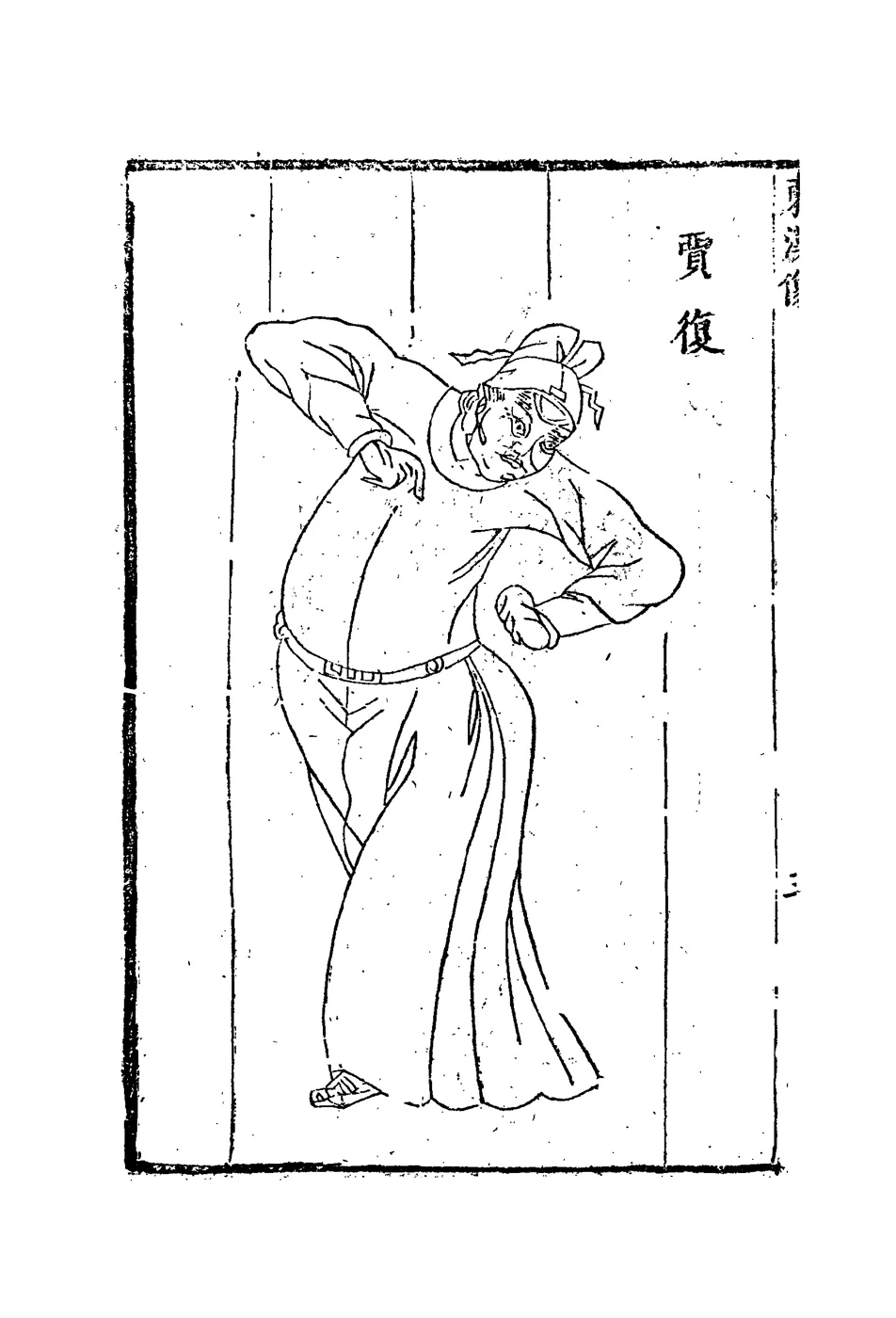
55 CE
Historical figure
Jia Fu
贾复
Jia Fu (died 55 CE), courtesy name Junwen, was a paramount founding hero and military leader of the Eastern Han Dynasty, ranked third among the celebrated 28 Generals of the Cloud Terrace. Originally trained in the Classic of History, he was hailed in his youth as possessing the innate talent of chancellors and marshals. Mobilizing local militia during the collapse of the Xin Dynasty, he crossed the Yellow River in 24 CE to…
55 CEEastern Han
PROFILE
Jia Fu (died 55 CE), courtesy name Junwen, was a paramount founding hero and military leader of the Eastern Han Dynasty, ranked third among the celebrated 28 Generals of the Cloud Terrace. Originally trained in the Classic of History, he was hailed in his youth as possessing the innate talent of chancellors and marshals. Mobilizing local militia during the collapse of the Xin Dynasty, he crossed the Yellow River in 24 CE to swear allegiance to Liu Xiu, receiving appointment as General Who Breaks the Barbarians. Throughout grueling campaigns across Hebei and Central China, he consistently fought at the vanguard, receiving twelve grievous combat wounds and winning boundless renown for battlefield heroism. Following the consolidation of the empire, Jia Fu displayed consummate political foresight by willingly relinquishing his military commission to pursue Confucian learning. Retaining supreme honor as Grandee of the First Order alongside Deng Yu and Li Tong, he regularly counseled Emperor Guangwu on grand affairs of state. He passed away in 55 CE and was conferred the posthumous title Marquis Gang.
- Courtesy / Art Name
- Junwen
- Era
- Early Eastern Han
- Dynasty
- Eastern Han Dynasty (Reign of Emperor Guangwu)
- Identity
- Historical figure
- Date of Birth
- Not recorded in historical sources
- Ethnicity
- Han
- Ancestral Home
- Guanjun, Nanyang Commandery (modern Dengzhou, Henan)
- Place of Birth
- Guanjun county of Nanyang commandery
- Place of Death
- Unknown
- Lifespan
- Unknown
- Major Offices
- General who smashes the barbarians, general protector, bearer of the golden mace, general of the left, specially advanced
- Peerage
- Marquis of Guanjun
- Posthumous Name
- Marquis Gang
- Major Achievements
- Spearheaded campaigns in Hebei; sustained 12 severe battle wounds at Zhending; conquered Yin Zun and Bao Si in Henan; trapped the Red Eyebrows at Yiyang; voluntarily relinquished military command to cultivate Confucian statecraft
- Date of Death
- 55 CE(31st year of Jianwu, Emperor Guangwu of Han)
LIFE TIMELINE
Organizing Local Militia | Mobilized hundreds of fighters at Yushan following peasant rebellions, styling himself general
Alignment with Gengshi | Pledged allegiance to Prince of Hanzhong Liu Jia, receiving appointment as Colonel
Allegiance to Liu Xiu | Traveled north across the Yellow River with Liu Jia's recommendation, joining Liu Xiu at Bairen as General Who Breaks the Barbarians
Storming Handan | Participated in crushing Wang Lang's regime at Handan, elevated to General Protector
Wounded in Action | Smashed the Qingdu and Wuxiao armies; suffered twelve severe wounds in Zhending, eliciting Liu Xiu's royal marriage pledge
Bearer of the Gilded Mace | Elevated to Bearer of the Gilded Mace and Marquis of Guanjun upon Guangwu's accession; took part in subduing Luoyang
Pacifying Henan | Marched south to subjugate Yin Zun and Bao Si, pacifying Yan, Zhaoling, and Xinsi in a matter of months
Left General & Yiyang | Appointed Left General; repeatedly battered Red Eyebrows columns in western Henan, sealing their surrender at Yiyang
Relinquishing Commands | Invested as Marquis of Jiaodong over six counties; surrendered military commands to pursue Confucian scholarship as Grandee of the First Order
Passing and Legacy | Passed away in Luoyang and honored with the posthumous title Marquis Gang; depicted 3rd in the Cloud Terrace Pavilion in 60 CE
Grave wounds | He routed the Qingdu at Shequan and broke the Five Schools at Zhending, but was so gravely hurt by twelve wounds that he nearly died, and Emperor Guangwu, tending his wounds, promised him a marriage.
Bearers of the Gilded Mace | On Emperor Guangwu’s accession he was appointed Bearer of the Gilded Mace and enfeoffed as Marquis of Guanjun, and he besieged Luoyang and broke the defending troops of Zhu Wei.
Youth #2 | In the sixth month Liu Xiu proclaimed himself emperor, appointing him Bearer of the Gilded Mace and enfeoffing him as Marquis of Guanjun; he accompanied Wu Han in the siege of Luoyang and repeatedly defeated the defending general Chen Qiao.
Accession of Guangwu #3 | In the sixth month Liu Xiu proclaimed himself emperor, appointing him Bearer of the Gilded Mace and enfeoffing him as Marquis of Guanjun; he accompanied Wu Han in the siege of Luoyang and defeated the defending general Chen Qiao.
Pacification of Ru and Ying | He led his army south and defeated Yin Zun and Bao Si, taking the counties of Yancheng, Shaoling and Xinxi in succession.
Prime years #1 | With Wu Han he routed the Tanxiang army east of Ye on the Zhang River, taking more than a hundred thousand prisoners; his fief was increased by the counties of Rang and Chaoyang; he asked to attack Yan himself, crossed the Wushe Ferry southwards, forced Yin Zun’s surrender in little more than a month, struck Bao Si in the east and pacified Shaoling and Xinxi in the south.
Prime years #2 | In the third year of Jianwu (27) he joined Cen Peng and Geng Yan in attacking Deng Feng, fighting at Duxiang, where he was wounded.
General of the Left | He was appointed General of the Left and routed the main force of the Red Eyebrows at Xincheng and Mianchi, joining Emperor Guangwu at Yiyang and forcing the Red Eyebrows to surrender.
Prime years #3 | Thereafter, because Jia Fu dared to drive deep into the enemy, Liu Xiu preferred to keep him in his own campaigns and seldom gave him an independent command, so he won few laurels of his own.
Prime years #4 | In the spring he was transferred to be General of the Left and struck the Red Eyebrows separately between Xincheng and Mianchi, defeating them repeatedly, and met Emperor Guangwu at Yiyang, where the Red Eyebrows surrendered.
Laying down arms | His fief was fixed as that of Marquis of Jiaodong with six counties, and he took the initiative to lay down arms and cultivate learning, being granted the rank of special advancement and taking part with Deng Yu and Li Tong in the great deliberations of state.
Middle years #1 | His fief was fixed at Jiaodong with six counties; with Deng Yu he put aside armour and promoted Confucian learning; the offices of generals of the Left and Right were abolished and he retired to his residence as a marquis with the rank of special advancement, taking counsel on affairs of state with Deng Yu and Li Tong.
Middle years #2 | With Dou Rong, Deng Yu and Li Tong he memorialised for the enfeoffment of the imperial princes, which was granted.
Death and posthumous name | He died of illness at his residence in Luoyang and received the posthumous name Gang; in the third year of Yongping his portrait was placed third on the Cloud Terrace.
Later years | He died of illness with the posthumous name Marquis Gang.
After his death | When Emperor Ming of Han portrayed the twenty-eight generals of the Cloud Terrace, Jia Fu was placed third.
BIOGRAPHY
Biography
Classical Training and Proven Reliability Jia Fu was born into an affluent and respectable family in Guanjun of Nanyang Commandery. In his youth, he immersed himself in the Confucian canons, particularly the Classic of History (Shangshu), under the tutelage of Master Li in Wuyin. His imposing physique, dignified presence, and expansive intellect deeply impressed his mentor, who remarked to fellow disciples: "Master Jia possesses commanding dignity and lofty resolve while excelling in classical learning; he is assuredly suited to become a premier chancellor and grand marshal." During the twilight years of the Xin Dynasty, Jia Fu was appointed an administrative clerk in Guanjun. Dispatched to escort government salt shipments from Hedong Commandery, his convoy was ambushed by bandits along the highway. While the other clerks and wagoners fled in terror, Jia Fu remained steadfast, brandishing his blade and outmaneuvering the robbers to bring the valuable convoy back to Guanjun intact. His valor and unimpeachable fidelity earned widespread admiration across the commandery. ### Joining Liu Xiu at Bairen In 22 CE, massive revolts erupted across Nanyang. Perceiving that the empire was disintegrating, Jia Fu assembled hundreds of local fighters at Mount Yu, erecting defensive camps and declaring himself general. When Liu Xuan was crowned as the Gengshi Emperor, Jia Fu joined Liu Jia, the Prince of Hanzhong, receiving the commission of Colonel. Observing the chaotic misrule and venality within the Gengshi court, Jia Fu urged Liu Jia to establish an independent domain. When Liu Jia demurred, he provided Jia Fu with funds and letters of introduction, encouraging him to seek out Liu Xiu, then campaigning in Hebei. In late 24 CE, Jia Fu crossed the Yellow River and arrived at Bairen, where he was warmly introduced by Deng Yu. Liu Xiu was immediately taken by his striking bearing and articulate strategic vision, delighting: "Last night I dreamed of receiving an auspicious bird; meeting you today proves it was an omen from Heaven!" Liu Xiu appointed him General Who Breaks the Barbarians, charging him with maintaining operational discipline and intercepting hostile reconnaissance. ### Heroism in Hebei and The Battle of Zhending Serving at Liu Xiu's side, Jia Fu took part in the bloody operations to crush the rebel pretender Wang Lang in Handan. Promoted to General Protector for his audacity, Jia Fu invariably spearheaded offensive maneuvers. In 25 CE, during the campaign against the Qingdu peasant insurgents at Shequan, Jia Fu charged deep into the enemy lines carrying a long spear, decapitating hundreds and breaking the rebel host. Later that summer, Liu Xiu engaged the formidable Wuxiao army in a climactic struggle at Zhending. With Han frontlines buckling under violent enemy pressure, Jia Fu rallied his cavalry and repeatedly drove into the heart of the enemy formations. Several horses were slain beneath him, and he received twelve severe wounds penetrating his abdomen. Retrieved semiconscious from the melee, his life hung in the balance. Hearing of his dire state, Liu Xiu rushed to his field tent in tears, weeping: "General Jia risked his life for me! If he perishes, I will cherish his widow. If a daughter is born, my son shall wed her; if a son is born, my daughter shall take him as husband!" Remarkably, blessed with iron physical constitution and dedicated surgeon care, Jia Fu survived. Scarcely recovered, he strapped on his armor to spearhead the siege and capture of Ye, sending tremors through hostile garrisons across northern China. ### Campaigning in Henan and Defeating the Warlords Following Liu Xiu's enthronement as Emperor Guangwu in mid-25 CE, Jia Fu was appointed Bearer of the Gilded Mace (Zhi Jinwu) and created Marquis of Guanjun. Joining Grand General Wu Han, he laid siege to the capital at Luoyang, repeatedly routing sortie forces under garrison general Chen Qiao until defender Zhu Wei opened the gates. In 26 CE, Jia Fu contributed to crushing the Tanxiang army on the Zhang River, accepting the surrender of over 100,000 soldiers and receiving additional estates at Rang and Chaoyang. That autumn, seeing that rebel leaders Yin Zun and Bao Si terrorized the Ru and Huai valleys, Jia Fu volunteered to lead an expedition south. Crossing the Wushe Ford, he battered Yin Zun's fortifications at Yan within a single month, compelling his unconditional capitulation. He then drove east to conquer Bao Si, annexing Zhaoling and Xinsi to pacify the entire region. ### The Surrender of the Red Eyebrows at Yiyang In early 27 CE, several hundred thousand Red Eyebrows troops retreated eastward toward Henan. Emperor Guangwu appointed Jia Fu as Left General, ordering him to execute a sweeping flanking maneuver through the rugged passes of Xinshu and Mianchi. Jia Fu engaged the Red Eyebrows in seven consecutive battles, inflicting immense casualties on their vanguard columns. He subsequently joined Emperor Guangwu at Yiyang, establishing an impregnable cordon that severed the passes. Exhausted and facing starvation, rebel leaders Fan Chong and Liu Penzi realized resistance was hopeless, leading their remaining 200,000 followers in total surrender. Guangwu, cognizant of Jia Fu's tendency to charge recklessly into mortal danger, rarely dispatched him on independent campaigns thereafter, keeping him close as a trusted imperial protector. ### Renouncing Military Command to Cultivate Classical Virtue By 37 CE, the realm was fully pacified. Conscious of historical precedents where founding generals were eliminated by insecure monarchs, Emperor Guangwu signaled his intent to demobilize the military and govern through civilian civil bureaucracy. Comprehending the emperor's subtle intent, Jia Fu and Deng Yu acted with exemplary statesmanship, voluntarily turning in their military seals and retiring from active command. Returning to his private residence, Jia Fu immersed himself in the study of the Classic of History and Spring and Autumn Annals, maintaining absolute silence regarding military affairs. Moved by his selfless loyalty and refined discretion, Guangwu rewarded Jia Fu with unstinting imperial esteem. He consolidated his fief as the Marquis of Jiaodong across six wealthy counties and conferred upon him the honor of Grandee of the First Order (Tejin), outranking the Nine Ministers. Whenever major matters such as the imperial succession, suburban ancestral sacrifices, or administrative appointments were deliberated, Guangwu regularly summoned Jia Fu, Deng Yu, and Li Tong into private audience chambers to shape national policy. ### Passing, Royal Alliance, and Martial Enshrinement Emperor Guangwu faithfully fulfilled his battlefield promise by giving his daughter, Princess Kaide, in marriage to Jia Fu's son, Jia Wuzhong, sealing an exalted marital alliance between the imperial house and the Jia lineage. In 55 CE (31st year of Jianwu), Jia Fu passed away in his Luoyang residence in his fifties. Deeply grieved, Emperor Guangwu dispatched personal mourners and bestowed a magnificent state funeral with the posthumous title Marquis Gang . In 60 CE, Emperor Ming commemorated the dynasty's architects by commissioning portraits of the twenty-eight premier founding generals in the Cloud Terrace of the Southern Palace. For his valor on the field and flawless wisdom in civilian life, Jia Fu was depicted in the third position of honor, standing behind only Deng Yu and Wu Han. Furthermore, during the Tang Dynasty in 782 CE and the Song Dynasty in 1123 CE, Jia Fu was officially inducted into the imperial Temple of Martial Worthies (Wumiao), receiving veneration across subsequent dynasties as one of China's paramount martial commanders.
Major Activities
Peerless Battlefield Heroism Jia Fu repeatedly spearheaded shock attacks against overwhelming forces at Shequan and Zhending, sustaining twelve near-fatal combat wounds. His indomitable ferocity galvanized the nascent Han armies and established Liu Xiu's undisputed supremacy in Hebei. ### Campaign in the Central Plains Serving as Bearer of the Gilded Mace, Jia Fu led independent field operations that dismantled regional warlords Yin Zun and Bao Si across Henan within months, displaying comprehensive mastery over operational maneuvering and siege craft. ### Trapping the Red Eyebrows at Yiyang As Left General, Jia Fu conducted relentless blocking engagements between Xinshu and Mianchi, ultimately coordinating with Guangwu at Yiyang to secure the unconditional surrender of the massive 200,000-strong Red Eyebrows host. ### Disarmament and Preservation of Harmony Exhibiting rare political wisdom, Jia Fu surrendered his military commands at the height of his fame, transitioning from a celebrated warrior into a revered Confucian counsellor. His voluntary step backward enabled an enduring, trusting partnership between the throne and founding nobility. ### Perpetual State Sacrifices Enshrined as the third general in the Han Cloud Terrace, Jia Fu was later elevated to the official pantheon of Martial Worthies under the Tang and Song dynasties, receiving perpetual veneration across Chinese history.
Personal Relations
- Sovereign Monarch: Emperor Guangwu of Han (Liu Xiu)
- Mentor: Master Li of Wuyin (Classical scholar who foretold his greatness)
- Sponsors: Prince of Hanzhong Liu Jia, Grand Tutor Deng Yu
- Royal In-Laws: Emperor Guangwu (whose daughter Princess Kaide married Jia Fu's son Jia Wuzhong)
- Military Comrades: Wu Han, Feng Yi, Cen Peng, Geng Yan
- Sons: Jia Zhong (inherited the Marquisate of Jiaodong), Jia Wuzhong (Palace Attendant, married Princess Kaide), Jia Han (Marquis of regional branch)
Historical Assessment
Han through Six Dynasties - Fan Ye (Book of the Later Han, Biography of Jia Fu): "Jia Fu was a classical scholar yet his courage topped the three armies. Leading attacks and suffering agonizing wounds without ever boasting of his deeds, he returned to civil life to study canons, preserving his noble status to the very end as a consummate gentleman."
- Emperor Guangwu (Imperial Praise): "General Jia is truly a stalwart minister of war! Facing formidable foes, he unfailingly breaks strongholds to bring triumph to the state."
- Cao Zhi (Elegy for Emperor Wu): "When the Han house laid its foundation, starry hosts of worthy generals arose; Deng Yu strategized at the vanguard while Jia Fu unleashed fury in the rear, their radiant merits illuminating eternity." ### Tang through Qing Dynasties - Sima Guang (Zizhi Tongjian): "Deng Yu and Jia Fu comprehended Guangwu's grand design to turn toward civic letters; they gave up arms to dwell quietly in classical studies. The emperor revered them, consulting them on all monumental decisions. Among early Han meritorious heroes, Yu and Fu stood highest in preserving their lineages."
- Zhao Yi (Notes on the Twenty-Two Histories): "Guangwu did not burden founding generals with bureaucratic minutiae, yet Deng Yu and Jia Fu held supreme honor as Grandees of the First Order, guiding core policy with lifelong royal favor."
- Wang Fuzhi (On the Comprehensive Mirror in Aid of Governance): "Founding ministers of Eastern Han mostly arose from Nanyang; Deng Yu advanced through penetrating wisdom, while Jia Fu preserved himself through unblemished discretion. He possessed martial ferocity without the taint of arrogance, withdrawing in glory to harmonize with canonical rites."
- Gu Yanwu (Record of Daily Knowledge): "Early Han generals often studied classical scriptures; Jia Fu rose through the Classic of History, understanding when to advance and when to retreat, vastly differing from mere illiterate swordsmen." ### Modern Scholarship - Qian Mu (History of Qin and Han): "The founding aristocracy of Eastern Han differed fundamentally from that of Western Han. Figures such as Deng Yu and Jia Fu were Nanyang literati who synthesized letters and arms. Jia Fu sustained twelve wounds without boasting, retiring to his estates to study canons when the realm was pacified, establishing a lasting moral archetype for Eastern Han scholar-officials."
- Lü Simian (History of Qin and Han): "Jia Fu combined physical bravery with strategic vision, facing mortal danger in battle while retiring peacefully to study canonical texts, commanding extraordinary imperial veneration."
FIGURES ASSOCIATED WITH THIS DYNASTY
Bibliography
- Fan Ye: Book of the Later Han, Volume 17, Biographies of Feng, Cen, and Jia
- Sima Zhen: Seeking the Obscure in the Records of the Grand Historian
- Zhao Yi: Notes on the Twenty-Two Histories, Volume 3, Founding Ministers of Eastern Han
- Wang Fuzhi: On the Comprehensive Mirror in Aid of Governance, Volume 6
- Gu Yanwu: Record of Daily Knowledge, Volume 13
- Qian Mu: History of Qin and Han, Commercial Press