Birth | Born in Xinye County, Nanyang Commandery
2 CE–58 CE
General
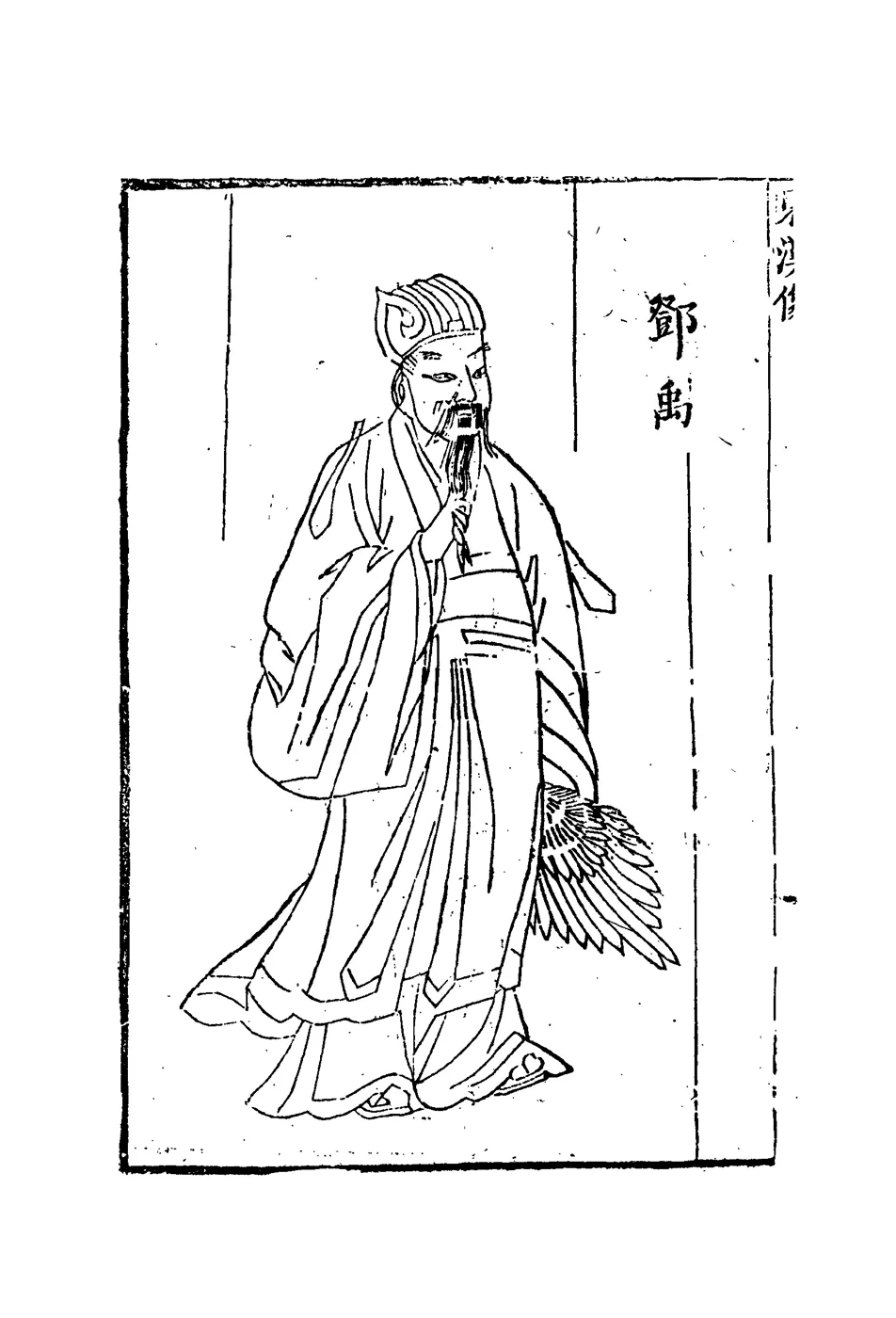
Deng Yu
邓禹
Deng Yu (2–58), courtesy name Zhonghua, was a native of Xinye County in Nanyang Commandery, present-day Xinye County, Henan. He was a founding statesman and general of the Eastern Han and was later ranked first among the 28 generals of the Cloud Terrace. As a young man he studied in Chang'an and befriended Liu Xiu. After the collapse of the Xin regime, Deng joined Liu and urged him to build a base in Hebei, win popular…
2 CE–58 CEEastern Han
PROFILE
Deng Yu (2–58), courtesy name Zhonghua, was a native of Xinye County in Nanyang Commandery, present-day Xinye County, Henan. He was a founding statesman and general of the Eastern Han and was later ranked first among the 28 generals of the Cloud Terrace. As a young man he studied in Chang'an and befriended Liu Xiu. After the collapse of the Xin regime, Deng joined Liu and urged him to build a base in Hebei, win popular support, and wait for an opportunity to contend for the empire. This advice earned him deep trust. Deng later campaigned against the Tongma rebels and defeated the Gengshi commanders Wang Kuang, Cheng Dan, and others in Hedong. He helped Liu Xiu establish the Eastern Han and was appointed Excellency over the Masses and enfeoffed as Marquis of Zan. He then crossed the Yellow River into the passes and accepted numerous surrenders. His following was said to number a million and he briefly entered Chang'an, but repeated defeats by the Red Eyebrows eventually destroyed his army. He escaped to Yiyang and resigned as Excellency over the Masses. He was later appointed General of the Right and re-enfeoffed as Marquis of Gaomi, and attended court as a Specially Advanced official. Under Emperor Ming he was promoted to Grand Tutor. Deng died of illness in 58, the first year of Yongping, aged fifty-seven, and received the posthumous name Yuan.
- Also known as
- Courtesy name Zhonghua
- Courtesy name
- Zhonghua
- Period
- Eastern Han
- Date of Birth
- 2
- Date of Death
- 58
- Dynasty / polity
- Eastern Han
- Identity
- General
- Ethnicity / group
- Han Chinese
- Native place
- Xinye County, Nanyang Commandery (present-day Xinye County, Henan)
- Place of birth
- Not recorded in historical sources
- Major achievements
- Foremost of the 28 generals of the Cloud Terrace; founding Grand Tutor who helped Emperor Guangwu secure Hebei and reunify the empire
LIFE TIMELINE
Age 13 | Could recite the Book of Odes, studied in Chang'an, and became acquainted with Liu Xiu
Age 22 | Hearing that Liu Xiu was pacifying Hebei, crossed north and caught up with him at Ye, where he presented a strategic plan
Age 23 | Helped Liu Xiu pacify Hebei, attacked the Tongma forces, and largely secured the northern provinces
Age 24 | Appointed General of the Van, marched west into Guanzhong, and pacified Hedong; after Liu Xiu became emperor, appointed Excellency over the Masses and enfeoffed as Marquis of Zan
Age 25 | Re-enfeoffed as Marquis of Liang, entered Chang'an, and was later defeated by the Red Eyebrows
Age 26 | After defeat at Yiyang, took responsibility and resigned as Excellency over the Masses; several months later appointed General of the Right
Age 27 | Defeated Yan Cen at Deng and Wudang
Age 36 | After the empire was pacified, enfeoffed as Marquis of Gaomi; together with Jia Fu reduced his military establishment and promoted civil virtue
Age 55 | Acted as Excellency over the Masses and accompanied the emperor to the Feng and Shan sacrifices at Mount Tai
Age 56 | After Emperor Ming's accession, appointed Grand Tutor
Age 57 | Died of illness and received the posthumous name Yuan
BIOGRAPHY
Biography
Family Background and Early Life
Deng Yu came from an ordinary family in Xinye County, Nanyang Commandery; historical sources preserve little information about his ancestry. He was intelligent and studious from childhood and could recite poetry by age thirteen. In 13 CE, the third year of Yuanshi under Emperor Ping of Han, Deng went to Chang'an to study at the National University. Liu Xiu was also studying in the capital at the time. Although still young, Deng concluded on meeting Liu that he was no ordinary man and deliberately cultivated a friendship with him. The two formed a close relationship in Chang'an. Several years later Deng completed his studies and returned home.
At the end of the Xin dynasty, the empire fell into disorder. In 23, the first year of Gengshi, Liu Xuan was proclaimed emperor as the Gengshi Emperor. Local leaders repeatedly recommended Deng for office, but he rejected all offers. He continued observing political developments while waiting for a ruler he considered worthy of service. When he heard that Liu Xiu had been sent to pacify Hebei, he immediately rode north across the Yellow River and eventually caught up with Liu at Ye County.
Liu Xiu was delighted to see him and asked whether he had come from so far away seeking office. Deng replied that he did not want an appointment. When Liu asked what he wanted instead, Deng said that he hoped Liu's power and virtue would spread throughout the empire and that he himself might contribute even a small effort and leave a name in history. Liu laughed, kept Deng in his own quarters, and spoke with him at length.
Deng then presented a strategic plan. He argued that although the Gengshi regime had established its capital in the west, the regions east of the mountains remained unsettled, large armed groups such as the Red Eyebrows and Qingdu were active, and the regime's generals were mediocre men concerned chiefly with wealth and coercive power rather than stable government. Since the empire was visibly fragmenting, Deng urged Liu to recruit heroes, win the people's support, emulate the enterprise of Emperor Gaozu, and rescue the population. Liu was greatly pleased, ordered attendants to address Deng as "General Deng," and kept him nearby to discuss policy and strategy.
Pacifying the Northern Provinces
In 24, Wang Lang raised an army, and Liu Xiu traveled from Ji County toward Xindu. While passing Nangong, Liu encountered a violent storm and took shelter in an empty roadside building. Feng Yi gathered firewood, Deng Yu lit the fire, and Liu dried his clothes at the stove. Their shared hardship strengthened their relationship.
Liu ordered Deng to raise emergency troops from commanderies and kingdoms. Deng obtained several thousand men and was ordered to lead them in attacking Leyang County. Wang Lang's general Li Yu was stationed at Bairen, but the Han troops were unaware of his position. Deng and General of the Household Zhu Fu were defeated and lost much of their baggage. Liu then gathered their scattered troops, defeated Li Yu near the city gate, and recovered the captured supplies. Li withdrew into the city and could not immediately be taken, so Liu turned and captured Guang'e.
When Deng arrived at Guang'e, Liu pointed to a map from a tower and asked why Deng had earlier claimed that his virtue was sufficient to pacify the empire when only one commandery had so far been secured. Deng replied that the realm was in chaos and people longed for an enlightened ruler just as infants long for a loving mother; the rise of rulers depended on the depth of their virtue, not the size of their initial territory. Liu was delighted.
Liu frequently consulted Deng when appointing and dispatching commanders. Men recommended by Deng—including Jia Fu, Wu Han, and Kou Xun—generally proved well suited to their offices, and Liu came to regard Deng as an excellent judge of talent. Deng was later ordered to lead cavalry separately and joined Gai Yan in attacking the Tongma forces at Qingyang. Gai's troops arrived first, were defeated, and retreated into a fortified position under siege. Deng advanced, defeated the enemy, and captured their commander alive. He then followed Liu in pursuing the enemy to Puyang and won a series of victories, after which the northern provinces were largely pacified.
Pacification of Hedong
In the first lunar month of 25, Liu Xiu hoped to take advantage of the conflict between the Red Eyebrows and the Gengshi regime to seize Guanzhong. Because he considered Deng composed and broad-minded, he appointed him General of the Van with an imperial tally, assigned him twenty thousand elite troops, and ordered him westward, allowing Deng to choose his own subordinate commanders. Deng made Han Xin his military adviser, Li Wen, Li Chun, and Cheng Lü libationers, Feng Yin General of Massed Crossbows, Fan Chong General of Agile Cavalry, Zong Xin General of Chariots and Cavalry, Deng Xun General Who Establishes Might, Geng Xin General of the Red Eyebrows, and Zuo Yu General and Military Adviser, then marched west.
Deng advanced from Henei to Ji Pass, west of present-day Jiyuan, Henan, and then entered Hedong Commandery. The local commandant closed the pass against him. After ten days of fighting, Deng broke through and captured more than one thousand cartloads of supplies. He then besieged Anyi, northwest of present-day Xia County, Shanxi, but failed to take it for several months. The Gengshi Emperor Liu Xuan sent General-in-Chief Fan Can with tens of thousands of troops across Dayang to attack Deng. Deng sent his generals to meet them south of Jie County, routed the force, and killed Fan Can.
Liu Xuan next sent Wang Kuang, Cheng Dan, Liu Jun, and others with a combined force of more than 100,000. Deng lost the first battle, and his General of Agile Cavalry Fan Chong was killed. After nightfall, adviser Han Xin and the other generals, believing morale had collapsed, urged a retreat, but Deng refused, judging that Wang Kuang's army was large without being strong. The next day was a guihai day, which Wang considered an inauspicious "exhaustion day" in the sexagenary cycle, and he avoided battle. Deng used the pause to reorganize his army. On the following morning Wang's entire force attacked. Deng ordered his troops to hold position until the enemy approached the camp, then suddenly sounded the drums and launched a full assault. Wang Kuang and Cheng Dan abandoned their army and fled. Deng pursued with light cavalry, captured Liu Jun, Hedong Administrator Yang Bao, and the imperial-tally-bearing court officer Mi Qiang, and had them executed. He seized six imperial tallies, five hundred official seals and ribbons, and large quantities of weapons, completing the pacification of Hedong.
In the sixth lunar month of the same year, Liu Xiu proclaimed himself emperor at Gao, in present-day Baixiang County, Hebei. He sent an envoy with an imperial tally to appoint Deng Excellency over the Masses and enfeoff him as Marquis of Zan with ten thousand households. The appointment edict praised Deng's loyalty, filiality, strategic counsel, victories, and especially his role in pacifying the lands west of the mountains. Deng was only twenty-four years old.
Fame throughout the Western Passes
After securing Hedong, Deng crossed the Yellow River at Fenyin and entered Xiayang, in present-day Hancheng, Shaanxi. Gongsun Xi, an officer of the Gengshi regime, joined troops from Zuofengyi and led a force said to number one hundred thousand against him at Ya County. Deng defeated and drove them off. At the same time the Red Eyebrows entered Chang'an. The Three Capital Districts collapsed into disorder, and the Red Eyebrows plundered wherever they passed. Hearing that Deng won successive victories while maintaining strict discipline, local people came out with the elderly and young to welcome his army. Thousands reportedly joined each day, and his following was said to number a million.
Wherever Deng went, he halted his carriage, displayed the imperial tally, and personally comforted the people. Elderly men and children crowded around his carriage, and his fame spread throughout the western regions. Liu Xiu was delighted and repeatedly sent letters praising him. In the twelfth lunar month, the Gengshi Emperor was strangled by Zhang Ang. Deng received orders to bury him at Baling.
Deng's subordinates urged an immediate attack on Chang'an, but he adopted a cautious strategy. He argued that although his followers were numerous, few were combat-ready and his army lacked both forward stores and rearward supply lines. The Red Eyebrows had just captured Chang'an, possessed abundant wealth, and had high morale. Deng believed that such a loosely organized force could not hold its gains indefinitely. He proposed moving north into Shang, Beidi, and Anding commanderies, where grain and livestock were abundant, training the army while living off local supplies, and waiting for the Red Eyebrows to weaken. He therefore moved north to Gouyi County.
Deng defeated several detached Red Eyebrow garrisons, and commanderies and counties opened their gates to him. Zong Yu, Administrator of Xihe, sent his son carrying Deng's proclamations to surrender, and Deng forwarded him to the imperial capital.
Loss of Prestige at Gouyi
Because Guanzhong remained unsettled and Deng still delayed advancing, Liu Xiu issued an edict urging him to take Chang'an, arguing that the officials and people of the western capital lacked anyone to rely on and that the moment should be seized. Deng nevertheless adhered to his previous strategy. He sent troops to take the counties of Shang Commandery, left Feng Yin and Zong Xin to defend Gouyi, and led the main force to pacify Beidi.
Feng Yin and Zong Xin then fought over authority. Feng killed Zong and rebelled against Deng. Deng sent an envoy to ask Liu Xiu for advice. Liu asked who was closest to Feng, and the envoy identified Protector of the Army Huang Fang. Liu predicted that Feng and Huang would not remain allies and told Deng that Huang would be the one to arrest Feng. He then sent Master of Writing Zong Guang with an imperial tally to induce Huang to surrender. One month later Huang did in fact seize Feng and bring his followers to submit. Feng was sent to Luoyang and pardoned rather than executed. Nevertheless, Feng's rebellion damaged Deng's prestige.
Defeats around Chang'an
In the spring of 26, the second year of Jianwu, Liu Xiu sent an envoy to re-enfeoff Deng as Marquis of Liang with four counties. Erudite Ding Gong argued that such a large fief for Deng and for Wu Han, Marquis of Guangping, violated the principle of strengthening the trunk and weakening the branches. Liu replied that he had never heard of meritorious ministers being destroyed because their fiefs were too large.
By this time Chang'an had exhausted its food supplies, and the Red Eyebrows burned the palaces and moved west toward Fufeng. Deng led his army south into Chang'an and camped at Kunming Lake. He rewarded his soldiers, chose an auspicious day to visit the Gao Temple, recovered the spirit tablets of eleven Han emperors, sent them to Luoyang, and inspected the imperial mausoleums, assigning officials and soldiers to maintain the sacrifices and guard the tombs. He then fought Yan Cen at Lantian but failed to win. The Red Eyebrows, after suffering defeat during their westward movement against Wei Xiao and losing many men to heavy snow, returned and plundered the imperial tombs. Deng sent troops against them at Yuyi, west of present-day Baoji, but was defeated and withdrew from Chang'an toward Yunyang.
Liu Jia, King of Hanzhong, surrendered to Deng, but his chancellor Li Bao behaved arrogantly and disrespectfully, and Deng had him executed. Li Bao's younger brother gathered his followers, attacked Deng, and killed Deng's general Geng Xin. Soon afterward the Red Eyebrows returned to Chang'an. Deng fought them, was defeated, and retreated to Gaoling. His soldiers were so hungry that they survived on dates and vegetables.
Liu Xiu ordered Deng to return, telling him that the Red Eyebrows, short of food, would naturally move east and could be defeated easily when they did; Deng should not continue reckless attacks. Ashamed that he had received a major commission without completing it, Deng nevertheless repeatedly led hungry troops into battle and suffered further setbacks.
Army Lost at Yiyang
In the first lunar month of 27, the third year of Jianwu, Deng Yu and General of Chariots and Cavalry Deng Hong ignored Feng Yi's advice and attacked the Red Eyebrows at Huayin. The Red Eyebrows feigned defeat and abandoned large carts whose tops were covered with beans but whose interiors were filled with earth. Deng Hong's starving troops rushed to seize them. Deng Yu and Feng Yi came to the rescue, and the Red Eyebrows initially withdrew. Deng continued the attack despite Feng's warning and suffered a crushing defeat at Huixi. He escaped to Yiyang with only twenty-four horsemen.
In the intercalary month Deng took responsibility and surrendered the seals of Excellency over the Masses and Marquis of Liang. Liu Xiu returned the marquisate seal to him. Several months later Deng was appointed General of the Right. In the second lunar month of 28, Deng led General Who Restores Han Deng Ye and General Who Assists Han Yu Kuang against Yan Cen at Deng County, defeated him, pursued him to Wudang, and defeated him again. Yan fled toward Hanzhong and the remainder of his force surrendered.
Retirement after Achievement
In 37, the thirteenth year of Jianwu, after the empire had been pacified, Deng was enfeoffed as Marquis of Gaomi with the counties of Gaomi, Chang'an, Yi'an, and Chunyu. His younger brother Deng Kuan was also enfeoffed as Marquis of Mingqin because of Deng's achievements. That year Deng and General of the Left Jia Fu voluntarily reduced their military establishments and promoted Confucian learning, after which the posts of General of the Left and Right were no longer maintained. Deng attended court with the rank of Specially Advanced. Among the enfeoffed founding meritorious officials, only Deng, Li Tong, Marquis of Gushi, and Jia Fu, Marquis of Jiaodong, continued to deliberate state affairs alongside the highest ministers.
In the third lunar month of 39, Liu Xiu ordered the court to debate the enfeoffment of the imperial princes. Deng, Excellency of Works Dou Rong, Li Tong, Jia Fu, Minister of Ceremonies Deng, and others jointly petitioned in favor, and the emperor accepted their recommendation.
In 56, the first year of Zhongyuan, Deng acted as Excellency over the Masses and accompanied the emperor east, taking part in the Feng and Shan sacrifices at Mount Tai. In the fourth lunar month of 57, the newly enthroned Emperor Ming, regarding Deng's contribution to his father's rise as foremost among the founding ministers, appointed him Grand Tutor and accorded him exceptional honor at court.
After Emperor Guangwu's death, Deng grieved so deeply that he reportedly coughed blood and became ill. In 58 his condition worsened. Emperor Ming personally visited him several times and appointed two of his sons as Gentlemen of the Interior. Deng died in the fifth lunar month and received the posthumous name Yuan.
At thirteen Deng Yu could recite the odes and studied at Chang'an, where the future Emperor Guangwu was also a student; young as he was, he saw at once that Liu Xiu was no common man and attached himself to him. Years later he went home; when the Han rose and the Gengshi emperor took the throne, many recommended Deng Yu, who would not join them, and only on hearing that Liu Xiu had settled Hebei did he ride north across the Yellow River and overtake him at Ye. Liu Xiu was delighted to see him and asked whether, since he had the power to appoint and dismiss officials, Deng had come so far to take office; Deng said he had not, and when asked what he wanted, answered that he wished only that his lord's power and virtue should reach the four seas and that he might render his own small service and leave a name in the records — at which Liu Xiu laughed.
That night, lodging in his tent, Deng Yu told Liu Xiu that although Gengshi had made his capital west of the passes, east of the mountains was unsettled, that the Red Eyebrows, Green Calves and their like numbered tens of thousands, that pretenders gathered in the metropolitan region; that Gengshi had neither defeated them nor could decide matters himself, and that his generals were upstarts intent on goods and gold, each contending for power and seeking pleasure from morning to night, with none loyal and wise, none thinking far ahead to honor their lord and comfort the people; that the realm was visibly splitting apart; and that though his lord had rendered great service to the throne, he might still accomplish nothing. The plan for the present, he said, was to gather heroes, win the people's hearts and establish the work of Gaozu, saving the lives of the myriad people; with his lord's ability the realm could be settled. Liu Xiu was delighted, had those about him call Deng Yu "General Deng" and kept him often in his tent to settle plans together.
In 25, when Liu Xiu took the throne, he made Deng Yu grand minister of education, Marquis of Zan with ten thousand households, at only twenty-four. He then led the western campaign into Guanzhong, winning at first and later suffering reverses against the Red Eyebrows that brought his recall, though his standing as a founder was unaffected. In 37, with the realm at peace, he was made Marquis of Gaomi; under Emperor Ming he was made grand tutor, and he died in 58 at fifty-seven with the posthumous name Yuan. In the Yongping years Emperor Ming had the portraits of twenty-eight men of the restoration painted in the Cloud Terrace at Luoyang with Deng Yu at their head, and his descendants were prominent through the dynasty, his granddaughter Deng Sui becoming empress to Emperor He and the Deng family a famous consort house of the middle Eastern Han.
Deng Yu's conduct of the western campaign is the key to later assessments. In 26 he entered the passes with well-disciplined troops and received many submissions, earning repeated commendations from Guangwu; but his standoff with the Red Eyebrows dragged on without a quick decision, and in 27 he suffered a reverse in Guanzhong and was recalled to the capital and stripped of the post of grand minister. In the dozen years after he was repeatedly sent on campaigns, yet his achievement lay chiefly in planning and administration at the dynasty's founding rather than in particular battles. After the Han was established he held high office and took part in government, Emperor Ming making him grand tutor with great ceremony; after his death his sons Deng Xun and Deng Hong were active under Emperors He and An, and the fortunes of the Deng family became a miniature of consort politics in the Eastern Han.
Deng Yu's relation with Guangwu was unusual among the founders: they had known each other as students, and Deng followed Liu Xiu not for office but from his judgment of the man. His speech in the tent is regarded as one of the founding strategies of the Eastern Han, its call to gather heroes and win the people's hearts matching the direction Guangwu's government later took. The History of the Later Han places his biography at the head of the collection, showing how historians rated his standing among the founders.
The Eastern Han handled its founders differently from the Western Han: Guangwu did not leave military power long in their hands but kept them as marquises attending court, and Deng Yu followed the same pattern. This made for firmer central authority and kept the founders largely out of later power struggles.
His grandsons Deng Zhi and Deng Kui held power in turn under Emperors He and An, with the empress dowager Deng holding the court for more than ten years — a comparatively mild stretch of Eastern Han consort politics; the family declined after her death, its experience like that of consort houses generally in that dynasty.
The History of the Later Han notes that he set store by merit and name, and records his steady and modest manner, never claiming credit for himself — unusual among the founders of the Eastern Han.
The Eastern Han combined favor and restraint toward its founders, the result being that the founding group's political influence gradually gave way to consort kin and eunuchs, and the rise and fall of Deng Yu's family stands within that transition.
Later discussions of the Eastern Han founding generally name Deng Yu with Kou Xun and Feng Yi, and place him first among them.
When Emperor Ming painted the Cloud Terrace portraits, Ma Yuan was omitted as a consort kinsman while Deng Yu stood at the head as the chief founder — the comparison showing how the Eastern Han weighed precedence among its founders.
His descendants gradually withdrew from the center of power after the middle of the Eastern Han, the family's course resembling that of most consort houses in the dynasty: rising through marriage and declining through political storms.
His understanding with Guangwu is one of the most often cited passages in the story of the Eastern Han founding, his wish to render small service and leave a name in the records being especially remembered.
The Eastern Han honored its founders chiefly through the twenty-eight of the Cloud Terrace, and Deng Yu's place in that sequence has kept his name permanently linked to the dynasty's founding.
The Eastern Han enfeoffed its founders largely within a single reign, after which a family's continuance depended on marriage ties to the throne and on personal conduct — the history of the Deng showing precisely this.
Central authority was comparatively firm from the beginning of the Eastern Han, which owed to Guangwu's handling of his founders, his control of the provinces and his precautions against consort kin. Deng Yu took part in that process as a chief founder and ended his days in safety within it.
The History of the Later Han records that he was cultured within and thorough in conduct, a most filial son and a frugal householder who had each of his children learn a skill. These notices stand beside his standing as a founder to form the complete later impression of him: able to plan within the tent and to keep discipline in the home.
In the Jianwu years he memorialized more than once to decline his enfeoffment and was refused; afterward he held court office long, taking part in deliberations but not in military affairs, in keeping with the general arrangement for the founders. Emperor Ming honored him as a teacher, and after his death the court gave him the posthumous name Yuan, his son Deng Zhen inheriting the title.
His fief of Gaomi lay in what is now Shandong, and his descendants continued there and at Xinye, becoming a noted house of the Eastern Han. The family's local base and its standing at court supported each other, an instance of the aristocratic politics of the dynasty.
After the Eastern Han the story of Deng Yu and the twenty-eight of the Cloud Terrace was cited repeatedly in histories, poems and essays.
His figure appears repeatedly in later historical essays and poems, generally styled the first of the founding merit.
He was honored under both Jianwu and Yongping, one of the founders of the Eastern Han whose end was most complete and untroubled.
Major Activities
Foundational Strategic Counsel
At the beginning of Liu Xiu's imperial enterprise, Deng proposed recruiting heroes, winning the people's support, emulating Emperor Gaozu, and rescuing the population. The strategy gave Liu a broad direction for the contest for the empire and became closely associated with Eastern Han state-building. Later writers compared advisers who helped establish dynasties at an early stage to Deng. Sun Quan, for example, compared Lu Su's early discussion of imperial strategy to Deng Yu, while Emperor Taizong of Tang compared Fang Xuanling's recruitment of talented men to Deng's service under Emperor Guangwu.
Pacification of Hedong
Deng entered Hedong through Ji Pass, broke the defenses after ten days, and seized more than one thousand carts of supplies. After a prolonged siege of Anyi, he defeated Gengshi General-in-Chief Fan Can south of Jie County and killed him. He then stabilized his line after an initial setback against the combined army of Wang Kuang, Cheng Dan, and Liu Jun, waited for an opportunity, and routed their force of more than one hundred thousand. He captured and executed Liu Jun and Hedong Administrator Yang Bao, completing the pacification of the commandery. The campaign displayed his composure under pressure and tactical judgment and removed a major obstacle to Liu Xiu's establishment of the Eastern Han.
Fame in Guanzhong
After crossing the Yellow River into the passes, Deng defeated the large force of Gongsun Xi. Following the Red Eyebrows' occupation of Chang'an, people in the Three Capital Districts, impressed by Deng's discipline, came to him in thousands, and his following was said to reach one million. He regularly stopped to comfort local people, gaining enormous prestige. Although his cautious strategy ultimately failed to secure Guanzhong, his ability to attract local support contributed to the Eastern Han's later consolidation of the region.
Recognition and Recommendation of Talent
Deng was renowned as a judge of men. Liu Xiu often consulted him about appointments and military commands. The men Deng recommended, including Jia Fu, Wu Han, and Kou Xun, generally matched their responsibilities and became important founding figures of the Eastern Han.
Withdrawal after Success
Once the empire was unified, Deng and Jia Fu took the lead in supporting Liu Xiu's policy of ending warfare and cultivating civil virtue. They reduced their troops and promoted Confucian learning, setting an example for the withdrawal of military meritorious officials from active command. Even so, Deng remained one of the few enfeoffed founding ministers who continued to participate in major state deliberations. He later joined debates over enfeoffing the imperial princes, acted as Excellency over the Masses, accompanied the emperor to Mount Tai, and finally became Grand Tutor under Emperor Ming.
Travels and Areas of Activity
Deng's career took him across much of northern China. He studied in Chang'an, crossed north to join Liu Xiu at Ye, campaigned throughout Hebei, moved west through Hedong into Guanzhong, operated in Shang, Beidi, and Anding, entered Chang'an, retreated through Gaoling and Yiyang, later fought as far south as Wudang, and in old age accompanied Emperor Guangwu east to Mount Tai. His movements extended across Hebei, Shanxi, the Guanzhong region, the northwest, the Wudang region, and Shandong.
Personal Relations
- Deng Kuan: Younger brother, enfeoffed as Marquis of Mingqin because of Deng Yu's achievements
- Deng Zhen (heir to the marquisate of Gaomi): Son who inherited the marquisate of Gaomi
- Deng Xi and another son also romanized Deng Zhen: Sons appointed Gentlemen of the Interior under Emperor Ming
- Deng Xun: Son, Eastern Han general and Colonel for the Protection of the Qiang
- Deng Zhi: Grandson, powerful Eastern Han imperial relative and General-in-Chief
- Deng Sui: Granddaughter, empress of Emperor He of Han, later Empress Dowager Hexi
- Liu Xiu (Emperor Guangwu): Friend from student days in Chang'an, later his sovereign
- Han Xin: Military adviser who accompanied Deng on the western campaign
- Feng Yi: Colleague and fellow commander who repeatedly advised Deng during campaigns against the Red Eyebrows
- Gai Yan: Colleague who fought alongside Deng against the Tongma forces
- Jia Fu: Recommended by Deng; one of the 28 generals of the Cloud Terrace and later joined Deng in reducing their military establishments
- Wu Han: Recommended by Deng; one of the 28 generals of the Cloud Terrace
- Kou Xun: Recommended by Deng; one of the 28 generals of the Cloud Terrace
- Liu Xiu (Emperor Guangwu): Founding emperor of the Eastern Han; treated Deng as a principal adviser, appointed him Excellency over the Masses, and enfeoffed him successively as Marquis of Zan, Marquis of Liang, and Marquis of Gaomi
- Liu Zhuang (Emperor Ming of Han): Son of Emperor Guangwu; appointed Deng Grand Tutor and accorded him exceptional honor
- Wang Lang: Regional ruler in Hebei against whom Deng campaigned with Liu Xiu
- Wang Kuang, Cheng Dan, and Liu Jun: Gengshi commanders defeated by Deng in Hedong
- Fan Can: Gengshi General-in-Chief killed by Deng's forces south of Jie County
- Red Eyebrow Army: Principal opponent during Deng's western campaign; Deng suffered repeated defeats against it
- Yan Cen: Regional warlord whom Deng fought at Lantian and later defeated at Deng and Wudang
- Feng Yin: Subordinate who rebelled against Deng and killed Zong Xin
Historical Assessment
Han Dynasty and Contemporary Assessments
- Emperor Guangwu praised Deng in the appointment edict for his loyalty, filiality, strategic planning, battlefield victories, and especially his role in pacifying the lands west of the mountains (Book of the Later Han, "Biography of Deng Yu").
- Emperor Ming regarded Deng's contribution to assisting the founding emperor as the foremost among the founding ministers and appointed him Grand Tutor (Book of the Later Han, "Biography of Deng Yu").
- Fu Zhan, who served in the same era as acting Excellency over the Masses, was described in the historical record as maintaining civil virtue even in emergencies, reflecting a value also associated with Deng's later conduct.
Wei, Jin, and Northern and Southern Dynasties
- Sun Quan compared Lu Su to Deng Yu because Lu had discussed the broad strategy of imperial enterprise with him at an early stage (Records of the Three Kingdoms, "Biography of Lu Su").
- The Book of Chen cited Deng Yu and Du Yu as examples of men grounded in literary or Confucian learning who nevertheless achieved distinguished military success.
- Emperor Yuan of Liang, Xiao Yi, treated Deng as an exemplary learned general in the Jinlouzi.
Sui and Tang Periods
- Emperor Taizong of Tang compared Fang Xuanling to Deng Yu, stating that Emperor Guangwu's possession of Deng brought capable men closer and that Fang played a similar role for himself (Old Book of Tang, "Biography of Fang Xuanling").
- Under Emperor Dezong of Tang, Deng was included in the Temple of King Wucheng among sixty-four famous generals of antiquity.
Song, Yuan, Ming, Qing, and Modern Assessments
- Emperor Taizu of Song, Zhao Kuangyin, reportedly pointed at Deng's portrait in the Temple of King Wucheng and called men of his kind heroes of their age.
- Emperor Taizu of Ming, Zhu Yuanzhang, invoked Deng Yu's achievements when praising Xu Da, placing his fame above that of ordinary feudal lords.
- Wang Fuzhi wrote in Reflections on Reading the Comprehensive Mirror that Deng's talent surpassed that of the other generals and compared his victory in Hedong favorably with Han Xin's conquest of Zhao.
- Lü Simian, in History of the Qin and Han Dynasties, observed that Deng led armies despite being trained as a scholar, pacified Hedong, and shook the western regions; despite later defeats by the Red Eyebrows, his strategic ability ranked with the great generals of his age.
FIGURES ASSOCIATED WITH THIS DYNASTY
Bibliography
- Fan Ye, Book of the Later Han, "Biography of Deng Yu"
- Lü Simian, History of the Qin and Han Dynasties