Birth | Daughter of Jia Chong and Guo Huai, born during the Cao Wei period
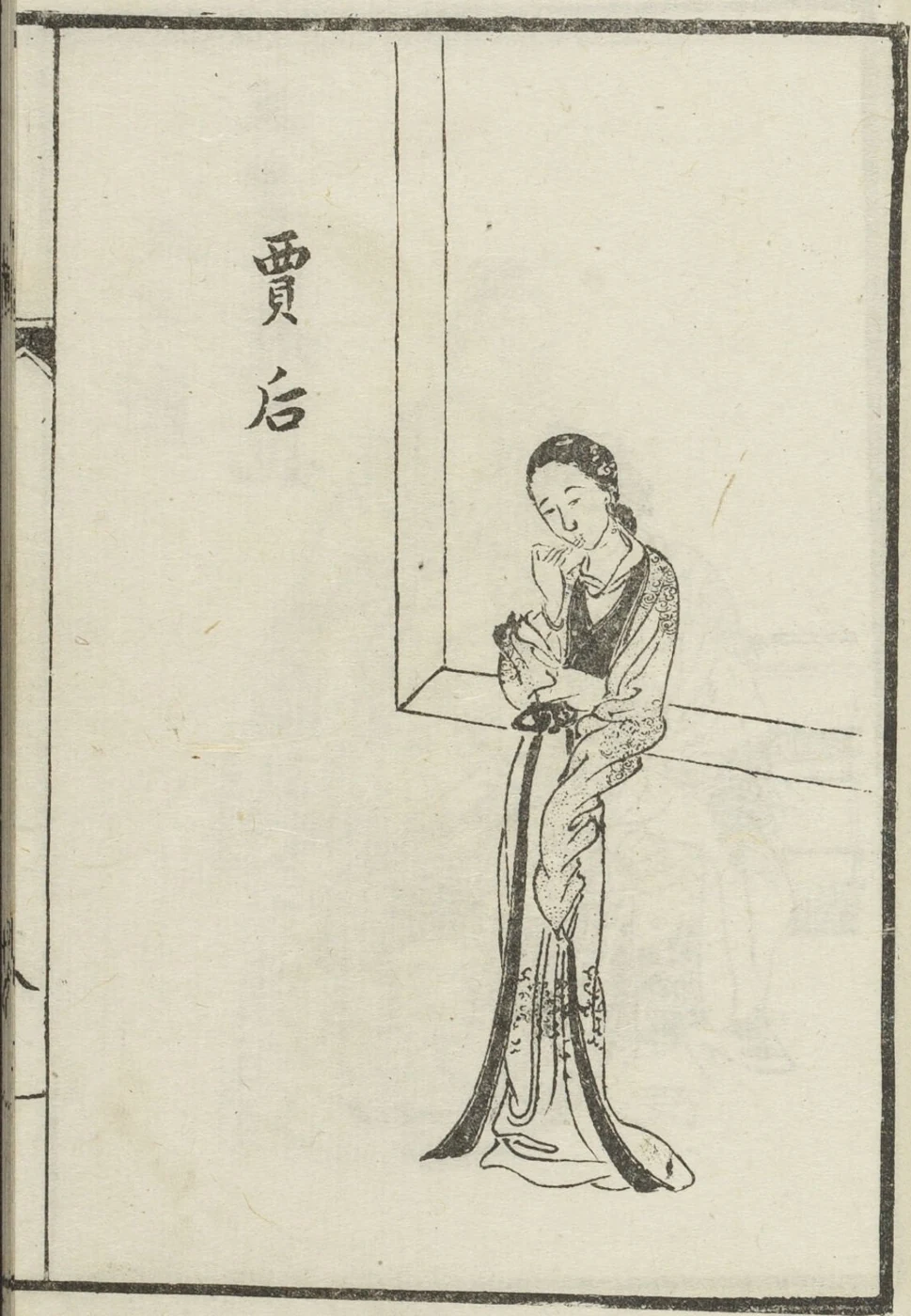
257 CE–300 CE
Empress
Jia Nanfeng
贾南风
Jia Nanfeng was the empress of Emperor Hui of Jin. She exercised political power, became a central figure in the conflict between the Jia and Yang factions and the War of the Eight Princes, controlled the Western Jin court, and was later killed by Sima Lun, Prince of Zhao.
257 CE–300 CEWestern Jin
PROFILE
Jia Nanfeng was the empress of Emperor Hui of Jin. She exercised political power, became a central figure in the conflict between the Jia and Yang factions and the War of the Eight Princes, controlled the Western Jin court, and was later killed by Sima Lun, Prince of Zhao.
- Other name
- Empress Jia
- Courtesy name
- Nanfeng
- Period
- Western Jin
- Dynasty / regime
- Western Jin
- Identity
- Empress
- Ethnicity / group
- Not reliably confirmed in historical sources
- Native place
- Xiangling County, Pingyang Commandery (present-day Xiangfen, Shanxi)
- Date of birth
- 257
- Place of birth
- Unknown
- Date of death
- May 13, 300
- Place of death
- Unknown
- Highest office
- See Biography and Major Activities
- Major achievements
- Empress of Emperor Hui of Jin; exercised political power, became central to the conflict between the Jia and Yang factions and the War of the Eight Princes; controlled the Western Jin court; later killed by Sima Lun, Prince of Zhao
LIFE TIMELINE
Age 15 | As Jia Chong sought to remain in the capital, Xun Xu arranged a marriage alliance with the crown prince; Jia Nanfeng was selected as the prospective crown princess
Age 16 | Formally installed as crown princess in the second lunar month; replaced her younger sister Jia Wu, who was too young and small for the marriage
Period as crown princess | Known for cruelty in the Eastern Palace; threw a halberd at a pregnant consort and caused a miscarriage; nearly deposed by Emperor Wu of Jin but spared after intercession by Zhao Can, Yang Yao, and others
Age 34 | Emperor Wu of Jin died; Sima Zhong ascended the throne and Jia Nanfeng became empress
Age 35 | In the third lunar month, joined Sima Wei, Prince of Chu, and others in killing Grand Tutor Yang Jun and reducing Empress Dowager Yang Zhi to commoner status; later the same year forged an edict ordering Sima Wei to kill Sima Liang and Wei Guan, then executed Sima Wei for unauthorized killings, thereby securing control of the court
Period of political dominance | Promoted Zhang Hua, Pei Wei, and others to assist in government; the realm remained relatively stable; reforms included the salary-field system and the Nine-Rank office system described in the source
Age 43 | Framed Crown Prince Sima Yu for rebellion, reduced him to commoner status, and imprisoned him at Jinyong Fortress
Age 44 | Ordered Crown Prince Sima Yu killed; Sima Lun, Prince of Zhao, launched a coup in the name of avenging the crown prince, deposed Jia Nanfeng to commoner status, and imprisoned her at Jinyong Fortress; she was soon forced to drink poisoned wine containing gold powder and died at age forty-five
BIOGRAPHY
Biography
Family Background and Early Years
Jia Nanfeng came from the Jia clan of Pingyang. She was a granddaughter of Jia Kui, Inspector of Yu Province under Cao Wei, and a daughter of Jia Chong, a founding minister of the Western Jin, and Guo Huai. Jia Chong was a key participant in the Sima clan's replacement of Wei and rose to the offices of Excellency of Works and Palace Attendant, wielding great influence. Jia Nanfeng was the third daughter in the family, with an elder sister and a younger sister, Jia Wu. Historical records describe her as short and dark-complexioned, with a blemish behind the eyebrow; Emperor Wu of Jin was said to have described the Jia daughters as unattractive, short, and dark.
In 271, Palace Attendant Ren Kai, who was hostile to Jia Chong, proposed sending Jia Chong to guard the Guanzhong region on the pretext of dealing with non-Han unrest. Jia Chong was deeply worried. His ally Xun Xu advised him to marry a daughter to Crown Prince Sima Zhong; once the crown prince married, Jia Chong, as the prince's father-in-law, would naturally remain in the capital Luoyang. After strong recommendations from Empress Yang Yan and Xun Xu, Emperor Wu of Jin finally agreed that Sima Zhong should marry Jia Nanfeng. Jia Chong had initially intended his younger daughter Jia Wu to marry the crown prince, but Jia Wu was only twelve and too small to wear the wedding garments. Jia Nanfeng therefore replaced her. In the second lunar month of 272, she was formally installed as crown princess at age sixteen, two years older than Sima Zhong.
Period as Crown Princess
After entering the Eastern Palace, Jia Nanfeng was described as cruel and intensely jealous. Crown Prince Sima Zhong both feared and was dominated by her, and other consorts seldom received his favor. She was said to have killed several people herself. When she saw other attendants become pregnant, she once threw a sharp halberd at one of them, causing the fetus to fall out with the blade. Emperor Wu was furious when he learned of this. Jinyong Fortress had just been completed, and he intended to depose Jia Nanfeng and imprison her there. Zhao Can, a favored palace consort, interceded calmly, arguing that Jia Nanfeng was young and that jealousy was a common emotion that would lessen with age. Yang Yao also pleaded for her on the basis of Jia Chong's services, while Xun Xu and others worked to save her. Jia Nanfeng therefore retained her position as crown princess.
Emperor Wu had long suspected that Crown Prince Sima Zhong lacked intelligence and might be unsuitable as heir; officials such as He Jiao had voiced similar concerns. The emperor therefore held a banquet for all officials of the Eastern Palace and separately sealed questions for the crown prince to answer. Jia Nanfeng knew Sima Zhong could not answer and was alarmed. She found outsiders to draft responses, but these were filled with classical citations. An attendant named Zhang Hong recognized the problem and warned that because the crown prince was not known for reading, answers full of quotations would expose the use of ghostwriters. He suggested direct answers to the substance of the questions instead. Jia Nanfeng was delighted, had Zhang Hong draft them, and had Sima Zhong copy them in his own hand. Emperor Wu was very pleased and showed the responses to Crown Prince Junior Tutor Wei Guan. Wei Guan reacted respectfully but uneasily, which was taken as evidence that his earlier criticism of the prince had been unfounded. Jia Chong secretly sent word to Jia Nanfeng that Wei Guan had nearly ruined her affairs.
Destruction of the Yang Faction
In 290, Emperor Wu of Jin died and Sima Zhong ascended the throne. Jia Nanfeng was installed as empress. Her first major political threat was the Yang clan. In the final illness of Emperor Wu, Chancellor Yang Jun had monopolized power, excluded other senior officials, and placed his own followers in important positions. After Emperor Hui of Jin took the throne, Yang Jun controlled court affairs. Edicts had to be reviewed by the emperor, sent to Empress Dowager Yang Zhi, and only then issued. Jia Nanfeng wanted to intervene in government but was restrained by Grand Tutor Yang Jun and deeply resented his dominance.
In the third lunar month of 291, Jia Nanfeng conspired with Palace Gentlemen Meng Guan and Li Zhao and the eunuch official Dong Meng to kill Yang Jun and depose Empress Dowager Yang Zhi. She sent Li Zhao to contact Sima Liang, Prince of Runan, and Sima Wei, Prince of Chu, asking them to lead troops against Yang Jun. Sima Wei agreed and requested permission to enter the capital; Yang Jun did not dare prevent him. After Sima Wei entered, Meng Guan and Li Zhao caused Emperor Hui to issue an edict falsely accusing Yang Jun of rebellion and sent Sima Yao, Duke of Dong'an, with four hundred men to attack him. Yang Jun was killed at his residence. Guard General Yang Yao, Crown Prince Grand Guardian Yang Ji, and others were arrested and their clans exterminated to the third degree.
Because Empress Dowager Yang Zhi had written on cloth that anyone who rescued the Grand Tutor would be rewarded, Jia Nanfeng declared that she too had participated in rebellion and decided to depose her. Most officials complied when the issue was debated at court. Only Crown Prince Junior Tutor Zhang Hua opposed the plan and suggested following the Han precedent of deposing Zhao Feiyan as empress dowager while still allowing her the title of Empress Wu and residence in a separate palace. Jia Nanfeng rejected the proposal, reduced Yang Zhi to commoner status, and moved her to Jinyong Fortress. Yang Zhi was starved to death the following year.
Domination of Court Politics
After killing Yang Jun and deposing the empress dowager, Jia Nanfeng recalled Sima Liang as Grand Chancellor and appointed him together with Grand Guardian Wei Guan to supervise the affairs of the Secretariat. Sima Wei was appointed Guard General. Jia Nanfeng intervened in state affairs together with her clansman Jia Mo, maternal relative Guo Zhang, nephew Jia Mi—the son of her sister Jia Wu—and Sima Wei and Sima Yao.
Jia Nanfeng soon used the hostility between Sima Wei and Sima Liang to eliminate both sides. She first caused Emperor Hui to dismiss Sima Liang and Sima Wei, then forged an edict ordering Sima Wei to kill Sima Liang and Wei Guan. After Sima Wei carried out the killings, Crown Prince Junior Tutor Zhang Hua sent Dong Meng to urge Jia Nanfeng to eliminate Sima Wei as well. Jia Nanfeng agreed, accused Sima Wei of killing Sima Liang and Wei Guan without proper authority, and had him arrested and executed after his followers dispersed. Jia Nanfeng now controlled the central court completely. Historical sources described her as exercising absolute authority over the realm and imposing her will inside and outside the court.
Jia Nanfeng did not rely only on relatives and personal allies. She considered Zhang Hua, who came from a comparatively humble background, cultivated and strategically capable. Because he posed little threat to the throne yet enjoyed broad respect, she entrusted him with the offices of Palace Attendant and Director of the Secretariat and had him work with Pei Wei and others in governing. Zhang Hua loyally supported the court and corrected deficiencies. Although Jia Nanfeng was dangerous and ruthless, she respected Zhang Hua. As a result, for several years the realm remained relatively stable despite a weak emperor and a violent empress.
Deposition and Killing of the Crown Prince; Fall from Power
Jia Nanfeng had four daughters but no son. Her mother Guo Huai repeatedly urged her to show affection to Crown Prince Sima Yu and, on her deathbed, again begged her to protect him while warning her against Zhao Can and Jia Wu. Jia Nanfeng ignored the advice and joined Zhao Can and Jia Wu in plotting against the crown prince.
In 299, Jia Nanfeng falsely claimed that she had given birth to a son in secrecy during the mourning period for Emperor Wu and presented Han Weizu, a son of her brother-in-law Han Shou, as her own child. She intended to depose Sima Yu and make Han Weizu crown prince. She forced Sima Yu to become drunk, induced him to write words suggesting rebellion while intoxicated, altered the text, and presented it to Emperor Hui and members of the imperial clan as evidence of treason. Sima Yu was reduced to commoner status and imprisoned at Jinyong Fortress together with his three young sons. His mother Xie Jiu and Jiang Jun, mother of Sima Bin, were killed.
In 300, anger spread through court and society because the highly regarded crown prince had been deposed. Right Guard Commander Sima Ya, Regular Attendant Commander Xu Chao, Palace Gentleman Shi Yi, and others plotted to depose Empress Jia and restore Sima Yu. They sought support from Sun Xiu, a confidant of Sima Lun, Prince of Zhao. Sun Xiu used counterintelligence, claiming that people within the palace planned to depose the empress and restore the crown prince. Jia Nanfeng became frightened. Sima Lun and Sun Xiu then persuaded Jia Mi to urge her to kill Sima Yu and thus destroy the focus of public hopes. Jia Nanfeng ordered Imperial Physician Cheng Ju to take poison and sent Palace Attendant Sun Lü under a forged edict to poison Sima Yu. When Sima Yu refused to take the poison, Sun Lü killed him with a medicinal pestle.
The killing provided Sima Lun with a pretext to attack Empress Jia. In the fourth lunar month of 300, he forged an edict and deposed her for murdering the crown prince. Sima Jiong, Prince of Qi, arrested Jia Nanfeng and sent her to Jinyong Fortress, where she was reduced to commoner status. Sima Lun also arrested her allies Zhao Can, Jia Wu, Cheng Ju, and others, while respected ministers such as Zhang Hua and Pei Wei were killed as well. Soon afterward, Sima Lun forced Jia Nanfeng to drink poisoned wine containing gold powder. She died at age forty-five.
Major Activities
Political Struggles
The most prominent feature of Jia Nanfeng's career was her participation in and leadership of a series of palace coups in the early Western Jin. In 291 she joined Sima Wei, Prince of Chu, Sima Yao, Duke of Dong'an, and others in killing Grand Tutor Yang Jun and exterminating his clan to the third degree; she then deposed Empress Dowager Yang Zhi and later had her starved at Jinyong Fortress. That same year she exploited the conflict between Sima Wei and Sima Liang and Wei Guan, first using a forged edict to have Sima Wei kill the two senior regents, then executing Sima Wei for unauthorized killing. In this way she removed the leading regents and monopolized power. These political struggles directly fed into the War of the Eight Princes and the subsequent instability of the Western Jin.
Appointments and Administration
During her dominance, Jia Nanfeng did not simply appoint relatives. She broke with some aristocratic conventions by promoting Zhang Hua, who came from a relatively humble background, to key central offices as Palace Attendant and Director of the Secretariat, and employed capable officials such as Pei Wei, Pei Kai, and Wang Rong. Zhang Hua, Pei Wei, and others worked together to repair deficiencies in government. Historical accounts state that, despite a weak ruler and violent empress, the realm remained peaceful. Jia Nanfeng respected Zhang Hua and often accepted his advice. This period was one of the more stable phases of Western Jin history outside the reign of Emperor Wu.
Institutional Reforms
During Jia Nanfeng's rule, the Western Jin formally implemented a salary-field system in which income from public land formed part of official remuneration. The Book of Jin, "Treatise on Offices," records provisions from the first year of Yuankang concerning vegetable fields and agricultural attendants. Salary fields had appeared by the late Eastern Han, but the source states that they were first systematized during Jia Nanfeng's period of dominance. In 297, the seventh year of Yuankang, Jia Nanfeng promoted Liu Song to Minister of Personnel. He established the Nine-Rank system described in the source, reformed promotion procedures, simplified bureaucratic rank categories, and abolished accumulation of seniority through lateral transfer, so that officials tended to remain longer in their posts.
Military Responses
In 294, the Xiongnu leader Hao San led an uprising and attacked the Shangdang region of Western Jin, then surrendered and was killed. In the summer of 296, the Xiongnu leader Hao Duyuan joined Qiang and Hu groups in Fengyi, Beidi, and other commanderies in revolt against Jin. Guanzhong was suffering severe famine and population displacement, and Di and Qiang communities in Qin and Yong provinces rose in response, elevating the Di leader Qi Wannian as emperor. His forces, said to number seventy thousand, besieged Jingyang. Jia Nanfeng sent General Who Pacifies the West Xiahou Jun and General Who Establishes Might Zhou Chu to suppress the revolt under the command of Sima Rong, Prince of Liang. Because Sima Rong had an old grievance against Zhou Chu, he cut off Zhou's retreat and Zhou was killed after defeat at Liumo. In 298, following recommendations from Meng Guan and others, Jia Nanfeng sent General of the Left Crossbowmen Meng Guan with palace guards to campaign against Qi Wannian, eventually suppressing the revolt.
Personal Relations
Family
- Grandfather: Jia Kui, Inspector of Yu Province under Cao Wei
- Father: Jia Chong, founding minister of the Western Jin
- Mother: Guo Huai, Jia Chong's later wife
- Younger sister: Jia Wu, wife of Han Shou and mother of Han Weizu and Jia Mi
- Nephew: Jia Mi, son of Jia Wu and Han Shou, adopted as Jia Chong's heir-grandson and involved in court politics
- Husband: Sima Zhong, Emperor Hui of Jin
- Daughters: Princess of Hedong; Princess of Shiping; Princess of Hongnong, Sima Xuanhua; and the imperial daughter posthumously styled Aixian, Sima Nüyan
Political Allies
- Zhang Hua: official of relatively humble origin promoted by Jia Nanfeng to Palace Attendant and Director of the Secretariat; an effective regent
- Pei Wei: Jia Nanfeng's younger cousin, Palace Attendant, who worked with Zhang Hua in government
- Jia Mo: clan elder who served as Cavalier Attendant-in-Ordinary and Palace Attendant and later considered deposing Jia Nanfeng out of fear of disaster
- Guo Zhang: maternal relative and General of the Right Guard
- Dong Meng: eunuch official who took part in the conspiracy against Yang Jun and was enfeoffed as Marquis of Wu'an
- Meng Guan and Li Zhao: Palace Gentlemen who participated in the conspiracy against Yang Jun
Rulers, Officials, and Conflicts
- Yang Jun: Grand Tutor and regent, killed by Jia Nanfeng; his clan was exterminated to the third degree
- Yang Zhi: empress dowager, reduced by Jia Nanfeng to commoner status and starved at Jinyong Fortress
- Sima Liang: Prince of Runan and regent, killed through an edict carried out by Sima Wei
- Wei Guan: Grand Guardian and regent, killed through the same action
- Sima Wei: Prince of Chu, later executed by Jia Nanfeng for unauthorized killings
- Sima Yu: crown prince, deposed and killed at Jia Nanfeng's direction
- Sima Lun: Prince of Zhao, launched the coup that overthrew and killed Jia Nanfeng
- Zhao Can: palace consort who earlier helped save Jia Nanfeng and later joined her plot against the crown prince; killed after the coup
- Jia Wu: Jia Nanfeng's younger sister, joined the plot against the crown prince and was killed after the coup
Historical Assessment
Tang and Traditional Historiography
The compilers of the Book of Jin, led by Fang Xuanling and others, judged Jia Nanfeng harshly, describing her as jealous, deceitful, and cruel and making her a negative example in the "Biographies of Empresses and Consorts." The work nevertheless also acknowledged that the empire remained peaceful during part of her dominance because Zhang Hua and other officials governed effectively.
The Comprehensive Mirror in Aid of Governance described Jia Nanfeng as exercising absolute control over the realm and imposing her authority throughout the court and country. It condemned her seizure of power but also recorded the relative stability of the period in which Zhang Hua assisted in government.
Song and Yuan Periods
Sima Guang's Comprehensive Mirror in Aid of Governance continued the critical judgment found in earlier histories, treating Jia Nanfeng as a model of destructive rule and regarding her monopoly of power and killing of the crown prince as important causes of the War of the Eight Princes and the eventual collapse of Western Jin.
Ming and Qing Periods
The Qing scholar Wei Yuan compared Jia Nanfeng with Empress Lü and Wu Zetian as among the most influential female power holders in Chinese history. This interpretation moved beyond purely moral condemnation and emphasized her historical political impact.
Modern Assessments
Modern scholarship has become more varied. Some scholars argue that Jia Nanfeng broke aspects of aristocratic appointment practice, promoted capable officials such as Zhang Hua, and oversaw reforms including the salary-field and Nine-Rank systems, giving her rule some positive institutional significance. Others stress her violence and political manipulation and hold her directly responsible for helping trigger the War of the Eight Princes. Overall, scholarship increasingly evaluates her within the complex struggles of Western Jin politics, acknowledging her political ability while not overlooking her brutality.
FIGURES ASSOCIATED WITH THIS DYNASTY
Bibliography
- Fang Xuanling et al., Book of Jin, vol. 31, "Biographies of Empresses and Consorts I"