Birth in Hedong
Born into a prominent clan in Xiangling County, Hedong Commandery; orphaned young, he received tens of thousands of words of military strategy orally from his grandfather Jia Xi.
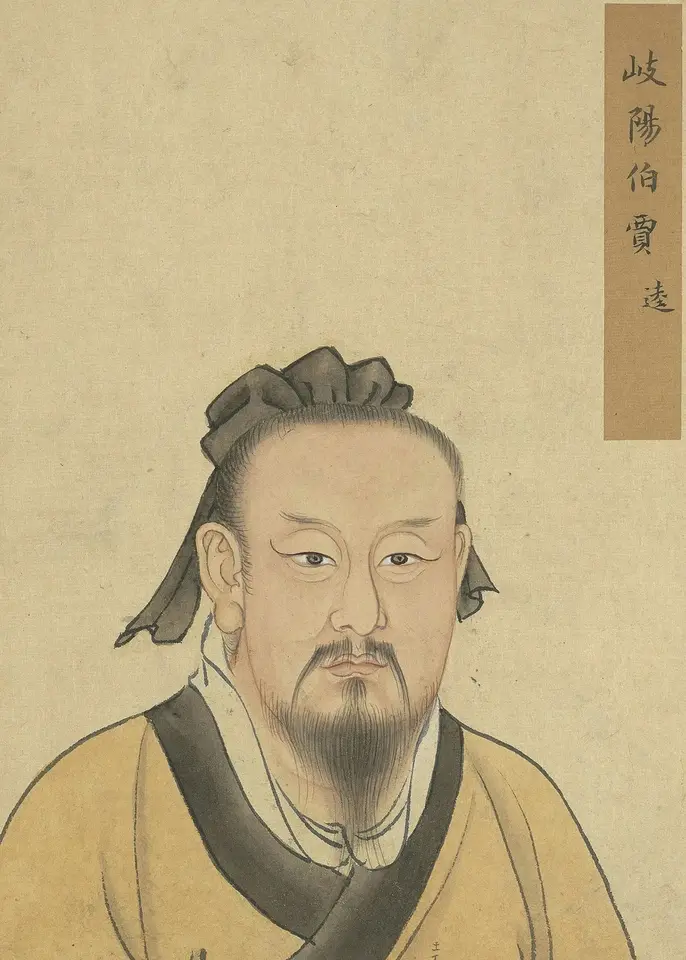
30 CE–101 CE
贾逵
Jia Kui (贾逵, 174–228), originally named Jia Qu, courtesy name Liangdao (梁道), was a native of Xiangling County in Hedong Commandery and a prominent civil governor and military commander of the late Eastern Han (东汉) and Cao Wei during the Three Kingdoms period, as well as the father of the Western Jin regent Jia Chong (贾充) (he is to be distinguished from the early Eastern Han Confucian classicist of the same name,…
Jia Kui (贾逵, 174–228), originally named Jia Qu, courtesy name Liangdao (梁道), was a native of Xiangling County in Hedong Commandery and a prominent civil governor and military commander of the late Eastern Han (东汉) and Cao Wei during the Three Kingdoms period, as well as the father of the Western Jin regent Jia Chong (贾充) (he is to be distinguished from the early Eastern Han Confucian classicist of the same name, Jia Kui, courtesy name Jia Jingbo 贾景伯). Orphaned in childhood and raised in poverty, Jia Kui learned military strategy from his grandfather Jia Xi and studied the Zuo Zhuan assiduously. Beginning his career as a commandery clerk and Chief of Jiangyi in Hedong, he defended Jiangyi tenaciously against Yuan Shang's general Guo Yuan in 202, refused to kneel when captured, and delayed Guo Yuan's advance by stratagem so Hedong Commandery could secure the strategic ford of Pishi. As Magistrate of Mianchi in 205, he outwitted and crushed the rebel Zhang Yan. Entering the service of Imperial Chancellor Cao Cao, Jia Kui served successively as Administrator of Hongnong, Master of Records to the Imperial Chancellor, and Grandee Remonstrant, jointly managing military planning with Xiahou Shang. When Cao Cao died in Luoyang in the first month of 220, Jia Kui directed the funeral arrangements, rejected proposals to conceal the death, issued official passes to pacify mutinous Qingzhou troops, sternly rebuked Cao Zhang for demanding the late king's seal, and escorted Cao Cao's coffin back to Ye to secure Cao Pi's succession. Appointed Inspector of Yuzhou by Cao Pi, he enforced strict law across the commanderies—earning Cao Pi's praise as a "true Inspector"—strengthened border defenses against Eastern Wu, and constructed dams and a 200-li canal known as the "Marquis Jia Canal." During the Battle of Shiting in 228, setting aside long-standing personal grievances, Jia Kui marched double-time to occupy Jiashi and rescued Grand Marshal Cao Xiu from annihilation. He died in office later that year and was posthumously honored as Marquis Su.
Born into a prominent clan in Xiangling County, Hedong Commandery; orphaned young, he received tens of thousands of words of military strategy orally from his grandfather Jia Xi.
As Chief of Jiangyi, he resisted Yuan Shang's general Guo Yuan and the Southern Xiongnu Chanyu, refused to kneel when captured, and tricked Guo Yuan's adviser into delaying seven days so Hedong could hold Pishi.
Recommended as Flourishing Talent and appointed Magistrate of Mianchi, he feigned cooperation with the rebel Zhang Yan to borrow troops, fortified Licheng, executed rebel conspirators inside the city, and defeated Zhang Yan.
During Cao Cao's campaign against Ma Chao, he was appointed Administrator of Hongnong and praised by Cao Cao as a model administrator; later dismissed for breaking the leg of an insolent tuntian commandant, then reappointed Master of Records.
Defying Cao Cao's capital prohibition against remonstrating during heavy rains on the Wu campaign, he drafted a joint memorial and took sole responsibility in prison before being restored to office.
Sent ahead to Xie Valley during the Hanzhong campaign, he decisively executed one grave offender and freed dozens of carts of prisoners, earning promotion to Grandee Remonstrant alongside Xiahou Shang.
Directed Cao Cao's funeral in Luoyang, pacified the Qingzhou troops, rebuked Cao Zhang, and served as Magistrate of Ye, Administrator of Wei Commandery, and Inspector of Yuzhou with the title Marquis Within the Passes.
Joined Cao Xiu's campaign against Eastern Wu, routing Lü Fan's fleet at Dongpu, and was promoted to Marquis of Yangli Village and General Who Establishes Martial Might.
Commanded four armies toward Dongguan, marched rapidly to Jiashi with decoy banners to rescue the routed Grand Marshal Cao Xiu, and died in office later that year, receiving the posthumous title Marquis Su.
Jia Kui belonged to an established clan of Xiangling County in Hedong Commandery, but he lost his father in childhood and grew up in such extreme poverty that in winter he often had no lined trousers. On one occasion, after staying overnight at the home of his brother-in-law Liu Fu, he had nothing to wear the next morning and simply walked off wearing Liu Fu's trousers, which led contemporaries to admire his uninhibited, robust character. Even as a child, he constantly arranged mock military formations in his games; his grandfather Jia Xi marveled at him, declared that he would surely become a general when grown, and orally transmitted tens of thousands of words on the art of war to him. As a young academy student, Jia Kui read for essential meaning and practical application, taking special delight in the Zuo Zhuan, which he continued to read through once every month even after becoming a regional inspector and commandery administrator.
Jia Kui began his career as a commandery clerk in Hedong and was subsequently appointed acting Chief of Jiangyi County. In the seventh year of the Jian'an era (202), while Yuan Shang confronted Cao Cao at Liyang, Yuan Shang dispatched his appointed Administrator of Hedong Guo Yuan, Inspector of Bingzhou Gao Gan, and the Southern Xiongnu Chanyu Huchuquan to attack Pingyang and link up with warlords in Guanzhong. As Guo Yuan swept through Hedong, every city fell except Jiangyi, which Jia Kui defended stubbornly. Guo Yuan summoned the Southern Chanyu's cavalry for a combined assault. Earlier, when passing through Pishi County, Jia Kui had observed its strategic terrain and remarked that in military contention whoever occupied Pishi first would prevail. Seeing that Jiangyi was about to fall, Jia Kui secretly sent a messenger by byways to return his official seal and ribbon to the Hedong commandery headquarters, urging Administrator Wang Yi to occupy Pishi immediately.
As Jiangyi was about to collapse, the elders of the city made a pact with Guo Yuan sparing Jia Kui's life as a condition of surrender. Having heard of Jia Kui's renown, Guo Yuan wished to press him into service as a general and had soldiers seize him. When Guo Yuan's attendants pulled Jia Kui to make him kowtow, Jia Kui stood immovable and angrily shouted: "How can a senior magistrate of the state kowtow to a bandit!" He further challenged Guo Yuan, asking why he was invading a commandery governed for years by Administrator Wang Yi. Infuriated, Guo Yuan ordered his execution, but the officials and people of Jiangyi climbed the city walls and cried out: "If you break your covenant and kill our worthy magistrate, we would rather die together with him!" Moved by Jia Kui's righteousness, Guo Yuan's own officers pleaded on his behalf, and his life was spared.
According to the Records of the Three Kingdoms (Sanguozhi), when Guo Yuan prepared to advance after absorbing the forces of Jiangyi, Jia Kui feared he would seize Pishi first and used a stratagem to sow doubt in the mind of Guo Yuan's adviser Zhu Ao, delaying Guo Yuan's army for seven days; Hedong Commandery followed Jia Kui's advice to garrison Pishi ahead of time and thus avoided defeat. According to the Weilüe, Guo Yuan imprisoned the defiant Jia Kui inside an earthen pit at Huguan, covering the opening with a carriage wheel under heavy guard. Facing execution, Jia Kui called out from inside the pit to his guards: "Is there no man of courage here, that a righteous gentleman should be left to die in this pit?" A native of Henan named Zhu Gongdao, though a complete stranger to Jia Kui, overheard his words and admired his integrity in peril; coming by night, he pulled Jia Kui out of the pit, broke his fetters, and sent him away without revealing his own name. Only after Guo Yuan's defeat and death did Jia Kui learn that his rescuer was Zhu Gongdao. Years later, when Zhu Gongdao was sentenced to death for another offense, Jia Kui exhausted every means to save him; unable to secure his pardon, Jia Kui wore mourning garments for him to repay his life-saving grace.
Around that time, Sun Zi of Taiyuan fled to Hedong after avenging his brother's murder and declined an appointment from Hedong Commandery on the pretext of illness. As his friend, Jia Kui persuaded Sun Zi that a man of extraordinary talent should honor his homeland in a time of crisis rather than spurning a commandery summons like someone flaunting the Heshi Jade in the court of Qin while demanding an impossible price. Moved by his words, Sun Zi accepted office as Officer of Merit and was sent to Xuchang as Reporting Officer, where he submitted a memorial to Cao Cao's chancellor office praising Jia Kui's valor at Jiangyi as unsurpassed even by Lin Xiangru or Shu Zhan of antiquity and recommending him as a talent combining civil and military virtues.
Jia Kui was soon nominated as a Flourishing Talent (Maocai) and appointed Magistrate of Mianchi. In 205, when Gao Gan rebelled against Cao Cao in Bingzhou, Zhang Yan of Hongnong prepared to raise troops in response. Unaware of the plot, Jia Kui went to meet Zhang Yan and only discovered the rebellion upon arrival. Fearing he would be detained if he tried to leave immediately, Jia Kui pretended to join the conspiracy and offered plausible strategic plans, winning Zhang Yan's complete trust. At the time, the temporary county seat of Mianchi was located at Licheng, whose walls and moats were weak. Under the pretext of fortifying Licheng against Cao Cao's forces, Jia Kui borrowed soldiers from Zhang Yan. Once back inside Licheng, local conspirators who assumed Jia Kui was on their side openly revealed their plans to him; Jia Kui promptly arrested and executed every rebel in the city, repaired the fortifications, and resisted Zhang Yan until the rebellion was crushed. After leaving office to mourn the death of his grandfather Jia Xi, he was recruited into the Excellency of Works' office and served as military adviser to Colonel Director of Retainers Zhong Yao with the rank of Consultant.
In the sixteenth year of Jian'an (211), during his western campaign against Ma Chao, Cao Cao passed through Hongnong and remarked: "This is the vital choke point of the western road." He appointed Jia Kui acting Administrator of Hongnong and summoned him to discuss military affairs. Greatly pleased by his capability, Cao Cao told his attendants: "If all two-thousand-bushel administrators in the realm were like Jia Kui, what worries would I have?" Later, when troop conscription in Hongnong fell short, Jia Kui suspected the Agricultural Garrison Commandant (Tuntian Duwei) of harboring absconding households. Claiming exemption from commandery jurisdiction, the commandant spoke insolently to Jia Kui; in a fury, Jia Kui arrested him, enumerated his offenses, and beat him until his leg broke, for which Jia Kui was dismissed from office. While in Hongnong, after an unresolved official dispute with the Colonel of Agriculture left him indignant, Jia Kui developed a goiter (ying) on his neck; when he petitioned to have physicians excise it, Cao Cao cherished his loyalty and sent word warning him, "I hear that out of ten men who cut out a goiter, nine die," though Jia Kui insisted on the procedure and the swelling grew even larger. Cao Cao soon reappointed him Master of Records to the Imperial Chancellor.
In 214, after Sun Quan captured Wancheng, Cao Cao set out to attack Eastern Wu during torrential rains. Knowing the soldiers were reluctant to march, Cao Cao issued an order declaring that anyone who remonstrated against the campaign would be executed. Jia Kui told three fellow Masters of Records that the campaign was truly untenable and drafted a memorial that all four signed and submitted. Enraged, Cao Cao arrested them and demanded to know who had initiated the protest. Jia Kui immediately stepped forward, declared "I initiated it," and walked to prison. When the jailer hesitated to shackle him because he was a confidential aide to the Chancellor, Jia Kui urged him: "Fetter me at once! His Excellency will suspect that because of my close post I asked you for leniency, and he will soon send someone to inspect me." No sooner were the shackles fastened than Cao Cao's household servant arrived at the prison to check on him. Recognizing that Jia Kui harbored no malice, Cao Cao restored him to his post. In 219, during the campaign against Liu Bei via Xie Valley, Jia Kui encountered the Chief Commandant of Waters and Parks transporting dozens of carts of prisoners; judging the military situation urgent, Jia Kui executed the single most serious offender and released all the rest. Cao Cao approved of his decisiveness and appointed him Grandee Remonstrant to manage military planning jointly with Xiahou Shang.
In the first month of the twenty-fifth year of Jian'an (220), Cao Cao died in Luoyang, and Jia Kui took charge of the funeral rites. With Crown Prince Cao Pi far away in Ye and army morale in Luoyang volatile due to heavy corvée labor and epidemic disease, many officials urged keeping Cao Cao's death secret. Jia Kui firmly rejected secrecy, publicly proclaimed mourning, and ordered all civil and military officials to enter and weep in orderly ranks. When the Qingzhou soldiers suddenly beat their drums and marched away without authorization, officials wanted to send troops to suppress them by force. Jia Kui argued that while the late king lay in state and the heir had not yet ascended, the troops should be pacified rather than provoked; he issued long official dispatches (changxi) instructing commanderies along their route to supply the Qingzhou soldiers with grain, peacefully defusing the mutiny.
Meanwhile, Cao Zhang, Marquis of Yanling and acting General of Chariots and Cavalry, arrived from Chang'an with troops and demanded of Jia Kui: "Where are the late king's seal and ribbon?" With a stern countenance, Jia Kui replied: "The Crown Prince is in Ye; the state has its designated heir. The late king's seal and ribbon are not something Your Lordship should ask about!" Silenced by Jia Kui's rebuke, Cao Zhang dared not press further, and Jia Kui escorted Cao Cao's coffin safely back to Ye. Upon ascending the throne as King of Wei, Cao Pi appointed Jia Kui Magistrate of Ye to curb lawlessness in the capital, and promoted him a month later to Administrator of Wei Commandery. When the commandery staff crowded outside the county gate to bow beneath his carriage as soon as his promotion letter arrived, Jia Kui clapped his hands and rebuked them, insisting they wait until he reached the commandery seat. In the sixth month, accompanying Cao Pi's southern march as Libationer of the Masters of Records, Jia Kui restored order at the Liyang river crossing by summarily executing soldiers who broke ranks, and upon reaching Qiao was appointed Inspector of Yuzhou.
At that time, local administration across the empire remained lax after decades of war. Jia Kui declared that a regional inspector was commissioned to supervise two-thousand-bushel administrators with hawk-like rigor under the Six Articles rather than indulgent leniency. Using the case of a military clerk who overstayed a leave granted by the previous inspector for several months, Jia Kui investigated and impeached all commandery administrators and magistrates in Yuzhou who had bent the law, removing them from office. Emperor Wen (Cao Pi) praised him, saying, "Jia Kui is a true Inspector indeed!" and ordered the entire empire to take Yuzhou as its model, conferring upon him the title Marquis Within the Passes. Along Yuzhou's southern frontier facing Eastern Wu, Jia Kui maintained vigilant scouts and repaired armor and weapons; domestically, he dammed the Yan and Ru rivers to create new reservoirs, blocked mountain streams to form the Lesser Yiyang Reservoir, and dredged a 200-li transport canal that the people gratefully named the "Marquis Jia Canal." In 222 (the third year of Huangchu), joining Cao Xiu's campaign against Wu, Jia Kui routed Lü Fan's fleet at Dongpu and was promoted to Marquis of Yangli Village and General Who Establishes Martial Might.
When Emperor Ming (Cao Rui) ascended the throne in 227 (first year of Taihe), he increased Jia Kui's fief by 200 households to a total of 400. Observing that Sun Quan's garrison at Dongguan (Ruxukou) lay four hundred li south of Yuzhou and that Wu forces could freely reinforce their eastern and western flanks because Yuzhou forces merely guarded their borders, Jia Kui proposed opening a direct route from Yuzhou to the Yangtze River and advancing his garrison to Liaokou to threaten Dongguan directly, a plan Emperor Ming approved.
In the second year of Taihe (228), lured by the feigned surrender of Eastern Wu's Administrator of Poyang Zhou Fang, Grand Marshal Cao Xiu led 100,000 troops deep into Wancheng, while Emperor Ming ordered Jia Kui to command General of the Van Man Chong, Administrator of Dongguan Hu Zhi, and four armies marching from Xiyang straight toward Dongguan. When Jia Kui reached Mount Wujiang, Cao Xiu petitioned to advance even deeper, and Emperor Ming ordered Jia Kui to march east and join Cao Xiu. Judging that Wu had left Dongguan unguarded to concentrate its entire main force against Cao Xiu at Wancheng—and that Cao Xiu was certain to be defeated—Jia Kui ordered his generals to advance rapidly by land and water. After marching two hundred li, Jia Kui captured a Wu soldier and learned that Cao Xiu had indeed been ambushed and routed by Lu Xun at Shiting, and that Sun Quan had sent troops to block Cao Xiu's only line of retreat at Jiashi. While his officers hesitated and urged waiting for rear reinforcements, Jia Kui declared: "Cao Xiu's army is defeated outside and his road is cut off inside; he can neither advance to fight nor retreat to return, and his survival hangs in the balance of a single day! The enemy pressed so boldly only because they believe he has no relief force behind him. If we advance at top speed and catch them off guard, we will seize their spirit and they will surely retreat upon seeing our army. If we wait for the rear guard, the enemy will already have sealed the mountain pass—what use would even a massive army be then!"
Jia Kui marched at double speed to Jiashi, setting up numerous banners and beating war drums across the mountain defiles as a decoy force. Mistaking Jia Kui's vanguard for a massive relief army, the Eastern Wu forces retreated. Occupying the pass at Jiashi, Jia Kui supplied the shattered troops of Cao Xiu with grain, horses, and weapons, enabling Cao Xiu's army to regroup and escape annihilation. Previously, during the Huangchu era, Cao Xiu had disliked Jia Kui and blocked Emperor Wen from granting Jia Kui the imperial tally (jiajie) by claiming that Jia Kui was harsh and contemptuous of fellow generals. Yet after Jia Kui saved his life at Jiashi, Cao Xiu angrily blamed Jia Kui for arriving late and ordered him as Inspector of Yuzhou to go pick up the discarded weapons left behind by Cao Xiu's routed soldiers. Confident in his own rectitude, Jia Kui retorted: "I serve the state as Inspector of Yuzhou; I did not come here to pick up discarded weapons for the Grand Marshal!" He then led his army back. Although both men submitted memorials impeaching each other, the court knew Jia Kui was in the right and took no action against either, while contemporaries praised Jia Kui all the more for placing the state above personal resentment.
Shortly after returning from the campaign, Jia Kui fell gravely ill in 228. On his deathbed, he said to his attendants: "Having received generous grace from the state, my only regret is that I could not behead Sun Quan so as to face the late Emperor below! In my funeral affairs, nothing extravagant shall be constructed." He died at the age of fifty-four (or fifty-five according to the Book of Wei) and was given the posthumous title Marquis Su; his young son Jia Chong inherited his marquisate. The officials and common people of Yuzhou erected a carved stone stele and built a shrine in his memory. During the Qinglong era, Emperor Ming rode his imperial palanquin into Jia Kui's shrine at Xiangcheng and issued an edict proclaiming him "immortal in death" for his loyalty and merit; in 257 (second year of Ganlu), the Wei emperor Cao Mao likewise visited and ordered the restoration of his shrine.
FIGURES ASSOCIATED WITH THIS DYNASTY