Born | Dongyuan, Henan; son of Northern Zhou General-in-Chief Han Xiong
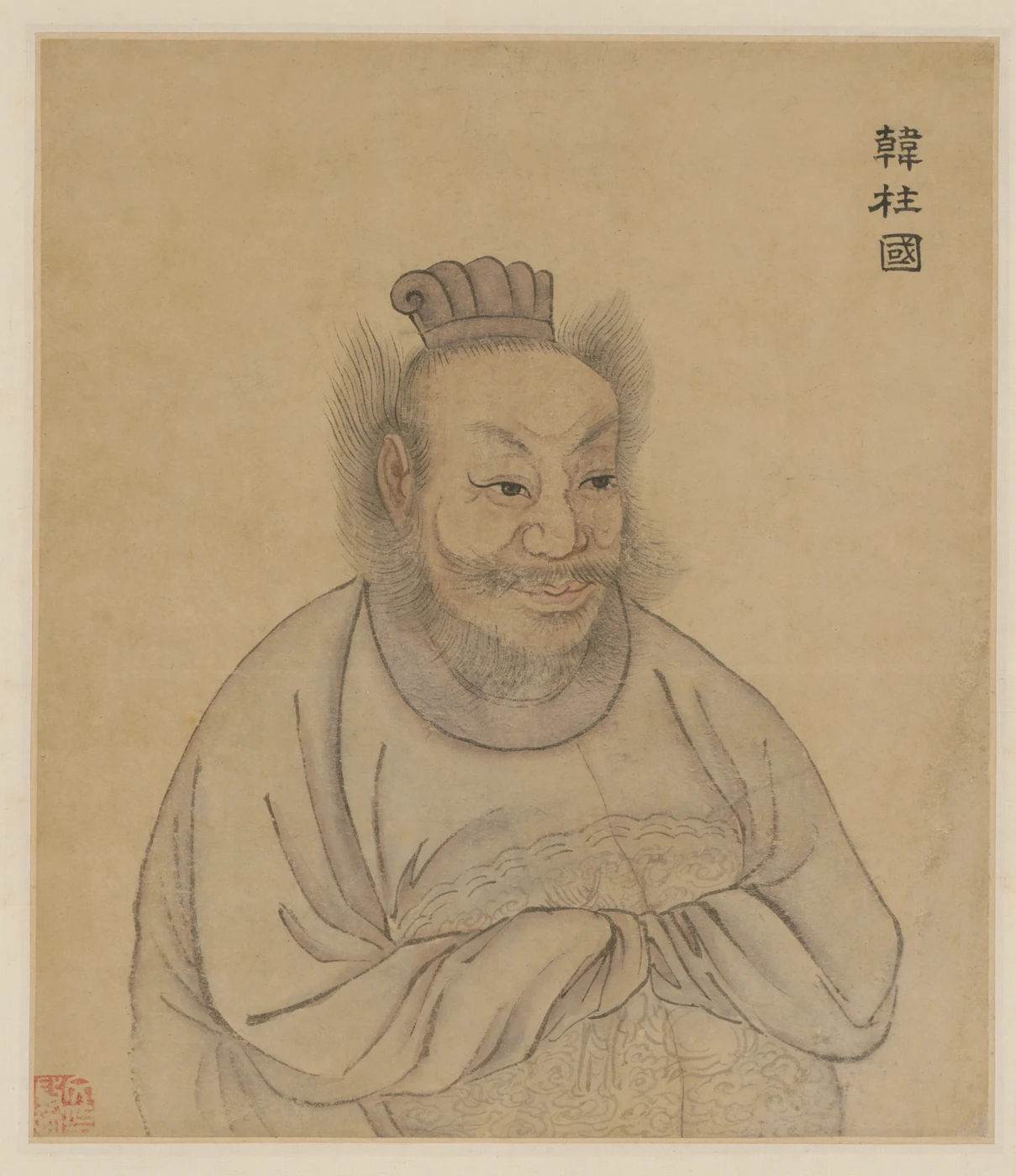
538 CE–592 CE
General
Han Qinhu
韩擒虎
Han Qinhu (538–December 26, 592), originally named Han Qinbao and courtesy name Zitong, was a native of Dongyuan in Henan (present-day Xin'an County, Henan). He was a noted general from Northern Zhou into the Sui Dynasty and the son of the Northern Zhou General-in-Chief Han Xiong. Han was known for courage and strategic judgment and possessed a general understanding of the classics, histories, and writings of the various…
538 CE–592 CESui Dynasty
PROFILE
Han Qinhu (538–December 26, 592), originally named Han Qinbao and courtesy name Zitong, was a native of Dongyuan in Henan (present-day Xin'an County, Henan). He was a noted general from Northern Zhou into the Sui Dynasty and the son of the Northern Zhou General-in-Chief Han Xiong. Han was known for courage and strategic judgment and possessed a general understanding of the classics, histories, and writings of the various schools. Under Northern Zhou he rose through military merit to the Three Offices and inherited the title Duke of Xinyi Commandery. After the establishment of Sui, Emperor Wen entrusted him with the position of Area Commander of Luzhou and with preparations for conquering Chen. In 588, as a vanguard of the invasion, he led five hundred soldiers across the Yangzi by night, surprised Caishi, captured Gushu within half a day, and then advanced directly into Jiankang. He took Jinling with little fighting and captured Later Ruler of Chen Chen Shubao alive. After the campaign he was promoted to Supreme Pillar of State, enfeoffed as Duke of Shouguang County, and later served as Area Commander of Liangzhou. He died of illness in 592 at the age of fifty-five.
- Alternative name
- Han Zitong
- Courtesy name
- Zitong
- Period
- Sui
- Date of Birth
- 538
- Date of Death
- December 26 592
- Dynasty/Regime
- Sui Dynasty
- Identity
- General
- Ethnicity/Ethnic affiliation
- Not recorded in historical sources
- Native place
- Dongyuan, Henan (present-day Xin'an County, Henan)
- Place of birth
- Dongyuan, Henan
- Place of death
- Not recorded in historical sources
- Highest office
- See Biography and Major Deeds
- Major achievements
- Vanguard commander in the Sui conquest of Chen; led troops into Jiankang and captured Later Ruler of Chen; renowned for extraordinary courage
LIFE TIMELINE
Youth | Became known for courage and judgment; Yuwen Tai valued him and had him associate with his sons
Young adulthood | Appointed military commander and administrator of Xin'an through military merit; later promoted to the Three Offices and inherited the title Duke of Xinyi Commandery
About age thirty-nine | During Emperor Wu's conquest of Northern Qi, persuaded the Qi commander Dugu Yongye to surrender; helped pacify Fanyang, received higher military rank, and became governor of Yongzhou
About age forty-two | Yang Jian became Grand Councilor; Han transferred to governor of Hezhou and repeatedly defeated Chen attacks north of the Yangzi
About age forty-three | Emperor Wen of Sui appointed him Area Commander of Luzhou and entrusted him with preparations for the Sui conquest of Chen
About age fifty | During the major Sui invasion of Chen, served as vanguard, led five hundred men across the Yangzi at night, seized Caishi, captured Gushu within half a day, and occupied Xinlin
About age fifty-one | Entered Jiankang, captured Chen Shubao, and completed the conquest; promoted to Supreme Pillar of State and awarded eight thousand bolts of goods, but received no additional fief because his troops had violated women in the Chen palace
About age fifty-one and later | Separately enfeoffed as Duke of Shouguang County with one thousand households; later stationed at Jincheng as campaign commander and appointed Area Commander of Liangzhou
Age fifty-five | Died of illness; his son Han Shi'e inherited the title
BIOGRAPHY
Biography
Family Background and Early Years
Han Qinhu was originally from Dongyuan in Henan and later moved to Xin'an. His father Han Xiong was known for courage and integrity and served under Northern Zhou as General-in-Chief and governor of eight prefectures including Lu and Yu. As a youth Han Qinhu was rough and bold, famous for courage and strategic sense, and physically imposing. He enjoyed reading and had a broad general understanding of the classics, histories, and various schools of thought. Yuwen Tai, founder of Northern Zhou, considered him exceptional and had him associate with his sons. Han later became a military commander and administrator of Xin'an through military merit, was promoted to the Three Offices, and inherited the title Duke of Xinyi Commandery.
Northern Zhou Career
During Emperor Wu of Northern Zhou's attack on Northern Qi, the Qi general Dugu Yongye defended Jinyong. Han persuaded him to surrender. After Fanyang was pacified, Han received higher military rank and was appointed governor of Yongzhou. When Southern Chen troops advanced toward Guangzhou, Han, serving as campaign commander, defeated them. He later accompanied Yuwen Xin in pacifying Hezhou. When Yang Jian became Grand Councilor, Han was transferred to governor of Hezhou. Chen commanders including Zhen Qing, Ren Mannu, and Xiao Mohe repeatedly attacked north of the Yangzi, and Han repeatedly defeated them, substantially reducing their morale.
Vanguard in the Sui conquest of Chen
In 581, the first year of the Kaihuang era, Emperor Wen of Sui planned to annex Jiangnan. Judging Han Qinhu to possess both civil and military talent and already enjoy a strong reputation, he appointed him Area Commander of Luzhou and entrusted him with preparing the Sui conquest of Chen. In 588 Sui launched its major invasion. Han served as vanguard and led five hundred soldiers across the Yangzi by night to attack Caishi. The defenders were drunk and the position fell quickly. He then attacked Gushu, capturing it in half a day, and occupied Xinlin. Elders in Jiangnan who had heard of his reputation came to his camp continuously day and night. Chen commanders Fan Xun, Lu Shizhen, Tian Rui, and others successively surrendered. Yang Guang, Prince of Jin, reported the results and Emperor Wen celebrated with a court banquet.
Yang Guang sent campaign commander Du Yan to join Han, producing a combined force of twenty thousand infantry and cavalry. Later Ruler of Chen Chen Shubao ordered commander Cai Zheng to defend the Zhuque floating bridge. On hearing that Han was approaching, the defenders panicked and dispersed. Ren Mannu, already defeated by Heruo Bi, abandoned his troops and surrendered to Han. Han then led five hundred picked cavalry directly through Zhuque Gate. Chen soldiers prepared to fight, but Ren Mannu called to them that even he had surrendered and asked why they should continue; the defenders scattered. Han thus secured Jinling and captured Chen Shubao.
After the Conquest and Final Years
After returning to the capital, Han Qinhu and Heruo Bi disputed credit before Emperor Wen. Heruo claimed that he had fought hard at Jiangshan while Han had not engaged in major combat. Han replied that he had taken Jinling without bloodshed, received Ren Mannu's surrender, and captured Chen Shubao, while Heruo had not reached the northern side gate until evening and was admitted only after Han opened it. Emperor Wen ruled that both commanders deserved the highest distinction and promoted Han to Supreme Pillar of State, awarding him eight thousand bolts of goods. Officials, however, impeached Han for allowing soldiers to violate women in the Chen palace, and he received no additional fief at that time.
Later a Turkic envoy came to court. Emperor Wen brought him before Han and said, “This is the man who captured the emperor of Chen.” Han looked at the envoy sternly, and the envoy became so frightened that he did not dare raise his eyes. Emperor Wen separately enfeoffed Han as Duke of Shouguang County with one thousand households. Han later served as campaign commander stationed at Jincheng and was appointed Area Commander of Liangzhou. He was soon recalled to the capital, where Emperor Wen entertained him in an inner hall with exceptional favor. Han died of illness on the jiwei day of the eleventh lunar month of the twelfth year of Kaihuang, December 26, 592, at age fifty-five. His son Han Shi'e inherited the title.
Han Qinhu, courtesy name Zitong, was a native of Dongyuan in Henan who later moved to Xin'an. His father Han Xiong was known for martial valor and served the Northern Zhou up to general-in-chief and governor of eight prefectures including Luo and Yu. As a young man Han Qinhu was generous and bold, noted for daring and strategy, of commanding stature and with the air of a hero; he also loved books and knew the gist of the classics, histories and the hundred schools. The Zhou emperor, seeing him, thought him remarkable and had him associate with his own sons. He rose by military merit to commandant and administrator of Xin'an, then to the rank of the three offices, inheriting the title of Duke of Xinyi.
When Emperor Wu of Zhou attacked Qi, the Qi general Dugu Yongye held Jinyong city, and Han persuaded him to surrender; after the pacification of Fanyang he was given the higher rank and made governor of Yongzhou. When Chen forces pressed on Guangzhou he broke them as commissioner of the marching army and helped Yuwen Xin pacify Hezhou. After Yang Jian became regent he was transferred as governor of Hezhou. The Chen generals Zhen Qing, Ren Mannu and Xiao Mohe supported one another and raided north of the river repeatedly, but Han checked them again and again and the Chen lost heart.
Early in the Kaihuang era, with the court secretly set on annexing the south, Han was made commander of Luzhou because of his civil and military gifts and established reputation, charged with the conquest of Chen and feared by the enemy. In 588, when the Sui attacked in force, Han went as vanguard with five hundred men across the river by night, surprised Caishi while the guards lay drunk and took it; he then stormed Gushu in half a day and camped at Xinlin. The elders of Jiangnan, long familiar with his name, came to his gate day and night, and the Chen generals Fan Xun, Lu Shizhen and Tian Rui surrendered one after another. The Prince of Jin, Yang Guang, reported it and Emperor Wen was delighted, feasting and rewarding the ministers; Yang Guang sent the commissioner Du Yan to join him with twenty thousand foot and horse. Chen Shubao posted the guard commander Cai Zheng at the Red Sparrow bridge, and at news of Han's approach the troops panicked and scattered; Ren Mannu, beaten by He Ruobi, laid down his arms and surrendered to Han, who then rode into the Red Sparrow gate with five hundred picked horsemen. The Chen men wished to fight, but Ren Mannu cried that he himself had surrendered and what were they about, and they scattered; thus Jinling was taken and the Chen sovereign captured. Emperor Wen issued an edict crediting the pacification to Han and He Ruobi together and gave them ten thousand bolts of silk.
On returning to the capital the two quarrelled over their merits before the emperor. He Ruobi cited his desperate fighting at Jiangshan, breaking the enemy's picked troops and taking their bravest generals; Han answered that he had been ordered to act in concert with He Ruobi for the capture of the capital, that He had attacked early and cost many lives, while he himself with five hundred light horse had taken Jinling without bloodshed, received Ren Mannu's surrender, seized Chen Shubao, occupied the treasury and destroyed the nest, He Ruobi only reaching the north gate at nightfall to be let in by him. The emperor said both deserved the highest merit, advanced Han to pillar of state and gave him eight thousand bolts of silk. The authorities then impeached him for letting his soldiers plunder and defile the Chen palace, and for that he received no additional fief. When Turkic envoys later came to court, the emperor had them brought before Han and said, "This is the man who took the sovereign of Chen," and Han's stern glance so frightened them that they dared not look up. He was separately enfeoffed as Duke of Shouguang with a thousand households, stationed at Jincheng as commissioner of the marching army against the northern raiders, and made commander of Liangzhou; soon recalled to the capital, he was feasted in the inner hall with exceptional ceremony. He died on the jiwei day of the eleventh month of 592 at fifty-five.
After the conquest of Chen, Han Qinhu's duties shifted to the northern frontier. Separately enfeoffed as Duke of Shouguang with a thousand households, he was stationed at Jincheng as commissioner of the marching army to guard against northern raiders, and was then made commander of Liangzhou in charge of the northwestern line. Before long Emperor Wen recalled him to the capital and feasted him in the inner hall with exceptional ceremony, a mark of the court's reliance on the conqueror of Chen. The Book of Sui observes that as the heir of generations of generals he overawed the enemy state with his name, and that after the enemy was broken he kept both name and life intact — a rare thing.
Han Qinhu came of a military family; his brothers Han Sengshou and Han Hong were also known for martial skill, making the house one of famous generals in the early Sui. After the conquest of Chen he was made commander of Liangzhou in charge of the northwest, and the northern frontier in the early Sui leaned heavily on his reputation. He Ruobi, who won merit in the same campaign, was likewise known for ferocity, and their quarrel over credit before Emperor Wen remains a record of the rivalry between the great captains of the early Sui. When the Tang established the temple of the Martial King to honor generals of past ages, the Sui among those included were Han Qinhu and He Ruobi, a mark of his standing among later military men.
The Book of Sui describes him as commanding in person with the look of a hero and uses the phrase "he had a fearsome presence" of the scene in which he awed the Turkic envoys. Among the early Sui captains he was known for knowing when to advance and when to hold back, and beside He Ruobi's quarrelsomeness his conduct appears the steadier.
His son Han Shie inherited the title and was later drawn into Yang Xuangan's rebellion at the end of the Sui and killed, a contrast with his father's conquest of the south.
His career is known chiefly from his biography in the Book of Sui.
Major Activities
Leading Merit in the Sui conquest of Chen
Han Qinhu was one of the core commanders in the Sui conquest of Chen. In the eleventh lunar month of 588, with Yang Guang, Prince of Jin, directing the invasion, Han led five hundred picked soldiers across the Yangzi at night and seized Caishi. He captured Gushu within half a day and moved on to Xinlin. In the first lunar month of 589 he led five hundred elite cavalry through Zhuque Gate into Jiankang, took Jinling without major bloodshed, and captured Later Ruler of Chen Chen Shubao alive. From the crossing at Caishi to entry into Jiankang took only a little more than ten days. Emperor Wen issued an edict crediting Han's achievement with extending Sui prestige and bringing the southeast out of warfare.
Northern Zhou Military Service
During Emperor Wu of Northern Zhou's conquest of Northern Qi, Han persuaded the Qi general Dugu Yongye to surrender Jinyong and then took part in pacifying Fanyang, after which he became governor of Yongzhou. He later repeatedly defeated Southern Chen attacks north of the Yangzi. These accomplishments established the reputation that led Yang Jian to entrust him with the later conquest of Chen.
Intimidating the Turks
After the conquest, Emperor Wen deliberately presented Han to a visiting Turkic envoy as the man who had captured the emperor of Chen. Han's stern appearance reportedly frightened the envoy so much that he did not dare look up, an anecdote illustrating how widely his military reputation had spread.
Dispute with Heruo Bi
Han Qinhu and Heruo Bi argued over credit after the conquest. Heruo emphasized his hard fighting at Jiangshan; Han answered that he had taken Jinling without bloodshed, accepted Ren Mannu's surrender, and captured Chen Shubao, whereas Heruo arrived only later. Emperor Wen judged that both deserved the highest distinction, though Han's troops' misconduct in the Chen palace prevented an additional grant of land.
Personal Relations
- Father: Han Xiong, Northern Zhou General-in-Chief and governor of eight prefectures including Lu and Yu
- Younger brothers: Han Sengshou, Sui Supreme Pillar of State and Duke of Xincai Commandery; Han Hong, Sui Pillar of State and Duke of Gantang County
- Sons: Han Shi'e, who inherited the title Duke of Shouguang County; Han Zhao, a military officer
- Nephew: Li Jing, noted late-Sui and early-Tang general, Duke of Wei, posthumous title Jingwu
- Yuwen Tai: founder of Northern Zhou who valued Han and had him associate with his sons
- Yuwen Yong, Emperor Wu of Northern Zhou: Han gained merit during his conquest of Northern Qi
- Yang Jian, Emperor Wen of Sui: entrusted Han with the Sui conquest of Chen and later promoted him to Supreme Pillar of State
- Yang Guang: as Prince of Jin, overall commander in the Sui conquest of Chen and Han's superior during the campaign
- Heruo Bi: fellow commander in the Sui conquest of Chen; later quarreled with Han over credit
- Yuwen Xin: Han accompanied him in the Northern Zhou campaign at Hezhou
- Du Yan: campaign commander sent by Yang Guang to combine forces with Han in the Sui conquest of Chen
- Chen Shubao: Later Ruler of Chen, captured by Han
- Ren Mannu, also Ren Zhong: Chen commander who surrendered to Han
- Xiao Mohe: Chen commander who fought against Han on multiple occasions
Historical Assessment
Sui / Contemporary
- Emperor Wen of Sui praised Han in an edict for projecting state prestige over great distances and clearing away a long-standing southeastern rival in a matter of days.
- In the dispute over credit, Emperor Wen ruled that “both generals deserve the highest merit,” formally recognizing Han's contribution.
- Wei Zheng's Book of Sui describes Han as charging forward with surplus courage, moving like thunder and lightning, and regards him as one of the outstanding martial figures of a multigenerational military family who broke an enemy state and completed his life with his reputation intact.
Tang and Song Periods
- Li Jing, Han's nephew, was said to have discussed military affairs with him and praised him as one of the few men with whom the methods of Sunzi and Wu Qi could be discussed.
- Du Mu's poem “Song of Taicheng” includes the famous line contrasting Han Qinhu outside the gate with Zhang Lihua atop the tower, using literary imagery to recall the fall of Chen.
- Zhang Yu's Biographies of One Hundred Generals from the Seventeen Histories cites principles from The Art of War in praising Han's surprise seizure of Caishi and capture of Jinling.
Ming and Qing Periods
- Xu Jun's historical poem praised Han's irresistible advance while mocking the later quarrel over credit and the legend that he became a judge in the underworld.
- Chen Yuanjing's Expanded Record of the Forest of Affairs praised Han for entering first, receiving surrender, spreading his reputation, and achieving an unparalleled conquest.
Modern Assessments
- Historians generally recognize Han's leading role in the Sui conquest of Chen while also noting the misconduct of his soldiers in the Chen palace. Modern accounts of the campaign often discuss Han Qinhu together with Heruo Bi as the two key field commanders.
FIGURES ASSOCIATED WITH THIS DYNASTY
Bibliography
- History of the Northern Dynasties, juan 68, Biography of Han Qinhu