Birth | Noble Lady Liang gave birth to Liu Zhao in Luoyang
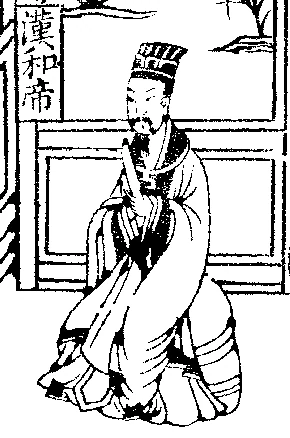
88 CE–105 CE
Emperor
Liu Zhao
刘肇
Emperor He of Han, Liu Zhao (79–February 13, 106), whose given name is also written with a graphic variant of the character for Zhao, was the fourth emperor of the Eastern Han, reigning from April 9, 88 to February 13, 106. He was the fourth son of Liu Da, Emperor Zhang of Han. His birth mother was Noble Lady Liang, but he was later adopted by Empress Dou, posthumously known as Empress Zhangde. In 82 (the seventh year of…
88 CE–105 CEEastern Han
PROFILE
Emperor He of Han, Liu Zhao (79–February 13, 106), whose given name is also written with a graphic variant of the character for Zhao, was the fourth emperor of the Eastern Han, reigning from April 9, 88 to February 13, 106. He was the fourth son of Liu Da, Emperor Zhang of Han. His birth mother was Noble Lady Liang, but he was later adopted by Empress Dou, posthumously known as Empress Zhangde. In 82 (the seventh year of Jianchu), he was made crown prince. He came to the throne in 88 (the second year of Zhanghe) at the age of ten, while Empress Dowager Dou ruled as regent and the Dou imperial-in-law family dominated government. In 92 (the fourth year of Yongyuan), the fourteen-year-old Liu Zhao joined the eunuch Zheng Zhong in a coup that destroyed the Dou faction and allowed him to rule personally. During his reign, Eastern Han power reached what the source describes as its height, known as the “Flourishing of Yongyuan”. Militarily, Dou Xian's campaigns destroyed the Northern Xiongnu as a major power; Ban Chao secured more than fifty states of the Western Regions; and Gan Ying was sent toward Daqin, identified in the source as the Roman Empire, reaching the eastern coast of the Mediterranean and thereby realizing what the text describes as the first directly recorded contact between China and Europe. Domestically, Liu Zhao carried out the “Yongyuan reforms”, reduced punishments and taxes, aided disaster victims, recruited talented men, and presided over substantial population growth. He died of illness in Luoyang on February 13, 106 (the twenty-second day of the twelfth month of the first year of Yuanxing), aged twenty-seven, and was buried at Shenling Mausoleum. His temple name was Muzong, which was removed in 190 during the Chuping era of Emperor Xian.
- Alternate names
- Emperor He of Han; Emperor He of Han, Liu Zhao
- Period
- Eastern Han
- Date of Birth
- 79
- Date of Death
- February 13 106
- Dynasty / regime
- Eastern Han
- Identity
- Emperor
- Ethnicity / people
- Not recorded in historical sources
- Ancestral origin
- Not recorded in historical sources
- Place of birth
- Not recorded in historical sources
- Reign
- April 9, 88–February 13, 106
- Predecessor
- Emperor Zhang of Han (Liu Da)
- Successor
- Emperor Shang of Han (Liu Long)
- Era names
- Not recorded in historical sources
- Temple name
- Muzong
- Posthumous title
- Emperor He of Han
- Principal achievements
- Succeeded as a child under the regency of Empress Dowager Dou; later destroyed the Dou Xian imperial-in-law faction and took personal control, made extensive use of eunuchs, and achieved major frontier successes
LIFE TIMELINE
Age one | Adopted by Empress Dou, Empress Zhangde
Age four | Emperor Zhang deposed Crown Prince Liu Qing and made Liu Zhao crown prince; Liu Zhao began studying the Book of Documents
Age five | His birth mother Noble Lady Liang was falsely accused and killed through Empress Dou's actions; no one in the palace knew his true parentage
Age ten | Emperor Zhang died; Liu Zhao ascended the throne, honored Empress Dou as empress dowager, and she governed as regent
Age ten | Dou Xian became Palace Attendant, and the Dou brothers controlled the political center
Age eleven | Dou Xian launched the Battle of Jiluoshan and decisively defeated the Northern Xiongnu
Age thirteen | Underwent the capping ceremony in the first month; Dou Xian sent Geng Kui to fight the Battle of Jinweishan, driving the Northern Xiongnu chanyu far away and leaving the steppe north of the desert empty; in the twelfth month the office of Protector-General of the Western Regions was restored and Ban Chao appointed protector-general
Age fourteen | Joined his elder brother Liu Qing, Prince of Qinghe, and eunuch Zheng Zhong in a coup that destroyed the Dou faction and brought him into personal rule
Age fourteen | Ban Chao defeated the Kushan Empire; more than fifty states of the Western Regions submitted
Age sixteen | Ban Chao pacified Karasahr, completing the pacification of the Western Regions; Gan Ying was sent toward Daqin, identified as the Roman Empire, and reached the eastern Mediterranean coast
Age nineteen | Empress Dowager Dou died; Liu Zhao learned that Noble Lady Liang was his birth mother and posthumously honored her as Empress Gonghuai
Age twenty-two | Xu Shen began compiling the Shuowen Jiezi
Age twenty-four | Ban Chao returned to Luoyang and died that year; Cai Lun improved papermaking technology
Age twenty-seven | Died of illness in the Front Hall of Zhangde at Luoyang and was buried at Shenling Mausoleum
BIOGRAPHY
Biography
Family Background and Early Years
Liu Zhao was born in 79 (the fourth year of Jianchu) as the fourth son of Liu Da, Emperor Zhang of Han. His mother Noble Lady Liang was the daughter of Liang Song, Marquis Min of Baoqin. In 77 (the second year of Jianchu), Noble Lady Liang and her elder sister were selected together to enter the palace as noble ladies. In 79, Noble Lady Liang gave birth to Liu Zhao. Empress Dou, posthumously Empress Zhangde, had no son and therefore adopted Liu Zhao as her own.
When the Liang family privately celebrated Liu Zhao's adoption, Empress Dou learned of it and feared that the Liang clan might later rise to power. In 83 (the eighth year of Jianchu), she arranged accusations against Noble Lady Liang. Liang Song was imprisoned on a charge of grave rebellion and died in custody, his relatives were exiled to Jiuzhen, and Noble Lady Liang and her sister were also killed through false accusations. From that point no one in the palace knew that Liu Zhao had been born to the Liang family.
As a child Liu Zhao displayed filial devotion, intelligence, generosity, and humility. Emperor Zhang therefore valued him highly and regarded him as suitable for succession. On June 18, 82 (the seventh year of Jianchu), Emperor Zhang deposed Crown Prince Liu Qing, making him Prince of Qinghe, and established the four-year-old Liu Zhao as crown prince. Liu Zhao studied the Book of Documents from childhood, read broadly in books and commentaries, and was said to love antiquity and the Way.
Child Emperor and Dou Clan Domination
On the thirtieth day of the second month of 88 (the second year of Zhanghe), Emperor Zhang died. The ten-year-old Liu Zhao took the throne, honored his adoptive mother Empress Dou as empress dowager, and allowed her to govern as regent. Empress Dowager Dou promoted her elder brother Dou Xian from General of the Gentlemen of the Tiger Guards to Palace Attendant, placing him over court secrets and the issuing of commands. Her younger brother Dou Du became General of the Gentlemen of the Tiger Guards and commanded the imperial guard, while Dou Jing and Dou Gui served as Central Regular Attendants. The Dou brothers occupied key positions and controlled the political center.
Empress Dowager Dou was obstinate and indulgent, while members of the Dou clan and their relatives and associates spread throughout the court, colluded with one another, and exercised power freely. Dou Jing allowed his servants to seize property and violate women, causing merchants to avoid them as if they were bandits, yet the authorities did not dare report the abuses. Yue Hui, Vice Director of the Department of State Affairs, memorialized against political intervention by imperial in-laws, and Dou Xian forced him to take poison. Zhi Shou, another vice director, impeached Dou Xian for arrogance and used Wang Mang's usurpation as a warning; Dou Xian likewise forced him to commit suicide. Court officials were intimidated and followed the prevailing wind, with none daring oppose the family.
During debate over attacking the Northern Xiongnu, Masters of Writing, Attendant Censors, and other officials strongly remonstrated. Lu Gong even accused Empress Dowager Dou of “abandoning the lives of ten thousand men for the plan of one man,” but the officials could not prevent her from launching the expedition in order to protect Dou Xian. In 89 (the first year of Yongyuan), Dou Xian heavily defeated the Northern Xiongnu at Jiluoshan. Thereafter, through the battles of Yiwu, north of Heyun, Jinweishan, and another campaign, he repeatedly struck the Northern Xiongnu. The source says that “the Northern Chanyu, shaken with fear, held his breath beneath felt and fled toward the land of the Wusun, and the steppe north of the desert was empty.” Dou Xian's prestige grew still greater. Provincial inspectors, administrators, and magistrates competed to bribe him. Yuan An, Minister over the Masses, and Ren Wei, Minister of Works, impeached more than forty officials for bribing Dou Xian, earning the Dou family's intense hatred.
Yongyuan Coup and Personal Rule
In the tenth month of 91 (the third year of Yongyuan), Liu Zhao visited Chang'an and issued an edict seeking close descendants of Xiao He and Cao Can to inherit their fiefs, implicitly urging officials to emulate the two founding statesmen. After Dou Xian reached Chang'an, courtiers privately discussed shouting “ten thousand years” when bowing to him. Master of Writing Han Leng angrily objected: “Ritual contains no rule allowing a subject to be hailed with ‘ten thousand years’!” The practice was stopped.
Dou Xian relied on Deng Die and Guo Huang as close confidants. In 92 (the fourth year of Yongyuan), Deng Die was enfeoffed as Marquis of Rang. Deng Die, his younger brother Deng Lei, their mother Lady Deng, Guo Ju, and Guo Huang were closely linked. Lady Deng was a friend of Empress Dowager Dou, while Guo Ju often entered the palace and was favored by her. Together, the source says, they plotted to kill Liu Zhao.
Liu Zhao secretly learned of the conspiracy and planned action with his elder brother Liu Qing, Prince of Qinghe. Liu Qing had been close to him from childhood and often entered and left the palace, discussing private affairs with the emperor. Liu Zhao wanted to read the “Biographies of Imperial In-Laws” in the Book of Han, intending to emulate Emperor Wen of Han's execution of Bo Zhao and Emperor Wu of Han's punishment of Dou Ying, but feared that attendants would disclose his purpose. He therefore had Liu Qing privately borrow the book from Liu Kang, Prince of Qiancheng. Liu Zhao also asked Liu Qing to pass messages to Central Regular Attendant Zheng Zhong. Zheng Zhong urged him to execute Guo Ju and Lady Deng immediately, but Liu Zhao worried that Dou Xian still commanded troops outside the capital and restrained himself.
On August 14, 92 (the twenty-third day of the sixth month, fourth year of Yongyuan), Dou Xian and Deng Die returned to the capital. Liu Zhao went to the Northern Palace and ordered the Bearer of the Gilded Mace and the five colonels to deploy troops guarding the Southern and Northern Palaces. The city gates were closed. Guo Huang, Guo Ju, Deng Die, and Deng Lei were arrested, imprisoned, and put to death. An ushering court official was sent to recover Dou Xian's seal and ribbon as General-in-Chief and reduce him to Marquis of Guanjun. Dou Du, Dou Jing, and Dou Gui were likewise sent back to their fiefs. Because of Empress Dowager Dou, Liu Zhao did not wish to execute Dou Xian openly and selected strict officials to supervise him. After Dou Xian, Dou Du, and Dou Jing reached their domains, all were forced to commit suicide.
At age fourteen Liu Zhao destroyed the Dou faction in a single stroke, displaying resolve comparable in the source to that of Emperor Zhao of Han. However, because the coup had been planned with the eunuch Zheng Zhong, Zheng Zhong was rewarded as Marquis of Chaoxiang, and “from this point the palace officials began to flourish.” The event therefore marked the beginning of eunuch political power in the Eastern Han and the vicious later cycle of struggle between imperial in-laws and eunuchs.
Flourishing of Yongyuan
After taking personal control, Liu Zhao applied himself energetically to government. He lived frugally and repeatedly ordered relief for disaster victims, tax remissions, resettlement of displaced people, and protection of the agricultural calendar. He often called for the recommendation of talented men, treated worthy persons with courtesy, and accepted useful remonstrance. In law he favored lenient punishment, repeatedly ordering correction of wrongful convictions, aid for widowers and widows, care for orphans and the weak, and light taxation. He showed concern for popular suffering and admonished officials to reflect on their own responsibility for natural and human disasters.
In 91 (the third year of Yongyuan), Liu Zhao used new ritual regulations formulated by Cao Bao for his capping ceremony and appointed Yuan An, Minister over the Masses, as divination guest. Thereafter he promoted Confucian learning, personally visited the Eastern Lodge, viewed its book collections and texts, and surrounded himself with attendants who recited the Book of Odes and the Book of Documents. In 92 (the fourth year of Yongyuan), Ban Chao defeated the Kushan Empire, after which more than fifty states of the Western Regions submitted. In 94 (the sixth year), Ban Chao subdued Karasahr, completing the pacification of the Western Regions. That same year Liu Zhao sent Gan Ying toward Daqin, identified in the source as the Roman Empire. Gan Ying reached the eastern coast of the Mediterranean, “came to the great sea and wished to cross,” but returned after Parthian merchants discouraged him. The text further states that coastal states more than forty thousand li away later sent interpreters with tribute and that Liu Zhao received merchant delegations from the Roman provinces of Macedonia and the East, including Tyre, under the designation of “envoys,” conferring ranks on them and thereby realizing the first directly documented China–Europe contact.
In 102 (the fourteenth year of Yongyuan), Ban Chao returned to Luoyang and died in the ninth month of that year. During this period Cai Lun improved papermaking, using tree bark, hemp waste, worn cloth, and fishing nets, producing what came to be called “Marquis Cai paper”. Xu Shen also began compiling the Shuowen Jiezi.
Under Liu Zhao, the Eastern Han registered population expanded to 9,237,112 households and 53,256,229 people. The period was called the “Flourishing of Yongyuan,” and the source presents Eastern Han state power as reaching its peak.
Final Years and Death
In 97 (the ninth year of Yongyuan), Empress Dowager Dou died. Shortly before her death, Liang Yi, elder sister of Noble Lady Liang, submitted a memorial explaining Emperor He's parentage. Liu Zhao then learned that Noble Lady Liang was his birth mother. He posthumously honored her as Empress Gonghuai and posthumously enfeoffed his maternal grandfather Liang Song as Marquis Min of Baoqin.
On February 13, 106 (the twenty-second day of the twelfth month of the first year of Yuanxing), Liu Zhao died of illness in the Front Hall of Zhangde in the capital Luoyang, aged twenty-seven. On April 27, 106 (the first year of Yanping), he was buried at Shenling Mausoleum. His temple name was Muzong, later removed in 190 during the first year of Chuping under Emperor Xian. His younger son Liu Long succeeded him as Emperor Shang of Han at little more than one hundred days old.
Courtiers against the Dou Clique
After the Empress Dowager Dou took the regency, members of the Dou clan filled the court as ministers and colonels. The Marquis of Rang, Deng Die, his brother the infantry colonel Deng Lei and their mother Lady Deng, and Guo Ju, archery colonel and son-in-law of Dou Xian, together with Guo Ju's father Guo Huang of the Changle palace office, were all in league, coming and going within the palace; Guo Ju enjoyed the favour of the empress dowager and they plotted together to kill Liu Zhao. With the Dou brothers monopolising power, Liu Zhao had no direct contact with officials inside or outside the court and was surrounded only by eunuchs; since virtually every courtier attached himself to Dou Xian, only Zheng Zhong, the eunuch director and keeper of the hook-and-shield office, was careful, astute and refused to join the powerful faction. Liu Zhao therefore settled with him on a plan to destroy Dou, restrained only because Dou Xian commanded troops outside the capital and might raise revolt. The grand tutor Yuan An and the censor-general Ren Kui impeached the officials who had bribed Dou Xian, and more than forty were demoted or dismissed; the Dou hated them but, since Yuan and Ren were of established integrity, could find no way to harm them. The imperial secretary Yue Hui, who impeached without sparing anyone, memorialised that "Your Majesty is in the prime of youth and has inherited the great enterprise; the uncles should not interfere with the royal house"; his memorial was ignored, and when he pleaded illness and retired to his home district, Dou Xian pressed the provincial authorities until he took poison. The imperial secretary Zhi Shou, whom Dou Xian had asked to do a favour through a disciple, instead sent the disciple to the imperial prison and memorialised against Dou's arrogance, citing the example of Wang Mang; when he mocked Dou at court for the campaign against the Xiongnu and for building mansions, Dou had him charged with buying public land and slander and nearly executed, though his sentence was commuted to exile at Hepu, and he killed himself before departing. The court was thus cowed and none dared oppose. Yuan An, seeing the emperor young and the consort kin unchecked, could never speak of state affairs before the nobles without weeping aloud, and both emperor and ministers relied on him; in the third month of 92 (fourth year of Yongyuan) he died of illness and court and country grieved. In the fourth month Dou Xian returned to the capital, and in the sixth a solar eclipse occurred; Ding Hong memorialised on the portent, asking that government be corrected to answer Heaven's will, whereupon Liu Zhao made him acting grand commandant and commander of the guards, stationed at the northern and southern palaces, and at once took back Dou Xian's seal of grand general; Dou Xian and his brothers all killed themselves. In the tenth month of 91, when Liu Zhao visited Chang'an, courtiers had privately discussed saluting Dou Xian with cries of "ten thousand years", and the imperial secretary Han Leng stopped them sternly, saying that "in the rites there is no provision for a subject to be hailed as ten thousand years", at which the proposers withdrew in shame.
Lenient Government and Relief
After taking personal rule, Liu Zhao attended to all affairs himself; whenever calamity or anomaly occurred he questioned the nobles and had them speak their minds, and when eighty-one auspicious signs were reported from various places he called himself lacking in virtue and suppressed them all. He repeatedly ordered the redress of unjust cases, the relief of widowers and widows, the pitying of orphans and the weak, and the lightening of taxes. In the second month of 93 (fifth year of Yongyuan), mindful of a poor autumn and wheat harvest the year before, he had the commanderies report the households that could not support themselves, noted that they had formerly counted clothes, shoes and cooking pots as wealth while the powerful profited, and ordered strict verification; he also ordered reductions in the horses of the inner and outer stables and the Liangzhou pastures, and gave the imperial orchards and parks of the capital to the poor for gathering and fishing free of tax. When locusts swarmed the capital that year he said that "the anomaly of locusts does not arise without cause; if there is guilt anywhere it lies with me", and required officials to examine the causes of calamity rather than blame subordinates. In the second month of 99 he sent envoys through the commanderies to let those ruined by disaster gather and fish in the hills and marshes without tax; in 104 he lent seed grain to the poor who had land but could not farm it, and sent the aides of the three offices through Yan, Yu, Xu and Ji provinces to hire plough oxen for those without them. In 103 he restored the salt and iron office of Zhuo Commandery. Chen Chong, commandant of justice, was humane and inclined to mercy; he submitted doubtful cases in person, often invoking the classics and seeking leniency, and Liu Zhao generally followed him, also having him review the statutes and delete whatever exceeded the punishments of the Fu Xing. In the south, fresh longans and lychees had been sent with relay posts every ten li and lookouts every five, carried day and night with many deaths on the road; when Tang Qiang, magistrate of Linwu, memorialised against it, Liu Zhao decreed that "rare delicacies from distant lands are meant to be offered in the ancestral temple, but if they cause harm, how can that be the basis of loving the people", and ordered the provisioners to accept no more, so the tribute from Jiaozhi ceased.
Reform of Recruitment and the Academy Examinations
After destroying the Dou in 92, Liu Zhao held a court conference on the inequality of selection: a large commandery of five or six hundred thousand was entitled to two filial-and-incorrupt nominees, but a small one of two hundred thousand, even with non-Han peoples included, also had two, which he thought unfair; the grand commandant Ding Hong and the censor-general Liu Fang proposed to grade nominations by population, so that each commandery should send one per two hundred thousand, two for four hundred thousand, three for six hundred thousand, four for eight hundred thousand, five for a million and six for 1.2 million, with those under two hundred thousand sending one every two years and those under a hundred thousand one every three years; Liu Zhao agreed. In 101, mindful that You, Bing and Liang provinces had small populations and heavy frontier service, leaving scholars few paths to office, he decreed that frontier commanderies of over a hundred thousand should send one per year, those under a hundred thousand one every two years, and those under fifty thousand one every three. He also ordered that nominees be tested in office and recommended from their districts, forbidding governors to ignore the decree or the inspectors to fail in supervision. As to the academy, in 102 the censor-general Xu Fang memorialised that its examinations were conducted "by personal interpretation without regard to the master's tradition, and private collusion opens a road to corruption", asking that doctoral and graded examinations follow each school's chapter-and-verse and pose fifty hard questions; Liu Zhao adopted the proposal. During his reign he issued four special decrees summoning worthies and personally examined candidates, appointing them as court gentlemen.
Frontier Affairs: Qiang, Xiongnu and the Southern Peoples
On the Qiang frontier, the protector Guan You sent interpreters to divide the Qiang and enticed them with goods, attacked Mitang at the Greater and Lesser Yugu valleys, taking over eight hundred heads and tens of thousands of bushels of wheat, and built forts, great boats and bridges along the Fenliu River to press the attack. In the eighth month of 97 Mitang raided Longxi with eight thousand men and, forcing the Qiang within the passes to join, mustered thirty thousand foot and horse and killed the chief of Daxia; Liu Zhao sent the acting general of the west Liu Shang and the Yueji colonel Zhao Shi with thirty thousand Han, Qiang and Hu troops, who routed him at Gaoshan and drove him far off; the next year Liu Shang and Zhao Shi were recalled and dismissed for cowardice, and Mitang later submitted and brought tribute. When he rebelled again, in 101 the protector Zhou Wei and the governor of Jincheng, Hou Ba, led thirty thousand men beyond the frontier to Yunquan and destroyed him, his people breaking apart, over six thousand surrendering and being resettled in Hanyang, Anding and Longxi, while Mitang fled beyond the Cizhi River to the Fa Qiang. Cao Feng, chancellor of Yumi, urged the rebuilding of the Western Sea commandery with extensive military farming to cut the Qiang and Hu off from one another; Liu Zhao agreed, repaired the old commandery, moved the western commandant of Jincheng to garrison it, and established thirty-four farming camps along the river, until the Qiang revolt in the Yongchu era under Emperor An. As to the Xiongnu, in 94 the newly surrendered northern Xiongnu, unwilling to serve the southern shanyu Shizi, rose in fifteen divisions of over two hundred thousand, enthroned Feng Hou as shanyu, killed officials and burned encampments; Liu Zhao sent the acting cavalry general Deng Hong, the Yueji colonel Feng Zhu, the acting general of Liaodong Zhu Hui and the Wuhuan protector Ren Shang with forty thousand men, who took over seventeen thousand heads and drove Feng Hou beyond the frontier. In 96 the southern Xiongnu prince Wujuzhan rebelled again beyond the passes, and the general of Liaodong Pang Fen and the Yueji colonel Feng Zhu with the commandery troops killed him and moved over twenty thousand of his people to Anding and Beidi. In the southwest, in 94 the Qiang chief Zao Tou and others of the Greater Zang Yi beyond Shu submitted with more than five hundred thousand people and were made a district lord with seals; in 99 the kings of the White Wolf and Loubao peoples beyond Maoniu, Tang Zeng and others, submitted with a hundred and seventy thousand people and received gold seals and purple cords; in 102 the Wu Man rebelled and an envoy led the Jingzhou troops to defeat and subdue them, and in the same year, because the Linxiang peoples of Rinan raided the people, a colonelship of troops was established there. In the east, the Xianbei raided Youbeiping and entered Yuyang and were beaten off by the governor; the king of Goguryeo, Gong, repeatedly raided the frontier and in the first year of Yuanxing entered Liaodong and plundered six counties, where the governor Geng Kui defeated him and killed his chief.
Ritual, Learning and Technology
In the first month of 91 (third year of Yongyuan) Liu Zhao assumed the cap of manhood according to the new rites drawn up by Cao Bao; the rites required divination of the day and then of the guest, and the empress dowager decreed that the grand tutor Yuan An act as guest, with gifts of silk and horses. He honoured Confucian learning, personally visited the Eastern Pavilion, surveyed its libraries and read its texts, broadly selecting men of arts and skills to fill its offices, while those about him all recited the Odes and Documents. When Ban Gu died leaving the eight tables and the treatise on astronomy of his History of the Han unfinished, Liu Zhao ordered his sister Ban Zhao to complete them in the Eastern Pavilion library, and repeatedly summoned her to the palace, where empresses and consorts studied under her and called her "the Great Lady"; Deng Sui, besides studying the classics with Ban Zhao, also learned astronomy and arithmetic. Xu Shen collected the writings of the scribe Zhou, Li Si and Yang Xiong, consulted widely and had Jia Kui verify his work, producing the Explanation of Simple and Compound Characters after more than twenty years. In calendrical matters, in 102 Liu Zhao adopted the proposal of the grand astrologer Huo Rong to regulate the water-clock by the sun's polar distance, changing from a uniform rate to one based on the sun's declination, and had forty-eight new scales made and distributed to the provinces so that local time-keeping matched the capital; in 103 he adopted Jia Kui's proposal, following Fu An, to build the grand astrologer's copper instrument using ecliptic coordinates, from which Jia Kui concluded that the moon's motion is uneven, laying a foundation for later work on the sun's uneven motion. In technology, Cai Lun as director of the imperial workshops supervised the making of secret swords and other implements in 97, all of marvellous workmanship and solidity that later ages imitated, and in 105 presented paper made from tree bark, hemp, rags and fishing nets, which Liu Zhao approved, so that the world called it "Marquis Cai's paper". Zhang Daoling, moreover, was three times summoned to office and declined, answering with the words "purify the heart and restrain desire, and the world governs itself".
Court Figures and the Making of Ritual
The court after Liu Zhao's assumption of power rested on men such as Yuan An, Ren Kui, Ding Hong, Han Leng and Lu Gong. Lu Gong, in the debate on the northern campaign, accused the empress dowager Dou of "sacrificing the lives of ten thousand for the plan of one man"; Song You, after Yuan An and others submitted memorial after memorial, grew afraid and no longer signed, and the other ministers gradually withdrew, leaving only Yuan An and Ren Kui unyielding, arguing in the hall with caps removed ten times over. Ding Hong, on the occasion of a solar eclipse, submitted a sealed memorial asking that "the great change be used to correct government and remedy faults, to answer Heaven's will", and his proposal directly led to the recovery of Dou Xian's seal. Ban Gu and Fu Yi were among those who handled documents in Dou Xian's headquarters. As to ritual, the drafting of Cao Bao's new rites began when, in 86 (third year of Yuanhe), the Erudite Cao Bao memorialised for a fixed ritual code; the grand master of ceremonies Chao Kan objected that "the great code of an age is not for Cao Bao to determine", but Emperor Zhang nonetheless made him a palace attendant. In 87 (first year of Zhanghe) Cao Bao, following old codes and supplementing them with the Five Classics and the prophetic writings, compiled one hundred and fifty sections covering cap, marriage, auspicious and mourning rites from the Son of Heaven down to commoners, and submitted them; Emperor Zhang, since opinion could not be unified, merely accepted them without referring them to the offices. In 91 (third year of Yongyuan) Liu Zhao formally adopted the new rites for assuming the cap of manhood and promoted Cao Bao to command the left cavalry of the Yulin guard.
Learning and Textual Work
Liu Zhao's reign saw much scholarly work. Xu Shen's Explanation of Simple and Compound Characters drew on the writings of the scribe Zhou, Li Si and Yang Xiong, consulted widely and had Jia Kui verify it, taking more than twenty years, and built a theoretical system for Chinese characters while pioneering the method of radical indexing. When Ban Gu died leaving the tables and treatises of his History of the Han incomplete, Liu Zhao ordered his sister Ban Zhao to finish them in the Eastern Pavilion library; she was also several times summoned into the palace, where empresses and consorts treated her as a teacher and called her "the Great Lady". After the censor-general Xu Fang's proposal in 102 that academy examinations stress the chapter-and-verse tradition was adopted, examinations emphasised the schools' methods, the texts of the classics became standardised and a new short-commentary form of annotation came into fashion, on which later scholars have based discussions of the "Yongyuan reform" and its effect on Han scholarship. Liu Zhao, troubled that the meaning of the Five Classics differed and that commentaries diverged, personally visited the Eastern Pavilion and broadly selected men of arts and skills, so that reading and reciting the classics flourished within the palace.
Major Activities
Yongyuan Coup
In 92 (the fourth year of Yongyuan), the fourteen-year-old Liu Zhao joined Liu Qing, Prince of Qinghe, and Central Regular Attendant Zheng Zhong in rapidly destroying the Dou imperial-in-law faction. He first secretly gathered evidence that Dou Xian's associates Deng Die, Guo Ju, and others were plotting to kill him. After Dou Xian returned to the capital from Liangzhou, Liu Zhao went to the Northern Palace, ordered the Bearer of the Gilded Mace and the five colonels to deploy troops around the Southern and Northern Palaces, closed the city gates, and arrested Guo Huang, Guo Ju, Deng Die, and Deng Lei, who were imprisoned and killed. An ushering court official was sent to confiscate Dou Xian's seal and ribbon as General-in-Chief and reduce him to Marquis of Guanjun. Dou Du, Dou Jing, and Dou Gui were sent to their fiefs and subsequently forced to commit suicide. The coup was swift and decisive and demonstrated Liu Zhao's strategic judgment, but because Zheng Zhong had helped plan it and was rewarded with a marquisate, it also opened the way for eunuch power in Eastern Han politics.
Destruction of the Northern Xiongnu Power
During Liu Zhao's reign, Dou Xian led four major campaigns against the Northern Xiongnu. In 89 (the first year of Yongyuan), Dou Xian and Geng Bing led Han troops and Southern Xiongnu allies more than three thousand li beyond the frontier and heavily defeated the Northern Xiongnu at Jiluoshan; more than two hundred thousand reportedly submitted. In 90, Han forces retook Yiwu. In 91, Dou Xian sent Colonel of the Left Geng Kui and Army Major Ren Shang beyond Juyan Pass to surround the Northern Chanyu at Jinweishan, defeating him and capturing his mother, Yanzhi, together with more than five thousand prominent kings and others. The Northern Chanyu escaped and disappeared. The force advanced more than five thousand li beyond the frontier, farther than previous Han campaigns. The Northern Xiongnu moved westward and “the steppe north of the desert was empty.” Dou Xian later installed the surrendered Yuchujian as Northern Chanyu, bringing both Southern and Northern Xiongnu under Eastern Han protection.
Pacification of the Western Regions and Mission toward Rome
Ban Chao operated in the Western Regions for thirty-one years. In 91 (the third year of Yongyuan), Kucha, Gumo, Wensu, and other states submitted, and Liu Zhao ordered the restoration of the Protector-General of the Western Regions with Ban Chao as protector-general. In 92 Ban Chao defeated the Kushan Empire. In 94, he mobilized more than seventy thousand troops from Kucha, Shanshan, and six other states against Karasahr and killed the kings of Karasahr and Weili. More than fifty states of the Western Regions sent hostages and entered Han allegiance. Liu Zhao then sent Gan Ying toward Daqin. Gan Ying reached Tiaozhi, identified here as within present-day Iraq, and came to the “great sea,” identified in the source as the Mediterranean, but returned after shipmen on Parthia's western frontier discouraged him. The text also states that merchant groups from the Roman provinces of Macedonia and the East, including Tyre, later reached Luoyang under the name of “envoys” and received ranks from Liu Zhao, representing the first directly documented China–Europe contact.
Yongyuan Reforms
After beginning personal rule, Liu Zhao introduced a series of measures. In official selection, he reformed the recommendation system and examination procedures. In 93 (the fifth year of Yongyuan), he issued an edict stating: “Selecting worthy talent is the foundation of government. Distinguishing conduct and ability must begin in the local community,” requiring local officials to emphasize actual competence when recommending candidates. In 94, another edict ordered the authorities to “carefully select thirty gentlemen who are broad-minded, strategic, and capable of governing cities” to fill vacancies in local administration. In law he favored leniency and repeatedly reduced punishments. In social policy, he repeatedly ordered disaster relief, tax remission, and resettlement of displaced populations. These measures helped maintain social stability and continued population growth.
Cultural Contributions
Cultural activity flourished during Liu Zhao's reign. Cai Lun improved papermaking by using tree bark, hemp waste, worn cloth, and fishing nets, producing what was widely called “Marquis Cai paper.” In 100 (the twelfth year of Yongyuan), Xu Shen began compiling the Shuowen Jiezi, which the source describes as a foundational work of Chinese graphology and lexicography, completed after twenty-one years. Ban Gu completed the Book of Han, while Wang Chong wrote the Lunheng. Liu Zhao himself loved antiquity and the Way, personally visited the Eastern Lodge, viewed its book collections, and kept attendants who recited the Book of Odes and Book of Documents.
Empresses and the Palace
In the second month of 96 (eighth year of Yongyuan) Liu Zhao made the consort of the Yin family empress; in the sixth month of 102 he deposed her and in the tenth month made the consort Deng Sui empress. Deng Sui, daughter of Deng Xun, studied the classics in the palace under Ban Zhao and also astronomy and arithmetic. Whenever Liu Zhao asked her about affairs of state she modestly declined to answer first, wishing the Yin empress to speak, and replied only when obliged; because she had "the character of a man", Liu Zhao let her know of and share in affairs of the outer court. Liu Zhao had more than ten sons but all except the eldest, Liu Sheng, died young, and later-born princes were secretly raised among the people. After his death Deng Sui enthroned Liu Long, then barely a hundred days old, as Emperor Shang, and took the regency as empress dowager.
His Brother Liu Qing
Even as heir apparent Liu Zhao had been very close to his half-brother Liu Qing, prince of Qinghe, sharing a room indoors and a carriage abroad; on the throne he treated Liu Qing with special favour beyond all other princes, often consulting him privately. In 92 Liu Zhao moved to the Zhangde Hall of the northern palace, where Liu Qing could lodge within the palace; in planning to destroy the Dou, Liu Zhao wanted to read the biographic records of consort kin in the History of the Han without letting his attendants know, and so had Liu Qing borrow the book privately from Liu Kang, prince of Qiancheng, and bring it in alone at night, and had him ask Zheng Zhong for the precedents. After Dou Xian's fall Liu Qing moved to his own residence and received three hundred slaves along with carriages, horses, money, silk and treasures. Liu Qing was often ill, and Liu Zhao inquired after him morning and evening and brought him food and medicine himself. In 103, because of a solar eclipse, the officials asked that the princes go to their fiefs, but Liu Zhao decreed that "the anomaly of the jiazi day is the fault of one man", and kept Liu Qing and the others in Luoyang. After Liu Zhao's death Liu Qing wept in the front hall and vomited several pints of blood, fell ill, and died the next year at twenty-nine.
The Western Regions and Gan Ying's Mission
In 91 (third year of Yongyuan) Kucha, Gumo and Wensu submitted, and Liu Zhao restored the protector of the western regions with its cavalry commandant and Wuji colonel; Ban Chao became protector and Xu Gan chief of staff. Ban Chao and the major Yao Guang coerced Kucha into deposing its king Youlidu and enthroning Bai Ba, sending Youlidu back to the capital, while Ban Chao stayed at Qigan city in Kucha and Xu Gan at Shule, only Yanqi, Weixu and Yuli still wavering. In 94 Ban Chao led troops of eight states including Kucha and Shanshan against Yanqi, Weixu, Yuli and Shanguo, cutting off the heads of the kings of Yanqi and Yuli and sending them to the capital to be displayed at the residence for foreign guests, and enthroning Yuan Meng as king of Yanqi; the western regions submitted and more than fifty states sent hostages, and Liu Zhao enfeoffed Ban Chao as Marquis of Dingyuan with a thousand households, and Su Pawei, the great protector of the Xianbei, as king of the assembled host. When the Kushans sent their viceroy Xie with seventy thousand men against the western regions, Ban Chao judged that "the Yuezhi troops are many, but they have come thousands of li across the Congling without supply lines", held the grain and stood fast, and ambushed and killed the envoy sent to Kucha for food, displaying his head to Xie, who was greatly shaken, begged pardon, and thereafter sent tribute annually. In 97 Ban Chao sent Gan Ying as envoy to Daqin; he reached Tiaozhi and, about to cross the great sea, was dissuaded by the sailors of Parthia's western frontier with tales of the hazards and of a voyage needing three years' provisions, and so turned back, his journey adding to Han knowledge of Central Asia, West Asia and Rome. In the winter of 100 envoys of the so-called "Macedonian and Tyrian" merchant group reached Luoyang, and Liu Zhao received them in the palace and granted their "king" a gold seal and purple cord. Parthia, India and other states also sent tribute in his reign, India ceasing only after the western regions revolted.
Death and Posthumous Title
Liu Zhao died in the Zhangde front hall at Luoyang on the twenty-second day of the twelfth month of the first year of Yuanxing (13 February 106) at the age of twenty-seven; in the third month of the following year (Yanping 1) he was buried at Shenling with the temple name Muzong. In 190 (first year of Chuping) the officials reported that the four emperors He, An, Shun and Huan had no merit deserving a temple name, and Emperor Xian removed Liu Zhao's. When the empress dowager Dou died in 97, before the burial Liang Yi, sister of the consort Liang, memorialised on her sister's wrongful death, and the grand tutor Zhang Pu, the censor-general Liu Fang and the censor-general Zhang Fen proposed that following the precedent of Guangwu's demotion of the empress dowager Lü, her title be reduced and she not be buried with the late emperor, and many officials concurred; but Liu Zhao's own decree said that "though the Dou did not observe the law, the empress dowager always restrained herself; I served her for ten years and, considering the great principle that a subject and son may not demote his superior, cannot bear in affection to part from her nor in duty to slight her", so her title stood and she was buried at Jingling. Because his mother the consort Liang had died cruelly with deficient burial rites, he had her reburied in the Chengguang palace, gave her the posthumous title Empress Gonghuai, wore mourning with white-clad officials, and buried her at Xiling beside her elder sister, with rites comparable to those of Jingyuan.
The Northern Campaign under Dou Xian
In 89 (first year of Yongyuan) Dou Xian and Geng Bing led Han and southern Xiongnu forces more than three thousand li beyond the frontier and routed the northern Xiongnu at Jiluo Mountain, taking over two hundred thousand surrenders. In 90 Han forces retook Yiwu. In 91 Dou Xian sent the left colonel Geng Kui and the major Ren Shang out from Juyan fortress to besiege the northern shanyu at Jinwei Mountain; Geng Kui with only eight hundred picked cavalry rode straight to the shanyu's court, cutting down the shanyu's consort, named princes and more than five thousand others and seizing their treasures and herds, returning from more than five thousand li beyond the frontier, a distance no Han army had ever reached. The northern shanyu escaped with a few riders and vanished; his brother, the right Guli king Yuchujian, made himself shanyu, halted at Lake Barkol and sent envoys to the frontier. Dou Xian memorialised that Yuchujian be recognised as northern shanyu and the court agreed; in 92 Geng Kui was sent to confer the seals, four jade swords and a feather-canopied carriage, and the major Ren Shang was given the tally and charged to protect him at Yiwu, as in the case of the southern shanyu, so that Han "extended favour to both protectors", of the southern and northern Xiongnu alike. The measure drew objections from ministers, and Dou Xian, glorying in his achievement, sought to win the northern Xiongnu over; after his fall Geng Kui too was stripped of office and fief.
The Western Regions and Ban Chao
Ban Chao's work in the western regions continued into Liu Zhao's reign. In 91, after Kucha, Gumo and Wensu submitted, Ban Chao and the major Yao Guang deposed the king Youlidu and enthroned Bai Ba; in 94 he led troops of eight states against Yanqi, Weixu, Yuli and Shanguo, cut off the heads of the kings of Yanqi and Yuli and sent them to the capital, and enthroned Yuan Meng as king of Yanqi, so that more than fifty states sent hostages and submitted. Later, when the king of Rear Jushi rebelled and attacked the king of Front Jushi, the chief of staff of the western regions, Wang Lin, attacked and killed him. In 102 the aged Ban Chao returned to Luoyang and died there in the ninth month. The edict enfeoffing him as Marquis of Dingyuan praised him especially for having "crossed the Congling and reached the Suspended Crossing, going in and out for twenty-two years, so that none failed to submit; he replaced their kings and pacified their peoples, without moving China's armies or troubling its soldiers, obtaining the harmony of distant peoples and uniting hearts of different customs", invoking the maxim of the Methods of the Minister of War that "reward should not be delayed beyond a month" — evidence of how the court then judged the western enterprise.
The Eunuch Zheng Zhong and Later Han Politics
Zheng Zhong, chief architect of the destruction of the Dou, was promoted to grand chief of the long autumn office; in the distribution of rewards he always declined much and accepted little, and so was often consulted by Liu Zhao. In 102, mindful of his merit, Liu Zhao enfeoffed him as Marquis of Xiang Township with fifteen hundred households. The History of the Later Han says that "the exercise of power by palace officials began with Zhong", and eunuch participation in politics is traced to this point. Some scholars object that Zheng Zhong had little power under Emperor He, that his post merely managed palace affairs, and that enfeoffing eunuchs was not Liu Zhao's innovation, the empress dowager Lü of the Former Han having done so already. The disagreement shows that attributing the eunuch troubles of the Later Han wholly to Emperor He is too simple.
The Height of the Later Han
Under Liu Zhao the Later Han reached its peak in population and cultivated land. According to the Monograph on Commanderies and States, in Emperor He's time there were 9,237,112 households and 53,256,229 persons, with cultivated land of more than 7.32 million qing, the greatest of the Later Han. Some scholars estimate from the sources that the territory controlled or influenced by Han then stretched west to Central Asia, east to the sea, north to Siberia and south to central Vietnam, some 11.57 million square kilometres, an unprecedented extent; the contemporary Li You's "Rhapsody on the Hall of the Round Moat" speaks of "the splendour of Yongyuan". Such estimates and phrases come from contemporary or later summaries and remain open to discussion, and should be read together with the domestic and frontier measures described above.
Frontier Establishments and Submitted Populations
Besides the Western Sea commandery, Liu Zhao's reign created new posts in newly attached regions. In 102, because the Linxiang peoples of Rinan raided the population, a colonelship of troops was for the first time established there as a safeguard; in 103 the salt and iron office of Zhuo Commandery was restored. Like the thirty-four farming camps of the Western Sea commandery, these measures show a policy of consolidating the frontier by settlement and office after military action. Meanwhile the Qiang chief Zao Tou and others of the Greater Zang Yi beyond Shu, with over five hundred thousand people, and the kings of the White Wolf and Loubao peoples beyond Maoniu, Tang Zeng and others, with a hundred and seventy thousand, submitted in turn, and Han bound them by titles such as district lord and by gold seals with purple cords; these submitted populations also became part of the growth in frontier household registers.
Personal Relations
- Liu Da, Emperor Zhang of Han (father); Noble Lady Liang, Empress Gonghuai (birth mother); Empress Dou, Empress Zhangde (adoptive mother); Liu Qing, Prince Xiao of Qinghe (elder brother); Liu Kang, Prince Zhen of Qiancheng (elder brother); Liu Shou, Prince Hui of Jibei (younger brother); Liu Kai, Prince Xiao of Hejian (younger brother); Lady Yin (empress); Empress Hexi Deng Sui (second empress); Liu Sheng, Prince Huai of Pingyuan (eldest son); Liu Long, Emperor Shang of Han (younger son); Liu Hu, Emperor An of Han (adopted successor)
- Zheng Zhong (eunuch and coup ally); Ding Hong (official and participant in the Yongyuan coup); Yuan An (Minister over the Masses and upright official); Ren Wei (Minister of Works and upright official); Cao Bao (Erudite and ritual scholar); Han Leng (Master of Writing and upright official)
- Dou Xian (General-in-Chief and powerful imperial in-law); Ban Chao (Protector-General of the Western Regions, Marquis of Dingyuan); Geng Kui (commander); Ren Shang (commander); Cai Lun (Director of the Imperial Workshops); Xu Shen (classical scholar); Gan Ying (envoy)
- Empress Dowager Dou (regent under whom the Dou clan monopolized power); Dou Du, Dou Jing, Dou Gui (members of the Dou imperial-in-law family); Deng Die, Guo Ju, Guo Huang (Dou Xian's associates)
Historical Assessment
Eastern Han / Contemporary
The Dongguan Hanji described Liu Zhao as “filial, obedient, intelligent, broad-minded, harmonious, benevolent, and filial,” and stated that “from his closest attendants onward, all recited the Book of Odes and Book of Documents. His moral instruction was generous and benevolence and forgiveness were fully practiced; therefore the common people were peaceful and healthy, the myriad states harmonious. More than eighty auspicious signs appeared, yet the emperor humbly declined to proclaim them.” Li You praised him in the “Rhapsody on the Biyong”: “Outstanding and brilliant was the Flourishing of Yongyuan.” Su Shun's “Elegy for Emperor He” stated that “his clothing was not newly made, rhinoceros and jade were kept far away; he walked in harmony, his majesty surpassed antiquity, his abundant grace flowed widely, and his transforming influence spread everywhere.” Cui Yuan also wrote an “Elegy for Emperor He.” Sima Biao's Continuation of the Book of Han observed: “At fourteen Emperor Xiaohe could break the arrogant power of the imperial in-laws, comparable to Emperor Zhao's destruction of the Shangguan clan. Court government was unified; the people rested in their occupations; he diligently cared for fundamentals; seldom visited parks and hunting grounds; distant peoples came to submit; and the Western Regions were opened and pacified.”
Wei, Jin, and Northern and Southern Dynasties
Huangfu Mi of Jin wrote in Diwang Shiji: “Emperor Xiaohe succeeded to the age, corrected himself and followed the Way to sustain the great enterprise, treated the aged with ritual, and modeled every action on old standards. The palace lacked the banquets of Zheng and Wei music, and the parks lacked excessive hunting pleasures. He personally practiced highest virtue, cultivated emptiness and stillness, and reduced himself; therefore rich harvests repeatedly came, and near and far followed his influence.” Yu Tan commented on his treatment of Empress Dowager Dou: “Emperor He had served her for ten years, so righteousness did not permit him to violate his duty. The way of subject and son required generous treatment; his reputation for benevolence and enlightenment was manifest among earlier generations.” Fan Ye wrote in the Book of the Later Han: “From the restoration to Yongyuan, although there were periods of relaxation and tightening, all preserved a policy of non-disturbance. Therefore common households increased year by year and territory expanded generation by generation. When a detached force went beyond the passes, the steppe north of the desert was emptied; when the protector-general pointed west, interpreters connected lands forty thousand li away.” His praise read: “Emperor Xiaohe was profound and resolute, following earlier models. Royal majesty arose from within, commands punished the strong and wicked. He suppressed and concealed auspicious signs and raised worthy men of the age.”
Tang and Song Periods
Du You wrote in the Tongdian: “After Ming and Zhang, the realm was without major affairs and government focused on nourishing the people. By the time of Emperor Xiaohe, households and population multiplied.” Li Bo wrote: “Emperor He suppressed auspicious omens and reduced tribute, retaining the legacy of Ming and Zhang; he was an excellent ruler of Luoyang.” Su Zhe included Emperor He among enlightened rulers of recent ages: “Emperor Wen of the Western Han reigned twenty-three years, Emperor Jing sixteen, Emperor Zhao twelve; Emperor Ming of the Eastern Han eighteen, Emperor Zhang thirteen, Emperor He seventeen; Emperor Taizong of Tang twenty-three. These were all enlightened rulers of recent ages.” Hu Yin wrote in Observations from Reading History: “Emperor Xiaohe came to the throne while very young; at fourteen he was able to eliminate Dou Xian. Thereafter the great authority remained in his hands and imperial power was not lost. For the next sixteen or seventeen years he committed no major error, honored Confucian learning, loved his brothers, treated worthy men generously, accepted good advice, suffered few incursions from the four barbarians, and kept China peaceful. Compared with Emperor Zhang, he actually surpassed him.” Ye Shi wrote: “During the eighty years from the Eastern Han to Emperor Xiaohe, there was no ruinous government above and the realm was peaceful.” Hong Mai in Spontaneous Essays of the Studio of Forbearance observed that when Emperor He killed Dou Xian at fourteen, “his firmness and decisiveness were no less than Emperor Zhao's, but Fan Ye's history did not bring this out, so later generations did not celebrate him.” Qian Shi in Notes on the Two Han Dynasties cautioned: “Emperor He could remove the treachery of the imperial in-laws, but eunuch power began from this point and became the incurable disease of the Han house.”
Yuan, Ming, Qing, and Modern Periods
Chen Li of the Yuan wrote in Lidai Tonglüe: “At fourteen Emperor He could execute Dou Xian, purify the court, and calm the palace; from afar this was enough to continue the achievement of Emperor Zhao. After assuming personal rule he grasped the myriad affairs himself and did not lose authority. For sixteen or seventeen years he committed no major error, honored worthy men and accepted remonstrance, and China was peaceful... Filial, friendly, generous, and kind, he is fully worthy of being called a worthy ruler of the Eastern Han. The one regret is that when he killed Dou Xian, the plan did not involve the great ministers and the credit went entirely to the eunuch Zheng Zhong, thus opening the precedent of ennobling eunuchs.” Fan Guangzhou in Historical Criticism wrote: “Among the rulers of the two Han who, while young, knew how to honor great ministers and destroy powerful traitors, the Former Han names Zhao and the Later Han names He... In judging Emperor He, one should praise him greatly yet regret him greatly.” He Zhuo in Yimen Dushiji stated: “When Emperor He destroyed Dou Xian he was fourteen; his decisiveness can be compared with the clarity of Emperor Zhao.” Liu Yuan in Shicun wrote: “During Emperor He's reign he followed remonstrance and cared for the people, with very few defective policies. His native ability was probably not inferior to Ming and Zhang, but regrettably he died before reaching mature years.” The Qianlong Emperor wrote in “General Discussion of the Eastern Han”: “Emperor He succeeded while very young and made no error in government. He was able to use Zheng Zhong and five men to execute Dou Xian, yet the disaster of the eunuchs was founded here.” Modern historians generally regard Emperor He as one of the most effective rulers of the middle and later Eastern Han. The “Flourishing of Yongyuan” is often treated as the peak of Eastern Han power, while the opening of political authority to eunuchs is also regarded as a long-term danger contributing to later decline.
FIGURES ASSOCIATED WITH THIS DYNASTY
Bibliography
- Fan Ye, Book of the Later Han, vol. 4, “Annals of Emperors Xiaohe and Xiaoshang IV”
- Fan Ye, Book of the Later Han, vol. 10A, “Annals of the Empresses, Part I”
- Fan Ye, Book of the Later Han, “Biography of Dou Rong”
- Fan Ye, Book of the Later Han, “Biographies of the Eight Princes of Emperor Zhang”
- Fan Ye, Book of the Later Han, “Biography of the Southern Xiongnu”
- Fan Ye, Book of the Later Han, “Biography of Geng Yan”
- Fan Ye, Book of the Later Han, “Biographies of Yuan, Zhang, Han, and Zhou”
- Yuan Hong, Annals of the Later Han, “Annals of Emperor Xiaohe”
- Sima Biao, Continuation of the Book of Han
- Hu Yin, Observations from Reading History
- Hongli, Imperially Composed Definitive Edition of the Complete Collection of Leshan Hall, “General Discussion of the Eastern Han”