Born | Born in Pingling County, Youfufeng (present-day Xianyang, Shaanxi).
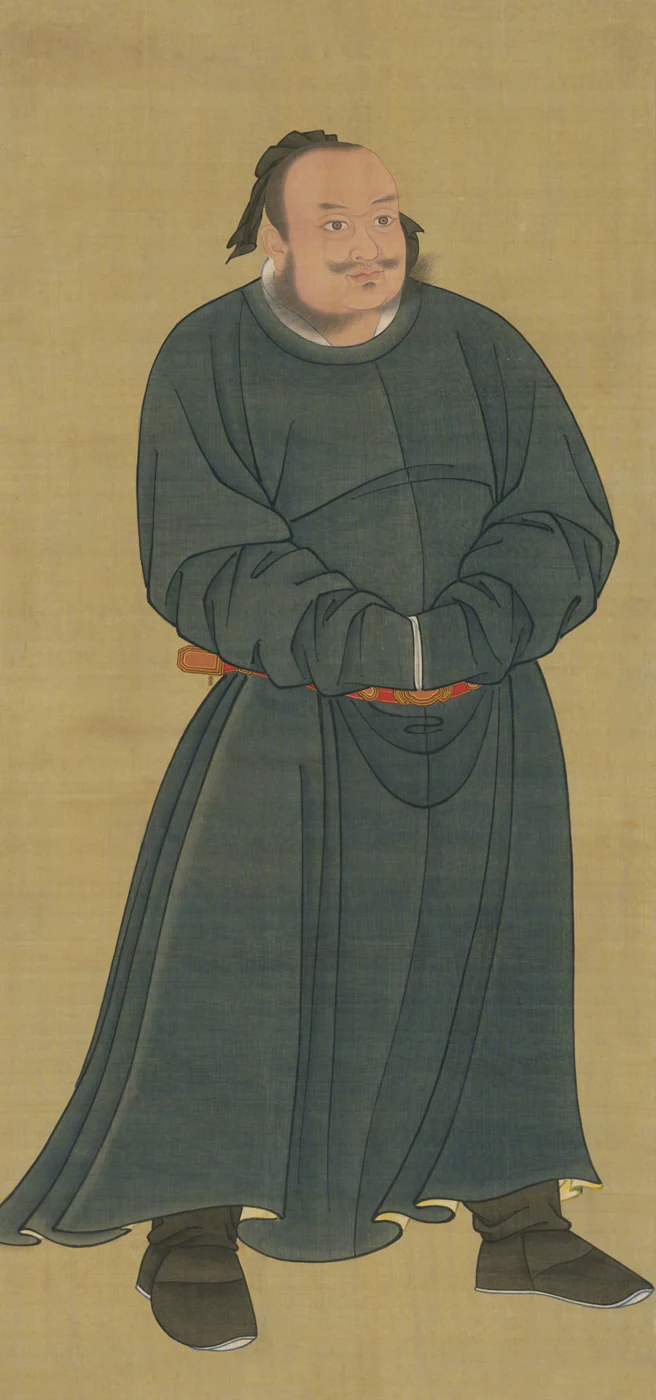
32 CE–102 CE
Generaldiplomat
Ban Chao
班超
Ban Chao (32–102), courtesy name Zhongsheng, was from Pingling County in Youfufeng (present-day Xianyang, Shaanxi). A celebrated military commander and diplomat of the Eastern Han, he was the youngest son of the historian Ban Biao; his elder brother Ban Gu and younger sister Ban Zhao were also noted historians. Ban Chao was ambitious and unconcerned with minor formalities, but personally filial, respectful, and perceptive. He…
32 CE–102 CEEastern Han
PROFILE
Ban Chao (32–102), courtesy name Zhongsheng, was from Pingling County in Youfufeng (present-day Xianyang, Shaanxi). A celebrated military commander and diplomat of the Eastern Han, he was the youngest son of the historian Ban Biao; his elder brother Ban Gu and younger sister Ban Zhao were also noted historians. Ban Chao was ambitious and unconcerned with minor formalities, but personally filial, respectful, and perceptive. He was eloquent and widely read. Unwilling to spend his life copying documents for the government, he “threw down the writing brush and joined the army.” He followed Dou Gu against the Northern Xiongnu, serving as acting Sima, and later led thirty-six men on a mission to the Western Regions. By the end of Emperor Ming of Han's reign he had brought several states of the Western Regions back into the Han sphere. After Emperor Zhang came to the throne, the court initially withdrew from the region under pressure from the Northern Xiongnu, but Ban Chao remained and received more than a thousand reinforcements. In 83, the eighth year of the Jianchu era, Emperor Zhang appointed him Senior Clerk in Command of Troops in the Western Regions. In 90, the second year of the Yongyuan era under Emperor He, he defeated a force of the Yuezhi (Kushan Empire) advancing from Central Asia; in the following year he restored Han control over additional states and was appointed Protector-General of the Western Regions. By 94, the sixth year of Yongyuan, more than fifty states of the Western Regions had submitted, while Tiaozhi, Parthia, and countries “as far as the seacoast forty thousand li away” sent tribute through interpreters. In 95 he was enfeoffed as Marquis of Dingyuan and became known as “Ban Dingyuan.” In 97 he sent Gan Ying on an embassy to Da Qin (the Roman Empire); Gan Ying reached the eastern Mediterranean region before turning back.
- Other name
- Courtesy name Zhongsheng
- Courtesy name
- Zhongsheng
- Period
- Eastern Han
- Date of Birth
- 32
- Date of Death
- 102
- Dynasty/Regime
- Eastern Han
- Identity
- General, diplomat
- Ethnicity/Group
- Not recorded in historical sources
- Native place
- Pingling County, Youfufeng (present-day Xianyang, Shaanxi)
- Place of birth
- Not recorded in historical sources
- Major achievements
- Eastern Han military diplomat who spent more than thirty years on missions and administration in the Western Regions and brought more than fifty states under Han authority.
LIFE TIMELINE
Age thirty-one | Moved to Luoyang with his elder brother Ban Gu and, because the family was poor, copied documents for the government.
Age forty-two | Abandoned clerical work for military service, followed Dou Gu against the Northern Xiongnu, and as acting Sima fought at Yiwu and the Pulei Sea.
Age forty-two | Led thirty-six men on a mission to the Western Regions, attacked Xiongnu envoys at night, and secured Shanshan's submission.
Age forty-three | Went to Khotan, killed a shaman, and brought Khotan into submission; in the same year induced Kashgar to submit and installed Zhong, a nephew of a former king, as ruler.
Age forty-four | Emperor Ming died; Karasahr attacked and killed Protector-General Chen Mu; Ban Chao held Pantuo City in Kashgar in isolation.
Age forty-five | Emperor Zhang ordered him home, but the populations of Kashgar and Khotan pleaded with him to stay, and he decided to remain in the Western Regions.
Age forty-seven | Led troops from Kashgar, Khotan, Kangju, and other states to capture Stone City in Gumo.
Age fifty-two | Appointed Senior Clerk in Command of Troops; Xu Gan arrived in the Western Regions with one thousand reinforcements.
Age fifty-three | Joined Kashgar and Khotan in attacking Yarkand; Zhong, king of Kashgar, rebelled, and Cheng Da was installed in his place.
Age fifty-six | Executed the rebel king Zhong and decisively defeated Yarkand, greatly increasing his authority in the Western Regions.
Age fifty-nine | Used fortified defense and scorched-earth tactics to repel a Yuezhi (Kushan) army said to number seventy thousand.
Age sixty | Appointed Protector-General of the Western Regions by Emperor He and stationed at Taqian City in Kucha.
Age sixty-three | Defeated Karasahr, Weixu, and Weili; more than fifty states of the Western Regions submitted.
Age sixty-four | Enfeoffed as Marquis of Dingyuan, hence known as “Ban Dingyuan.”
Age sixty-six | Sent his deputy Gan Ying toward Da Qin (the Roman Empire); Gan Ying reached the eastern Mediterranean region and returned.
Age sixty-nine | Memorialized for permission to return, writing that he wished at least to “enter the Jade Gate alive.”
Age seventy-one | Returned to Luoyang in the eighth month, was appointed Colonel of the Archers Who Shoot by Sound, and died of illness in the ninth month.
BIOGRAPHY
Biography
Family Background and Early Years
Ban Chao came from a family distinguished in historiography. His father Ban Biao (3–54) was an important early Eastern Han historian who continued the Records of the Grand Historian with dozens of chapters known as the Later Traditions, laying groundwork for the Book of Han. His elder brother Ban Gu (32–92) continued their father's work and spent more than twenty years compiling the Book of Han, the first Chinese dynastic history in annal-biography form. His younger sister Ban Zhao (c. 45–c. 117) was also a historian; after Ban Gu's death she continued the Eight Tables and Treatise on Astronomy of the Book of Han and later taught empresses and imperial consorts, becoming known as Cao Dagu.
From youth Ban Chao had great ambitions. He paid little attention to minor matters but was filial and respectful at home, worked hard without shame, was eloquent, and read widely. He especially liked the Gongyang Commentary to the Spring and Autumn Annals. The Book of the Later Han states that he “was eloquent and broadly read books and biographies,” while the Dongguan Hanji says that he “studied the Gongyang Spring and Autumn and read widely.”
In 62, when Ban Gu was summoned to the capital to serve as a proofreader, Ban Chao and their mother moved with him to Luoyang. The family was poor, and Ban Chao supported them by copying government documents. Tradition relates that a physiognomist predicted he would one day be enfeoffed ten thousand li away and explained that his facial and bodily features signified such a fate.
While copying documents in Luoyang, Ban Chao one day became frustrated, threw down his brush, and exclaimed: “A great man without other plans should at least emulate Fu Jiezi and Zhang Qian, win merit in foreign lands, and earn a marquisate. How can I spend my life among brush and inkstone?” Those around him laughed, but he answered, “How could a youngster understand the aspirations of a valiant man?” This episode became the source of the idiom “throw down the brush and join the army.”
Later Emperor Ming asked Ban Gu where his younger brother was. Ban Gu replied that Ban Chao was copying documents to support their mother. The emperor appointed Ban Chao a clerk at the Orchid Terrace, but he was soon dismissed for an offense.
Joining the Army and the First Mission to the Western Regions
In 73, the sixteenth year of Yongping, Dou Gu led an army against the Northern Xiongnu. Ban Chao joined the expedition as acting Sima. He led troops against Yiwu and fought the Northern Xiongnu near the Pulei Sea, taking many heads and captives. Dou Gu, impressed by his performance, sent him together with the staff officer Guo Xun on a diplomatic mission to the Western Regions.
Ban Chao and Guo Xun first led thirty-six officers and soldiers to Shanshan, southwest of the Lop Nur region. King Guang initially treated them with great courtesy, but after several days became distant. Ban Chao inferred that Northern Xiongnu envoys had arrived. He suddenly questioned an attendant: “I know the Northern Xiongnu envoys have been here for several days. Where are they staying now?” Caught off guard, the attendant confessed. Ban Chao detained him and called his thirty-six men together for wine. Once they were roused, he declared: “If one does not enter the tiger’s den, how can one capture its cubs?” He argued that their only option was a night attack with fire, because the Xiongnu envoys did not know their strength and could be annihilated in the confusion. When someone suggested consulting Guo Xun, Ban Chao rejected the idea, fearing that a timid civil official might disclose the plan and doom them.
That night a strong wind blew. Ban Chao placed ten men with drums behind the Xiongnu camp and instructed them to beat the drums and shout when flames rose. The others waited beside the gate with blades, spears, bows, and crossbows. Ban Chao set the camp on fire downwind. The Xiongnu envoys panicked; he personally killed three, his men killed more than thirty, and more than one hundred others reportedly died in the fire. The next day he informed Guo Xun. Seeing Guo's displeasure at not having participated, Ban Chao reassured him that he would share the credit. Ban Chao then showed the severed heads to King Guang. Shanshan, terrified, agreed to submit to Han and sent a prince as hostage.
Dou Gu was delighted when Ban Chao returned and memorialized his achievements, while requesting that another envoy be appointed for the next mission. Emperor Ming reportedly replied that if an envoy like Ban Chao already existed, there was no reason to choose someone else. Ban Chao was promoted to Military Sima and ordered to continue. Dou Gu offered him more troops, but Ban Chao declined, saying that the original thirty-odd men were sufficient and that more men would only become a burden if trouble arose.
Establishing Authority in Khotan and Kashgar
Ban Chao continued west with his original followers and reached Khotan. King Guangde had recently defeated Yarkand and was dominant on the southern route of the Tianshan region. Northern Xiongnu envoys were stationed at his court and wielded substantial influence. The king received Ban Chao coldly. Khotan was said to be strongly influenced by shamanic practices, and a shaman told the king that the gods were angry because he intended to submit to Han. The shaman demanded Ban Chao's fine horse as a sacrifice. The king sent his minister Silai Bi to request it. Having learned the circumstances in advance, Ban Chao agreed on condition that the shaman collect the horse personally. When the shaman appeared, Ban Chao killed him, arrested Silai Bi, and had him flogged. He then sent the shaman's head to the king and rebuked him. Having already heard of the killing of the Xiongnu envoys in Shanshan, King Guangde became frightened, killed the Northern Xiongnu envoys in Khotan, and returned to Han allegiance. Ban Chao rewarded the king and his officials. According to the source, states throughout the Western Regions then began sending princes as hostages to the Han court, restoring relations that had been interrupted for sixty-five years.
In the spring of 74, Ban Chao advanced by a minor route toward Kashgar. A Kucha-backed ruler named Douti had been installed after Kucha forces killed the previous king. When Ban Chao reached a point ninety li from Pantuo City, he sent the officer Tian Lü ahead to demand submission. Ban Chao instructed him that Douti was not a native of Kashgar and likely had little local support; if he refused, he should be seized. Tian Lü met Douti alone, and when Douti showed no intention of surrendering, Tian Lü suddenly captured him and rode back. Ban Chao entered Pantuo City, summoned the civil and military officials of Kashgar, denounced Kucha's actions, and installed Zhong, a nephew of the former king, as ruler. The local people rejoiced. When the new king and officials asked that Douti be killed, Ban Chao refused, saying that it was more useful to let Kucha witness the Han court's combination of favor and authority. Douti was released, and Kashgar thereafter became hostile toward Kucha.
By this point, through two missions and a combination of courage and diplomacy, Ban Chao had restored the tributary relationship of Shanshan, Khotan, and Kashgar with Han.
Holding Kashgar and Remaining in the Western Regions
In 75, Emperor Ming died. Taking advantage of the imperial mourning, Karasahr attacked and killed Protector-General Chen Mu. Ban Chao was left isolated, while Kucha and Gumo repeatedly attacked Kashgar. Ban Chao and King Zhong supported each other from separate positions around Pantuo City and held out for more than a year despite their weak forces.
In 76, after Emperor Zhang came to the throne, the court believed Ban Chao could not survive alone on the frontier and ordered him to return. When he prepared to leave, the people of Kashgar were alarmed. Commandant Li Yan reportedly declared that Kashgar would be destroyed again if the Han envoy departed and then committed suicide. When Ban Chao reached Khotan, nobles and commoners wept and clung to his horse to stop him. Moved by their appeals and concerned about the regional situation, he turned back to Kashgar. By then two Kashgar cities had defected to Kucha and allied with Weitou. Ban Chao quickly suppressed the revolt and restored control.
In 78, he led more than ten thousand soldiers from Kashgar, Khotan, Kangju, and other states and captured Stone City in Gumo, then memorialized the court asking for reinforcements to complete the pacification of the Western Regions. He argued that most states were already inclined toward Han and that additional forces could “sever the right arm of the Xiongnu.” Emperor Zhang accepted the strategic argument. In 80, Xu Gan was sent west with one thousand pardoned convicts and volunteers. After Xu Gan arrived, the two forces defeated the anti-Han commandant Fan Chen of Kashgar and killed more than one thousand men.
In 83, Emperor Zhang appointed Ban Chao Senior Clerk in Command of Troops and Xu Gan Military Sima, further expanding Ban Chao's authority in the Western Regions.
Defeating Yarkand and Repelling the Yuezhi
In 84, Ban Chao joined Kashgar and Khotan in an attack on Yarkand. The king of Yarkand secretly bribed Zhong, king of Kashgar, to rebel. Zhong defected and withdrew to Wujicheng. Ban Chao installed Cheng Da, an official of Kashgar, as king and attacked Zhong. Because Kangju sent forces to support Zhong, the siege dragged on. Since the Yuezhi (Kushan Empire) were connected by marriage to Kangju, Ban Chao sent gifts to the Yuezhi king and explained the situation. The Yuezhi persuaded Kangju to withdraw and released Zhong. Zhong later outwardly submitted again but secretly conspired with Kucha to feign surrender and attack Ban Chao. Ban Chao detected the plan, pretended to accept the surrender, and prepared an ambush. When Zhong arrived with light cavalry, Ban Chao entertained him at a banquet and then had him executed, taking advantage of the moment to break his followers and open the southern route.
In 87, Ban Chao mobilized twenty-five thousand troops from Khotan and other states for another assault on Yarkand. Kucha sent a left general with fifty thousand troops from Wensu, Gumo, Weitou, and other states. Ban Chao told his officers and the king of Khotan that because they were outnumbered, they should appear to disperse: Khotan's troops would move east while his own troops moved west, then reunite after hearing drums at night. He deliberately relaxed supervision of prisoners so that they could escape and report the apparent retreat. The Kucha king, delighted, led ten thousand cavalry west to intercept Ban Chao while the Wensu king led eight thousand cavalry east against Khotan. Once the allied enemy forces had divided, Ban Chao secretly gathered his forces and attacked the Yarkand camp around cockcrow. The defenders were caught unprepared. The source reports more than five thousand killed and large numbers of horses, livestock, and goods captured. Yarkand surrendered and the Kucha-led coalition dispersed, greatly increasing Ban Chao's prestige.
In 90, the Yuezhi king sent a deputy king named Xie with seventy thousand men across the Pamirs to attack Ban Chao. His subordinates were alarmed, but Ban Chao argued that the force had traveled thousands of li across the mountains and could not sustain its supplies. He ordered a defensive strategy of fortified positions and removal of food from the countryside. Xie's army failed to take Ban Chao's defenses and found no provisions when it raided. Ban Chao predicted that the Yuezhi would request aid from Kucha and laid an ambush on the route. Xie indeed sent envoys with gold, silver, pearls, and jade; Ban Chao's troops killed them and displayed their heads. Xie then apologized and requested permission to withdraw. Ban Chao allowed the army to return, and the source states that the Yuezhi thereafter submitted and sent annual tribute to Han.
Protector-General of the Western Regions and Enfeoffment
In 91, Kucha, Gumo, and Wensu submitted. Emperor He appointed Ban Chao Protector-General of the Western Regions and stationed him at Taqian City in Kucha; a separate Wuji command was established at Gaochang in the Nearer Jushi kingdom. Most states of the Western Regions had now returned to Han allegiance, while Karasahr, Weixu, and Weili remained outside because they feared punishment for the earlier killing of Protector-General Chen Mu.
In the autumn of 94, Ban Chao mobilized seventy thousand troops from Kucha, Shanshan, and six other states, together with 1,400 Han officials, soldiers, and merchants, to attack Karasahr. At the border of Weili he sent word to the rulers of Karasahr, Weixu, and Weili that the Protector-General had come to pacify them, promising graded rewards to kings and nobles who welcomed him. King Guang of Karasahr sent the Left Marquis Beijianzhi with cattle and wine. Ban Chao accused Beijianzhi of holding real power while the king failed to come in person. When some advisers urged execution, Ban Chao declined, saying that killing a powerful man before entering the country would only arouse suspicion; he rewarded and released him instead.
King Guang and his senior officials suspected Ban Chao's intentions and considered resistance. The Left Marquis Yuan Meng, who had once been a hostage at the Han court, secretly informed Ban Chao. In order to conceal the contact, Ban Chao executed Yuan Meng's messenger and publicly claimed disbelief. He then announced a great meeting of kings and promised generous rewards. King Guang of Karasahr, King Fan of Weili, Beijianzhi, and more than thirty others appeared. Seventeen officials led by Prime Minister Fujiu fled in fear. Ban Chao postponed the meeting until the next day and temporarily released Guang and the others. When they returned, he accused them of the killing of Protector-General Chen Mu and executed Guang, Fan, and others, sending their heads to Luoyang. His troops then plundered the area. The source reports more than five thousand killed, fifteen thousand captives, and more than three hundred thousand horses, cattle, and sheep seized. Ban Chao installed Yuan Meng as king of Karasahr and remained for half a year to pacify the population. At this point, more than fifty states of the Western Regions were said to have submitted to Han.
In 95, Emperor He issued an edict praising Ban Chao and enfeoffed him as Marquis of Dingyuan with a fief of one thousand households. The edict praised him for crossing the Pamirs and operating for twenty-two years with states everywhere submitting. It also noted that Khotan and regions westward sent hostages and that the Yuezhi, Tiaozhi, Parthia, and lands “as far as the seacoast forty thousand li away” sent tribute through multiple interpreters. He thereafter became known as “Ban Dingyuan.”
Mission toward Da Qin and Return to China
In 97, Ban Chao sent his deputy Gan Ying as an envoy toward Da Qin, understood in the source as the Roman Empire. Gan Ying traveled through Parthia and Tiaozhi and reached the eastern Mediterranean region according to the text, though another account places his endpoint at the Persian Gulf. Parthians told him that the sea was vast, that a favorable wind might allow crossing in three months but delays might require two years, and that sailors therefore carried three years of provisions and often suffered homesickness and death. Gan Ying turned back. The source presents this as the farthest documented westward travel by an official envoy from a Chinese dynasty at that time.
By 100, Ban Chao was nearing seventy and longed to return home. In a memorial he wrote: “I dare not hope to reach Jiuquan Commandery; I only wish to enter Yumen Pass alive.” His sister Ban Zhao also submitted an appeal on his behalf. Emperor He was moved and in 102 ordered him recalled. Ban Chao reached Luoyang in the eighth month and was appointed Colonel of the Archers Who Shoot by Sound. Less than a month later, exhausted by long service and advanced age, he died of illness in the chest and ribs at seventy-one.
Ban Chao had spent thirty-one years in the Western Regions and, according to the source, restored Han authority over the Tarim Basin to a level associated with the time of Emperor Xuan. After his death, his successor Ren Shang failed to follow his advice to govern with flexibility, overlook minor faults, and focus on the main principles; within a few years Han influence collapsed. About two decades later, Ban Chao's son Ban Yong continued his work and again opened routes to the Western Regions, driving out Xiongnu influence. The source credits father and son with promoting communication between Han Chinese and peoples of the northwest.
From the Writing Brush to the Frontier, and the First Mission to Shanshan
The History of the Later Han records that Ban Chao "was a man of great ambition and gave no thought to small details, yet within he was filial and careful, and at home endured toil and hardship without shame. He had a ready tongue and read widely in the histories." In AD 62, when his elder brother Ban Gu was summoned to be a collator of books, Ban Chao went with his mother to Luoyang, and being poor "he often copied documents for the government to support them." Afterwards he went to a physiognomist, who said: "Sir, you are but a common scholar in plain cloth, yet you will be enfeoffed as a marquis ten thousand li away." Asked for the signs, the man pointed and said: "You have a swallow's jaw and a tiger's neck; to fly and eat flesh — these are the marks of a marquis of ten thousand li." In time Emperor Ming asked Ban Gu where his younger brother was, and being told that he wrote documents for the government and took payment to support their mother, the emperor made Ban Chao a secretary of the Orchid Terrace; later he lost the office for a fault. In AD 73 Dou Gu, commandant of carriages, attacked the Xiongnu and made Ban Chao a deputy marshal, sending him with a separate force against Yiwu; he fought at Lake Barkol, "took many heads and returned," and Dou Gu, thinking him able, sent him with the clerk Guo Xun as envoy to the Western Regions.
His first station was Shanshan. Its king Guang "at first asked after their health and treated them with every courtesy," but then suddenly grew cold; and Ban Chao said to his subordinates: "Do you not feel that Guang's courtesy has thinned? This must be because envoys of the northern barbarians have come, and he wavers, not knowing whom to follow. A clear-eyed man sees what has not yet sprouted, and how much more what is already plain?" He therefore had the Shanshan attendant who served them brought in and asked him unawares: "The Xiongnu envoys have been here some days — where are they lodged now?" The man, startled, told the truth; Ban Chao had him held to prevent leaks and at once gathered his thirty-six men for a drinking party. When they were warm with wine he deliberately provoked them: "You and I are all in a far country with the hope of winning merit and wealth. Now the enemy envoys have been here only a few days and King Guang's courtesy is already discarded; if Shanshan binds us and sends us to the Xiongnu, our bones will be food for wolves. What is to be done?" They answered that in life or death they followed him, and Ban Chao said: "Unless you enter the tiger's den you cannot get the tiger's cub. The only plan now is to attack the Xiongnu by fire tonight, so that they cannot tell how many we are and will be terrified, and we may wipe them out." When someone proposed consulting Guo Xun, Ban Chao grew angry: "Good or ill is decided today. The clerk is a commonplace official; hearing of this he will be frightened and our plan will leak, and we shall die without a name — no brave man's course." That night a great wind blew; he posted ten men with drums behind the enemy's quarters, agreeing that at the sight of fire they should beat the drums and shout, and placed the rest with weapons and crossbows on either side of the gate. Then he set fire with the wind, and the thirty-six raised a din before and behind, so that the Xiongnu were thrown into confusion with nowhere to flee: "Chao with his own hands killed three men; his officers and soldiers cut down the envoys and thirty of their followers, and the remaining hundred or so were all burned to death." The next day he told Guo Xun, who was first astonished and then showed resentment; Ban Chao, understanding his jealousy, raised his hand and said: "Though you did not go with us, how could Ban Chao have the heart to take the merit alone?" at which Guo Xun was pleased. He then summoned King Guang and showed him the Xiongnu envoy's head, "and the whole state was terror-struck"; he soothed him with kind words, and the king sent his son to Han as a hostage. Dou Gu, delighted, reported his achievements in full and asked that another envoy be chosen, but Emperor Ming issued an edict: "An officer like Ban Chao — why not send him, and choose another?" and made him marshal of the army to complete his former work. Dou Gu wished to add to his troops, but Ban Chao said: "I would take the thirty-odd men who followed me; should anything unforeseen arise, more would be a burden."
The Pacification of Khotan and the Installing of a King at Kashgar
Sent out again, Ban Chao first went to Khotan. Its king Guangde had just taken Shache and "held the southern road by force," and the Xiongnu had envoys there to oversee the state, while his courtesy to Ban Chao "was very thin"; and the people being much given to shamanism, the shaman said that "the god is angry — why do you wish to turn toward Han? The Han envoy has a yellow horse with a black muzzle; fetch it quickly to sacrifice to me," whereupon Guangde sent his chancellor Silabi to ask for it. Ban Chao, secretly knowing the situation, agreed, "but had the shaman come himself for the horse"; when he came, Ban Chao at once cut off his head, seized Silabi and gave him several hundred lashes, and sent the shaman's head to Guangde with reproaches. Guangde, having heard how Ban Chao had destroyed the Xiongnu envoys at Shanshan, was greatly frightened, attacked and killed the Xiongnu envoys and submitted; and Ban Chao richly rewarded him and his officers, "and so all the states sent their sons to attend at court, and the Western Regions, cut off from Han for sixty-five years, were again in communication." He dealt as decisively with Kashgar: the king of Kucha, set up by the Xiongnu, had taken the northern road by their power, broken Kashgar and killed its king, setting up a man of Kucha named Douti as king of Kashgar. Ban Chao came by side roads to within ninety li of Douti's town of Pantuo and sent his officer Tian Lü ahead to demand submission, instructing him that "Douti is not of the Kashgar stock, and the people will not give their lives for him; if he does not submit at once, seize him." Tian Lü, coming before him, was taken for weak and slight, and Douti showed no intention of submitting; so Tian Lü, taking him unawares, seized and bound him, at which his attendants fled in fright. Tian Lü galloped back to Ban Chao, who came at once, gathered all the officers of Kashgar, set out the misdeeds of Kucha and installed Zhong, son of the murdered king's elder brother, as king, "at which the people of the state rejoiced greatly." When they asked to kill Douti, Ban Chao would not, saying: "Killing him would do no good; we should let Kucha know the majesty and virtue of Han," and released him; and from this Kashgar and Kucha became enemies.
Holding Kashgar Alone and Memorializing for Troops
In AD 75 Emperor Ming died, and Karashahr, "taking advantage of the great mourning in China, attacked and destroyed the protector Chen Mu"; Ban Chao was left without support, while Kucha and Aksu repeatedly attacked Kashgar, and he held the town of Pantuo with Zhong as head and tail, "his officers and men few and scattered," for more than a year. When Emperor Zhang came to the throne he sent for Ban Chao, fearing he could not hold out alone; and as Ban Chao was about to return, the whole of Kashgar was in distress. Its commandant Li Yan said: "If the Han envoy abandons us we shall be destroyed by Kucha again; I cannot bear to see the envoy go," and cut his own throat; and when Ban Chao reached Khotan, king and people alike wept, saying that "we depend on the Han envoy as children on their parents, and you must not go," some of them clinging to his horse's legs so that he could not move. Ban Chao, knowing that Khotan would never let him go east and himself wishing to complete his ambition abroad, turned back to Kashgar — where two towns had gone over to Kucha and joined with Weitou, so that he seized and beheaded the rebels, broke Weitou and killed more than six hundred, and Kashgar was again at peace. In AD 78 he led ten thousand men of Kashgar, Kangju, Khotan and Jumi against the stone city of Aksu, took it and beheaded seven hundred. He then memorialized for troops, saying that "I and thirty-six officers went as envoys to a far country, enduring every hardship, and since holding Kashgar alone five years have passed," and offering the plan of "using the barbarians to attack the barbarians, which is the best of schemes," holding that the Pamirs could be opened and Kucha then attacked, and that Shache and Kashgar, "their fields broad and rich," could support troops without cost to China. Emperor Zhang, seeing from the memorial that his work could succeed, approved; and Xu Gan, who had asked leave to serve in the far country, was made acting marshal and sent with a thousand pardoned convicts and volunteers to join him. Meanwhile Shache, thinking no Han troops would come, had gone over to Kucha, and the commandant of Kashgar, Fan Chen, had rebelled; but with Xu Gan's arrival Ban Chao attacked Fan Chen with him, broke him heavily, took more than a thousand heads and many prisoners. After that he wished to attack Kucha, and thinking the Wusun strong enough to be used, memorialized for envoys to win them over, which the emperor approved. In AD 83 Ban Chao was made senior secretary commanding troops with drums and banners, Xu Gan marshal of the army, and Li Yi, marquis of the guard, was sent to escort the Wusun envoys. Li Yi, reaching Khotan, found Kucha attacking Kashgar and dared not go on; to cover his cowardice he memorialized that the pacification of the Western Regions was labour without result, and greatly slandered Ban Chao as "embracing a beloved wife and holding a young child, at ease in a foreign country with no thought for home." Ban Chao, hearing it, sighed: "I am not Zeng Shen, yet there are slanders repeated three times; I fear I shall be doubted in my own day," and sent his wife away. The emperor, knowing his loyalty, sharply rebuked Li Yi: "Even if Chao embraces a beloved wife and holds a young child, how could the thousand-odd soldiers who long for home all be of one mind with him?" and ordered Li Yi to serve under Ban Chao's command. Ban Chao at once sent Li Yi back to the capital with the Wusun hostage; and when Xu Gan asked why he did not keep him there by the emperor's authority and send another to escort the hostage, Ban Chao answered: "How shallow that saying is! It is because Yi slandered me that I send him now. If I examine myself and find no fault, what need I care for men's talk? To keep him for my own satisfaction would not be the act of a loyal minister."
Major Activities
Throwing Down the Brush and Joining the Army
As a young man in Luoyang, Ban Chao copied government documents to support his mother. He one day threw down his brush and declared that a man should emulate Fu Jiezi and Zhang Qian by achieving merit in distant lands rather than spending his life over brush and ink. The story became the origin of the idiom “throw down the brush and join the army.”
Missions to the Western Regions
In 73 Ban Chao followed Dou Gu against the Northern Xiongnu as acting Sima and achieved successes at the Pulei Sea. He then led thirty-six men into the Western Regions and successively brought Shanshan, Khotan, and Kashgar into submission. He used the maxim “If one does not enter the tiger’s den, how can one capture its cubs?” when attacking Xiongnu envoys at Shanshan, killed a shaman to establish authority in Khotan, and seized Douti in Kashgar before installing another king. These episodes were presented as examples of his courage, intelligence, and diplomatic skill.
Bringing More Than Fifty States under Han Authority
During thirty-one years in the Western Regions, Ban Chao suppressed Zhong's rebellion in Kashgar, defeated Yarkand, repelled a seventy-thousand-man Yuezhi force, and conquered Karasahr, Weixu, and Weili. More than fifty states were ultimately said to have submitted. He frequently mobilized troops from local states and used relatively small Han forces to coordinate regional armies, a method the source treats as exemplary in the history of diplomacy and warfare.
Sending an Envoy toward Da Qin
In 97, Ban Chao sent Gan Ying toward Da Qin, identified in the source as the Roman Empire. Gan Ying reached the eastern Mediterranean region before turning back after Parthian warnings about the sea voyage. The episode is presented as an important milestone in the history of east-west contact.
Maintaining the Silk Road
During Ban Chao's administration, the southern route of the Silk Road remained open. States of the Western Regions sent envoys and tribute, while Tiaozhi, Parthia, and countries “as far as the seacoast forty thousand li away” were said to send tribute through chains of interpreters, facilitating economic and cultural exchange between east and west.
His Method of War in the Western Regions and Its Results
Ban Chao managed the Western Regions for thirty-one years, and his method may be summed up as beating many with few and using the barbarians against the barbarians. He began with thirty-six men and destroyed the Xiongnu envoys' camp at Shanshan by night — the classic case of "unless you enter the tiger's den you cannot get the tiger's cub"; at Khotan and Kashgar he changed the local political order by killing the shaman, seizing the king and installing another, displaying Han awe and Han kindness at the same time — his words on releasing Douti, that "killing him would do no good; we should let Kucha know the majesty and virtue of Han," being his own statement of the principle. In the matter of forces he always insisted on light, picked troops rather than numbers: he refused Dou Gu's offer of more men on the ground that "should anything unforeseen arise, more would be a burden," and in his memorial asked only for a few hundred horse to escort the Kucha hostage Ba Ba home and then "to join forces with the several states," attacking the enemies of the client states with client troops. This model, resting on local manpower with the Han envoy as its hinge, let him hold out for years "with officers and men few and scattered," and in AD 78 take the stone city of Aksu with ten thousand men of Kashgar, Kangju, Khotan and Jumi.
The strategy set out in his memorial deserves separate note: he held that "earlier discussions all said that to take the thirty-six states was to break the Xiongnu's right arm," that now the states of the Western Regions "from where the sun sets, none but turn toward us," and that only Karashahr and Kucha had not submitted; he therefore urged opening the Pamirs first and then attacking Kucha, foretelling that Shache and Kashgar were rich enough to support troops and that the kings of Aksu and Wensu, not being of the local stock, would fall out with Kucha, so that if those two submitted Kucha would fall of itself. What followed bore this out. The result of his work was that more than fifty states of the Western Regions came again within the empire and the road cut off for sixty-five years was reopened; he later sent Gan Ying west toward Daqin, so that Han envoys reached the region of Tiaozhi and the Persian Gulf for the first time (where exactly they arrived is still disputed), and "maintaining the Silk Road" has become the standard phrase for his achievement. And his bearing toward Li Yi's slander — "if I examine myself and find no fault, what need I care for men's talk," and "to keep him for my own satisfaction would not be the act of a loyal minister" — left in this history of war and diplomacy a footnote on the use of men and on integrity.
Personal Relations
- Father: Ban Biao, noted Eastern Han historian and author of the Later Traditions continuing the Records of the Grand Historian.
- Mother: Lady Jin, daughter of Jin Chang.
- Elder brother: Ban Gu, principal compiler of the Book of Han.
- Younger sister: Ban Zhao, noted historian known as Cao Dagu.
- Elder son: Ban Xiong, inherited the title Marquis of Dingyuan.
- Third son: Ban Yong, later continued his father's work in the Western Regions.
- Emperor Ming of Han, Liu Zhuang: noticed Ban Chao when he was still obscure, appointed him a clerk at the Orchid Terrace, and later promoted him to Military Sima.
- Emperor Zhang of Han, Liu Da: trusted Ban Chao despite criticism at court, appointed him Senior Clerk in Command of Troops, and sent Xu Gan with reinforcements.
- Emperor He of Han, Liu Zhao: appointed Ban Chao Protector-General of the Western Regions and enfeoffed him as Marquis of Dingyuan.
- Dou Gu: early patron who recognized his talent and sent him on his mission to the Western Regions.
- Guo Xun: staff officer who accompanied Ban Chao on the initial mission; he was not consulted before the night attack on the Xiongnu envoys but shared the credit afterward.
- Xu Gan: brought one thousand reinforcements and assisted in suppressing Fan Chen's rebellion; served as Military Sima.
- Tian Lü: subordinate who captured Douti in Kashgar.
- Gan Ying: deputy envoy sent toward Da Qin.
- Northern Xiongnu: the principal external force competing with Han for control of the Western Regions.
- Douti: Kucha-installed king of Kashgar, captured and deposed by Ban Chao.
- Zhong: king of Kashgar who first submitted and later rebelled; executed after Ban Chao exposed his feigned surrender.
- King Guang of Karasahr: associated with the killing of Protector-General Chen Mu and later executed by Ban Chao.
- Xie, deputy king of the Yuezhi: led seventy thousand troops against Ban Chao and was repelled by fortified defense and scorched-earth tactics.
Historical Assessment
Eastern Han / Contemporary
- An edict of Emperor He praised Ban Chao for pacifying Khotan and the western regions, crossing the Pamirs, gaining the submission of distant states, and doing so without mobilizing large forces from the Chinese heartland. The full wording is preserved in the Book of the Later Han.
- Fan Ye wrote that Ban Chao and Liang Jin developed strategy in the Western Regions and ultimately won success, reputation, and hereditary rank.
- Ban Zhao, in her memorial asking that her brother be allowed to return, emphasized that he had survived in the deserts for thirty years under imperial protection but had become physically weakened with age.
Wei, Jin, Northern and Southern Dynasties
- Western Jin historian Sima Biao described Ban Chao as broadly strategic, intelligent and courageous, unconcerned with minor matters, but filial and diligent at home.
- Li Daoyuan of the Northern Wei recorded his activities in the Commentary on the Water Classic, describing his authority as extending throughout the Western Regions.
- The Spring and Autumn Annals of the Sixteen Kingdoms records that Fu Jian of Former Qin invoked Ban Chao's achievements with only thirty-six men as an example of a great man's ambition.
Tang and Song Periods
- Tang commanders such as Feng Changqing and Gao Xianzhi were said to regard Ban Chao as a model when operating in the Western Regions. Du Fu referred in verse to his distant enfeoffment and enduring name as Marquis of Dingyuan.
- Liu Zhiji in Shitong praised him for winning fame in distant lands and surpassing even Fu Jiezi and Zhang Qian.
- Sima Guang in the Comprehensive Mirror in Aid of Governance gave a detailed account of his Western Regions campaigns and praised his intelligence and courage.
Ming, Qing, and Modern Periods
- Ming thinker Li Zhi included Ban Chao among notable ministers concerned with practical statecraft and praised a scholar who could achieve merit ten thousand li away.
- Qing historian Zhao Yi discussed him in Notes on the Twenty-Two Histories, describing him as unique in the Eastern Han for opening the Western Regions and establishing great achievements from a scholarly background.
- Modern historian Lü Simian wrote in his History of Qin and Han that Ban Chao's ability to range through the Western Regions with thirty-six men and ultimately win the submission of more than fifty states was exceptional in the history of Chinese diplomacy.
- Yu Ying-shih, in Views of Life and Death in the Eastern Han, noted that Ban Chao maintained Han rule in the Western Regions for three decades through personal courage and strategy.
FIGURES ASSOCIATED WITH THIS DYNASTY
Bibliography
- Fan Ye, Book of the Later Han, juan 47, Biographies of Ban and Liang, 37th, Zhonghua Book Company punctuated edition
- Sima Guang, Zizhi Tongjian·JuanSiShiWuZhiSiShiBa, Zhonghua Book Company punctuated edition
- Records of the Eastern Han from the Eastern Pavilion, juan 16, Biographies 11
- Lü Simian, History of Qin and Han, Shanghai Classics Publishing House