Birth in Seclusion
Born as the youngest son of Emperor He of Han and raised discreetly in common households to avoid premature misfortune.
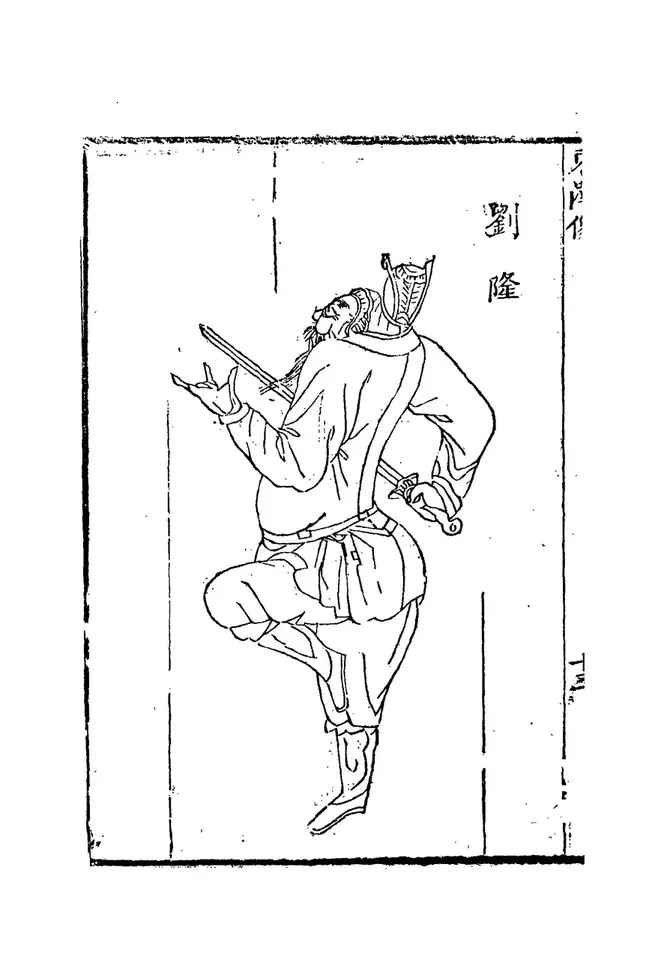
105 CE–106 CE
刘隆
Liu Long (刘隆, 105–106 AD), posthumously revered as Emperor Shang of Han (汉殇帝), was the fifth emperor of the Eastern Han dynasty. Born in the autumn of 105 AD as the youngest son of Emperor He of Han, he was secretly fostered outside the imperial palace among commoners due to the frequent early deaths of previous imperial sons. Following the sudden demise of Emperor He in late 105 AD, Empress Dowager Deng Sui enthroned the…
Liu Long (刘隆, 105–106 AD), posthumously revered as Emperor Shang of Han (汉殇帝), was the fifth emperor of the Eastern Han dynasty. Born in the autumn of 105 AD as the youngest son of Emperor He of Han, he was secretly fostered outside the imperial palace among commoners due to the frequent early deaths of previous imperial sons. Following the sudden demise of Emperor He in late 105 AD, Empress Dowager Deng Sui enthroned the infant when he was barely over a hundred days old to secure political stability and dynastic continuity. During his brief nominal reign under the era name Yanping, supreme state power resided entirely in the hands of Empress Dowager Deng Sui, who presided over the imperial court from behind the curtain. Liu Long died in the Chongde Hall of Luoyang Palace in September 106 AD at just over one year of age, becoming the shortest-lived recorded sovereign in Chinese dynastic history.
Born as the youngest son of Emperor He of Han and raised discreetly in common households to avoid premature misfortune.
Enthroned as emperor at just over a hundred days old following the death of Emperor He, with Empress Dowager Deng Sui assuming regency.
The era name was changed to Yanping, and an imperial general amnesty was proclaimed throughout the empire.
His elder brother Liu Sheng was enfeoffed as Prince of Pingyuan, and imperial clan branches received territorial settlements.
Extensive disaster relief decrees and granary distributions were dispatched to assist victims of catastrophic flooding.
Passed away in the Chongde Hall of the Southern Palace in Luoyang at the age of barely one year, buried at Kangling Mausoleum.
Because Emperor He had repeatedly suffered the tragic loss of several elder infant sons due to recurrent palace illnesses, imperial consorts and court advisers harbored deep anxieties regarding dynastic inheritance. Consequently, when Liu Long was born in the autumn of the first year of Yuanxing, the emperor strictly concealed his existence and sent the infant out of the palace to be secretly nurtured in a reliable commoner household.
This protective measure was designed to ward off perceived palace ill fortunes and safeguard the fragile newborn until he reached a safer age. Deprived of normal palace ceremony, Liu Long spent his earliest infancy entirely in the care of ordinary foster parents outside the capital walls, entirely detached from court affairs.
In December of the first year of Yuanxing, Emperor He passed away unexpectedly at the young age of twenty-seven. With dynastic succession hanging in the balance, Empress Deng decided against installing the chronically sickly elder prince Liu Sheng, choosing instead to secretly welcome the infant Liu Long back to Luoyang.
Barely over one hundred days old, the crying infant was carried into the imperial throne hall and proclaimed the new Son of Heaven. Because the monarch was incapable of speech or governance, Empress Dowager Deng Sui formally assumed full political authority, convening imperial audiences behind the curtain and conducting state policy in close cooperation with her brother Deng Zhi.
Throughout the brief reign era of Yanping, government decrees and state dispatches flowed entirely from the regent dowager's court, while the infant emperor remained sequestered inside the inner chambers of the imperial residence. Despite premier royal medical attention and attentive nursing, the fragile child succumbed to recurring physical frailty.
In August of the first year of Yanping, infant emperor Liu Long passed away suddenly in Chongde Hall of the Southern Palace, having lived only slightly more than one full year. The court bestowed upon him the tragic posthumous title of Emperor Shang, meaning the sovereign who died prematurely before reaching maturity.
Although state affairs during the Yanping era were guided by Empress Dowager Deng, foundational dynastic governance was promulgated under the infant emperor's imperial name. To pacify dynastic tensions stemming from the bypass of the elder prince, the court officially established the Principality of Pingyuan.
Elder prince Liu Sheng was granted extensive fiefs and financial stipends, while prominent princes and cadet branches of the imperial Liu clan received generous lands, pacifying potential imperial clan grievances and solidifying political equilibrium across provincial commands.
Confronting persistent agricultural failures, river breaches, and widespread flooding across various prefectures during the first year of Yanping, the imperial court issued decrees under the emperor's seal to reduce palace expenditures and curb bureaucratic luxury.
Palace stables and ornamental menageries were drastically scaled down, and surplus royal grain stocks were disbursed immediately to relieve millions of starving refugees. Strict penalties were instituted against grasping local magistrates, restoring basic civilian trust in the Eastern Han administration.
Along the northern and western frontiers, the imperial government sustained vigilant defenses while extending pacification policies toward Qiang, Xianbei, and Xiongnu tribal federations. Generous subsidies and diplomatic treaties preserved frontier tranquillity during the dangerous transition of supreme imperial authority.
When Emperor Shang passed away prematurely without heirs, the regency smoothly negotiated succession protocols, selecting Liu Hu, the grandson of Emperor Zhang, to ascend the imperial throne as Emperor An, thereby preventing factional warfare and preserving domestic imperial stability.
FIGURES ASSOCIATED WITH THIS DYNASTY