Age 1 | Born into the elite Bohai Gao clan in Tiao County; son of Prince Gao Mai of Le'an of Northern Qi.
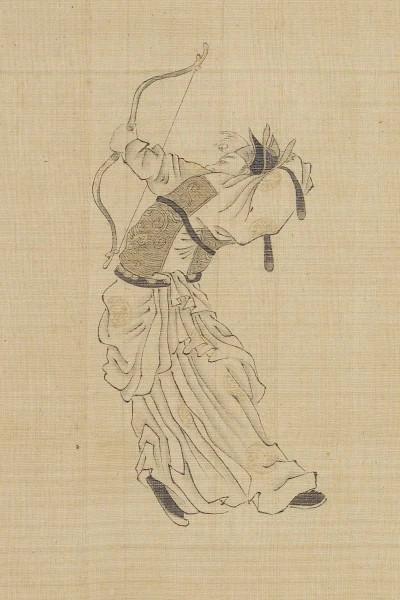
576 CE–647 CE
Grand ChancellorLingyan Pavilion Meritorious FounderImperial In-lawStatesman
Gao Shilian
高士廉
Gao Shilian (576–647), personal name Jian, courtesy name Shilian, was a founding grand chancellor, prominent statesman, and scholar of the Tang Dynasty, ranked sixth among the Twenty-Four Meritorious Founders in the Lingyan Pavilion. He was the maternal uncle of Empress Zhangsun and Duke of Zhao Zhangsun Wuji. He attained the office of Right Executive President of the Department of State Affairs and was created Duke of Shen.…
576 CE–647 CETang Dynasty
PROFILE
Gao Shilian (576–647), personal name Jian, courtesy name Shilian, was a founding grand chancellor, prominent statesman, and scholar of the Tang Dynasty, ranked sixth among the Twenty-Four Meritorious Founders in the Lingyan Pavilion. He was the maternal uncle of Empress Zhangsun and Duke of Zhao Zhangsun Wuji. He attained the office of Right Executive President of the Department of State Affairs and was created Duke of Shen. Hailing from the illustrious Bohai Gao clan, he raised his orphaned niece and nephew, arranging the marriage between Empress Zhangsun and Li Shimin. During the Xuanwu Gate Incident of 626, he led released convicts to hold the Fanglin Gate, securing Taizong's accession. During the Zhenguan era, he governed Shu and dug the Gao Gong Canal, subsequently directing the compilation of the hundred-volume Shizuzhi (Treatise on Clans) to restructure imperial nobility. He died in 647 and was buried in the Zhaoling Mausoleum.
- Courtesy / Art Name
- Shilian
- Era
- Sui-Tang Transition
- Dynasty
- Tang dynasty
- Identity
- Grand Chancellor, Lingyan Pavilion Meritorious Founder, Imperial In-law, Statesman, Scholar
- Date of Birth
- 576 CE(5th year of the Jiande era, Northern Zhou)
- Date of Death
- February 14, 647 CE(21st year of the Zhenguan era, Tang)
- Ethnicity
- Han Chinese (of the Gao clan of Bohai)
- Ancestral Home
- Tiao county of Bohai commandery (present-day Jing county, Hebei)
- Place of Birth
- Tiao county
- Place of Death
- His private residence at Chongren lane, Chang'an
- Lifespan
- 72 years
- Major Offices
- Right vice director of the department of state affairs, palace attendant, bearer of the privilege of opening a bureau with the ceremonial of the three excellencies, grand tutor of the heir apparent
- Peerage
- Duke of Shen (Shenguo Gong)
- Posthumous Name
- Wenxian (Cultured and Exemplary)
- Major Achievements
- Arranged marriage between Li Shimin and Empress Zhangsun; guarded Fanglin Gate with armed prisoners during the Xuanwu Gate Incident; dug the Gao Gong Canal in Sichuan; supervised the compilation of the Treatise on Clans (Shizuzhi)
LIFE TIMELINE
Youth | He lived in seclusion in the Zhongnan Mountains and closed his doors to visitors.
Age 22 | Following Sui Wen Emperor's purges of Northern Qi royal lineages, fled worldly society to live as a hermit in the Zhongnan Mountains for over a decade.
Age 30 | Recommended by Imperial Censor Xue Daoheng for his towering intellect; appointed Officer of Ceremonial Ritual (Zhililang).
In the first year of the Daye era of Emperor Yang of Sui (605) | In the first year of the Daye era of Emperor Yang of Sui (605), the imperial government launched a nationwide search for unheralded talent.
Age 34 | Upon the death of his brother-in-law Zhangsun Sheng, welcomed his expelled sister and young nephew Zhangsun Wuji and niece into his home; recognized Li Shimin's latent genius and betrothed his niece to him.
Age 38 | Implicated in Vice Minister of War Husi Zheng's defection to Goguryeo; banished as Chief Clerk of Zhuyuan County in Jiaozhi; left his wife behind to attend to his aged mother and rode south alone.
Age 43 | Emperor Yang was assassinated in Jiangdu; appointed Army Marshal (Sima) by Prefect of Jiaozhi Qiu He, serving as supreme military adviser.
Age 44 | Indigenous tribal leader Ning Changzhen attacked Jiaozhi; Gao engineered an ambush that pulverized the tribal army, pacifying the southern frontiers.
Age 47 | Xiao Xian was crushed in Jiangling; Gao persuaded Qiu He to formally submit Jiaozhi, Jiuzhen, and Rinan to the Tang; appointed Vice Governor of Yongzhou (Yongzhou Zhizhong).
Age 51 | On June 4, the Xuanwu Gate Incident occurred; Gao armed released convicts and guarded Fanglin Gate against the Crown Prince's faction; rewarded with appointment as Right Mentor to the Crown Prince; upon Taizong's accession, promoted to Director of the Chancellery (Shizhong) and Duke of Yixing.
Age 52 | Demoted to Governor-General of Anzhou for concealing a confidential historical memorial regarding Wang Gui; soon reassigned as Senior Executive Officer of the Superior Area Command of Yizhou.
Age 53 | Radically reformed Sichuanese social customs; constructed the "Gao Public Canal" along the Min River, bringing irrigation to thousands of hectares of arable land.
Age 56 | Recalled to Chang'an as Minister of Civil Personnel (Libu Shangshu); advanced in noble rank to Duke of Xu.
Age 63 | Oversaw the compilation and imperial promulgation of the one-hundred-volume Clan Registers (Shizu Zhi); elevated to Right Executive President of the Department of State Affairs (Shangshu Zuo Puye) and Duke of Shen.
Age 68 | In February, his portrait was installed in the Hall of Lingyan, ranked sixth among twenty-four founding heroes; petitioned for retirement due to advanced age; granted the rank of Senior Preceptor to the Crown Prince (Taizi Shaoshi).
Age 70 | During Taizong's eastern campaign against Goguryeo, co-directed state governance with Fang Xuanling at Dingzhou, assisting the Crown Prince Li Zhi.
Age 71 | Stricken with severe illness; Emperor Taizong personally visited his mansion in Chongren Ward, weeping profusely as the two reminisced on their thirty-year bond.
Age 72 | Passed away in the first month at his Chongren residence; Emperor Taizong attempted to personally attend the funeral, but was physically restrained by Zhangsun Wuji; posthumously honored as Minister of Education and Governor-General of Bingzhou, granted the posthumous name "Wenxian," and buried at Zhao Mausoleum.
Posthumous | Emperor Gaozong ascended the throne, posthumously conferring the supreme rank of Grand Commandant (Taiwei) and granting him permanent enshrinement in Emperor Taizong's imperial ancestral temple.
Aged fifty-three | In Shu he greatly reformed old customs and opened up the canal system of Dujiangyan to irrigate a thousand qing of fields, and the people built shrines to him and called it the Gao Gong Canal.
Masterminding the Clan Registers to Dismantle Aristocratic Monopoly In the fifth yea | ### Masterminding the Clan Registers to Dismantle Aristocratic Monopoly In the fifth year of Zhenguan (631), Emperor Taizong, recognizing that Shilian's governance of Sichuan was the finest in the empire, issued an imperial decree summoning him back to the capital.
Acting Minister of Works | He was put in charge of the affairs of Emperor Gaozu’s mausoleum.
Age 63 | In the twelfth year of Zhenguan (638), Emperor Taizong elevated Shilian to Right Executive President of the Department of State Affairs (Shangshu Zuo Puye—the functional prime minister heading the imperial bureaucracy) and advanced his noble title to Duke of Shen.
In the twelfth year of Zhenguan (638) | In the twelfth year of Zhenguan (638), Emperor Taizong elevated Shilian to Right Executive President of the Department of State Affairs (Shangshu Zuo Puye—the functional prime minister heading the imperial bureaucracy) and advanced his noble title to Duke of Shen.
Additional honours | He was granted the title of Equal to the Three Excellencies with the opening of a office.
Age 68 | ### Hall of Lingyan, the Korean Campaign, and Taizong's Tearful Farewell In the second month of the seventeenth year of Zhenguan (643), Emperor Taizong, reflecting upon the glorious comrades who had forged the empire, commissioned the court painter Yan Liben to execute life-sized portraits of the twenty-four supreme founding heroes within the Hall of Lingyan.
Hall of Lingyan | ### Hall of Lingyan, the Korean Campaign, and Taizong's Tearful Farewell In the second month of the seventeenth year of Zhenguan (643), Emperor Taizong, reflecting upon the glorious comrades who had forged the empire, commissioned the court painter Yan Liben to execute life-sized portraits of the twenty-four supreme founding heroes within the Hall of Lingyan.
Age 70 | In the nineteenth year of Zhenguan (645), Emperor Taizong personally led the grand imperial army on an eastern campaign against Goguryeo.
In the nineteenth year of Zhenguan (645) | In the nineteenth year of Zhenguan (645), Emperor Taizong personally led the grand imperial army on an eastern campaign against Goguryeo.
Age 71 | In the winter of the twentieth year of Zhenguan (646), exhausted by decades of tireless service, the seventy-one-year-old statesman fell critically ill at his private residence in Chongren Ward, Chang'an.
In the winter of the twentieth year of Zhenguan (646) | In the winter of the twentieth year of Zhenguan (646), exhausted by decades of tireless service, the seventy-one-year-old statesman fell critically ill at his private residence in Chongren Ward, Chang'an.
Age 72 | On the day of Renchan in the first month of the twenty-first year of Zhenguan (647), Gao Shilian passed away peacefully in his Chongren mansion at the age of seventy-two.
On the day of Renchan in the first month of the twenty-first year of Zhenguan (647) | On the day of Renchan in the first month of the twenty-first year of Zhenguan (647), Gao Shilian passed away peacefully in his Chongren mansion at the age of seventy-two.
In 649 | In 649, upon the accession of Emperor Gaozong, the new sovereign posthumously elevated his great-uncle to Grand Commandant (Taiwei), commanding that his mortuary tablet be permanently enshrined in the imperial ancestral temple of Emperor Taizong.
BIOGRAPHY
Biography
Princely Heritage and Hermit Life in Zhongnan Gao Shilian, named Gao Jian but conventionally addressed throughout his life by his courtesy name Shilian, was born in the fifth year of the Jiande era of Emperor Wu of Northern Zhou (576) in Tiao County, Bohai Commandery (modern-day Jing County, Hebei Province). His family was the Bohai Gao clan, an imperial lineage of the fallen Northern Qi dynasty and one of the preeminent aristocratic houses of the Northern Dynasties. His grandfather, Prince Gao Yue of Qinghe, was a legendary military commander and chancellor who had served as Minister of the Left, Grand Commandant, and Chief Executive of the Department of State Affairs under Northern Qi, conquering territories across north China. His father, Prince Gao Mai of Le'an, likewise held the office of Left Servant in Northern Qi before submitting to the Sui dynasty, where he served with celebrated administrative integrity as Prefect of Taozhou. Immersed in the refined cultural and literary traditions of the northern nobility from his earliest years, Gao Shilian grew into a quiet, observant, and fiercely intelligent young scholar, mastering classical Confucian philosophy, ancient dynastic histories, legal statutes, and tactical military treatises. During the early Kaihuang era of Emperor Wen of Sui (Yang Jian), the newly unified imperial court acted with profound paranoia toward the aristocratic lineages of the vanquished Northern Zhou and Northern Qi royal houses, systematically purging members of the Yuwen clan and closely scrutinizing eastern magnates. Recognizing that his identity as an imperial prince of the fallen Northern Qi dynasty placed his life in constant jeopardy, the twenty-two-year-old Gao Shilian made a radical decision: he renounced all social ambitions, severed his ties with the capital aristocracy, and retreated into the dense, secluded valleys of the Zhongnan Mountains south of Chang'an. For more than a decade, Shilian lived as a scholarly recluse. Within his rustic mountain cottage, he dedicated his days and nights to reading ancient manuscripts, studying the historical rise and fall of dynasties, and contemplating structural statecraft. Although prominent noblemen and high-ranking courtiers repeatedly climbed the mountains to seek his counsel, Shilian kept his wooden gates firmly barred, preserving his moral integrity and avoiding the lethal intrigues of the Sui court. In the first year of the Daye era of Emperor Yang of Sui (605), the imperial government launched a nationwide search for unheralded talent. Two of the most celebrated literary luminaries of the realm, Imperial Censor Xue Daoheng and Vice Director Cui Zujun, who had long admired Shilian's towering intellectual breadth and moral composure, jointly presented an impassioned memorial to Emperor Yang. They praised Shilian as a "flawless jade tablet emerging from the mountain wilderness, an indispensable pillar capable of stabilizing the grand temples of state." Persuaded by their endorsement, Emperor Yang issued an imperial summons ordering Shilian out of retirement, appointing him to the court as Officer of Ceremonial Ritual (Zhililang), charged with directing imperial ceremonies and ancestral sacrifices. ### Compassion for the Orphaned Kin and Betrothal to Li Shimin In the fifth year of Daye (609), Right Militant Guard General Zhangsun Sheng died suddenly at his private residence in Chang'an. Zhangsun Sheng's eldest son by a prior marriage, Zhangsun Anye, was an alcoholic, arrogant, and cruel profligate. Before his father's funeral rites were even concluded, Anye violently expelled his stepmother, Lady Gao (Gao Shilian's beloved younger sister), and her two young children—the ten-year-old Zhangsun Wuji and the eight-year-old future Empress Zhangsun—from the family estate, confiscating their inheritance and casting them penniless into the winter streets. When news of this heartless betrayal reached Gao Shilian, he was incandescent with rage and sorrow. Without a moment's hesitation, he rode his own carriage directly to the Zhangsun mansion, gathering his weeping sister and her terrified children and bringing them into his own household. A man of austere virtue and profound domestic affection, Shilian treated his orphaned nephew and niece with a tenderness that rivaled the devotion of a biological father. He allocated the finest living quarters in his estate to them, provided lavish stipends for their daily needs, and personally assumed the duty of their education. He drilled young Zhangsun Wuji in the Confucian classics, dynastic history, and military strategy, forging in the boy the iron moral character and administrative discipline that would later make him the premier architect of the Tang Empire. To his young niece, Shilian imparted deep lessons in classical propriety, literary elegance, and feminine virtue, cultivating the extraordinary wisdom, modesty, and benevolence that would later define her historical legacy as Empress Wende. Throughout their lives, Zhangsun Wuji and his sister revered Gao Shilian as their savior and father figure. During this same period, Li Shimin, the second son of Duke Li Yuan of Tang, was living in Chang'an. Though barely fifteen years of age and possessing no formal imperial office, Li Shimin displayed an extraordinary, charismatic aura—bold, generous, peerlessly brave, and possessing a magnetic capacity to draw heroes and scholars to his side. While ordinary courtiers dismissed the youth as merely another flamboyant aristocratic scion, Gao Shilian was astounded upon their very first encounter. Observing Li Shimin's piercing gaze, majestic bearing, and profound strategic clarity, Shilian was struck with a sudden, prophetic revelation. Returning home, he confided privately to his sister, Lady Gao: "The second son of Duke Tang possesses a celestial countenance and a transcendent magnanimity; he is emphatically no ordinary mortal! In the turbulent storms that surely lie ahead, this young man is destined to pacify the realm and establish a monumental dynasty. Our daughter cannot be matched with anyone beneath heaven except him!" Despite strong objections from relatives who favored wealthier and more established aristocratic suitors, Gao Shilian used his supreme authority as maternal uncle to arrange the formal betrothal between his niece and Li Shimin, culminating in their marriage in 613. This visionary union not only forged an indissoluble bond between the Gao, Zhangsun, and Li clans, but established the foundational familial alliance that would anchor the glory of the Zhenguan reign. ### The Husi Zheng Catastrophe, Filial Renunciation, and Tropical Exile In the spring of the ninth year of Daye (613), Emperor Yang mobilized the empire for his disastrous second military invasion of Goguryeo. Vice Minister of War Husi Zheng was stationed on the frontline, tasked with coordinating troop movements and grain transports. When Duke Yang Xuangan launched his massive anti-dynastic rebellion at Liyang, Husi Zheng, who had engaged in secret treasonous correspondence with Xuangan, panicked upon realizing his betrayal was about to be uncovered. In the sixth month, Husi Zheng deserted his post and fled across the border into the territory of Goguryeo. Enraged by this treason, Emperor Yang unleashed the secret police, ordering a sweeping purge of anyone who had ever maintained scholarly or personal relations with the fugitive minister. Because Gao Shilian was renowned for his hospitality and had frequently exchanged poetry and wine with Husi Zheng in the capital, he was arrested by imperial censors, stripped of his nobility and office, and sentenced to perpetual exile as the lowly ninth-rank Chief Clerk of Zhuyuan County in Jiaozhi Commandery (modern-day northern Vietnam). Jiaozhi was situated on the farthest southern perimeter of the known Chinese world—a terrifying wilderness of suffocating tropical humidity, dense jungle malarial bogs, and venomous reptiles, widely regarded by northern elites as a virtual death sentence. As Shilian prepared for departure, his thoughts turned immediately to his aged, ailing mother, who had reached her eightieth year. Shilian recognized that if his mother attempted to accompany him on this ten-thousand-li overland and maritime journey through malarial jungles, she would certainly perish along the road. He made a heart-wrenching, heroic sacrifice: summoning his faithful wife, Lady Xianyu, he commanded her to remain behind in their ancestral home in the north, tasking her with the sacred, solitary responsibility of nursing and serving his mother with filial devotion in his absence. Furthermore, observing that several impoverished families within the wider Gao lineage were facing starvation, Shilian liquidated his entire metropolitan property portfolio, distributing every piece of land and furniture among his kinsmen. He departed the capital on a single horse, accompanied only by his personal book chests, possessing not a single copper coin to his name. His astonishing display of filial renunciation and familial generosity moved the entire empire to tears. Surviving the grueling journey, Shilian arrived at the remote outpost of Zhuyuan. Despite the crushing heat, the alien language of the indigenous tribes, and his humiliating demotion from high metropolitan society to a petty clerk, Shilian maintained complete inner tranquility. He discharged his administrative duties with scrupulous fairness, arbitrated tribal disputes, and spent his leisure hours reading classical philosophy under the tropical palms. When the Sui Empire imploded into civil war following the assassination of Emperor Yang in Jiangdu in 618, all communication with northern China was severed. Qiu He, the seasoned Prefect of Jiaozhi, had long heard of Gao Shilian's towering fame. Recognizing that he held an administrative and military genius within his borders, Qiu He summoned Shilian to the commandery capital, appointing him Army Marshal (Sima) and treating him as his supreme strategic counselor. In 619, Ning Changzhen, a powerful indigenous chieftain commanding tens of thousands of fierce tribal warriors from Hepu, launched a massive surprise invasion of Jiaozhi, hoping to seize the fertile coastal plains. Facing overwhelming numbers and a terrified garrison, Shilian took personal command of the defense. Deploying classic stratagems from the Art of War, he concealed elite crossbowmen and shock troops within the dense forest defiles flanking the invading route, while deploying a small bait force to lure the tribal army deep into the canyon. As Ning Changzhen's horde surged forward in disorder, Shilian gave the signal: drums thundered from the heights, crossbow bolts darkened the sky, and ambush columns slammed into the enemy flanks. The tribal army was utterly destroyed, thousands were slain or captured, and Ning Changzhen fled into the wilderness. Through this single masterstroke, Shilian pacified the southern sea, preserving peace across Jiaozhi, Jiuzhen, and Rinan. Shortly thereafter, Xiao Xian, the regional warlord who had proclaimed himself Emperor of Liang at Jiangling, dispatched a fleet across the sea to demand Qiu He's submission. Tempted by the warlord's vast riverine fleet, Qiu He prepared to accept the Liang seals of office. Shilian forcefully intervened, presenting an incisive geopolitical analysis: "Although Xiao Xian occupies the middle Yangtze, his armies are merely undisciplined river pirates and bandit mobs! His laws are chaotic, his generals harbor murderous jealousy against one another, and his collapse is only a matter of time. Conversely, Duke Li Yuan of Tang has captured Chang'an, consolidated Guanzhong, and possesses the unmistakable mandate to unite the four seas. Your Excellency must preserve your forces, nurture the populace, and await the grand turning of the world; on no account should you throw your life away for a doomed pretender!" Qiu He was convinced, shutting the gates and defiantly expelling Xiao Xian's emissaries. ### The Return to Chang'an and Heroism at the Xuanwu Gate In the fifth year of the Wude era (622), Tang armies under Prince Li Xiaogong and the legendary general Li Jing swept down the Yangtze, completely annihilating Xiao Xian's regime. Recognizing that the divine mandate had firmly settled upon the house of Tang, Gao Shilian urged Qiu He to seize the moment: "The Tang armies have liberated Jiangling; imperial authority reaches the southern shores! This is a heaven-sent opportunity for Your Excellency to demonstrate transcendent fidelity. You must immediately submit maps, registers, and tribute to the Son of Heaven!" Qiu He enthusiastically concurred, commissioning Shilian to draft the formal memorial of submission and dispatching envoys bearing the census registers of Jiaozhi, Jiuzhen, and Rinan to Chang'an. Emperor Gaozu was overjoyed by the bloodless incorporation of the southern provinces, appointing Qiu He as Grand Area Commander of Tanzhou. Knowing well Gao Shilian's noble character and familial connections, the emperor summoned him to the imperial capital, appointing him Metropolitan Vice Governor of Yongzhou (Yongzhou Zhizhong)—the crucial administrative post governing the metropolitan territory of Chang'an, where Prince Li Shimin served as titular Governor. Returning to Chang'an after nearly a decade of exile, Shilian was reunited with Li Shimin, his sister Lady Gao, and his nephew Zhangsun Wuji. Overwhelmed with emotion, Li Shimin embraced his maternal uncle, immediately inducting him into his innermost strategic council within the Prince of Qin's Secretariat. At this time, the bitter succession struggle between the Prince of Qin and Crown Prince Li Jiancheng (allied with Prince Li Yuanji) was escalating toward a violent confrontation. Jiancheng and Yuanji, terrified of Li Shimin's immense military prestige and veteran loyalist generals, bribed palace concubines to poison Gaozu's mind, stripped Shimin of his veteran officers, and conspired to assassinate him during the upcoming northern expedition against the Eastern Turks. Gao Shilian perceived with terrifying clarity that if Li Shimin hesitated, the entire family would face total extermination. Working day and night in secret conclaves alongside Zhangsun Wuji, Fang Xuanling, and Du Ruhui, Shilian forcefully urged the Prince of Qin to execute a preemptive strike to eliminate the treacherous princes and secure the imperial succession. On the dawn of June 4 in the ninth year of Wude (626), the world-altering Xuanwu Gate Incident erupted. Li Shimin led an elite strike force of loyalist generals, including Yuchi Jingde and Hou Junji, laying an ambush inside the northern Xuanwu Gate of the imperial palace, where they intercepted and executed Li Jiancheng and Li Yuanji. However, as the news reached the eastern quarters, the Crown Prince's elite guard commanders, Xue Wanche and Feng Li, mobilized over two thousand heavily armored palace cavalry and infantries, launching a ferocious assault against the palace gates with deafening war cries. The metropolitan capital was thrown into wild panic, and the outcome hung precariously in the balance. In this supreme moment of existential peril, Gao Shilian demonstrated extraordinary martial resolution and commanding presence. Recognizing that the loyalist forces at the gate were vastly outnumbered and in danger of being overwhelmed from the rear, Shilian galloped directly to the central headquarters of Yongzhou. Acting with supreme audacity, he unilaterally ordered the prison wards flung open, pardoned all imperial convicts and detainees, and commanded the armories unlocked. Arming more than a thousand hardened convicts, imperial bailiffs, and municipal guards, Shilian formed them into disciplined battle formations. Brandishing his sword at their head, Shilian led this emergency force at a full gallop through the streets of Chang'an, securing and barring the northern Fanglin Gate and sealing off all major thoroughfares connecting the Eastern Palace with the imperial enclosure. This daring maneuver completely neutralized Xue Wanche's attempts to outflank the palace or incite a general rebellion within the metropolis, allowing Li Shimin's forces to consolidate their triumph at the Xuanwu Gate. Following the pacification of the capital, Li Shimin was designated Crown Prince, immediately rewarding Shilian's decisive heroism by appointing him Right Mentor to the Crown Prince (Taizi You Shuzi). In 627, upon Li Shimin's formal enthronement as Emperor Taizong, Gao Shilian was promoted to Vice Director of the Chancellery (Huangmen Shilang), soon advancing to Director of the Chancellery (Shizhong), elevated to Duke of Yixing with a fief of nine hundred households, and admitted to the supreme council of chancellors alongside Fang Xuanling and Feng Deyi. ### Administrative Governance in Sichuan and the "Gao Public Canal" In the winter of the first year of Zhenguan (627), Gao Shilian encountered a sudden political setback. During the reign of Emperor Gaozu, Wang Gui, a senior adviser in the household of the deceased Crown Prince Li Jiancheng, had submitted a secret, highly critical memorial to Jiancheng denouncing the Prince of Qin's faction. Following the coup, Shilian, who concurrently oversaw archival registers in the Chancellery, discovered this document. Believing that Emperor Taizong had already proclaimed a universal amnesty and seeking to prevent renewed factional recriminations, Shilian quietly set the document aside without presenting it to the throne. When an imperial censor discovered the omission and impeached him for concealing state intelligence, Emperor Taizong, though fully aware that Shilian harbored no treasonous malice, was compelled to demonstrate absolute impartiality in enforcing administrative statutes. The emperor stripped Shilian of his chancellorship, dispatching him to serve as Area Commander of Anzhou. Recognizing Shilian's matchless administrative talents, however, Taizong transferred him only a few months later to the pivotal post of Senior Executive Officer of the Superior Area Command of Yizhou (Yizhou Dadu Fuchangshi). Because the nominal Governor-General was Taizong's young son Prince Li Ke, Shilian wielded absolute civil and military authority across the entire Jiannan circuit (modern Sichuan). The Shu region, shielded by precipitous mountain ranges, had long preserved decadent, superstitious, and morally degraded social customs. The populace was addicted to divination, witchcraft, and ruinous competitive luxury in weddings and funerals. Far worse, the local culture was paralyzed by a profound, superstitious terror of infectious diseases: whenever elderly parents fell ill, their children and grandchildren, terrified of contracting pestilence, would lock the doors of the sickroom and flee, leaving their suffering progenitors to die of starvation and neglect in total isolation. Arriving in Chengdu, Gao Shilian launched a comprehensive campaign of cultural and economic reconstruction:
- Moral Transformation and Classical Education: He renovated the official academies of Yizhou, personally ascending the lecture podium to instruct regional officials, gentry, and scholars in the ethical principles of the Analects and the Classic of Filial Piety. He enacted severe legal penalties against children who abandoned sick parents, charging them with the grave crime of unfilial conduct, while publicly rewarding and decorating families that practiced exemplary filial care. Within three years, the barbaric customs of the region were eradicated, replaced by an enduring culture of filial reverence and civic harmony;
- Engineering the "Gao Public Canal": Surveying the agrarian topography of the Chengdu plain, Shilian observed that while Li Bing's ancient Dujiangyan irrigation system nourished the inner core of the plain, the peripheral agricultural tracts still suffered alternate scourges of severe drought and localized flooding. Marshaling tens of thousands of corvée laborers and troops, Shilian directed a monumental hydraulic engineering project: he diverted water from the roaring Min River, excavating a massive, interlocking network of irrigation channels stretching for dozens of leagues across the plains. This project brought reliable irrigation to thousands of hectares of arid farmland while diverting excess waters to cleanse the streets and moats of Chengdu. Agricultural yields multiplied, grain prices plummeted, and the Shu region was transformed into a prosperous storehouse for the empire. Overwhelmed with gratitude, the people of Sichuan erected ancestral shrines at the canal headwaters, engraving stone steles that named the waterway the "Gao Public Canal" (Gao Gong Qu), a name revered across generations. ### Masterminding the Clan Registers to Dismantle Aristocratic Monopoly In the fifth year of Zhenguan (631), Emperor Taizong, recognizing that Shilian's governance of Sichuan was the finest in the empire, issued an imperial decree summoning him back to the capital. Shilian was appointed Minister of Civil Personnel (Libu Shangshu) and advanced to Duke of Xu. The Ministry of Civil Personnel was the vital nerve center of imperial administration, controlling all appointments, promotions, and annual evaluations of civil magistrates. Endowed with an incisive eye for human talent and an encyclopedic knowledge of regional lineages, Shilian administered the ministry with scrupulous impartiality, ignoring the self-serving recommendations of powerful courtiers, promoting impoverished scholars of genuine merit, and establishing a legendary standard of bureaucratic fairness. In the twelfth year of Zhenguan (638), Emperor Taizong elevated Shilian to Right Executive President of the Department of State Affairs (Shangshu Zuo Puye—the functional prime minister heading the imperial bureaucracy) and advanced his noble title to Duke of Shen. During this era, Emperor Taizong confronted an intolerable socio-political problem: the entrenched snobbery and political obstruction of the ancient aristocratic lineages of Shandong. Ever since the Eastern Han, Wei, Jin, and Northern and Southern Dynasties, the four great clans of Shandong (Cui of Boling, Lu of Fanyang, Li of Zhaojun, and Zheng of Xingyang), alongside Guanlong magnates like the Wei and Liu, had monopolized high social status. These ancient families held the newly established imperial house and the victorious generals of the Tang in utter contempt. Even though many of their branches had produced no prominent statesmen for generations and had sunk into economic ruin, they maintained immense genealogical arrogance, demanding exorbitant bridal prices (caili) to marry their daughters to rising officials, while routinely rejecting the marriage proposals of Tang imperial princes and prime ministers. Emperor Taizong burned with indignation at this hereditary caste system, which undermined the meritocratic foundations of the state. He issued an imperial edict commissioning Gao Shilian to head a supreme editorial board comprising Vice Director of the Secretariat Wei Ting, Cen Wenben, and Secret Archives Vice Director Linghu Defen to collect all genealogical registers across the empire and compile the definitive Clan Registers (Shizu Zhi). When Gao Shilian presented the first draft of the compendium to the throne, the editors had succumbed to traditional social prejudices, placing Cui Mingan of the Boling Cui clan at the absolute apex as the "First Rank of All Lineages Beneath Heaven." Emperor Taizong was incandescent with fury. Summoning Gao Shilian and the editorial commission to the throne room, the emperor delivered a scathing reprimand: "In establishing the social ranks of our empire, we must never trace back hundreds of generations to count the ancient deeds of long-dead ancestors! Social rank must be measured exclusively by contemporary bureaucratic rank, moral excellence, and tangible state service! The descendants of the Cui clan have produced no ministers of state for generations; they are corrupt, selling their daughters for commercial wealth—by what right do they crown the realm? Do you gentlemen tremble before mere phantom reputations of the past, seeking to deceive Us with ancient fables!" Gao Shilian immediately internalized the revolutionary essence of the emperor's vision. Withdrawing the manuscript, he instituted a radical, meritocratic restructuring of the entire one-hundred-volume work:
- First Rank (The Imperial Royal Lineage): Exclusively reserved for the Tang imperial house and imperial princes;
- Second Rank (Imperial Consorts and In-Laws): Reserved for maternal relatives and imperial affinal clans;
- Third Rank (Meritorious Ministers and Chancellors): Reserved for contemporary civil and military officials who had rendered monumental service to the state, based strictly upon their current administrative rank;
- Demotion of Ancient Magnates: Ancient lineages devoid of contemporary state service, including Cui Mingan, were stripped of their preeminence and demoted to the third rank or lower. In 638, the completed one-hundred-volume Clan Registers was officially promulgated across the empire. This monumental compilation struck a mortal blow against the four-hundred-year-old hereditary monopoly of the medieval Chinese aristocracy, establishing a revolutionary social contract that grounded prestige in merit, state service, and civic virtue. It laid the sociological foundation for the golden age of Tang civil governance and the rise of the meritocratic civil service examination system. ### Hall of Lingyan, the Korean Campaign, and Taizong's Tearful Farewell In the second month of the seventeenth year of Zhenguan (643), Emperor Taizong, reflecting upon the glorious comrades who had forged the empire, commissioned the court painter Yan Liben to execute life-sized portraits of the twenty-four supreme founding heroes within the Hall of Lingyan. Gao Shilian was immortalized in the sixth position, standing among the greatest founders of the dynasty. In April of that year, following the deposition of Crown Prince Li Chengqian, Shilian joined Zhangsun Wuji and Fang Xuanling in steadfastly backing the virtuous and filial Prince of Jin, Li Zhi (the future Emperor Gaozong), securing the stability of the dynastic succession. Feeling the weight of his sixty-eight years, Shilian repeatedly submitted memorials requesting permission to surrender his executive post as Right Executive President. Reluctantly acceding to his plea for rest, Emperor Taizong relieved him of active executive duties, promoting him to the honorary second rank of Specially Appointed Grand Master with Open Palace Privileges (Kaifu Yitong Sansi) and appointing him Senior Preceptor to the Crown Prince (Taizi Shaoshi). In the nineteenth year of Zhenguan (645), Emperor Taizong personally led the grand imperial army on an eastern campaign against Goguryeo. Crown Prince Li Zhi was ordered to remain at Dingzhou to oversee domestic governance and rear logistics. Recognizing that the stability of the home front was paramount, Taizong entrusted Gao Shilian and Fang Xuanling with supreme advisory authority to assist the crown prince. At the Dingzhou regional headquarters, Shilian supervised the transport of tens of thousands of tons of grain, coordinated military reserves, and audited imperial memorials from across the provinces with consummate efficiency, earning the profound gratitude and veneration of the young heir. In the winter of the twentieth year of Zhenguan (646), exhausted by decades of tireless service, the seventy-one-year-old statesman fell critically ill at his private residence in Chongren Ward, Chang'an. Returning from the eastern front, Emperor Taizong rode directly to Gao's mansion to visit his bedside. Sitting beside the sickbed and grasping Shilian's emaciated hand, the emperor reminisced on their thirty-year journey together—from their first meeting in Taiyuan to the life-and-death struggle at the Xuanwu Gate and the glorious construction of the Zhenguan golden age. Overcome with grief and gratitude, Gao Shilian wept torrential tears, exchanging an agonizing, final farewell with his sovereign. On the day of Renchan in the first month of the twenty-first year of Zhenguan (647), Gao Shilian passed away peacefully in his Chongren mansion at the age of seventy-two. When news of his passing reached the palace, Emperor Taizong was inconsolable. Canceling all court audiences, the emperor ordered imperial carriages prepared so that he might personally attend the wake and weep before Shilian's coffin. Minister of Works Fang Xuanling rushed forward, desperately admonishing the sovereign: "Your Majesty has recently been consuming potent mineral cinnabar elixirs; the imperial physicians have repeatedly warned that extreme grief will provoke a lethal recurrence of your ailment. We implore Your Majesty to cherish your sacred health for the sake of the ancestral altars and the common folk!" Taizong wept, retorting: "Lord Gao was not merely my minister; he was my dearest friend of old, my closest kinsman, and the foundational pillar of our empire! How can I hear of his death and refuse to weep before his bones!" Ordering his attendants to proceed, Taizong rode his warhorse through the Xingan Gate. Grand Chancellor Zhangsun Wuji, who was keeping vigil at Shilian's bier, heard that the imperial cortege was approaching. Refusing even to remove his coarse mourning sackcloth, Wuji ran into the street, throwing himself directly in front of the emperor's warhorse. Clinging to the horse's reins and weeping uncontrollably, Wuji cried out: "Your Majesty is consuming cinnabar medicines; the sacred physicians forbid you from approaching a corpse! Why will Your Majesty not cherish your life for the living millions! Moreover, my uncle's dying words explicitly commanded that his lowly, dead body must never cause Your Majesty's carriage to be troubled! If Your Majesty advances, I shall die beneath your horse's hooves!" As Taizong attempted to urge the steed forward, Zhangsun Wuji cast his entire body flat onto the muddy road, embracing the horse's hooves and sobbing with raw agony. Seeing his brother-in-law's desperate devotion, Emperor Taizong was finally persuaded to rein in his mount. Turning back into the forbidden city, the emperor ascended the high observation pavilions of the Eastern Imperial Gardens, gazing southward toward Gao Shilian's residence in Chongren Ward, weeping so profusely that his tears drenched his imperial robes like torrential rain. Emperor Taizong promulgated an imperial rescript posthumously promoting Gao Shilian to Minister of Education (Situ) and Governor-General of Bingzhou, granting him the revered posthumous name "Wenxian" (Cultured and Exemplary), and according him a state funeral with supreme ministerial honors, accompanying the emperor in eternity at the Zhao Mausoleum. In 649, upon the accession of Emperor Gaozong, the new sovereign posthumously elevated his great-uncle to Grand Commandant (Taiwei), commanding that his mortuary tablet be permanently enshrined in the imperial ancestral temple of Emperor Taizong.
Major Activities
Dynastic Foundation and the Xuanwu Gate Triumph 1. Nurturing the Imperial Heirs and Dynastic Betrothal: Sheltered and raised the orphaned Zhangsun Wuji and the future Empress Zhangsun; prophetically recognized Li Shimin's transcendent genius in his youth and arranged the marriage that established the central political nexus of the Zhenguan reign;
- Heroic Defense of Fanglin Gate: During the Xuanwu Gate Incident of 626, daringly unlocked Yongzhou prisons, armed convicts and bailiffs, and sealed off Fanglin Gate, decisively repelling the counter-offensive of Crown Prince Li Jiancheng's elite cavalry. ### Frontier Pacification and Hydraulic Engineering 1. Defense of Jiaozhi and Submission to Tang: Masterminded the ambush that shattered Ning Changzhen's tribal army in the far south; orchestrated the bloodless submission of Jiaozhi, Jiuzhen, and Rinan to the Tang throne in 622;
- Moral Reform and the Gao Public Canal in Sichuan: As Senior Executive Officer of Yizhou, eradicated the cruel custom of abandoning sick parents and engineered the vast "Gao Public Canal" along the Min River, bringing irrigation to thousands of hectares of farmland. ### Overhauling Medieval Aristocracy through the Clan Registers 1. Dismantling Hereditary Caste Privileges: Supervised the compilation of the one-hundred-volume Clan Registers (Shizu Zhi), enforcing Emperor Taizong's mandate that social rank be determined by contemporary state service and moral virtue rather than ancestral pedigree;
- Establishing Meritocratic Governance: Demoted ancient Shandong clans, elevating imperial royals, state chancellors, and military founders, fundamentally creating the meritocratic social framework of the Tang Empire.
Personal Relations
- Father: Gao Mai, Prince of Le'an of Northern Qi, Left Servant, Prefect of Taozhou.
- Wife: Lady Xianyu, celebrated for her profound filial piety in serving her mother-in-law during Gao's exile.
- Sister: Lady Gao, married General Zhangsun Sheng, mother of Zhangsun Wuji and Empress Zhangsun.
- Nephew: Zhangsun Wuji, Duke of Zhao, premier chancellor and architect of the Tang Empire.
- Niece: Empress Wende (Empress Zhangsun), legendary empress of Emperor Taizong.
- Nephew-in-Law / Sovereign: Emperor Taizong (Li Shimin).
- Sons: - Gao Luxing: Succeeded as Duke of Shen; married Taizong's daughter Princess Dongyang; served as Minister of Revenue and Executive Officer of Yizhou. - Gao Zhixing (Gao Zhixing): Served as Director of Foreign Protocol (Zhuke Langzhong). - Gao Chunxing: Attained prominent ministerial office. - Gao Zhenxing: Served as General of the Left Militant Guards. - Gao Shenxing: Served as Vice Minister of Revenue. - Gao Shenxing: Served as Prefectural Governor. ### Ministerial Colleagues and Chancellors - Fang Xuanling: Grand Chancellor; collaborated on the Xuanwu Gate coup, co-directed state affairs at Dingzhou, and wept alongside Taizong.
- Du Ruhui: Right Executive President; core strategist within the Prince of Qin's Secretariat.
- Qiu He: Prefect of Jiaozhi and Grand Area Commander of Tanzhou; relied upon Gao Shilian to govern the southern sea and submit to Tang.
- Wei Ting, Cen Wenben, Linghu Defen: Distinguished co-editors of the Clan Registers.
Historical Assessment
Tang Dynastic Appraisals - Emperor Taizong Li Shimin: "Gao Shilian has scrutinized ancient and modern treatises; his mind is lucid and penetrating. Facing deadly peril, he never altered his righteous principles; holding public office, he harbored no private factions; his only deficiency was a slight reluctance to offer blunt, unvarnished admonitions. His moral virtue was vast and deep, his fame spreading far and wide. Administering personnel evaluations, he harmonized all classes; presiding over the executive government, his fragrant governance illuminated the state."
- Emperor Taizong's Grief: "Lord Gao was not merely my minister; he was my dearest friend of old, my closest kinsman, and the foundational pillar of our empire! How can I hear of his death and refuse to weep before his bones!"
- Liu Xu in the Old Tang Book: "Gao Shilian possessed lofty talent and renown, his moral conduct unstained. He preserved the sacred bond between sovereign and subject from beginning to end, planning brilliantly for the hereditary succession of his descendants. As a pillar of the altars of state, his merits were towering; as an object of imperial gratitude, his rewards were profound."
- Song Qi in the New Tang Book: "Gao Shilian possessed gravity and discernment from his youth. He recognized Emperor Taizong while the sovereign was still unheralded, and arranged the marriage of Empress Zhangsun with prophetic clarity. Entering the supreme administration, every action conformed to statutory law. In compiling the Clan Registers, he restrained hollow genealogical arrogance and elevated pure merit, inaugurating an era of enlightened imperial rule. His monumental deeds shine brightly—how entirely fitting that he should be granted perpetual enshrinement in the imperial temple!"
FIGURES ASSOCIATED WITH THIS DYNASTY
Bibliography
- Old Tang Book*, Volume 65, Biographies 15 (Biography of Gao Shilian)
- New Tang Book*, Volume 95, Biographies 20 (Biography of Gao Shilian)
- Quan Tangwen*, Volume 142, Collected Writings of Gao Shilian