Jiyang, Wancheng | Appointed Magistrate of Jiyang under Wang Mang; retreated to defend Wancheng against the Chunling rebels.
35 CE
Founding general of Eastern HanCommander of the Southern ExpeditionMarquis of Wuyang
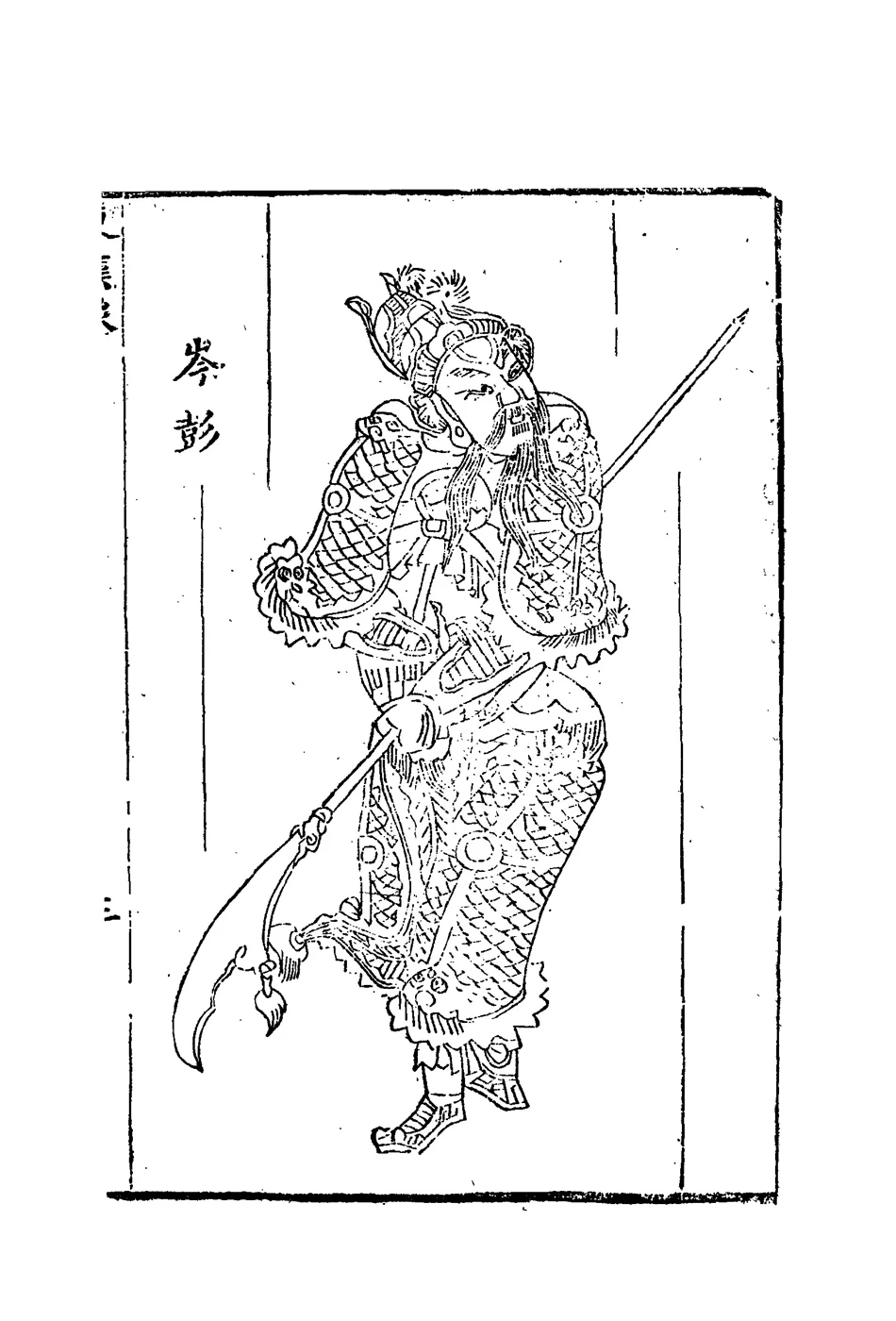
Cen Peng
岑彭
Cen Peng (died 35 CE), courtesy name Junran, was a native of Jiyang in Nanyang (modern Xinye County, Henan Province). He was a paramount founding military commander and strategist of the Eastern Han Dynasty, ranked sixth among the venerated Twenty-Eight Generals of Yuntai. Initially serving as magistrate of Jiyang under Wang Mang, he defended the commandery seat of Wancheng until starvation compelled his surrender to Liu Yan,…
35 CEEastern Han
PROFILE
Cen Peng (died 35 CE), courtesy name Junran, was a native of Jiyang in Nanyang (modern Xinye County, Henan Province). He was a paramount founding military commander and strategist of the Eastern Han Dynasty, ranked sixth among the venerated Twenty-Eight Generals of Yuntai. Initially serving as magistrate of Jiyang under Wang Mang, he defended the commandery seat of Wancheng until starvation compelled his surrender to Liu Yan, who spared his life. Recognizing Liu Xiu's imperial destiny, Cen Peng joined him in 24 CE, orchestrating the peaceful surrender of former capital Luoyang. Appointed Grand General of the Southern Expedition, Cen Peng demonstrated peerless operational mastery in amphibious and combined arms warfare. He conducted an extensive five-year campaign that crushed the powerful southern warlord coalitions of Qin Feng, Yan Cen, and Tian Rong across Henan and Hubei. In 35 CE, Cen Peng directed the naval invasion of the Shu kingdom (Dacheng regime), using fire ships to incinerate Gongsun Shu's impenetrable fortified floating bridge across the Three Gorges at Jingmen. He executed a lightning amphibious deep penetration, marching thousands of miles to seize Wuyang within striking distance of Chengdu. Shocked by his speed, Shu monarch Gongsun Shu dispatched clandestine assassins who fatally stabbed Cen Peng in his headquarters at night. He was posthumously honored as Marquis Zhuang.
- Courtesy Name
- Junran
- Historical Period
- Xin Dynasty to Early Eastern Han Dynasty
- Dynasty / Regime
- Xin Dynasty, Gengshi Regime, Eastern Han Dynasty
- Identity
- Founding general of Eastern Han, Commander of the Southern Expedition, Marquis of Wuyang
- Ethnicity
- Huaxia (Han Chinese)
- Native Place
- Jiyang, Nanyang (modern northeast of Xinye County, Henan Province)
- Place of Birth
- Xinye, Henan
- Place of Death
- Military Headquarters at Wuyang (modern Pengshan District, Meishan, Sichuan Province)
- Age at Death
- Unconfirmed; no calculation from an unknown birth year
- Highest Office
- Grand General of the Southern Expedition, Chamberlain for Law Enforcement (Tingwei), Marquis of Wuyang
- Major Offices
- Magistrate of Jiyang, Marquis of Guide, Prefect of Yingchuan, Grand General of the Southern Expedition
- Noble Title
- Marquis of Wuyang (formerly Marquis of Guide, Marquis of Huaiyang)
- Posthumous Title
- Marquis Zhuang (The Resolute Marquis)
- Major Achievements
- Ranked sixth among the Twenty-Eight Generals of Yuntai, pacified the Jingchu and Yangtze River basins annihilating warlords Qin Feng and Tian Rong, shattered the Jingmen floating bridge fortress in the Three Gorges, advanced lightning forces to Wuyang besieging Chengdu
LIFE TIMELINE
Wancheng | Defended Wancheng through months of famine; surrendered upon total starvation; spared and ennobled by Liu Yan.
Chang'an, Yingchuan | Appointed Prefect of Yingchuan under the Gengshi regime following Liu Yan's execution.
Huai County | Surrendered Yingchuan to Liu Xiu north of the Yellow River; appointed Grand General of Discipline Enforcement.
Luoyang | Persuaded Gengshi supreme commander Zhu Wei to surrender the imperial capital of Luoyang without bloodshed.
Nanyang | Invested as Marquis of Huaiyang and Grand General of the Southern Expedition to pacify southern warlords.
Deng County, Liqiu | Annihilated the field forces of Chu King Qin Feng at Deng County, initiating the protracted siege of Liqiu.
Liqiu, Yiling | Repelled relief columns under Tian Rong and Yan Cen; compelled Qin Feng's surrender, pacifying the Jingchu basin.
Xiangyang | Enfeoffed as Marquis of Wuyang with a vast territorial estate encompassing three fertile counties.
Tianshui, Shanggui | Supervised the grain transport lines supplying Emperor Guangwu's western expedition against warlord Wei Ao.
Jingmen, Jiangguan | Spearheaded the naval invasion of Shu; incinerated Gongsun Shu's fortified pontoon bridge in the Three Gorges.
Jiangzhou, Dianjiang | Swept through the Yangtze gorges, capturing Jiangzhou and capturing tens of thousands of enemy troops.
Wuyang | Bypassed Shu defensive lines via Pingshan, staging a lightning cavalry march capturing Wuyang near Chengdu.
Wuyang | Assassinated in his command tent by agents dispatched by Gongsun Shu; posthumously honored as Marquis Zhuang.
Aged about thirty-six | He defeated Tian Rong and besieged Qin Feng at Liqiu.
Aged about thirty-six #3 | He defeated Tian Rong and besieged Qin Feng at Liqiu.
Aged about thirty-seven #2 | He destroyed Qin Feng, struck Tian Rong in the south, broke Yiling, circulated proclamations through Jiangnan and received the submission of Jiaozhi and other commanderies.
Xiangyang | When Emperor Guangwu greatly enfeoffed the founding ministers, Cen Peng was advanced to Marquis of Wuyang with three counties for his exceptional service in pacifying the whole of the south.
Aged about thirty-eight #3 | He came to the capital for audience, received rich rewards and returned to his post at Jinxiang.
Tianshui and Shanggui | He accompanied Emperor Guangwu’s personal campaign against the Liangzhou warlord Wei Ao, holding the fortresses with a large force and forwarding grain from Ba and Shu to ensure the army’s victory over Wei Ao.
Aged about forty #4 | He campaigned with Liu Xiu against Wei Ao, attacked Xicheng and flooded it, and on withdrawing covered the rear.
Aged about forty-one #3 | When Ren Man and other generals of Gongsun Shu took Yiling, Cen Peng built tower ships to prepare for battle.
Aged about forty-three #3 | He attacked Shu, broke Jingmen and drove deep into the country, being appointed governor of Yizhou; in the tenth month he was assassinated by an agent of Gongsun Shu.
BIOGRAPHY
Biography
Early Defense of Wancheng and Redemption
Cen Peng was born in Jiyang in Nanyang Commandery, the bustling southern cultural hub of the Han Empire. During the closing years of the Xin Dynasty under Wang Mang, Cen Peng was appointed Magistrate of his native county. When Liu Yan and Liu Xiu mobilized the Chunling rebels in 22 CE, Cen Peng organized local resistance before withdrawing into the fortified commandery capital of Wancheng. Surrounded by rebel armies, Cen Peng mounted an unyielding defense that stretched across seven months. Even when provisions were exhausted and garrison troops resorted to eating leather saddles and horses, Cen Peng maintained iron discipline. In May 23 CE, seeing the populace on the verge of total annihilation, Cen Peng opened the gates. While vengeful rebel captains demanded his execution, Liu Yan intervened, praising Cen Peng's indomitable loyalty and convincing Emperor Gengshi to ennoble him as Marquis of Guide. ### Allegiance to Liu Xiu and the Bloodless Recovery of Luoyang Following the murder of Liu Yan by rival Gengshi factions, Cen Peng was reassigned as Prefect of Yingchuan. Recognizing Emperor Gengshi's erratic misrule, Cen Peng welcomed the arrival of Liu Xiu north of the Yellow River in 24 CE, surrendering his commandery without hesitation. Impressed by his administrative and tactical caliber, Liu Xiu appointed him Grand General of Discipline Enforcement. In 25 CE, as Liu Xiu ascended the imperial throne, former Gengshi General-in-Chief Zhu Wei defended the old imperial capital of Luoyang with three hundred thousand troops. Recognizing that Zhu Wei feared retribution for his role in Liu Yan's assassination, Cen Peng rode alone to the city moat. Pledging Liu Xiu's solemn imperial oath that all past offenses were forgiven, Cen Peng persuaded Zhu Wei to open the gates, securing the imperial capital intact. ### The Pacification of Jingchu In 26 CE, Emperor Guangwu invested Cen Peng with the seal of Grand General of the Southern Expedition, charging him with the complete pacification of the Yangtze and Han River valleys. The region was dominated by warlord Qin Feng, who styled himself King of Chu-Li with hundreds of thousands of combatants. Cen Peng waged a masterclass in operational maneuver at Deng County and Mount Atou, deploying deception flotillas along the Han River while sending cavalry squadrons across upper fords under cover of darkness to encircle Qin Feng's mountain camps. When neighboring warlord Tian Rong dispatched naval relief armies from the Three Gorges, Cen Peng destroyed them in detail at Dongjin. By 28 CE, Qin Feng surrendered, and the southern warlords were thoroughly eradicated. Cen Peng governed the pacified commanderies with strict discipline, prohibiting looting and restoring agricultural irrigation. ### The Conquest of Shu and the Breakthrough of Jingmen In 35 CE, Emperor Guangwu launched the final campaign to reunify China by conquering the separatist Dacheng empire of Gongsun Shu in Sichuan. Cen Peng was entrusted with supreme command of the southern naval thrust through the treacherous Yangtze Gorges. Gongsun Shu fortified the narrow defile between Mount Jingmen and Mount Huya with a colossal floating pontoon bridge bristling with artillery towers and palisades, blocking all river transit. In March 35 CE, observing heavy downstream gales, Cen Peng unleashed fireships loaded with oil and dry reeds against the floating bridge. The gale drove the inferno through the enemy fleet, incinerating the entire defensive complex. Cen Peng's vanguard broke through the smoking ruins, executing Shu commander Ren Man and capturing thousands of war junks. ### The Lightning March to Wuyang and Assassination Capitalizing on total panic among Shu garrisons, Cen Peng advanced hundreds of miles up the Yangtze. Learning that Gongsun Shu had concentrated his primary armies at Zizhong, Cen Peng executed a brilliant operational bypass: leaving banners to pin the enemy front, he navigated light cavalry across the river at Pingshan, marching through unmapped mountain defiles to seize Wuyang within striking distance of Chengdu. Terrified that Cen Peng was suddenly at his gates, Gongsun Shu exclaimed: "This general is like a god!" In desperation, Gongsun Shu dispatched elite assassins disguised as refugees. On a dark night in October 35 CE, the assassins penetrated the command tent and fatally stabbed Cen Peng. Emperor Guangwu wept bitterly upon receiving the report, decreeing national mourning and granting him the posthumous title Marquis Zhuang. In 60 CE, Emperor Ming painted Cen Peng's portrait in the Yuntai Pavilion, honoring him sixth among the founding generals of the Eastern Han.
Major Activities
Defense of Wancheng
Demonstrated heroic resilience in holding Wancheng during the Xin-Han transition, earning historical renown for steadfast professional honor. ### Recovery of Luoyang without Bloodshed Leveraged personal integrity to negotiate the unconditional surrender of Zhu Wei's three hundred thousand troops, preserving the imperial capital. ### Campaign of the Han River Basin Systematically annihilated the separatist warlord regimes of Qin Feng, Yan Cen, and Tian Rong, unifying southern China under Eastern Han rule. ### The Naval Fire Assault at Jingmen Engineered the destruction of the Great Pontoon Bridge of Jingmen using specialized fireships in 35 CE, breaching the natural barrier of the Three Gorges. ### The Deep Penetration to Wuyang Executed an amphibious flanking maneuver that captured Wuyang and brought imperial forces to the doorstep of Chengdu, directly ensuring the final conquest of Shu.
Personal Relations
- Sovereign: Emperor Guangwu of Han (Liu Xiu)
- Early Patron: Liu Yan (Liu Bosheng, elder brother of Liu Xiu)
- Sons: Cen Mai (heir to Marquisate of Wuyang), Cen Qi
- Prominent Descendants: Cen Wenben (Tang Chancellor), Cen Shen (High Tang frontier poet)
- Comrade Commanders: Wu Han, Zhu You, Jia Fu, Zang Gong
- Adversary: Gongsun Shu (Separatist Emperor of Shu)
Historical Assessment
Fan Ye's Book of the Later Han (Hou Han Shu) celebrates Cen Peng as a consummate field marshal whose strategic foresight, naval ingenuity, and spotless moral conduct place him alongside Han Xin as one of the preeminent military geniuses of imperial Chinese history.
FIGURES ASSOCIATED WITH THIS DYNASTY
Bibliography
- Fan Ye, Book of the Later Han (Hou Han Shu), Chapter 17, Biographies of Feng, Cen, and Jia.
- Yuan Hong, Annals of Later Han, Chronicles of Emperor Guangwu.