Youth | Entered Chang'an as a Gentleman because of his connection to a royal clan and later served as an Officer of Remonstrance and Communication
37 CE
General
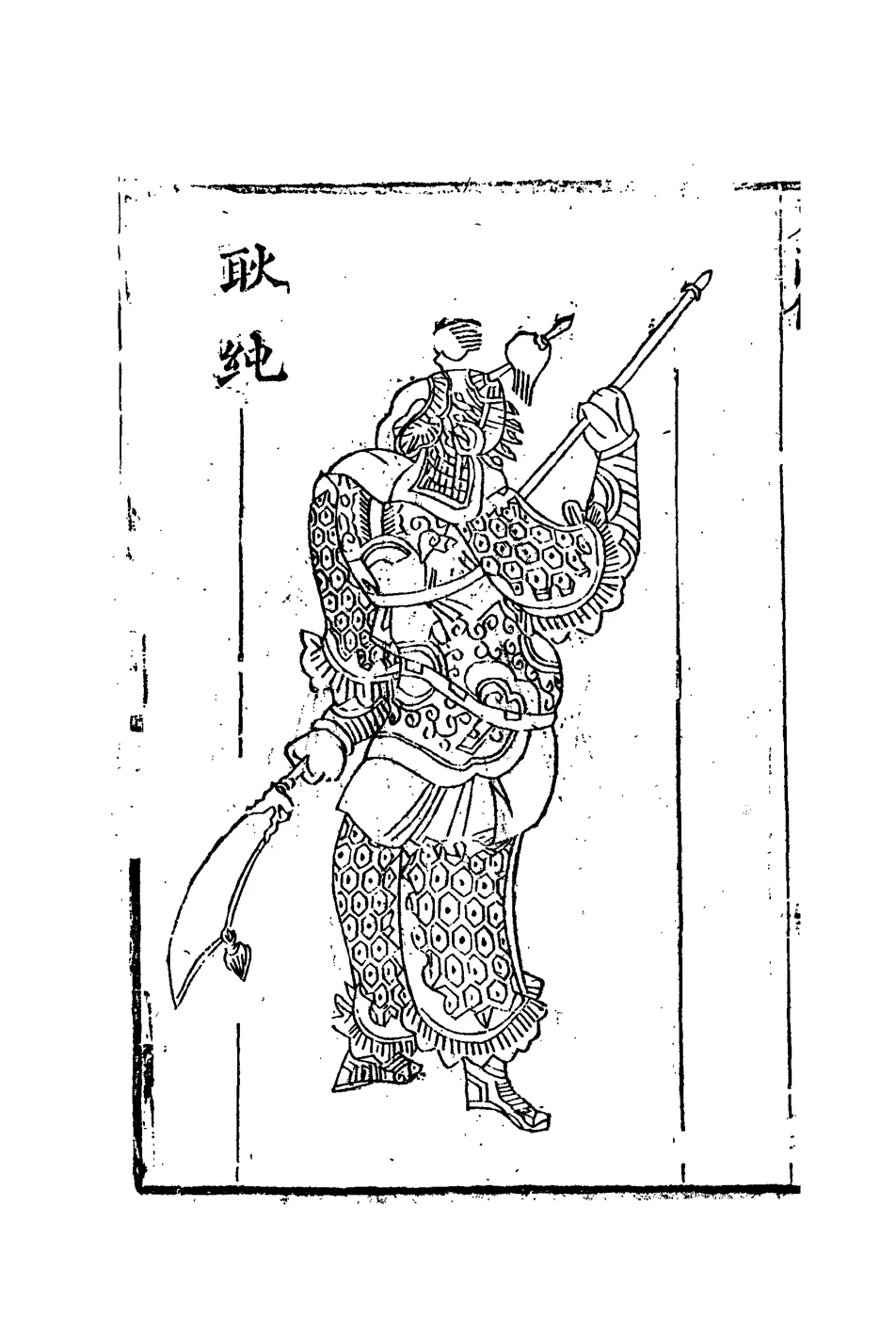
Geng Chun
耿纯
Geng Chun was one of the 28 generals of the Cloud Terrace, Marquis of Dongguang, and a major contributor to the defeat of hostile forces in You Province and the pacification of Hebei.
37 CEEastern Han
PROFILE
Geng Chun was one of the 28 generals of the Cloud Terrace, Marquis of Dongguang, and a major contributor to the defeat of hostile forces in You Province and the pacification of Hebei.
- Other name
- Courtesy name Boshan
- Courtesy name
- Boshan
- Period
- Eastern Han
- Date of Birth
- Not recorded in historical sources
- Date of Death
- 37
- Dynasty / regime
- Eastern Han
- Identity
- General
- Ethnicity / group
- Not recorded in historical sources
- Native place
- Songzi, Julu (present-day Zhao County, Shijiazhuang)
- Place of birth
- Not recorded in historical sources
- Place of death
- Not recorded in historical sources
- Highest office
- See Biography and Major Activities
- Major achievements
- One of the 28 generals of the Cloud Terrace; contributed to defeating forces in You Province and pacifying Hebei
LIFE TIMELINE
About age 30 | After the establishment of Xuan Han, appointed Commandant of Cavalry
About age 30 | When Liu Xiu reached Handan during his tour of Hebei, Geng Chun led more than two thousand clansmen and retainers in submitting to him; appointed General of the Vanguard and enfeoffed as Marquis of Gengxiang
About age 31 | Followed Liu Xiu in pacifying Hebei and participated in the defeat of Wang Lang
About age 32 | Used a ruse to kill Liu Yang, King of Zhending, and settled the Zhending rebellion; enfeoffed as Marquis of Gaoyang
About age 32 | After Liu Xiu proclaimed himself emperor, entered court and was enfeoffed as Marquis of Dongguang
About age 33 | Appointed Administrator of Dong Commandery
About age 37 | Dismissed from office because of an offense but later restored as Administrator of Dong Commandery
About age 44 | Died while serving as Administrator of Dong Commandery and received the posthumous title Marquis Cheng
BIOGRAPHY
Biography
Family Background and Early Life
Geng Chun came from the Geng clan of Julu, a prominent local family. His father Geng Ai served under Wang Mang as Yin of Jiping, an office comparable in function to a commandery administrator, showing that the family already occupied a significant position in the Xin dynasty. Geng Chun's mother came from the royal house of the Western Han kingdom of Zhending, creating a close marriage connection between the Geng family and local royal lineages in Hebei. This relationship later became important when Geng Chun dealt with the Zhending question.
Geng Chun was selected in his youth to enter Chang'an as a Gentleman and later served as a Nayan officer. Nayan positions were distinctive offices of Wang Mang's Xin dynasty, subordinate to the Nayan General and responsible for transmitting imperial commands and participating in confidential affairs. This experience gave Geng Chun direct familiarity with central political operations and exposed him to the turmoil of the late Xin.
Joining Liu Xiu and Pacifying Hebei
In 23, the first year of the Gengshi era, the Lulin armies enthroned Liu Xuan and established the Xuan Han regime. Liu Xiu was sent to tour Hebei on behalf of the Gengshi court. When he reached Handan, Geng Chun judged that Liu Xiu was capable of great achievements and led more than two thousand members of his clan and household retainers in submitting to him. The decision demonstrated both political judgment and the mobilizing power Geng Chun possessed as a leader of a major local family. He organized the younger men of his clan into the army, while he himself was appointed General of the Vanguard and enfeoffed as Marquis of Gengxiang.
Hebei was then politically fragmented, with Wang Lang claiming the imperial title at Handan and holding considerable power. Geng Chun followed Liu Xiu through the region and took part in campaigns against Wang Lang. During the pacification of Hebei he displayed military ability as well as skill in managing complex political relationships. He established good relations with Liu Xiu's commanders and became an important source of local support.
Killing Liu Yang and Receiving a Marquisate
In 25, the third year of the Gengshi era, shortly before Liu Xiu proclaimed himself emperor at Hao County, Liu Yang, King of Zhending, commanded one hundred thousand troops and watched events from the Zhending area. As a descendant of the Western Han kings of Zhending, Liu Yang enjoyed considerable local influence, and his allegiance had a direct bearing on Liu Xiu's ability to establish a new imperial regime. Because Geng Chun's mother came from the Zhending royal line, he was connected to Liu Yang by marriage and volunteered to deal with the situation.
Using a family visit as his pretext, Geng Chun rode lightly to Zhending with a small retinue and met Liu Yang. He used their personal relationship to urge Liu Yang to join Liu Xiu. Liu Yang outwardly agreed but did not act immediately. Geng Chun concluded that he was wavering and arranged to lure and kill him. He then incorporated Liu Yang's troops. The action removed a major obstacle to Liu Xiu's imperial plans without a large-scale battle. Liu Xiu rewarded Geng Chun with the title Marquis of Gaoyang.
In 25, the first year of Jianwu, Liu Xiu formally proclaimed himself emperor. Geng Chun entered court and was transferred to the marquisate of Dongguang. His movement from Marquis of Gengxiang to Marquis of Gaoyang and finally Marquis of Dongguang reflected his rising status in Liu Xiu's regime.
Governing Dong Commandery and Later Years
In 26, the second year of Jianwu, Geng Chun became Administrator of Dong Commandery. The commandery lay in the Central Plains and formed an important corridor between Hebei and Guanzhong. After taking office, Geng Chun reorganized local administration and reassured the population, helping make the region a stable rear area for the Eastern Han regime.
In 30, the sixth year of Jianwu, Geng Chun was dismissed because of an unspecified offense but was soon restored as Administrator of Dong Commandery. The sources do not explain the incident in detail, but his restoration suggests that Liu Xiu continued to trust him. He remained in office for many years and died while serving as administrator in 37, the 13th year of Jianwu. The court gave him the posthumous title Marquis Cheng, and his son Geng Fu inherited the marquisate.
Family, Service under the Gengshi Emperor, and Return to Han
Geng Chun came of a great family of Julu. He studied in his youth at Chang'an and was appointed a nayan official. When the realm fell into disorder at the end of the Xin dynasty he submitted to the Gengshi Emperor Liu Xuan and was made a cavalry commandant. When Gengshi sent Liu Xiu to tour Hebei, Geng Chun went at once to present himself, and Liu Xiu received him with pleasure. Withdrawing, Geng Chun saw that the discipline with which Liu Xiu's officers commanded their troops differed from that of the other generals, and so asked leave to attach himself, presenting horses and several hundred bolts of fine silk. When Liu Xiu went north to Zhongshan he left Geng Chun to hold Handan. It happened that Wang Lang proclaimed himself at Handan, and Liu Xiu rode south-east from Ji; Geng Chun, with his younger cousins Geng Xin, Geng Su and Geng Zhi, led more than two thousand of his clansmen and retainers, the old and sick carrying coffins with them, and welcomed Liu Xiu at Yu county. Liu Xiu made Geng Chun general of the vanguard and marquis of Gengxiang, and his cousins all lieutenant generals, placing them in the forward ranks; they reduced Songzi and took part in the attacks on Quyang and Zhongshan. After Liu Xiu took the imperial title, Geng Chun continued to serve by his military merit, rising to be governor of Dongjun.
The Urging of the Throne and the Founding of the Eastern Han
When Liu Xiu first rose in Hebei he had come alone, with no stores of treasure to serve as rich bait and nothing with which to gather men but the name of kindness. Geng Chun therefore spoke to him, saying that with Handan setting up its own honorific title the northern provinces were in doubt, that he had brought his whole clan to submit with the old and weak among them, and still feared that some of his kin and retainers were not of one mind, and that he had therefore burned their houses to cut off any thought of turning back; and Liu Xiu sighed over it. Afterwards, when the generals repeatedly urged Liu Xiu to take the throne and he would not listen, Geng Chun spoke again: that men had abandoned their kinsfolk and left their homes to follow the great lord in the hope of climbing the dragon and following the phoenix to fulfil their ambition, and that if the great lord would not heed the general counsel and take his place in good time, they would lose hope and scatter, and once scattered could hardly be gathered again. Thereupon Liu Xiu ascended the throne and changed the era name to Jianwu.
Major Activities
Leading His Clan to Join Liu Xiu
When Geng Chun joined Liu Xiu, he did not come alone but brought more than two thousand clansmen and retainers. This was an unusual act. Such retainers formed the core armed and social strength of a major local lineage, and by committing them all to Liu Xiu, Geng Chun effectively tied his family's fortunes to Liu Xiu's regime. The move provided valuable manpower and also served as an example to other local powers in Hebei.
Killing Liu Yang
This was both the most controversial and one of the boldest episodes of Geng Chun's life. Liu Yang, King of Zhending, possessed a large independent force and stood in the path of Liu Xiu's rise. Geng Chun used their kinship connection to approach him, gained his trust, and then arranged his killing. The action avoided a large-scale military clash and cleared an obstacle to Liu Xiu's proclamation as emperor. Critics later regarded the method as deceitful and morally questionable. Regardless of judgment, the incident shows the decisiveness and ruthlessness of Geng Chun as a political actor.
Governing Dong Commandery
Geng Chun served as Administrator of Dong Commandery for more than a decade. During his tenure, the commandery was described as socially stable and economically recovering. In the difficult years of early Eastern Han reconstruction, his administration gave local people a relatively stable environment. After his death, the people of Dong Commandery reportedly remembered his government and established a shrine in his honor.
Military and Administrative Achievements
As a commander Geng Chun excelled in seizing the moment on the field. When the Red Eyebrows, the Green Oxen, the Shangjiang, the Datong, the Iron Shin and the Five Pennants, more than a hundred thousand in all, were gathered at Shequan and Liu Xiu led his troops to attack them, Geng Chun's force was in front, several li from the main camp. The enemy attacked by night without warning, arrows raining into the camp, and many of the soldiers were killed or wounded; Geng Chun held his troops firm and did not move, and chose two thousand men who dared to die, all armed with strong crossbows and each carrying three bolts, caused them to march silently and secretly, come round behind the enemy, and then shout together and loose their crossbows at once, whereupon the enemy host fled in alarm and was pursued and utterly broken. Liu Xiu came to the camp the next day and asked whether the night had been hard; Geng Chun answered that by the great lord's authority and virtue he had been fortunate enough to keep his men safe; and Liu Xiu made Geng Chun's kinsman Geng Ji magistrate of Puwu, ordering Geng Chun to settle his relatives in that county.
The Killing of Liu Yang and the Government of a Commandery
When he was sent on a mission to Zhending, the king of Zhending, Liu Yang, pleaded illness and would not present himself; but as Geng Chun was the son of a sister of the Zhending royal house, he sent an envoy with a letter desiring to meet him. Geng Chun replied that, being on a mission to see kings, marquises and governors, he could not go first to him, and that if he wished to meet he should come to the lodging-house. Liu Yang's younger brother Liu Rang and his elder cousin Liu Xi each held more than ten thousand troops, and Liu Yang, trusting in his numbers, brought light-armed men outside the gate. Liu Yang came in to see him, and Geng Chun received him with courtesy; then he invited both Liu Rang and Liu Xi to enter, and forthwith shut the gate and killed Liu Yang and his brothers to the last, and led his troops out, so that Zhending was struck with terror and none dared stir. Liu Xiu, pitying them because their plot had not yet been launched, enfeoffed their sons and restored their former domains. Afterwards, following the attack on Wang Lang, Geng Chun fell from his horse and broke his shoulder, and when the pain came on he returned to Huai Palace; Liu Xiu asked which of his brothers could take his command, and Geng Chun recommended his cousin Geng Zhi, so that Geng Zhi led his camp while Geng Chun still followed as general of the vanguard. He also attacked the bandits of Taishan, Jinan and Pingyuan and pacified them all; and in four years as governor of Dongjun, when the magistrate of Fagan was guilty and Geng Chun memorialised against him and besieged him, the magistrate killed himself before the memorial came down, and Geng Chun was implicated and dismissed. Later, when Liu Xiu passed through Dongjun, several thousand of the old and young of the people followed the imperial carriage weeping and begging to have Lord Geng again, and Liu Xiu said to his ministers that Geng Chun, who from youth had worn armour only as an army clerk, could yet be so remembered by the people of a commandery.
Personal Relations
- Father: Geng Ai, Yin of Jiping under Wang Mang
- Mother: woman of the Western Han royal house of Zhending
- Son: Geng Fu, who inherited the title Marquis of Dongguang
- Liu Xiu: after Geng Chun joined him, Liu Xiu trusted and repeatedly rewarded him
- Liu Yang: King of Zhending and a relative by marriage whom Geng Chun lured and killed
- Feng Yi, Cen Peng, Jia Fu, and other generals later honored among the Cloud Terrace group: campaigned with Liu Xiu during the pacification of Hebei
Historical Assessment
Eastern Han Period
- Fan Ye's Book of the Later Han described Geng Chun as having studied in Chang'an, entered service as a Gentleman because of his family connection, and later served as a Nayan officer; it characterized him as steady, strategic, and capable in administration.
- Liu Xiu is recorded as saying that he had long known Geng Chun's loyalty.
- The people of Dong Commandery reportedly established a shrine to commemorate his administration.
Wei, Jin, and Northern and Southern Dynasties
- Dongguan Han Ji records Geng Chun's activities in detail and credits his decision to join Liu Xiu.
- The Western Jin historian Sima Biao, in the Continuation of the Book of Han, described Geng Chun as strategically capable and skilled in governing the people.
Tang and Song Periods
- The Tang historian Liu Zhiji discussed Geng Chun's killing of Liu Yang in Shitong, arguing that although the plan succeeded, the use of kinship for a deception compromised its moral legitimacy.
- The Song historian Sima Guang recorded Geng Chun's activities in the Comprehensive Mirror in Aid of Governance without adding a strong evaluative judgment.
Modern Period
- Lü Simian wrote in History of the Qin and Han that Geng Chun brought an entire clan to Emperor Guangwu and removed the danger posed by Zhending, so his contribution was no less than that of the better-known generals.
- Modern scholars commonly regard Geng Chun as an underestimated founding contributor to the Eastern Han whose political judgment and decisiveness ranked highly among Liu Xiu's commanders.
FIGURES ASSOCIATED WITH THIS DYNASTY
Bibliography
- Book of the Later Han, “Biography of Geng Chun”
- Lü Simian, History of the Qin and Han