Nanzhao (738–902) was a polity of ethnic groups in southwestern China in antiquity. It was established after Pi Luoge, leader of Nanzhao's predecessor polity, unified the Six Zhao with Tang Dynasty support in 738, the twenty-sixth year of the Kaiyuan era. Its capital was established at Taihe City, and Pi Luoge received the title King of Yunnan. At its greatest extent, Nanzhao reached Guizhou in the east, the Irrawaddy River in the west, Xishuangbanna in the south, and the Dadu River in the…
738 CE–902 CECapital · Taihe City; Yangjumie City
ERA OVERVIEW
Nanzhao (738–902) was a polity of ethnic groups in southwestern China in antiquity. It was established after Pi Luoge, leader of Nanzhao's predecessor polity, unified the Six Zhao with Tang Dynasty support in 738, the twenty-sixth year of the Kaiyuan era. Its capital was established at Taihe City, and Pi Luoge received the title King of Yunnan. At its greatest extent, Nanzhao reached Guizhou in the east, the Irrawaddy River in the west, Xishuangbanna in the south, and the Dadu River in the north, covering present-day Yunnan and parts of surrounding regions. Nanzhao's relations with the Tang Dynasty were complex. Conflict during the Tianbao era led to war with Tang and a period of alignment with the Tibetan Empire. In 794, the tenth year of the Zhenyuan era, Yimouxun returned to Tang allegiance and was invested as King of Nanzhao. Nanzhao fought Tang repeatedly in the later ninth century. In 902, Zheng Maisi seized power and founded the Great Changhe state, bringing Nanzhao to an end.
Time span738 CE–902 CE
CapitalTaihe City; Yangjumie City
ERA TIMELINE
Pi Luoge unified the Six Zhao and was Open
Pi Luoge unified the Six Zhao and was invested by Tang as King of Yunnan; the Nanzhao regime was established.
Relations between Nanzhao and Tang detOpen
Relations between Nanzhao and Tang deteriorated and frontier conflict intensified.
A Tang campaign against Nanzhao failedOpen
A Tang campaign against Nanzhao failed, and Nanzhao moved into alignment with the Tibetan Empire.
Yimouxun succeeded to the throne and bOpen
Yimouxun succeeded to the throne and began reassessing Nanzhao's relationship with Tang and Tibet.
Yimouxun concluded an alliance with TaOpen
Yimouxun concluded an alliance with Tang and received investiture; Nanzhao returned to Tang allegiance.
Shilong proclaimed himself emperor andOpen
Shilong proclaimed himself emperor and changed Nanzhao's policy toward Tang.
Nanzhao forces captured Jiaozhi, afterOpen
Nanzhao forces captured Jiaozhi, after which Tang organized a counteroffensive.
Zheng Maisi seized the throne and estaOpen
Zheng Maisi seized the throne and established the Great Changhe state, ending the Nanzhao regime.
FULL ENTRY
Overview
Nanzhao (738–902) was a polity of ethnic groups in southwestern China in antiquity. It was established after Pi Luoge, leader of Nanzhao's predecessor polity, unified the Six Zhao with Tang Dynasty support in 738, the twenty-sixth year of the Kaiyuan era. Its capital was established at Taihe City, and Pi Luoge received the title King of Yunnan. At its greatest extent, Nanzhao reached Guizhou in the east, the Irrawaddy River in the west, Xishuangbanna in the south, and the Dadu River in the north, covering present-day Yunnan and parts of surrounding regions. Nanzhao's relations with the Tang Dynasty were complex. Conflict during the Tianbao era led to war with Tang and a period of alignment with the Tibetan Empire. In 794, the tenth year of the Zhenyuan era, Yimouxun returned to Tang allegiance and was invested as King of Nanzhao. Nanzhao fought Tang repeatedly in the later ninth century. In 902, Zheng Maisi seized power and founded the Great Changhe state, bringing Nanzhao to an end.
Historical Development
Nanzhao developed from the Mengshe polity, named for its location south of the other Six Zhao. Its royal lineage was said to descend from the Ailao peoples and to form a branch of the Wuman. The Sherong lineage of the Ailao royal house moved to Xielong, in present-day Weishan, Yunnan, to escape danger. With support from the Ailao population, its power expanded and a tribal alliance centered on the Sherong lineage emerged, first known as Mengshe or Mengshelong. The powerful chieftain Zhang Lejinqiu, seeking to ally with the Sherong lineage, married his daughter to Xinuluo, Sherong's son. In 649, the twenty-third year of the Zhenguan era, Xinuluo inherited the rulership of the Mengshe polity. At this time the polities around Lake Erhai included Langqiong, Dengdan, Shilang, Yuexi, and Mengxi; together with Mengshe they were known as the Six Zhao.
In 653, the fourth year of the Yonghui era, Xinuluo sent his son Luoshengyan on a mission to the Tang court, and Emperor Gaozong of Tang appointed Xinuluo as inspector of Wei Prefecture. The other five Zhao were frequently threatened by the Tibetan Empire and often shifted their allegiance away from Tang toward Tibet, whereas Nanzhao remained aligned with Tang and therefore received Tang support. In 713, the first year of the Kaiyuan era, Emperor Xuanzong of Tang granted Pi Luoge the title Prince of Taideng Commandery. In 737, the twenty-fifth year of Kaiyuan, Pi Luoge defeated the Heman and took Taihe City. The following year, Emperor Xuanzong bestowed on Pi Luoge the name Meng Guiyi and promoted him to King of Yunnan. In 738, Pi Luoge gave substantial gifts to Wang Yu, Military Commissioner of Jiannan, and requested permission to unite the Six Zhao; Emperor Xuanzong approved. The Tang court sent the palace envoy Wang Chengxun and censor Yan Zhenghui to participate in the military operations. Pi Luoge successively eliminated Yuexi, Sanlang, Mengxi, and other Zhao, unified the Six Zhao, and formally established Nanzhao. In 739, the twenty-seventh year of Kaiyuan, Pi Luoge moved the capital to Taihe City.
In 745, the fourth year of the Tianbao era, Zhangqiu Jianqiong, Military Commissioner of Jiannan, sent an envoy to Yunnan whose exchange with Pi Luoge was unfriendly. In 750, the ninth year of Tianbao, Geluofeng passed through Yao Prefecture. Zhang Qiantuo, the Tang governor of Yunnan, insulted women traveling in Geluofeng's party and demanded bribes. When Geluofeng refused, Zhang Qiantuo sent men to abuse him and submitted accusations against him to the court. Geluofeng angrily raised troops, captured Yao Prefecture, killed Zhang Qiantuo, and took thirty-two loosely administered prefectures. In 751, the tenth year of Tianbao, Xianyu Zhongtong, Military Commissioner of Jiannan, led 80,000 troops against Nanzhao. Geluofeng sent envoys to apologize and seek peace, saying that he was willing to return to Tang allegiance but, if rejected, would submit to the Tibetan Empire and Yunnan would no longer belong to Tang. Xianyu Zhongtong refused and advanced to the Xi'er River, where Nanzhao defeated him; the source states that 60,000 Tang soldiers died. In 752, the eleventh year of Tianbao, the Tibetan court conferred on Geluofeng the title Tsenpo Chung, described as “younger brother of the btsan po,” and Nanzhao and Tibet entered a fraternal relationship. In 754, the thirteenth year of Tianbao, Li Mi, acting commander in Jiannan, led 70,000 troops against Nanzhao and advanced to Taihe City, where his army was annihilated. Geluofeng erected the *Nanzhao Dehua Stele* at Taihe City, stating that his rebellion against Tang had not been his original intention. He told his followers that if later generations returned to Tang allegiance, they should show the stele to Tang envoys as evidence of his true intentions.
In 779, the fourteenth year of the Dali era, Li Sheng and other Tang commanders inflicted a major defeat on the combined Nanzhao-Tibetan forces, which the source says lost more than 100,000 men. Angered by the defeat, the Tibetan Empire changed the Nanzhao ruler's status from that of a fraternal ally to that of a subordinate and granted the title “King of the Eastern Sun.” Tibet levied heavy taxes in Nanzhao, established garrisons at strategic points, and demanded troops each year for frontier defense, burdens that Yimouxun resented deeply. Zheng Hui, originally a Tang subject, had been captured by Nanzhao and came to be highly valued by Geluofeng. He educated Nanzhao Crown Princes including Fengjiayi, Yimouxun, and Xunmengcou, and later served as a Qingping guan with significant authority. Zheng Hui urged Yimouxun to renew allegiance to Tang. In 793, the ninth year of Zhenyuan, Yimouxun sent envoys to Chengdu by three routes with a letter to Wei Gao, Military Commissioner of Jiannan Xichuan, expressing his wish to return to Tang and offering gold and cinnabar as tokens. Wei Gao sent the inspection official Cui Zuoshi to Yangjumie City to proclaim the emperor's orders, and Yimouxun and his subordinates bowed in submission. In 794, the tenth year of Zhenyuan, the Tang court invested Yimouxun as King of Nanzhao and bestowed a seal inscribed “Seal of the Zhenyuan Imperial Bestowal to Nanzhao.” Nanzhao thus returned to the Tang tributary system. Yimouxun thereafter sent sons of the nobility to Chengdu to study Chinese culture, promoting cultural exchange, and Nanzhao became a major power in the southwest.
Yimouxun died in 808, the third year of the Yuanhe era, after which the Nanzhao throne changed hands frequently. In 829, the third year of the Dahe era, the Nanzhao Prince Regent Cuodian took advantage of the weakening of Xichuan's defenses under Military Commissioner Du Yuanying, who had withheld soldiers' clothing and provisions. Nanzhao launched a major raid into Xichuan, captured Xi, Rong, and Qiong prefectures, reached the outer city of Chengdu, and carried off tens of thousands of young people and skilled artisans; the source states that Nanzhao thereafter became proficient in textile production. In 859, the thirteenth year of the Dazhong era, Shilong succeeded to the throne. Because his name was considered to violate the name taboos of Emperor Taizong of Tang, Li Shimin, and Emperor Xuanzong, Li Longji, and because he had not sent an envoy to report mourning, Emperor Yizong of Tang declined to invest him. Shilong therefore broke with Tang, changed the state name to Da Li, and proclaimed himself emperor. From the first to the fourth year of the Xiantong era (860–863), Nanzhao twice captured Jiaozhou. In 866, the seventh year of Xiantong, Gao Pian, Tang protector-general of Annan, decisively defeated the Nanzhao army and recovered Jiaozhou. Nanzhao and Tang continued to fight repeatedly, and Nanzhao's strength gradually declined. In 902, the second year of the Tianfu era, Zheng Maisi, a descendant of the Tang subject Zheng Hui, seized power and founded the Great Changhe state, ending Nanzhao.
Politics and Institutions
Nanzhao emerged through the absorption of the other five Zhao by the Mengshe polity and was governed jointly through royal power, aristocratic elites, and local tribal leaders. Its rulers accepted Tang investiture and drew on titles used by the Central Plains dynasties to construct political legitimacy while maintaining an independent military-administrative system. Political centers including Taihe City, Dahe City, and Yangjumie City connected the Erhai basin with surrounding regions, while local administration relied on towns, tribal communities, and transportation nodes.
Military and Foreign Relations
Nanzhao repeatedly adjusted its alliances between the Tang Dynasty and the Tibetan Empire. It accepted Tang investiture but also fought Tang because of conflicts with frontier officials and regional competition. After the wars of the Tianbao era, Nanzhao aligned with Tibet for a time before restoring relations with Tang. At its height it expanded toward southern Sichuan, eastern Yunnan, and Southeast Asia. Prolonged warfare enlarged its sphere of control but also increased military obligations and the cost of governing local regions.
Economy and Commerce
Agriculture, animal husbandry, salt production, metalworking, and mountain resources in the Erhai basin formed the economic base of Nanzhao. It controlled routes linking Sichuan and the Tibetan Empire with Southeast Asia, and horses, salt, gold, silver, medicinal materials, and textiles circulated through regional exchange. Warfare caused population movement and the transfer of technical skills, while economic patterns varied among plateau, basin, and river-valley environments.
Culture and Society
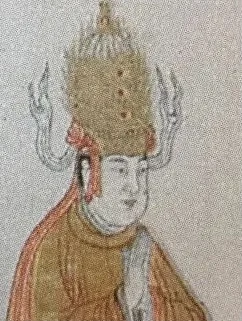
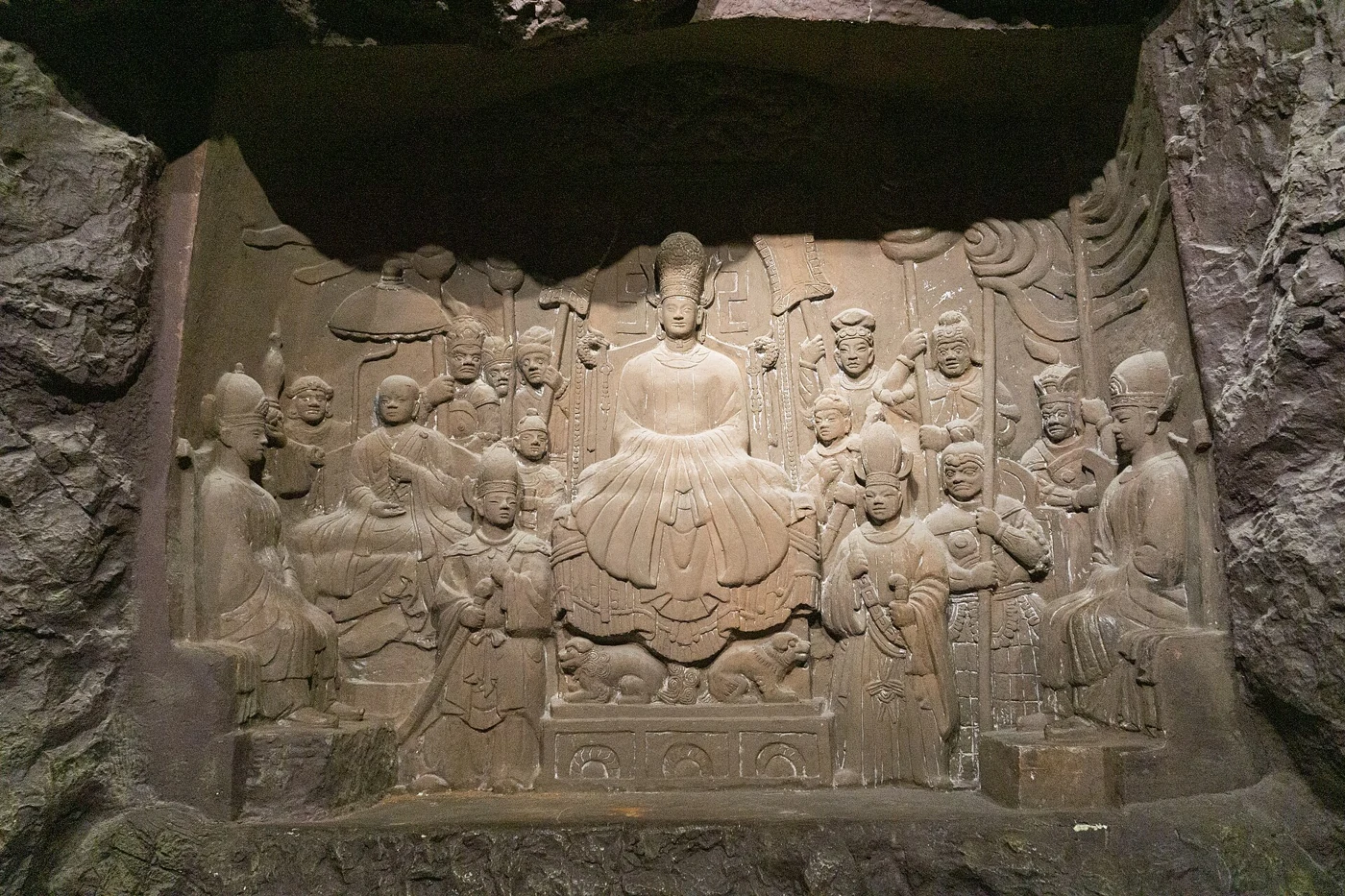
Nanzhao society included groups described in Tang sources as Baiman and Wuman. These historical ethnonyms must be understood in the context of Tang-period sources and should not be equated directly with modern ethnic classifications. Buddhism, particularly the Azhali Buddhist tradition, gradually developed, while Chinese written documents, Tang ritual practices, and local traditions coexisted. The *Nanzhao Tuzhuan*, stone inscriptions, and archaeological remains are important materials for studying its kingship, religion, and external relations.
Rulers and Governing Core
Pi Luoge, Geluofeng, Yimouxun, Xungequan, Quanlongsheng, Quanlisheng, Fengyou, Shilong, Longshun, Shunhuazhen, and others.
> This section describes the place of rulers and political actors in the evolution of the regime; full biographies are carried by their corresponding person entities.