Royal Birth
Born into the royal Meng lineage of Nanzhao as younger son of King Xungequan.
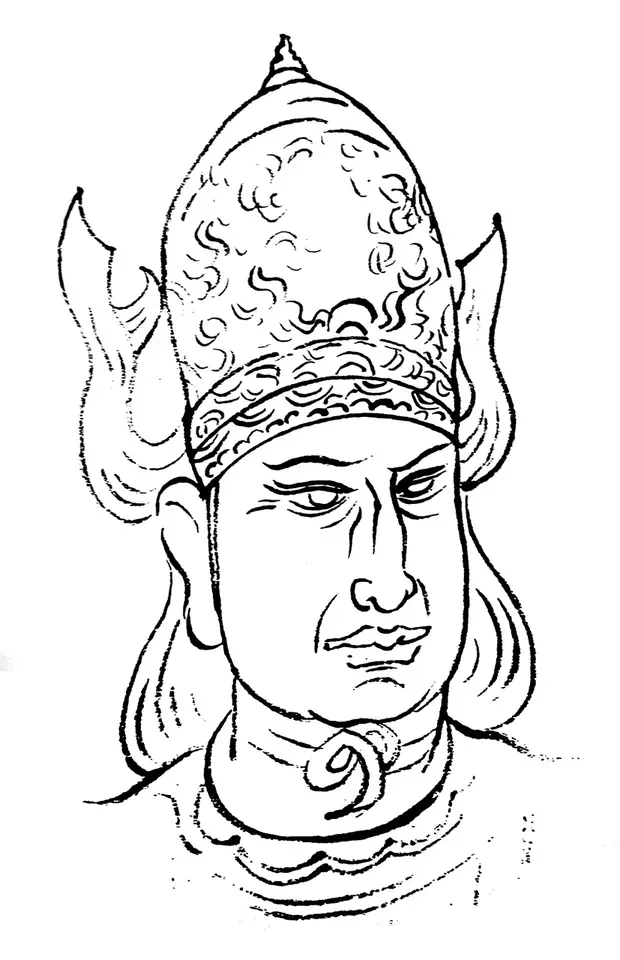
劝丰祐
Quan Fengyou (劝丰祐, 817–859), also known as Sheng Fengyou, was a monarch of Wuman lineage and the seventh king of the Nanzhao Kingdom, being the younger brother of Quan Lisheng and son of Xungequan. In 824 (fourth year of the Changqing era of Tang), following the untimely death of Quan Lisheng, the seven-year-old Quan Fengyou was elevated to the throne by court nobles. Due to his youth, royal executive authority and military…
Quan Fengyou (劝丰祐, 817–859), also known as Sheng Fengyou, was a monarch of Wuman lineage and the seventh king of the Nanzhao Kingdom, being the younger brother of Quan Lisheng and son of Xungequan. In 824 (fourth year of the Changqing era of Tang), following the untimely death of Quan Lisheng, the seven-year-old Quan Fengyou was elevated to the throne by court nobles. Due to his youth, royal executive authority and military command were concentrated under powerful ministers, notably Senior General and Grand Chancellor Wang Cuodian. Reigning for thirty-six years across the Baohe and Tianqi era names, Quan Fengyou remains one of the longest-ruling sovereigns in Nanzhao history. Upon reaching maturity, Quan Fengyou systematically reclaimed sovereign authority. Under the pretext of royal tours, he relocated his court east to Tuodong, renaming it Shanshan (modern Kunming). By elevating Shanshan alongside the ancestral capital Yangjumie (modern Dali), he inaugurated a dual-capital system that successfully diluted the political monopoly of hereditary aristocratic factions. During his reign, Nanzhao embraced Mahayana Buddhism and accelerated cultural sinification, employing Central Plains artisans to construct the Huiguang and Changle pagodas in Kunming and the iconic Qianxun Pagoda at Chongsheng Temple in Dali. In external diplomacy, Senior General Wang Cuodian launched a massive invasion into Western Sichuan in 829, capturing Qiongzhou and Rongzhou and menacing Chengdu before abducting thousands of skilled Han artisans back to Yunnan. When renowned Tang chancellor Li Deyu assumed military governance over Western Sichuan and consolidated border defenses, Quan Fengyou prudently sought peaceful reconciliation, returning captives and restoring regular tribute missions. Passing away in 859, Quan Fengyou was posthumously honored as King Zhaocheng, succeeded by his son Shilong, who subsequently declared imperial independence.
Born into the royal Meng lineage of Nanzhao as younger son of King Xungequan.
Succeeded to the throne at age seven upon the death of Quan Lisheng under Wang Cuodian's regency.
Wang Cuodian invaded Western Sichuan, capturing border commanderies and abducting skilled artisans.
Li Deyu consolidated Sichuan defenses, prompting Quan Fengyou to negotiate peace and resume tribute.
Constructed the East and West Pagodas at Shanshan and commenced construction of Qianxun Pagoda in Dali.
Concluded the Baohe era and established the Tianqi era, reinforcing the dual-capital administrative model.
Passed away in the inner palace after a thirty-six-year reign at age forty-three, posthumously honored as King Zhaocheng.
In 824 (fourth year of Changqing of Tang), King Quan Lisheng of Nanzhao died of illness without leaving an adult heir. Court dignitaries convened and installed his seven-year-old younger brother, Quan Fengyou, upon the royal throne. Because the sovereign was an infant incapable of directing complex state affairs, civil administration and supreme military command fell completely under the control of Senior General and Grand Chancellor Wang Cuodian. Wang Cuodian exercised despotic authority and cultivated an extensive factional network, subjecting royal authority to severe ministerial dominance.
In 829 (third year of Dahe of Tang), taking advantage of administrative transitions and relaxed border readiness in Western Sichuan, Wang Cuodian commanded tens of thousands of elite Nanzhao troops north to assault the outskirts of Chengdu. The expeditionary force plundered regional resources, abducting tens of thousands of literate scholars and skilled artisans back to Yunnan. When distinguished statesman Li Deyu arrived as military governor of Western Sichuan, he erected mountain citadels and demanded accountability. Recognizing the military prowess of Tang forces, Quan Fengyou and Wang Cuodian prudently sued for peace, returning captives and restoring tribute missions.
As he matured, Quan Fengyou grew determined to overcome the overbearing political constraints imposed by Wang Cuodian at the ancestral capital of Yangjumie. Under the pretext of provincial inspection tours, Quan Fengyou established long-term residence at Tuodong and officially renamed it Shanshan. He constructed administrative halls and stationed royal guards there, creating a dual-capital governance system alongside Dali. This strategic arrangement dismantled the political monopoly of western aristocrats, granting the royal house effective centralized control and defensive depth across Yunnan.
Throughout his life, Quan Fengyou was a devoted patron of Mahayana Buddhism, vigorously promoting its regional acculturation. He commissioned the construction of the Huiguang and Changle Pagodas in Shanshan to standardize local religious architecture. In 833 (seventh year of Dahe), he mobilized skilled craftsmen from Shanshan to Dali to erect the monumental, sixteen-tier Qianxun Pagoda before Chongsheng Temple. Quan Fengyou invited eminent monks from India and China to expound the scriptures, appointing abbots as national preceptors to turn Buddhism into a unifying state ideology.
During the later years of his reign, Quan Fengyou settled the abducted Sichuan artisans, promoting advanced techniques in silk weaving, paper manufacturing, and lacquer production throughout Nanzhao. He established state Confucian academies, selecting aristocratic youths to study the Chinese classics, which transformed Nanzhao cultural customs and elevated the regional economy. In 859 (thirteenth year of Dazhong of Tang), following a reign of thirty-six years, Quan Fengyou passed away from illness in his bedchamber at the age of forty-three, succeeded by his son Shilong.
Confronting overbearing ministerial power at court, Quan Fengyou displayed long-term political foresight by shifting the royal residence eastward to Shanshan. Establishing a balanced dual-capital system between Dali and Kunming, he curtailed the hereditary authority of traditional clans while securing vital transport routes connecting Yunnan with Lingnan.
Quan Fengyou allocated substantial state resources to construct the monumental Qianxun Pagoda at Chongsheng Temple in Dali, alongside the East and West Pagodas in Kunming. These grand religious monuments promoted the convergence of Buddhist philosophy with indigenous ethnic customs, creating the cultural legacy of Nanzhao as a sacred Buddhist realm.
By providing permanent settlements for thousands of skilled artisans from Sichuan, Quan Fengyou systematically introduced metallurgy, paper manufacturing, textile weaving, and hydraulic engineering into Yunnan. He founded Confucian schools to educate the populace, accelerating the transition of Nanzhao into an advanced civilization.
| Relationship | Name | Identity and Historical Intersection |
|---|---|---|
| Elder Brother | Quan Lisheng | King Jing of Nanzhao; elder brother who reigned until his death in 824. |
| Regent Chancellor | Wang Cuodian | Senior General and Grand Chancellor who dominated court governance and invaded Sichuan. |
| Tang Adversary | Li Deyu | Military Governor of Western Sichuan; fortified borders and compelled Nanzhao to restore peace. |
Ouyang Xiu in the New Book of Tang detailed the military and political developments of his thirty-six-year reign. Historians generally evaluate Quan Fengyou as an exceptionally capable monarch who navigated the perils of child succession and ministerial regency with remarkable patience. By establishing the dual-capital system at Shanshan, curbing aristocratic factions, and sponsoring architectural masterpieces such as the Chongsheng Temple Pagodas, he presided over the cultural and economic zenith of the Nanzhao Kingdom, earning recognition as an exemplary ruler in southwestern frontier history.
FIGURES ASSOCIATED WITH THIS DYNASTY