Songtsen Gampo largely completed the unification of the main regions of the plateau, and the Tibetan Empire took shape.
629 CE–842 CE
Tibetan Empire
Concurrent polity吐蕃
The Tibetan Empire was the first polity in the history of the Tibetan Plateau to establish large-scale unified rule. Songtsen Gampo consolidated the Yarlung tribal alliance, placed the political center at Luoxie, and entered the political systems of East and Central Asia through institution-building, military expansion, marriage alliances, and diplomatic missions. Relations with the Tang Dynasty included prolonged warfare as well as treaties, marriage alliances, and trade, and Tibetan power at…
629 CE–842 CECapital · See entry
ERA OVERVIEW
The Tibetan Empire was the first polity in the history of the Tibetan Plateau to establish large-scale unified rule. Songtsen Gampo consolidated the Yarlung tribal alliance, placed the political center at Luoxie, and entered the political systems of East and Central Asia through institution-building, military expansion, marriage alliances, and diplomatic missions. Relations with the Tang Dynasty included prolonged warfare as well as treaties, marriage alliances, and trade, and Tibetan power at one point extended into the Hexi region, the Western Regions, and western Sichuan. In the mid-ninth century, disputes over royal succession and religious policy triggered internal conflict and the unified polity collapsed, although its writing system, legal traditions, and Buddhist heritage continued for a long time.
Time span629 CE–842 CE
CapitalSee entry
ERA TIMELINE
(seventh year of the Zhenguan era
633 (seventh year of the Zhenguan era of Tang): Songtsen Gampo moved the political center to Luoxie.
(fifteenth year of the Zhenguan er
641 (fifteenth year of the Zhenguan era of Tang): Princess Wencheng entered Tibet, beginning a new phase of Tang–Tibet marriage alliance and exchange.
After the Battle of Dafei River, Tibetan influence expanded in the Qinghai region.
(fourteenth year of the Tianbao er
755 (fourteenth year of the Tianbao era of Tang): Trisong Detsen ascended the throne, and the Tibetan Empire entered a phase of expansion and institution-building.
Tibetan forces briefly entered Chang'an, the Tang capital.
(second year of the Jianzhong era
781 (second year of the Jianzhong era of Tang): A Tang–Tibet agreement at Qingshui delimited parts of the frontier and regulated relations.
The Tang–Tibet Treaty of 821–822 began; its text was later carved on a stele.
After Langdarma was assassinated, the struggle for the throne intensified, unified royal authority collapsed, and the Tibetan Empire came to an end.
FULL ENTRY
Overview
The Tibetan Empire was the first polity in the history of the Tibetan Plateau to establish large-scale unified rule. Songtsen Gampo consolidated the Yarlung tribal alliance, placed the political center at Luoxie, and entered the political systems of East and Central Asia through institution-building, military expansion, marriage alliances, and diplomatic missions. Relations with the Tang Dynasty included prolonged warfare as well as treaties, marriage alliances, and trade, and Tibetan power at one point extended into the Hexi region, the Western Regions, and western Sichuan. In the mid-ninth century, disputes over royal succession and religious policy triggered internal conflict and the unified polity collapsed, although its writing system, legal traditions, and Buddhist heritage continued for a long time.
Historical Development
In the early seventh century, Songtsen Gampo unified the principal regions of the plateau, established a military-administrative system centered on the Tsenpo, and maintained contacts with the Tang Dynasty, Nepal, and other regions. The Tibetan Empire later continued expanding into Qinghai, western Sichuan, and the Western Regions. Under Tridé Tsuktsen, relations with Tang alternated between marriage alliance and warfare; under Trisong Detsen, Tibetan military power reached a high point and the court supported the institutional development of Buddhism. In 763, the first year of the Guangde era, Tibetan forces briefly entered Chang'an, the Tang capital. Tang and Tibet concluded the Tang–Tibet Treaty of 821–822 in the first and second years of the Changqing era (821–822), and the treaty text was preserved on a stone stele. After Ralpachen was killed, the rule of Langdarma and the subsequent struggle for the throne caused the center to fragment; from the mid-ninth century onward, the former empire entered a period of regional separatism.
Politics and Institutions
The Tibetan Empire was governed through a combination of Tsenpo kingship, aristocratic clans, and military-administrative organizations. It used chiliarchies, military garrisons, oath-taking, and legal documents to control a broad territory, while also absorbing administrative and scribal practices from Chinese, Indian, and Central Asian traditions. The balance of power between the Tsenpo, the chief minister, and aristocratic groups affected political stability, and disputes over royal succession were an important factor in the empire's late fragmentation.
Military and Diplomacy
Highland cavalry, mountain mobilization, and a network of military garrisons supported expansion. The Tibetan Empire competed with the Tang Dynasty for the Hehuang region, Longyou, the Western Regions, and western Sichuan, and after the An Lushan Rebellion it took control of extensive territory in the Hexi region. It also maintained complex relations with Nanzhao, the Arab Empire, and Central Asian city-states. Treaties and frontier markets also served as means of reducing the costs of prolonged warfare.
Economy and Commerce
Pastoralism was an important foundation of the highland economy, while valley agriculture, handicrafts, and systems of taxation and service obligations were also significant. After gaining control of routes through Hexi and the Western Regions, the Tibetan Empire came into contact with Silk Road trade and with multiple monetary and documentary traditions. Military expansion generated movements of population and material resources, while also increasing the logistical burden of supplying garrisons.
Culture and Society
During the Tibetan Empire, the Tibetan script was created and promoted, and traditions of legal writing, treaty documents, and Buddhist translation developed. Buddhism gradually entered the plateau, and under Trisong Detsen monasteries and translation institutions were established; indigenous religious traditions and Buddhism interacted over the long term. The Tang–Tibet treaty stele, Tibetan documents from Dunhuang, and surviving monastic remains are important materials for the study of politics, language, and society.
Rulers and Governing Core
Songtsen Gampo, Mangsong Mangtsen, Tridu Songtsen, Tridé Tsuktsen, Trisong Detsen, 牟如赞普, Tridé Songtsen, Ralpachen, Langdarma, and other Tsenpos.
> This section explains the place of rulers in the evolution of the polity; complete biographies are carried by the corresponding person entities.
Historical Assessment and Legacy
The Tibetan Empire brought multiple regions of the Tibetan Plateau into a shared political framework and profoundly affected the northwestern political order of the Tang period. Its writing system, Buddhist translation traditions, legal documents, and foreign relations formed an important foundation for later Tibetan history. The Tibetan Empire should not be assessed solely from the perspective of a frontier threat to Tang; it should also be examined within the formation of a highland state and the wider networks of Eurasian communication.
Rulers
Songtsen Gampo, Mangsong Mangtsen, Tridu Songtsen, Tridé Tsuktsen, Trisong Detsen, 牟如赞普, Tridé Songtsen, Ralpachen, Langdarma, and other Tsenpos.
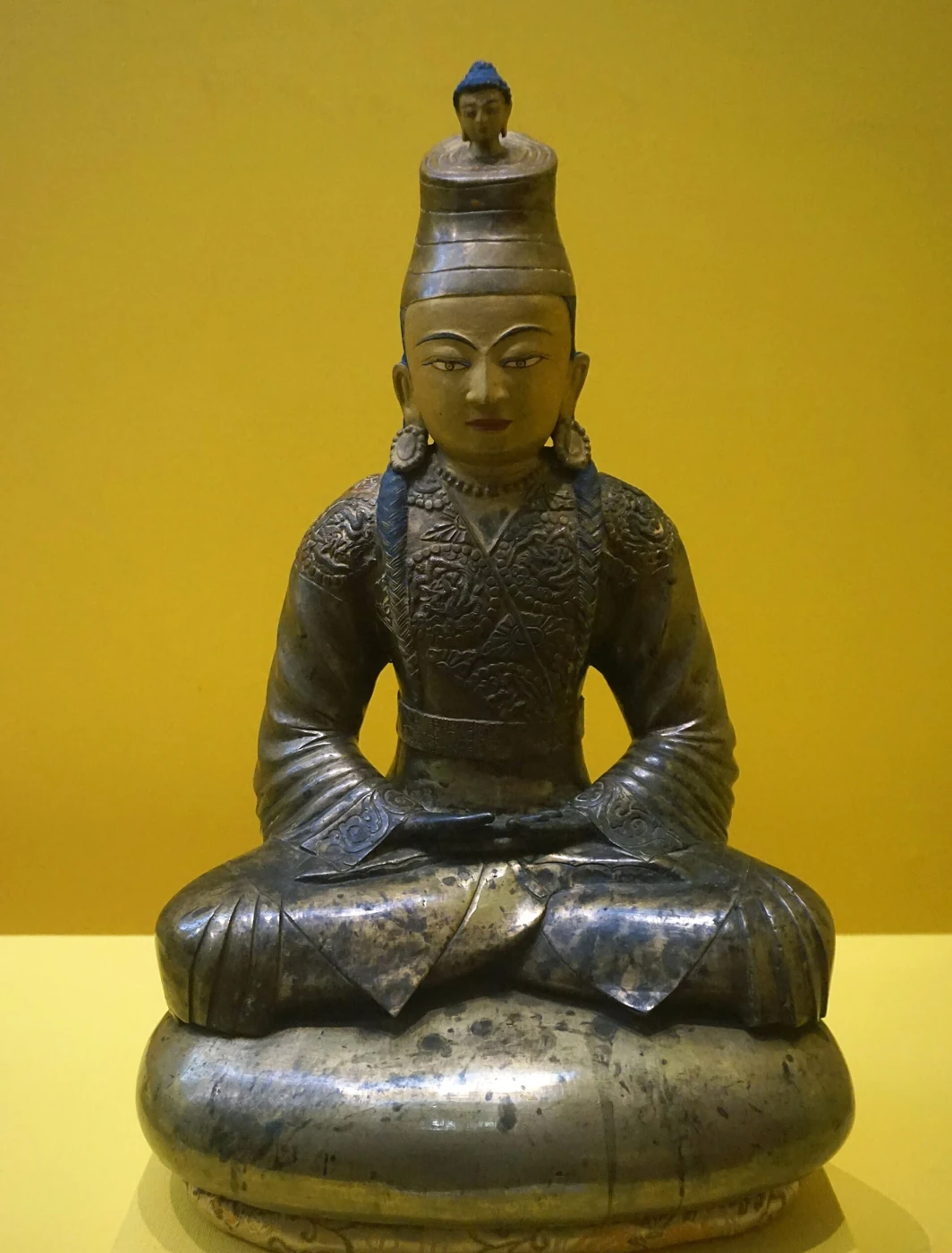 Tibetan Empire
Tsenpo of the Tibetan Empire
Songtsen Gampo
Songtsen Gampo (Tibetan: སྲོང་བཙན་སྒམ་པོ་; Wylie: Srong bTsan sGam Po; 617–650) is rendered as Qizong Nongzan in the New Book of Tang, Qizong Nongzan in the Cefu Yuangui, and Qisu Nongzan in the Tongdian. He was said to be from Qiongwa Daze (present-day Qonggyai in the Shannan region of Tibet), belonged to the Yarlung royal house, was the thirty-third Tsenpo of Tibet, and was effectively the founder of the Tibe
Tibetan Empire
Historical figure
Murug Tsanpo
The Chinese source cache identifies this person as a tsenpo associated with Tibetan Empire. This entry preserves the source-backed identity and records the available chronology without adding unsupported claims.
Tibetan Empire
Forty-first Emperor (Tsenpo) of the Tibetan Empire
Tri Tsukdetsen (Ralpacan)
Tri Tsukdetsen (806–841), also known as Kelikezu or Tri Ralpachen, was a Tibetan born at Wuxiangduo, son of the fortieth Tsenpo Tri Desongtsen, who succeeded to the throne in 815 with the era name Yitai. During his reign he vigorously promoted Buddhism, established the system of "seven households supporting one monk," and authorized monks to take part in framing religious rules and state law. In 821–822 (the first an
Tibetan Empire
Last emperor of the Tibetan Empire
Langdarma
Langdarma (799–842), personal name Dharma, rendered as Darma in Chinese historical texts, was the last emperor of the Tibetan Empire and ruled from 838 to 842. During his reign he pursued policies restricting Buddhism, closing some monasteries and limiting monastic activity. Later accounts call these measures the “persecution of Buddhism under Langdarma.” In 842, Langdarma was assassinated by the Buddhist monk Lhalun
KEY PEOPLE
Related entries
Bibliography
- 《资治通鉴》