Chinese Coordinates
—
Western / Mediterranean Coordinates
Western / Mediterranean Coordinates: 1347 CE (The Black Death strikes Europe) to 1847 CE (Ignaz Semmelweis introduces chlorinated lime handwashing at the Vienna General Hospital)
TL;DR · Core Takeaways
- Status gave no immunity against germs: Inside the Qing Forbidden City, wealth and power were everywhere. Yet nearly half of all imperial children died before age five. An emperor and a commoner faced the exact same danger from acute bacterial infection.
- Three fatal gaps broke premodern medicine: Doctors had no antibiotics, no clean surgery, and no IV fluids. Because of this, appendicitis, tetanus, and childbed sepsis almost always meant death.
- Simple daily habits saved millions of lives: Long before germ theory, people in China drank hot tea and ate fully cooked food. This simple habit killed waterborne germs and became the best shield of the pre-industrial world.
> Chinese Historical Coordinates: 1080 CE (Northern Song, third year of the Yuanfeng reign, Emperor Shenzong establishes the State Pharmacy and the Bureau for Editing Medical Books) to 1682 CE (Qing dynasty, twenty-first year of the Kangxi reign, an Imperial Physician in the Imperial Academy of Medicine examines smallpox in the Inner Court)
In 1080 CE, people gathered outside the state drugstore in Bianjing, the Northern Song Eastern Capital. Government scholars organized recipes for state dispensaries. Every working Master Physician could diagnose heat, cold, and damp. But if a worker cut his hand on rusty iron, or if a child developed sharp pain in the lower right abdomen with a burning fever, doctors had no real cure.
Storytellers later claimed that Hua Tuo cut open skulls and Bian Que cured hopeless sickrooms. These legends made people believe that calling an Imperial Physician or buying costly ginseng could save anyone from death. Official records tell a different story. Before penicillin, clean surgery, and sterile IV saline, tiny bacteria killed rich and poor alike.
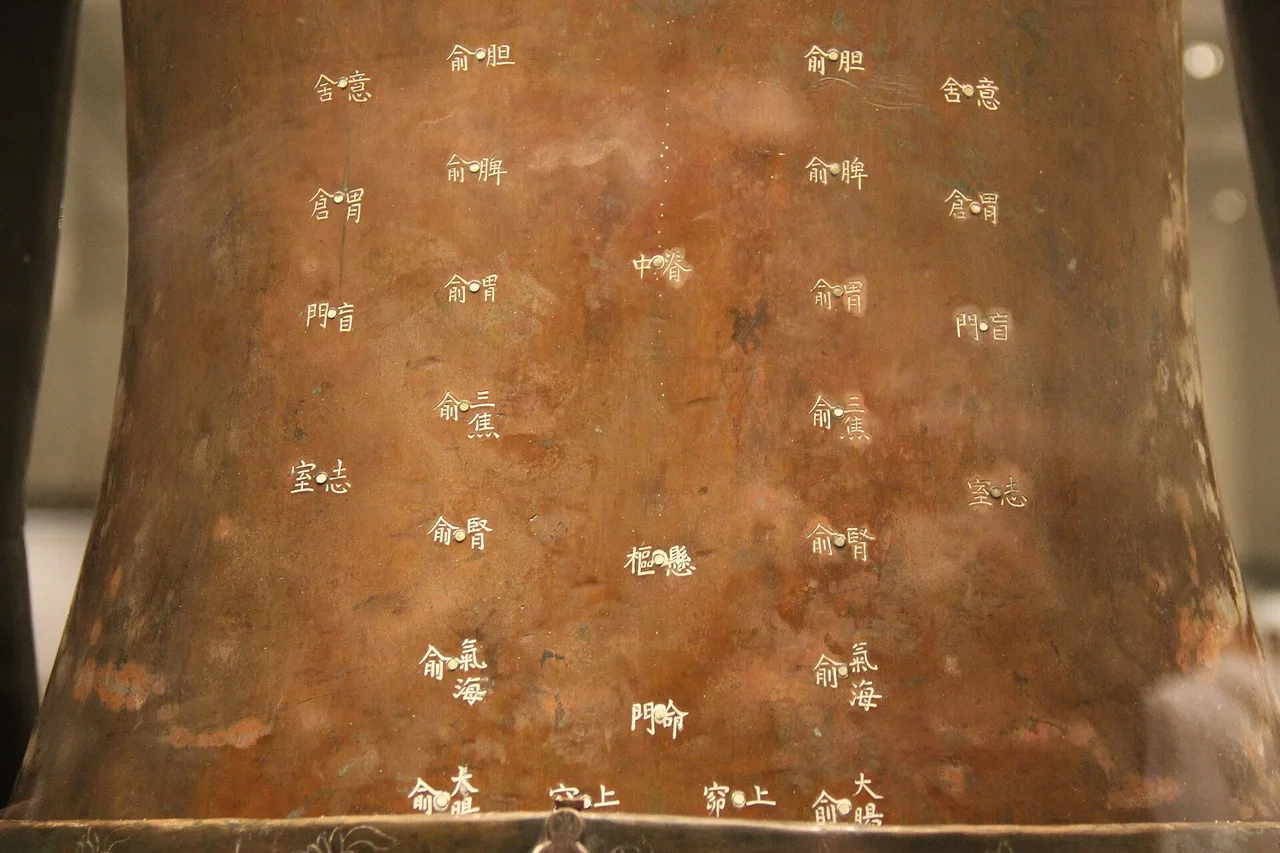
01. The Limits of Court Retainers: Microscopic Death in the Forbidden City
Many stories suggest that palace life and rare materia medica brought long life. The records of the Qing Empire show otherwise.
Even the highest rulers could not escape unseen germs. In the palace, an Imperial Physician in the Imperial Academy of Medicine checked pulses every day. Each recipe needed approval from palace doctors and a senior Palace Eunuch. High officials, a trusted Court Painter, a brave general like Yu Lie, a royal Imperial Prince, an Imperial Princess, or a provincial Chancellor of a Princedom all had top doctors nearby. Yet the red palace walls could not stop lethal microbes.
The Shunzhi Emperor caught smallpox in 1661 and died in days at twenty-four. In 1874, the Tongzhi Emperor died of smallpox and secondary sepsis at age nineteen. The Kangxi Emperor had fifty-five children, but more than a dozen died before age five. Kangxi won his imperial succession as a boy only because he had already survived smallpox. The scars on his face showed that he was immune.
Early death from infection fills old annals. Tang poet Li He died at twenty-seven from high fevers and lung trouble. European royal courts suffered just as much. In France, smallpox and measles killed the family of Louis XIV in 1711 and 1712. Queen Anne of Great Britain had seventeen pregnancies, but not one child lived to grow up. Palaces were just as helpless as farm huts.
02. Three Fatal Dead Ends: How Common Ailments Killed
Today, any clinic gives fluids, tetanus shots, antibiotics, or does a quick surgery for appendicitis. In ancient times, those same illnesses quickly destroyed vital organs.
1. Ruptured Appendicitis: From Dull Pain to Fatal Sepsis
In the Eastern Han dynasty, event.zhang-zhong-jing-《-shang-han-za-bing-lun-》|Zhang Zhongjing wrote about internal belly sores in his Essential Prescriptions of the Golden Coffer. He used cooling herbs like Rhubarb and Moutan Bark Decoction. In early cases, herbs sometimes cleared the bowels and eased mild swelling.
However, once the appendix burst, gut bacteria flooded the abdomen. Without surgery to clean the cavity and strong antibiotics to kill bacteria, the patient felt brief relief, followed by a rigid belly, burning fever, confusion, and death within days.
2. Tetanus and Arrow Wounds: The Soil-Dwelling Anaerobe
Deep cuts from rusty iron, muddy weapons, or soiled bamboo invited Clostridium tetani. Old military books called this condition metal-wound stiffness.
The spores of this bacterium live in dirt and animal dung. They grow best where there is no air. When an arrow drove dirt deep into muscle, covering the hole with ash sealed out air and helped the bacteria grow. Old accounts of warriors like Tai Ping fighters or Han leaders like Zhang Liao dying from old arrow wounds match this toxin. The victim suffered lockjaw, facial cramps, and back spasms that bent the body like a bow. Soon, chest spasms stopped all breathing.
3. Puerperal Fever: Dirty Blades and Streptococcus
Old customs made women give birth in dark, closed rooms like a Jushi Prison to keep away bad luck. Midwives did not know about germs. They used dirty copper coins to press the navel cord and cut it with kitchen shears.
When strep bacteria entered the womb from dirty hands or unwashed tools, childbed fever set in fast. Chills, bad fluid, and pelvic pain showed that infection had spread. In Vienna, one in five mothers died until Ignaz Semmelweis made doctors wash their hands. In ancient China, women called childbirth a walk through the gates of death. Thousands died of blood poisoning.
| Era | Traditional Clinical Diagnosis | Standard Period Treatment | Estimated Daily Cost of Treatment | Modern Clinical Counterpart | Outcome & Historical Prognosis |
|---|---|---|---|---|---|
| Han to Tang | Intestinal abscess (acute appendicitis) | Rhubarb and Moutan Bark Decoction; moxibustion | 40–80 Han copper coins; or half a bolt of silk | Laparoscopic surgery; IV antibiotics; sterile wash | Mild cases calmed down; burst organs killed over 80% of patients |
| Song Dynasties | Metal-wound wind (deep wound infection) | Yuzhen Powder; hot iron cautery | 30–60 Song coins per dose (one day of laborer wages) | Surgical cleaning; tetanus shot (TAT/TIG); penicillin | Severe spasms and locked breathing killed over 70% |
| Ming & Qing | Postpartum delirium (childbed fever, sepsis) | Shenghua Decoction; incantations; old cloth pads | 0.5–2.0 silver taels for midwife and herbs (15–30 days of wages) | Clean delivery; IV antibiotics; medical care | Infection in blood veins caused shock; maternal death stayed very high |
| Late Qing to 1911 | Sudden violent cholera (severe diarrhea) | Agastache Qi Water; bloodletting at fingertips | 500–1,200 late copper coins (3–5 days of porter wages) | Fast IV fluids; oral rehydration salts (ORS) | Severe water loss caused collapse; untreated death rate hit 50% |
03. A Survival Guide: Physical Hygiene in Premodern Cities
If a modern traveler went back in time, survival would not come from secret herbs. It would come from simple, physical ways to block germs.
[Premodern Infection Defense: Household Protocol & Costs]
(Example: Three-person artisan household, Wanli reign, Ming Dynasty Jiangnan)
|-- Water Safety Baseline (Monthly expenditure: ~0.08 taels of silver)
|   |-- Avoid shallow neighborhood wells, urban moats, and stagnant canals
|   |-- Fuel reserve: Buy 200 catties of scrap wood monthly (~0.04 taels per 100 catties) to boil all water
|   `-- Sedimentation jars: Large coarse earthenware storage vat (120 cash); add half an ounce of alum per load
|-- Emergency Trauma Kit (Setup cost: ~0.15 taels of silver)
|   |-- Distilled alcohol: Redistill market liquor through a tin stillhead to achieve high-proof spirit; store sealed
|   |-- Boiled linen bandages: Boil plain cotton cloth in rolling water for an hour, sun-dry, and cut into strips
|   `-- Trauma rules: Reject incense ash, mud, or powder dressings; wash cuts with clean boiled water and drain openly
`-- Childbirth Room Sanitation (Preparation cost: ~0.3 taels of silver)
    |-- Tools: Boil new metal shears and hemp cord in rolling water for forty-five minutes before use
    |-- Attendant prep: Scrub attendant hands with boiled wood-ash lye or high-proof liquor; ban unwashed internal exams
    `-- Airflow: Strip paper window sealings to ensure fresh cross-breezes; replace damp bedding with sun-cured straw
The greatest life saver in everyday life was drinking boiled water and tea. Started in the Tang era and expanded during the Song dynasty, tea culture made people boil their water first. Rolling boils killed cholera, dysentery, and other water germs. This gave Chinese cities a major health edge over European towns that drank raw canal water.
For cuts and punctures, the main rule was avoiding extra dirt. Packing a puncture with dirt, ash, or herb powder makes an airless pocket where tetanus blooms. People needed to flush wounds with boiled water and strong alcohol, leaving the wound open to the air.
Before modern drugs and sterile operating rooms, people survived through clean physical barriers and boiling heat. A simple fire, a clean blade, and well-cooked food were the best armor anyone had.
Primary Sources & Historical Bibliography
- Zhang Zhongjing (Eastern Han). Essential Prescriptions of the Golden Coffer (Jin Kui Yao Lue), Treatise 18: "Pulse, Syndrome, and Treatment of Sores, Carbuncles, Intestinal Abscesses, and Wet-Spreading Sores." Documents early imperial diagnostic methods, pulse assessments, and the compound Rhubarb and Moutan Bark Decoction for acute internal abdominal inflammation.
- Imperial Medical Bureau (Northern Song). Formulary of the Pharmacy Bureau for Public Welfare and Benefit (Tai Ping Hui Min He Ji Ju Fang), Vol. 8: "Treatise on Incised Wounds and Fractures." Sets out Northern Song state clinical formulas for metal-wound tetanus, including Yuzhen Powder, illustrating trauma treatments and their historical limitations.
- Chen Keji, ed. Integrated Imperial Medical Cases of the Qing Palace (Qing Gong Yi An Ji Cheng). Beijing: Science Press. Compiles bedside clinical notes and medicinal prescriptions from the Imperial Academy of Medicine covering Qing monarchs and imperial consorts battling smallpox, measles, and purulent infections.
- Song Ci (Southern Song). Collected Cases of Injustice Rectified (Xi Yuan Ji Lu), Vol. 2. Provides forensic observations on fatal secondary infections following blade wounds and projectile injuries in thirteenth-century legal inquiries.