Historical Context
- Chinese Chronological Coordinates: From Emperor Suzong's accession at Lingwu in the first year of the Zhide era (756 CE) to the death of Guo Ziyi in the second year of the Jianzhong era under Emperor Dezong of Tang (781 CE). This window spans the An Lushan Rebellion (755 CE), the Tibetan sack of Chang'an in the first year of the Guangde era (763 CE), and the confrontation at Jingyang in the first year of the Yongtai era (765 CE).
- Western and Mediterranean Coordinates: The Abbasid Revolution topples the Umayyad Caliphate (750 CE). Charlemagne ascends the Frankish throne (768 CE). Emperor Constantine V Copronymus rules the Byzantine Empire under the Isaurian dynasty (741–775 CE).
- Multipolar fragmentation erased the profits of usurpation: Sima Yi carried out the Incident at the Gaoping Tombs in a centralized capital. In contrast, the mid-to-late Tang was split into dozens of rival commands. If the northwestern Shuofang Army had marched on the throne, warlords across other regions would have banded together under loyalist flags to crush them.
- Radical transparency neutralized imperial paranoia: Faced with sudden dismissals, eunuch plots, and the desecration of his ancestral tombs, Guo Ziyi handed over his seals at once. He opened his home to the public and accepted personal blame for failures in troop discipline.
- The collapse of institutional safety locks: The rise of the palace Shence Army and deep court fear prevented frontier generals from seizing civil power. By placing the House of Li above his own ambitions, Guo preserved his influence and protected his family for generations.
01. I. Paper Command and Systemic Paralysis: The Dilemma of Overbearing Merit
In the late autumn of 765 CE, an allied army of nearly three hundred thousand Tibetan and Uyghur troops entered the Guanzhong plains. They soon encircled the strategic pass of Jingyang. At sixty-nine years of age, Deputy Marshal of Guannei Guo Ziyi rode out unarmed and without a helmet toward the Uyghur line. Relying on his past prestige, he persuaded the steppe chieftains to abandon their Tibetan allies and turn against them. This bold move lifted the veteran commander of the Shuofang Army to the pinnacle of imperial renown.
On paper, Guo Ziyi held the assets needed to found a new dynasty. He was the greatest savior of the empire during the An Lushan Rebellion. Emperor Daizong of Tang named him Prince of Fenyang. His son Guo Ai married Imperial Princess Shengping. Former subordinates from the Shuofang networks led garrisons across the northwest, directing hundreds of thousands of veteran border troops.
| Strategic Vector | Paper Assets on the Eve of Crisis | Reality of Operational Paralysis |
|---|---|---|
| Central Command | Held commissions as Deputy Marshal of Guannei and Military Commissioner of Shuofang, nominally directing imperial defense across the northwest. | Imperial authority rarely extended beyond Guanzhong; Daizong fled the capital twice; eunuchs Yu Chao'en and Cheng Yuanzhen commanded the Shence Army, cutting off provincial generals from the throne. |
| Field Strength | Commanded a paper roster of 300,000 frontier veterans across Shuofang and Hedong. | Directly commanded fewer than 30,000 elite retainers; the remaining units operated under autonomous frontier commanders dependent on court grain transfers via the Grand Canal. |
| Political Legitimacy | Re-established the dynasty after the rebellion; court officials and military officers revered him as the pillar of state security. | The moral authority of the House of Li anchored coalition stability; breaking that bond offered officers greater incentive to defect than to follow an unlawful coup. |
This outward military might hid a brittle core. After the recovery of Chang'an and Luoyang in 757 CE, the court needed only a single eunuch courier to strip Guo Ziyi of his field commands. Whenever foreign incursions broke through the border, the court summoned him back as a shield. This endless shift between supreme command and sudden dismissal showed how fragile the mid-Tang state had become.
02. II. From the Disaster at Yecheng to the Stand at Jingyang: A Chronology of Disarmament
Guo Ziyi did not turn away from the path of Sima Yi out of simple loyalty. Through repeated political clashes, he learned the hard limits of his power.
May 759: The Collapse at Yecheng and the First Dismissal
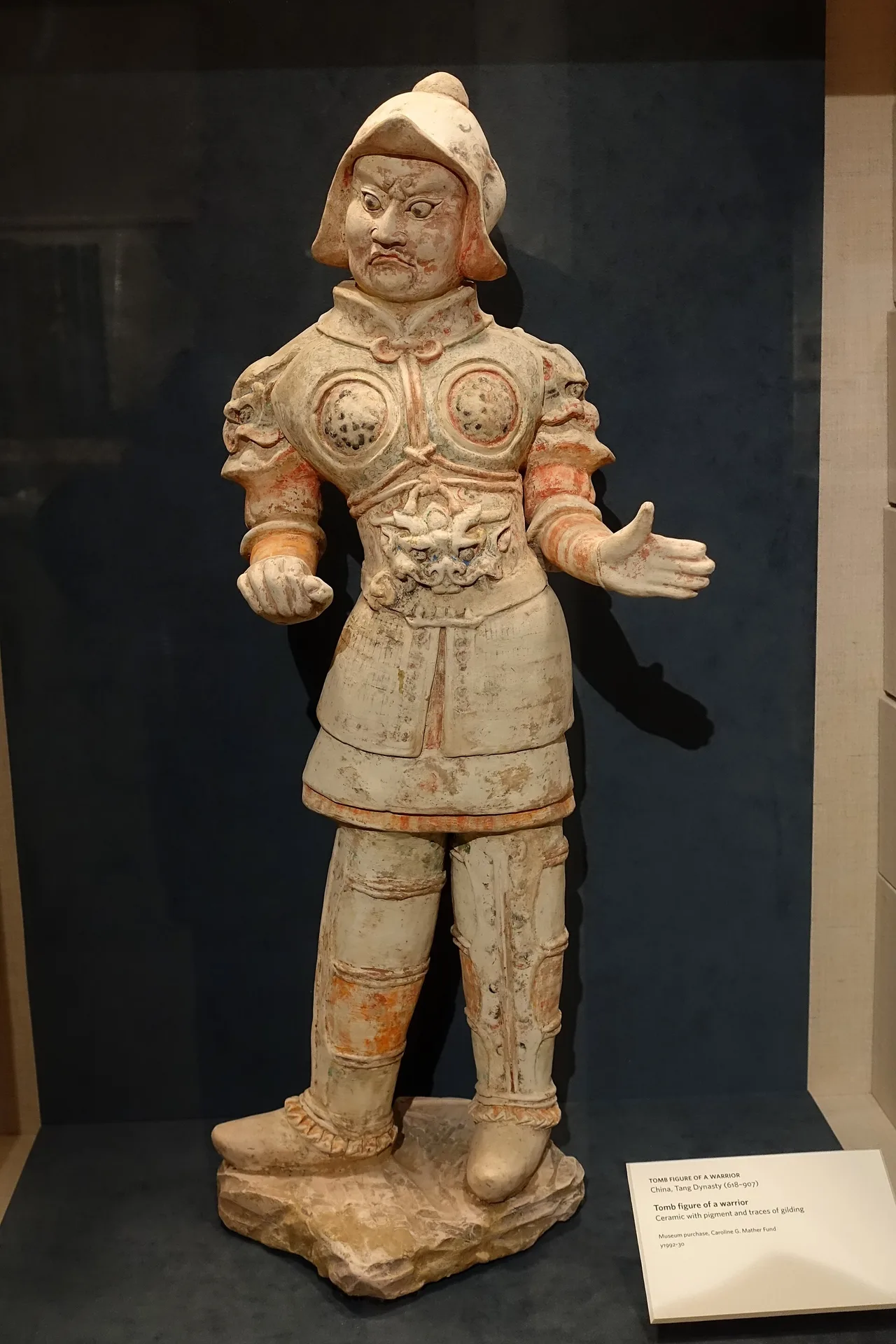
In the third month of 759 CE, during the second year of the Qianyuan era, Emperor Suzong mobilized six hundred thousand troops. He gathered nine military commissioners, including Guo Ziyi and Li Guangbi, to besiege the rebel leader An Qingxu at Yecheng. Suspicious of his generals, Suzong refused to name an overall military marshal. Instead, he sent the eunuch Yu Chao'en as Supervisory Commissioner to monitor the campaign. When rebel general Shi Siming arrived with relief forces, the scattered Tang lines broke in a severe dust storm.
Yu Chao'en blamed the defeat entirely on Guo Ziyi. In the fifth month, Suzong took away Guo's troops and called him back to Chang'an. The emperor gave him the nominal rank of Minister of Works without field troops, while Li Guangbi took over the Shuofang forces. Guo gave up his command at once. He packed his official seals and rode without an escort to the capital. This step set his lifelong pattern of immediate obedience.
April 762: Daizong's Accession and Bureaucratic Maneuvers
In the fourth month of 762 CE, Suzong grew critically ill. Emperor Daizong of Tang took the throne with help from palace eunuchs. After warnings from Palace Attendant Cheng Yuanzhen, the new ruler removed Guo from his border posts. He appointed Guo Grand Preceptor and named him Director of the Imperial Mausoleum for Suzong's burial.
Mutinies soon broke out in the Hezhong garrison while former rebel generals watched the unrest. Each Vice General and Army Commander urged Guo to keep his troops under the pretext of guarding the border. Guo refused their requests and returned to the capital as ordered. To ease royal suspicion, he gave the court all the private letters and decrees he had received from the late emperor. This step proved that he harbored no secret plans.
October–November 763: The Fall of Chang'an and Rescue of the Court
In the tenth month of 763 CE, Tibetan forces joined the Tuyuhun in a coordinated assault through the western passes. Cheng Yuanzhen withheld the border dispatches until Tibetan vanguards reached the Bian Bridge outside the capital. Daizong fled east to Shanzhou, and Tibetan armies entered Chang'an, placing the puppet prince Li Chenghong on the throne.
The court summoned Guo Ziyi and made him Deputy Marshal of Guannei. Guo had only twenty horsemen when he started out. He gathered scattered soldiers along the roads and lit deceptive beacon fires around Shangzhou to imitate a massive army. By November, the Tibetan command withdrew, fearing a trap. Guo entered Chang'an, secured the city, and escorted Daizong back to the palace. Having saved the dynasty a second time, he resigned his multi-circuit marshal titles and returned to a civilian desk post.
October 765: Single-Handed Defense and the Desecration of the Ancestral Tomb
In the tenth month of 765 CE, rogue general Pugu Huai'en led an allied force of Tibetans, Uyghurs, and Tangut people into the Guanzhong basin. Guo Ziyi broke the alliance at Jingyang through personal diplomacy. Yet his military victories only made the palace more jealous. In 767 CE, Yu Chao'en secretly arranged to dig up and desecrate the tomb of Guo Ziyi's father.
The event shocked the entire realm. Scouts from regional garrisons rushed to Chang'an to see how the veteran general would respond. When summoned to court, Guo Ziyi entered the imperial hall, knelt on the floor, and wept:
> "Your subject has long failed to enforce strict Military Discipline, and my soldiers have desecrated the graves of many families. That my late father's tomb suffered such ruin is Heaven's retribution for my unfilial conduct, not the malice of men."
This humble reply removed Daizong's fear of a military revolt. It also stripped Yu Chao'en of any political leverage. Guo ended a deadly crisis by trading his personal pride for the safety of his family.
03. III. Failure of the Safety Locks: Institutional Grid of Mid-Tang Rivals
Historians often compare Guo Ziyi to Sima Yi. During the Incident at the Gaoping Tombs in 249 CE, Sima Yi used three thousand private retainers to capture the arsenals of Luoyang, execute Cao Shuang, and take over the state. However, the divided political map of the post-rebellion Tang made such a coup impossible.
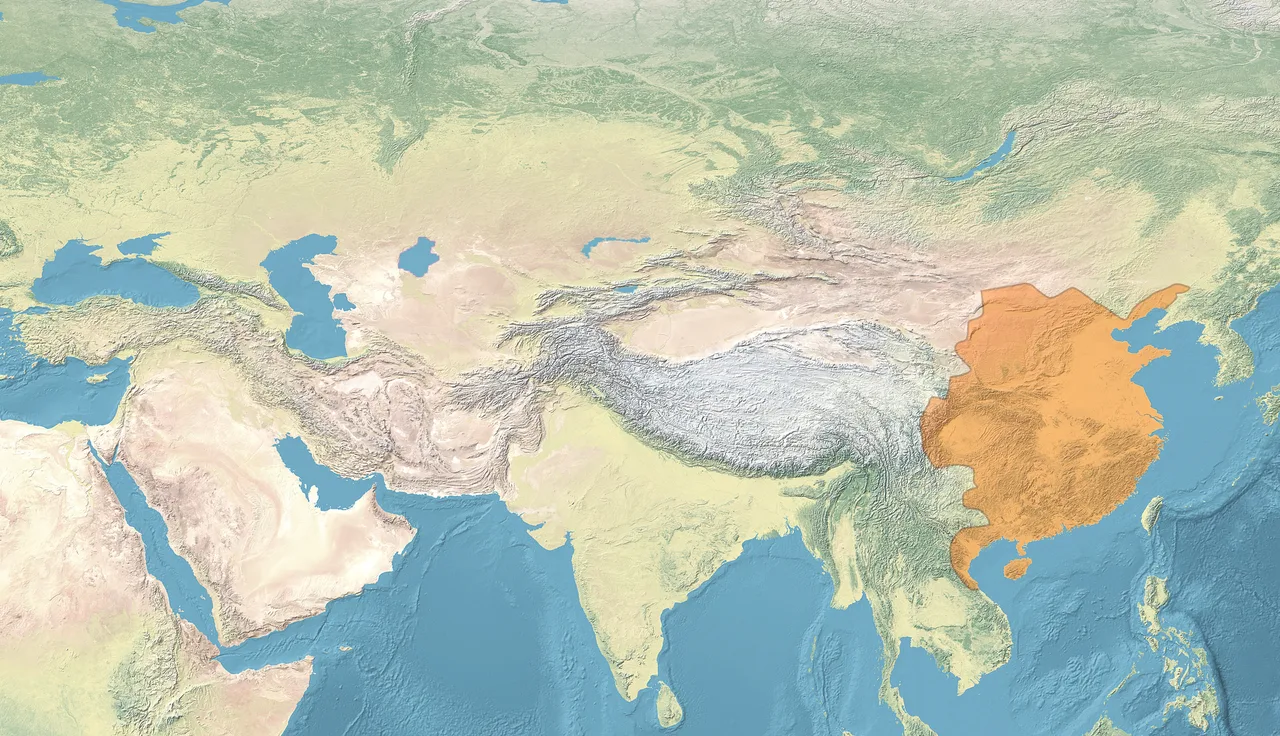
After the civil war, political power split across four main groups:
| Faction | Sources of Legitimacy | Military Command | Fiscal Structure | Intelligence Infrastructure | Structural Point of Failure |
|---|---|---|---|---|---|
| Imperial Court (Daizong / Dezong) | Sole dynastic authority; arbiter of noble ranks and provincial titles. | Weak metropolitan guard; relied on the eunuch-led Shence Army to shield the capital. | Dependent on Grand Canal shipments from Jiangnan; squeezed by the state monopoly on salt and iron. | Supervisor of Palace Receptionists and Palace Receptionist network; vulnerable to court intrigue. | Lacked central strike units; trapped in an endless cycle of relying on and suspecting frontier generals. |
| Guo Ziyi and Shuofang Network | Imperial Father status and merit as savior of the state; zero dynastic claim. | Commanded frontier veterans across the northwest; divided internal factions. | Completely dependent on the Treasury Section for rations and military expenditure. | Lacked high-level court networks; exposed to central surveillance. | Military and fiscal authority were split; field popularity could not transfer down the family line. |
| Inner Court Eunuchs (Yu Chao'en / Cheng Yuanzhen) | Derived power from executing secret imperial decrees. | Infiltrated and led the Shence Army, bypassing civil ministries. | Controlled inner treasury reserves and took cuts from salt-and-iron revenues. | Extensive spy networks across capital wards, barracks, and noble houses. | Created mutual suspicion to preserve influence, risking disaster on the borders. |
| Autonomous Northeastern Garrisons | Rebel generals with no court legitimacy; operated as nominal subjects under fanzhen separatism. | Hereditary Succession regional units numbering tens of thousands of infantry and cavalry. | Intercepted local tribute taxes, running autonomous regional treasuries. | Independent scouts tracking movements in Chang'an and frontier bases. | Viewed the court as a buffer; ready to march on anyone attempting an imperial usurpation. |
If Guo Ziyi had tried to take the throne, he would not have met an unarmed civilian court. Instead, rival provincial armies would have attacked him at once. Warlords in the northeast accepted distant Tang rule because a weak court in Chang'an stopped rival garrisons from attacking them. If a northwestern commander seized the throne, northeastern circuits like the Lulong Circuit, Chengde, and Weibo would have marched on Guanzhong to destroy the usurper.
The Shuofang Army was also divided from within. Subordinate generals like Pugu Huai'en, Hun Jian, and Li Huaiguang led their own veteran units and held separate imperial commissions. When Pugu Huai'en later revolted, his own officers left him once the court offered them titles and silver. If Guo Ziyi had tried to take power, he would have faced mutiny within his own ranks instead of receiving the Nine Bestowments.
04. IV. The Open-Gate Policy: Rational Survival in a Shattered Realm
Recognizing these hard limits, Guo Ziyi turned domestic transparency into a shield for his clan.
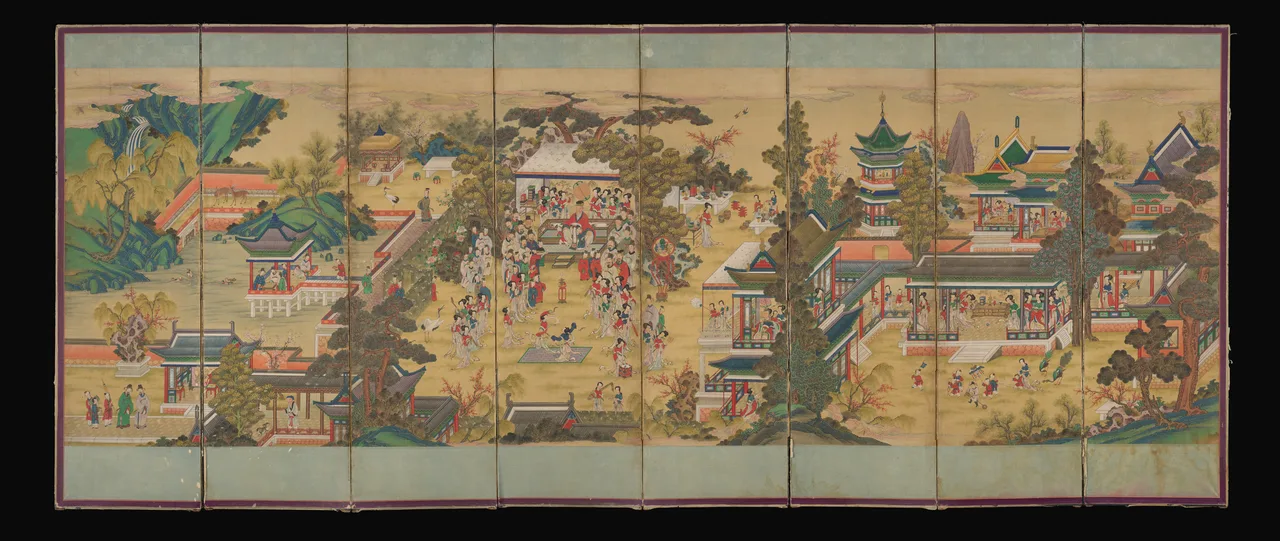
At his mansion in the Qinren Ward of Chang'an, Guo left the front gates open day and night. Street vendors, minor officials, commoners, and palace spies walked freely through the courtyards. Entertaining dancers served wine while his grandchildren played in plain sight of visitors. When his son Guo Xi complained that this hurt their noble standing, the marshal explained:
> "I command tens of thousands of armed troops. If we build high walls and lock our gates, our enemies will accuse us of plotting in secret. An imperial purge would wipe out our clan. By leaving the gates open, everyone can see our daily lives. Rumors wither before the naked eye."
Turning his private life into an open display removed the court's fear. He gave up personal privacy to save his family. This transparency gave Emperor Daizong of Tang and Emperor Dezong of Tang the peace of mind they needed to leave him unharmed.
This trust proved critical during an argument between Guo Ai and Imperial Princess Shengping. In anger, Guo Ai shouted: "You rely on your father being emperor! My father refused the throne out of disdain!" When Guo Ziyi heard what his son said, he put him in chains and brought him to the palace, asking for his execution. Emperor Daizong of Tang laughed and dismissed the incident: "A man must play the fool and deaf-mute to run a household. Why heed the bedroom arguments of children?" Long years of humble service had erased the court's fear.
On the fourteenth day of the sixth month in 781 CE, Guo Ziyi died at eighty-five years of age. Emperor Dezong of Tang granted him the title of Posthumous Grand Preceptor and the posthumous name Zhongwu, meaning Loyal and Martial. The emperor declared five days of official mourning before Guo was buried near the Jianling Mausoleum. His descendants served for generations within the imperial civil service and palace guard.
Guo Ziyi did not refuse the throne out of weakness. He saw that in a broken empire where tax revenue, weapons, and military command were split among rivals, any attempt to seize the center would destroy the state. By trading personal pride for open transparency, he preserved his family line and gave stability to a fragile dynasty.
Primary Sources & Historical Bibliography
- Official Historiography:
- Old Book of Tang, Vol. 120, Biographies 70: "Biography of Guo Ziyi."
- New History of the Tang, Vol. 137, Biographies 62: "Biography of Guo Ziyi."
- Sima Guang, Comprehensive Mirror to Aid in Government, Vols. 220–227, "Tang Records 36–43."
- Modern Scholarship:
- Qiu Luming, Political Power and Family Networks in the Wei-Jin Transition (Shanghai Chinese Classics Publishing House, 2012). This work compares centralized palace coups in the Three Kingdoms with fragmented regional commands in the mid-Tang.
- Zhang Guogang, A Study of the Tang Dynasty Fanzhen (Renmin University of China Press, rev. ed., 2010). This book analyzes the balance between the Shuofang Army, the Shence Army, and border commands.
- Chen Yinke, Draft Brief History of the Tang Political Structure (SDX Joint Publishing Company, 2001). This study examines the rise of autonomous northeastern circuits after the An Lushan crisis.