TL;DR · Core Takeaways
- The non-migrating majority built micro-city-states: After the Western Jin fell in 317 CE, elite clans fleeing across the Yangtze River made up only a small fraction of the northern population. Millions of commoners and local families stayed on the North China Plain. They fortified mountain retreats (wubao) and depended on private retainers (buqu) and grain stores to survive steppe cavalry attacks.
- A fragile pact of force and ledgers: The Sixteen Kingdoms and early Northern Wei rested on a clear division of labor. Han masters managed farm records, field taxes, and civil offices. Nomadic lords led the heavy cavalry. Without stable laws, cultural bias and court fears sparked bloody purges.
- Building a new empire from ruins: From the bloodletting of Cui Hao's National History Inquisition in 450 CE to Yuwen Tai's Fubing System and Eight Pillars of State, Han lords took up arms and Xianbei chiefs embraced statecraft. This union created the Guanlong Military-Aristocratic Group, which reunited China.
Historical Coordinates
- Chinese Chronology: From the Disaster of Yongjia under the Western Jin (311 CE) to Emperor Wen of Sui ascending the throne in the first year of the Kaihuang era (581 CE).
- Western / Mediterranean Chronology: From the Visigothic sack of Rome (410 CE) to the collapse of the Ostrogothic Kingdom and the spread of the Justinianic Plague (541–554 CE).
01. On the Eve of Imperial Evaporation: Paper Prosperity and the Collapse of Public Order
Around 300 CE, the Jin court still enjoyed the peace of the Prosperity of the Taikang Era. Official registers counted more than sixteen million taxpayers. Imperial armories in Luoyang and Chang'an held hundreds of thousands of weapons and suits of iron armor. Regional governors held nominal loyalty under imperial princes and their Commander-in-Chief of Military Affairs.
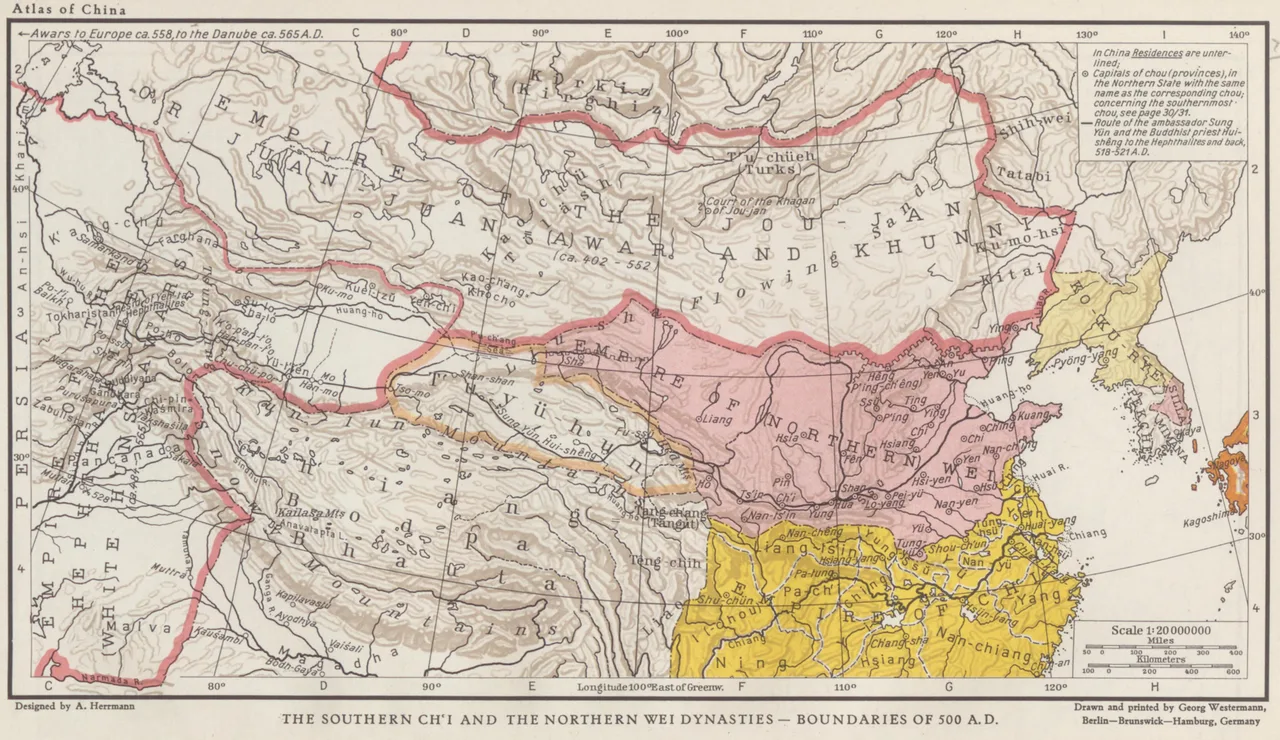
This public order vanished during the War of the Eight Princes, a brutal sixteen-year civil clash. Regional Commander-in-chief figures hired steppe horsemen to serve as shock cavalry. Five Xiongnu armies in Bingzhou and Xianbei forces from Liaodong marched straight into the imperial heartland. They quickly saw the weakness of the Jin court. In 311 CE, Han-Zhao forces took Luoyang and captured Emperor Huai of Jin. Chang'an fell in 316 CE. In five years, central taxes, courts, and imperial armies completely melted away.
Sima Rui and his chief minister Wang Dao fled south. They founded the Eastern Jin court at Jiankang (modern Nanjing). They took only rich clans with boats, servants, and mobile wealth. Emigrants numbered under one million. Over ten million people stayed behind in the north. Abandoned by officials and state grain reserves, these families organized local defense around their villages, farms, and ancestral graves.
02. The Proliferation of Fortified Estates: Armed Order in an Anarchic Landscape
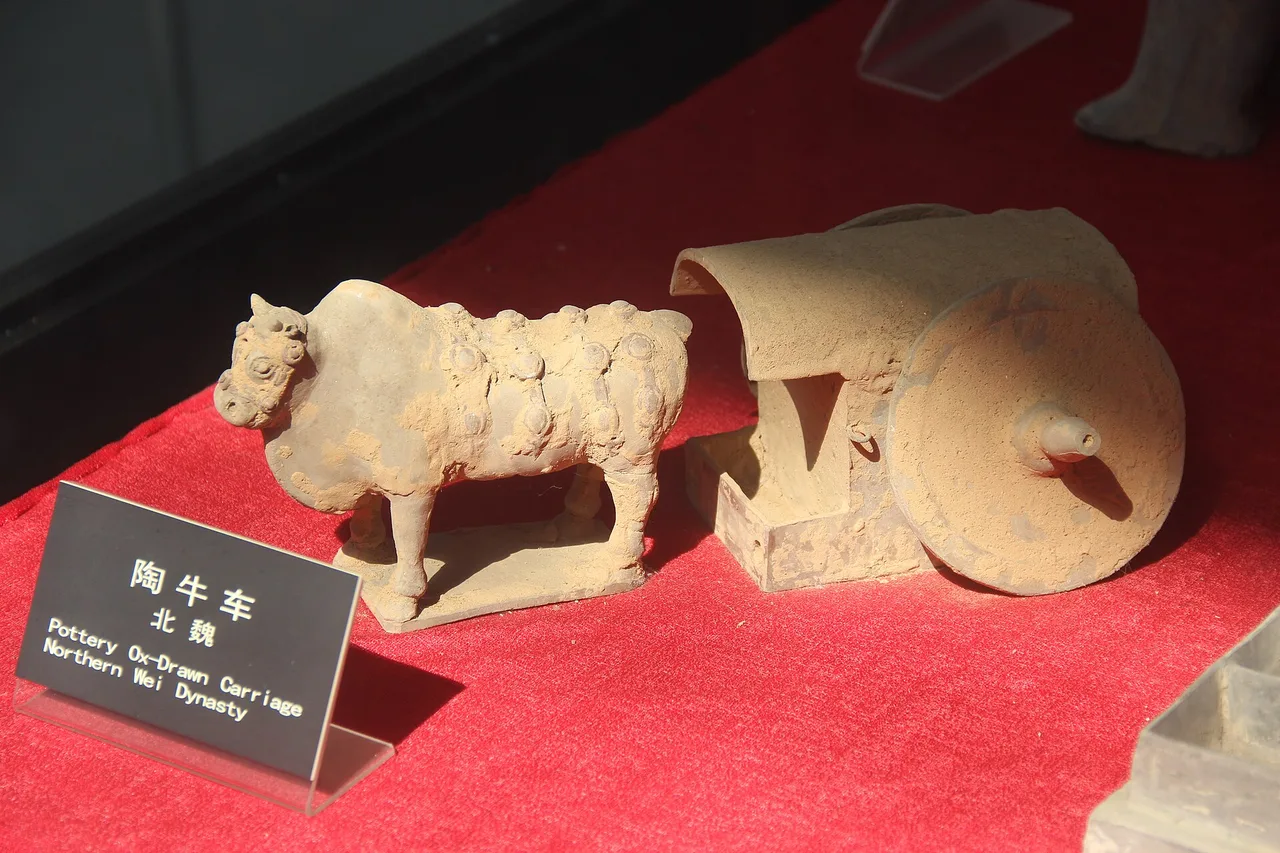
With central taxes and courts gone, northern society broke into armed, self-governing forts. From Mount Song to the Taihang Range, farming redoubts called wubao sprang up across the countryside.
                 [INTERNAL HIERARCHY OF A FORTIFIED ESTATE]
                     ┌───────────────────────────┐
                     │ Estate Master / Clan Head │ (Lineage patriarch, military chief, arbiter)
                     └─────────────┬─────────────┘
                                   │
              ┌────────────────────┴────────────────────┐
              ▼                                         ▼
       ┌──────────────┐                          ┌──────────────┐
       │ Clan Kinfolk │                          │ Client Clans │
       │ (Cadre Core) │                          │ (Subjugated) │
       └──────┬───────┘                          └──────┬───────┘
              │                                         │
              └────────────────────┬────────────────────┘
                                   ▼
                     ┌───────────────────────────┐
                     │   Agrarian Militia Corps  │ (Tills in peace; defends the walls in war)
                     └───────────────────────────┘
The scholar Yu Gun led hundreds of kin into the cliffs of Linlü Mountain. His group cut trees for walls, shaped stone for watchtowers, and formed local defense pacts. Great clans like the Lu of Fanyang, Cui of Qinghe, and Li of Zhaojun built earthen ramparts and deep moats around shared wells and grain silos. Independent farmers gave up their land deeds to clan masters in exchange for safety. They became hereditary retainers (buqu) or dependent tenants (ke).
The estate master acted as military commander, judge, and storehouse manager. These clan compounds functioned as private micro-states. This shift matched the late Western Roman Empire in Gaul and Hispania, where farmers sought shelter inside noble villae, paving the way for medieval European manors.
When northern invaders set up dynasties, they hit an administrative wall. Rulers like Liu Yuan and Shi Le commanded cataphract cavalry suited for battle, but their horsemen could not measure fields, collect cloth, or register homes. Killing commoners left fields bare, starving their war mounts in winter. Han gentry held accounting skills and written law, but had no cavalry to stop steppe raiders.
Shi Le, ruler of Later Zhao, broke this gridlock with his Han adviser Zhang Bin. They created the Dual-Track Administration of Hu and Han. Nomadic warriors held elite military command, while Han estate lords ran local civil bureaus. In return, Han gentry delivered steady grain quotas through their estate networks. This secured formal state protection for their land and retainers. This shared rule shaped the Sixteen Kingdoms and early Northern Wei.
03. Escalating Crisis: Cultural Friction and the Bloodbath of 450 CE
This partnership between steppe fighters and Han scribes rested on shaky ground. Nomadic lords held raw military power. Whenever Han officials used classical books to challenge royal succession or mock tribal ways, violent crackdowns followed.
Phase 1: 439–448 CE — Bureaucratic Clashes After Northern Unification
When Emperor Taiwu of Northern Wei (Tuoba Tao) conquered Northern Liang and unified North China, his court had to govern twenty million Han subjects. Cui Hao, Senior Compiler of state records and Minister over the Masses from the Cui clan of Qinghe, won Taiwu's absolute trust. Cui drove bold reforms. He brought sons of the Lu, Guo, and Liu lineages into the civil capital at Pingcheng. He promoted Daoist rites and old court ceremonies to curb the power of tribal nobles. Watching civil posts go to Han scholars, Xianbei military veterans grew bitter.
Phase 2: Summer 450 CE — Carving Tribal Origins into Stone
Taiwu ordered Cui Hao to compile the official dynastic history, the Guoshu. Following Confucian ideals of honest history, Cui wrote down early Xianbei tribal customs, clan feuds, and succession struggles without hiding anything. Urged on by his colleague Min Zhan, Cui used public funds to carve the entire 300,000-word text onto giant stone stelae. These stones stood along the busy highway outside Pingcheng for all travelers and envoys to read.
To Xianbei generals, displaying these tribal origins in stone was an open insult by Han scholars. Palace guards and tribal nobles petitioned Tuoba Tao, accusing Cui Hao of treason and slander.
Phase 3: Autumn 450 CE — The National History Inquisition and Gentry Purge
Facing a military mutiny, Emperor Taiwu reacted as a steppe war leader. He abandoned legal process and threw Cui Hao into prison. Guards locked the aged minister in an open cart, drove him to the execution grounds, and mocked him before killing him. The purge spread quickly across his kinship network. Northern Wei troops executed every branch of the Qinghe Cui, along with their relatives among the Lu of Fanyang, Guo of Taiyuan, and Liu of Hedong, killing thousands.
          [THE DEADLOCK OF THE NATIONAL HISTORY INQUISITION, 450 CE]
┌──────────────────────────────┐            ┌──────────────────────────────┐
│  Tuoba Xianbei War Aristocracy│            │    Han Gentry Lineages       │
│  (Monopoly on Field Cavalry) │            │  (Monopoly on Bureaucracy)   │
└──────────────┬───────────────┘            └──────────────┬───────────────┘
               │                                           │
               │         ┌───────────────────────┐         │
               └────────►│ Structural Friction   │◄────────┘
                         └───────────┬───────────┘
                                     │
                                     ▼
               ┌───────────────────────────────────────────┐
               │ Cui Hao Carves Unvarnished History in Stone│
               │ (Perceived as Tribal Defamation & Insult) │
               └─────────────────────┬─────────────────────┘
                                     │
                                     ▼
               ┌───────────────────────────────────────────┐
               │ Autocratic Violence Overrides Civil Norms │
               │ (Complete Extermination of Leading Clanns)│
               └───────────────────────────────────────────┘
The slaughter showed the weak position of the northern Han gentry. Pedigree and classical books gave zero defense against cavalry lances. Serving only as scribes or clerks left them easy targets. To survive, Han clans had to drop their traditional Emphasis on Civil Administration over Military Power, take up weapons, and master military command.
04. Institutional Breakdown: Four-Way Balance of Power in the Northern Dynasties
To trace shifting power before the rise of Northern Dynasties, the major factions can be compared by their key resources:
| Political Faction | Legitimacy Basis | Military Command (Hard Power) | Fiscal & Material Control | Local Intelligence & Networks | Structural Vulnerability |
|---|---|---|---|---|---|
| Xianbei Tribal Aristocracy (Northern Wei Pingcheng Court) | Military conquest and Tuoba clan genealogy; status as sovereign conquerors | Total monopoly on heavy shock cavalry; command of imperial guards and Six Frontier Garrisons | Poor tax administration; reliance on war plunder and fixed grain rations | Confined to military garrisons; minimal reach into rural Han villages | Impoverished as sinicization halted border raids, sparking the Six Garrisons Rebellion |
| Northern Han Estate Lineages (Cui, Lu, Li, Zheng) | Classical Nine-Rank System credentials; monopoly on Confucian rites and scholarship | Estate militias and light infantry; unable to face cavalry armies in the field | Control over rural estates, waterworks, grain silos, and local tax ledgers | Tight web of ancestral registers and regional scholar-gentry ties | Lacked centralized armed forces; remained vulnerable to sudden imperial purges (e.g., Cui Hao) |
| Mixed Guanlong Warlords (Western Wei under Yuwen Tai) | Classical Rites of Zhou revival paired with dual tribal-bureaucratic oaths | Created the Fubing System; Han gentry commanded troops alongside Xianbei generals | Clear land surveys, agricultural colonies, and the Equal-Field tax framework | Rural gentry served as local militia officers, bridging state and village | Depended heavily on leader charisma; succession disputes regularly sparked violence |
| Southern Emigré Aristocracy (Eastern Jin / Liu Song at Jiankang) | Inherited Western Jin orthodoxy; cultural prestige of Southern dynasties | Relied on mercenary forces like the Beifu Army; elites abandoned martial training | Tax extraction from the rich Yangtze delta and riverine commerce | Depended on yellow/white immigrant registries; blind to northern local dynamics | Military command outsourced to plebeian generals, inviting dynastic coups (e.g., Hou Jing Rebellion) |
05. Crucible of Reunification: Yuwen Tai's Fubing System and the Guanlong Elite
Emperor Xiaowen's Relocation of the Capital to Luoyang split his realm rather than uniting it. Neglected along the northern frontier, Xianbei garrisons revolted in 523 CE. The empire split into two rival states: Eastern Wei under Gao Huan, and Western Wei under Yuwen Tai.
Western Wei held the dry, remote Guanlong area (modern Shaanxi and eastern Gansu), with barely a third of Eastern Wei's population. Facing Gao Huan's larger armies, Yuwen Tai launched major institutional reforms that erased ethnic divides:
1. The Fubing System and Integrated High Command
During the 540s CE, Yuwen Tai set up a unified military administration. He formed the Eight Pillars of State, Twelve General-in-Chief commanders, and Twenty-Four Open Offices. Among the Eight Pillars of State, Yuwen Tai led the army alongside imperial prince Yuan Xin. The other six commanders—Li Hu, Li Bi, Zhao Gui, Yu Jin, Dugu Xin, and Houmochen Chong—split evenly between Han and non-Han backgrounds. Han lords from the west, such as the Li of Longxi and Yang of Hongnong, entered this top command circle.
2. Surnames and Adoptive Kinship
To ease ethnic friction between Xianbei troopers and Han officers, Yuwen Tai revived old tribal customs. Soldiers in the Fubing corps took the clan names of their commanders. Han generals received honored Xianbei surnames. Yang Zhong, father of Emperor Wen of Sui, received the surname Puliuru. Li Hu, grandfather of Emperor Gaozu of Tang, took the surname Daye. Han lords gained military honors, while Xianbei cavalrymen received grain and infantry recruits from Han estates.
3. Soldier-Farmer Integration Under Local Gentry
The Fubing System incorporated the defense networks built by northern wubao estates over two centuries. Yuwen Tai appointed local clan patriarchs directly as Area Commander-in-chief and Commander-in-chief in their home districts. Their estate retainers became regular state troops. In wartime, soldiers mobilized with their own mounts, provisions, and weapons, while their households gained tax and corvée exemptions; in peacetime, they tilled their acreage and trained in seasonal formations.
The historian Chen Yinke called this ruling elite the Guanlong Military-Aristocratic Group. It joined steppe archery with Han military administration and statecraft.
This hybrid elite defeated every rival. In 577 CE, Northern Zhou forces led by Guanlong generals conquered Northern Qi, uniting northern China. In 581 CE, Yang Jian took the throne to found the Sui dynasty. His armies crossed the Yangtze in 589 CE to overthrow the Chen dynasty, ending three centuries of division. Decades later, Li Yuan's family, descended from the Pillar of State Li Hu, used this foundation to build the Tang dynasty.
This long cycle revealed a striking historical irony. Southern nobles who fled south in 317 CE preserved high culture and salon poetry, but perished during the Hou Jing Rebellion and Sui conquests. The northern clans who stayed, endured centuries of war, and turned their farming manors into military forts became the masters of a reunified China.
Primary Sources & Historical Bibliography
- *Wei Shou, Book of Wei (Wei Shu), Vol. 35, "Biography of Cui Hao": Records the compilation of the imperial Guoshu*, the stone stelae outside Pingcheng, and the factional fury that resulted in the execution of the Qinghe Cui and affiliated clans during the National History Inquisition.
- *Li Delin and Li Baiyao, Book of Northern Qi (Bei Qi Shu), Vol. 1, "Annals of Emperor Shenwu, Part 1"*: Contains Gao Huan's speech balancing ethnic grievances: "The Han are your serfs: the men till for you, the women weave for you, delivering grain and silk so you are fed and clothed. Why mistreat them? The Xianbei are your guests: for a bushel of grain and a bolt of silk, they take up lances to strike your enemies and keep you secure. Why despise them?"
- *Linghu Defen, Book of Zhou (Zhou Shu), Vol. 16, "Biography of Yuwen Tai"*: Details Western Wei administrative decrees founding the Fubing System, the creation of the Eight Pillars of State and Twelve Great Generals, and the bestowal of Xianbei surnames on northwestern Han magnates.
- *Chen Yinke, Draft Outline on the Origins of Sui and Tang Institutions (Sui Tang Zhidu Yuanyuan Lüelun Gao)*, Beijing: Sanlian Bookstore: The classic study analyzing the formation of the Guanlong Military-Aristocratic Group and its dual Hu-Han structural roots.