TL;DR · Core Takeaways
- Not a Robin Hood seizure of noble wealth: The Northern Wei court launched the Equal-Field System (
Equal-Field System (Juntian Zhi)) in 485 CE. It never took away the private lands of great noble clans. Instead, the state claimed huge tracts of empty wasteland left behind by a century of war. It used free land grants as bait to pull displaced farmers back onto the state tax rolls. - A huge gap between paper rules and Dunhuang tax records: Tang law promised 100 mu (about 13.8 acres) of farmland to every adult male taxpayer. Yet surviving 747 CE household records from Dunhuang show a harsher truth. Farmers in crowded areas often got less than 40 mu. Even so, the state still took the full Zu-Yong-Diao head tax from every man, no matter how little land he actually held. At the village level, real tax rates more than doubled.
- When the wasteland ran out, the system broke: This tax model relied on empty post-war land to rebuild a head-tax base. Decades of peace brought a population boom, while court favorites grabbed public fields. Soon, the state ran out of spare land. The cycle of giving out land, collecting taxes, and taking back plots snapped.
Historical Context
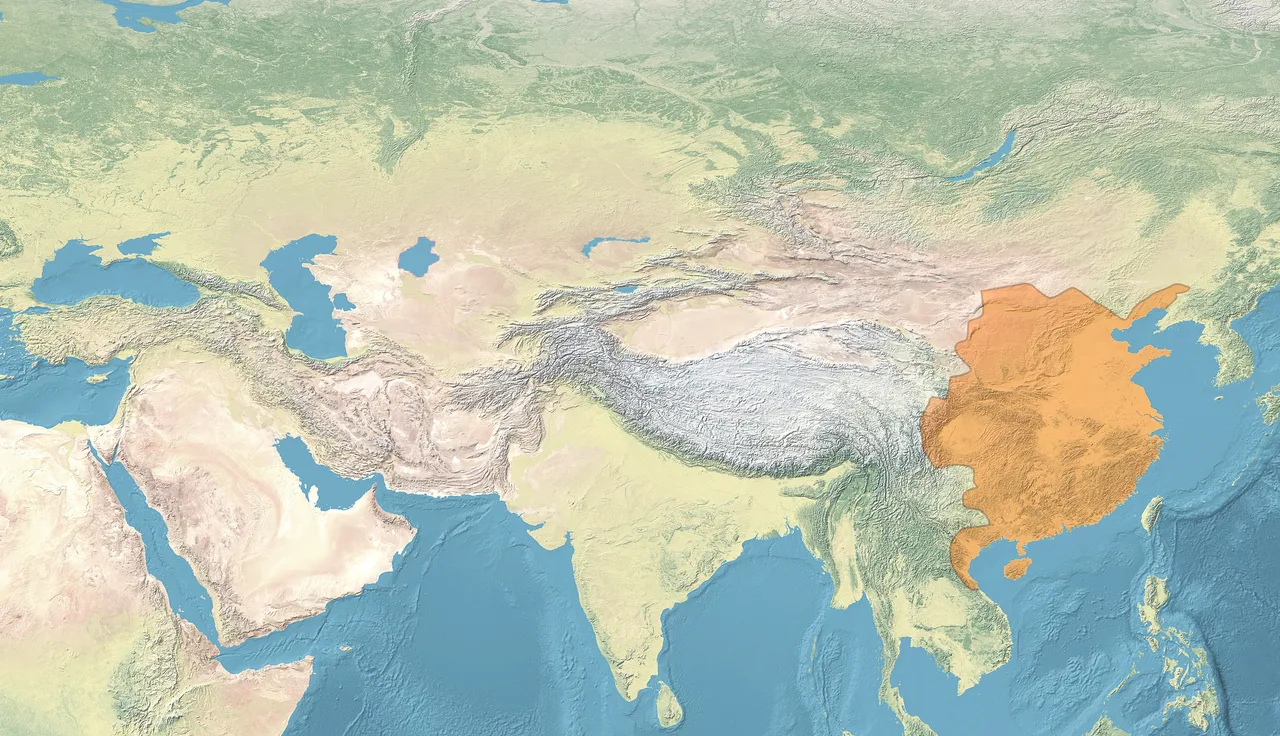
- Chinese Historical Timeline: 485 CE to 780 CE. This period begins in the ninth year of the Taihe reign, when Emperor Xiaowen of Northern Wei issued the Equal-Field edict. It ends in the first year of the Jianzhong reign under Emperor Dezong of Tang, when the Two-Tax System replaced it. In total, the system lasted nearly three centuries across the Northern and Southern Dynasties, the Sui, and the Tang.
- Western & Mediterranean Timeline: The late 5th to late 8th century CE. This era spans the rise of Germanic kingdoms after the fall of the Western Roman Empire, the creation of Justinian's law code, and the military reforms of the Byzantine Empire, right up to the eve of Charlemagne's crowning in the Frankish Kingdom.
In 485 CE, Empress Dowager Feng and the young Emperor Xiaowen of the Northern Wei issued a bold new law across North China. It would form the tax backbone of Chinese empires for the next three hundred years: the Equal-Field System (Equal-Field System (Juntian Zhi)).
On paper, the law looked like a farmer's dream. Under the Northern Wei code, every adult man aged fifteen or older got 40 mu of "open fields" (lutian, main grain land) and 20 mu of "mulberry fields" (sangtian) from the state. Married women got 20 mu of open fields. If a family owned farm oxen, each animal earned an extra 30 mu, up to four oxen per home. By the Sui and Tang eras, rulers made this ledger even clearer. Under the Tang Kaiyuan Statutes of 737 CE, every taxable man aged eighteen or older had a legal right to 100 mu of land (about 13.8 acres or 5.6 hectares). This grant was split into 80 mu of lifetime "personal-share fields" (koufentian) and 20 mu of "perpetual-tenure fields" (yongyetian) that his heirs could inherit.
Old histories often praise this policy as wise and humane governance. They claim it curbed greedy landlords and put soil into the hands of working farmers. Yet a look at the empire's account books raises an obvious question about supply. Land is not like bronze Wuzhu or Kaiyuan Tongbao coins. State mints cannot stamp new acres out of thin air. Nor did the Northern Wei, Sui, or Tang rulers start a bloody land war to strip northern noble clans of their family estates. If the best lands of rich lords stayed untouched, where did the empire find tens of millions of mu to hand out to millions of poor families? Behind the legal promise of 100 mu per man, how did the real numbers add up for a village farmer versus the central treasury?
01. A Century of Carnage: The State Wasteland Pool and the Battle for Households
Turning the Equal-Field law from paper into plowed dirt rested on a grim physical reality. North China had just suffered over a century of brutal war and population loss after the fall of the Western Jin Dynasty.
First came the War of the Eight Princes (291–306 CE) and the southward flight during the Yongjia era, followed by the southward relocation of the capital to Jiankang. Then came the endless wars of the Sixteen Kingdoms period. The rich farm heartland of the Yellow River basin—modern Henan, Hebei, Shanxi, Shandong, and the Guanzhong plain—lost most of its people. Armies burned walled villages to ash. Millions of free farmers either died in war or fled south to the Yangtze valley. They left behind vast stretches of unowned, weed-choked farmland. When the Tuoba Xianbei rulers of the Northern Wei unified the north in 439 CE, they did not face a crisis of too many people on too little land. Instead, they faced a tax desert. The soil was rich, but weeds covered it, and no registered taxpayers were left to plow it.
At the same time, rural North China suffered from massive tax dodging as families hid from census clerks. To escape war and endless state forced labor, refugees sought shelter under powerful local clans. They became dependent tenants known as "sheltered households" (baoyinhu) on private noble estates. Hiding under a great lord's wing cost a steep price. Tenants paid over half their harvest in private rent to the manor lord. However, this deal kept them safe from state military drafts and labor gangs. For the Northern Wei treasury, millions of farmhands vanishing from official census rolls meant no grain tax, no silk tribute, and no army recruits.

To break this deadlock, the Northern Wei Dynasty (Northern Wei) court carried out a two-part tax reform between 485 and 486 CE. First, it passed the Equal-Field System (Equal-Field System (Juntian Zhi)). The state gathered unowned wartime wasteland, royal pastures, and public fields into a state land pool. It then gave farming rights straight to peasant families based on how many workers they had. Second, it set up the Three Elders System (Three Elders System) at the village level. The state named a Neighborhood Elder (linzhang) for every five homes, a Village Elder (lizhang) for every five neighborhoods, and a District Elder (dangzhang) for every five villages. These local bosses went door to door to root out hidden tenants from noble estates and write their names back onto the royal tax rolls.
The land given to poor farmers never touched the private holdings of great noble families. Nor did it cost the royal treasury a single ounce of silver in land buyouts. In fact, Northern Wei law let families claim extra land grants for enslaved servants and farm oxen. Because rich lords owned most of the slaves and cattle, noble clans used the new law to legally grow their estates. What the court gave ordinary farmers was wild, empty wasteland left behind by war. What the court got back was millions of registered taxpayers brought within reach of state tax collectors.
02. Auditing the Ledger: The Peasant's Micro-Budget vs. The Treasury's Macro-Accounts
Some view this system as a simple welfare program where the state gave away land and farmers grew grain. That view misses the clever tax design of early Chinese officials. We can place the legal rules of the Book of Wei (Weishu) and the Six Statutes of the Tang (Tang Liudian) next to real 8th-century household records dug up at Dunhuang and Turpan. When we do, a wide gap opens between paper promises and village reality.
The Peasant and Village Headman's Micro-Ledger: Shortchanged Fields, Full-Price Taxes
For an ordinary registered adult man (dingnan), the land he got under the Equal-Field System was not his own private property. It was a lifetime lease tied to strict tax and labor duties.
Land rights came with tight strings attached. Under Tang law, out of a man's legal 100-mu grant, only 20 mu of "perpetual-tenure fields" (yongyetian) could pass down to his children. These plots were meant for growing useful trees like mulberry, elm, and jujube. The other 80 mu of "personal-share fields" (koufentian—the main grain land) belonged to the state. A farmer got his plot when he reached taxable manhood at eighteen. He had to give half of it back to the state when he became an "elderly male" (laonan) at sixty. When he died, the state took back the rest so local clerks could hand it out to young men just turning eighteen in the village. Selling or pawning personal-share fields was strictly against the law, except in times of extreme hardship.
A much harsher catch lay in how the state balanced land grants against tax bills. Local officials could cut a farmer's land grant when public wasteland ran low, but the treasury never cut his head tax.
Household records dug up at Dunhuang and Turpan let us check this gap down to the single mu. A surviving census scroll from 747 CE (the sixth year of Emperor Xuanzong of Tang's Tianbao reign) records the families of Duxiang Village in Longle District, Dunhuang County. It lists both the "legal entitlement" (yingshoutian) and the "land actually received" (yishoutian) for every taxable man. Take the records for ordinary farmers like Cheng Sichu and Cao Sili. The scroll notes that each man had a legal right to 1 qing (100 mu). Yet their actual registered land was only 30 to 45 mu, followed by a blunt official note: "sixty-some mu unallocated." In crowded core areas near the capitals of Chang'an and Luoyang—which Tang clerks called "narrow districts" (xiaxiang)—ordinary adult men often got less than 20 mu.
| Accounting Dimension | Statutory Paper Standard (Tang Kaiyuan Land & Tax Statutes) | Ground-Level Execution (Dunhuang & Turpan Household Registers) | Fiscal & Social Fallout |
|---|---|---|---|
| Adult Male Land Allotment | *100 mu** per taxable male (80 mu personal-share + 20 mu* perpetual-tenure) | *30–45 mu in Dunhuang (over 60% marked "unallocated"); often under 20 mu*** in crowded Central Plains districts | State reserve land pools ran dry; statutory entitlements became unbacked paper promises |
| Land Transfer & Reversion | Personal-share fields banned from sale; returned to the state upon old age or death for redistribution | Illicit private transfers disguised as "mortgages" or "leases"; families concealed deaths of elders to keep land | Local governments lost their revolving land pool while wealthy households bought up distressed plots |
| *Annual In-Kind Taxes (Zu & Diao)* | *2 dan of millet (Zu grain tax) plus 2 zhang of silk & 3 liang of floss or hemp equivalent (Diao* cloth tax) per man | Collected in full per head, regardless of whether a farmer actually held 100 mu or 20 mu | The smaller the actual land grant, the higher the effective tax rate per mu, accelerating peasant bankruptcy |
| *Annual Corvée Labor (Yong & Miscellaneous Levies)* | 20 days of regular state labor per year (commutable at 3 chi of silk per day, called Yong), plus local corvée | Beyond the 20-day regular levy (or silk commutation), village headmen imposed unpaid post-station, canal, transport, and Fubing militia duties | Prime male laborers were pulled from farms or forced to pay heavy silk commutations, breaking household finances |
Let us run the yearly budget for a Tang farmer in a "narrow district" who got only 30 mu of dry land.
In North China's dry farming zones, one mu yielded about 1 dan of raw millet. A Tang dan held about 53 liters, or roughly 40 kilograms of raw grain. Even in a year with good rain, 30 mu brought in a total harvest of about 30 dan of millet. The Zuyongdiao Taxation System charged taxes per registered adult man rather than per mu of land actually farmed. Thus, a poor farmer with only 30 percent of his legal land grant still owed the full 100-mu tax bill:
- *Grain Tax (Zu): A flat fee of 2 dan* of millet. This took 6.7 percent of his total harvest right off the top.
- *Cloth Tax (Diao) and Labor Buyout (Yong): Each year, he owed 2 zhang (about 6 meters) of silk cloth and 3 liang (about 110 grams) of raw silk floss. The state also required 20 days of forced labor per year. If the state made him pay goods instead of working (shuyong daiyi), he owed another 6 zhang of silk (3 chi per day for 20 days). Together, his cloth bill reached 2 full bolts of silk (8 zhang, or about 24 meters) plus 3 liang of floss. In rural Tang China, bolts of silk served as hard cash alongside bronze coins. Weaving two bolts of standard tax silk took a farm woman months at the loom. If the family lived in an area too cold or dry for mulberry trees and silkworms, the farmer faced a double loss. He had to dump his grain onto the local market right after harvest, when grain prices hit rock bottom. He then used that small sum to buy silk from traders, losing another 6 to 8 dan* of millet.
- Extra Forced Labor and Fubing System Militia Duty: If officials picked the farmer for the Fubing System militia, he had to pay his own travel costs to guard the capital or fight on the border. By law, his family had to buy his gear out of pocket. This list included a bow, thirty arrows, a hengdao sword, a thick armor coat, dry grain rations, and shared pack horses.
For village headmen (lizheng), balancing the local books was just as cruel. The central court graded District Magistrates and village headmen on two strict targets: growth in registered homes and full payment of fixed Zuyongdiao Taxation System quotas. When broke villagers died or ran away, leaving their fields empty, higher officials rarely cut the village's total tax bill right away. To avoid a whipping from the District Magistrate, the village headman forced the remaining neighbors to pay the runaways' back taxes. This practice was called "apportioning the fled" (tantao). Sharing the debt of runaway neighbors pushed the remaining families past their limit. Soon, whole villages packed up and fled in a chain reaction.
The Central Court's Macro-Fiscal Ledger: Zero-Cost Land Reclamation and a Predictable Tax Base
From the Department of State Affairs (Shangshu Sheng) and its Bureau of General Accounts in Luoyang or Chang'an, however, the picture looked very different. Pairing the Equal-Field System (Equal-Field System (Juntian Zhi)) with the Three Elders System (Three Elders System) and the Zuyongdiao Taxation System brought huge fiscal payoffs and steady military administration during a dynasty's first hundred years.
Early medieval rulers hit a hard management wall. Their staff lacked the tools and clerks needed to measure the exact size and soil quality of every field in the empire. They certainly could not check every farm family's yearly harvest. Taxing crops as a share of real harvests required an army of local clerks. Their bribes and wages would easily eat up the tax income.
The Equal-Field System bypassed this bottleneck with a simple, standard tax package:
- Pushing land clearing costs onto farmers: The royal treasury did not need to pay for costly state farms. By giving farming rights over empty wasteland to landless refugees, the state let poor families spend their own sweat to clear brush and turn dead dirt into rich cropland.
- Making tax math simple: The law rested on a legal fiction that every adult man held a standard plot of state land. Because of this, the Ministry of Revenue (Hubu) never needed to check how much grain a farmer actually grew. Village elders under the Three Elders System (
Three Elders System) and its Sui-Tang heirs updated household rolls (huji) every three years and tax books (jizhang) every year. Central clerks simply counted the total number of taxable men (keding, aged 18 to 59) across the empire. By multiplying the total number of taxable men by the fixed per-head Zuyongdiao rate, the Minister of Revenue in Chang'an could flick a few beads on his abacus. In moments, he could predict next year's grain income, silk stocks, and free labor days. - Slashing military expenditure through farmer-soldiers: Built on top of these Equal-Field smallholders, the Fubing System ran from the Western Wei and Northern Zhou through the Sui and early Tang. It forced farmers who got state land to train during the winter off-season and march to war carrying their own weapons and food. For over a century, this saved the royal treasury the huge military expenditure of feeding and paying a full-time standing army.
For the first hundred years after a dynasty's birth, while post-war wasteland stayed plentiful, this model worked wonders. It gave the empire steady income in grain and silk, a vast pool of free labor, and a cheap army—all at near-zero startup cost to the crown.
03. The Chain Reaction of Collapse: How an Empty Wasteland Pool Triggered the Tang Fiscal Crisis
If this big-picture ledger worked so well for the central court, why did the Equal-Field System and the Zu-Yong-Diao tax structure grind to a halt by the mid-8th century?
The crash happened because the system rested on two fragile beliefs. First, it assumed the state would always hold enough empty wasteland to keep the shared land pool turning. Second, it assumed every adult man would get enough soil to pay a flat head tax. After a century of peace under the Tang, both assumptions failed at once.

Natural population growth drained the public land pool first. Between the early Zhenguan reign of Emperor Taizong of Tang Dynasty (Tang Dynasty) and the Tianbao era (742–756 CE), registered homes on the census nearly tripled. They rose from under 3 million to almost 9 million, pushing the total population past 50 million. Without a big leap in farming tools or crop yields, farmers quickly used up the supply of wild wasteland across North China and the Guanzhong plain.
Worse still, the ruling elite ate away the remaining public land from the inside, both legally and illegally. Tang law gave princes, nobles, and high officials huge grants of "officials' perpetual-tenure fields" (guanren yongyetian) and royal gift lands (citian). These grants ranged from several hundred to ten thousand mu—and none of them had to go back to the state pool. During the late reign of Wu Zetian and the political turmoil around Emperor Zhongzong of Tang and Empress Wei (705–710 CE), Princess Taiping, Princess Anle (both holding the rank of Imperial Princess), Empress Wei's family clan, and great royal Buddhist temples went on a land-grabbing spree around Chang'an and Luoyang. They used special "ink edicts" (mochi)—private royal orders sent straight from the palace that skipped central government review. Armed with these notes, court favorites seized public and private fields to build sprawling country estates (tianzhuang). Noble and temple land grabs swallowed the spare personal-share fields that District Magistrates needed to keep the cycle of "take back at death, hand out at adulthood" running.
Once the state wasteland pool hit bottom, a deadly tax chain reaction swept through the empire's rural tax base:
> The Fiscal Collapse Chain:
> Peacetime population boom + noble gift-land & temple land grabs ➔ State spare land pool runs dry; new adult men get under 30% of their legal land grant ➔ Zuyongdiao taxes and militia duties are still taken in full per head, doubling the real tax rate per *mu* in crowded districts ➔ Broke farmers hide family deaths, illegally pawn personal-share fields, and flee the census rolls as unregistered migrant families (*kehu*) ➔ Village headmen enforce "apportioning the fled" (*tantao*), dumping runaway tax bills onto remaining neighbors and sparking whole-village flight ➔ The state's base of registered taxable men (*keding*) plunges; Fubing System bases run out of soldiers and treasury income dries up ➔ The An Lushan Rebellion shatters the remaining census network, forcing the Tang court in 780 CE to scrap the Equal-Field System for the Two-Tax System (taxing real land and wealth instead of heads)
The Treatise on Food and Money in the New History of the Tang (Xin Tangshu) describes this drop in blunt terms. By the Kaiyuan and Tianbao eras (713–756 CE), "laws fell into ruin, and the evils of land grabbing beat those of the reigns of Emperors Cheng and Ai of Han." To stay alive, desperate farmers sold or pawned their state personal-share fields at dirt-cheap prices to rich locals. They hid these banned sales under fake names like "pledges" (zhidian) or "extra leases" (tielin), sliding back into rent slavery on private manors. Others packed up their families and fled south to the Yangtze valley or the Jing-Xiang region. There, state census control stayed weak, and runaways could clear hill plots as unregistered "guest households" (kehu).
After the An Lushan Rebellion broke out in 755 CE, the number of taxable adult men under central Tang rule dropped by nearly 70 percent from its pre-war peak. The Equal-Field books sitting in the Ministry of Revenue had turned into stacks of dead men's names and ghost acres. They listed 100-mu grants for farmers who had fled twenty years earlier, on dirt long since swallowed into the private estate of a General-in-Chief or a tax-free temple. In 780 CE (the first year of Emperor Dezong's Jianzhong reign), Chancellor Yang Yan (Yang Yan) finally pulled the plug on the lie. Putting forward the Implementation of the Two-Tax System (Two-Tax System (Liangshuifa)), he set a new tax rule: "take wealth and property as the sole standard, not the adult male body." The royal state dropped its promise to hand out land to every farmer. It made private land ownership and open-market sales legal, and it shifted to taxing families based on the acres and wealth they actually held. After nearly three hundred years, the Equal-Field ledger closed for good.
04. Cross-Imperial Fiscal Comparison: The Roman Ager Publicus and China's Equal-Field System
Looking across Eurasia, using state-owned land to support free small farmers—who in turn gave the treasury taxes and the army soldiers—was not unique to early China. In the Roman Republic, the handing out of "public land" (ager publicus) and the land laws of the Gracchi brothers ran on the exact same tax and military logic as the Equal-Field System (Equal-Field System (Juntian Zhi)). Yet the very different fates of the two systems show deep structural differences between Roman and Chinese statecraft.
Shared Fiscal and Military Logic: Feeding the Taxpayer-Soldier with Public Land
During the growth of the Roman Republic, whenever Roman legions beat an Italian city-state or rival power, Rome took a cut of the defeated land. It usually seized about one-third of the enemy's farmland, turning it into state-owned public land (ager publicus). The Roman Senate prized this land pool for a hard military and fiscal reason. Under the early Servian rules, only free citizens who owned a minimum amount of land (assidui) had the legal duty and right to buy their own armor and weapons, serve in the legions, and pay wartime property taxes (tributum). Landless citizens (proletarii) paid no direct property taxes and could not serve as heavy foot soldiers.
This setup mirrors the Northern Wei, Sui, and early Tang trio of Equal-Field land grants, Zu-Yong-Diao taxes, and Fubing militia duty across three core points:
- Source of the land pool: Neither empire started by taking away the private estates of its own ruling nobles. Both handed out new state land created by war. Rome did this by seizing land from beaten neighbors abroad. Northern Wei through Tang China did it by sweeping up unowned home wasteland left behind by civil wars.
- Keeping state ownership: When Rome rented out ager publicus or gave plots to poor settlers, legal title stayed with the Roman state and people. Farmers on the land owed a share of their crops or a grazing fee (scriptura) to the treasury. In the exact same way, legal title to Tang personal-share fields stayed with the crown while farmers paid Zu-Yong-Diao taxes.
- Causes of breakdown: By the 2nd century BCE, Roman senators routinely broke the Lex Licinia Sextia of 367 BCE. That law capped one person's holdings of ager publicus at 500 jugera (about 325 acres). Rich nobles fenced off huge tracts of public land to build slave-run cash farms (latifundia). Meanwhile, Roman small farmers fighting long wars overseas went broke and lost their family farms. Soon, the legions ran short of qualified citizen recruits. In 133 BCE, Tribune of the Plebs Tiberius Gracchus passed his Lex Sempronia Agraria. He aimed to take back public land held by nobles above the legal cap and hand it out to landless citizens in permanent 30-jugera plots. It was an uncanny Roman twin to the Equal-Field law.
Institutional Divergence: Why Rome's Reform Ended in Bloodshed While China's Ran for Three Centuries
Despite sharing the same tax logic, the Gracchan land reform died in just over ten years. Angry mobs led by senators murdered both Tiberius (133 BCE) and his brother Gaius Gracchus (121 BCE). By contrast, China's Equal-Field System worked as binding royal law for nearly three hundred years. Its legal model even spread across East Asia. It inspired Japan's Handen Shūju (Allotment-Field) system after the Taika Reforms of 645 CE and shaped centuries of land-reform debates in Korea under the Goryeo and Joseon dynasties. What explains this split? The answer lies in the two empires' political property rules and village-level management reach:
First, the balance of power between the ruler and the landed nobles differed at the root. A tight club of senators ruled the Roman Republic. The very lords who had fenced off thousands of jugera of ager publicus sat in the Senate and wrote the laws. Rome had no strong royal crown standing above the nobles to enforce land caps or seizures. In Northern Wei, Sui, and Tang China, an all-powerful emperor sat at the top. He was backed by the legal view that "all land under Heaven belongs to the king." He held supreme lawmaking power and ruled through paid civil servants who enforced uniform land laws across the empire.
Second, China had a permanent village census and land-tracking network that Rome lacked. The Roman Republic had no full-time civil service reaching down into every village to list families and manage yearly land returns. The Gracchi had to set up a temporary three-man land board (tresviri agris iudicandis assignandis) to check disputed boundary stones in person. This slow setup made it easy for senators to block them in court. Starting with the Northern Wei's Three Elders System (Three Elders System) and running through the Sui-Tang village grid, Chinese clerks updated family rolls every three years and tax books every year. Clerks wrote down the legal right, actual acres received, unallocated shortfall, and four border markers (sizhi) for every single plot held by every farm family, just as we see in the Dunhuang scrolls. That tight grip kept the system running by habit for decades even after spare public land grew scarce.
Third, the two empires left their small-farmer crises along opposite paths. Rome's supply of public land relied on foreign conquest. When the Gracchan land handout failed, Gaius Marius (107 BCE) scrapped the land requirement for army service altogether. Rome hired landless proletarii into full-time armies. These soldiers looked to their generals—not the Senate—to win loot and retirement land grants, paving the way for warlord civil wars and the fall of the Republic. Imperial China ran an inward-looking farm tax state. Once peacetime population growth ate up the one-time bonus of post-war wasteland, the Tang Dynasty did not break into warlord armies handing out farm plots as feudal fiefs. Instead, through the Two-Tax System of 780 CE and the shift to a Recruitment-Based Standing Army System (mubingzhi), the empire moved on. It shifted from an early system of direct state control over people and land plots to a later tax system built on land wealth.
Balancing this three-hundred-year ledger—reconstructed today from Dunhuang manuscripts and transmitted historical sources—answers our opening question. Generous emperors never magicked the fields of the Equal-Field System out of thin air, nor did they seize them from noble manors. Those fields were the unowned wastelands left behind by a century of war and death. Once generations of peacetime plows turned the last acre of unclaimed dirt into family plots and noble estates, the tax ledger that had funded the golden age of the Tang Empire had no choice but to close.
Primary Sources & Historical Bibliography
- *Wei Shou (Northern Qi), Book of Wei (Weishu), Vol. 110, Treatise on Food and Money (Shihuo Zhi)* (Zhonghua Book Company punctuated edition): Keeps the full text of Emperor Xiaowen's 485 CE Equal-Field law, handout rules for open fields and mulberry fields, and Li Chong's 486 CE report setting up the
Three Elders Systemalongside new grain-and-silk tax rates. - *Li Linfu et al. (Tang), ed. Chen Zhongfu, The Six Statutes of the Tang (Tang Liudian), Vol. 3, Ministry of Revenue (Shangshu Hubu) (Zhonghua Book Company, 1992): Lists the legal Kaiyuan-era land grants (80 mu of personal-share fields and 20 mu of perpetual-tenure fields per adult man), rules splitting "broad districts" (kuanxiang) from "narrow districts" (xiaxiang*), and the legal Zuyongdiao Taxation System rates.
- *Ouyang Xiu & Song Qi (Song), New History of the Tang (Xin Tangshu), Vol. 51, Treatise on Food and Money I (Shihuo Zhi I) & Liu Xu et al. (Later Jin), Old Book of Tang (Jiu Tangshu), Vol. 48, Treatise on Food and Money I*** (Zhonghua Book Company punctuated editions): Tracks the fall of the Tang Equal-Field System, noble land grabs from Wu Zetian through Emperor Zhongzong of Tang's reign, the flight of unregistered migrant families under Emperor Xuanzong of Tang, and Chancellor Yang Yan's 780 CE report setting up the Two-Tax System.
- *Tang Geng'ou & Lu Hongji (eds.), Transcriptions of Authentic Socio-Economic Documents from Dunhuang, Vol. 1 (Dunhuang Shehui Jingji Wenxian Zhenji Shilu) (Bibliography and Document Publishing House, 1986): Holds full copies of dug-up family rolls, including the 747 CE Household Register of Duxiang Village, Longle District, Dunhuang County*, showing the home-by-home gap between legal land rights and actual grants.
- *Hori Toshikazu, A Study of the Equal-Field System: Land Policy and Land Ownership in Ancient China (Kinden-sei no Kenkyū)* (Iwanami Shoten, 1975; Chinese trans. by Han Sheng et al., Fujian People's Publishing House, 2006): The key research book on the roots of the Equal-Field land pool, legal ownership rules, Hereditary Succession restrictions, and village handout practices from the Northern Wei through the Tang Dynasty.