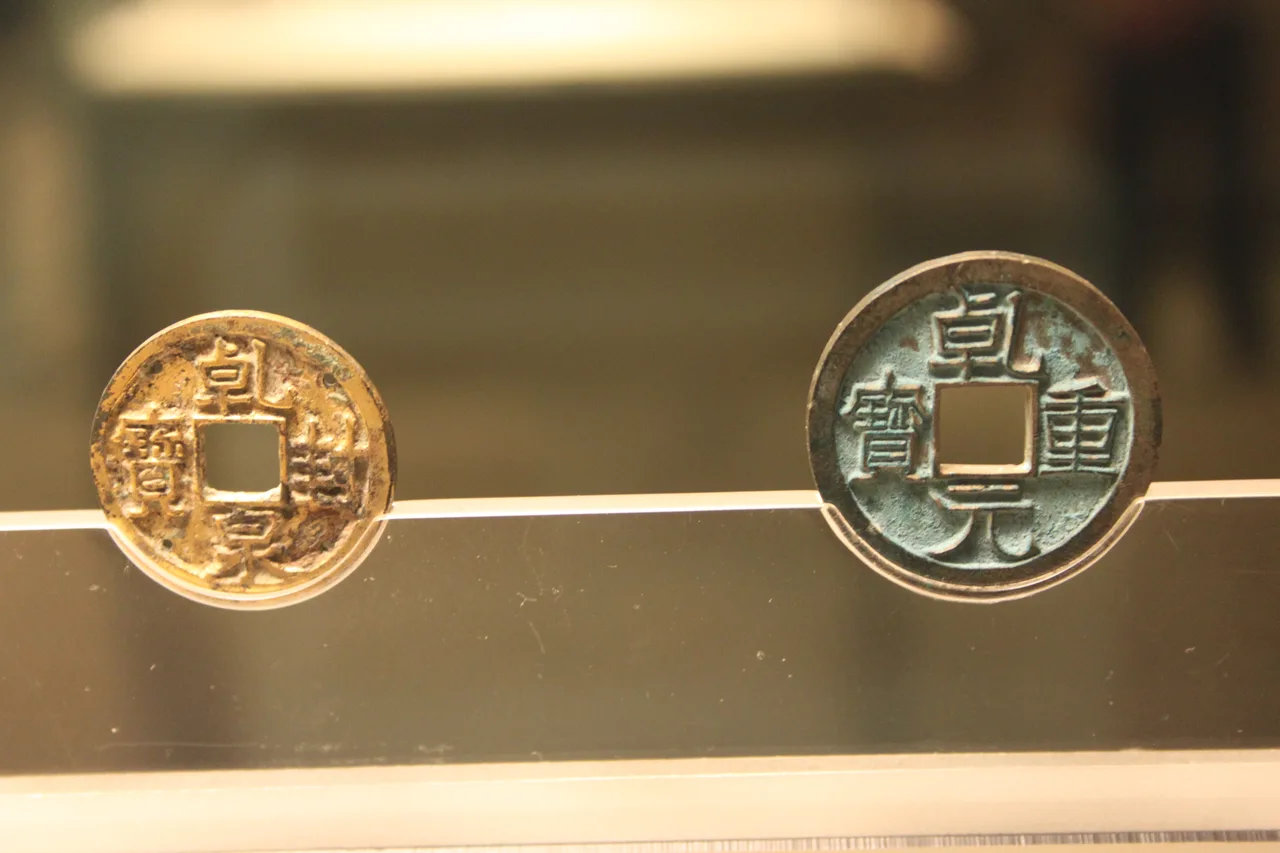
TL;DR · Core Takeaways
- Collapse of the old tax base: Seventeen years after the court quelled the An Lushan Rebellion, registered taxable households on central ledgers dropped from over eight million during the peak Tianbao era to roughly 1.2 million. This drop broke the head-based Zuyongdiao Taxation System.
- Rebuilding tax fundamentals: In 780 CE, Grand Councilor Yang Yan replaced the old grain-and-cloth levies with the Two-Tax System. He ended the old divide between native and migrant households. The state stopped taxing mobile bodies and began taxing stationary land and real wealth. This move brought registered taxable households back up to 3.1 million in just one year.
- Monetary trap: The reform set tax amounts in copper cash but collected payments in real goods. A severe coin shortage soon hit the mid-Tang economy. Silk prices fell while the fixed cash tax stayed the same. As a result, the real tax burden on peasants grew three to five times heavier.
Historical Context
- Chinese timeline: In 780 CE, Yang Yan became Grand Councilor and started the Two-Tax System reform under Emperor Dezong of Tang. Twenty-five years had passed since the outbreak of the An Lushan Rebellion. By this time, the imperial Equal-Field System (Juntian Zhi) had collapsed completely.
- Mediterranean and Western world timeline: In the late eighth century CE, Charlemagne of the Frankish Kingdom fought the Saxon Wars and built up the manorial estate system. In the Byzantine Empire, Empress Irene ruled under a regency during the Isaurian dynasty, using the gold solidus to run tax assessments across provincial army themes.
01. 1. Phantom Ledgers: When an Eight-Million Tax Base Shrank to Barely a Million
In 780 CE, Emperor Dezong of Tang took the throne and started the Jianzhong era. Seventeen years had passed since the An Lushan Rebellion ended. Even so, the central treasury faced a money crisis rather than a real recovery.
Officers at the Ministry of Revenue worked with account books that did not match daily life. Imperial rules still described the old Zuyongdiao Taxation System created by early Tang rulers. Under that plan, each adult male got one hundred mou of state land. In return, each taxpayer paid a fixed share of grain, silk fabric, and silk floss, while also giving twenty days of labor. On paper, tax rates looked low and fair. They seemed to follow the classic ideal of Humane Governance.
Long wars and growing fanzhen separatism wiped out that ideal. The court had no spare land to hand out. Big fields across the north lay empty as farm families fled south toward the Yangtze River and Sichuan. Local warlords, noble clans, and Buddhist temples took over empty land. They built up private manors across thousands of acres. In 755 CE, central rolls listed 8.91 million households. By the end of the Dali era under Emperor Daizong, the Ministry of Revenue could collect taxes from barely 1.2 million households.
More than eighty percent of the labor force had vanished from imperial tax rolls. Yet the court still had to feed the Shence Army in Chang'an and pay for daily state tasks. To raise cash, the central court began to allow and create off-book taxes. Every Military Commissioner and each local official invented extra fees. They added field taxes, road tolls, house taxes, and steep markups on salt and wine.
A large gap opened between written laws and real tax collections. A small farmer who stayed on family land paid his own head tax. At the same time, local leaders forced him to pay the unpaid taxes of neighbors who had fled. Meanwhile, rich merchants, high officers, and big temples kept large estates. They used legal exemptions or hidden rolls to avoid civic work. Even a noble Commander of Ten Thousand or a court scholar serving as Manager of the Library could keep broad holdings off local rolls. The treasury struggled to pay palace guards in Chang'an, while rural smallholders faced financial ruin under uncoordinated regional extraction.
Emperor Dezong needed a skilled leader who could rebuild state cash flow from the ground up. In early 780 CE, the emperor chose Yang Yan, who served as Vice Director of the Chancellery and Chief Councilor, to take charge of imperial finances.
02. 2. Structural Revolution of the Two-Tax System: Reorganizing Tang Cash Flow
Yang Yan saw the root flaw in the old tax model. Early laws tried to pin moving workers to fixed plots through state force. That control vanished during the wars. While war refugees moved often, their land, farmhouses, and shops stayed in one spot.
In the second month of 780 CE, Emperor Dezong approved Yang Yan's reform Memorials and set up the Two-Tax System across the empire. Yang Yan pointed out the big flaw of the Zuyongdiao system. He noted that taxing fixed head quotas on missing names drove farmers away. It left empty homes with unpaid dues and squeezed more out of the few people who stayed behind.
The new policy threw out old tax habits and rebuilt state revenue across five core areas:
| Fiscal Accounting Metric | Zuyongdiao and Post-War Levies (Old Regime) | Yang Yan's Two-Tax System (780 CE Reform) | Institutional Evolution |
|---|---|---|---|
| Budget Logic | Spend within income (rigid statutory quotas; emergency levies to cover deficits) | Calculate outlays to set collections (central court sets aggregate expenditure first, apportioning quotas to prefectures) | Introduces expenditure-driven budgeting and halts arbitrary local levies |
| Household Census | Fixed by ancestral origin; separates native residents from migrant refugees | Tax by current residence without distinguishing native from migrant (all residents assessed on current assets) | Eliminates ancestral status monopolies and expands coverage to mobile labor |
| Tax Assessment Base | Adult male bodies (fixed per-capita rate regardless of total wealth) | Tax by wealth rather than age brackets (households graded by total land and property) | Shifts direct taxation from individual physical labor to real property and productive assets |
| Payment Calendar & Unit | Erratic deliveries of grain and silk; year-round labor corvée | Two annual collections (Summer levy by the sixth month, Autumn levy by the eleventh month); assessed in coin, paid in kind | Establishes a predictable tax calendar and shifts imperial books toward money accounting |
| Commercial Capital | Poll taxes only; long-distance merchants avoided direct central assessment | Transit merchant tax of three percent (thirty cash per thousand), delivered to local treasuries | Brings mobile inter-regional commercial capital into the imperial tax base |
This structural pivot created a clear chain of cause and effect:
$$
\text{Abandon Household Grain-and-Labor Controls} \longrightarrow \text{Anchor Tax Base to Land and Assets} \longrightarrow \text{Consolidate Miscellaneous Levies into Summer and Autumn Taxes} \longrightarrow \text{Double Taxpayer Households and Restore Imperial Cash Flow}
$$
!Map of the late Tang Dynasty showing the geographic fragmentation of fanzhen separatism and central control zones (Source: naturalearthdata.com / Wikimedia Commons, License: CC BY-SA 4.0)")
To see how this change restored state funds, we can look at the books from two sides: the local county and the imperial court.
Balance Sheets of Common Households and Local Officials
At the local level, Yang Yan lifted the shared tax debts that had crushed small farmers. Under the old rules, local leaders made surviving villagers pay the taxes of runaways. This forced poor farmers with small fields to give up grain and cloth for missing neighbors.
The new rules set fixed quotas using the actual taxes collected in the fourteenth year of the Dali era (779 CE). Each District Magistrate grouped local households into nine wealth grades by looking at land, buildings, and livestock. Poor families in the lowest rank paid small summer and autumn taxes. Rich migrant merchants who had used residency tricks to dodge civic labor had to pay full local taxes on their land and homes. Traveling traders paid a three percent tax on goods they sold.
For county clerks and administrators, the clear schedule cut down daily friction. Before this, dozens of random fees required monthly tracking. The Two-Tax System rolled regular head dues, grain tributes, and labor corvée into two clear collections. The summer tax took wheat and light crops, while the autumn tax collected rice and millet. This simple calendar replaced messy extortion with a steady administrative routine.
Imperial Treasury Balance Sheets at Court
At the imperial level, the reform drove the largest growth in the tax base since the start of the dynasty.
By adding unlisted tenant farmers, hired laborers, and big estates to state ledgers, the court raised taxable households from 1.2 million to over 3.1 million in the first year of the New Policies. Without adding new people to the land, the court found and taxed hidden rural wealth.
Total revenue collected in 780 CE reached over 13.05 million strings of copper cash along with more than four million shi of grain. This surplus wiped out regular deficits and met every urgent military expenditure by supplying ample military provisions for palace troops. Emperor Dezong used this steady southern income to fund wars against rebel warlords in Hebei and Henan, adding a century to the dynasty's life.
03. 3. The Deflationary Nightmare: The Fatal Flaw of an Ingenious Design
The Two-Tax System had a clean institutional design, but it soon hit a hard money wall: a tiny coin supply and sharp price deflation.
Yang Yan set up an accounting rule that tallied dues in copper cash while letting farmers pay in real goods like silk or grain at current market rates. This rule was meant to stop local clerks from cheating peasants with false scales or oversized grain boxes.
Eighth-century Tang China did not have the monetary tools to run a cash-based tax system. Imperial mints made only 100,000 to 300,000 strings of copper cash per year. As trade grew between regions, the demand for money outran supply. Rich merchants melted coins into bronze mirrors and statues to gain from metal price spreads, while rich landlords hoarded cash in underground vaults. A severe coin drought spread across the Guanzhong plains and the southern river valleys.
The coin shortage caused crop prices to crash while the buying power of metal money surged. When the court passed the reform in 780 CE, wartime inflation set the price of a standard bolt of silk at 3,200 to 4,000 copper cash. A middle-tier peasant household with a tax bill of 4,000 cash paid its full debt with one single bolt of silk.
During the Zhenyuan and Yuanhe eras under Emperor Dezong and Emperor Xianzong, price deflation grew worse. The open-market price of silk fell below 1,500 cash, then 1,000 cash, and at last sank to 800 cash per bolt.
This price collapse created a harsh fiscal distortion:
- The court's ledger stayed flat, still asking for 4,000 copper cash from the home;
- To pay that same cash figure, a small farmer now had to weave and deliver five full bolts of silk.
The nominal tax rate never changed, but the shifting value of coin made the peasant's physical tax burden several times heavier over two decades.
This structural split brought official complaints and poems of protest. Court advisor Master Lu Xuan criticized the Two-Tax System in his Memorials on equalizing taxes. The poet Bai Juyi attacked the harsh coin economy in his satirical poetry: "Private households have no coin furnaces, barren fields yield no copper mountains... as years advance, corrupt clerks exploit the void." Smallholders sold textiles below cost to find scarce copper coins. Corrupt money lenders and grain merchants rigged conversion rates, forcing broke peasants to sell their land and flee.
The central budget rule also broke down under court pressure. Yang Yan wanted two set yearly levies to take the place of all random fees. Yet when wars flared or the imperial treasury ran dry, the emperor and Military Commissioners added new surcharges on top of base rates. They billed farmers for transport waste, coin conversion, and palace gifts. The unified tax turned into a floor for new surcharges. This cycle returned centuries later with the Single Whip Law under the Ming Dynasty and the Integration of the Poll Tax into the Land Tax under the Qing Dynasty.
04. 4. Cross-Imperial Perspective: The Parallel Trap of the Byzantine and Late Roman Solidus
The currency trap that hurt Yang Yan's reform was not unique to East Asia. The growth of the Two-Tax System looks much like the money-based tax reforms in the late Roman Empire and mid-Byzantine state from Diocletian and Constantine onward.
In the fourth century CE, the Roman state faced debased coins and runaway inflation. Emperor Constantine rebuilt Roman public finance around a pure gold coin: the solidus. Struck at seventy-two coins to a Roman pound, the solidus kept a gold purity above ninety-five percent for centuries.
Late Roman and Byzantine leaders dropped random head taxes for an integrated asset tax system called the capitatio-iugatio. Every fifteen years, imperial auditors ran an indiction census. They counted land, farm beasts, and workers across provinces to fix tax debts in gold solidi.
The financial systems of these two empires shared key structural traits:
Both states tied real farm harvests to rigid coin benchmarks. The Byzantine treasury counted provincial taxes in solidi, but rural farmers lived in a trade-in-kind economy based on barley, olive oil, and wool. Small farmers rarely held gold coins. To pay imperial tax collectors (exactores), farmers sold grain right after harvest when market prices were lowest. When gold was scarce and crop prices fell, the farmer had to give more real grain and labor, driving rural homes into deep debt.
Both setups speeded the loss of free smallholders to big landlords. In the late Roman and Byzantine worlds, free peasants who could not get gold coins gave their land rights to wealthy nobles through protection pacts (patrocinium). They became tied to the soil as hereditary tenants (coloni), laying the groundwork for medieval European manors. In the late Tang Dynasty, falling crop prices pushed broke peasants off their land and onto private estates run by garrison chiefs and rich gentry.
One key difference separated the two states: control over the coin supply and central enforcement.
The Byzantine Empire kept a tight state grip on gold coins through imperial mints in Constantinople. The state banned gold exports, punished counterfeiters with death, and pulled back issued coins through tax collections. It used that hard cash to pay hired troops and civil staff. This closed loop protected the purity and value of the solidus for nearly seven hundred years. It gave Constantinople the liquid funds it needed to hold out against long sieges by Arab and Slavic forces.
The Tang court in Chang'an never built a firm monopoly over its bronze coins. Small bronze coins were easy to melt down into everyday items. The state could not mine enough raw copper to stabilize the coin supply. Nor could it build state-run banking networks to move cash between regions. Yang Yan's Two-Tax System saved the imperial treasury in the short run, but it could not shield rural workers from painful money shocks.
Primary Sources & Historical Bibliography
- Official Histories:
- Old Book of Tang, Vol. 118, "Biography of Yang Yan": Contains the original text of Yang Yan's Memorials advocating the Two-Tax System, core tax principles, and the structural reorganization of imperial finances during the first year of Emperor Dezong of Tang's Jianzhong era.
- New History of the Tang, Vol. 51, "Treatise on Food and Money I": Traces the evolution of imperial taxation from the disintegration of the early Tang Zuyongdiao Taxation System through the proliferation of miscellaneous levies under Emperor Daizong to the adoption of the Two-Tax System.
- Comprehensive Mirror to Aid in Government, Vol. 226, Tang Annals 42: Documents nationwide census adjustments, total revenue receipts, and administrative resistance encountered during the initial rollout of the reform in 780 CE.
- Tang Political Writings and Literary Collections:
- Lu Zhi, "Six Articles on Equalizing Taxation to Relieve the People" (Master Lu Xuan's Literary Collection, Vol. 22): An analytical critique of the Two-Tax System written a decade after implementation, examining coin deflation, extra-legal surcharges, and peasant distress.
- Bai Juyi, "Heavy Taxes" (Bai Juyi's Changqing Collection, Vol. 2): Satirical poetry illustrating how coin shortages and deflation damaged rural households across the Guanzhong plain during the Zhenyuan and Yuanhe eras.
- Modern Scholarly Works:
- Han Guopan, Studies on the Two-Tax System of the Tang Dynasty (Beijing: People's Publishing House, 1982): A structural investigation into agrarian relations, land tenure, and social hierarchies before and after the tax reform.
- Zheng Xuemeng, Studies on the Southward Shift of Ancient China's Economic Center and the Jiangnan Economy in the Tang and Song Dynasties (Changsha: Yuelu Shushe, 2003): Explores how the Two-Tax System tapped the agricultural output and canal transport of the Jiangnan region to sustain late Tang imperial finances.