Birth | Born in Wan County, Nanyang Commandery
48 CE
General
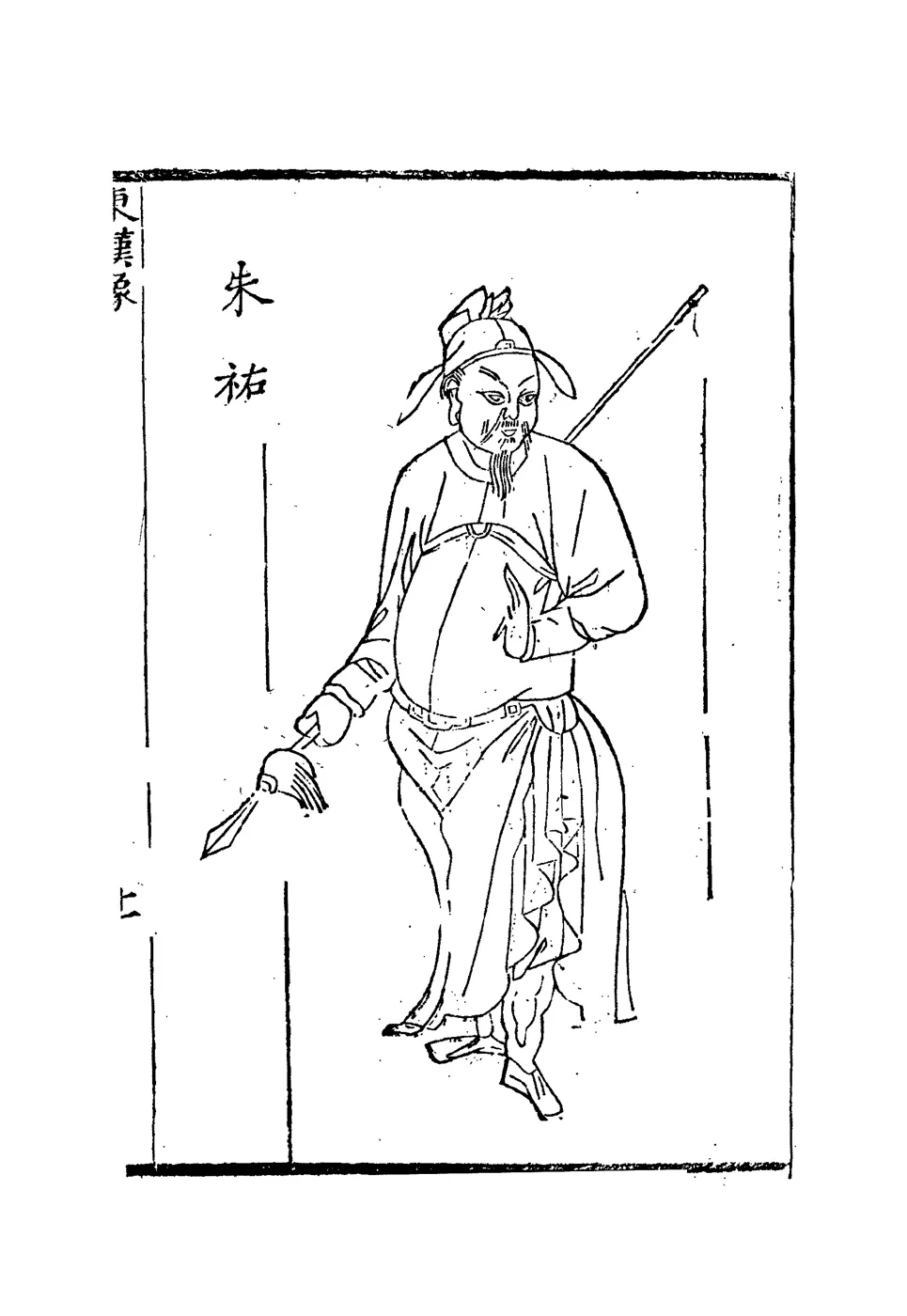
Zhu You
朱祐
Zhu You (c. 10 BCE–48 CE), courtesy name Zhongxian, was a native of Wan County in Nanyang Commandery (present-day Wancheng District, Nanyang, Henan). He was a founding general of the Eastern Han and one of the 28 generals of the Cloud Terrace. He had known the brothers Liu Yan and Liu Xiu since childhood and remained closely associated with them from the time they rose in rebellion. He took part in the pacification of Hebei,…
48 CEEastern Han
PROFILE
Zhu You (c. 10 BCE–48 CE), courtesy name Zhongxian, was a native of Wan County in Nanyang Commandery (present-day Wancheng District, Nanyang, Henan). He was a founding general of the Eastern Han and one of the 28 generals of the Cloud Terrace. He had known the brothers Liu Yan and Liu Xiu since childhood and remained closely associated with them from the time they rose in rebellion. He took part in the pacification of Hebei, the siege of Luoyang, and campaigns against various rebel forces. Although he was captured during a campaign against Deng Feng, the incident did not diminish Liu Xiu's trust in him. Zhu You successively served as Army Protector, Assistant General, and Grand General Who Establishes Righteousness, and was enfeoffed as Marquis of Anyang, Marquis of Duyang, and finally Marquis of Ge. He died at home in 48 CE, the twenty-fourth year of the Jianwu era.
- Alternate name
- Courtesy name Zhongxian
- Courtesy name
- Zhongxian
- Period
- Eastern Han
- Date of Birth
- about 10 BCE
- Date of Death
- 48
- Dynasty/Regime
- Eastern Han
- Identity
- General
- Ethnicity
- Han Chinese
- Ancestral home
- Wan County, Nanyang Commandery (present-day Wancheng District, Nanyang, Henan)
- Place of birth
- Not recorded in historical sources
- Major achievements
- One of the 28 generals of the Cloud Terrace; Marquis of Ge; veteran follower of Emperor Guangwu in the early establishment of the Eastern Han
LIFE TIMELINE
Youth | Lost his father and moved with his mother to the Liu family of Fuyang County in Qinghe Commandery, his maternal relatives
Youth to early adulthood | Frequently traveled around Chongling, became acquainted with Liu Yan and Liu Xiu, and later studied with Liu Xiu at Chang'an
About age thirty-two | Joined Liu Yan's uprising immediately after Liu raised troops
About age thirty-three | When Liu Yan became Minister over the Masses, served as his Army Protector; after Liu Yan was killed by Liu Xuan, went alone to inform Liu Xiu
About age thirty-three | Followed Liu Xiu north across the Yellow River to pacify the commanderies and provinces of Hebei and was appointed Army Protector
About age thirty-four | Fought Wang Lang under Liu Xiu, distinguished himself in assaults, was appointed Assistant General and enfeoffed as Marquis of Anyang; joined thirteen generals including Geng Yan in pursuing remnants of rebel forces as far as Youbeiping
About age thirty-five | After Liu Xiu proclaimed himself emperor, appointed Grand General Who Establishes Righteousness
About age thirty-five | Joined Wu Han and ten other generals in besieging Luoyang
About age thirty-six | Re-enfeoffed as Marquis of Duyang; joined Wu Han and others in defeating the Five Garrisons rebels at Yiyang and accepting the surrender of fifty thousand people; defeated and captured by Deng Feng at Yuyang during a southern campaign
About age thirty-seven | Deng Feng surrendered bare-bodied in submission and was escorted by Zhu You to Liu Xiu's camp; Liu Xiu pardoned Zhu You for having been captured and restored his offices and title
About age thirty-seven | With Ji Zun fought Yan Cen at Dongyang, won a major victory, killed Zhang Cheng in battle, and captured ninety-seven official seals and ribbons
About age thirty-eight | Campaigned with Geng Yan, Wang Chang, and others against the Western Hills forces and defeated them
About age thirty-nine | Besieged Liqiu; Qin Feng surrendered, and Zhu You sent him to Luoyang
About age forty-three | Joined Wu Han and others against the forces of Lu Fang under Jia Lan and Min Kan at Gaoliu; after an unfavorable battle, garrisoned southern Xingtang in Changshan to guard against the Xiongnu
About age forty-seven | Memorialized that princely titles should be changed to ducal titles; the proposal was adopted; in the fourth lunar month his fief was enlarged and he was definitively enfeoffed as Marquis of Ge with 7,300 households
About age forty-nine | Voluntarily returned his grand general's seal and ribbon and remained in the capital as a Gentleman for Court Audience
About age fifty-eight | Died at home
BIOGRAPHY
Biography
Family Background and Early Life
Zhu You was born around 10 BCE, approximately the first year of the Yangshuo era, in Wan County of Nanyang Commandery, present-day Wancheng District of Nanyang, Henan. His father died when he was young, and his mother took him to live with her Liu relatives in Fuyang County of Qinghe Commandery. Zhu You frequently returned to Wan in Nanyang and often traveled through the Chongling area, which brought him into contact from childhood with the brothers Liu Yan and Liu Xiu. He later studied together with Liu Xiu in Chang'an, and the two had already formed a close relationship before the Liu brothers raised troops. The Book of Later Han, in the biography of Zhu You, records that he was orphaned young, returned to his maternal Liu relatives at Fuyang, traveled frequently through Chongling, and was loved by both Emperor Guangwu and Liu Yan.
The source text recounts several stories illustrating the closeness between Zhu You and Liu Xiu. On one occasion, when Liu Xiu fell ill and lacked money to buy honey for medicine, Zhu You used his own limited funds to purchase it. After Liu Xiu became emperor, he later recalled the incident, gave Zhu You one shi of white honey, and jokingly asked how it compared with the honey they had once bought together in Chang'an.
Another anecdote describes Liu Xiu visiting Zhu You while the latter was studying in Chang'an. Zhu You allegedly made Liu Xiu wait while he first attended his lecture. Years later, when the emperor visited Zhu You's residence, Liu Xiu joked at the gate that the host would surely not abandon him again to attend class. These stories are used in the source to illustrate the unusually familiar relationship between ruler and general.
Joining the Uprising
In the final years of Wang Mang's Xin dynasty, widespread disorder accompanied the rise of the Lulin and Red Eyebrows rebellions. In 22 CE, the third year of the Dihuang era, Liu Yan and Liu Xiu raised troops at Chongling in Nanyang, forming what became known as the Chongling Army. Zhu You immediately joined them. When the Gengshi Emperor Liu Xuan appointed Liu Yan Minister over the Masses, Liu Yan made Zhu You his Army Protector, and Zhu remained at his side in that capacity.
After Liu Yan was killed by Liu Xuan in 23 CE, Zhu You traveled alone to inform Liu Xiu. He thereafter remained with Liu Xiu. In the tenth lunar month of the same year, Liu Xiu, serving as General Who Breaks the Caitiffs and acting Grand Marshal, crossed the Yellow River to pacify the commanderies and provinces of Hebei. Zhu You was again appointed Army Protector and joined the campaigns through which Liu Xiu established his position in Hebei.
According to the Book of Later Han, when Zhu You set out from Luoyang toward Hebei, the Gengshi general Liu Jia asked where he was going. Zhu replied that he was heading to Chang'an. Liu Jia, who regarded Liu Xiu as an extraordinary man and knew of Zhu You's old friendship with him, suggested that Zhu instead go north to join Liu Xiu and offered several capable subordinates to accompany him. Zhu agreed, and Liu Jia provided transport. The group, including Jia Fu and Chen Jun, eventually caught up with Liu Xiu at Bairen.
Campaigns in Hebei
Liu Xiu trusted Zhu You deeply, frequently consulted him, and shared food and quarters with him. At the time, Liu Xiu's main opponent in Hebei was Wang Lang. Zhu You fought aggressively in the campaign, repeatedly breaking into enemy formations and earning merit. Liu Xiu appointed him Assistant General and enfeoffed him as Marquis of Anyang.
After Wang Lang was defeated, the source states that Zhu You used opportunities while dining with Liu Xiu to urge him to establish an independent regime, and after Hebei had been largely pacified he repeatedly encouraged Liu Xiu to proclaim himself emperor. Liu Xiu also faced numerous peasant armies scattered through Hebei. Zhu You participated in the campaigns against them. After the main rebel forces were broken, Liu Xiu returned to Ji and ordered Zhu You together with Geng Yan, Wu Han, Jing Dan, Gai Yan, Pi Tong, Geng Chun, Liu Zhi, Cen Peng, Ji Zun, Wang Ba, Jian Tan, Ma Wu, Chen Jun, and other commanders to continue the pursuit. They fought repeatedly east of Lu and at Pinggu, killed more than thirteen thousand enemy troops, and pursued the remnants through Wuzhong, Tuyin, and Junmi in Youbeiping before turning back.
Siege of Luoyang
In 25 CE, the first year of the Jianwu era, Liu Xiu proclaimed himself emperor and appointed Zhu You Grand General Who Establishes Righteousness. To capture the major Central Plains city of Luoyang, he placed Grand Marshal Wu Han in command of Zhu You, Wang Liang, Wan Xiu, Jia Fu, Hou Jin, Feng Yi, and other generals in a siege of the city. Luoyang was defended by Zhu Wei, Grand Marshal under the Gengshi Emperor Liu Xuan. Since Zhu Wei had participated in the killing of Liu Yan, he resisted surrender.
After a prolonged siege, a commander responsible for the eastern gate secretly agreed with Jian Tan to defect and open the Shangdong Gate at dawn. Jian Tan immediately informed Zhu You. When the gate opened the next morning, Zhu You and Jian Tan led troops into the city and encountered Zhu Wei's forces near the arsenal. The two sides fought heavily until the morning meal, but Zhu You and Jian Tan were unable to break the defenders and withdrew. Although they did not capture Luoyang by force, the betrayal undermined Zhu Wei's confidence in his troops. Liu Xiu later sent Cen Peng to persuade him to surrender, and Zhu Wei eventually capitulated.
Southern Campaign Against Deng Feng
In 26 CE, the second year of Jianwu, Liu Xiu conducted another large distribution of fiefs and re-enfeoffed Zhu You as Marquis of Duyang. Soon afterward, remnants of the Five Garrisons and Tanxiang rebel forces combined and raided Wei and Qinghe commanderies. Under Liu Xiu's orders, Zhu You joined Grand Marshal Wu Han in suppressing them. The Han army fought the rebels near the Zhang River east of Ye, inflicting a major defeat; more than one hundred thousand were said in the source to have been killed or to have surrendered.
That same spring, Liu Xiu ordered Zhu You, Wang Chang, Jing Dan, Ji Zun, Wang Liang, and Zang Gong to lead troops south through the Jigu Pass against displaced armed groups around Hongnong, Yanxin, Baihua, Manzhong, and other areas southwest of Luoyang. After roughly a year of campaigning, these areas were pacified. In the autumn of 26, Zhu You joined Jing Dan, Wu Han, Geng Yan, Jia Fu, Feng Yi, Chen Jun, Wang Chang, Zang Gong, and others in defeating the Five Garrisons army at Yiyang and accepting the surrender of fifty thousand people.
Meanwhile, rebellions led by Dong Xin and Deng Feng broke out in Nanyang. In the eleventh lunar month of 26, Liu Xiu appointed Cen Peng, then Minister of Justice, General Who Campaigns in the South and commander of the southern expedition. Zhu You, Jia Fu, Geng Yan, Wang Chang, Guo Shou, Liu Hong, Liu Jia, Geng Zhi, and others served as subordinate commanders with several tens of thousands of troops. During this campaign Zhu You suffered the most serious reverse of his military career. His force was defeated by Deng Feng at Yuyang, northeast of present-day Xinye in Henan, and Zhu You was captured. Deng Feng did not kill him because Zhu was an old acquaintance from Luoyang.
In the fourth lunar month of 27 CE, Liu Xiu personally led reinforcements south. Seeing the strength of the Han army, Deng Feng decided to surrender. He came out bare-bodied in submission and had Zhu You escort him to Liu Xiu's camp to ask forgiveness. Liu Xiu pardoned Zhu You for having been captured and, crediting him with helping bring about Deng Feng's surrender, restored all his offices and titles and rewarded him generously. Zhu You later led troops in taking Xinye and Sui County.
Capture of Qin Feng
To destroy Qin Feng, who had established himself as King of Chu-Li in the Jing-Xiang region, Liu Xiu first sent Cen Peng, Fu Jun, Zang Gong, and Liu Hong south in 27 CE. Their advance was slow, and in the sixth lunar month Liu Xiu dispatched a second force with Zhu You as principal commander and Ji Zun as his deputy. Zhu You and Cen Peng divided responsibilities: Zhu would operate on the northern line against Yan Cen and Zhang Cheng, while Cen Peng would handle the southern line against Qin Feng and Cai Hong.
Zhu You led Ji Zun, General Who Pacifies the Caitiffs, against Yan Cen at Dongyang and won a major victory. Zhang Cheng, one of Qin Feng's commanders, was killed in battle, and Yan Cen fled to Qin Feng. Zhu You captured ninety-seven official seals and ribbons in the fighting. He then advanced on Huangyou, whose defenders surrendered without resistance. On receiving news of the victories, Liu Xiu rewarded him with thirty jin of gold.
When the Han armies converged to encircle Qin Feng's capital at Liqiu, Liu Xiu ordered Cen Peng and Fu Jun farther south against Tian Rong at Yiling, leaving Zhu You in charge of the siege. Hou Jin and Geng Zhi were assigned to assist him. Zhu You defeated Caiyang and the commander Zhang Kang. Liu Xiu later came personally to Liqiu and sent Li You, Censor-in-Chief, to offer surrender under an imperial sealed letter. Qin Feng rejected the proposal and used insulting language. Angered, Liu Xiu instructed Zhu You that when the city fell Qin Feng and his clan were to be executed on the spot rather than sent to Luoyang.
After a prolonged siege Qin Feng exhausted his supplies and surrendered in the sixth lunar month of 29 CE. Contrary to the emperor's prior order, Zhu You chose not to execute Qin Feng and his family immediately. He imprisoned them and sent them to Luoyang in a caged cart. Wu Han memorialized against Zhu You for disregarding an imperial command and accepting surrender, but Liu Xiu merely ordered Qin Feng's execution and did not punish Zhu You. Zhu later joined Zang Gong in clearing Yin County, Zan City, and Zhuyang of forces associated with Yan Cen.
Northern Campaign Against Lu Fang and Later Years
In the spring of 33 CE, Grand General of Agile Cavalry Du Mao and Yanmen Administrator Guo Liang campaigned against Lu Fang, who relied on Xiongnu support. More than ten thousand Xiongnu cavalry came to Lu Fang's aid, and Du Mao suffered a severe defeat and withdrew into Loufan. Liu Xiu responded by ordering Grand Marshal Wu Han and Wang Chang north from the Guanzhong region while Zhu You, Hou Jin, and Wang Ba advanced north from Luoyang to reinforce them.
In the sixth lunar month of 33, Wu Han led Zhu You, Wang Chang, Hou Jin, and Wang Ba, commanding more than fifty thousand troops, against Lu Fang's generals Jia Lan and Min Kan at Gaoliu. Xiongnu cavalry again reinforced Lu Fang and heavy rain set in. The Han army suffered another major defeat, and Wu Han returned south to Luoyang. Zhu You was left to garrison Changshan, while Wang Chang, Hou Jin, and Wang Ba were stationed in Zhuo, Yuyang, and Shanggu. Zhu You thereafter held the southern Xingtang area of Changshan to guard against the Xiongnu and Lu Fang.
In 37 CE, the thirteenth year of Jianwu, Emperor Guangwu enlarged Zhu You's fief and enfeoffed him as Marquis of Ge with 7,300 households. As the Eastern Han regime stabilized, Zhu You voluntarily returned his grand general's seal in 39 CE and remained at the capital. He memorialized that, according to ancient precedent, high ministers receiving enfeoffment should not hold princely titles and proposed changing the princes' titles to dukes. He also recommended dropping the character meaning “Grand” from the titles of the Three Excellencies—the Grand Marshal, Minister over the Masses, and Minister of Works—to accord with the classics. Both proposals were accepted.
After withdrawing from active command, Zhu You lived at the capital, where Liu Xiu continued to reward him in remembrance of their old friendship. Zhu You died at home in 48 CE. During the Yongping era of Emperor Ming, the emperor ordered portraits of twenty-eight founding generals who had helped his father establish the Eastern Han to be painted on the Cloud Terrace in the Southern Palace at Luoyang. Zhu You ranked eighth among these 28 generals of the Cloud Terrace.
Zhu You, courtesy name Zhongxian, was born in 10 BCE. Losing his father young, he lived with his mother's family, the Liu of Fuyang, and often returned to Chongling, so that he knew Liu Xiu and his brother Liu Yan well before they raised troops and was deeply attached to them. When Liu Yan rose in 22 CE, Zhu joined him at once; when Liu Yan became minister of education he made Zhu his army supervisor, and Zhu stayed at his side thereafter. After Liu Yan was killed by Liu Xuan, Zhu went alone to carry word to Liu Xiu and remained with him from then on.
When Liu Xiu went to pacify the commanderies of Hebei, Zhu was made supervisor of his troops, meeting him often to talk and sharing his food and lodging, much trusted and cared for. The main enemy was Wang Lang, who held Hebei, and Zhu fought hard against him, charging into the line and winning repeated merit, so that he was made a general of the flank and Marquis of Anyang. After Wang Lang's defeat he used a meal with Liu Xiu to urge him to keep his troops and stand on his own, and once Hebei was subdued he urged him repeatedly to take the imperial title — signs of how close the two were.
Zhu was also one of the chief figures in the destruction of the Hebei peasant armies. After Wang Lang's fall, dozens of such forces barred Liu Xiu's hold on the province; having broken their main bodies, Liu Xiu returned to Ji and sent Zhu with Geng Yan, Wu Han, Jing Dan, Gai Yan, Pi Tong, Geng Chun, Liu Zhi, Cen Peng, Ji Zun, Jian Tan, Wang Ba, Chen Jun and Ma Wu, thirteen generals in all, to pursue the remnants. They struck them again and again at Ludong and Pinggu, beheading more than thirteen thousand, and chased them to the borders of Wuzhong and Tuyin in Youbeiping, only turning back at Junmi, so that the remnants were wiped out.
In 25 CE, when Liu Xiu took the throne, Zhu was made grand general of establishing righteousness. To take the central stronghold of Luoyang, Liu Xiu sent Wu Han as grand marshal with Zhu and ten other generals to besiege it, and its defender Zhu Wei opened the gates on Cen Peng's persuasion. Zhu campaigned in the south thereafter, taking part in the pacification of the separatist forces about Nanjun. In the Yongping years Emperor Ming, honoring the men who had restored the dynasty, had the portraits of twenty-eight generals painted in the Cloud Terrace of the Southern Palace, Zhu You among them, the one closest in private friendship to Emperor Guangwu of all the founders.
Zhu You's relation to Emperor Guangwu was unusual among the founders of the Eastern Han. He first served Liu Yan and, after Liu Yan's murder, went alone to inform Liu Xiu, remaining with him ever after; through the hard years in Hebei he shared his food and lodging and twice urged him on — first to keep his army and stand alone, then to take the imperial title — so that he was both an old subordinate and a close man who could speak privately. After the dynasty was founded Guangwu followed a policy of retiring the generals and advancing civil officials, so that most of the founding commanders held no real power but kept their wealth and rank; Zhu was among them.
Zhu's military merit lay chiefly in Hebei and the central plains: the destruction of the peasant armies in Hebei, the siege of Luoyang in the center, and later campaigns in the south. In the Yongping years Emperor Ming had the portraits of twenty-eight generals painted in the Cloud Terrace of the Luoyang palace, known ever since as the Twenty-Eight Generals of the Cloud Terrace, Zhu You among them; beside such contemporaries as Deng Yu, Feng Yi, Wu Han and Geng Yan he was not the most brilliant, but his early adherence and personal closeness earned him a place. Fan Ye's History of the Later Han gives his life, noting that he lost his father young, went to his mother's family, and was dear to both Liu brothers — details that are important material for understanding the inner relations of the Eastern Han founding group.
After 25 CE Zhu You continued in command as grand general of establishing righteousness. In 26, when Guangwu richly enfeoffed his ministers, Zhu was made Marquis of Ge; thereafter he campaigned for years in the Nanyang and Nanjun regions, taking part in the destruction of Qin Feng and other separatists in the Jing-Xiang area, where the difficult terrain and the number of local powers kept the court's armies busy for years, Zhu being one of the principal commanders.
Zhu's character was distinctive among the founders. The History of the Later Han notes that he had little taste for letters and was blunt and upright, known for valor rather than learning, in contrast to such scholar-generals as Deng Yu and Kou Xun. Guangwu's general arrangement for his founding ministers was to have them yield real power while keeping wealth and rank, and Zhu followed the pattern, living out his years as a marquis. After his death his son Zhu Shang inherited the title. Among the twenty-eight generals of the Cloud Terrace honored under Emperor Ming, several have portraits and panegyrics surviving, and Zhu You is counted among them; in later accounts of the Eastern Han founders he is often cited as the one closest in private friendship to Emperor Guangwu.
The Eastern Han's wars of unification were only completed in 36 CE with the reduction of Gongsun Shu in Shu, and Zhu You's activity belongs chiefly to the earlier theaters in Hebei, the central plains and Jing-Xiang, making him one of the important commanders of the founding phase. The list of the twenty-eight generals of the Cloud Terrace was fixed by Emperor Ming in the Yongping years and names only men of Guangwu's years of struggle; at the same time Guangwu's policy of retiring the generals and advancing civil officials kept most of these founders from real power, shifting the political center of gravity to the bureaucracy — an arrangement with lasting effects on the politics of the whole dynasty.
According to the History of the Later Han, Zhu You was enfeoffed as Marquis of Ge in the Jianwu years with a substantial revenue, later adjusted several times; like Deng Yu, Wu Han and Jia Fu, enfeoffed in the same period, he ceased to command troops after the wars and lived at the capital in honor. Guangwu's arrangement had two grounds: the lesson of the Western Han, where consort kin and overmighty ministers had taken power in turn, and his own preference for administrators rather than commanders who could raise armies of their own.
Major Activities
Military Achievements
Zhu You followed Liu Yan and Liu Xiu from the beginning of their uprising and took part in the pacification of Hebei, the siege of Luoyang, the suppression of rebel armies, the southern campaigns against Deng Feng and Qin Feng, and operations in the north against Lu Fang. The source portrays him as a commander who prioritized taking cities and territory rather than accumulating enemy heads, frequently accepted surrender, and strictly prohibited his troops from plundering civilians. During the siege of Liqiu he accepted Qin Feng's surrender despite an imperial order to execute him immediately. Although Wu Han impeached him for this, Emperor Guangwu did not punish him.
Political Activities
Zhu You repeatedly urged Liu Xiu to proclaim himself emperor and was among the intimate followers who encouraged the creation of a new imperial regime. In later years, although he no longer took an active role in state affairs as a retired founding general, he retained political influence. His proposals to reduce princely titles to ducal rank and to remove the character “Grand” from the titles of the Three Excellencies were adopted. He also recommended Jia Fu for appointment as chancellor, but Liu Xiu, pursuing a policy of withdrawing founding generals and promoting civil administrators, did not accept the recommendation.
Travels
Zhu You's campaigns took him across a wide region: from Nanyang, where he joined the uprising, north with Liu Xiu into Hebei, east to Youbeiping in pursuit of rebel forces, to the siege of Luoyang, south through Nanyang and Jing-Xiang to Liqiu, and north again in the campaign against Lu Fang, after which he garrisoned southern Xingtang in Changshan.
Relations with Contemporaries
Zhu You and Liu Xiu had known one another since youth and studied together in Chang'an. The source emphasizes the exceptional closeness of their relationship, including Liu Xiu's later gift of white honey in memory of their student days. Zhu You is described as honest and direct in speech. As an old acquaintance and distant relative of Liu Xiu, he was said to speak more freely than most officials and to voice opinions others hesitated to express.
Personal Relations
- Son: Zhu Shang, who inherited the title
- Grandson: Zhu Yan, son of Zhu Shang; reduced to commoner status after his cousin Zhu Bo was implicated in the witchcraft case involving Empress Yin under Emperor He of Han
- Great-grandson: Zhu Chong, son of Zhu Yan; restored as Marquis of Ge in the seventh year of the Yongchu era under Empress Dowager Deng
- Liu Xiu: acquaintance from youth and fellow student at Chang'an; later emperor and Zhu You's ruler
- Liu Yan: acquaintance from youth; Zhu You once served as his Army Protector
- Liu Xiu: Zhu You was an early veteran follower who successively served as Army Protector, Assistant General, and Grand General Who Establishes Righteousness and held the titles Marquis of Anyang, Marquis of Duyang, and Marquis of Ge
- Wu Han: fellow member of the 28 generals of the Cloud Terrace; once impeached Zhu You for accepting Qin Feng's surrender contrary to an imperial order
- Cen Peng: fellow Cloud Terrace general; cooperated with Zhu You in southern campaigns
- Ji Zun: fellow Cloud Terrace general; fought alongside Zhu You on multiple occasions
- Geng Yan: fellow Cloud Terrace general; campaigned repeatedly with Zhu You
- Jian Tan: fellow Cloud Terrace general; entered Luoyang with Zhu You through the Shangdong Gate
- Deng Feng: defeated and captured Zhu You at Yuyang, later surrendered bare-bodied
- Qin Feng: besieged by Zhu You at Liqiu and eventually surrendered
- Zhu Wei: Grand Marshal under the Gengshi Emperor; Zhu You participated in the siege of Luoyang against him
Historical Assessment
Eastern Han / Contemporary
Fan Ye's Book of Later Han describes Zhu You as straightforward in character and respectful of Confucian learning. It states that when commanding troops he frequently accepted surrender, regarded the capture and stabilization of cities as the principal objective, and did not seek merit through enemy head counts. He also prohibited his soldiers from plundering civilians, a restraint that caused some troops who preferred looting to resent him.
The source further emphasizes Emperor Guangwu Liu Xiu's trust in Zhu You: even when Zhu was captured or accepted a surrender contrary to an imperial instruction, Liu Xiu did not punish him and instead continued to reward him. Emperor Ming later included Zhu You among the 28 generals of the Cloud Terrace and ranked him eighth.
Song and Yuan Periods
Qian Shi's Notes on the Two Han Dynasties approved Zhu You's proposal to change princely titles to ducal ones while criticizing Liu Xiu for having altered the system only a few years after its establishment.
Zhu Xi's Outline and Details Based on the Comprehensive Mirror cites a judgment by Master Hu that figures such as Deng Yu, Jia Fu, Kou Xun, Zhu You, Ji Zun, and Zhuo Mao possessed the capacity of chief ministers and should have been entrusted with major state deliberations, but were instead treated merely as meritorious generals and therefore had little opportunity to present broader plans for government.
Ming and Qing Periods
Tan Qian wrote that Zhu You, Liu Long, and Liu Zhi had rendered different kinds of service—some through arduous campaigning, others through strategic planning—but all had contributed to the state and served as supports of the dynasty.
Modern Period
Modern scholarship generally regards Zhu You as an important Eastern Han founding figure and often emphasizes his dual image as a close confidant of Liu Xiu and as a cultivated military commander. His status as one of Liu Xiu's trusted followers also became a later literary and political allusion; the source notes that the Book of Southern Qi records Emperor Gao of Southern Qi comparing his own confidant Chu Yuan to Zhu You.
FIGURES ASSOCIATED WITH THIS DYNASTY
Bibliography
- Book of Later Han, vol. 19, Biography 9
- Book of Later Han, vol. 20, Biography 10 (Yao Qi, Wang Ba, Ji Zun)
- Book of Later Han, vol. 22, Biography 12