Birth | Born into the prestigious Taishan Yang aristocratic clan; demonstrated vast physical strength and intellectual curiosity from childhood
495 CE–549 CE
Historical figure
Yang Kan
羊侃
Yang Kan (496 – 549 CE), courtesy name Zuxin, a native of Liangfu in Taishan (present-day Xintai, Shandong), was a descendant of the venerated Eastern Han statesman Yang Xu and an illustrious military commander of the Southern Liang dynasty. Endowed with towering physique (nearly 1.9 meters tall) and immense physical strength, Yang was equally accomplished in classical literature, military strategy, and martial combat. In his…
495 CE–549 CENorthern Dynasties
PROFILE
Yang Kan (496 – 549 CE), courtesy name Zuxin, a native of Liangfu in Taishan (present-day Xintai, Shandong), was a descendant of the venerated Eastern Han statesman Yang Xu and an illustrious military commander of the Southern Liang dynasty. Endowed with towering physique (nearly 1.9 meters tall) and immense physical strength, Yang was equally accomplished in classical literature, military strategy, and martial combat. In his early career under Northern Wei, he distinguished himself by slaying rebel general Mozhe Tiansheng with an arrow, earning ennoblement as Marquis of Juping. In 528 CE, honoring his father's deathbed command to return to the southern court, he raised an army at Taishan, broke through a massive Northern Wei siege at Xiaqiu, and brought his troops south to Jiankang. Emperor Wu of Liang received him with great distinction, appointing him Inspector of Xuzhou, Grand Administrator of Jin'an, and Minister of Criminal Law, ennobling him as Marquis of Gaochang County. When the Hou Jing Rebellion erupted in 548 CE and rebel armies besieged the capital, Yang was appointed Supreme Commander of Taicheng's defenses. Operating in desperate isolation, he deployed ingenious counter-siege machinery—including roof-mounted stone pestles, long-range catapults, and water torrents to extinguish fire-rams—repelling hundreds of frantic assaults. When Hou Jing brought his captured eldest son to the walls to demand surrender, Yang calmly shot arrows at his own son to affirm his uncompromising loyalty. In January 549 CE, he died of exhaustion at his command post in Taicheng at age fifty-four. Taicheng fell shortly after his demise, and his unyielding martyr's spirit was immortalized in dynastic histories.
- Courtesy / Art Name
- Courtesy name Zuxin
- Era
- Ancient times
- Dynasty
- Ancient times
- Identity
- Historical figure
- Date of Birth
- Not recorded in historical sources
- Date of Death
- Not recorded in historical sources
- Ethnicity
- Han
- Ancestral Home
- Liangfu of Taishan, a long-standing great house of Taishan
- Place of Birth
- Liangfu of Taishan, a long-standing great house of Taishan
- Place of Death
- Unknown
- Lifespan
- 54 years
- Major Offices
- Palace attendant of Liang, minister of the bureau of justice, commandant of the left guards of the heir apparent, prefect of Xuzhou, inspector of Hengzhou, marquis of Gaochang county; posthumously granted the titles palace attendant, palace guard commander and general-in-chief, with the posthumous name Zhuanglie; bearer of the imperial tally of Wei, grand general who conquers the east, branch secretariat of the eastern circuit, governor of Taishan, marquis of Juping
- Peerage
- Marquis of Juping
- Posthumous Name
- Zhuanglie
- Major Achievements
- Shot and killed the formidable rebel warlord Mozhe Tiansheng with a single arrow while in Northern Wei service; led an army of over 10,000 elite troops on a legendary breakout to return south to Liang in accordance with his father's dying wish; completely crushed the Minyue insurgencies as Grand Administrator of Jin'an; served as Supreme Commander of Capital City Defense during the Hou Jing Rebellion, inventing crushing stone devices, battering ram crushers, and catapults to repulse overwhelming rebel assaults for months within the besieged citadel of Taicheng
LIFE TIMELINE
Age 20 | Father Yang Zhi passed away; observed strict mourning and remembered his father's dying injunction to serve the southern dynastic throne
Age 29 | Participated in military operations in Liangzhou; appointed Secretarial Gentleman and detachment commander, famed for drawing 20-dan war-bows on horseback
Age 32 | Served under Xiao Baoyin in Guanzhong, ambushing and slaying rebel chief Mozhe Tiansheng with a single arrow; promoted to General of the East Campaign and Marquis of Juping
Age 33 | Raised troops to return south; besieged at Xiaqiu by tens of thousands of Wei cavalry under Yu Hui and Gao Huan; fought day and night on a fighting breakout to the south
Age 34 | Arrived in Jiankang; warmly embraced by Emperor Wu of Liang and appointed General of the Northern Peace and Inspector of Xuzhou; brothers all granted provincial inspectorships
Age 37 | Appointed Area Commander of Xiaqiu Expeditions, participating in the northern campaign alongside Yuan Faseng; withdrew after allied defeats at Qiaocheng
Age 38 | Elevated to Marquis of Gaochang County with a feudal estate of one thousand households; appointed Palace Attendant
Age 39 | Appointed Cloud-Banner General and Grand Administrator of Jin'an; waged decisive military campaigns against Minyue rebels, executing insurgent chieftains Chen Cheng and Wu Man
Age 42 | Performed masterly combat exercises at Leyou Garden with a colossal twenty-four-foot double-edged lance presented by Emperor Wu, who named the weapon "The Tree-Snapper Lance"
Age 47 | Promoted to Minister of Criminal Law (Duguan Shangshu); subsequently governed Hengzhou as Inspector with high cultural and musical patronage
Age 52 | Recalled as Palace Attendant; supervised construction of the Hanshan Dam; repeatedly advised commander Xiao Yuanming to attack Pengcheng before northern reinforcements consolidated, but was ignored
Age 53 | Reappointed Minister of Criminal Law; Hou Jing revolted, and Yang was placed in charge of the inner palace defenses of Taicheng, neutralizing enemy siege rams and ladders
Age 54 | Died of extreme physical exhaustion inside the besieged citadel of Taicheng; posthumously honored as General-in-Chief with the honorific "Zhuanglie"
Age 38 | Elevated to Marquis of Gaochang County with 1,000 households and Palace Attendant in 533 CE, Yang was appointed Cloud-Banner General and Grand Administrator of Jin'an (Fujian) in 534 CE.
Age 37 | Elevated to Marquis of Gaochang County with 1,000 households and Palace Attendant in 533 CE, Yang was appointed Cloud-Banner General and Grand Administrator of Jin'an (Fujian) in 534 CE.
Age 39 | Elevated to Marquis of Gaochang County with 1,000 households and Palace Attendant in 533 CE, Yang was appointed Cloud-Banner General and Grand Administrator of Jin'an (Fujian) in 534 CE.
Age 38 | Elevated to Marquis of Gaochang County with 1,000 households and Palace Attendant in 533 CE, Yang was appointed Cloud-Banner General and Grand Administrator of Jin'an (Fujian) in 534 CE.
Age 42 | In 537 CE, during an imperial banquet at Leyou Garden, Emperor Wu presented Yang with a newly forged double-edged lance measuring twenty-four chi (approx.
Age 41 | In 537 CE, during an imperial banquet at Leyou Garden, Emperor Wu presented Yang with a newly forged double-edged lance measuring twenty-four chi (approx.
Aged forty-four | He was transferred to be senior assistant of the Chancellery of the Master of Writing.
Aged forty-seven | He was transferred to be director of the Capital Office and later went out with the staff of authority as General of Sturdy Martiality and governor of Hengzhou.
Aged forty-six #2 | He was transferred to be director of the Capital Office.
Aged forty-seven #2 | He went out with the staff of authority as General of Sturdy Martiality and governor of Hengzhou.
Age 52 | In 547 CE, recalled as Palace Attendant, Yang supervised the construction of the Hanshan Dam on the Huai River.
Age 51 | In 547 CE, recalled as Palace Attendant, Yang supervised the construction of the Hanshan Dam on the Huai River.
Age 53 | In October 548 CE, Hou Jing built massive earthworks and wheeled armored wooden rams (Mulu) to batter the palace walls.
Age 52 | In October 548 CE, Hou Jing built massive earthworks and wheeled armored wooden rams (Mulu) to batter the palace walls.
CE(2nd year of the Taiqing era, Liang of the Southern Dynasties, 1
549 CE(2nd year of the Taiqing era, Liang of the Southern Dynasties, 12th month) | Age 54 | Exhausted from unending combat and famine, Yang fell fatally ill at his command post in the twelfth month of Taiqing 2 (January 549 CE).
Age 54 | Exhausted from unending combat and famine, Yang fell fatally ill at his command post in the twelfth month of Taiqing 2 (January 549 CE).
BIOGRAPHY
Biography
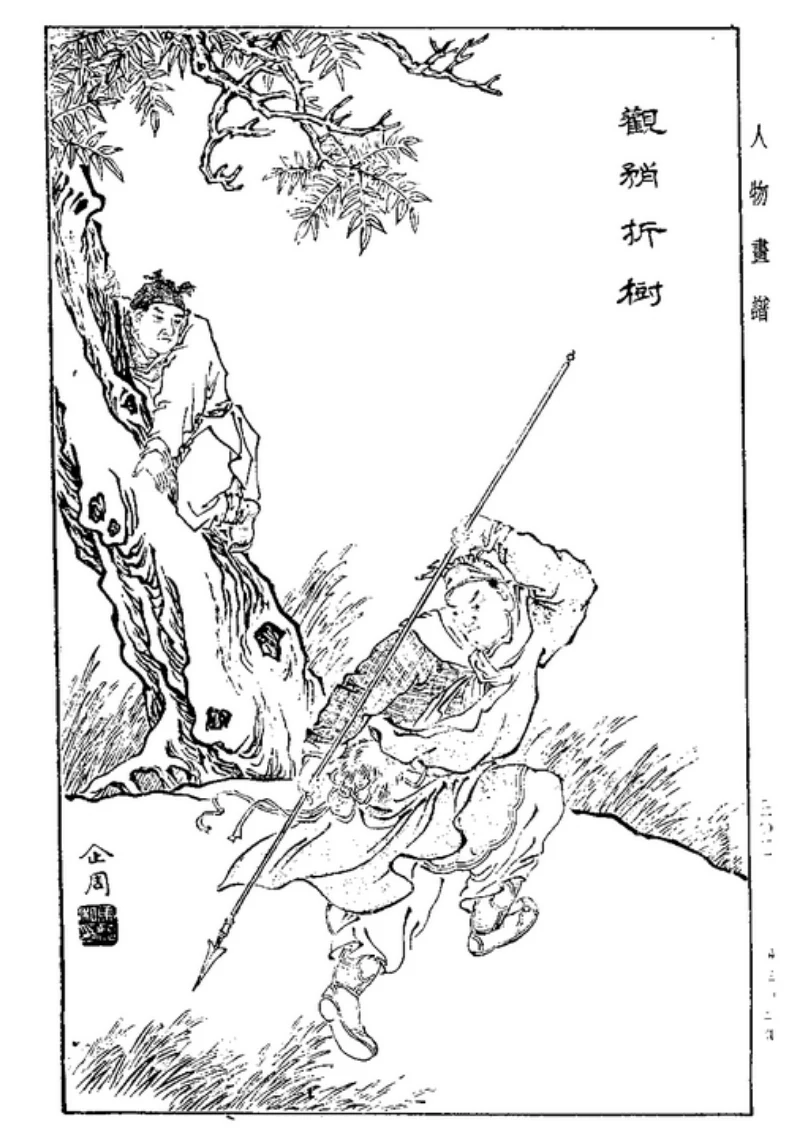
Aristocratic Lineage and Youthful Might Yang Kan hailed from the illustrious Taishan Yang clan of Liangfu, descending from Yang Xu, the revered Eastern Han Grand Administrator of Nanyang. The Yang clan had been one of Shandong's foremost scholar-official lineages since the late Han dynasty. His grandfather, Yang Gui, served Song founder Liu Yu as Libationer Attendant and Grand Rectifier of Xuzhou. When Xue Andu surrendered Pengcheng to Northern Wei in 467 CE, Yang Gui was stranded in the north and entered Northern Wei service, rising to General of the Guards and Inspector of Yingzhou. Yang Kan's father, Yang Zhi, served Northern Wei as General of the Northern Peace and Grand Master for Splendid Happiness, ennobled as Viscount Jing of Juping. Yang Zhi always nurtured deep loyalty toward the southern dynasties, continually admonishing his sons: "How can men of our blood remain stranded forever in a foreign realm? You must return and serve the Eastern Court." This paternal injunction guided Yang Kan's life decisions. Standing seven chi eight cun in height (approx. 190 cm), with a commanding, handsome presence, Yang was deeply immersed in literature and history, especially the Zuo Zhuan and Sun-Wu military treatises. Simultaneously, his physical strength was legendary: he easily drew standard infantry bows of six shi and cavalry war-bows of twenty shi. Dynastic chronicles record that at the Yao Temple in Yanzhou, Yang climbed sheer vertical stone walls with his bare hands, ascending five xun (approx. 12 meters) and traversing horizontally across seven spans. At the Si Bridge stood two massive stone statues measuring eight chi high and ten girths around; Yang lifted both statues with his bare arms and smashed them together, shattering them to fragments. ### Service in Northern Wei and the Great Southern Breakout In his early twenties, Yang accompanied his father in military expeditions in Liangzhou (Hanzhong), receiving an initial appointment as Secretarial Gentleman. During the Zhengguang era, he served as a detachment general under Xiao Baoyin. In 527 CE, Qiang insurgent leader Mozhe Niansheng revolted in Qinzhou, sending his brother Mozhe Tiansheng to overrun Qizhou and threaten the western metropolis of Chang'an. Serving as a detachment commander, Yang lay in ambush along the rebel advance route. When Mozhe Tiansheng rode into range, Yang shot him through the chest with a single war arrow. Mozhe collapsed dead, causing the rebel army to disintegrate in terror. For this feat, Yang was promoted to Commissioner with Imperial Tally, General of the East Campaign, Regional Director of the Eastern Route, Grand Administrator of Taishan, and Marquis of Juping. In 528 CE, Northern Wei warlord Erzhu Rong seized Luoyang and massacred courtiers. Palace Secretary Xu He, fleeing Erzhu's wrath, took refuge with Yang in Taishan and urged him to return south. Remembering his father's dying wish, Yang resolved to lead his command south to Liang. His cousin, Yanzhou Inspector Yang Dun, remained loyal to Northern Wei and resisted him. Yang besieged Yanzhou with 30,000 troops, building over ten siege forts around the city while sending envoys to Liang requesting naval and supply support. Terrified of losing Shandong, Emperor Zhuang of Northern Wei sent envoys offering Yang the rank of Grand General of Agile Cavalry, Situ, and Duke of Taishan, promising hereditary governorship of Yanzhou. Yang executed the Wei envoys in public to demonstrate his irreversible resolve. In October 528 CE, Northern Wei mobilized several hundred thousand troops under Yu Hui, Gao Huan, and Erzhu Yangdu to crush Yang at Xiaqiu (Yanzhou). Surrounded and with arrows exhausted, while southern relief failed to arrive, Yang launched a nocturnal breakout in November. Fighting continuously for twenty-four hours across snowy terrain, he smashed through the cordon to Zhakou with 10,000 troops and 2,000 warhorses. Seeing that many local soldiers wept with homesickness, Yang addressed them with tears: "You long for your native soil and cannot follow me south; choose freely whether to stay or depart." The weeping soldiers bowed in reverence and dispersed, while Yang rode south with his kin and sworn retainers. ### Distinguished Service in Southern Liang In 529 CE, Yang arrived in Jiankang. Delighted by his return, Emperor Wu granted him Commission with Imperial Tally, Cavalier Attendant Gentleman, Area Commander of Xiaqiu Expeditions, General of the Northern Peace, and Inspector of Xuzhou. His elder brother Yang Mo and younger brothers Yang Chen, Yang Ge, and Yang Yuan were all granted provincial inspectorships. In 532 CE, as Inspector of Yanzhou, Yang was appointed army Chief of Staff under Grand Tutor Yuan Faseng for a northern campaign. Before departing, Yang frankly told Emperor Wu: "Northerners call me a southern barbarian, while southerners call me a northern captive. Accompanying Faseng is merely northern defectors chasing one another, inviting barbarian contempt." When the campaign stalled at Guanzhu, Yang led his division back in flawless formation. Elevated to Marquis of Gaochang County with 1,000 households and Palace Attendant in 533 CE, Yang was appointed Cloud-Banner General and Grand Administrator of Jin'an (Fujian) in 534 CE. The Minyue frontier was chronically rebellious, with successive administrators powerless. Arriving at the outpost, Yang waged decisive mobile campaigns, hunting down and decapitating rebel warlords Chen Cheng and Wu Man, restoring complete peace to the coastal province. In 537 CE, during an imperial banquet at Leyou Garden, Emperor Wu presented Yang with a newly forged double-edged lance measuring twenty-four chi (approx. 5.9 meters) in length and over one chi in circumference. Mounted on the imperial stallion Ziliu, Yang performed intricate mounted thrusting and parrying drills with breathtaking agility. Crowds scrambled up trees to watch, prompting Emperor Wu to joke: "That branch will break under your weight!" When the branch snapped, the emperor named the weapon "The Tree-Snapper Lance." Following promotions to Left Chief of Staff to the Situ, Minister of Criminal Law (Duguan Shangshu), and Inspector of Hengzhou, Yang became famous for lavish cultural patronage. Highly gifted in music, he composed the popular tunes Gathering Lotus and The Oarsman's Song. In Hengzhou, he joined two large river yachts together, building an ornate floating pavilion decorated with jewels, silks, and exquisite musical troupes, sailing across waves amidst cheering spectator boats. In 547 CE, recalled as Palace Attendant, Yang supervised the construction of the Hanshan Dam on the Huai River. Completed in twenty days, Yang urged commander Xiao Yuanming to breach the dam and wash away Pengcheng's garrison. Xiao vacillated. When Eastern Wei reinforcements arrived under Murong Shaozong, Yang repeatedly urged immediate assault while the enemy was fatigued, but Xiao refused. When the Liang army suffered a catastrophic rout, Yang held his defensive perimeter intact and conducted a masterful rear-guard withdrawal without losing a single man. ### The Siege of Taicheng and Martyrdom In 548 CE, Yang was reappointed Minister of Criminal Law. In August, Hou Jing rebelled at Shouyang and took Liyang. Yang immediately urged Emperor Wu: "Hou Jing has long harbored rebellion. We must instantly seize Caishi with naval forces and order the Prince of Shaoling to recapture his base at Shouchun. Deprived of advance and retreat, his rabble will disintegrate." Arrogant courtiers dismissed the advice as alarmist. Hou Jing crossed the Yangtze River and surrounded Jiankang. The court frantically summoned Yang into the palace citadel to assist Prince of Xuancheng Xiao Daqi in commanding all inner city forces. As terrified refugees flooded the gates, Yang executed several looting soldiers at the armory, restoring calm. With forty-seven years of peace, the court grandees were ignorant of war; veteran commanders were dead, and external princes were trapped outside. The defense rested entirely on Yang Kan, alongside the ailing Liu Jin and the timid Wei An. In October 548 CE, Hou Jing built massive earthworks and wheeled armored wooden rams (Mulu) to batter the palace walls. Yang constructed ingenious suspended heavy stone hammers (Hangdui) along the battlements; whenever a wooden ram reached the wall base, the operators released the ropes, smashing the roofs to splinters. When the rebels set fire to the gates, Yang directed torrents of water to douse the flames; when flaming arrows rained inside, he hung wet rush mats to catch them. When Hou Jing erected tall wooden towers, Yang climbed to the towers himself, killing dozens of snipers with his war-bow, and deployed heavy catapults that battered the siege towers to rubble. Frustrated, Hou Jing paraded Yang's captured eldest son, Yang Dan, beneath the walls with a blade at his throat, shouting that Yang must surrender to save his son. Yang Kan stepped onto the battlements and shouted to his son: "I have dedicated my entire clan to the Son of Heaven! How could I abandon my sacred duty for the life of a single son!" Drawing his massive war-bow, Yang shot arrows directly at his son to demonstrate his unyielding resolve. Reeling in disbelief at such ferocious loyalty, Hou Jing spared Yang Dan. For months, Taicheng held fast beneath Yang's brilliant direction. However, food supplies vanished, disease decimated the defenders, and relief armies under Liu Zhongli passively watched from across the river. Exhausted from unending combat and famine, Yang fell fatally ill at his command post in the twelfth month of Taiqing 2 (January 549 CE). Weeping on his deathbed that he could not crush the rebels, he died at fifty-four years of age. Emperor Wu wept bitterly, and the defenders wailed in despair. Shortly after his death, the leaderless citadel fell. Posthumously, he was awarded Palace Attendant, Commander of the Palace Guard, and General-in-Chief with the noble title "Zhuanglie" (Heroic and Chaste).
Yang Kan was a commander of the Liang, of the Yang family of Taishan and a descendant of the Han governor of Nanyang, Yang Xu. His grandfather Yang Gui served under Emperor Wu of the Song as a provincial officer and grand impartial judge, and when Xue Andu surrendered Pengcheng to the Northern Wei the family remained in the north, the Wei making him general of the guards and governor of Yingzhou, so that the Yangs served the Wei thereafter. Yang Kan himself began his military career in the Northern Wei, known for his strength and horsemanship; in the Datong years of Emperor Wu of Liang he brought his troops south to the Liang and was well received by the emperor.
After his return he served as governor of Xuzhou and of Qing-Ji prefecture, taking part repeatedly in the wars with the Northern Wei and Eastern Wei and doing much for the defense of the Huai region. When Hou Jing's rebellion broke out in 548 he was at Jiankang and was given command of all the forces within the city, directing its defense. He died of illness before the city fell, and later writers on the rebellion have often regretted that the defense might have gone differently had he lived.
His family's passage between north and south is a case of how gentry houses chose and fared amid the changes of regime in the Northern and Southern Dynasties.
His arrangements for the defense of Jiankang are recorded in some detail in his biography in the Book of Liang: he assigned his officers to the various gates and organized the soldiers and people of the city to repair the walls and prepare engines, meeting the attacks of Hou Jing's army with countermeasures again and again. After his death the command passed to others and the defenders' morale suffered.
His passage from north to south is no isolated case among the gentry of the period, similar family choices being common at the time.
The family's movement between north and south is connected with the position of the Yang of Taishan under the Northern and Southern Dynasties.
His son Yang Kun and others were active at the end of the Liang, the family appearing in Southern Dynasties records into the Chen.
The family's military tradition is unusual among the emigrant gentry of the Northern and Southern Dynasties.
His part in the defense of Jiankang is a point the sources of the late Liang emphasize.
The family's military activity in the south runs on from its experience in the Northern Wei: the Yangs knew both northern cavalry tactics and southern river warfare and city defense, a double background that made Yang Kan particularly useful in the Liang's frontier commands.
The posts he held in the Liang — Xuzhou and the Qing-Ji prefecture — both lay in the north-south border zone, his operations there being chiefly defense and counterattack. Emperor Wu trusted him considerably and his position at court was fairly secure.
Major Activities
Slaying Mozhe Tiansheng with a Single Arrow In 527 CE, Yang ambushed and shot the insurgent chieftain Mozhe Tiansheng with a single war arrow in Guanzhong, routing the rebellion and establishing his military reputation across northern China. ### The Legendary Xiaqiu Breakout In 528 CE, honoring his father's dying wish, Yang raised troops to return to Liang, endured a massive siege by hundreds of thousands of Northern Wei troops at Xiaqiu, and executed a twenty-four-hour fighting retreat that safely delivered his command south. ### Pacification of the Minyue Border In 534 CE, as Grand Administrator of Jin'an, Yang waged mobile warfare against rebel hill tribes, executing chieftains Chen Cheng and Wu Man to secure total peace across Fujian. ### Heroic Defense of Taicheng During the Siege of Taicheng in 548–549 CE, Yang served as the intellectual and tactical soul of the capital defense, inventing stone drop-hammers and catapults to shatter Hou Jing's siege engines, and drawing his bow against his captured son to demonstrate unbreakable dynastic fidelity.
Personal Relations
- Yang Zhi: Father; Northern Wei General of the Northern Peace; gave the dying injunction to his sons to return south.
- Lady Cui Shenfei: Mother; daughter of Southern Qi Minister Cui Pingzhong from the eminent Boling Cui clan.
- Yang Mo: Elder brother; accompanied Yang south and served as Liang provincial inspector.
- Yang Chen, Yang Ge, Yang Yuan: Younger brothers; all served as provincial inspectors in Liang.
- Yang Dun: Paternal cousin; Northern Wei Inspector of Yanzhou who opposed Yang's southern return.
- Yang Dan: Eldest son; captured by Hou Jing and paraded before the walls; Yang shot arrows at him to affirm his loyalty.
- Yang Kun: Younger son; renowned Liang commander who later assassinated Hou Jing to avenge the dynasty. ### Imperial Masters and Courtiers - Xiao Yan (Emperor Wu of Liang): Held Yang in immense esteem, bestowing the "Tree-Snapper Lance"; wept bitterly upon Yang's death in Taicheng.
- Xiao Daqi (Prince of Xuancheng): Joint commander with Yang during the defense of Taicheng.
- Xiao Yuanming: Commander at the Hanshan Dam who repeatedly ignored Yang's aggressive tactics, leading to defeat.
- Zhu Yi: Palace clerk whose arrogant complacency dismissed Yang's preemptive defense plan at Caishi.
- Liu Jin and Wei An: Senior commanders inside Taicheng whose infirmity left all military decisions to Yang. ### Adversaries - Hou Jing: Defected warlord whose siege engines were repeatedly destroyed by Yang's counter-artillery at Taicheng.
- Mozhe Tiansheng: Frontier rebel warlord slain by Yang's arrow.
- Gao Huan and Yu Hui: Northern Wei commanders who besieged Yang at Xiaqiu, only for Yang to break out successfully.
Historical Assessment
Contemporary and Medieval Evaluations - Emperor Wu of Liang: "This tree will surely break under your might!" Upon hearing of his death: "Heaven has abandoned Liang, depriving me of my sole faithful shield!"
- *Yao Silian, Book of Liang***: "Yang Kan was an aristocratic scion endowed with supreme civil and military talent, his courage surpassing his era. In his breakout from Xiaqiu, he brought his army home intact; in his defense of Taicheng, he exhausted every stratagem. Drawing his bow against his son to preserve honor, dying at his post to fulfill his duty—the majestic spirit of a true martyr shines through the millennia!"
- *Li Yanshou, History of the Southern Dynasties*: "In his youth, Kan embraced noble ideals, mastering both literature and martial art. When Hou Jing besieged the isolated capital, Kan braved arrows and stones, creating ingenious machines to halt the rebels. When Heaven took this worthy minister, the dynastic edifice crumbled. What tragic sorrow!" ### Tang and Song Dynastic Historians - Li Baiyao (Tang Dynasty)**: Reflected on the fall of Liang: "Had Yang Kan not perished, Hou Jing's severed head would have hung above the palace gates."
- *Sima Guang, Zizhi Tongjian***: Preserved detailed accounts of Yang's tactical inventions and unyielding loyalty, lauding him as an exemplar of the ancient heroic captains who died for righteous duty.
- *Hu Sanxing, Annotator of the Zizhi Tongjian***: "Inside Taicheng, Kan exhausted his wisdom and strength, preventing the rebels from breaching the walls. When Kan died, Taicheng fell. The survival of the Liang dynasty rested upon Kan alone." ### Modern Scholarly Perspective Modern military and cultural historians evaluate Yang Kan as medieval China's most gifted fortification engineer and siege-defense master. Beyond his formidable personal physical prowess (immense strength, equestrian archery, and giant lances), he possessed a rare mastery of mechanical physics and field engineering, pioneering heavy kinetic impact weapons, stone throwers, and hydraulic firefighting defenses. In an era marked by dynastic decadence, cowardice, and fratricidal treachery among the southern imperial princes, Yang Kan stood as a towering monument of moral purity, sacrificing his life and clan to defend his state and people.
FIGURES ASSOCIATED WITH THIS DYNASTY
Bibliography
- Book of Liang*, Volume 39, Biography 33: "Biography of Yang Kan"
- History of the Southern Dynasties*, Volume 63, Biography 53: "Biography of Yang Kan"
- Book of Wei*, Volume 89, Biography 77: "Biography of Yang Zhi"