Birth | Birth; the place is not recorded; empress、empress dowager、grand empress dowager
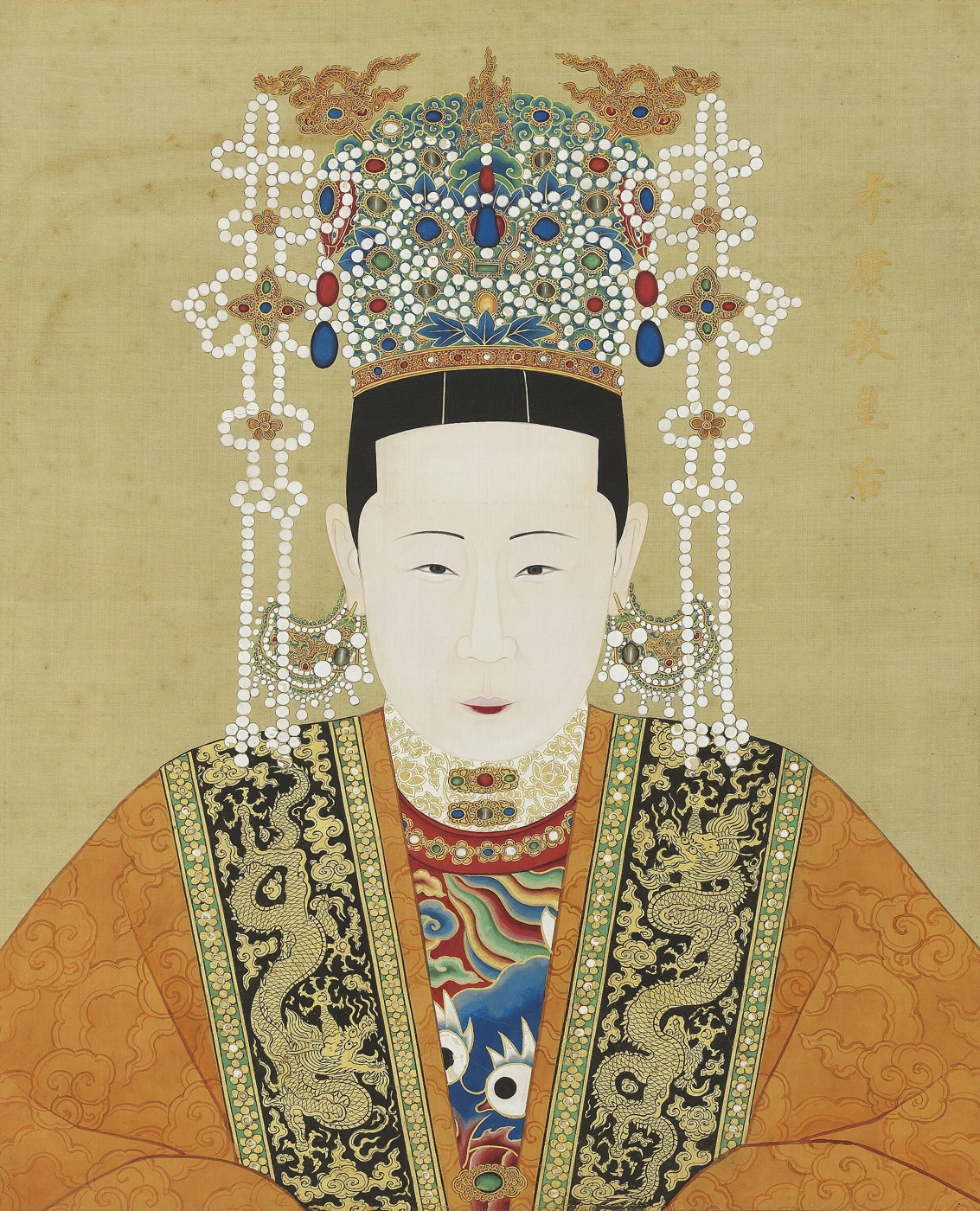
1471 CE–1541 CE
Empressempress dowagergrand empress dowager
Empress Zhang (Hongzhi Emperor)
张氏(明孝宗皇后)
Empress Zhang (1471–1541), posthumously titled Empress Xiaokangjing and later Empress Xiaochengjing, was a native of Xingji County, Hejian Prefecture, Northern Zhili (present-day Cang County, Hebei). She was the empress of Zhu Youcheng, the Hongzhi Emperor, and mother of Zhu Houzhao, the Zhengde Emperor. In 1487, the twenty-third year of Chenghua, she was selected as crown princess and, after the Hongzhi Emperor ascended the…
1471 CE–1541 CEMing Dynasty
PROFILE
Empress Zhang (1471–1541), posthumously titled Empress Xiaokangjing and later Empress Xiaochengjing, was a native of Xingji County, Hejian Prefecture, Northern Zhili (present-day Cang County, Hebei). She was the empress of Zhu Youcheng, the Hongzhi Emperor, and mother of Zhu Houzhao, the Zhengde Emperor. In 1487, the twenty-third year of Chenghua, she was selected as crown princess and, after the Hongzhi Emperor ascended the throne later that year, was installed as empress. When Hongzhi died in 1505, the eighteenth year of his reign, his son Zhu Houzhao succeeded as the Zhengde Emperor and honored Lady Zhang as empress dowager. In 1521, the sixteenth year of Zhengde, the emperor died without an heir. Empress Dowager Zhang and Grand Secretary Yang Tinghe agreed on the succession and summoned Zhu Houcong, heir to the Prince of Xing, to become emperor, the Jiajing Emperor. Later, because of tensions with the Jiajing Emperor's biological mother, Empress Dowager Jiang, Zhang received increasingly cold treatment. She died in the eighth lunar month of 1541, the twentieth year of Jiajing, aged seventy-two. She was the only Ming woman to pass successively through the ranks of empress, empress dowager, and grand empress dowager and was also the central female figure in the unusually monogamous marriage of a Chinese emperor.
- Also Known As
- Empress Zhang of the Hongzhi era; Empress Xiaokangjing; Empress Xiaochengjing
- Period
- Ming
- Date of Birth
- 1471
- Date of Death
- 1541
- Dynasty/Regime
- Ming
- Identity
- Empress, empress dowager, grand empress dowager
- Ethnicity/Ethnic Affiliation
- Not recorded in historical sources
- Ancestral Home
- Xingji County, Hejian Prefecture, Northern Zhili (present-day Cang County, Hebei)
- Place of Birth
- Not recorded in historical sources
- Tenure as Empress
- 1487–1505
- Posthumous Name
- Empress Xiaokangjing; later changed to Empress Xiaochengjing
- Major Achievements
- Empress of the Hongzhi Emperor and mother of the Zhengde Emperor; Hongzhi's only empress; honored as empress dowager after his death.
LIFE TIMELINE
Age 17 | Selected as crown princess; after the Hongzhi Emperor ascended the throne later that year, installed as empress.
Age 21 | Gave birth to the emperor's eldest son Zhu Houzhao, later the Zhengde Emperor.
Age 35 | The Hongzhi Emperor died; their son Zhu Houzhao succeeded and honored her as empress dowager.
Age 40 | Received the honorific title “Empress Dowager Cishou.”
Age 51 | The Zhengde Emperor died without an heir. Together with Yang Tinghe, she decided to enthrone Zhu Houcong and received the honorific “Empress Dowager Zhaosheng Cishou.”
Age 54 | The Jiajing Emperor changed his form of address for her from “Sacred Mother” to “Aunt,” triggering a dispute over titles and ritual status.
Age 72 | Died on the eighth day of the eighth lunar month and received the full posthumous title Empress Xiaokang Jingsu Zhuangci Zheyi Yitian Zansheng Jing.
Posthumous | The Hongguang Emperor of the Southern Ming changed her posthumous title to Empress Xiaochengjing because it duplicated that of Empress Xiaokang of Xingzong, Lady Chang.
BIOGRAPHY
Biography
Family Background and Early Life
Lady Zhang's family was a prominent lineage of Xingji County in Hejian Prefecture. According to Cheng Minzheng's collected writings, the Zhang ancestors moved from Henan to Xugou in Shanxi and later to Xingji in Hejian. Zhang's grandfather, known by an official title, and her paternal uncle, known as Master Lesu, were both renowned for literary learning; one assisted government in a major regional administration while the other presided over education in a prominent county. Her father Zhang Luan inherited the teachings of his father and elder brother, repeatedly sat the imperial examinations, and enjoyed a strong reputation at the National University. Lady Zhang's elder brother Zhang Heling later inherited the title Marquis of Shouning, while her younger brother Zhang Yanling became Earl of Jianchang.
In the first lunar month of 1487, the twenty-third year of Chenghua, Emperor Xianzong of Ming selected a consort for Crown Prince Zhu Youcheng. Lady Zhang was chosen for her dignified appearance, pure disposition, and gentle speech and conduct. The Imperial Ming Edicts records that selection standards required parents of proper conduct and orderly household discipline and girls aged fourteen to seventeen whose appearance was dignified, nature pure, and words and actions modest and in accordance with ritual. Lady Zhang thus met the highest contemporary standards for a crown princess. On the twenty-first day of the first lunar month, the court performed the rites of betrothal and inquiry of name, sending Zhu Yong, Duke of Baoguo, as principal envoy and Grand Secretary Liu Ji as deputy envoy. Zhang Luan submitted his daughter's genealogy, identifying her as a great-granddaughter of the late Zhang Di, an official of Kuizhou Prefecture in Sichuan, and granddaughter of Zhang Shou, and stating that she was eighteen. On the first day of the second lunar month, Lady Zhang was formally invested as crown princess.
Empress of the Hongzhi Emperor (1487–1505)
In the ninth lunar month of 1487, Crown Prince Zhu Youcheng ascended the throne as the Hongzhi Emperor. In the tenth lunar month, Crown Princess Zhang was installed as empress. Hongzhi was deeply devoted to her and did not appoint other consorts, and the two were said to live together much like an ordinary married couple. Zhang He recorded in Zhouzai that the Ming palace normally observed a rule that “the emperor and empress do not spend the entire night together,” but the Hongzhi Emperor so favored Empress Zhang that “he stayed through the night as ordinary husbands and wives do.” Shen Defu likewise wrote in Unofficial Gleanings from the Wanli Era that by the end of the Hongzhi reign, Empress Xiaokang Zhang monopolized imperial favor and none of the other palace women were admitted to the emperor.
On the thirteenth day of the tenth lunar month in 1491, the fourth year of Hongzhi, Empress Zhang gave birth to the imperial eldest son Zhu Houzhao, and the emperor issued a special proclamation to the realm. She later gave birth to another son, Zhu Houwei, who died young and was posthumously titled Prince Weidao, and to Princess Taikang, who also died young. Hongzhi gave exceptional favor to Empress Zhang's family. Her father Zhang Luan was posthumously made Duke of Changguo, her elder brother Zhang Heling became Marquis of Shouning, and her younger brother Zhang Yanling became Earl of Jianchang. The emperor also built a large ancestral temple for the Zhang family at Xingji, a project that took several years. Zhang Heling and Zhang Yanling were allowed to move in and out of the palace precincts and permitted their household members to profit through abuses. Court officials repeatedly remonstrated, but Hongzhi did not pursue the brothers because of Empress Zhang. The History of Ming records that he once wrote in his own hand, “I have only these relatives; there is no need to speak of them again,” and ordered the Court of Imperial Entertainments to hold a banquet for the censors who had impeached them as a gesture of conciliation.
Empress Dowager (1505–1521)
When the Hongzhi Emperor died in 1505, the eighteenth year of his reign, Crown Prince Zhu Houzhao succeeded as the Zhengde Emperor and honored Empress Zhang as empress dowager. In the twelfth lunar month of 1510, the fifth year of Zhengde, the emperor led the officials in respectfully conferring on her the honorific “Empress Dowager Cishou.” In 1521, the sixteenth year of Zhengde, the emperor died without an heir. At this moment Jiang Bin and other powerful figures harbored private ambitions and the political situation was dangerous. Empress Dowager Zhang and Grand Secretary Yang Tinghe agreed on the succession and summoned Zhu Houcong, a cousin of the late emperor and heir to the Prince of Xing, to take the throne as the Jiajing Emperor. According to an officially sponsored Ming history compiled in the Wanli period, without Empress Dowager Zhang's management within the palace the political outcome might have been difficult to predict.
The Jiajing Reign and Later Years (1521–1541)
In the third lunar month of 1521, Zhu Houcong entered the capital to succeed to the throne. He initially addressed Empress Dowager Zhang as “Sacred Mother” and granted her the honorific “Empress Dowager Zhaosheng Cishou.” At the same time, however, he honored his biological mother Lady Jiang as Empress Dowager of Xingguo and his paternal grandmother Lady Shao as Grand Empress Dowager Shou'an, contributing to the Great Rites Controversy. Empress Dowager Zhang and Lady Jiang did not get along, and the Jiajing Emperor treated Zhang with increasing coldness. In 1524, the third year of Jiajing, he changed his form of address for her from “Sacred Mother” to “Aunt” and reduced the ceremonial scale of her birthday celebrations.
In Zhang's later years, her younger brother Zhang Yanling was convicted and imprisoned. She knelt and pleaded bitterly for him without success and soon became ill. On the eighth day of the eighth lunar month in 1541, the twentieth year of Jiajing, she died aged seventy-two. She received the full posthumous title Empress Xiaokang Jingsu Zhuangci Zheyi Yitian Zansheng Jing and was buried with the Hongzhi Emperor in Tailing Mausoleum. Five years after her death, the Jiajing Emperor had Zhang Yanling executed. In 1644, the seventeenth year of Chongzhen, the Hongguang Emperor of the Southern Ming changed her posthumous title to Empress Xiaochengjing because it duplicated that of Empress Xiaokang, Lady Chang, consort of Xingzong.
Empress Zhang came of a leading family of Hejian. The Zhangs had moved from Henan to Xugou in Shanxi and then to Xingji in Hejian; her grandfather, the registrar, and her uncle Mr. Lesu were both known for literary attainments, one assisting the government of a great prefecture and one teaching in a famous town, and her uncle the censor Zhang Laifeng was prominent in his day as an examination graduate of the highest class. Her father, Zhang Luan, following his father's and brothers' teaching, sat repeatedly for the examinations and had a good name in the imperial college. On the sixth day of the first month of 1487 she was chosen as consort of the heir apparent, and her father was at the same time given the post of chief minister of the court of state ceremonial, in preparation for the wedding.
Ming selection of consorts followed explicit standards. The edict of 1486 on choosing consorts for the heir apparent records that the Board of Rites was ordered to seek carefully among the households of officials and commoners for girls whose parents were upright in conduct and whose family rules were orderly, aged between fourteen and seventeen, of clean appearance, pure in nature and gentle in speech and bearing, all in accord with propriety. It was by such a procedure that Empress Zhang was chosen. On Xiaozong's accession in 1488 she was made empress. Xiaozong had only this one empress and no other consorts in his palace, a rare case among Ming and indeed Chinese emperors, and she is often mentioned for that reason.
Xiaozong and the empress were deeply attached; her mother, Lady Jin, came often to the palace, and her brothers Zhang Heling and Zhang Yanling were prominent through their position as consort kin, though both were often criticized for arrogance and lawlessness. Under Wuzong she was honored as empress dowager; when Wuzong died without issue and Shizong came in as the son of the Prince of Xingxian, she was at first honored as empress dowager but relations quickly worsened over the Great Ritual Controversy. She died in 1541 with the posthumous name Xiaokang Jingsu Zhuangci Zheyi Yitian Zansheng Jing Huanghou and was buried with Xiaozong at Tailing. About the time of her death her brother Zhang Yanling was imprisoned and her plea for him went unheeded, ending the prominence of the Zhang consort family.
The relation between Empress Zhang and Emperor Xiaozong is much recorded in Ming sources. Xiaozong was mild in temper and diligent in government, and his private life was known for simplicity; accounts of the emperor and empress living together appear in the veritable records and in the collected works of contemporaries. In the Hongzhi years Xiaozong showed the empress's kin much favor: her father Zhang Luan was given the post of chief minister of state ceremonial and later honored further, and her brothers Zhang Heling and Zhang Yanling were enfeoffed as marquises, arrangements that made the Zhangs prominent through the Hongzhi and Zhengde reigns.
The arrogance of the consort kin accordingly became a subject of complaint. Zhang Heling and Zhang Yanling were often accused of seizing people's land and abetting their servants, with Xiaozong and Wuzong indulgent toward them; under Jiajing, Shizong's attitude hardened, Zhang Yanling was imprisoned for an offense, the empress dowager's plea went unheeded, and he was afterward executed. Her last years and her brother's fate contrast sharply with her honor under Xiaozong. After her death she was buried with him at Tailing, the style of her posthumous name and funeral being clearly recorded in the veritable records of Shizong.
Ming rules made the empress head of the inner palace with ranks such as imperial noble consort, noble consort, consort and concubine beneath her, and the investiture of an empress required the Board of Rites to settle the ceremonial and an edict to the realm. Empress Zhang was made empress and remained so through the whole of Xiaozong's reign, unusual in the Ming, where empresses were frequently deposed. The relation between Xiaozong and the empress is repeatedly mentioned by later ages largely because it offers an example of an emperor with a single empress, in contrast to the complicated palace and succession problems of the middle and late Ming.
The rise and fall of the Zhang family also reflects the limits of Ming practice toward consort kin. The dynasty set rules for office to consort families: fathers and brothers generally received nominal posts in the central military commission or the embroidered-uniform guard, or titles without part in government. The favors given the Zhangs under Xiaozong were already on the generous side, and were therefore argued over by censors through the Zhengde and Jiajing reigns. The empress dowager spent her last years amid such disputes and family troubles, and while the settling of her posthumous name and her burial followed the rites of an empress, the political influence of the Zhang consort family was at an end.
Empress Zhang stands out among Ming empresses also because of her particular position. Xiaozong was one of the few Ming emperors to succeed as legitimate eldest son, reigning long and of mild temper, his Hongzhi era called a restoration; the empress lived with him, her mother and brothers coming in and out of the palace, all of which is recorded in the veritable records and private collections. Both the advantages of her consort status and its later troubles centered on her brothers.
The Ming sources on Empress Zhang also cover certain palace matters in which she took part. After Wuzong's accession she rose to be empress dowager, palace business often handled by her together with the other dowagers; during the Zhengde years, when Wuzong went on repeated tours, the court's discussions of succession and the heir also concerned her position. After Wuzong's death she and the grand secretary Yang Tinghe and others settled the choice of Zhu Houcong, son of the Prince of Xingxian, later Emperor Shizong — a decision that changed the Ming imperial line.
The empress's younger sister also married into a noble house, and the family's marriage connections in the Hongzhi and Zhengde years are an example of Ming consort networks. She was often ill in her last years, and her relations with Shizong grew increasingly distant over the ritual controversy, her death and funeral arrangements carrying that political background.
The History of Ming records such details as that when the empress's mother, Lady Jin, came to the palace the emperor and empress attended her together, showing her special place in the palace life of the Hongzhi years. Her case bears out the peculiarity of one emperor with one empress in Xiaozong's reign and provides concrete material for studying the Ming court and its consort families.
The honors she received in the Hongzhi years also included the posthumous elevation of her father and the enfeoffment of her brothers. Ming rules limited office for consort families, but an emperor's private favor could override them, and the history of the Zhangs is an example of institutions and personal favor acting on each other.
Her funeral and posthumous name are clearly recorded in the veritable records of Shizong.
She was buried with Xiaozong at Tailing, her tablet placed in the ancestral temple.
Major Activities
Decision on the Jiajing Succession
In 1521, when the Zhengde Emperor died without an heir, the court entered a period of uncertainty. Jiang Bin and other political actors pursued their own interests and sought to influence the succession. Empress Dowager Zhang and Grand Secretary Yang Tinghe agreed to summon Zhu Houcong, heir to the Prince of Xing, and establish him as emperor. According to the Biographies of Empresses and Consorts in the Later Ming, Zhang “made the decision with a public heart, issued a gracious command from within, and welcomed a close and worthy relative; only then were the people's minds united and the ancestral altars made secure.” She instructed the officials that all matters should await the arrival of the succeeding ruler, and later writers praised her refusal to use the interregnum as an opportunity for direct political control.
Central Figure in the Hongzhi Emperor's Monogamous Marriage
The Hongzhi Emperor is exceptionally noted in Chinese imperial history for maintaining a monogamous marriage. In an era when rulers normally maintained multiple consorts, he continued to favor Empress Zhang alone despite ministers' pressure that the succession required additional women in the palace. Empress Zhang was therefore central to this unusual historical phenomenon. Lu Ji wrote in his collected works that Empress Xiaokangjing Zhang was the consort of the Hongzhi Emperor and that the emperor never favored another woman, living with her in deep affection.
Problems of the Imperial In-Law Family
Because Empress Zhang enjoyed imperial favor, her family also received unusual privilege. Her father Zhang Luan was posthumously made Duke of Changguo, her elder brother Zhang Heling became Marquis of Shouning, and her younger brother Zhang Yanling became Earl of Jianchang. The two brothers entered and left the palace freely and allowed members of their households to engage in abusive profiteering, leading to repeated impeachment by court officials. Although Hongzhi knew of their misconduct, he did not pursue them because of Empress Zhang. The problem continued into the Jiajing reign and ultimately ended with Zhang Yanling's execution and Zhang Heling's death in prison. Wan Sitong and other Ming-Qing historians generally held that although the brothers' downfall arose in part from their own arrogance and lawlessness, the deeper cause was the Jiajing Emperor's deliberate retaliation rooted in his personal resentment toward Empress Dowager Zhang.
Conflict with the Jiajing Emperor
After succeeding to the throne, the Jiajing Emperor came into conflict with Empress Dowager Zhang during the Great Rites Controversy. He elevated his biological mother Empress Dowager Jiang and his biological grandmother Lady Shao and did not accord Zhang the same degree of respect she had previously enjoyed. In 1524 he changed his form of address for her from “Sacred Mother” to “Aunt.” According to the History of Ming, the emperor resented Zhang for having earlier restricted the position of his mother Lady Jiang and later used opportunities to attack the Zhang family. In Zhang's final years, her younger brother Zhang Yanling was imprisoned for crimes. She knelt and begged for mercy without success, fell ill, and died after a bleak final period.
Personal Relations
- Father: Zhang Luan, entered the National University through local recommendation, was appointed Minister of the Court of State Ceremonial because of his daughter's status, and was posthumously made Duke of Changguo.
- Mother: Lady Jin, titled Lady Jin.
- Elder brother: Zhang Heling, Marquis of Shouning.
- Younger brother: Zhang Yanling, Earl of Jianchang, executed by the Jiajing Emperor.
- Elder son: Zhu Houzhao, the Zhengde Emperor.
- Younger son: Zhu Houwei, died young and was posthumously titled Prince Weidao.
- Daughter: Princess Taikang, died young.
- Emperor Xianzong of Ming, Zhu Jianshen: Father-in-law; selected her as crown princess.
- Emperor Xiaozong of Ming, Zhu Youcheng: Husband; the couple had a close relationship and he did not appoint other consorts.
- Emperor Wuzong of Ming, Zhu Houzhao: Son; honored her as empress dowager.
- Emperor Shizong of Ming, Zhu Houcong: Younger agnatic relative and succeeding emperor; came into conflict with her.
- Yang Tinghe: Grand Secretary; worked with her in determining the Jiajing succession.
- Empress Dowager Jiang: Biological mother of the Jiajing Emperor; had a strained relationship with Zhang.
Historical Assessment
Ming and Contemporary Views
- Lu Ji wrote: “Empress Xiaokangjing Zhang was the consort of the Xiaozong Emperor. Throughout his life the emperor had no other favorite and lived with the empress in great harmony.”
- Zhang He wrote in Zhouzai that the Xiaozong Emperor uniquely favored his empress and stayed through the night “as ordinary husbands and wives do.”
- Shen Defu wrote in Unofficial Gleanings from the Wanli Era that toward the end of the Hongzhi reign Empress Xiaokang Zhang monopolized imperial favor and none of the women of the six palaces entered the emperor's presence.
- Zhu Guozhen wrote in Yongchuang Xiaopin that while she was with the Xiaozong Emperor, Empress Dowager Zhaosheng was exclusively favored and jealous, resulting in the emperor's lifelong failure to take other consorts.
- Gu Yingtai wrote in Mingshi Jishi Benmo that the emperor and Empress Zhang were deeply affectionate, that he rarely approached other consorts throughout his life, and that this exclusive marital harmony emerged from within the palace.
Early and Mid-Qing
- Wan Sitong held that although the Zhang brothers' downfall resulted partly from their own arrogance and illegality, its fundamental cause was deliberate retaliation by the Jiajing Emperor because of personal resentment toward Empress Dowager Zhang.
- The compilers of the History of Ming recorded that the Jiajing Emperor resented Zhang for having constrained his biological mother Empress Dowager Jiang and did not treat her with sufficient ceremonial respect, later using opportunities to attack the Zhang family.
- Zha Jizuo's Zuiwei Lu affirmed Empress Dowager Zhang's role in deciding the succession after the Zhengde Emperor's death and expressed sympathy for the bleakness of her later years.
Late Qing and Republican Period
- Cai Dongfan's Romance of the History of Ming portrayed Empress Zhang as the exclusive object of the Hongzhi Emperor's affection and expressed sympathy for her difficult later years.
- Meng Sen, in his lectures on Ming history, emphasized her role in the succession decision and regarded her as important to stabilizing the political situation after the Zhengde Emperor's death.
Modern Views
- Modern scholars generally hold that Empress Dowager Zhang played a stabilizing role in the political uncertainty after the Zhengde Emperor's death by managing the succession and bringing the Jiajing Emperor to the throne, while refraining from following earlier female regents who enthroned minors and ruled for long periods. Her public-minded restraint is often viewed positively.
- Ye Qunying's Study of Imperial In-Laws in the Ming Dynasty argues that the conflict between Empress Dowager Zhang and the Jiajing Emperor reveals the complex relationship between imperial authority and the status of empress dowagers in the Ming.
- Scholars often view Zhang's marriage with the Hongzhi Emperor favorably and regard it as a rare monogamous imperial marriage in Chinese history.
FIGURES ASSOCIATED WITH THIS DYNASTY
Bibliography
- History of Ming, vol. 114, Biography 2, “Empresses and Consorts II”
- Veritable Records of Emperor Xianzong, vols. 286–287
- Veritable Records of the Hongzhi Emperor, vol. 56
- Veritable Records of the Zhengde Emperor, vol. 70
- Veritable Records of the Jiajing Emperor, vol. 252
- Li Xiaolin, A Study of the Official History of the Present Dynasty Compiled in the Wanli Period, Nankai University Press, 1999
- Ye Qunying, Study of Imperial In-Laws in the Ming Dynasty, Renmin University of China Press, 2018