Birth | Born
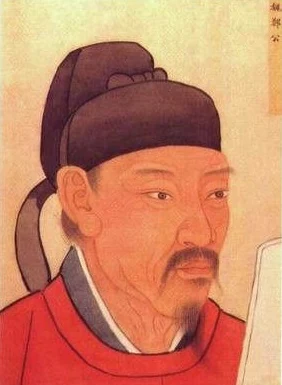
580 CE–643 CE
Tang politician and Grand Councilor
Wei Zheng
魏征
Wei Zheng was a prominent minister under Emperor Taizong of Tang, renowned for forthright remonstrance. He supervised compilation of the Book of Sui and helped shape the political ethos of the Zhenguan reign.
580 CE–643 CETang Dynasty
PROFILE
Wei Zheng was a prominent minister under Emperor Taizong of Tang, renowned for forthright remonstrance. He supervised compilation of the Book of Sui and helped shape the political ethos of the Zhenguan reign.
- Alternate name
- Duke of Zheng
- Courtesy name
- Xuancheng
- Period
- Tang Dynasty
- Date of Birth
- 580
- Date of Death
- January 17 643
- Dynasty / polity
- Tang Dynasty
- Identity
- Tang politician and Grand Councilor
- Ethnicity / group
- Not recorded in historical sources
- Native place
- Xiaquyang County, Julu Commandery (present-day Jinzhou, Hebei)
- Place of birth
- Not recorded in historical sources
- Place of death
- Not recorded in historical sources
- Highest office
- See Biography and Major Activities
- Major achievements
- Prominent minister under Emperor Taizong of Tang; renowned for forthright remonstrance; supervised compilation of the Book of Sui; helped shape the political ethos of the Zhenguan reign
LIFE TIMELINE
Served under Yuan Baozang | Served under Yuan Baozang, commandery assistant administrator of Wuyang; later joined the Wagang forces and became a literary staff officer in Li Mi's marshal's headquarters
Proposed a strategy of protracted warfare to Li Mi's chief secretary Zheng Ting | Proposed a strategy of protracted warfare to Li Mi's chief secretary Zheng Ting; the proposal was not adopted
Submitted to Tang with Li Mi | Submitted to Tang with Li Mi, volunteered to pacify Shandong, and wrote to persuade Li Ji to submit
Captured by Dou Jiande and appointed Recorder of Court Audiences | Captured by Dou Jiande and appointed Recorder of Court Audiences
After Dou Jiande was captured | After Dou Jiande was captured, entered Tang service again and was appointed Crown Prince's Attendant by Li Jiancheng
Advised Li Jiancheng to request command against Liu Heita and helped pacify Shandong | Advised Li Jiancheng to request command against Liu Heita and helped pacify Shandong
After the Xuanwu Gate Incident | After the Xuanwu Gate Incident, was retained by Li Shimin and appointed Registrar of the Heir Apparent's Household
Promoted to Remonstrance Grand Master and ordered to pacify Hebei with discretionary autho | Promoted to Remonstrance Grand Master and ordered to pacify Hebei with discretionary authority
After Li Shimin ascended the throne | After Li Shimin ascended the throne, enfeoffed as Baron of Julu County
Appointed Left Assistant Director of the Department of State Affairs | Appointed Left Assistant Director of the Department of State Affairs; opposed conscription of underage males and persuaded Taizong by arguing for government based on good faith
Appointed Director of the Palace Library | Appointed Director of the Palace Library, participated in government, and collated classical texts
Supervised compilation of the Book of Sui and the histories of four other dynasties | Supervised compilation of the Book of Sui and the histories of four other dynasties
Appointed Palace Attendant and took charge of affairs of the Chancellery | Appointed Palace Attendant and took charge of affairs of the Chancellery
The Book of Sui and the other four dynastic histories were completed | The Book of Sui and the other four dynastic histories were completed
Enfeoffed as Duke of Zheng | Enfeoffed as Duke of Zheng
Appointed Grand Preceptor of the Heir Apparent to assist Crown Prince Li Chengqian | Appointed Grand Preceptor of the Heir Apparent to assist Crown Prince Li Chengqian
Died at age sixty-four | Died at age sixty-four; posthumously appointed Minister of Works, given the posthumous name Wenzhen, and buried near Zhaoling
After doubts arose concerning men he had recommended and copies of his remonstrances kept | After doubts arose concerning men he had recommended and copies of his remonstrances kept at home, Taizong ordered his tomb stele toppled and canceled the marriage arrangement involving Princess Hengshan
After Taizong's unsuccessful campaign against Goguryeo | After Taizong's unsuccessful campaign against Goguryeo, the emperor remembered Wei Zheng and ordered the stele restored
BIOGRAPHY
Biography
Family Background and Early Life
Wei Zheng came from the Wei clan of Julu. According to the Stele of the Ancestral Temple of Duke Wei, erected in 632, the sixth year of Zhenguan, his grandfather was Wei Yan and his father Wei Changxian. His family had served in government for generations but had declined by Wei Zheng's time. He lost his father while young and lived in poverty. Nevertheless, he was ambitious and did not devote himself to making a livelihood. He became a Daoist priest while keeping a low profile, read widely, and, as disorder spread in the final years of Sui, took particular interest in the theories of political strategists. The Old Book of Tang states that he was orphaned and poor in youth, possessed great ambition, did not pursue an ordinary livelihood, became a Daoist priest, read broadly, and paid special attention to the methods of strategists as the realm descended into disorder.
Joining the Wagang Forces and Moving through the Warlord Era
In 617, the thirteenth year of Daye, Wei Zheng served under Yuan Baozang, assistant administrator of Wuyang Commandery. In the ninth month, Yuan rebelled in response to Li Mi's Wagang uprising, and memorials sent to Li Mi were drafted by Wei Zheng. Recognizing his literary ability, Li Mi summoned him as a literary staff officer in the marshal's headquarters, where he handled written records. Wei presented ten proposals for strengthening the Wagang forces. Li Mi found them unusual but did not adopt them.
In 618, the fourteenth year of Daye, Wang Shichong, who held Luoyang, attacked Cangcheng and Luokou but was repeatedly defeated by Li Mi. Wei told Li Mi's chief secretary Zheng Ting that although Li Mi had won several victories, his forces had suffered heavy casualties, the Wagang army lacked a treasury, and soldiers received no rewards for service. He proposed digging deep ditches and raising strong fortifications, holding the enemy until its grain was exhausted and it withdrew, then pursuing. Zheng dismissed the proposal as commonplace, and Wei left in anger.
Later in 618, the first year of Wude, Li Mi was defeated by Wang Shichong, and Wei followed him in surrendering to Tang. Li Mi's subordinate Li Ji still controlled much of Li Mi's former territory, extending east to the sea, south to the Yangtze, west to Ruzhou, and north to Wei Commandery, and had not decided what to do. Wei volunteered to pacify Shandong, was appointed Secretary of the Palace Library, and went to Liyang in present-day Xun County, Henan. After receiving Wei's letter, Li Ji decided to submit to Tang and opened his granaries to supply Prince Li Shentong of Huai'an.
In the ninth month of the same year, Dou Jiande attacked Xiangzhou. Li Shentong could not hold him and moved to Liyang, where he was again defeated. Wei Zheng, Li Shentong, Li Ji, and others were captured. Dou Jiande appointed Wei Recorder of Court Audiences.
Service under Crown Prince Li Jiancheng
In 621, the fourth year of Wude, Prince of Qin Li Shimin defeated and captured Dou Jiande. Wei Zheng then entered Tang service again. Crown Prince Li Jiancheng, having heard of Wei's reputation, appointed him Crown Prince's Attendant and treated him with great respect.
In 622, the fifth year of Wude, Liu Heita, a former follower of Dou Jiande, allied with the Turks and attacked Shandong. Wei observed that although Li Jiancheng was the eldest legitimate son, his military record was inferior to that of Li Shimin. He therefore advised Li Jiancheng to request a command and establish merit. Li Jiancheng followed the advice, campaigned against Liu Heita, captured and killed him, and pacified Shandong.
In the sixth month of 626, the ninth year of Wude, Li Shimin launched the Xuanwu Gate Incident and killed Li Jiancheng and Prince Li Yuanji of Qi. Li Shimin had heard that Wei Zheng had often advised Li Jiancheng to remove him from the political center, so he summoned Wei and asked why he had tried to alienate the brothers. Wei calmly replied that if the former crown prince had listened to him earlier, he would not have suffered the disaster of that day. Li Shimin valued his ability and, impressed by his candor, pardoned him and appointed him Registrar of the Heir Apparent's Household.
Assisting Taizong and Remonstrating Frankly
Soon after the Xuanwu Gate Incident, Li Shimin promoted Wei Zheng to Remonstrance Grand Master. In the seventh month of 626 he also ordered him to pacify former followers of Li Jiancheng and Li Yuanji in Hebei, granting him discretion to act as circumstances required. When Wei reached Cizhou, he encountered prison carts transporting Li Zhian, formerly of the Eastern Palace guards, and Li Sixing, formerly an officer of the Prince of Qi's guard, to Chang'an. Wei believed that the court had already announced an amnesty for former followers of the crown prince and Prince of Qi and that continuing to transport the two men would undermine the court's credibility. He therefore released them on the spot and reported the action by memorial. Li Shimin was pleased.
In the eighth month of the same year, Li Yuan abdicated and Li Shimin ascended the throne. Wei was enfeoffed as Baron of Julu County. Seeking to create a prosperous reign, Taizong repeatedly summoned Wei for private discussions of political gains and losses. Wei was capable in government, straightforward in character, and spoke without reserve. Taizong later praised him for having submitted more than two hundred remonstrances and attributed this to his sincere devotion to the state.
In 627, the first year of Zhenguan, Wei was appointed Left Assistant Director of the Department of State Affairs. On one occasion, Taizong ordered a levy of troops. Secretariat Director Feng Deyi proposed conscripting physically strong males who had not yet reached eighteen. Wei firmly opposed the order and refused four times to endorse the edict. Taizong became angry and summoned him for rebuke. Wei replied that the emperor repeatedly spoke of governing the realm through sincerity and trust but had already broken promises several times soon after taking the throne. He cited contradictions among early imperial proclamations. Taizong accepted the criticism, halted the conscription, and gave Wei a golden vessel.
Later Years and Posthumous Events
In 629, the third year of Zhenguan, Wei became Director of the Palace Library, participated in government, and supervised collation of classical works. In 633, the seventh year of Zhenguan, he became Palace Attendant and took responsibility for affairs of the Chancellery. In 638, the twelfth year of Zhenguan, he was enfeoffed as Duke of Zheng.
In 642, the sixteenth year of Zhenguan, Taizong appointed Wei Grand Preceptor of the Heir Apparent to assist Crown Prince Li Chengqian. Wei was already bedridden by illness and submitted a memorial declining the appointment. Taizong ordered that even if he was ill, he could still provide protection and guidance from his bed.
On January 17, 643, in the seventeenth year of Zhenguan, Wei Zheng died at the age of sixty-four. Taizong grieved deeply, went in person to mourn at his bier, wept, suspended court for five days, and ordered civil and military officials to attend the funeral. Wei was posthumously appointed Minister of Works, given the posthumous name Wenzhen, and buried near Zhaoling. Taizong compared the loss of Wei to losing one of three mirrors: bronze for correcting one's appearance, history for understanding rise and decline, and other people for perceiving one's own successes and faults.
Despite his high office, Wei remained frugal and reportedly lacked even a proper main hall at his residence. When Taizong learned this, he reassigned construction materials intended for a palace side hall so that a hall could be built for Wei and also presented him with plain screens and bedding. After Wei's death, his wife followed his wishes and declined ceremonial items offered by Taizong, transporting the coffin only in a simple cloth-covered cart.
Before his death, Wei had privately recommended Secretariat Vice Director Du Zhenglun and Minister of Personnel Hou Junji to Taizong as men with the ability to serve as Grand Councilors. After Wei died, however, Du was dismissed for an offense and Hou was executed for rebellion. Taizong consequently suspected that Wei had formed a private faction. The emperor also learned that Wei had retained copies of his remonstrances at home and had shown them to court historian Chu Suiliang, which led Taizong to suspect him of seeking reputation. In anger, Taizong ordered the stele carrying his own inscription at Wei's tomb toppled and canceled the marriage arrangement between Princess Hengshan and Wei's eldest son, Wei Shuyu.
In 644, the eighteenth year of Zhenguan, Taizong's personal campaign against Goguryeo ended badly. He lamented that had Wei Zheng still been alive he would not have allowed the expedition. Taizong then ordered Wei's tomb stele restored and sent condolences to his family.
His Family and Forebears
Wei Zheng came of the Julian Wei clan; the stele of his ancestral shrine names his grandfather Wei Yan and his father Wei Changxian. According to the History of the Northern Dynasties, his kinsman Wei Zhao, originally named Xianyi, was eloquent, widely read, versed in both letters and arms, and known between Liang, Chu, the Huai and the Si. Summoned by the Northern Wei Shizu before his southern campaign and pleased with his talk, he was made an attendant of the inner guard. When the army halted at Huainan and the cities would not submit, Wei Zhao observed that with a million troops sweeping like wind and lightning, the cities of Yiyang still held out not from ignorance of destruction but from fear of slaughter and lack of trust, dreading that if they surrendered their families would suffer; he asked leave to enter the city, meet its leaders, declare the imperial mind and show good faith. The emperor was delighted, and Wei Zhao went in by night, showing the cities their peril and opening the road to survival, so that at dawn the gates opened and all the country to the south submitted. The emperor said that "a single word of yours is worth a hundred thousand troops", and made him governor of Yiyang and general. Wei Zheng's father Wei Changxian, widely read in the classics and histories and of polished style, passed the examination as a cultivated talent, and under the Qi became an assistant author, wishing to complete his forebear's design of a new History of the Jin; in the Heqing era he memorialised against the government and offended the powerful, being sent out as magistrate of Tunliu in Shangdang, and in Wuping he resigned on grounds of illness, refusing all summons after the fall of Qi and dying at seventy-four, being granted posthumously the governorship of Dingzhou in the Zhenguan era. Wei Zheng himself, orphaned young and poor, of wide ambition and caring nothing for livelihood, became a Daoist priest to bide his time, fond of reading and widely versed, and, seeing the realm falling into disorder, gave his mind especially to the arts of the strategists.
Wagang and the Return to Tang
In the ninth month of 617, when the Wuyang commandery deputy Yuan Baozang surrendered his commandery to Li Mi, the documents sent to Li Mi, including the request to rename Wuyang as Weizhou, came from Wei Zheng's hand, and Li Mi, admiring his talent, made him literary adjutant of the marshal's office in charge of records. Wei Zheng offered Li Mi ten plans to strengthen Wagang, which Li Mi thought remarkable but did not adopt. In 618, when Wang Shichong attacked Cangcheng and Luokou and was beaten off, Wei Zheng told Li Mi's chief of staff Zheng Ting that although Li Mi had won repeatedly, his best officers and troops were much reduced, the camp had no treasury and no rewards for merit, and the soldiers were dispirited, so that on both counts they were ill matched against the enemy; better to deepen the ditches, raise the walls and stand off for a month until the enemy's food ran out, when they might be routed without fighting and pursued; and since the eastern capital was starving and Wang Shichong, at his wits' end, meant to fight to the death, an enemy at bay should not be met in the field. Zheng Ting called this "the common talk of old men", and Wei Zheng, retorting that it was "a rare plan and deep strategy, and not common talk at all", swept out. After Li Mi's defeat Wei Zheng surrendered with him to Tang and went long unrecognised; asking to pacify Shandong himself, he was made secretary of the secretariat and posted to Liyang. Li Ji still held Li Mi's old territory for him, and Wei Zheng wrote to him that Li Mi, rising from a rebel, had with one wave of the arm drawn the response of all quarters, broken Wang Shichong at Luokou and crushed Yuwen Huaji at Lishan, only in the end "to lose, with the prestige of a hundred victories, to a fleeing bandit", showing that the sacred regalia goes by its own law and cannot be seized by force; he urged that "none lacks a good beginning, but to end well is hard", that the moment of choosing one's allegiance is the great juncture of safety and peril, and that hesitation while others act would let the crafty forestall him. Li Ji, receiving the letter, resolved to send envoys and submit, opened his granaries and transported grain to the army of the Prince of Huai'an, Li Shentong. In the ninth month Dou Jiande attacked Xiangzhou, Li Shentong was defeated, and Wei Zheng with Li Shentong and Li Ji was captured, Dou Jiande making him a diarist. In 621, when Li Shimin captured Dou Jiande, Wei Zheng entered Tang again, and the heir Li Jiancheng, hearing of his reputation, made him his stable-master with great courtesy.
Serving the Heir and after the Xuanwu Gate
In 622, when Liu Heita, Dou Jiande's old subordinate, invaded Shandong with Turkish help, Wei Zheng and Wang Gui urged Li Jiancheng that, though he was the eldest son by the principal wife and heir apparent, his achievements could not be named nor his fame of benevolence spread, while the Prince of Qin's merits towered and the hearts of men turned to him, so that the heir could not be at ease; and that since Liu Heita had but a broken remnant of less than ten thousand, cut off from supplies and still unhealed of wounds, a great army's coming would take him without a battle — he should ask to lead it, "to win merit and plant himself deep, and so bind the heroes of Shandong". Li Jiancheng followed the plan, asked for the command, took Liu Heita and returned. After the Xuanwu Gate coup of 626, Li Shimin, hearing that Wei Zheng had often urged Li Jiancheng to send him elsewhere, summoned and asked why he had set the brothers at odds, at which all present feared for him; Wei Zheng answered calmly and directly that "had the former heir done as I said, there would have been no such disaster today", and Li Shimin, who had long valued his ability and saw his frankness, pardoned him and made him a registrar. Soon promoted to remonstrance official, he was sent to pacify the former adherents of Li Jiancheng and Li Yuanji in Hebei with discretionary powers. At Cizhou he met the prison carts carrying Li Zhian, former guard of the eastern palace, and Li Sixing, guard of the Prince of Qi, to the capital, and told his deputy Li Tongke that on the day of their commission all the former palace and princely households had been pardoned and were not to be questioned, so that to send Li Sixing on now would make everyone else suspect — "a hair's difference is a thousand li of error"; that "what profits the state, knowing it, one must do, and one may not for fear of oneself neglect the realm's great plan"; that envoys abroad in old times might act on their own where the altars of state were served; and that, being treated as a gentleman of worth, he could not but repay in kind — and accordingly released Li Sixing and reported it, to Li Shimin's great satisfaction.
Remonstrances of the Early Zhenguan Years
In 627 Wei Zheng was promoted to left assistant director of the secretariat. When the emperor sent officers to conscript soldiers and Feng Deyi proposed taking unmarried youths under eighteen if of strong build, Wei Zheng firmly opposed it and would not sign the decree, four times over. The emperor, angry, reproached him, and Wei Zheng answered that "the army depends on being governed by the right method, not on numbers"; that with the able-bodied well handled the empire could be matchless, and there was no need to take the young and weak to swell the rolls; and that the emperor said he would govern by good faith and honesty, yet within months of his accession had broken faith several times — the first decree remitting all debts to the public treasury had been applied by the offices so as to except debts to the Qin princely household, though since the emperor had risen from Prince of Qin to Son of Heaven those were public too; the decree remitting two years' taxes in the passes and one year's labour outside had been followed by another that those who had already paid or served should begin from the next year, and after refunding to levy again the people could not but complain; and now, having collected the taxes, to conscript them as soldiers was no "beginning from next year"; and the governors and magistrates with whom he governed were trusted in ordinary matters yet suspected of fraud in conscription, which was not governing by good faith. The emperor, pleased, stopped the conscription and gave him a golden jar. In 628, when the Lingnan chiefs Feng Ang and Tan Dian attacked one another and would not come to court, and the provinces memorialised a dozen times that Feng Ang was rebelling, the emperor ordered General Lin Mou to raise troops from dozens of commanderies in Jiangnan and Lingnan; Wei Zheng remonstrated that "China is newly settled, and Lingnan is miasmal, far and perilous; no great army can be quartered there", and that Feng Ang's rebellion was not yet fact — if he meant to rebel he would divide his forces, seize the passes and raid the prefectures, yet after years of accusations his troops had never crossed his border, which showed he was not rebelling; if a trustworthy envoy were sent to show sincerity, he would rejoice at escaping disaster and submit without a battle. The emperor stopped the campaign and sent Li Gongyan with the tally, whereupon Feng Ang sent his son Zhidai to court; the emperor said that "Wei Zheng had me send a single envoy, and Lingnan was pacified, better than a hundred thousand troops", and gave him five hundred bolts of silk. In the same year, when the Duke of Sui'an, commandant of Jiaozhou, was dismissed for corruption and the emperor summoned Lu Zushang, governor of Yingzhou, to govern Jiaozhi and the latter refused on plea of illness, the emperor had him beheaded in the hall and at once regretted it; later, discussing what sort of man Emperor Wenxuan of Qi had been, Wei Zheng noted that though violent he would yield when the case was against him, instancing his pardon of Wei Kai, and the emperor said that Lu Zushang, though failing a subject's duty, had been too harshly killed, and that he was not the equal of Wenxuan, restoring Lu's official privileges.
Good Ministers and Loyal Ministers, and the Question of Appearances
When someone accused Wei Zheng of favouring his kin, the emperor had the censor-in-chief Wen Yanbo investigate and find nothing; Wen Yanbo reported that as a subject Wei Zheng should have kept up appearances and avoided suspicion, and though his conduct was without selfishness he might be blamed; the emperor had him reproved with the words that henceforth he must leave a trace in his conduct. The next day Wei Zheng said in audience that he had heard that ruler and minister are one body, and that if the realm's affairs were set aside in favour of appearances, and ruler and subjects alike followed that road, the rise and fall of the state could not be known. The emperor, startled, said he had repented, and Wei Zheng bowed again, asking that the emperor let him be a good minister and not a loyal one. Asked the difference, he answered that good ministers were like Ji, Xie and Gao Yao, winning a fair name for themselves, a glorious title for their sovereign, and heirs and emoluments without end, while loyal ministers like Long Feng and Bi Gan were killed, their sovereign sunk in folly and violence and their state and family destroyed, leaving only the empty name of loyalty — a great distance apart. The emperor took it to heart and gave him five hundred bolts of silk. Again, when the emperor spoke of a western barbarian merchant who cut open his flesh to hide a pearl, Wei Zheng added that the Duke of Lu had told Confucius of a man who moved house and forgot his wife, and Confucius had answered that there were worse, for Jie and Zhou forgot their own persons — the same thing. When Fang Xuanling and Wang Gui conducted the assessment of officials and the censor Quan Wanji accused them of unfairness, the emperor ordered Hou Junji to investigate, and Wei Zheng argued that the two were old and trusted ministers, that with so many assessed one or two mistakes were inevitable, that to prove one would destroy confidence in them and unfit them for great office, and that Quan Wanji, having long sat on the assessment board and raised no objection, only spoke when his own grade was poor, seeking to anger the emperor rather than serving the state; the emperor dropped the matter. When Pang Xiangshou, prefect of Pu, dismissed for corruption, pleaded former service in the Prince of Qin's household, and the emperor wished to restore him, Wei Zheng said that many of the household held office within and without, and that if all relied on private favour the good would be afraid; the emperor accepted it and dismissed him with gifts of silk.
Ritual, Foreign Relations and His Last Honours
In 632 (some sources say 635), when Princess Changle was to marry and the emperor, loving her as the empress's daughter, ordered her dowry doubled that of the Grand Princess Yongjia, Wei Zheng argued against it, citing the Han emperor Ming's words that "my sons cannot equal the sons of the former emperor" and halving their fiefs, a matter praised by historians, and saying that since an imperial sister is a grand princess and an imperial daughter a princess, the added "grand" implies a higher honour, and though affection may differ, ritual may not be exceeded. The emperor agreed and told the Empress Zhangsun, who sighed that she had often heard him value Wei Zheng without knowing why, and now saw that he could "restrain the sovereign's feelings by ritual and righteousness", a true minister of the altars; and she sent a eunuch with four hundred strings of cash and four hundred bolts of silk, bidding him keep that mind always; he was soon raised to a dukedom. In 638 the minister of rites Wang Gui memorialised that officials of the third rank and above dismounted for princes on the road, contrary to precedent, and the emperor was displeased; Wei Zheng said that since antiquity princes ranked below the three excellencies, and that for the emperor's ministers to dismount for a prince was not what a prince should receive; the emperor urging that a crown prince is made to be ruler, and that if there were no heir the next brother would succeed, Wei Zheng answered that the Yin honoured substance and allowed brother to succeed brother, but since Zhou the eldest son by the principal wife had been established to cut off the ambitions of bastards and stop the source of disorder; the emperor accordingly approved Wang Gui's memorial. When a grandchild was born and the nobles were feasted, the emperor told his attendants that before Zhenguan, in pacifying the realm and through dangers, Fang Xuanling's merit was unsurpassed, but after Zhenguan the one who served him with all his heart, offering loyal counsel, steadying the state and benefiting the people, and correcting his faults to his face, was Wei Zheng alone, and that the famous ministers of old could not surpass him; and he ungirded his own sword and gave it to the two. In 642, because the heir Li Chengqian neglected virtue and the Prince of Wei Li Tai grew in favour amid suspicions, the emperor made Wei Zheng tutor to the heir while retaining his post in the chancellery, answering his plea of illness that "the Han heir had the Four Whiteheads to aid him, and my reliance on you is the same; knowing you are ill, you may guard him from your bed". Wei Zheng's house had no proper hall, and the emperor, meaning to build a small palace, gave up its materials to build him one, finished in five days, sending plain mattresses and cloth quilts to suit his simplicity; when he grew gravely ill the emperor visited him twice, weeping and asking what he wished to say, and Wei Zheng answered with the words that "the widow does not worry about her weaving but about the fall of Zhou". He had also accompanied the emperor up the storeyed gallery to gaze at the Zhaoling tomb and, asked if he saw it, said his eyes were too dim to see, gently reproving the emperor for indulging private grief against the rites. He died on the jiachen day of the first month of 643 at sixty-four; the emperor wailed over him, suspended court five days, granted him the titles of minister of works and commandant of Xiangzhou with the posthumous name Wenzhen, with honours of feathers, drums and forty sword-bearers, and gifts of silk and grain, and burial at Zhaoling. At the funeral his wife, Lady Pei, said that "Wei Zheng was always frugal, and now with the rites of the first rank the display is too great for his wish", and refused it all, the coffin going on a plain cart without painted trappings; the emperor, watching from the western tower of the park, wept aloud, composed the epitaph in his own hand and wrote it on the stone, granted nine hundred households, and had his portrait painted in the Lingyan Gallery.
Reversals after His Death
After Wei Zheng's death, Du Zhenglun, whom he had secretly recommended, was dismissed for a crime, and Hou Junji, likewise recommended, was executed for treason, so that the emperor began to suspect him of faction; and learning that Wei Zheng had kept copies of his remonstrances and shown them to the diarist Chu Suiliang, he was the more displeased; the promised marriage of the Princess Hengshan to Wei Zheng's eldest son Wei Shuyu was cancelled by an autograph decree, and his family declined. The New Tang History adds that the emperor had the tombstone he had written himself thrown down. In 644, after the setback of his Korean campaign, the emperor lamented that "had Wei Zheng been alive, he would not have let me make this journey", and ordered the stone re-erected and his family comforted. The episode, recorded in both Tang histories, has been taken ever since as evidence of how hard it is for ruler and minister to hold together to the end.
Major Activities
Forthright Remonstrance
Wei Zheng was renowned for frank remonstrance and is said in the source to have offered more than two hundred remonstrances. His advice addressed state policy, imperial self-discipline, appointments, and administration. He urged Taizong to listen widely rather than rely on a single perspective, to remain alert to danger in times of peace, and to restrain extravagance through frugality. He also advocated lighter exactions and taxation and a more benevolent approach to government. His well-known memorial commonly titled Memorial on Ten Thoughts for Emperor Taizong urged the emperor to discipline desire, restrain construction and undertakings, and observe ten forms of self-reflection.
Supervising Dynastic Histories
In 629, the third year of Zhenguan, Taizong established a historiographical office to compile histories of Liang, Chen, Northern Qi, Northern Zhou, and Sui. As Director of the Palace Library, Wei supervised the work. The five histories were completed in 636. The source states that Wei wrote the introductory discussions of the Book of Sui and the general discussions of the Book of Liang, Book of Chen, and Book of Qi, reflecting his interest in the rise and decline of states. He also supervised collation of classical texts and contributed to Tang textual scholarship.
Pacifying Shandong
In 618, the first year of Wude, Wei volunteered to pacify Shandong and wrote to persuade Li Ji, who controlled much of the former Wagang territory, to submit to Tang and open his granaries to supply Tang forces. In 626, the ninth year of Wude, he again received orders to pacify former followers of the crown prince and Prince of Qi in Hebei. At Cizhou he independently released Li Sixing and others being transported under guard because he placed the credibility of the court's amnesty above strict adherence to the transport order. Taizong approved the decision.
Opposing the Conscription of Underage Males
In 627, the first year of Zhenguan, while serving as Left Assistant Director of the Department of State Affairs, Wei repeatedly refused to endorse an order conscripting physically strong males under eighteen. He persuaded Taizong to reverse the order by arguing that government required sincerity and good faith.
Opposing a Change of Crown Prince
Wei supported succession by the eldest legitimate son and opposed Taizong's consideration of replacing Crown Prince Li Chengqian with Prince Li Tai of Wei. In 642, the sixteenth year of Zhenguan, Taizong appointed Wei Grand Preceptor of the Heir Apparent in the hope that his integrity would strengthen the crown prince's position.
His Political Doctrine and the Zhenguan Style
Wei Zheng's doctrine took quietude as its root. He held that though the Sui had full treasuries and strong armies, they fell through "ceaseless campaigns and unending corvee", their disease being motion; and that after great disorder, with the people worn out and longing for peace, government should rest on quiet — "by quiet they are settled, by motion they are disordered". He urged the emperor to stop campaigns, lighten taxes and corvee and spread kindness, and argued against receiving tribute missions from neighbouring states. In 628, when the king of Gaochang was to come to court and the states of the western regions wished to send envoys with him, and the emperor ordered Gaochang's envoy Yandahegan to go to meet them, Wei Zheng remonstrated that China was newly settled and its wounds unhealed, that any small corvee would unsettle the people, that when Gaochang's king had come before, the prefectures he passed could scarce supply him, and that if the western envoys came as merchants the frontier would profit but as guests China would suffer; that Emperor Guangwu of the Han had refused the western regions a protectorate and hostages "lest barbarians wear out China"; and that if ten states were allowed to send tribute, their envoys would number a thousand and the frontier prefectures could not cope. The emperor approved and recalled the envoy already on the road. He also opposed the emperor's proposed sacrifice at Mount Tai, holding that after the great disorder of the Sui the households were not restored nor the granaries full, and that an eastern progress with a thousand carriages and ten thousand horsemen could not be borne; a flood in several Henan and Hebei prefectures ended the plan. On civilising the people he refuted Feng Deyi's view that men had grown worse, telling the emperor that "a long-peaceful people grow proud and idle, and pride and idleness are hard to teach; a people tried by disorder are sorrowful, and sorrow is easy to teach, as the hungry are easy to feed and the thirsty easy to drink", and instancing the Yellow Emperor, Zhuanxu, Tang and King Wu, who all brought peace after great disorder.
Listening Widely, Using Men, and Vigilance in Peace
On the sovereign's manner he urged wide consultation. Asked how a ruler is enlightened and how benighted, he answered that "he who listens to all is enlightened; he who believes one side is benighted", citing Yao and Shun, who saw and heard in all directions, against Qin Er Shi, who trusted Zhao Gao and fell at Wangyi, Emperor Wu of Liang, who trusted Zhu Yi and suffered at Taicheng, and Emperor Yang of Sui, who trusted Yu Shiji and met his end at Pengcheng Pavilion; a ruler who listens widely will not be blocked by favourites and the feelings of those below will reach him. On appointments he held that "reward should not pass over the distant, punishment should not spare the near and noble; fairness should be the rule and benevolence and righteousness the measure", so that "the wicked and upright cannot hide, the good and bad are distinguished"; and in 629, when Pang Xiangshou, dismissed for corruption, sought restoration, he argued that "if all rely on private favour, the good will be afraid". In 640, when the emperor repeatedly used eunuchs as envoys and they made false reports on returning, Wei Zheng memorialised that "though eunuchs are of little account, they stand close to the sovereign, their words are easily believed, and the poison of insidious slander is especially deep", asking that the source be stopped for the sake of his descendants, to which the emperor answered that "but for you, how should I have heard this". On the difficulty of founding and preserving a dynasty he held that a founder rises amid decay and is acclaimed, so that "founding is not difficult", whereas after gaining power "the will turns to pride and ease, the people wish for rest and corvee never ceases, the people are ruined and extravagance never stops; the decline of states always begins here", so that "preserving is difficult". He constantly took the fallen Sui as a mirror, and in 637 submitted memorial after memorial on "taking the Sui as a warning", observing that the Sui had "united the world with strong armies for over thirty years" yet fell in a moment, because "in safety they did not think of danger, in order they did not think of chaos, in being they did not think of ruin". He also held that rulers "all shine in adversity and decline in success; many begin well but few end well", because "in adversity they deal sincerely with those below; once successful they give way to licence and contempt". His memorial on the "ten declining faults" listed the emperor's collecting of treasures, indulgence at the people's cost, closeness to petty men and distance from gentlemen, love of luxury, frequent hunting and needless campaigns; the emperor had it "set up as a screen, that I may see it morning and evening, and copied for the historians, that ten thousand ages may know the duty of ruler and subject".
Histories, Compilations and Ritual Songs
In 629, when the emperor established the history office to compile the histories of Liang, Chen, Qi, Zhou and Sui, Wei Zheng supervised and revised them as secretary of the secretariat. The prefaces and judgments of the History of the Sui were his, as were the general judgments of the Liang, Chen and Qi histories, and the work was praised as good history; the bibliographical treatise of the Sui history was his own, first applying the fourfold division of classics, histories, philosophers and belles-lettres. For this he was raised to the rank of left grand master of light and made Duke of Zheng. He was also commanded to survey the books from the Five Emperors to the Jin and compile their essentials, producing in 631 fifty chapters of the Governmental Essentials from the Group of Books; the emperor praised it as "broad yet essential, things I had never seen or heard, enabling me to govern by studying antiquity and to be undismayed by events", and gave a copy to each prince. Because the works he drew on are largely lost, the compilation is of great value for knowing the books of the early Tang. He also composed thirty ritual songs in 632, chiefly four-line quatrains and, in the "Great Brightness Dance", twenty-four four-character lines, sober and dignified, valuable for the study of Tang sacrificial ritual.
His Family and Later Reputation
Wei Zheng had four sons: Wei Shuyu, who inherited the dukedom as chief minister of the court of imperial entertainments, enfeoffment passing to his son Wei Ying; Wei Shuwan; Wei Shulin, vice-minister of rites, killed in Empress Wu's time by cruel officials; and Wei Shuyu, governor of Yuzhou, skilled in cursive and clerical script, who "passed his brushwork to his son Hua and his nephew Xue Ji", so that it was said that "before there were Yu and Chu, after there are Xue and Wei". His descendant in the fifth generation, Wei Mo, was chancellor under Emperor Xuanzong of Tang. He had wished to marry his niece to Wang Yifang, who declined at the time but married her after Wei Zheng's death out of gratitude for a true friend; and he gave a consort to Li Yuangui, Prince of Huo, who spoke of him as comparable to the Han princes of Hejian and Dongping in learning and unmatched in filial conduct. As to his birthplace, general reference works say "a man of Neihuang in Wei commandery, his ancestral home at Xiaquyang in Julu (west of present Jinzhou, Hebei)", while others give Guantao; shrines and local records honour him at Jinzhou, Shunde and Julu. In popular tales, prompt-books and plays he was gradually mythologised, sometimes as half divine, and in one tradition he became a door god along with Qin Qiong and Yuchi Gong.
His Appearance, Courage and Anecdotes
Wei Zheng was of ordinary appearance but of uncommon courage, skilled at turning a sovereign's mind and ready to remonstrate to his face; when the emperor was enraged he would not change countenance, and even the imperial wrath would abate. Once, having asked leave to sweep his ancestral graves, he returned and told the emperor that "people say Your Majesty intends to visit the Southern Mountain, and outside all is ready and arrayed, yet you did not go — why?" and the emperor, laughing, answered that he had indeed meant to, but feared Wei Zheng's scolding and stopped halfway. Once, given a fine sparrowhawk and carrying it on his arm, the emperor saw Wei Zheng approach and hid it in his bosom; Wei Zheng, standing long and reporting business without end, let the bird smother in his breast. According to the Record of Longcheng, when the emperor asked his attendants what Wei Zheng liked, and was told that he relished pickled cress, he gave him three cups of it at a feast the next day; Wei Zheng, delighted, had finished the cress before the meal was over, and the emperor, laughing, said that "you claimed to like nothing, and now I see it", to which Wei Zheng replied that "the sovereign desires nothing, and so his minister dares not; I merely follow my work, and this alone is my weakness" — the emperor musing and sighing thrice as he withdrew. Such anecdotes, though scattered in note-books, bear out the image of a man who spoke his mind.
Personal Relations
- Grandfather: Wei Yan
- Father: Wei Changxian
- Wife: Lady Pei of Hedong
- Eldest son: Wei Shuyu, inherited the title Duke of Zheng and later served as Junior Minister of the Court of Imperial Entertainments
- Son: Wei Shuyu, served as Director in the Bureau of Operations
- Sons: Wei Shuwan and Wei Shulin
- Grandson: Wei Yin, magistrate of Ruyang
- Great-grandson: Wei Mo, a Grand Councilor during the reign of Emperor Xuanzong of Tang
- Wang Yifang: Wei intended during his lifetime to marry a niece to him; Wang initially declined but married her after Wei's death, saying he wished to honor a man who had understood him
- Chu Suiliang: Wei showed him copies of his remonstrances
- Li Mi: Wei joined the Wagang forces under him, served as a literary staff officer in the marshal's headquarters, and presented ten proposals that were not adopted
- Li Jiancheng: Wei served as Crown Prince's Attendant and advised him to request military command and establish merit
- Li Shimin: Wei served him as Remonstrance Grand Master, Left Assistant Director of the Department of State Affairs, Director of the Palace Library, and Palace Attendant; was enfeoffed as Duke of Zheng; and became known for frank remonstrance
- Dou Jiande: After Wei was captured, Dou appointed him Recorder of Court Audiences
- Feng Deyi: Secretariat Director whose proposal to conscript underage males Wei opposed
- Du Zhenglun: Recommended by Wei to Taizong; later dismissed after committing an offense
- Hou Junji: Recommended by Wei to Taizong; later executed for rebellion
Historical Assessment
Tang and Contemporary Assessments
- Emperor Taizong praised Wei for having submitted more than two hundred remonstrances out of sincere devotion to the state. After Wei's death, Taizong famously compared the loss to the loss of a mirror that revealed one's own gains and faults. These statements are recorded in the Old Book of Tang: Biography of Wei Zheng.
- Empress Zhangsun is recorded in the Comprehensive Mirror in Aid of Governance as praising Wei's integrity and urging him to maintain it.
- Late in his reign, after the Goguryeo campaign, Taizong lamented that if Wei had still been alive, he would not have allowed the expedition, as recorded in the Comprehensive Mirror in Aid of Governance.
Song and Yuan Periods
- Sima Guang recorded Wei's remonstrances in detail in the Comprehensive Mirror in Aid of Governance and generally treated his frankness positively.
- Su Shi wrote that Wei's remonstrance would have caused even tyrants such as Jie and Zhou to change, much less Taizong, in Dongpo Zhilin.
- Yuan scholar Yu Ji, in an inscription for a shrine to Wei Zheng and Song Jing in Shunde Circuit, identified Wei as a native of Julu and praised his career and achievements.
Ming and Qing Periods
- Ming thinker Li Zhi wrote that Wei Zheng could speak frankly and Taizong could accept remonstrance, calling such a ruler-minister relationship rare in history, in Essentials of Historical Criticism.
- Qing thinker Wang Fuzhi wrote that Wei concealed nothing from Taizong and exhausted what he had to say, regarding him as comparable to the best ministers of antiquity, in Du Tongjian Lun.
- The Shunde Prefectural Gazetteer and Julu County Gazetteer both recorded Wei Zheng as a man of Julu and noted shrines established for his worship.
Modern Period
- Chen Yinke argued that had certain matters involving Wei been discovered before his death, Wei might have suffered execution like Zhang Liang and Hou Junji, and that canceling the marriage and toppling the stele were comparatively light punishments. This assessment appears in his study of the institutional origins of Sui and Tang.
- Modern historical scholarship generally regards Wei Zheng as one of the important contributors to the Zhenguan era and treats his practice of remonstrance as a notable example in the history of Chinese political culture.
FIGURES ASSOCIATED WITH THIS DYNASTY
Bibliography
- Old Book of Tang, vol. 71, "Biography of Wei Zheng"
- New Book of Tang, vol. 97, "Biography of Wei Zheng"