Born in Gaoping, Shanyang (present-day Weishan County, Shandong)
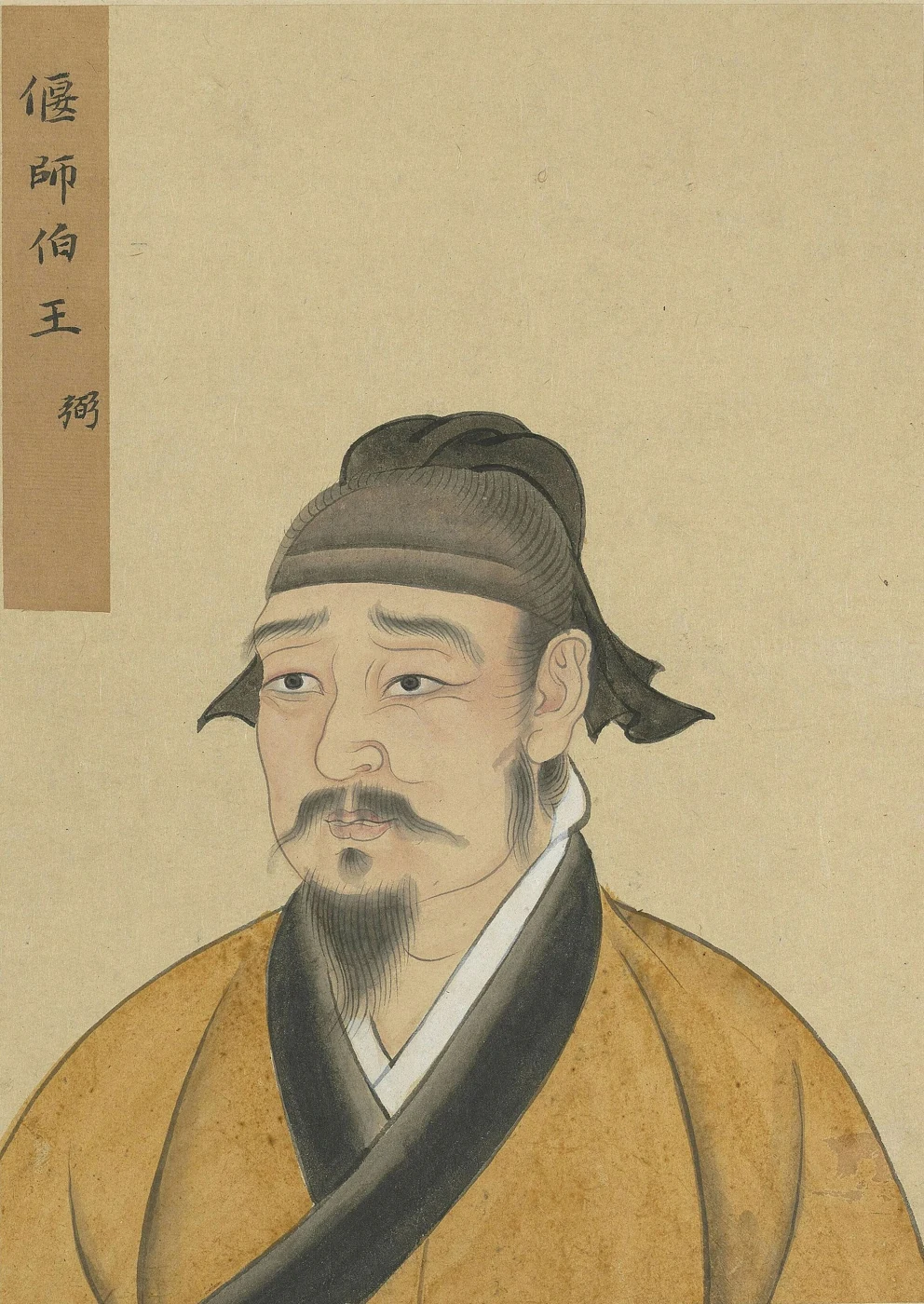
226 CE–249 CE
Philosopherclassical scholar
Wang Bi
王弼
Wang Bi (226–249), courtesy name Fusi, was a classical scholar and philosopher of Cao Wei from Gaoping, Shanyang (present-day Weishan County, Shandong). He was one of the leading figures and founders of Wei-Jin Dark Learning and rose to the office of Gentleman of the Department of State Affairs. He was a grandnephew of Wang Can; his grandfather was Wang Kai and his father Wang Ye. Exceptionally intelligent from youth, Wang Bi…
226 CE–249 CECao Wei
PROFILE
Wang Bi (226–249), courtesy name Fusi, was a classical scholar and philosopher of Cao Wei from Gaoping, Shanyang (present-day Weishan County, Shandong). He was one of the leading figures and founders of Wei-Jin Dark Learning and rose to the office of Gentleman of the Department of State Affairs. He was a grandnephew of Wang Can; his grandfather was Wang Kai and his father Wang Ye. Exceptionally intelligent from youth, Wang Bi immersed himself in the teachings of Laozi and Zhuangzi and produced a distinctive commentary on the Laozi before reaching adulthood. During the Zhengshi era, He Yan recommended him for service under Cao Shuang. His aloof, severe, and forthright character and lack of social tact contributed to difficulties in his official career. In 249, the first year of the Jiaping era, Sima Yi launched a coup in which Cao Shuang and He Yan were killed, and Wang Bi lost his office. He died of illness that autumn at the age of twenty-four. In the Tang dynasty he was included among twenty-two former worthies and classical scholars enshrined in the Confucian temple. Wang Bi's thought centered on the principle that "nonbeing is the root and nonbeing is the function." He articulated the interpretive method of "grasping the meaning and forgetting the words" and the idea of "holding to the one to govern the many," and together with He Yan helped establish Zhengshi Dark Learning. His thought broke with the cosmological generation theories dominant in the Han and began to construct an ontological framework in classical Chinese philosophy. His principal works include the Commentary on the Laozi, General Remarks on the Laozi, Commentary on the Book of Changes, and Outline Examples of the Book of Changes.
- Other Names
- Wang Fusi, Fusi
- Courtesy Name
- Fusi
- Period
- Wei
- Dynasty/Regime
- Wei
- Identity
- Philosopher, classical scholar
- Ethnicity/Ethnic Group
- Not reliably confirmed by historical sources
- Native Place
- Gaoping, Shanyang (present-day Weishan County, Shandong Province)
- Date of Birth
- 226
- Place of Birth
- Gaoping, Shanyang (present-day Weishan County, Shandong Province)
- Date of Death
- 249
- Place of Death
- Unknown
- Highest Office
- See Biography and Major Activities
- Major Achievements
- Prodigious thinker of the Dark Learning tradition; wrote commentaries on the Laozi and Book of Changes; helped establish the philosophical framework of Wei-Jin Dark Learning
LIFE TIMELINE
Age 15 | Fond of the Laozi, eloquent, and mentioned alongside Zhong Hui
Age 17 | Before adulthood, gained the notice of Pei Hui and Fu Gu and impressed those present in philosophical debate with He Yan
Age 19 | Wrote his commentary on the Laozi; He Yan admired it and abandoned his own Laozi commentary
In his twenties | Recommended by He Yan, appointed Gentleman of the Department of State Affairs, but held in low regard by Cao Shuang
Age 24 | Sima Yi's coup led to the deaths of Cao Shuang and He Yan; Wang Bi lost office through association and died of illness that autumn
BIOGRAPHY
Biography
Family Background and Early Years
Wang Bi came from a family of officials. His sixth-generation ancestor Wang Gong was renowned and rose to Grand Commandant, one of the Three Excellencies; his fifth-generation ancestor Wang Chang was one of the "Eight Eminent Men" of the late Han and rose to Minister of Works, also one of the Three Excellencies. During the turmoil at the end of the Eastern Han, Wang Bi's grandfather Wang Kai and his clansman Wang Can took refuge in Jingzhou under Liu Biao, Governor of Jingzhou. Liu Biao admired Wang Can's talent and initially wished to marry a daughter to him, but considered his appearance unsuitable and instead married her to the more handsome Wang Kai. Wang Kai fathered Wang Ye, and Wang Ye fathered Wang Bi. Wang Bi was therefore a maternal great-grandson of Liu Biao.
In 217, Wang Can died of illness while accompanying Cao Cao on a campaign against Sun Quan. Wang Can's two sons were later executed for crimes. With Wang Can's line extinguished, Wang Ye was made his heir, making Wang Can Wang Bi's adoptive grandfather. Wang Can was a famous writer and one of the Seven Masters of the Jian'an period. When Wang Can was fourteen and went to Chang'an, the scholar Cai Yong treated him with great respect and gave him a library of ten thousand juan of books and writings. These several cartloads of books eventually passed to Wang Ye, providing favorable conditions for Wang Bi's education. Wang Bi's father Wang Ye rose to the office of Director of Imperial Messengers, and the literary standing of his adoptive grandfather Wang Can also strongly shaped Wang Bi's upbringing.
Early Fame and Intellectual Formation
Wang Bi displayed exceptional intelligence as a child. In his early teens he became devoted to Laozi's teachings and was known for eloquence, being mentioned alongside Zhong Hui. Before reaching adulthood, he was already known to officials and men of letters. When he met Pei Hui of the Ministry of Personnel, Pei asked why the sages had not spoken explicitly about nonbeing even though all things depended upon it, while Laozi repeatedly discussed it. Wang Bi answered that the sages embodied nonbeing, which could not itself be taught directly, whereas Laozi spoke from the realm of being and therefore continually discussed nonbeing. The exchange became well known. Fu Gu also recognized his talent. He Yan, then Minister of Personnel, was greatly impressed by him. Liu Tao of Huainan, renowned for argument, was often bested in conversation with Wang Bi.
During the Zhengshi era, Wang Bi debated He Yan. When He Yan presented what he considered the ultimate formulation of an argument and asked whether it could still be challenged, Wang Bi raised objections that impressed the entire gathering. Wang Bi also repeatedly staged dialogues in which he argued both sides, producing discussions that those present could not match. He Yan had begun a commentary on the Laozi, but after hearing Wang Bi explain the work and recognizing the brilliance of his commentary, he abandoned his own project and instead composed a Discourse on the Way and Virtue.
Difficult Official Career
During the Zhengshi era, when the office of Palace Attendant was vacant, He Yan had already promoted Jia Chong, Pei Xiu, and Zhu Zheng and considered appointing Wang Bi as well. Ding Mi, who was competing with He Yan, recommended Wang Li of Gaoyi to Cao Shuang. Cao Shuang appointed Wang Li and gave Wang Bi a post as Gentleman of the Department of State Affairs instead. When Wang Bi met Cao Shuang after taking office, Cao Shuang dismissed the attendants, but Wang Bi spoke only about abstract principles, causing Cao Shuang to regard him lightly. Cao Shuang dominated government and favored his own associates. Wang Bi was intellectually accomplished but did not cultivate reputation or political relationships. After Wang Li died, Cao Shuang replaced him with Wang Shen, again leaving Wang Bi outside the inner circle, to He Yan's regret. Because Wang Bi was very junior and not skilled in routine administrative work, he attracted still less attention.
Dismissal and Early Death
In 249, the tenth year of Zhengshi, Sima Yi launched the Gaoping Tombs coup and Cao Shuang was killed. Wang Bi was implicated by association and lost his office. That autumn he contracted an epidemic illness and died at the age of twenty-four. He had no son and his line ended, though he had a daughter who married Zhao Jizi. After his death, figures including Sima Shi lamented his loss. In 647, the twenty-first year of the Zhenguan era, Emperor Taizong of Tang ordered twenty-two former worthies and classical scholars to be enshrined in the Confucian temple, and Wang Bi was among them.
Major Activities
Philosophical Thought
Wang Bi's philosophy centered on the proposition that "nonbeing is the root and nonbeing is the function." He regarded nonbeing as the underlying basis and source of the myriad things and treated being as dependent upon nonbeing. In his Commentary on the Laozi, he argued that the myriad forms ultimately return to one and that this unity is grounded in nonbeing, linking "the one" with "nonbeing" as the source and destination of all things.
In discussing movement and stillness, Wang Bi took stillness as fundamental and movement as derivative. His commentaries explain that being arises from emptiness and movement from stillness, and that although the myriad things move and transform, they ultimately return to emptiness and stillness. From this he developed political ideas associated with controlling movement through stillness, governing through stillness, and rule through nonaction.
On the relation between the one and the many, Wang Bi argued for the necessity of "governing the many through the few" and "holding to the one to govern the many." In the Laozi and the Outline Examples of the Book of Changes, he maintained that multiplicity requires a unifying principle and that by tracing things back to their organizing root, the many can be governed through the one. He extended this reasoning to justify the political principle of a ruler governing the people and of unity ordering plurality.
Contributions to the Book of Changes and Laozi Studies
Wang Bi wrote influential commentaries on the Book of Changes and the Daodejing. Because most Han and Three Kingdoms commentaries on the Daodejing were later lost, Wang Bi's Commentary on the Daodejing became the earliest surviving commentary on the work. In interpreting the Book of Changes, he rejected the Han tradition's emphasis on images and numbers and instead explained the text through philosophical principles, helping inaugurate the "meaning and principle" approach to Changes studies. Kong Yingda's Tang preface to the Correct Meaning of the Book of Changes declared that Wang Fusi's Wei commentary alone surpassed ancient and modern commentaries.
Wang Bi also formulated the interpretive method of "grasping the meaning and forgetting the words." He treated words, images, and meaning as successive levels of expression. Words enable one to grasp images, and images enable one to grasp meaning; once meaning is understood, however, one should no longer cling to images, and once the images are understood, one should no longer cling to words. In this view, only by not becoming attached to words can one grasp images, and only by not becoming attached to images can one grasp meaning.
The Theory That the Sage Has Emotions
He Yan held that the sage was without joy, anger, sorrow, or pleasure, a view that Zhong Hui and others accepted. Wang Bi disagreed. He argued that the sage's spiritual clarity surpasses that of ordinary people while the five emotions are shared with them. The sage therefore responds emotionally to things without being burdened by them. Wang Bi criticized the idea that freedom from emotional entanglement meant complete lack of response. This view was praised by later thinkers.
Travels and Social Relations
Wang Bi was comfortable with discussions of abstract principle, enjoyed banquets and excursions, understood music, and was skilled at pitch-pot. At the same time, he often mocked others on the strength of his talent and was disliked by some contemporaries. He was friendly with Zhong Hui, whose style of argument emphasized careful analysis and who nevertheless admired Wang Bi's lofty qualities. Wang Bi was initially on good terms with Wang Li and Xun Rong, but after Wang Li was appointed Palace Attendant he resented him; his relationship with Xun Rong also deteriorated. After Wang Bi completed his commentary on the Book of Changes, Xun Rong of Yingchuan challenged him over the meaning of the "Great Expansion" passage in the Appended Statements I. Wang Bi replied with an explanation and wrote a letter mocking Xun Rong.
Personal Relations
Family
- Wang Gong: sixth-generation ancestor; Grand Commandant
- Wang Chang: fifth-generation ancestor; one of the late-Han "Eight Eminent Men" and Minister of Works
- Liu Biao: maternal great-grandfather; Governor of Jingzhou in the late Eastern Han
- Wang Kai: grandfather
- Wang Ye: father; Director of Imperial Messengers
- Wang Can: adoptive grandfather; one of the Seven Masters of Jian'an
- Wang Hong: elder brother
- Zhao Jizi: son-in-law
Teachers and Friends
- He Yan: recommender and co-founder of Zhengshi Dark Learning
- Zhong Hui: friend and intellectual peer
- Pei Hui: admirer
- Fu Gu: admirer
- Liu Tao: debating opponent
- Wang Li: initially friendly, later resented
- Xun Rong: initially friendly, later estranged
Ruler-Minister
- Cao Shuang: superior who held Wang Bi in low regard
- Cao Fang: Prince of Qi of Wei, emperor during the Zhengshi era
Conflicts
- Ding Mi: competed with He Yan and recommended Wang Li for the Palace Attendant post, preventing Wang Bi from receiving it
- Xun Rong: scholarly opponent whose relationship with Wang Bi deteriorated
Historical Assessment
Wei-Jin Contemporary Views
- He Yan praised Wang Bi as a formidable younger scholar and suggested that a person of his ability could discuss the boundary between Heaven and humanity, as recorded in the Biography of Wang Bi and A New Account of the Tales of the World: Literature.
- He Shao described Wang Bi as extraordinarily gifted and unbeatable in matters he truly grasped. He praised Wang Bi's Commentary on the Laozi, General Remarks, and Book of Changes commentary for their intellectual organization and striking formulations, while also criticizing Wang Bi as shallow in understanding human affairs and noting differences between his arguments and He Yan's.
- Chen Shou wrote that Wang Bi delighted in discussing Confucianism and Daoism and possessed outstanding literary and debating talent, in the Records of the Three Kingdoms: Biography of Zhong Hui.
- Wang Ji, who enjoyed philosophical discussion but disliked Laozi and Zhuangzi, reportedly said that reading Wang Bi's commentary on the Book of Changes had given him many insights, as recorded in the Biography of Wang Bi.
Jin and Northern and Southern Dynasties
- Sun Sheng criticized Wang Bi's rejection of image-and-number interpretation of the Book of Changes, arguing that Wang's elegant discussion of abstract principles did not adequately address yin-yang processes, hexagram transformations, images, time, and the circulation of the five qi, although he acknowledged that some parts were worth reading.
- Fan Ning of the Eastern Jin sharply criticized Wang Bi and He Yan for what he saw as frivolous fame, arrogance, and socially harmful promotion of unrestrained behavior, while also praising Wang Bi's subtle thought for reviving a declining intellectual tradition and describing him as a master of metaphysical learning.
- Liu Xie wrote that in the Zhengshi era He Yan and his associates made metaphysical discourse flourish, with Laozi and Zhuangzi competing with Confucius for intellectual authority. He praised Wang Bi's Two Examples and He Yan's discussions as original, incisive, and among the finest works of argument, and also regarded Wang Bi's explanation of the Book of Changes as concise and clear enough to serve as a model.
- Yan Zhitui criticized He Yan and Wang Bi for promoting metaphysical teachings at the expense of Confucian learning and said that Wang Bi's habit of laughing at others led him into the trap of competitiveness, in Family Instructions for the Yan Clan: Encouraging Learning.
Tang and Song Periods
- Kong Yingda of the Tang declared that Wang Fusi's Wei commentary "alone surpasses ancient and modern works" in the preface to the Correct Meaning of the Book of Changes.
- In 647, the twenty-first year of the Zhenguan era, Emperor Taizong of Tang ordered twenty-two former worthies and classical scholars, including Wang Bi, to be enshrined in the Confucian temple.
- Zhu Xi of the Song criticized Wang Bi's Book of Changes as clever but insufficiently clear, as recorded in Classified Conversations of Master Zhu: Mencius I.
Modern and Contemporary Views
- Tang Yongtong's The Learning That Prizes Nonbeing—Wang Bi systematically explained the central position of Wang Bi's doctrine of "valuing nonbeing" in Dark Learning and argued that his treatment of nonbeing as ontological ground opened a new direction in Chinese philosophy.
- Wang Baoxuan's Critical Biography of Wang Bi: Ancestor of Dark Learning, Source of Song Learning offered a comprehensive assessment of Wang Bi's intellectual achievements and historical position and called him the "ancestor of Dark Learning."
- Modern scholars commonly regard Wang Bi as having broken with the traditional Han cosmology of generation and as having begun to establish an ontological framework in classical Chinese philosophy, reshaping the intellectual landscape of the Wei-Jin period.
- Kanaya Osamu's study on the development of the idea of "nonbeing" from Laozi to Wang Bi examines Wang Bi's inheritance and development of Laozi's concept of nonbeing.
FIGURES ASSOCIATED WITH THIS DYNASTY
Bibliography
- Records of the Three Kingdoms, Book of Wei, Biography of Zhong Hui, annotations citing Bowu Ji and the Biography of Wang Bi
- Book of Jin: Biography of Fan Ning
- Preface to the Correct Meaning of the Book of Changes