Born at Daming Palace as the thirteenth son of Emperor Xianzong of Tang. | Born at Daming Palace as the thirteenth son of Emperor Xianzong of Tang.
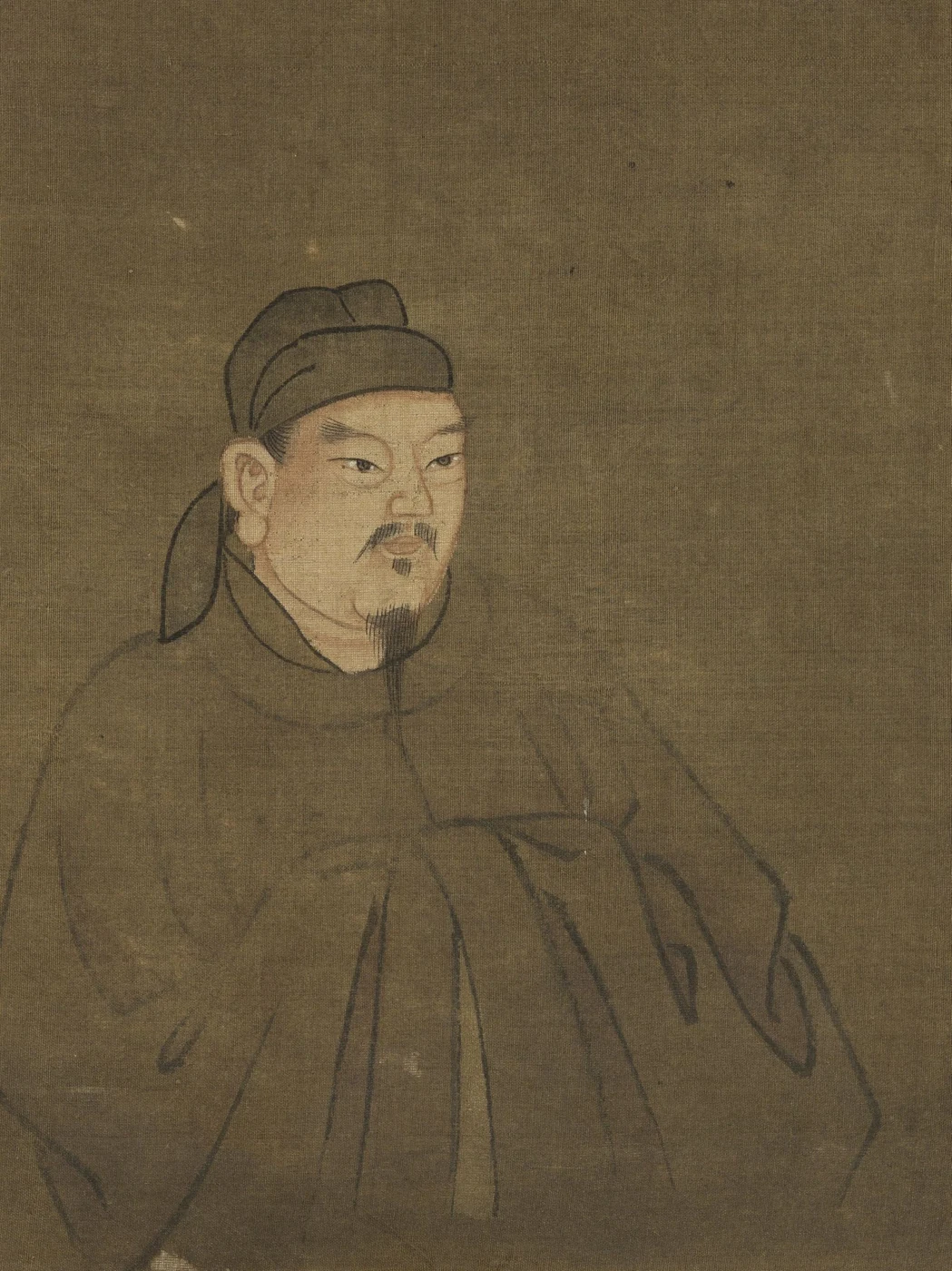
810 CE–859 CE
Emperor of the Tang Dynasty
Li Chen
李忱
Li Chen (810–859), originally named Li Yi, was the thirteenth son of Emperor Xianzong of Tang and the seventeenth emperor of the Tang Dynasty, reigning from 846 to 859. His era name was Dazhong, his temple name was Xuanzong, and his posthumous name was Emperor Yuansheng Zhiming Chengwu Xianwen Ruizhi Zhangren Shencong Yidao Daxiao. Later generations called him the “Little Taizong,” and his reign became known as the Dazhong…
810 CE–859 CETang Dynasty
PROFILE
Li Chen (810–859), originally named Li Yi, was the thirteenth son of Emperor Xianzong of Tang and the seventeenth emperor of the Tang Dynasty, reigning from 846 to 859. His era name was Dazhong, his temple name was Xuanzong, and his posthumous name was Emperor Yuansheng Zhiming Chengwu Xianwen Ruizhi Zhangren Shencong Yidao Daxiao. Later generations called him the “Little Taizong,” and his reign became known as the Dazhong administration, regarded as the final revival of the late Tang. Li Chen succeeded as “Imperial Great-Uncle,” the only Tang ruler to do so. During his reign he worked diligently at government, reformed official administration, restrained eunuchs, defeated Tibetan, Uyghur, Tangut, and other forces, and recovered territory in the Hexi region, temporarily improving the fortunes of the declining Tang state. In his later years he was poisoned by alchemical elixirs and died in 859, the thirteenth year of Dazhong. He was buried at Zhenling.
- Other name
- Li Chen
- Period
- Tang Dynasty
- Date of Birth
- July 27 810
- Date of Death
- September 10 859
- Dynasty / polity
- Tang Dynasty
- Identity
- Emperor of the Tang Dynasty
- Ethnicity / people
- Not recorded in historical sources
- Native place
- Not recorded in historical sources
- Place of birth
- Daming Palace
- Place of death
- Not recorded in historical sources
- Reign
- 846–859
- Predecessor
- Emperor Wuzong of Tang (Li Yan)
- Successor
- Emperor Yizong of Tang (Li Cui)
- Era name
- Dazhong
- Temple name
- Xuanzong
- Posthumous name
- Emperor Yuansheng Zhiming Chengwu Xianwen Ruizhi Zhangren Shencong Yidao Daxiao
- Highest office
- See Biography and Major Activities
- Principal achievement
- A late-Tang emperor known as the “Little Taizong,” whose energetic rule produced the highly praised Dazhong administration.
LIFE TIMELINE
Enfeoffed Prince of Guang. | Enfeoffed Prince of Guang.
Deliberately concealed his abilities | Deliberately concealed his abilities, was considered “unintelligent” in the palace, and was repeatedly treated slightingly by Emperors Wenzong and Wuzong.
Emperor Wuzong became gravely ill | Emperor Wuzong became gravely ill; the eunuch Ma Yuanzhi and others installed Li Yi as Imperial Great-Uncle, and he changed his name to Li Chen.
Emperor Wuzong died | Emperor Wuzong died; Li Chen ascended the throne before the coffin at age thirty-seven.
Demoted Li Deyu | Demoted Li Deyu, bringing the Niu–Li factional strife to an end.
Rehabilitated officials killed in the Sweet Dew incident except Zheng Zhu and Li Xun. | Rehabilitated officials killed in the Sweet Dew incident except Zheng Zhu and Li Xun.
Zhang Yichao recovered eleven Hexi prefectures | Zhang Yichao recovered eleven Hexi prefectures, returning Tang influence to the Hexi Corridor.
Military commands in Xuanzhou | Military commands in Xuanzhou, Hunan, Guangzhou, Jiangxi, and other places rebelled in succession and were pacified one after another.
Poisoned by elixirs | Poisoned by elixirs; suffered intense thirst and internal heat.
Died at Daming Palace at age fifty. | Died at Daming Palace at age fifty.
Buried at Zhenling | Buried at Zhenling, in present-day Jingyang County, Xianyang, Shaanxi.
Emperor Yizong of Tang expanded his posthumous name to Emperor Yuansheng Zhiming Chengwu X | Emperor Yizong of Tang expanded his posthumous name to Emperor Yuansheng Zhiming Chengwu Xianwen Ruizhi Zhangren Shencong Yidao Daxiao.
BIOGRAPHY
Biography
Family Background and Early Years
On the twenty-second day of the sixth month of 810, the fifth year of Yuanhe, Li Yi was born at Daming Palace in Chang'an as the thirteenth son of Emperor Xianzong of Tang. His mother, Lady Zheng, later posthumously honored as Empress Xiaoming, had originally been a concubine of Li Qi, Military Commissioner of Zhenhai. After Li Qi's rebellion failed in 807 and he was executed, Lady Zheng was confiscated into the palace as a member of a rebel's household and served as a maid to Noble Consort Guo, later Empress Yi'an. Emperor Xianzong later took her as a consort and she gave birth to Li Yi. The Chinese entity states that this background left Li Yi with relatively low status at court and contributed to long-standing hostility between him and the line of Noble Consort Guo, which included Emperors Muzong, Jingzong, Wenzong, and Wuzong.
In the third month of 821, the first year of Changqing, Emperor Muzong of Tang enfeoffed his brothers and sons, and the ten-year-old Li Yi became Prince of Guang. In generation Li Yi was uncle to Emperors Jingzong, Wenzong, and Wuzong, although he was one year younger than Jingzong and Wenzong. The Old Book of Tang describes him as restrained and taciturn, and says people in the palace considered him “unintelligent.” When he was in his teens he reportedly became gravely ill, suddenly saw a radiance illuminate his body, sprang upright, and formally clasped his hands as though receiving ministers. His nurse thought it was a mental disorder, but Emperor Muzong touched his back and said that the child was an outstanding member of the family rather than mentally ill, then bestowed a jade ruyi, an imperial horse, and a golden belt. Li Yi also repeatedly dreamed of riding a dragon into heaven; when he told his mother, Lady Zheng warned him not to let others know.
Years of Concealment
Li Yi passed through the Dahe and Huichang eras while increasingly concealing his abilities and seldom speaking in company. During banquets in the Sixteen Residences, Emperors Wenzong and Wuzong were said to force him to speak for amusement, calling him “Uncle Guang.” Emperor Wuzong, whose temperament was forceful and proud, treated Li Yi with particular disdain. The Chinese entity interprets these experiences as teaching Li Yi the dangers of conflict within the imperial family and helping him develop patience and reserve. Because of his humble maternal background and the hostility between Lady Zheng and Empress Dowager Guo, he allegedly understood that displaying intelligence might invite suspicion and danger, and therefore deliberately affected dullness as a means of self-preservation.
Succession as Imperial Great-Uncle
On the first day of the third month of 846, the sixth year of Huichang, Emperor Wuzong became gravely ill after his pursuit of longevity and use of Daoist elixirs worsened his condition until he could no longer speak. Although Wuzong had five sons, no heir had been designated. By the middle Tang, eunuchs controlled the palace armies and frequently influenced imperial succession. The eunuch Ma Yuanzhi, Left Shence Army Guardian Commander, and others judged Prince of Guang Li Yi comparatively easy to control. On the twentieth day of the third month they issued an edict naming him Imperial Great-Uncle and assigning him to handle military and state affairs; he changed his name to Li Chen. On the twenty-third day of the month, after Wuzong died, Li Chen ascended the throne before the coffin at age thirty-seven and became Emperor Xuanzong of Tang.
After assuming regency powers, however, Li Chen received officials with an expression of grief and decided affairs competently, revealing what observers regarded as previously hidden ability. Eunuchs, officials, and imperial relatives were surprised and concluded that his earlier dullness had been deliberate concealment. Qing thinker Wang Fuzhi, in Discussions on Reading the Comprehensive Mirror, argued that the eunuchs displaced Wuzong's sons and raised his uncle because Li Deyu had enjoyed Wuzong's deep trust and was restricting eunuch power; the eunuchs needed a succession that would remove Li Deyu, and among the princes of the Sixteen Residences, Prince of Guang appeared the easiest to control.
The Dazhong Administration
After ascending the throne, Li Chen tried to emulate Emperor Taizong of Tang. The Chinese entity records that he used the maxim that extreme disorder had never arisen without employing the unworthy, and great order had never arisen without employing the loyal and worthy. He especially liked the Essentials of Government in the Zhenguan Reign, wrote passages from it on a screen, and read them with formal reverence. He worked diligently and sought to address problems accumulated since the middle Tang. Domestically, he demoted Li Deyu and ended the Niu–Li factional strife, checked excessive eunuch power, punished lawbreaking nobles and imperial relatives, and rehabilitated officials killed in the Sweet Dew incident except Zheng Zhu and Li Xun. Externally, the Chinese entity states that his government successively defeated declining Tibetan, Uyghur, Tangut, and Xi forces and recovered substantial territory lost after the An Lushan Rebellion. The Tang state temporarily revived and popular prosperity improved, leading later historians to call the period the “Dazhong administration.”
After 858, the twelfth year of Dazhong, poor management by commanders led to a series of regional mutinies. Kang Quantai, a general at Xuanzhou, expelled Observer Zheng Xun; Shi Zaishun in Hunan expelled Observer Han Cong; Wang Linghuan in Guangzhou expelled Military Commissioner Yang Fa; and Mao He in Jiangxi expelled Observer Zheng Xian. Li Chen separately appointed Cui Xuan to oversee Xuan, Chi, and She prefectures, Wen Zhang as Inspector of Xuan Prefecture, Cai Xi as Hunan Observer, Li Chengxun as Military Commissioner of Guangzhou, and Wei Zhou as Jiangxi Observer, dispatching troops from neighboring circuits to escort them to their posts and suppress the disturbances.
Later Years and Death
From the fifth month of 859, the thirteenth year of Dazhong, Li Chen was poisoned by an elixir known as the “longevity drug,” prepared by the imperial physician Li Yuanbo. He suffered intense thirst and internal heat and was unable to attend court for more than a month. The Chinese source's narrative states that he died at Daming Palace on the seventh day of the eighth month, given there as September 7, 859, at age fifty; the person-information table gives September 10, 859. His ministers initially bestowed the posthumous name Emperor Shengwu Xianwen Xiao and temple name Xuanzong.
Before his death, Li Chen entrusted his favored son Li Zi, Prince of Kui, to three trusted eunuchs: Military Affairs Commissioners Wang Guichang and Ma Gongru and Southern Commissioner of Xuanhui Wang Jufang. After Xuanzong died, the three concealed his death while planning to transfer their enemy Wang Zongshi, a eunuch and Left Army Commander, out of the capital as military supervisor of Huainan. Wang Zongshi sensed something was wrong and, escorted by Deputy Left Army Commander Qi Yuanshi, entered the inner palace directly. Learning that the emperor had died, he arrested Wang Guichang and the others, accused them of forging an edict, and had them all executed. He then brought Prince of Yun Li Wen into the palace, forged an edict making him crown prince, and changed his name to Li Cui. The death was announced the next day, and Li Cui succeeded as Emperor Yizong of Tang. In the second month of 860 Li Chen was buried at Zhenling, in present-day Jingyang County, Shaanxi. In 872, Emperor Yizong enlarged his posthumous title to Emperor Yuansheng Zhiming Chengwu Xianwen Ruizhi Zhangren Shencong Yidao Daxiao.
His Early Years: Thought Simple in the Palace and His Long Concealment
Li Chen was the thirteenth son of Emperor Xianzong of Tang and of the empress Xiaoming, lady Zheng, and was born in the Daming palace on the twenty-second day of the sixth month of 810. The histories say that he was "dull without and bright within, grave and sparing of speech, with a look unlike other men," and that in childhood the palace thought him simple. In his teens he fell gravely ill and grew daily worse, when suddenly a light shone upon his body and he sprang up, set himself upright and made obeisance with joined hands "as if before his ministers"; his nurse thought it a sickness of the mind, but Muzong, having looked at him, stroked his back and said that this was the wonder of his house and not a sick mind at all, and gave him a jade sceptre, a horse of the imperial stables and a golden belt. He often dreamed of mounting a dragon and rising to heaven, and telling this to lady Zheng she said that it was not a thing men should know and begged him not to speak of it again. Through the Taihe and Huichang reigns he concealed himself the more, and in company never said much; and Wenzong and Wuzong, at their feasts, would force him to speak for their amusement and called him "uncle Guang," while Wuzong, being of a proud temper, treated him with particular disregard. Of his early years two tales have been widely told. One is that Wuzong, contending for the throne, meant to kill him and sent four palace attendants to seize him and duck him in the palace privy, and that the eunuch Qiu Gongwu, wishing to save him, pretended that he had been killed and smuggled him out of the imperial house, so that three years later when Wuzong died the eunuchs brought him out to be emperor; the other is that he took the tonsure under the Chan master Huangbo and went with the monk Zhixian to Lushan in Jiangxi, where the two looked at the waterfall and Zhixian, to test him, recited the lines about piercing the clouds and splitting the rock without shirking the toil, and knowing from afar the height of the source, to which Li Chen answered that a mountain stream could never hold him and that he would end in the great sea making waves. But neither the persecution nor the taking of the tonsure has any basis in the standard histories; the standard histories say nothing of them, and Li Chen was then only one of many imperial uncles by a secondary mother with no threat at all to Wuzong's throne, so that such accounts should be read as legend.
His Accession, the Rehabilitation of the Victims of the Ganlu Affair, and the Demotion of Li Deyu
On the first day of the third month of 846, Wuzong being gravely ill, his testament named Li Chen imperial grand uncle and acting manager of military and state affairs, the Tang Huiyao dating the act to the twenty-first day of that month; and on taking over he was "full of mourning, receiving his colleagues and deciding the business of the day, so that men first saw his hidden virtue." At the accession Li Deyu presided over the investiture, and when it was done Li Chen told the attendants about him that the grand commandant had been the man standing near him, and that every time he looked at him it made his hair stand on end; and he afterwards demoted Li Deyu, and, holding that in the Ganlu affair only Li Xun and Zheng Zhu had deserved death while Wang Ya, Jia Su and the rest were innocent, issued an edict clearing them of their wrongs.
His Personal Choice of Chancellors and His Personal Examination of Governors
It is recorded that with Xuanzong "the choice of chancellors came wholly from himself." He once directed the privy council that the vice minister of war and judge of the revenue, Xiao Ye, could be made a joint manager of the department of state affairs, ordering the Hanlin to draft the commission; and when the privy commissioners Wang Guichang and Ma Gongru asked again on the ground that Xiao Ye had first been judge of revenue and the imperial intention was not clear, Li Chen, suspecting them of favouring Xiao Ye, directed the Hanlin instead that the vice minister of revenue and judge of revenue affairs Cui Shenyou could be made minister of works and joint manager. Seeing the abuses of the previous reigns in the too free granting of high office, he kept strict control of the number of high officials: since purple and crimson denoted high office, and the grant of purple or crimson dress meant promotion, he was extremely chary of them, keeping two sets of purple with gold fish and crimson with silver fish in attendance on his progresses to the inner treasury, "so that in half a year or even a whole year not one set was used, and men then took the getting of crimson or purple for an honour." His principle in conferring office or rank was not to confer before the appointed time and not without achievement. He set most store by the prefects, the highest officers of the provinces, holding that the empire was made up of its localities and that their government bore directly on the people's loyalty; and he provided that when a prefect was chosen he might not go straight to his post but must come to the capital to be examined by him in person. His explanation was that he saw many prefects unfit for their posts and harming the people, and so wished to see each one and ask how he would govern, and thereby learn his good and bad points before deciding whether he might be appointed. When Linghu Tao had transferred an old friend to a neighbouring prefecture as prefect and let him take up office on the way, Li Chen, seeing his memorial of thanks, asked Linghu Tao about it, and Linghu Tao answered that being near, it saved the sending and receiving of the man; and Li Chen said that because many prefects were unfit and harmed the people he wished to see each one and ask what he had done, learning his worth to promote or degrade him, and that an edict once issued had simply been set aside, and that a chancellor was indeed to be feared for his power — it being then cold, and Linghu Tao's sweat soaking through his double fur. Though kind and considerate he was extremely strict in law, and once said that whoever broke his law, even of his own sons and brothers, would not be pardoned, so that all within and without stood in awe of him. His uncle Zheng Guang, military commissioner of Pinglu and Hezhong, came to court from Hezhong in 853, and Li Chen asked him about his government, but Zheng Guang did not know letters and answered coarsely; and Li Chen kept him to attend court and afterwards, concerned for his livelihood, gave him gold and silk generously and gave him no more provincial commands.
His Restraint of the Eunuchs: Three Instances and Their Limits
First, the jester Zhu Hanzhen, famous for his buffoonery, quick and ready with a quip and endlessly witty, was much favoured by Li Chen for his power to amuse; but one day, talking on, he touched on government, and Li Chen's face changed at once and he said that he kept such men for his amusement and that they dared not meddle in government, and from that time kept him at a distance, and when Zhu Hanzhen's son was found to have taken bribes had him beaten to death and sent the father into exile on the frontier. Second, the musician Luo Cheng played the pipa as no other man and was greatly favoured; and when he murdered a man in a moment's anger and was thrown into prison, the other musicians pleaded for him, saying that his art was unmatched and could add to the emperor's pleasure, but Li Chen said that what they pitied was his art while what he himself prized was the law of the founders, and had him beaten to death. Third, to deal with the eunuchs he summoned the Hanlin academician Wei Ao on the pretext of discussing poetry and dismissed those about him, saying that he wished to speak privately with him and that outside he might talk only of poems, and then, having sent away the little yellow-gate who set the tea table, asked how his own position stood with the eunuch commissioners; and when Wei Ao answered that his awe and control of them exceeded that of former reigns, Li Chen shut his eyes, waved his hand and said that it was nothing of the kind, that he was still afraid of them as before, and asked what plan could be devised. Wei Ao, unprepared, answered at random that to plot from the outer court might bring another Taihe affair, and that it would be better to pick out the able among the eunuchs themselves and entrust them with the business; and Li Chen said that this was the last resort, that he had tried it — that at first he promoted the lesser ones, and that up to yellow, up to green, up to crimson, all were grateful, but that as soon as purple was on a man's back he and the rest became one body — at which Wei Ao withdrew in a sweat. Moreover, whereas by the old rule, when the left army commissioner was dismissed the successor was taken from the right army and when the right was dismissed from the left, so as to guard against the small beginnings of trouble, Li Chen, governing his subordinates by law, always had the successor taken from the same army, so that "none within or without could fathom him."
His Manner in Court, His Courtesy to Ministers, and His Frugality and Family Feeling
In court Li Chen met his ministers as a host meets guests, and even those nearest him never saw him in a slack mood; when the chancellors were reporting business no one stood by him and his majesty was such that a man could not look up, but when they had finished his face would break into a smile and he would say that they might talk at leisure, and then ask about small affairs of the wards or speak of the palace feasts and excursions, and there was nothing he would not touch on; and after about a quarter of an hour he would compose himself again and warn the ministers to do well, saying that he was always afraid they would fail him and that they would not meet again. Linghu Tao said of him that in ten years of holding power he had been most favoured, and yet at every audience in the Yanying hall his clothes were soaked with sweat. He loved scholars and gave his mind to the examinations, going about among the people in disguise to hear public opinion and judge the fairness of the selection; at the little feasts by the pools his academicians matched verses with him, and when his ministers went out to their commands he wrote poems to speed them. To his ministers he bowed with grave courtesy and seldom spoke lightly, and when one of them presented a memorial he burned incense and washed his hands before reading it. In his own living he wore washed clothes and had no more than a few dishes at his ordinary meals, and would not have music played unless his mother dined with him, and when the harvest failed he showed his grief in his face. Where formerly the yellow gates had spread borneol and turmeric under the emperor's feet, he had it all removed; and when a palace woman fell ill and the physician cured her he would slip gold into her sleeve, warning her not to let the eunuch commissioners know lest they think him partial to his attendants. He was by nature affectionate and kept his brothers in harmony: in 847 he built the Yonghe hall in the sixteenth mansion and visited it several times, all the princes from the youngest up taking their seats, with a hundred entertainments till dusk, and when one of the princes fell ill he had the entertainments stopped and went into his chamber to comfort him himself. On the day before the suburban sacrifice he visited the ancestral temple, and entering the chamber of Xianzong with the cup in his hands "his tears fell together," so that those about him could not bear to look. To his own children he was strict almost to inhumanity: when the princess Wanshou married, and the old ceremonial of Wude would have had silver plate on the carriage, he said that since he was reforming the realm by frugality it should begin with his near kin, and ordered copper instead; and after she married he told her always not to slight her husband and not to meddle in affairs. When the princess went to the theatre while her husband lay ill, Li Chen was furious, saying that he had sometimes wondered why the great families were unwilling to marry their sons to princesses and now he knew; and he had her summoned and reproved to her face. When Yu Cong was chosen to marry the princess Yongfu, and she broke the chopsticks at table with the emperor, Li Chen said that with such a temper she would hardly do for a great officer's wife, and changed Yu Cong's marriage to the princess Guangde.
The Return of the He-Huang Region and His Handling of the Northern Barbarians, Annam and the Tangut
In 847 all the Xi of the northern mountains rebelled, and Zhang Zhongwu of Lulong marched deep, took their chiefs, burned two hundred thousand tents and brought to the capital three hundred ears and faces of men below the rank of prefect, seventy thousand sheep and cattle and five hundred carts of stores; and after this there was no great military threat in the north. In 848 Zhang Yichao, judging the moment ripe, raised the standard: "the host buckled on armour and clamoured at the gates of the prefecture, all the Chinese helped them, the Tibetan guards fled in terror, and he took over the government of the prefecture," driving out the Tibetan commanders and recovering Shazhou, and sending envoys to the capital with the news. As Liangzhou and other places were still in Tibetan hands and the eastern road blocked, the envoys had to go round by the Tiande city in the northeast, and only in the first month of 850, through the men of Tiande, did they reach court with the maps and registers of Gua, Sha and eleven other prefectures; and so, apart from Liangzhou, the Hexi region, which had been under the Tibetans for nearly a century, came back to Tang. Li Chen sent envoys with an edict of comfort and made Zhang Yichao defender of Shazhou, afterwards giving him command of the eleven prefectures of Sha, Gan, Su, Shan, Yi, Xi, He, Lan, Min and Kuo and appointing him commissioner of the province and of surveillance and settlement within his jurisdiction. When the region came back Li Chen said with delight that Xianzong had always meant to recover He and Huang but had been busy with war in the central plain and never done it, and that he had completed his father's will and could comfort his spirit. His ministers asked him to take an honorific title, and he said that Xianzong had thought of He and Huang and died before the work was done, that they should now set out the merits of the ancestors and deliberate on posthumous titles for the temples of Shunzong and Xianzong to display them to later ages, and issued an edict that he would spare the people for the present and deal with the prefectures beyond the mountains later. In the south he made Wang Shi protector and commissioner of Annam, who selected and trained troops, repaired the walls and strengthened the defence; the commandant Luo Xinggong, long in charge of the office and much in breach of the law, was beaten on a pretext and sent to a distant frontier post; and when Nanzhao invaded in force Wang Shi calmly sent interpreters to reproach them so that they withdrew, and in the seventh month when the unruly people of Annam rose to drive him out he put on armour, led troops to the wall and reproached the rebels, and the next day sent troops to seize and behead them; the Du clan of the cave barbarians, insolent and ungovernable since Qi and Liang, he divided by a stratagem, and their chief Du Shoucheng was beaten and killed; and Annam, after years of famine and disorder, with no rewards for the troops and no tribute sent for six years, from his time had its soldiers rewarded and its tribute paid and the region was at peace. As to the Tangut, Wuzong's campaigns had gone on for years without result and had only consumed supplies, and Li Chen learned that their raids came of the frontier officers seizing their sheep and horses and killing men at will, so that they rose in fury; and he had scholars chosen in place of the greedy and violent frontier officers and the Tangut people conciliated, so that they were quiet; in the Da Zhong years Bai Minzhong reported the Pingxia Tangut pacified and the Nanshan Tangut asking to submit, and Li Chen, with the army long in the field and the state's funds insufficient, issued an edict pardoning the Nanshan Tangut and letting them return to their work.
Pei Xiu's Transport Reform, the Compiling of Books, and the Provincial Risings of His Last Years
In the second month of 851 Li Chen made the vice minister of revenue Pei Xiu commissioner of salt and iron transport. Since the Taihe years no more than four hundred thousand hu of grain had been shipped from the Huai each year, and through the thefts of the clerks and soldiers along the way and losses by sinking fewer than two hundred thousand reached the granaries at the Wei; and Pei Xiu, learning the abuses, on taking office established ten rules for transport and sent officers to reform it, so that a million two hundred thousand hu reached the Wei granaries yearly. He had his subordinates search out the abuses thoroughly, ordered the magistrates of the districts through which the grain passed to oversee the transport and rewarded the capable, and of the four hundred thousand in wages from the river crossing to the mouth of the Wei, twenty-eight thousand strings a year, he had the whole go to the transport clerks, the inspecting offices being forbidden to take any; and he further established twenty rules on the tea tax, which were approved by general opinion. In letters, Li Chen had Cui Guicong, Wei Ao, Li Xun and Zhang Yanyuan compile the continuation of the Tang Annals in twenty-two chapters, finished in the seventh month of 851 and ending with the reign of Xianzong, to supply what Liu Fang's Tang Annals lacked; in 853 Cui Xuan presented the continuation of the Institutional History in forty chapters; and in the fifth month of the same year Zhang Kui, of the left guard's store, collected twelve hundred and fifty articles of statute and ordinance of like kind into a hundred and twenty-one sections under the title Classified Criminal Statutes and presented it to the throne, its feature being that the edicts, ordinances, regulations and forms bearing on the criminal code were all appended to the text of the code, which made it easy to consult and of great practical use, and had a considerable influence on the legislative technique of the Five Dynasties and the Song. In his last years, though the realm was moderately prosperous, drought and flood still came, and from 858 onwards, through the bad management of the commanders he appointed, the garrisons rebelled one after another: the commandant of Xuanzhou, Kang Quantai, drove out the surveillance commissioner Zheng Xun; the commandant of Hunan, Shi Zaishun, drove out Han Cong; the commandant of Guangzhou, Wang Linghuan, drove out the military commissioner Yang Fa; and the commandant of Jiangxi, Mao He, drove out Zheng Xian; and Li Chen made the Huainan commissioner and president of the left of the chancellery Cui Xuan also surveillance commissioner of Xuan, Chi and She, made Wen Zhang of Songzhou prefect of Xuanzhou, Cai Xi of the right guard commissioner of Hunan, Li Chengxun, military commissioner of Jingyuan, commissioner of Guangzhou, and Wei Zhou, chief of the court of imperial entertainments, commissioner of Jiangxi, sending them to their posts with troops from the neighbouring circuits, and all the prefectures were pacified. As to his death, though he had seen Wuzong's error with his own eyes, he sent a eunuch to Wei Zhou to ask Wei Ao, whose Taoist practices he knew of, what drugs he had and to have him report by word of mouth; and Wei Ao memorialized that the adepts were not to be listened to and that minerals were poison and should not be taken, yet Li Chen took the long-life medicine prepared by the imperial physician Li Yuanbo, fell into thirst and internal dryness, and died of a carbuncle on the back. On the seventh day of the eighth month of 859 he issued a testament making the prince of Yun heir and manager of affairs, and died the same day in the Daming palace at the age of fifty.
Major Activities
Political Reform
After his accession, Emperor Xuanzong focused on reversing political arrangements of Emperor Wuzong's reign; the Comprehensive Mirror in Aid of Governance characterized this as an effort to reverse the policies of Huichang. He quickly removed Li Deyu from central government, dismissed him from the chancellorship, sent him out as Military Commissioner of Jingnan, and after repeated demotions eventually exiled him to Yazhou on Hainan, where Li Deyu died in 849. Li Chen then appointed many members of the Niu faction and brought the Niu–Li factional strife to an end.
Xuanzong personally selected his chief ministers. On one occasion he intended to appoint Xiao Ye, but when the Military Affairs Commissioner asked whether Xiao should retain his historiographical position, the emperor feared factional ties and abruptly chose Cui Shenyu instead. Seeking to correct excessive promotion under earlier reigns, he strictly limited the number of senior officials and was sparing in the award of purple and crimson official robes. Attendants kept both colors ready, yet sometimes half a year passed without a single award. His stated appointment principles were not to promote before the required time, not to promote without administrative achievement, not to appoint from personal liking, and not to appoint simply because a person was close to him.
He attached particular importance to prefectural inspectors. Once a candidate for inspector had been selected, that official was not allowed to proceed directly to the post but had to come to the capital for a personal interview. Li Chen explained that too many inspectors had been unsuitable and harmed the people, so he wished to question each candidate on methods of government, judge strengths and weaknesses, and determine fitness before appointment.
Administrative Discipline and Strict Law
Although the Chinese entity describes Xuanzong as benevolent toward the people, it also says he enforced law strictly, especially against those close to him, forbidding them to interfere in government. He reportedly declared that even his own sons and relatives would not be excused if they violated the law. He did not show favoritism toward incapable imperial relatives. His maternal uncle Zheng Guang became a Military Commissioner, but when the emperor discussed government with him and found his answers shallow, he was displeased and Zheng was never again given a civil post over the people.
The Comprehensive Mirror in Aid of Governance and Tang Yulin preserve two stories illustrating this strictness. The entertainer Zhu Hanzhen was renowned for wit and was favored because he amused the emperor. When Zhu once commented on state affairs, Xuanzong immediately reproved him, saying he kept him for entertainment rather than political interference. He thereafter distanced himself from Zhu, and when Zhu's son was found guilty of corruption, the son was beaten to death and Zhu himself exiled. The musician Luo Cheng was a brilliant pipa player and greatly favored, but after killing someone over a minor matter he was imprisoned. When musicians begged for mercy because of his art, the emperor replied that while they cherished Luo's skill, he cherished the laws of his ancestors, and ordered Luo beaten to death.
Military Affairs and Diplomacy
During the Huichang era, Tangut groups repeatedly rebelled and Emperor Wuzong's repeated campaigns failed to suppress them. Xuanzong concluded that the unrest resulted from frontier commanders coveting Tangut sheep and horses, repeatedly mistreating and plundering them, and at times killing people arbitrarily. He therefore replaced them with honest and lenient officials, after which the Tangut situation calmed. In the third month of 851 he again placed Bai Minzhong in special charge of the matter, selected capable staff, and gradually pacified Tangut groups in Nanshan, Pingxia, and elsewhere.
In 848, the second year of Dazhong, Zhang Yichao of Shazhou, present-day Dunhuang, took advantage of Tibetan internal disorder and rallied Han Chinese residents against Tibetan rule, taking Shazhou. In 850 he defeated Tibetan forces and recovered Ganzhou and Suzhou, then successively recovered Guazhou, Yizhou, Ganzhou, Suzhou, Lanzhou, Xizhou, Shanzhou, Hezhou, Minzhou, and Kuozhou. In the eighth month of 851, Zhang Yichao sent his elder brother Zhang Yitan and twenty-eight others to Chang'an with maps and registers of eleven Hexi prefectures. In the eleventh month the Tang court established Guiyi Army at Shazhou and appointed Zhang Yichao Military Commissioner of Guiyi Army and Observer of the eleven prefectures. In 857, the eleventh year of Dazhong, the Tibetan commander Shang Yanxin led Tibetan groups from He and Wei prefectures in surrendering to Tang, allowing Tang influence to enter the Hexi Corridor again and temporarily restoring imperial prestige.
Cultural Policy
Emperor Wuzong had carried out a large-scale suppression of Buddhism across the empire. Under Xuanzong, the excessive effects of that suppression were reversed and Buddhism was allowed an appropriate restoration. The Chinese entity interprets this policy as sacrificing some fiscal benefits gained from temple property in exchange for support from Buddhist officials and the wider population, thereby helping consolidate imperial authority.
Xuanzong favored Confucian scholars and paid close attention to the imperial examinations. He sometimes traveled incognito among the people to hear public opinion and assess the effectiveness of selection. At banquets held by mountains and ponds, he had academicians compose and exchange poetry, and when high officials left for provincial commands he also wrote verse to see them off. He generally treated ministers with solemn courtesy and few casual remarks. When an official submitted a memorial, he was said to burn incense and wash his hands before reading it. When first considering a chief minister after accession, he reportedly thought first of Bai Juyi, only to discover that Bai had died eight months before the edict was issued; he then wrote a lament for Bai Juyi.
His Retentive Memory, His Disguised Excursions, and the "Words of Instruction": Several Concrete Means of Learning Conditions Below
Several specific records survive of the ways Li Chen learned conditions below. The first is his memory: of the meanest servants of the palace privies and the several dozen or hundred who swept, "he remembered their names at a glance," so that when he had something in mind he would say to summon such a one and have him attend to such a matter, never making a mistake, and the eunuchs and palace women thought him divine; and the names of the clerks of registers and of prisons, coming in confusion, he also largely remembered after seeing them. The second is his attention to small things: when the revenue office reported spoiled silk and in the memorial the character for "soaked" was written as "clear," the officer in charge, thinking Li Chen would not notice, sent it up carelessly, yet Li Chen saw it at a glance and punished those concerned. The third is the compiling of the Words of Instruction: he often went out hunting, but his real purpose was to go among the people, learn their condition and examine on the ground the performance of the local officials; and as the empire was too large for him to travel over all of it, he secretly ordered the Hanlin academician Wei Ao to compile a volume on the customs, products and the people's hardships of each prefecture for his reading, which he named the Words of Instruction, and no one but Wei Ao knew of it; and not long after, when Xue Hongzong, prefect of Dengzhou, came to court to report business and came down from the hall, he could not refrain from telling Wei Ao how astonishingly well the emperor knew the affairs of his prefecture, and Wei Ao, inquiring, found that the material Li Chen had was from the Words of Instruction. The fourth is his love of reading and of scholars: he loved books and built a hall, and after leaving court would always sit alone in it reading, sometimes until late at night when the candle was nearly out, so that the palace called him the old scholar; he regretted that he had not sat for the examinations, and once wrote on a pillar of the palace "the provincial tribute scholar Li Daolong," and would always ask his ministers whether they had passed, being delighted when one answered with a degree and asking what poems and rhapsodies had been set and who the examiner had been, while if a man of good quality had failed he would sigh over it for a long time. He also often went out of the palace in disguise among the candidates, and when he met one of outstanding literary talent he would give his name to the examiner and have him passed. Another record has it that he "often went about Chang'an in disguise, and meeting a candidate would talk with him familiarly, and afterwards put what he had heard to the test in the inner court"; and he once met Lu Hang, then surveillance commissioner of Shanzhou and a poet of some name, asked for his poems, "put them in his sleeve and rode off on a donkey," and the next day spoke of Lu Hang to his ministers and had the examiner pass him; and it is recorded that before his death he issued an edict dismissing a great number of palace women and allowing them to marry civil and military officials, but that they were not to marry any candidate who had failed the examinations. These practices show on the one hand that his concern for the selection of scholars and the conduct of officials was quite concrete, and on the other that his means of learning conditions below depended largely on his own eyes and ears and on trusted academicians rather than on institutional reporting — which is the point on which later critics fastened in marking the limits of his achievement.
Personal Relations
- Father: Emperor Xianzong of Tang, Li Chun.
- Mother: Empress Xiaoming of the Zheng clan, originally a concubine of Li Qi and later a maid of Noble Consort Guo before entering Xianzong's household.
- Elder brother: Emperor Muzong of Tang, Li Heng, third son of Xianzong and son of Noble Consort Guo.
- Nephews: Emperor Jingzong of Tang, Li Zhan; Emperor Wenzong of Tang, Li Ang; Emperor Wuzong of Tang, Li Yan.
- Eldest son: Emperor Yizong of Tang, Li Cui, formerly Li Wen, Prince of Yun.
- Third son: Li Zi, Prince of Kui, favored by Xuanzong and intended for the succession but never established as crown prince.
- Maternal uncle: Zheng Guang, Military Commissioner whose poor answers on government led the emperor not to reappoint him to civil office.
- Guo Ji: cousin of Empress Dowager Guo, appointed by Emperor Muzong as Li Yi's tutor.
- Linghu Tao: chief minister and important official of Xuanzong's reign, who served for ten years and was said to fear the emperor.
- Pei Xiu: chief minister who presided over economic reform and later asked to retire after failing to persuade the emperor to establish a crown prince.
- Cui Shenyu: chief minister personally selected by Xuanzong, later dismissed after requesting appointment of a crown prince.
- Wei Mo: chief minister who repeatedly urged establishment of an heir, which Xuanzong refused.
- Ma Yuanzhi: eunuch and Left Shence Army Guardian Commander who helped install Li Chen as Imperial Great-Uncle.
- Li Deyu: chief minister under Emperor Wuzong, demoted after Xuanzong's accession and later died in exile at Yazhou.
- Zhang Yichao: man of Shazhou who recovered eleven Hexi prefectures and was appointed Military Commissioner of Guiyi Army.
- Bai Minzhong: chief minister placed in special charge of pacifying Tangut groups in the fifth year of Dazhong.
- Wang Guichang, Ma Gongru, and Wang Jufang: eunuchs entrusted with Prince Li Zi at Xuanzong's death, later executed by Wang Zongshi.
- Wang Zongshi: Left Army eunuch commander who acted after Xuanzong's death and installed Prince of Yun Li Wen.
- Empress Dowager Guo, Empress Yi'an: consort of Emperor Xianzong and mother of Emperor Muzong; the Chinese entity records long-standing hostility with Xuanzong's mother Lady Zheng.
- Emperor Wuzong of Tang, Li Yan: treated Prince of Guang Li Yi disrespectfully; after accession Xuanzong sought to reverse Huichang policy.
- Zhu Hanzhen: entertainer later distanced for interfering in politics; his son was beaten to death and Zhu exiled.
- Luo Cheng: musician executed by beating after killing a person despite his artistic skill.
Historical Assessment
Tang Period / Contemporaries
- The Old Book of Tang praised the emperor's interest in Confucian scholars and the examinations and said that the Dazhong administration was regarded at the time as having something of the spirit of Zhenguan.
- Tang Yulin states that Xuanzong ruled for more than twelve years with constant diligence; although the realm was only moderately prosperous and still suffered floods and droughts, contemporaries called him the “Little Taizong.”
- The Comprehensive Mirror in Aid of Governance described Xuanzong as highly skilled in hearing and deciding matters but inclined to treat close scrutiny as enlightened government, criticizing a lack of humane generosity even while recognizing his diligence.
Song and Yuan Periods
- Ouyang Xiu and Song Qi in the New Book of Tang similarly described Xuanzong as precise in decision-making but overly suspicious and lacking benevolent feeling, and argued that the Tang's decline continued after his reign.
- Sima Guang in the Comprehensive Mirror in Aid of Governance praised Xuanzong as intelligent, decisive, impartial in enforcing law, receptive to remonstrance, sparing with offices and rewards, respectful and frugal, and caring for the people, adding that the Dazhong administration was remembered until the fall of Tang.
- Southern Song historian Fan Zuyu in Tangjian wrote that Xuanzong's rule did not equal Zhenguan but could still be called a period of modest prosperity.
Ming and Qing Periods
- Wang Fuzhi in Discussions on Reading the Comprehensive Mirror gave Xuanzong a very low assessment, arguing that the emperor understood minor details of rulership but not larger principles and that disputes among eunuchs over the succession after his death nearly caused chaos.
- Qing historian Zhao Yi in Notes on the Twenty-Two Histories emphasized the irony that Xuanzong had witnessed Emperor Wuzong's mistake with elixirs yet later took the longevity medicine prepared by Li Yuanbo and died after suffering thirst, internal heat, and a carbuncle on his back.
- Qing scholars often criticized Xuanzong for failing to designate a crown prince. The Chinese entity states that his prolonged indecision while favoring Prince Li Zi contributed to a eunuch succession struggle after his death and planted further instability in the late Tang.
Modern Period
- Lü Simian in History of the Sui, Tang, and Five Dynasties argued that despite Xuanzong's reputation as the “Little Taizong,” much of his policy was driven by a desire to reverse Huichang measures and that his late belief in alchemists and elixirs made his reign a turning point in late-Tang decline.
- Cen Zhongmian's History of Sui and Tang noted that Xuanzong was the only Tang ruler to succeed as Imperial Great-Uncle and contrasted his earlier concealment with his later decisiveness, while also criticizing his failure to appoint a crown prince.
- Huang Yongnian's Twelve Lectures on Tang History described the Dazhong administration as only a brief late-Tang revival and argued that Xuanzong did not solve fundamental problems of eunuch power, regional military separatism, or factional conflict.
FIGURES ASSOCIATED WITH THIS DYNASTY
Bibliography
- Old Book of Tang, juan 18b, Basic Annals 18b.
- New Book of Tang, juan 8, Basic Annals 8.
- Comprehensive Mirror in Aid of Governance, juan 249, Tang Annals 65.
- Lü Simian, History of the Sui, Tang, and Five Dynasties.
- Cen Zhongmian, History of Sui and Tang.
- Huang Yongnian, Twelve Lectures on Tang History.