Birth | Born in Yongfu Palace of the Mukden palace, ninth son of Hong Taiji
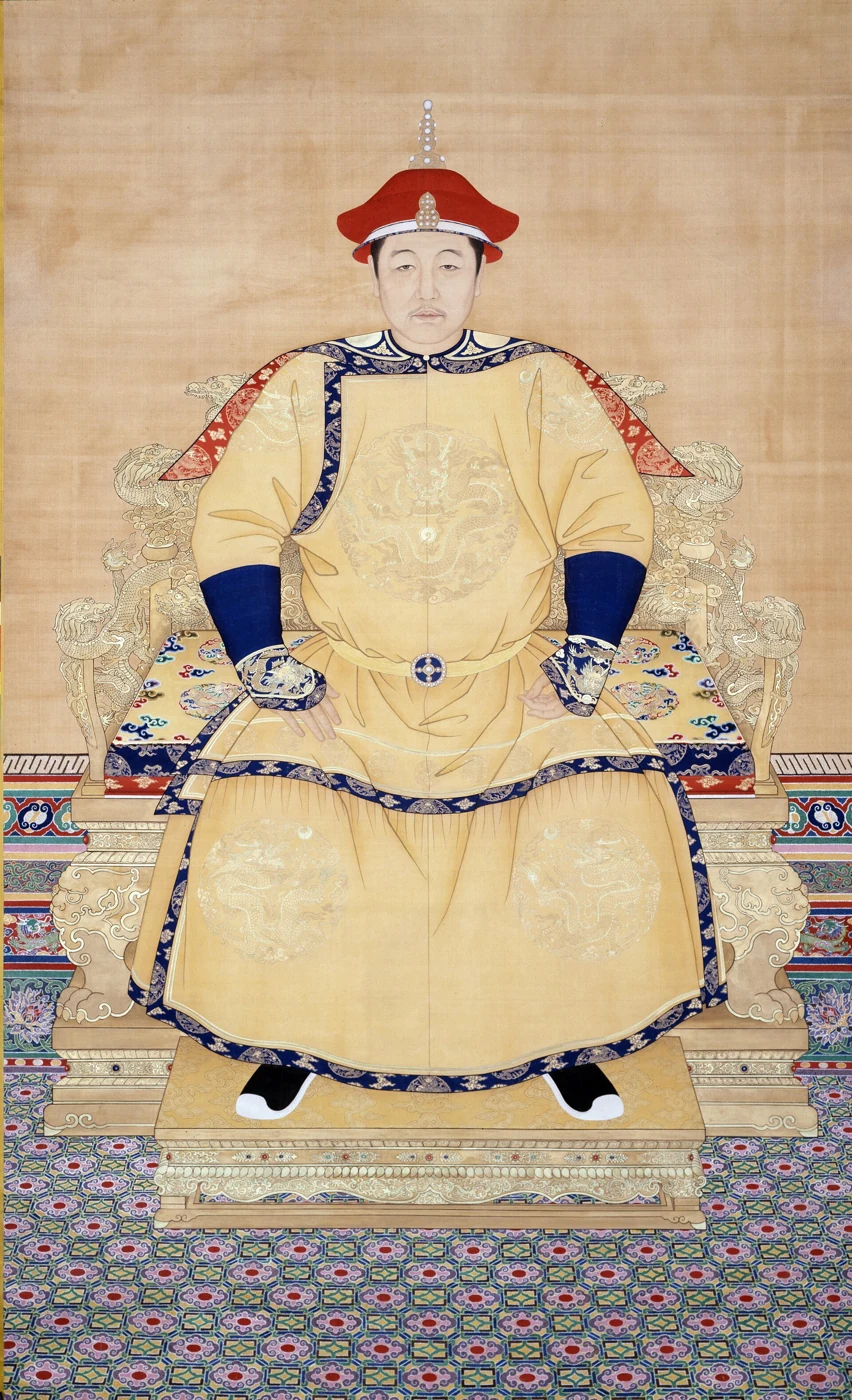
1638 CE–1661 CE
Emperor
Aisin Gioro Fulin
爱新觉罗·福临
Shunzhi Emperor Fulin (March 15, 1638–February 5, 1661), of the Aisin Gioro clan and known by the Manchu childhood name Fangkala, was the first Qing emperor after the dynasty entered the passes and the first Qing ruler after the capital was established at Beijing. He was the ninth son of Hong Taiji, Emperor Taizong of Qing, and his mother was Empress Xiaozhuangwen of the Borjigit clan. After Hong Taiji died suddenly in 1643,…
1638 CE–1661 CEQing Dynasty
PROFILE
Shunzhi Emperor Fulin (March 15, 1638–February 5, 1661), of the Aisin Gioro clan and known by the Manchu childhood name Fangkala, was the first Qing emperor after the dynasty entered the passes and the first Qing ruler after the capital was established at Beijing. He was the ninth son of Hong Taiji, Emperor Taizong of Qing, and his mother was Empress Xiaozhuangwen of the Borjigit clan. After Hong Taiji died suddenly in 1643, the six-year-old Fulin was chosen as emperor amid an intense succession struggle. The following year the era name was changed to Shunzhi, and his uncles Dorgon, Prince Rui, and Jirgalang, Prince Zheng, served as regents. In 1644 Qing forces entered the passes and moved the capital to Beijing, transforming the Qing from a regime based outside the passes into a dynasty ruling all China. Dorgon died in 1650, and Fulin began personal rule at age fourteen. He abolished the old practice by which princes and beile administered the ministries, strengthened imperial authority, halted further land enclosure, relaxed the fugitive laws, and adopted other measures intended to ease Manchu-Han tensions, while also rectifying official administration and employing Han officials. In 1661, the eighteenth year of Shunzhi, Fulin died of smallpox in the Forbidden City in Beijing at age twenty-four. His testament named his third son Xuanye as successor, the future Kangxi Emperor.
- Alternative Names
- Shunzhi Emperor Fulin; Emperor Shizu of Qing
- Era
- Qing
- Dynasty/Polity
- Qing
- Identity
- Emperor
- Ethnicity
- Manchu
- Clan
- Aisin Gioro clan
- Ancestral Home
- Self-styled “Yian Dao”
- Date of Birth
- March 15, 1638
- Place of Birth
- Place of birth not specified
- Date of Death
- February 5, 1661
- Reign
- 1643–1661
- Predecessor
- Emperor Taizong of Qing (Hong Taiji)
- Successor
- Emperor Shengzu of Qing, the Kangxi Emperor
- Era Name
- Shunzhi
- Temple Name
- Emperor Shizu of Qing
- Posthumous Name
- Not recorded in historical sources
- Major Achievements
- First Qing emperor after the dynasty entered the passes; ascended the throne at age six under the regency of Dorgon
LIFE TIMELINE
Age five | Hunted with his father at Yehe Gaha Ridge, shot a roe deer, and received the title “Fangkala Janggin”
Age six | Hong Taiji died; after selection by the council of princes and ministers, Fulin ascended the throne at Dugong Hall on the twenty-sixth day of the eighth lunar month
Age seven | Qing forces entered the passes; in the tenth month he moved from Mukden to Beijing, sacrificed at the Temple of Heaven, and again took the imperial throne at Huangji Gate
Age eight | Qing forces destroyed the Dashun regime and the Southern Ming Hongguang regime
Age ten | The Great Qing Code was completed; Dorgon removed Jirgalang from the regency and monopolized power
Age thirteen | In the twelfth month, regent Dorgon died at Kharahotun
Age fourteen | Began personal rule in the first month; in the second month condemned Dorgon's usurpations and stripped his titles and posthumous honors; in the eighth month married and installed a Borjigit empress
Age fifteen | In the third month abolished princes' and beile's authority over the Six Ministries; in the twelfth month received the Fifth Dalai Lama at the Southern Park
Age sixteen | Ordered Manchu and Han officials to submit memorials jointly; accepted Fan Wencheng's proposal to establish an agricultural-reclamation office and promote military-agricultural colonies
Age eighteen | Promulgated the Complete Book of Taxes and Services and promoted land reclamation
Age twenty | The major Dingyou examination scandal erupted, and multiple examiners were executed
Age twenty-one | Elevated Lady Donggo to Imperial Noble Consort
Age twenty-three | Lady Donggo died in the eighth month; Fulin was devastated and at one point wished to become a Buddhist monk
Age twenty-four | Died of smallpox in Yangxin Hall on the seventh day of the first lunar month and named his third son Xuanye as successor
BIOGRAPHY
Biography
Family Background and Early Years
Fulin was born on the jiawu day of the first lunar month in the third year of Chongde, March 15, 1638, in Yongfu Palace of the Mukden imperial palace. His father, Hong Taiji, Emperor Taizong of Qing, was a founder of the Qing state. His mother was Borjigit Bumbutai, later known as Empress Xiaozhuangwen and at that time Consort Zhuang of Yongfu Palace. Two days before Fulin's birth, the eighth imperial son, born to Hong Taiji's favorite consort Hailanzhu, had died. Hong Taiji was grief-stricken, and Fulin's birth brought some consolation.
The Draft History of Qing: Annals of Shizu records legendary portents surrounding his birth: while Empress Xiaozhuangwen was pregnant, “red light encircled her body and coiled like a dragon”; on the night before delivery she dreamed of a divine figure placing a child in her arms and saying, “This is the ruler who will unify all under Heaven.” Hong Taiji reportedly rejoiced and said, “The child who is born will surely accomplish a great enterprise.” The next day, when Fulin was born, “red light illuminated the palace and fragrance lingered all day.” Such accounts belong to the traditional mythologization of emperors, but they also reflect contemporary expectations surrounding the prince.
As a child Fulin was called “Fangkala,” a Manchu name said to mean “short person.” On the second day of the twelfth month of 1642, Hong Taiji took princes and beile hunting in the Yehe region. Five-year-old Fangkala accompanied them and shot a roe deer at Gaha Ridge, for which he received the temporary title “Fangkala Janggin.” The episode appears in volume 63 of the Veritable Records of Emperor Taizong of Qing and is among the few direct records of Fulin's childhood, illustrating the importance of riding and archery in Manchu aristocratic upbringing.
Childhood Accession and Dorgon's Regency
On September 21, 1643, the ninth day of the eighth lunar month in the eighth year of Chongde, Hong Taiji died suddenly at Mukden at age fifty-two without designating an heir. A fierce struggle over succession followed. The principal contenders were Hooge, Prince Su, Hong Taiji's thirty-four-year-old eldest son, and Hong Taiji's thirty-one-year-old younger brother Dorgon, Prince Rui. Hooge was supported by the two Yellow Banners, while Dorgon controlled the Plain and Bordered White Banners. The two sides were closely matched.
Dorgon proposed a compromise: Hong Taiji's ninth son Fulin would become emperor, and Jirgalang, Prince Zheng, and Dorgon would serve together as regents. This satisfied the Yellow Banner officials who wanted Hong Taiji's line to continue while also preserving Dorgon's room to wield real power. The council of princes and ministers ultimately approved the plan. On the twenty-sixth day of the eighth lunar month, October 8, six-year-old Fulin ascended the throne at Dugong Hall in Mukden, with the following year designated the first year of Shunzhi.
The year 1644 was a decisive turning point. In the third month, Li Zicheng's Dashun army captured Beijing and the Chongzhen Emperor committed suicide. Ming commander Wu Sangui, stationed at Shanhai Pass, sought Dorgon's military assistance. In the fourth month the Qing defeated Li Zicheng's army at Yipianshi and formally entered the passes. In the fifth month Qing troops occupied Beijing. In the tenth month Fulin moved from Mukden to Beijing. On the first day of that month, he sacrificed at the Temple of Heaven in the southern suburbs and again took the imperial throne at Huangji Gate, present-day Taihe Gate, declaring that the court had “fixed the tripod at Yanjing in order to pacify China.” This marked the Qing's transformation into the central dynasty governing all China.
For the next several years government power was entirely in Dorgon's hands. He successively directed campaigns that destroyed the Dashun regime and the Southern Ming Hongguang regime and enforced policies such as the queue order and land enclosure. His authority grew steadily. In 1645 his title changed from “Uncle Regent” to “Imperial Uncle Regent,” and in 1648 to “Imperial Father Regent,” placing him only a step below the emperor. During these years Fulin was emperor in name but effectively sidelined. Jirgalang had already been stripped of regency authority by Dorgon in 1647, leaving no one at court capable of balancing Dorgon's power.
Personal Rule and the Purge of Dorgon's Faction
On December 31, 1650, Dorgon died suddenly while hunting near Kharahotun, around present-day Luanping in Hebei. When the news reached Beijing, Fulin ordered officials and subjects to observe mourning, had Dorgon buried with imperial rites, and posthumously honored him as Emperor Yi Maode Xiudao Guangye Dinggong Anmin Lizheng Chengjing, with the temple name Chengzong. Once Dorgon was dead, however, his political opponents quickly struck back. In the first month of 1651, Jirgalang joined officials of the two Yellow Banners in announcing the beginning of Fulin's personal rule. In the second month, Jirgalang and others accused Dorgon of encroaching on imperial authority. Fulin ordered Dorgon's imperial and princely titles, temple privileges, and posthumous honors stripped, his property confiscated, and his followers executed or demoted. Dorgon's political group was completely purged.
At age fourteen Fulin began to rule personally. His first task was to emerge from the shadow of Dorgon's regency and rebuild imperial authority. In the eighth month of 1651, he married and installed as empress a daughter of Jorightu Prince Wu Keshan of the Khorchin Borjigit clan. The marriage had a strong political dimension and continued the tradition of intermarriage between Mongol nobility and the Manchu imperial house. Fulin and the empress did not get along, however, and he later deposed her.
Government under Personal Rule
After assuming power, Fulin displayed political ambition beyond his years. To strengthen imperial authority, in the third month of 1652 he abolished the right of princes, beile, and beise to administer the Six Ministries, ending the system under which princes had separately supervised ministerial affairs after the Qing conquest. In the first month of 1653, he changed the earlier practice under which only Manchu ministers presented state matters and ordered that memorials be jointly submitted by Manchu and Han officials of vice-minister rank and above, increasing the role of Han officials in decision-making.
In ethnic policy, Fulin adopted measures intended to reduce Manchu-Han tensions. The Qing had already ordered a halt to new land enclosure in 1647, and after beginning personal rule in 1651 he continued this policy and relaxed the fugitive laws. In 1653 he accepted Grand Secretary Fan Wencheng's recommendation to establish an agricultural-reclamation office and promote military-agricultural colonies to restore farming devastated by war. In 1657 the Complete Book of Taxes and Services was compiled and promulgated throughout the empire, standardizing tax collection and supporting postwar economic recovery.
Fulin devoted considerable effort to official discipline. He sent investigating censors to the provinces, punished corrupt officials, and personally handled major cases. In 1657 the Dingyou examination scandal exposed bribery and cheating in the Jiangnan and Shuntian provincial examinations. Several examiners were executed and hundreds of people were exiled or had property confiscated. Although the punishments were severe, the case struck at longstanding examination abuses and reflected Fulin's determination to discipline the bureaucracy.
Culturally, Fulin admired the culture of the Central Plains and diligently studied Chinese classics. He read the Comprehensive Mirror in Aid of Governance and discussed the merits and faults of earlier emperors with his officials. He particularly admired the legislation of the Hongwu Emperor and said he wished to follow Ming institutions. He styled himself “Yian Daoren” and also adopted the Buddhist name Xingchi, showing the depth of his interest in Buddhist and Daoist thought. In 1652 the Fifth Dalai Lama came to Beijing for an audience. Fulin received him at the Southern Park, presented a golden patent and seal, and formally established a relationship of imperial investiture with Tibet.
Personal Life and Final Years
The most famous aspect of Fulin's inner-court life was his relationship with Consort Donggo. Lady Donggo entered the palace in 1656 and was deeply favored. In the eighth month of the same year she was made Consort Xian, and in the twelfth month was elevated to Imperial Noble Consort, second only to the empress. In 1657 she gave birth to a son, greatly delighting Fulin, but the child died within months. In the eighth month of 1660 Lady Donggo died at only twenty-two. Fulin was overwhelmed with grief, posthumously honored her as Empress Xiaoxian, and wrote the several-thousand-character Account of the Conduct of Empress Duanjing to express his mourning.
Her death struck him deeply. He at one point wished to become a monk, summoned eminent monks Yulin Xiu and Maoxi Sen to preach at court, and even ordered Maoxi Sen to shave his head. Empress Dowager Xiaozhuang and the ministers persuaded him to abandon the idea, but his spirits never fully recovered.
On February 5, 1661, the seventh day of the first lunar month in the eighteenth year of Shunzhi, Fulin died of smallpox in Yangxin Hall at age twenty-four. In his testament he listed fourteen faults of his personal reign, including gradually adopting Han customs, repeatedly altering the old simple institutions, entrusting Han officials, and even allowing Han officials to hold seals of ministries and courts. The document expressed a desire to return toward Manchu traditions. He named his third son Xuanye crown prince and appointed Sonin, Suksaha, Ebilun, and Oboi as four regents. Xuanye became the Kangxi Emperor and later the longest-reigning emperor in Chinese history.
After Fulin's death he received the temple name Shizu and the posthumous name Emperor Zhang Titian Longyun Dingtong Jianji Yingrui Qinwen Xianwu Dade Honggong Zhiren Chunxiao. He was buried at Xiaoling in the Eastern Qing Tombs.
Birth, Boyhood and Accession
Fulin was born on the jiawu day of the first month of the third year of Chongde (15 March 1638) in the Yongfu Palace of the Shengjing palace, his first name being Fangkala. The Draft History of the Qing records that his mother, the Empress Xiaozhuangwen, while pregnant was "wrapped in red light that coiled like a dragon", and that the night before the birth she dreamed a god placed a boy in her arms saying "this is the lord who shall unify the world", at which Hong Taiji rejoiced and said that a son so born would surely build a great enterprise; the next day Fulin was born, "red light lit the palace and the fragrance lingered for days", and he was "endowed with an uncommon nature, the hair of his crown standing up, with dragon bearings and phoenix bearing, his wisdom Heaven-granted". In 1642, when Hong Taiji hunted with the princes and beile at Yehe, the five-year-old Fangkala went with them and shot a roebuck at Gaha ridge, receiving the temporary title of Fangkala Zhangjing — the Manchu nobility being reared to horse and bow from childhood. In the eighth month of 1643 Hong Taiji died suddenly with no heir designated; the Prince of Li, Daišan, assembled the princes, beile and ministers, and it was resolved to raise Fulin to the throne, with an oath to Heaven and Earth, under the regency of Jirgalang and Dorgon, while the beile Adali and the beise Shuotuo, who had plotted to make Dorgon emperor, were exposed by Daišan and Dorgon and executed. On the twenty-sixth day of the eighth month the six-year-old Fulin ascended the antlered throne in the Dukong Hall at Shengjing and decreed that the next year be the first of Shunzhi; going out in his carriage, when his wet-nurse would have ridden with him for his youth he refused, saying "this is not for you to ride", showing a sovereign dignity not to be offended.
Entering the Pass and the Regency of Dorgon
In the third month of the first year of Shunzhi the Grand Secretary Xifu presented abridged translations of the histories of Liao, Jin and Yuan; that month the rebel Li Zicheng took Yanjing and the Ming emperor hanged himself, and Li styled himself emperor of the Great Shun. In the fourth month He Luohui and others accused Hooge, Prince Su, of sedition, and Fulin reduced him to commoner and put his party to death, promoting Abatai to a princedom; Fan Wencheng urged Prince Rui to secure the Central Plains, and after sacrifices to Taizu and Taizong the emperor in the Dukong Hall made Dorgon generalissimo with the seal and authority to act at discretion. Dorgon halted at Wonghou, where Wu Sangui, holding Shanhaiguan, sent asking aid against the rebels; on the twenty-first day of the fourth month the Qing, having agreed to help Wu, routed at Yipianshi the rebel force sent to cut his retreat, and on the twenty-third, when Li Zicheng and Wu fought all morning before the pass and Wu's men were worn out and surrounded, the Qing struck suddenly and the rebels broke, retiring on the capital, so that the Qing formally entered the pass and on the second day of the fifth month occupied the capital. Dorgon asked that Fulin move the capital there, and in the sixth month ordered Hong Chengchou to continue as minister of war with the Inner Court in handling business; on the first day of the tenth month, urged on by Dorgon and the princes and the Manchu and Chinese ministers, Fulin sacrificed at the southern altar and again took the throne at the Huangji Gate, proclaiming that "here the capital is fixed at Yanjing, to pacify China". Thereafter the government lay wholly in the regent's hands: in 1645 Tulai broke Li Zicheng at Tong Pass, and Li fled to Xi'an and died at Jiugong mountain in Huguang; Yangzhou fell on the twenty-fifth day of the fourth month, and Duoduo took Zhenjiang on the ninth of the fifth; Zheng Hongkui held Guazhou and Yizhen with a fleet, and the Qing, after building more than two hundred ships, sent the fleet against the south bank and ferried the army over, whereupon the Prince of Fu fled and Zhao Zhilong and the civil and military officers brought over two hundred and thirty thousand men to welcome them. In 1646 Hooge was made general of the far frontier against Sichuan, pay and provisions were regulated, and the old Jiangnan boards abolished in favour of officers of the central boards at Jiangning. In 1647 the Chinese were forbidden to join Manchu banners, the seizure of private houses and land was ended with compensation for what had been seized, and Duoduo was made uncle-regent; Dorgon stripped Jirgalang of the regency and held power alone, and ceased to kneel to the emperor. In 1648 Jirgalang was reduced to a commandery prince, Hooge condemned to death but "out of pity" only imprisoned and shortly killed by Dorgon; Jirgalang was restored, six Chinese ministers and the left censor-in-chief were appointed, Manchu and Chinese were allowed to intermarry, and in the eleventh month the emperor sacrificed at the round altar and honoured the four generations above Taizu as emperors. In 1649 Duoduo died and the empress dowager; in the twelfth month of 1650 Dorgon died hunting at Hara city, and Fulin, in grief, ordered mourning as for an emperor and honoured him as the righteous emperor with the temple name Chengzong.
Assumption of Rule and the Reckoning with Dorgon
Dorgon's death brought Fulin to power early. According to the Korean Verbatim Records of the Yi Dynasty, on the twenty-sixth day of the first month of 1651 he sat in the hall directing the generals as though none were there, though he was only fourteen. On the twenty-first of the second month he proclaimed Dorgon's crimes, annulling his honours, removing his temple sacrifices, revoking his amnesties and confiscating his property; in the intercalary second month he had the grand secretary who had flattered Dorgon executed, and in the tenth month ordered Ajige to take his own life, thus destroying the Dorgon faction, though much difficulty remained and he at first "re-employed the princes" in the boards, Jirgalang gaining power. In the eighth month he married the Borjigit daughter of the Khorchin prince and made her empress. In 1652 he made Jirgalang uncle and Prince Zheng; in the third month he ended the power of the princes and beile over the Six Boards, fixed the names and insignia of offices below the princes, decreed three audiences a month and one colloquium each spring and autumn, and set up the Court of the Imperial Clan. In 1653 he ordered that memorials be submitted jointly by Manchu and Chinese vice-ministers and above, "each putting aside mutual deference, to show a single mind"; he inspected the Comprehensive Mirror in the inner garden and, asked which of the Han founders and emperors of Tang, Song and Ming was best, and told that Tang Taizong exceeded them, answered that "the Ming founder's legislation can last for ever, and no ruler of after ages equals him", showing his intent to follow Ming institutions. He gave Tang Ruowang the title "Master who penetrates the mystery", ordered the green-headed tablets discontinued in memorials, examined the Hanlin officials himself, appointed Chinese grand secretaries to the Inner Three Courts, established the Thirteen Offices with a warning against eunuch interference and a limit of the fourth rank for eunuchs, and married his fourteenth sister to Wu Sangui's son. He also compiled the Great Instructions of Shunzhi and the Sacred Instructions of Taizu and Taizong, and had an iron tablet set up forbidding eunuchs to meddle in government. In the seventh month of 1658, "weighing former institutions", he dissolved the secretariat, Hongwen and History bureaux of the Inner Three Courts, destroyed their seals and, following the Ming model, renamed the body the Grand Secretariat, adding a Hanlin Academy, its grand secretaries bearing hall and pavilion titles and ranking only fifth class, below the second class of the ministers; in the tenth month of 1659 he ordered that the custody of seals need not be divided between Manchu and Chinese.
Tang Ruowang, Buddhism and the Wish to Renounce the World
Soon after taking power Fulin knew the Jesuit Tang Ruowang, whom, because his mother called him godfather, he called "Mafa", grandfather; Tang's standing rose swiftly, with the title of 1653, the rank of a transmission commissioner in 1655 and the first rank in 1658. Fulin, eager for knowledge, questioned him on astronomy, the calendar and life, and came almost to follow his advice in all things; it is recorded that his choice of his third son Xuanye as heir was made on Tang's advice. In 1657, through the monk Hanpu, he came into contact with Buddhism, summoning him at Nanyuan and asking about the eminent monks of the Longchi line with growing admiration. In the ninth month of 1658 he sent envoys to invite the famous monk Yulinxiu, who repeatedly declined; in the second month of 1659 Yulinxiu came, and Fulin at once made him "Great Enlightened Master", treated him as a master of the Zen school, called himself his disciple and asked for a dharma name, insisting despite his refusals that it be an ugly one, and choosing the character "chi", so that his name was Xingchi. In the fourth month Yulinxiu asked leave to go, and was given yellow robes and a gold seal and escorted home; Fulin then summoned his disciple Maoxi Xingsen, whom he met in the seventh month, nodding approval as they discussed the dharma. When Consort Donggo died on the nineteenth day of the eighth month of 1660 he fell into grief, troubled also by political frustrations, and found refuge only in Buddhism, conceiving again the wish to renounce the world; about the turn of the ninth and tenth months he resolved on it and was shaved by Maoxi Xingsen. On the fifteenth of the tenth month Maoxi's master Yulinxiu, summoned to the capital, was furious on hearing it, ordered faggots piled to burn Maoxi alive and remonstrated that, by worldly law, the emperor should sit for ever on the throne to comfort the empress dowager and settle the people, and by the law of renunciation should also remain emperor to protect the bearers of the dharma and dwell in the wisdom of the great bodhisattvas. Fulin accepted the remonstrance, agreed to let his hair grow and gave up the idea for the time, and Maoxi escaped burning and left for the south that month; though he did not renounce the world, his mind was wholly imbued with the dharma. On the second day of the first month of 1661 he had a eunuch made a monk.
Marriage, Consort Donggo and Death
Fulin had two empresses: one chosen by his mother, married and made empress on his assumption of rule, whom he disliked because of his hatred of Dorgon and deposed after Dorgon's death; and the Borjigit daughter of the Khorchin duke Coerji, betrothed at fourteen in the fifth month of 1654 and made empress in the sixth, who was soon reproved but survived deposition because she was yielding and protected by the empress dowager. The proposal to depose the first empress was discussed by the princes and ministers, who opposed it, but Fulin ordered it reconsidered and, after Kong Yunyue was made to speak plainly, Jirgalang and the rest submitted, and she was deposed. His true companion was Consort Donggo: made "Worthy Consort" on the twenty-fifth day of the eighth month of 1656, within little more than a month she was raised to imperial noble consort as "of no superior in intelligence, beauty and goodness", a rise almost unheard of, and in the twelfth month a ceremony as for an empress was held with an amnesty. In 1657 she bore the fourth son, and Fulin, delighted, proclaimed that "this is my first son", treating him as though by the principal wife and intending to make him heir, but the child died within three months and was posthumously made Prince Rong of Heshuo with a great tomb. She, already frail, took to her bed and died on the nineteenth day of the eighth month of 1660 at twenty-two, "her words and movements undisturbed, sitting upright and calling on the Buddha, breathing out her life", her countenance still peaceful days after; he honoured her as Empress Xiaoxian and wrote a memorial of several thousand words. On the second day of the first month of 1661 he had a eunuch made a monk, and then fell ill with smallpox and sank; late on the sixth night he summoned the vice-minister of rites and chancellor of the Hanlin, Wang Xi, and dictated his testament, which Wang and Malegi drafted in a day within the western screen of the Qianqing palace, thrice submitted and thrice weighed by the emperor before it was settled at nightfall; on the seventh day he died in the Yangxin Hall at twenty-four. The testament listed fourteen faults, chiefly failure to keep the ancestral system, gradual infection with Chinese customs, and favouring Chinese over Manchu — "gradually habituated to Chinese ways, daily altering the plain old system", "employing Chinese officials, even giving them the seals of the boards". It made his third son Xuanye, eight years old, heir, under the regency of the four ministers Sonin, Suksaha, Ebilun and Oboi. Malegi and the guard Jia Bojia announced it to the empress dowager and the princes; on the eighth it was promulgated throughout the realm, on the ninth Xuanye took the throne; in the second month the coffin was moved to the Shouhuang Hall on Jingshan, the Thirteen Offices abolished and the eunuch Wu Liangfu executed, after which the body was cremated and the ashes buried at the Xiaoling at Zunhua, with the temple name Shizu and the posthumous name Zhang.
Major Activities
Establishing Qing Rule in the Central Plains
The most important development of Fulin's reign was the Qing entry through the passes and establishment of the capital at Beijing. In the fourth month of 1644, Dorgon led Qing forces to defeat Li Zicheng's army at Yipianshi near Shanhai Pass; in the fifth month they occupied Beijing. In the tenth month Fulin moved from Mukden to Beijing, sacrificed at the Temple of Heaven, and declared that the court had fixed its capital at Yanjing to pacify China. This transformed the Qing from a northeastern regional regime into the central dynasty ruling China. Qing forces subsequently eliminated the Dashun and Southern Ming Hongguang regimes. By the end of the Shunzhi reign, the country was largely unified except for the Zheng regime in Taiwan.
Strengthening Imperial Authority
After assuming personal rule, Fulin adopted measures to reverse the weakening of imperial power under Dorgon. In the third month of 1652, he abolished the authority of princes, beile, and beise over the Six Ministries and transferred administrative power to the cabinet and ministries directly controlled by the emperor. In 1653 he ordered Manchu and Han high officials to submit state business jointly, increasing the role of Han officials and balancing Manchu aristocratic power. These measures did not eliminate aristocratic influence, but they laid foundations for further centralization under the Kangxi Emperor.
Easing Ethnic Tensions
After entry through the passes, policies such as the queue order, land enclosure, and fugitive laws had provoked strong resistance among Han communities. During personal rule Fulin ordered further land enclosure stopped and compensation arranged for lands already enclosed, relaxed the fugitive laws, permitted intermarriage between Manchu and Han officials and commoners, employed Han officials, and raised their political standing. These policies did not fundamentally eliminate Manchu-Han tensions but helped reduce social strain and restore postwar order.
Economic Recovery
Long warfare had severely damaged the economy. In 1653 Fulin accepted Fan Wencheng's proposal to establish the agricultural-reclamation office and promote military farming. In 1657 the Complete Book of Taxes and Services was compiled and promulgated to standardize taxation. He encouraged cultivation of abandoned land and granted tax exemptions for specified periods. These policies laid groundwork for economic prosperity in the Kangxi era.
Rectifying Official Administration
Fulin strongly disliked bureaucratic corruption. He dispatched investigating censors and punished corrupt officials. In the Dingyou examination scandal of 1657, bribery and cheating in the Jiangnan and Shuntian examinations were exposed; seven chief examiners were executed, and hundreds of people were exiled or had their property confiscated. The punishments may have been excessive, but the case struck at examination abuses and sent a powerful message of bureaucratic discipline.
Establishing the Investiture Relationship with Tibet
In 1652 the Fifth Dalai Lama, Ngawang Lobsang Gyatso, came to Beijing for an audience. Fulin received him at the Southern Park and gave him a golden patent and seal with the title recorded in the Chinese source. This marked the beginning of a formal investiture relationship between the Qing court and Tibetan religious leadership and had long-term significance for Qing governance of Tibet.
Wasteland Reclamation, Military Farming and the Economy
After long war the economy was badly damaged, "land waste and people fled, and taxes had nothing to come from", and with years of campaigning the treasury was drained; by his assumption of rule the shortfall in the provinces had reached more than four million taels. Realising that hungry soldiers rebel and the poor steal, Fulin made efforts to steady the economy. On Fan Wencheng's advice he promoted military farming and reclamation from 1653, chiefly in war-ravaged Sichuan and the northern provinces, the state issuing oxen, tools and seed and taxing after three years, while in Liaodong settlers were encouraged by offers of office. In the autumn of 1656 he encouraged the rich to reclaim land; in the summer of 1657 he issued regulations rewarding or punishing officials and gentry according to the acreage reclaimed, with penalties for false or abandoned reclamation; in the winter of 1658 he introduced reclamation by subscription. As land was also concealed and Ming princely estates occupied without report, he adopted a lenient policy toward concealment, so that declarations increased, and for the former Ming princely lands he ordered the buildings sold and the land let to tenants, so that both rent and grain came in. To avoid burdening the people he several times remitted local tribute and taxes in stricken regions, though he also allowed the rich to buy office and at times sanctioned levies for militia and Liaodong. In 1657 the Complete Book of Taxes and Labour was completed and promulgated, giving a uniform basis for taxation.
Civilising, Loyalty and Sinicisation
His reign was troubled, with risings continuing and the national contradiction sharp; the year after his assumption of rule the Prince of Dingnan was killed in ambush at Hengyang. Holding that the urgent task was to win over and pacify the Chinese while suppressing resistance, he promoted civilising teaching, declaring his adherence to Confucian learning and sacrificing to Confucius at the Imperial College on the twenty-second day of the ninth month of 1652; he wrote prefaces for the Exhortation to Goodness, the Great Instructions of Shunzhi and other works, deified Guan Yu as the "Loyal and Righteous Divine Emperor", repeatedly honoured the loyal, filial and chaste, and insisted on treating Manchu and Chinese alike, decreeing in 1653 that Manchu officials of the boards should be subject to the same rules of retirement as Chinese. He honoured the Ming officials who died for their sovereign when Beijing fell, had the ministry of rites record their names and deeds for posthumous honours, and set up a tablet for the emperor Chongzhen, praising his diligence and giving him the posthumous name Zhuanglie Min. It is said that he put on a Ming emperor's robe, looked in the mirror and asked the eunuchs, who praised it, and that he agreed, then put on the Manchu hat, and after looking in the mirror threw the Manchu ornaments to the ground, ordinarily wearing wide-sleeved robes and black boots in Chinese style; a Korean at the Qing court reported that he "detested Hu customs and admired Chinese institutions, secretly having ceremonial robes made, wearing them at times, but fearing the disapproval of those below he dared not speak of it". He collected Chongzhen's calligraphy, unrolled eighty or ninety pieces himself and wept, saying that "so enlightened a ruler should meet so great a disaster, and one cannot but grieve", ordering that the ministers never speak lightly of Chongzhen, and having Jin Zhijun write an inscription for the tomb to show that the Ming fell through the fault of its ministers and not through the emperor's failure of the Way. He promulgated the six imperial maxims for the instruction of officials and people, having worthy licentiates and village elders over sixty recite them on the first and fifteenth of each month. In the spring of 1655 he ordered the Exhortation of the Classic of Filial Piety compiled and the Complete Mirror compiled "to examine the right and wrong of a hundred ages". Yet he never abandoned the policy of "exalting the Manchus first", reaffirming the Manchu dress, exiling to the frontier officials who urged that the boards employ Chinese rather than Manchus or who proposed relaxing the law on fugitive slaves, and even having the grand secretary Chen Mingxia, who urged the retention of the queue, strangled — partiality which left many great questions unsettled.
Relations with Russia, Holland and Ryukyu
Fulin valued ties with Mongolia and Tibet, knowing their devotion to the lama; on the fifth Dalai Lama's arrival in 1652 he would have gone to the frontier in person but, dissuaded, sent ministers instead, and after audiences and banquets in 1652 and 1653 sent a gold album and seal, enfeoffing him as "the Great Compassionate Self-Existing Buddha, Ordinary Vajra-splendid Dalai Lama". To Russia, when Baikov came with a letter in 1655 the two sides disputed for six months over the presentation of credentials and the audience, and the mission was expelled, though Fulin let Baikov take back a letter to the tsar beginning "to the Tsagan Khan of the Russian state", saying that "your country lies far to the northwest and has never once reached China; now that you sincerely turn to civilisation and send envoys with tribute, I much approve", so that the Qing treated Russia as a tributary and the colonial office received the envoys by the ceremony of court audience. When Ablin came later, agreeing to submit his letter to the colonial office first, but demanding equal relations, exchange of embassies and free trade, with a letter dated by the Russian calendar, and styling the tsar as great khan and Fulin only as "your highness", the emperor was much displeased and the princes proposed expelling him, but Fulin did not expel him and received him as a tribute envoy, afterwards ordering the colonial office to explain the refusal of an audience and asking Russia to send no more letters. The Dutch East India Company, having first sought to trade through Guangdong, sent envoys to Beijing with tribute, and were granted "one mission in five years by way of Guangdong", treated as a dependency like Korea and Annam, with rules later added of one mission in eight years, a hundred men and only twenty to the capital, goods to be traded at their lodging and not privately at Guangdong. To Ryukyu, Fulin treated the envoys well, sending the interpreter Xie Bizhen to recover the Ming credentials; the first mission of 1647 obtained a promise not fulfilled, and the second in 1652 brought the credentials and an embassy under Ma Zongyi and Cai Zuolong asking investiture; Ma reached Beijing in 1654, and Fulin agreed to enfeoff Shang Zhi as King of Chusan and sent Zhang Xueli with a gilded silver seal, though the embassy was long delayed at Fuzhou by resistance in the southeast, the envoys being recalled in 1658 and the investiture completed only in the early Kangxi years.
Art and His Own Painting
In his leisure Fulin took to art, his landscapes being judged "truly to have caught the spirit of the Song and Yuan", his calligraphy following the masters. The catalogue of the imperial collection records works from 1654 onward, most from 1655 and 1656, eighteen paintings and four pieces of calligraphy, besides those he gave to ministers, so that the total was far larger; few survive, chiefly in the Beijing and Taipei palaces and a few museums. He wrote a large character "jing" for the monk Muchen Min, drafted a large character for him on the spot and wrote several more, showing them to him, and said that "my characters are nothing; those of the emperor Chongzhen are excellent", having eighty or ninety of them unrolled before him and weeping that so enlightened a ruler had met so great a disaster.
Personal Relations
- Father: Hong Taiji (Emperor Taizong of Qing)
- Mother: Empress Xiaozhuangwen, Borjigit Bumbutai
- Brothers: Hooge (eldest brother), Yebušu, Šose, Gose, Changšu, Taose, Bomubogor, and others
- Empresses: Borjigit clan (deposed empress); Empress Xiaohuizhang of the Borjigit clan
- Imperial Noble Consort: Lady Donggo (Empress Xiaoxian)
- Children: Xuanye (Kangxi Emperor) and seven other sons; six daughters
- Johann Adam Schall von Bell: German Jesuit whom Fulin called “mafa” (“grandfather” in Manchu); they often discussed astronomy, calendars, and philosophy of life
- Chen Mingxia: Han grand secretary and trusted adviser early in Fulin's personal rule, later executed in a factional struggle
- Fan Wencheng: Han grand secretary and important strategist before and after the Qing entry; remained trusted under Fulin
- Yulin Xiu and Maoxi Sen: eminent Buddhist monks whom Fulin consulted in his later years
- Dorgon: uncle and regent, effective ruler during Fulin's childhood, later posthumously purged
- Jirgalang: paternal cousin once removed and assisting regent, later helped Fulin purge Dorgon's faction
- Oboi, Sonin, Suksaha, and Ebilun: the four ministers appointed by testament to assist the Kangxi Emperor
- Hooge: elder brother and succession rival, later persecuted by Dorgon and died in prison
- Ajige: Dorgon's elder brother, who attempted to seize power after Dorgon's death and was imprisoned and ordered to commit suicide
- Zheng Chenggong: Southern Ming anti-Qing commander based in Taiwan who repeatedly fought Qing forces during Fulin's reign
Historical Assessment
Qing / Contemporary Assessments
- The Draft History of Qing: Annals of Shizu states that after assuming personal rule Fulin was diligent, cared for the people, and earnestly sought good government; it also notes that because he ascended young, powerful ministers initially controlled the state, and that after taking personal command he devoted himself to reform but died before his ambitions could be fulfilled.
- Shunzhi official Jin Zhijun praised him as naturally intelligent, studious, and thoughtful, saying even the worthy rulers of antiquity could not surpass him, reflecting the favorable view held by some Han officials.
- Empress Xiaozhuangwen's view of her son was more complex: she recognized his exceptional intelligence but was also dissatisfied with his intense Buddhist devotion and impulsive temperament, concerns reflected in Fulin's testament.
Mid-Qing (Qianlong Era)
- During compilation of the Complete Library of the Four Treasuries, the Qianlong Emperor gave positive recognition to Fulin's achievement in establishing Qing rule in the Central Plains, describing Emperor Shizu as the ruler who entered the passes, fixed the capital, and came to possess the realm.
- The Qianlong-era official Comprehensive Gazetteer of the Qing Dynasty described Fulin as ascending at a young age yet trusting capable ministers, defeating rival powers, and unifying the realm, and called him an able ruler.
Late Qing and Republican Period
- Republican historian Xiao Yishan wrote in General History of the Qing Dynasty that although Fulin entered the Central Plains at age six and government initially lay with ministers, after personal rule he quickly recovered authority, rectified official administration, and understood the importance of employing Han officials, making him a turning point in early Qing politics.
- Meng Sen, in Lectures on Qing History, argued that the Shunzhi reign marked the beginning of Qing rule inside the passes and that although institutions were still incomplete, their general framework was established; he regarded Fulin's early death as a major loss for early Qing politics.
Modern and Contemporary Assessments
- Chen Yuan, in “Johann Adam Schall von Bell and the Shunzhi Emperor,” used their relationship to portray Fulin's interest in Western learning, religious enthusiasm, and emotional sensitivity, describing him as a sincere young emperor with vivid human qualities.
- Yang Zhen, in “Notes on Manchu Archives of the Shunzhi Reign,” examined the childhood name Fangkala and argued that Fulin's youth was not entirely happy and that Dorgon's domination had a profound psychological effect on him.
- Yan Chongnian, in A Correct Account of the Twelve Emperors of the Qing Dynasty, regarded Fulin as the first Qing emperor after the entry through the passes and argued that although he personally ruled for only about ten years, he laid foundations for Qing government by ending princely management of ministry affairs, strengthening imperial authority, and adopting policies that eased ethnic tensions.
FIGURES ASSOCIATED WITH THIS DYNASTY
Bibliography
- Draft History of Qing, Vols. 3–5, Annals 3–5
- Veritable Records of Emperor Shizu of Qing
- Veritable Records of Emperor Taizong of Qing
- Xiao Yishan, General History of the Qing Dynasty, East China Normal University Press, 2006
- Meng Sen, Lectures on Qing History, Zhonghua Book Company, 2006
- Yan Chongnian, A Correct Account of the Twelve Emperors of the Qing Dynasty, Zhonghua Book Company, 2004