Native place and early life | A native of Junyi, Kaifeng; entered military service under Guo Wei in his youth.
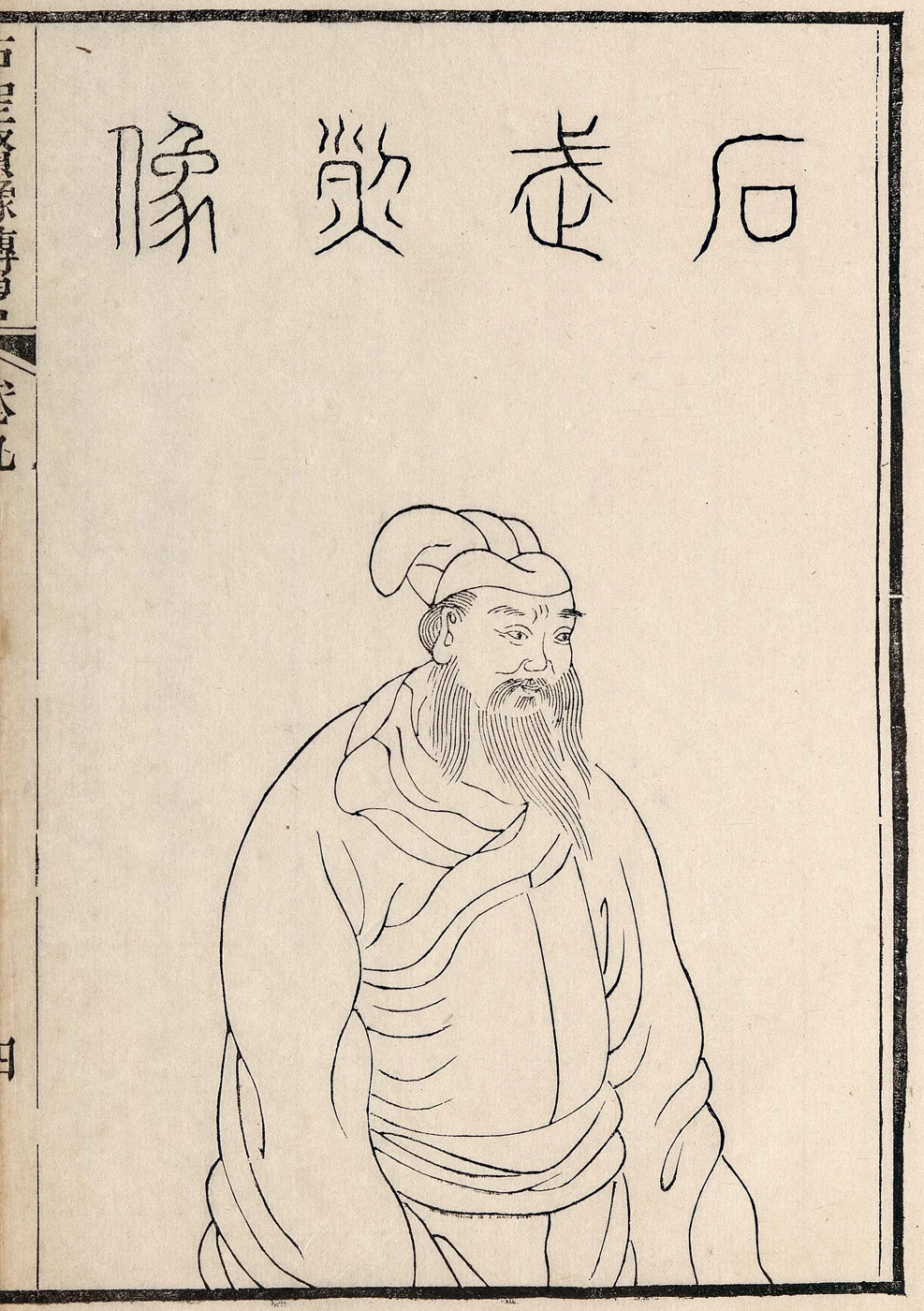
928 CE–984 CE
Founding General of Northern SongMilitary Commissioner (Jiedushi)ChancellorSecretariat Director
Shi Shouxin
石守信
Shi Shouxin (928–984 AD) was a preeminent founding general and military commissioner during the late Five Dynasties and early Northern Song dynasty, hailing from Junyi in Kaifeng. Rising through the ranks under Later Zhou, he fought with distinction at the Battle of Gaoping and in the Huainan expeditions, becoming Commander of the Palace Command and forming the renowned 'Ten Brothers of the Righteous Association' with Zhao…
928 CE–984 CELater Zhou
PROFILE
Shi Shouxin (928–984 AD) was a preeminent founding general and military commissioner during the late Five Dynasties and early Northern Song dynasty, hailing from Junyi in Kaifeng. Rising through the ranks under Later Zhou, he fought with distinction at the Battle of Gaoping and in the Huainan expeditions, becoming Commander of the Palace Command and forming the renowned 'Ten Brothers of the Righteous Association' with Zhao Kuangyin. During the Chenqiao mutiny of 960 AD, Shi held Kaifeng from within to orchestrate Zhao Kuangyin's bloodless ascension and subsequently routed the dangerous rebellions of Li Yun and Li Chongjin. In 961 AD, during the celebrated 'Relieving Military Command with a Cup of Wine', Shi voluntarily yielded his supreme command of the Imperial Guards, accepting provincial reassignment as Military Commissioner of Tianping. In his twilight years, he served as Secretariat Director, Prefect of Henan, and Western Capital Resident in Luoyang, enfeoffed as Duke of Wei. He passed away in 984 AD at age fifty-seven, posthumously honored as Prince of Wuwei with the posthumous title Wulie.
- Courtesy / Art Name
- None
- Historical Era
- Late Five Dynasties to Early Northern Song dynasty
- Dynasty / Regime
- Later Zhou, Northern Song dynasty
- Identity
- Founding General of Northern Song, Military Commissioner (Jiedushi), Chancellor, Secretariat Director
- Date of Birth
- 928 CE(3rd year of the Tiancheng era, Later Tang)
- Date of Death
- July 11, 984 CE(9th year of the Taipingxingguo era, Song, 6th month)
- Ethnicity
- Han
- Native Place
- Junyi, Kaifeng (present-day Kaifeng, Henan Province)
- Place of Birth
- Unconfirmed; the source gives a native place, not an explicit birthplace
- Place of Death
- Luoyang (present-day Luoyang, Henan Province)
- Age at Death
- 57
- Highest Office
- Commander-in-Chief of Imperial Guards, Military Commissioner of Tianping, Secretariat Director (Zhongshu Ling), Prefect of Henan, Western Capital Resident
- Major Offices
- Commander of Palace Command, Military Commissioner of Yicheng, Military Commissioner of Guide, Military Commissioner of Tianping, Military Commissioner of Chongxin, Military Commissioner of Zhen'an, Secretariat Director
- Noble Title
- Duke of Wei; Posthumously Prince of Wuwei
- Posthumous Name
- Wulie
- Major Achievements
- Member of the Ten Brothers of the Righteous Association; key conspirator in the Chenqiao mutiny supporting Zhao Kuangyin; suppressed rebellions of Li Yun and Li Chongjin; relinquished imperial guard command in the 'Cup of Wine' demilitarization; preeminent founding contributor of Northern Song
LIFE TIMELINE
Shi Shouxin (928–984 AD) was a preeminent founding general and military commissioner durin | Shi Shouxin (928–984 AD) was a preeminent founding general and military commissioner during the late Five Dynasties and early Northern Song dynasty, hailing from Junyi in Kaifeng.
Guard Officer | Appointed Commandant of the Imperial Guards upon the founding of Later Zhou.
In 951 AD | In 951 AD, with the founding of the Later Zhou, Shi was appointed as an Imperial Guard Commandant.
Battle of Gaoping | Accompanied Emperor Shizong against Northern Han, distinguishing himself at Gaoping and promoted to senior cavalry commander.
In 954 AD | In 954 AD, following Emperor Shizong's accession, Liu Chong of Northern Han invaded south alongside Khitan cavalry.
Campaign Against Southern Tang | Served as vanguard in the Huainan campaigns, capturing Liuhe, Wokou, and Yangzhou.
In 956 AD | In 956 AD, Shi served as vanguard commander during Shizong's expedition against Southern Tang, leading rapid assaults that captured Liuhe, Wokou, and Yangzhou.
Palace Guard Commander | Promoted to commander of the four divisions of Iron Cavalry and Konghe Guards.
By 958 AD | By 958 AD, after Southern Tang ceded the fourteen Huainan prefectures, Shi was elevated to Commander of the Four Divisions of the Iron Cavalry and Konghe Guards.
Expedition Against Liao | Participated in the northern campaign against Liao; appointed Commander of the Palace Command and Military Commissioner of Yicheng.
In 959 AD | In 959 AD, during Shizong's northern offensive against the Liao, Shi served as Deputy Field Commander of Land Forces.
Chenqiao Coup & Pacification | Coordinated palace troops in Kaifeng during the Chenqiao coup; helped suppress the rebellions of Li Yun and Li Chongjin.
The Chenqiao Mutiny and the Suppression of Rebellions On New Year's Day of 960 AD | ### The Chenqiao Mutiny and the Suppression of Rebellions On New Year's Day of 960 AD, reports of a joint Khitan and Northern Han invasion reached Kaifeng.
Demilitarization over Wine | Relinquished imperial guard control during the 'Cup of Wine' banquet, transferred to Military Commissioner of Tianping.
Relinquishing Arms and Regional Governance By 961 AD | ### Relinquishing Arms and Regional Governance By 961 AD, having subdued internal rivals, Emperor Taizu confronted the foundational weakness of the Five Dynasties era—the constant threat of imperial guards toppling dynasties.
Resignation of Guard Titles | Formally requested relinquishment of the guard commandership to focus exclusively on his regional governorship.
In 962 AD | In 962 AD, Shi formally memorialized the throne requesting complete removal from his central guard titles, dedicating himself solely to regional administration.
Promotion to Chancellor Rank | Appointed Palace Attendant (Shizhong) by Emperor Taizu.
In 973 AD | In 973 AD, Emperor Taizu conferred upon him the chancellor rank of Palace Attendant (Shizhong).
Western Capital Resident | Appointed Secretariat Director, Prefect of Henan, and Western Capital Resident in Luoyang.
Luoyang Resident and Later Years In 977 AD under Emperor Taizong | ### Luoyang Resident and Later Years In 977 AD under Emperor Taizong, Shi retired from the Tianping commission and was appointed Secretariat Director (Zhongshu Ling), Prefect of Henan, and Western Capital Resident in Luoyang.
Gaoliang River Defeat | Followed Emperor Taizong against Northern Han and Liao; demoted to Chongxin after the Gaoliang River defeat, later created Duke of Wei.
In 979 AD | In 979 AD, following the conquest of Northern Han, Emperor Taizong launched a campaign to reclaim the Sixteen Prefectures from Liao.
Transfer to Zhen'an | Reassigned as Military Commissioner of Zhen'an while retaining Secretariat Director status.
In 982 AD | In 982 AD, Shi was transferred as Military Commissioner of Zhen'an while retaining the title Secretariat Director.
Death in Luoyang | Passed away in Luoyang at age fifty-seven; posthumously created Prince of Wuwei and granted the posthumous name Wulie.
Death | In July 984 AD, Shi passed away from illness at his official mansion in Luoyang at age fifty-seven.
BIOGRAPHY
Biography
Early Service and Later Zhou Exploits Shi Shouxin was a native of Junyi in Kaifeng (modern Kaifeng, Henan Province). Born during the tumultuous twilight of the Five Dynasties, he joined the military in his youth and entered the service of Guo Wei, founder of the Later Zhou dynasty. In 951 AD, with the founding of the Later Zhou, Shi was appointed as an Imperial Guard Commandant. In 954 AD, following Emperor Shizong's accession, Liu Chong of Northern Han invaded south alongside Khitan cavalry. At the decisive Battle of Gaoping, as imperial battlelines wavered, Zhao Kuangyin and Shi Shouxin spearheaded a daring cavalry charge that routed the Northern Han host. Gaoping forged the prestige of the elite Palace Command; for his valor, Shi was promoted to Senior Commander of the Left First Imperial Army and subsequently to Commander of the Iron Cavalry, joining the inner echelon of imperial defense. In 956 AD, Shi served as vanguard commander during Shizong's expedition against Southern Tang, leading rapid assaults that captured Liuhe, Wokou, and Yangzhou. By 958 AD, after Southern Tang ceded the fourteen Huainan prefectures, Shi was elevated to Commander of the Four Divisions of the Iron Cavalry and Konghe Guards. In 959 AD, during Shizong's northern offensive against the Liao, Shi served as Deputy Field Commander of Land Forces. Following Shizong's sudden illness, Zhao Kuangyin succeeded to Grand Inspector of the Palace Command, while Shi succeeded him as Commander of the Palace Command. Bound to Zhao Kuangyin in sworn brotherhood as one of the 'Ten Brothers of the Righteous Association', Shi wielded pivotal military power during the succession of the child-emperor Chai Zongxun. ### The Chenqiao Mutiny and the Suppression of Rebellions On New Year's Day of 960 AD, reports of a joint Khitan and Northern Han invasion reached Kaifeng. The Later Zhou regency dispatched Grand Inspector Zhao Kuangyin with the main imperial forces north. Shi Shouxin, Zhao's most trusted confidant, was left behind in Kaifeng to control the capital fortifications and palace guard divisions. On the third day of the first month, the mutiny broke out at Chenqiao Courier Station, where troops draped Zhao Kuangyin in yellow imperial robes. As Zhao marched back to Kaifeng, Shi Shouxin immediately secured key gates, subdued dissent, and swung open the Fengqiu Gate to welcome the new sovereign without bloodshed. Emperor Taizu ascended the dragon throne, founding the Great Song dynasty. Shi was acclaimed preeminent among founding contributors, promoted to Deputy Commander-in-Chief of the Imperial Guards, and invested as Military Commissioner of Guide. In April 960 AD, Li Yun, Military Commissioner of Zhaoyi, revolted in Luzhou with Northern Han support. Emperor Taizu dispatched Shi Shouxin as vanguard commander. Shi smashed Li's forces at Changping and encircled Zezhou, paving the way for Taizu's personal capture of the city, where Li Yun perished in flames. Shi was promoted to Joint Manager of State Affairs. In autumn of the same year, Li Chongjin rebelled at Yangzhou. Shi was appointed Field Commander of the Yangzhou Expedition, swiftly blockading and storming the city, whereupon Li Chongjin self-immolated. The dual suppressions effectively eliminated regional military resistance and established imperial supremacy. ### Relinquishing Arms and Regional Governance By 961 AD, having subdued internal rivals, Emperor Taizu confronted the foundational weakness of the Five Dynasties era—the constant threat of imperial guards toppling dynasties. Gathering Shi Shouxin, Gao Huaide, Wang Shenqi, and other sworn brothers for an intimate banquet in the palace, Taizu shared his profound anxiety: "Human life is as fleeting as a white colt flashing past a crevice; what one seeks is wealth and tranquility. Why do you not relinquish your military commands, depart for grand provincial seats, and acquire fertile estates and fine houses for your descendants? Between sovereign and subject, there would then be neither suspicion nor dread!" Discerning the emperor's resolve, Shi and the other generals submitted petitions the following morning feigning illness and requesting reassignment. Emperor Taizu appointed Shi as Military Commissioner of Tianping, governing Yunzhou. In 962 AD, Shi formally memorialized the throne requesting complete removal from his central guard titles, dedicating himself solely to regional administration. This legendary 'Relieving Military Command with a Cup of Wine' preserved the lives and fortunes of the founding cohort while allowing the Song dynasty to complete the transition to civil bureaucratic governance. At Yunzhou, Shi lived circumspectly, amassing estates to demonstrate a total lack of political ambition. In 973 AD, Emperor Taizu conferred upon him the chancellor rank of Palace Attendant (Shizhong). ### Luoyang Resident and Later Years In 977 AD under Emperor Taizong, Shi retired from the Tianping commission and was appointed Secretariat Director (Zhongshu Ling), Prefect of Henan, and Western Capital Resident in Luoyang. In Luoyang, Shi lived lavishly and patronized Buddhism, spending vast sums to erect the Chongde Temple. Dynastic historians noted that he "focused entirely on amassing immense wealth and drove corvée laborers mercilessly," earning contemporary and historical criticism; however, later thinkers such as Wang Fuzhi interpreted his ostentatious greed as a deliberate strategy of self-tarnishing to extinguish imperial paranoia. In 979 AD, following the conquest of Northern Han, Emperor Taizong launched a campaign to reclaim the Sixteen Prefectures from Liao. Shi commanded the vanguard at the disastrous Battle of Gaoliang River. When Song forces collapsed, Shi was demoted to Military Commissioner of Chongxin for operational failure; nevertheless, Taizong shortly restored his honors and elevated him to Duke of Wei. In 982 AD, Shi was transferred as Military Commissioner of Zhen'an while retaining the title Secretariat Director. In July 984 AD, Shi passed away from illness at his official mansion in Luoyang at age fifty-seven. Emperor Taizong suspended court audiences for three days in mourning, posthumously enfeoffed him as Prince of Wuwei, and conferred the posthumous title Wulie. His sons, Shi Baoxing and Shi Baoji, both held high military governorships and married into the imperial clan, perpetuating the family's aristocratic status throughout the dynasty.
Major Activities
The Chenqiao Mutiny and Dynastic Founding Shi Shouxin's control of Kaifeng palace troops during the Chenqiao mutiny ensured a bloodless transition from Later Zhou to Song, serving as the crucial domestic pivot for Zhao Kuangyin's accession. ### Suppression of Li Yun and Li Chongjin Leading expeditionary forces against Li Yun in Luzhou and Li Chongjin in Yangzhou in 960 AD, Shi eliminated the most potent warlord rebellions confronting the infant Song regime. ### Demilitarization over Wine By stepping down from the supreme guard commandership in 961–962 AD, Shi set the precedent for founding commanders exchanging military authority for aristocratic wealth and familial survival, establishing the structural basis of Song civil supremacy.
Personal Relations
- Zhao Guangyi (Emperor Taizong of Song): Sovereign whom Shi served in his later years during the northern expeditions and Luoyang administration.
- Guo Wei (Emperor Taizu of Later Zhou): Early patron under whom Shi entered imperial service.
- Chai Rong (Emperor Shizong of Later Zhou): Supreme commander in the Gaoping and Huainan campaigns.
- Gao Huaide: Fellow member of the Ten Brothers; co-commander in suppressing Li Yun.
- Wang Shenqi: Fellow member of the Ten Brothers and palace guard commander who relinquished power alongside Shi. ### Family Lineage - Eldest Son: Shi Baoxing, distinguished Northern Song military commander and Military Commissioner of Wucheng.
- Second Son: Shi Baoji, married Princess Yanqing (daughter of Emperor Taizu); reached Military Commissioner of Zhen'an and Joint Chancellor.
- Youngest Son: Shi Baozong, Court Attendant who died young.
- Grandsons: Shi Yuansun, Shi Yisun, and Shi Xiaosun, all high-ranking Song officials.
Historical Assessment
Dynastic Historiographical Perspectives - Tuotuo et al. (History of Song): "Shi Shouxin and his peers were veteran officers of Zhou whom Taizu elevated from the ranks and trusted wholeheartedly. During the Chenqiao mutiny, they established the dynastic foundation; at Zezhou and Huainan, they led the imperial vanguard. Taizu understood their loyalty and treated them with open sincerity, enabling them to surrender military authority for provincial tranquility. That sovereign and subject preserved their mutual covenant to the very end was truly magnificent! However, that Shouxin devoted his later years to accumulation and drove laborers mercilessly at Chongde Temple was a blemish upon his virtue."
- Li Tao (Longer Continuation of the Zizhi Tongjian): "Emperor Taizu treated founding heroes with magnanimity. Shouxin took the lead in vacating the imperial guards for grand provincial governorships, demonstrating supreme wisdom in personal preservation."
- Wang Fuzhi (On the Song): "Song Taizu treated Shi Shouxin and Gao Huaide with steadfast warmth, exchanging the claws and teeth of military command for lush estates and enduring wealth. Shouxin's relentless amassing of wealth and construction of temples was the classic wisdom of historical heroes deliberately tarnishing their own repute to avert dynastic suspicion." ### Modern Scholarly Viewpoints - Deng Guangming (Studies on Northern Song Political History): "Shi Shouxin and the Ten Brothers formed the core military apparatus that propelled Zhao Kuangyin to the throne. His transition from imperial guard commander to regional commissioner marked the institutional implementation of Taizu's 'centralizing elite armies' policy, establishing the indispensable precondition for Song civil bureaucracy."
- Qi Xia (Economic History of the Song Dynasty): "Shi Shouxin's extensive accumulation of rural estates and Buddhist temple patronage in Luoyang illustrated both the rapid concentration of bureaucratic-landlord wealth under early Song tax-exempt policies and the typical economic recourse of demobilized military elites."
FIGURES ASSOCIATED WITH THIS DYNASTY
Bibliography
- Tuotuo et al., History of Song, Vol. 250, "Biographies 9: Shi Shouxin", Beijing: Zhonghua Book Company, 1977.
- Li Tao, Longer Continuation of the Zizhi Tongjian, Vols. 1–25, Beijing: Zhonghua Book Company, 2004.
- Sima Guang, Sushui Jiwen, Vol. 1, Beijing: Zhonghua Book Company, 1989.
- Wang Fuzhi, On the Song, Vol. 1: "Taizu", Beijing: Zhonghua Book Company, 1964.
- Deng Guangming, Complete Works of Deng Guangming: Essays on Song History, Shijiazhuang: Hebei Education Press, 2005.