Age one | Born on the sixth day of the ninth month in Yin County, Mingzhou.
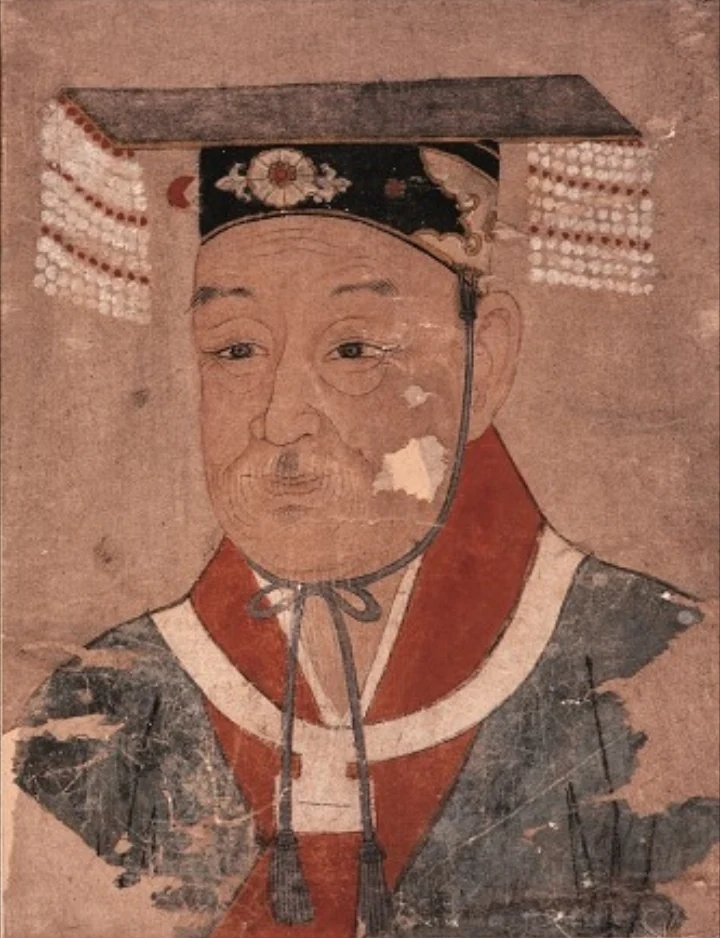
1106 CE–1194 CE
Grand Councilor
Shi Hao
史浩
Shi Hao was tutor to the future Emperor Xiaozong while the latter was still a prince and later served as Grand Councilor. He advocated caution in warfare, opposed a hasty northern expedition, and took part in the political recovery of the Southern Song together with Zhao Ruyu and others.
1106 CE–1194 CESouthern Song
PROFILE
Shi Hao was tutor to the future Emperor Xiaozong while the latter was still a prince and later served as Grand Councilor. He advocated caution in warfare, opposed a hasty northern expedition, and took part in the political recovery of the Southern Song together with Zhao Ruyu and others.
- Other name
- Courtesy name Zhiweng
- Courtesy name
- Zhiweng
- Style name
- Zhenyin Jushi
- Period
- Southern Song
- Dynasty / Polity
- Southern Song
- Identity
- Grand Councilor
- Ethnicity / People
- Not reliably established in the surviving sources
- Ancestral home
- Yin County, Mingzhou (present-day Ningbo, Zhejiang)
- Date of birth
- 1106
- Place of birth
- Unknown
- Date of death
- 1194
- Place of death
- Unknown
- Highest office
- See Biography and Major Deeds
- Major achievement
- Tutor to the future Emperor Xiaozong while he was a prince; Grand Councilor; opposed a hasty northern expedition; assisted the Southern Song restoration together with Zhao Ruyu and others
LIFE TIMELINE
Age nineteen | His father Shi Shizhong died; Shi Hao assumed the responsibilities of the eldest son and eldest grandson and remained with his grandfather Shi Zhao.
Age twenty-five | Jin forces captured Mingzhou. Shi Hao helped his grandfather Shi Zhao escape; Shi Zhao died soon afterward, and Shi Hao observed mourning for three years.
Age thirty-five | Lived at Xiashui, associated with Chan master Hongzhi Zhengjue of Tiantong Temple, and was deeply influenced by Silent Illumination Chan.
Age thirty-nine | Borrowed money to celebrate his mother's birthday, fell into debt, temporarily stayed in Shaoxing, received help from a woman who sold cakes, returned home for the prefectural examination, and placed among the top ten on Liu Zhang's list.
Age forty | Passed the jinshi examination, was appointed Commandant of Yuyao County, and devised a plan to capture nine bandit leaders without claiming personal credit.
Ages forty-one to fifty | Served as instructor in Wenzhou, associated with Prefect Zhang Jiucheng, and after completing his term was recommended by Zhang to the capital, where he served as Rectifier of the Imperial University and Erudite of the Directorate of Education.
Age fifty-one | Appointed Collator in the Palace Library and later promoted to Vice Minister of the Court of the Imperial Clan.
Age fifty-five | Appointed professor and concurrent lecturer in the residence of the Prince of Jian, becoming a teacher of the future Emperor Xiaozong Zhao Shen.
Age fifty-seven | Advised Emperor Gaozong to make the Prince of Jian, Zhao Shen, crown prince. Appointed Recorder and concurrently Right Commoner of the Crown Prince. After Gaozong abdicated and Xiaozong succeeded, Shi successively served as Secretariat Drafter, Hanlin Academician, drafter of imperial edicts, and Assistant Grand Councilor.
Age fifty-eight | Appointed Right Vice Director of the Department of State Affairs, Joint Manager of Affairs with the Secretariat-Chancellery, and Military Affairs Commissioner. He first argued that Zhao Ding and Li Guang were innocent and sought redress for Yue Fei. He opposed Zhang Jun's northern expedition, was impeached by Censor Wang Shipeng, and was removed to govern Shaoxing Prefecture.
Age sixty-three | Governed Shaoxing Prefecture and established the Xiangqu charitable estate to assist impoverished local scholar-official families.
Age seventy-three | Again became Right Grand Councilor. In the twelfth month he opposed forced recruitment by the Palace Command and defended the townsman Lu Qingtong, angering Emperor Xiaozong. He was dismissed and appointed Junior Preceptor, Military Commissioner of Baoning Army, Intendant of Liquan Temple, and concurrent Reader-in-waiting.
Age seventy-eight | Requested retirement; retired with the title Grand Protector and was enfeoffed Duke of Wei.
Age eighty-five | After Emperor Guangzong's accession, promoted to Grand Preceptor.
Age eighty-nine | Died. Posthumously titled Wenhui, later posthumously enfeoffed Prince of Yue and given the revised posthumous title Zhongding.
BIOGRAPHY
Biography
Family Background and Early Life
Shi Hao was born on the sixth day of the ninth month of the fifth year of the Chongning era under Emperor Huizong, October 4, 1106. His ancestor Shi Weize moved from Cixi to Yin County, and through Shi Zhao, a great-grandson, the family remained there for four generations. During Emperor Huizong's reign, Shi Zhao declined a court summons and was awarded the honorific “Scholar of the Eight Virtues.” Shi Hao's great-grandfather Shi Ji had studied under Wang Zhi, one of the Five Scholars of the Qingli era. Wang Zhi founded Taoyuan Academy, where Shi Hao also studied in his youth and met Wang Siwen, Zheng Tan, Wei Qi, Yuan Xie, and others.
Shi Hao was known locally from youth for filial and fraternal devotion. Once, while he and his younger brother were riding in an ox cart for amusement, the ox suddenly bolted and the cart nearly broke apart. Although Shi Hao was frightened and crying, he first called for help for his younger brother. The story became locally celebrated. In 1124, the sixth year of the Xuanhe era, his father Shi Shizhong died. Before death, his father instructed him, as eldest son and eldest grandson, to shoulder responsibility for caring for his grandfather. For the next several years Shi Hao remained by Shi Zhao's side.
In 1130, the fourth year of the Jianyan era, Jin troops captured Mingzhou. Shi Hao helped his grandfather flee and take refuge at sea, allowing the family to escape disaster. The seventy-four-year-old Shi Zhao, however, could not withstand the shock and hardship of war and travel and died not long after returning home. With the family's property plundered by Jin forces, Shi Hao's circumstances deteriorated, but he declined financial help from an uncle and observed mourning for three years. The responsibilities of the eldest son and grandson and the hardships of these years fostered a habit of endurance and deliberation and made him mature at an early age.
Youthful Study and Chan Influence
To follow his mother's wishes, Shi Hao took his mother, Lady Hong, to stay with relatives of the Qian family near Tiantong Street. As a young man he withdrew to Mount Mao to study and styled himself Zhenyin Jushi. The area was close to Tiantong Temple and Yuwang Temple, and Shi frequently accompanied his mother there to burn incense. He recorded these visits in the poem Tian Tong Yu Wang Daozhong.
The abbot of Tiantong Temple at the time was Chan master Hongzhi Zhengjue, an advocate of Silent Illumination Chan and the Caodong tradition. Shi Hao accompanied his mother to listen to teachings and was deeply influenced by Zhengjue. Zhengjue used circular signs as Chan devices and spoke in a highly literary style, often producing verse spontaneously. Shi drew inspiration for poetry from this practice. He linked poetic thought with Chan contemplation and believed that poetry required entry into a clear, empty, silent state in which the mind functioned like a mirror reflecting myriad phenomena. In the poem Zeng Tiantong Ying Shujì, he wrote that learning Chan was to see the root of one's nature and learning poetry concerned its remaining expressions, that though the paths appeared different their destination was not necessarily separate, and that in emptiness and silence a single thought vanished while responses to things could give form to myriad images like a mirror suspended in the great void. The poem explicitly expressed his acceptance of Silent Illumination Chan. In 1140, the tenth year of the Shaoxing era, while living at Xiashui, Shi invited Zhengjue to tour East Lake and wrote Donghu Youshan. He also befriended many monks of the Tiantong community.
In 1141, the eleventh year of the Shaoxing era, Shi passed Hanling by Qian Lake and wrote a song praising the landscape of Siming. At thirty-five, while living at Xiashui, he composed Xiashui An Xiaowang Outi. The source describes both his poetry and prose as accomplished and his character as increasingly mature and steady.
Middle Years: Examinations and Entry into Office
In 1144, the fourteenth year of the Shaoxing era, Shi Hao's mother turned sixty. Because the family was poor, he borrowed money from acquaintances to hold an elaborate birthday celebration and incurred considerable debt. By autumn he could not repay principal and interest and temporarily avoided creditors in Shaoxing, lodging with a woman surnamed Tang who sold cakes. With the local examination approaching, Shi could not return home and was deeply distressed. After learning what had happened, the woman lent him the one thousand cash she had saved so that he could repay the debt and take the examination. Shi returned to Mingzhou, passed the examination, and placed among the top ten on Liu Zhang's list at age thirty-nine. He kept his promise and immediately repaid the full sum.
After passing, Shi was appointed Commandant of Yuyao County. Banditry was active in the area, and he devised a plan that captured nine leaders. Although he had earned merit, he refused to claim it as his own, telling the county magistrate that apprehending bandits was simply the commandant's duty and that he would feel uneasy accepting an individual reward. The magistrate greatly admired him.
After his term ended, Shi went to Lin'an awaiting another appointment. Qin Hui attempted to draw him into his network and sent Palace Attendant Lin Yifei to convey to Right Remonstrance Grand Master Shi Cai that a post as library officer at the Directorate of Education had been reserved for Shi Hao. Shi told his uncle that Qin Hui seemed difficult to serve alongside and that, since he had placed in the top ten of the metropolitan examination, regulations entitled him to an educational appointment, so there was no need to seek favor. He soon became instructor in Wenzhou.
The prefect of Wenzhou was Zhang Jiucheng, whom Emperor Gaozong had personally ranked first in the 1132 examination. Because Zhang opposed peace with Jin and refused Qin Hui's attempts to recruit him, he had been falsely accused of belonging to Zhao Ding's faction and exiled to Nan'an Army for fourteen years. After Qin Hui's death, Gaozong restored Zhang and appointed him to Wenzhou. During Shi Hao's service there, he associated closely with Zhang and at times carried messages between Zhang and Chan master Zonggao of Jingshan, gaining Zhang's deep trust. After three years Zhang recommended Shi to Gaozong. Shi went to the capital, became Rectifier of the Imperial University, then Erudite of the Directorate of Education, and began to have frequent contact with the emperor.
Tutor in the Princely Residence and the Accession of Emperor Xiaozong
Emperor Gaozong had stabilized the Southern Song under extreme hardship after the Jingkang catastrophe. As a contemporary of the emperor, Shi Hao displayed due respect. Gaozong frequently asked him about the essentials of government, and Shi consistently answered that the most important tasks were securing the frontiers and gathering talented men. He also recommended a number of capable people to the emperor.
Because Gaozong had little prospect of producing an heir, he decided to establish a successor. In 1132, the second year of the Shaoxing era, he selected two boys from the line of Emperor Taizu to be raised in the palace. One was Zhao Shen, then named Bocong, who would later become Emperor Xiaozong and was six years old. Shi Hao advised that one of the princes of Pu'an and Enping should be selected to fix the hopes of the realm. Gaozong approved and appointed Shi as professor in the princely residence. The emperor ordered the two princes to copy the Lanting Xu five hundred times as a test. Shi advised both to reverently obey their sovereign and father. The Prince of Pu'an copied seven hundred versions and presented them; the Prince of Enping did not complete even one. Gaozong later gave each prince ten palace women to serve him. Shi advised both to treat them with the respect due to secondary mothers. Pu'an obeyed; Enping did not. More than a month later the emperor recalled the women. Those assigned to Pu'an were still virgins, while those assigned to Enping were not. Gaozong thereby resolved to make the Prince of Pu'an crown prince.
In 1160, the thirtieth year of the Shaoxing era, Gaozong enfeoffed Pu'an as Prince of Jian, and Shi Hao was appointed professor and concurrent lecturer in his residence. One day, while lecturing on the Rites of Zhou, Shi discussed the need for moderation in the heir's diet. The prince bowed and thanked him, saying that he would not dare fail to remember the instruction.
In 1161, the thirty-first year of the Shaoxing era, Shi Hao was promoted to Vice Minister of the Court of the Imperial Clan. When Jin forces invaded the frontier, advocates of surrender demanded retreat, while Prince Jian strongly supported resistance and submitted a memorial asking personally to serve as vanguard. This touched a major political sensitivity for Gaozong. Shi urgently advised the prince that an imperial son should not command troops and that he should take warning from the cases of Shensheng of Jin and Emperor Suzong of Tang at Lingwu. The prince understood, immediately asked Shi to draft a new memorial requesting instead to accompany the imperial carriage and fulfill the duties of a son. Its language was deeply earnest. Gaozong's anger vanished after reading it; recognizing Shi's hand, he told his ministers that this was what a true official of the Prince of Jian's residence should be. Soon afterward Palace Censor Wu Fu proposed appointing the imperial son supreme commander. Shi again memorialized that the prince lived deep within the palace and had never dealt with the generals and therefore should not take on the task. Gaozong instead ordered Prince Jian to become acquainted with the generals and accompany him to Jiankang.
In 1162, the thirty-second year of the Shaoxing era, Gaozong returned to Lin'an and made the Prince of Jian crown prince. Shi Hao was appointed Recorder and concurrently Right Commoner of the Crown Prince. That same year Gaozong abdicated, Emperor Xiaozong took the throne, and Shi successively served as Secretariat Drafter, Hanlin Academician, drafter of imperial edicts, and Assistant Grand Councilor.
Grand Councilor and Dismissal
In 1163, the first year of the Longxing era, Shi Hao was appointed Right Vice Director of the Department of State Affairs, Joint Manager of Affairs with the Secretariat-Chancellery, and concurrently Military Affairs Commissioner, reaching the office of Grand Councilor. His first major recommendation was that Zhao Ding and Li Guang had committed no crime, and he also sought redress for Yue Fei, helping overturn a number of unjust cases. In the dispute between war and peace, however, Shi strongly favored negotiation and opposed Zhang Jun's plan for a hasty northern expedition. He argued for securing fortified positions and defending them while gradually planning recovery. Zhang Jun strongly advocated war, and their conflict intensified. Censor Wang Shipeng impeached Shi, who was removed from the central government and sent to govern Shaoxing Prefecture. Zhang Jun's northern expedition soon failed, and the defeat at Fuli was presented by the source as confirming Shi Hao's cautious judgment.
In 1168, the fourth year of the Qiandao era, while governing Shaoxing, Shi established the “Xiangqu Charitable Estate.” He donated his own funds to purchase good farmland, using annual rental income to help impoverished descendants of worthy local scholar-officials meet funeral and marriage expenses. Local people painted portraits of Shi Hao, Shen Huan, and Wang Dayou at the estate to express respect.
In 1178, the fifth year of the Chunxi era, Shi again became Right Grand Councilor. That year he opposed forced recruitment by the Palace Command, which had thrown the capital into disorder, and vigorously defended the townsman Lu Qingtong as innocent. His sharp arguments angered Emperor Xiaozong, and he was dismissed after only several months. He was appointed Junior Preceptor, Military Commissioner of Baoning Army, Intendant of Liquan Temple, and concurrent Reader-in-waiting. In 1183, the tenth year of the Chunxi era, he requested retirement, received the title Grand Protector in retirement, and was enfeoffed Duke of Wei.
Later Years and Posthumous Honors
After Emperor Guangzong took the throne, Shi Hao was promoted to Grand Preceptor. He died in 1194, the fifth year of the Shaoxi era, at the age of eighty-nine. He received the posthumous title Wenhui, was later posthumously enfeoffed Prince of Yue, and was given the revised posthumous title Zhongding.
Shi Hao's third son Shi Miyuan and his grandnephew Shi Songzhi both became major Southern Song officials. The family was described as producing three grand councilors in one lineage, two princely enfeoffments over four generations, five ministers, and seventy-two jinshi. After attaining high office, Shi Hao founded the Xiangqu Charitable Estate. The institution continued for many years and was an important example of local charitable practice under the Southern Song.
Major Activities
Political Activity
Shi Hao's political career was characterized by steadiness and caution. He served under Emperors Gaozong, Xiaozong, and Guangzong and took clear positions on major questions including succession, northern war, and military recruitment.
The succession was a decisive episode in his career. Shi recognized Gaozong's intention to establish an heir and, through the tests involving five hundred copies of the Lanting Xu and the palace women given to the two princes, helped Zhao Shen, Prince of Pu'an, distinguish himself in Gaozong's judgment. Zhao Shen was ultimately made crown prince and later Emperor Xiaozong, creating the basis of Shi Hao's political position under that reign.
After becoming Grand Councilor in 1163, Shi argued that Zhao Ding and Li Guang were innocent, sought redress for Yue Fei, and helped reverse unjust political cases. In policy toward Jin he opposed Zhang Jun's hasty northern expedition and favored fortified defense, a position for which he was impeached and dismissed. The later defeat at Fuli was presented by the source as vindicating his judgment.
When restored as Grand Councilor in 1178, Shi opposed forced military recruitment by the Palace Command and defended Lu Qingtong, angering Emperor Xiaozong and losing office. The episode is used in the source to show that he did not abandon his principles merely to accommodate the ruler's anger.
Xiangqu Charitable Estate
In 1168, while governing Shaoxing Prefecture, Shi Hao founded the Xiangqu Charitable Estate. He donated personal funds to purchase productive land and used the rent to help impoverished descendants of local scholar-official families pay for funerals and marriages. The arrangement provided concrete assistance to families unable to meet these major expenses and represented an important Southern Song local charitable practice. Local people placed portraits of Shi Hao, Shen Huan, and Wang Dayou at the estate in commemoration.
Literary Activity
Shi Hao authored Maofeng Zhenyin Manlu, and a variety of his poems, lyrics, prose, and rhapsodies survive. His poetry was influenced by Chan and pursued a clear, open, and lively aesthetic. Inspired in youth by the Silent Illumination teaching of Hongzhi Zhengjue at Tiantong Temple, Shi connected poetic thought to Chan contemplation. In Zeng Tiantong Ying Shuji he stated that the study of Chan seeks the root of one's nature while poetry concerns its remaining expression and argued that the two ultimately converge. He believed a poet had to enter a silent and empty state before responding to objects and giving form to images.
Shi Hao's ci poetry also achieved a degree of recognition. Much of it concerns daily life and exchanges with friends and is described in the source as plain and natural in style. His writings preserve substantial information about his associations with monks and friends and are useful for studying the attraction of Chan among Southern Song scholar-officials.
Travels and Places of Activity
In youth Shi withdrew to Mount Mao to study, later lived at Xiashui, and frequently visited Tiantong and Yuwang temples, associating with Hongzhi Zhengjue and other Chan monks. In 1141 he crossed Hanling by Qian Lake and wrote verses on the landscape of Siming. After passing the examination in 1145 he was posted as Commandant of Yuyao County. In the following year he visited Chaoyin Cave at Mount Putuo, where later tradition associated the visit with unusual religious responses. He subsequently served as instructor in Wenzhou and associated with Prefect Zhang Jiucheng. After entering court service he held posts including Rectifier of the Imperial University, Erudite of the Directorate of Education, Collator in the Palace Library, and Vice Minister of the Court of the Imperial Clan. After retiring, he lived in his home region, maintained the charitable estate, and spent his final years there.
Relations with Contemporaries
Shi Hao maintained a wide range of relationships. In youth he met Wang Siwen, Zheng Tan, Wei Qi, Yuan Xie, and others at Taoyuan Academy. As a young man he associated closely with Chan master Hongzhi Zhengjue of Tiantong Temple and Zhengjue's disciple Ying Shuji, and was deeply influenced by Chan. While instructor in Wenzhou he formed a close bond with Prefect Zhang Jiucheng, who later recommended him to Gaozong. At court he had close relations with both Gaozong and Xiaozong, serving as Xiaozong's teacher and as a trusted official of Gaozong. He sharply disagreed with Zhang Jun over national strategy, representing the cautious/peace position against Zhang's pro-war policy. In later life he participated in the Xiangqu charitable estate together with local worthies Shen Huan and Wang Dayou.
Personal Relations
Family
- Father: Shi Shizhong, died early.
- Grandfather: Shi Zhao, awarded the honorific “Scholar of the Eight Virtues” by Emperor Huizong.
- Great-grandfather: Shi Ji, studied under Wang Zhi.
- Mother: Lady Hong.
- Younger brother: Shi Hao was deeply protective of him; the childhood ox-cart incident became a well-known local story.
- Wife: Lady Zheng, enfeoffed Lady of Yue according to the History of Song and the epitaph.
- Son: Shi Miyuan, powerful Southern Song Grand Councilor and Shi Hao's third son.
- Grandnephew: Shi Songzhi, Southern Song official.
Teachers and Friends
- Wang Zhi: one of the Five Scholars of the Qingli era, founder of Taoyuan Academy, and teacher of Shi Hao's great-grandfather.
- Wang Siwen, Zheng Tan, Wei Qi, Yuan Xie: fellow students at Taoyuan Academy.
- Chan master Hongzhi Zhengjue: abbot of Tiantong Temple; Shi Hao was influenced by his Silent Illumination Chan.
- Ying Shuji: disciple of Zhengjue and a poetic friend of Shi Hao.
- Zhang Jiucheng: prefect of Wenzhou who recommended Shi Hao to Emperor Gaozong.
- Chan master Zonggao: master of Jingshan; he and Zhang Jiucheng were exiled in the same period, and Shi Hao at times carried messages between them.
Rulers
- Emperor Gaozong of Song, Zhao Gou: Shi Hao advised him to make the Prince of Jian crown prince and enjoyed his trust.
- Emperor Xiaozong of Song, Zhao Shen: Shi Hao taught him while he was still a prince and rose to Grand Councilor after his accession.
- Emperor Guangzong of Song, Zhao Dun: promoted Shi Hao to Grand Preceptor after taking the throne.
Conflicts
- Qin Hui: attempted to draw Shi Hao into his political network; Shi declined.
- Zhang Jun: opposed Shi Hao in national policy; Shi resisted his hasty northern expedition.
- Wang Shipeng: impeached Shi Hao and contributed to his dismissal.
Historical Assessment
Song and Contemporary Assessments
- Emperor Gaozong told his ministers, “This is what a true official of the Prince of Jian's residence should be,” highly praising Shi Hao's guidance of the prince.
- Although Emperor Xiaozong dismissed Shi over the Lu Qingtong affair, the source states that he continued to respect him and treated him generously after retirement.
- Zhang Jiucheng recommended Shi Hao to Gaozong, indicating his recognition of Shi's ability.
- Local people painted portraits of Shi Hao, Shen Huan, and Wang Dayou at the charitable estate, showing local respect for their virtue.
Song and Yuan Historiography
- The “Biography of Shi Hao” in the History of Song calls him a “loyal, generous elder,” affirming his mild character and steady handling of affairs.
- The History of Song records his efforts to seek redress for Yue Fei and defend Zhao Ding and Li Guang, praising his contribution to political rehabilitation.
- Yuan-period writers assessing Southern Song Grand Councilors often treated Shi as a representative of steadiness and caution, contrasting him with Zhang Jun's aggressiveness.
Ming and Qing Periods
- Wang Fuzhi's Song Lun discusses Southern Song policy and gave some approval to Shi Hao's caution toward war, treating it as grounded in practical considerations rather than empty talk of recovery.
- Qing historians often focused on Shi Hao's establishment of the Xiangqu charitable estate and treated it as a model of Southern Song local charity.
- The Qing compilation Siming Renjian included Shi Hao among the local worthies of Siming.
Modern Assessments
- Modern scholars of Southern Song political history commonly treat Shi Hao as a representative of the cautious faction and argue that his opposition to a hasty northern expedition was based on practical considerations rather than simple capitulation. The source summarizes a common view that he made concrete contributions in succession policy, political rehabilitation, and the charitable estate.
- Criticism of Shi Hao centers on the Longxing northern campaign, with some arguing that he was overly conservative and missed an opportunity for recovery. After the defeat at Fuli, however, many commentators recognized that his caution had a reasonable basis.
- Shi's relationships with Chan monks and his poetry have received increasing attention from literary historians as a representative case of Southern Song scholar-official engagement with Chan.
FIGURES ASSOCIATED WITH THIS DYNASTY
Bibliography
- History of Song, juan 396, “Biography of Shi Hao,” compiled by Toqto'a and others.
- Wang Fuzhi, Song Lun, Zhonghua Book Company punctuated edition.
- He Zhongli, Political History of the Southern Song, People's Publishing House.