Birth | Born into the Imperial Aisin Gioro clan in Beijing, seventh-generation descendant of Šurhaci, son of Grand Secretary Lukang
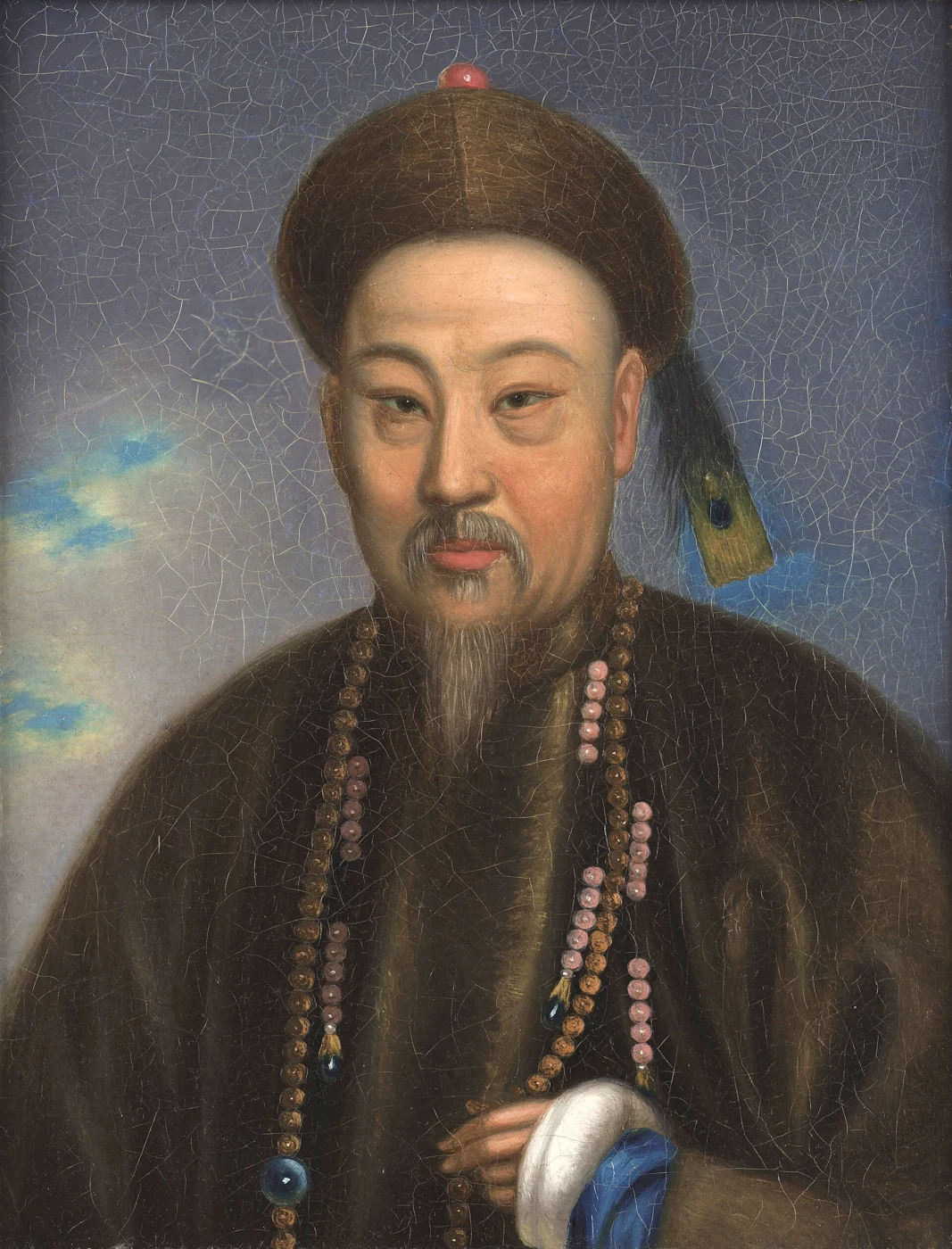
1790 CE–1858 CE
Imperial ClansmanGrand Secretary of the Wenyuan HallViceroy of LiangjiangViceroy of Liangguang
Keying
耆英
Qiying (Manchu: ᠠᡳᠰᡳᠨ ᡤᡳᠣᡵᠣ ᡴᡳᠶᡳᠩ; ; courtesy name: Jiechun []; art name: Leshan []; March 21, 1787 – June 29, 1858), often romanized as Keying or Ki-ying in contemporary Western records, was an eminent imperial clansman, senior statesman, and paramount plenipotentiary diplomat of the Qing Dynasty during the reigns of Jiaqing, Daoguang, and Xianfeng. A direct seventh-generation descendant of Nurhaci’s brother Šurhaci and the…
1790 CE–1858 CEQing Dynasty
PROFILE
Qiying (Manchu: ᠠᡳᠰᡳᠨ ᡤᡳᠣᡵᠣ ᡴᡳᠶᡳᠩ; ; courtesy name: Jiechun []; art name: Leshan []; March 21, 1787 – June 29, 1858), often romanized as Keying or Ki-ying in contemporary Western records, was an eminent imperial clansman, senior statesman, and paramount plenipotentiary diplomat of the Qing Dynasty during the reigns of Jiaqing, Daoguang, and Xianfeng. A direct seventh-generation descendant of Nurhaci’s brother Šurhaci and the son of Grand Secretary Lukang, Qiying rose through the imperial bureaucracy to attain the supreme offices of Grand Secretary of the Wenyuan Hall , Minister of Personnel, Viceroy of Liangjiang, and Viceroy of Liangguang. As the foremost Imperial High Commissioner of the Daoguang era, Qiying was the primary architect and chief signatory of China’s first generation of unequal treaties, inextricably linking his name to the dawn of China’s modern semi-colonial transformation. During the climax of the First Opium War in August 1842, as the British expeditionary fleet under Sir Henry Pottinger advanced up the Yangtze River to Nanjing, the Daoguang Emperor invested Qiying with plenary powers to halt hostilities. Aboard the British flagship HMS Cornwallis, Qiying signed the historic Treaty of Nanking (1842), ceding Hong Kong Island, opening five treaty ports (Guangzhou, Fuzhou, Xiamen, Ningbo, and Shanghai), paying an indemnity of twenty-one million silver dollars, and establishing fixed tariffs. The following year, he signed the Supplementary Treaty of the Bogue (1843), formally conceding consular jurisdiction (extraterritoriality) and unilateral most-favored-nation status. As Viceroy of Liangguang, he subsequently negotiated the Treaty of Wanghia (1844) with American envoy Caleb Cushing and the Treaty of Whampoa (1844) with French envoy Théodore de Lagrené, extending full Western commercial and religious privileges across the treaty ports. In his diplomacy, Qiying pursued an appeasement policy termed "soothing and tethering the barbarians" (jimi), attempting to placate foreign envoys with personal flattery (such as adopting British Governor John Davis’s infant son as his godchild) while brutally suppressing indigenous anti-British resistance in Guangzhou and slandering patriotic commanders such as Yao Ying in Taiwan. Following the accession of the Xianfeng Emperor, Qiying was denounced as cowardly and dismissed from high office in 1851. When Anglo-French forces captured the Daku Forts in 1858 during the Second Opium War, Xianfeng reappointed the seventy-one-year-old Qiying to negotiate in Tianjin. However, British interpreters Harry Parkes and Thomas Wade publicly confronted him with confidential imperial memorials captured from Guangzhou, in which Qiying had boasted of manipulating the "dog-and-sheep nature" of Westerners. Disgraced and rejected by Lord Elgin, Qiying panicked and fled Tianjin for Beijing without imperial authorization. An enraged Xianfeng Emperor ordered him arrested and tried by the Imperial Clan Court, granting him the "mercy" of suicide by hanging.
- Courtesy / Art Name
- Jiechun
- Era
- Late Qing Dynasty (Jiaqing, Daoguang, and Xianfeng Eras)
- Dynasty
- Qing dynasty
- Identity
- Imperial Clansman, Grand Secretary of the Wenyuan Hall, Viceroy of Liangjiang, Viceroy of Liangguang, Imperial High Commissioner, Plenipotentiary Diplomat
- Date of Birth
- March 21, 1787 CE(52nd year of the Qianlong era, Qing, 2nd month, 3rd day)
- Date of Death
- June 29, 1858 CE(8th year of the Xianfeng era, Qing, 5th month, 19th day)
- Ethnicity
- Manchu Plain Blue Banner
- Ancestral Home
- the capital (present-day Beijing)
- Place of Birth
- the capital (present-day Beijing)
- Place of Death
- A cell of the imperial clan court in the capital
- Lifespan
- 71 years old
- Highest Office
- Grand Secretary of the Wenyuan Hall, Minister of Personnel, Viceroy of Liangjiang, Viceroy of Liangguang, Imperial Commissioner for Foreign Trade
- Major Offices
- Grand secretary of the Wenyuan hall and minister of personnel, governor-general of Liangjiang, governor-general of Liangguang and imperial commissioner for the five treaty ports, imperial commissioner
- Peerage
- Grace-Defender Duke (Feng'en Fuguogong, held periodically)
- Posthumous Name
- None (sentenced to death by suicide for fleeing negotiations; all ranks and honors stripped)
- Major Achievements
- Chief negotiator and signatory of the Sino-British Treaty of Nanking (1842) and Treaty of the Bogue (1843); concluded the Sino-American Treaty of Wanghia and Sino-French Treaty of Whampoa (1844); shaped the early treaty port and extraterritoriality system
LIFE TIMELINE
Age 20 | Entered bureaucratic service as a student of the Imperial Academy; appointed secretary in the Grand Secretariat
Appointment by hereditary privilege | By hereditary privilege he was appointed a secretary of the Imperial Clan Court and was promoted to registrar.
Age 41 | Promoted to Minister of the Court of Colonial Affairs (Lifanyuan); concurrently appointed General of the Gendarmerie (Nine Gates Infantry Commander)
Between 1822 and 1828 | Between 1822 and 1828, he served successively as Senior Vice Minister of Works, Senior Vice Minister of Revenue, and Minister of the Court of Colonial Affairs (Lifanyuan).
Minister of the Imperial Household | He was appointed a minister of the Imperial Household Department and subsequently served in the Ministries of Works and Revenue.
Age 50 | Appointed General of Shengjing, supervising military and civil administration across southern Manchuria
Commander of the gendarmerie | He was appointed commander of the Peking Gendarmerie.
Promotion to Minister of Rites | He was promoted to Minister of Rites and concurrently held a lieutenant-generalship of a banner.
Drought in the capital region | During a drought in the capital region he memorialised for the inspection of officials and the reduction of punishments, and was appointed an imperial household minister.
Junior Guardian of the Heir Apparent | He was granted the title of Junior Guardian of the Heir Apparent and was sent to Guangdong and Jiangxi to settle cases.
Age 56 | Following Qing defeats in Zhejiang, transferred to General of Hangzhou and Imperial Commissioner to manage coastal defense and diplomatic contacts
Demotion over a eunuch case | For privately releasing a eunuch convicted of gambling he was demoted to Vice Minister of War and then sent out as lieutenant-general of Rehe.
General of Shengjing | He was appointed General of Shengjing.
Age 56 | Commanded by Daoguang to halt British advance on Nanjing; signed the Treaty of Nanking aboard HMS Cornwallis with Sir Henry Pottinger
Age 57 | Concluded the Treaty of the Bogue with Pottinger in Guangdong, formally yielding extraterritoriality and most-favored-nation rights
In the spring of 1842 | In the spring of 1842, the grand Qing counter-offensive in Zhejiang under Prince Yijing disintegrated in catastrophic rout.
Age 58 | Appointed Viceroy of Liangguang and Imperial Commissioner; signed the Treaty of Wanghia with the United States and the Treaty of Whampoa with France
Age 60 | Signed secret "Guangzhou Entry Agreement" with Governor Davis yielding to British entry demands; memorialized the throne slandering Taiwan defense heroes Yao Ying and Da Hong'a
In early 1844 | In early 1844, American special envoy Caleb Cushing arrived in Macao aboard the frigate USS Brandywine, threatening to sail directly to Tianjin unless China granted the United States equal commercial status.
Assistant Grand Secretary | He was made an Assistant Grand Secretary while retaining his governor-generalship.
Age 62 | Recalled to Beijing due to intense popular unrest against foreign entry into Guangzhou; appointed Grand Secretary of the Wenyuan Hall
Age 64 | Denounced by the young Xianfeng Emperor for cowardly appeasement; stripped of grand secretaryship and ranks, reduced to private clansman
The Guangzhou Crisis and Slander of Patriotic Heroes During his four years as Viceroy | ### The Guangzhou Crisis and Slander of Patriotic Heroes During his four years as Viceroy of Liangguang (1844–1848), Qiying’s appeasement policy faced explosive popular resistance in Guangzhou.
Age 72 | Reappointed Imperial Commissioner by Xianfeng following the fall of Daku Forts to negotiate with the Anglo-French forces in Tianjin
In 1850 | In 1850, Daoguang passed away and was succeeded by his twenty-year-old son, the Xianfeng Emperor.
Service on the defence commission | He served with the princes and ministers of the defence commission and was granted the fourth-rank button for contributing funds to the army.
Dismissal and confinement | After his son Qingxi was impeached, he was held responsible for a private disclosure to him, was dismissed from office and placed under confinement.
Age 72 | Publicly humiliated during Tianjin negotiations when British interpreters produced his captured secret memorials; fled the frontline without imperial leave
Age 72 | Arrested by the Imperial Clan Court for desertion; sentenced to execution, granted the privilege of committing suicide by hanging
Humiliation at Tianjin and Death by Suicide In 1858 | ### Humiliation at Tianjin and Death by Suicide In 1858, the Second Opium War escalated dramatically.
BIOGRAPHY
Biography
Imperial Lineage and Early Bureaucratic Ascendancy Qiying was born on March 21, 1787, during the twilight of the Qianlong reign, into the absolute pinnacle of the Manchu nobility. He was a direct descendant of Šurhaci, the younger brother of dynastic founder Nurhaci. His father, Lukang, was a paramount pillar of the Jiaqing court, serving as Grand Secretary of the Dongge Hall and Minister of Personnel. Blessed with immense hereditary privilege, Qiying entered government service in 1806 without participating in the imperial examinations, stepping into the Grand Secretariat as a middle-level secretary. Possessing a suave, polished demeanor, sharp administrative instincts, and a profound talent for courtly sycophancy, Qiying climbed the bureaucratic ladder rapidly under the Jiaqing and Daoguang emperors. Between 1822 and 1828, he served successively as Senior Vice Minister of Works, Senior Vice Minister of Revenue, and Minister of the Court of Colonial Affairs (Lifanyuan). He was subsequently appointed General of the Gendarmerie , commanding the metropolitan garrison responsible for public security across the walled capital. In 1836, Daoguang transferred him to the strategic post of General of Shengjing , where he oversaw banner military training and frontier administration across Manchuria for nearly six years, earning an imperial reputation for administrative competence and diplomatic tact. ### The First Opium War and the Treaty of Nanking In 1840, the First Opium War erupted. British ironclad steamships and naval gunboats pulverized coastal fortifications from Guangzhou to Zhoushan, exposing the complete military obsolescence of the Eight Banners and Green Standard armies. In the spring of 1842, the grand Qing counter-offensive in Zhejiang under Prince Yijing disintegrated in catastrophic rout. Panicked by British advances toward the Grand Canal, the Daoguang Emperor reassigned Qiying from Manchuria to Hangzhou, designating him Imperial High Commissioner with broad powers to explore diplomatic cessation of hostilities. However, before Qiying could establish communication, Sir Henry Pottinger’s fleet sailed up the Yangtze River, captured Zhenjiang in a bloody battle, and anchored off the ancient walls of Nanjing, severing Beijing’s grain supply. Confronted with the imminent bombardment of Nanjing, Daoguang panicked and authorized Qiying and his imperial colleague Yilibu to accept British demands at any cost. On August 12, 1842, Qiying, Yilibu, and Viceroy Niu Jian boarded the British flagship HMS Cornwallis moored in the Yangtze. Confronting Pottinger’s military ultimatums, Qiying conceded to all primary British demands without meaningful resistance. On August 29, 1842, Qiying signed the historic Treaty of Nanking , concluding the first unequal treaty in modern Chinese history. Its provisions were catastrophic:
- Cession of Hong Kong Island in perpetuity to the British Crown;
- Payment of a war indemnity and opium compensation totaling twenty-one million Spanish silver dollars;
- Opening of five primary coastal cities—Guangzhou, Fuzhou, Xiamen, Ningbo, and Shanghai—as treaty ports for British residence and commerce;
- Abolition of the Cohong monopoly system;
- Establishment of a "conventional tariff" schedule, stripping the Qing of autonomous tariff determination. To the Daoguang Emperor, Qiying’s concessions were viewed not as national humiliation, but as a brilliant bureaucratic success that "pacified the barbarians and preserved the dynasty." Qiying was rewarded with high honors and appointed Viceroy of Liangjiang. ### The Treaty of the Bogue and Extraterritoriality Recognizing that the Treaty of Nanking left commercial and judicial mechanisms vaguely defined, British diplomats demanded a supplementary treaty to institutionalize their privileges. In the spring of 1843, Daoguang appointed Qiying Viceroy of Liangguang and Imperial High Commissioner for Foreign Trade, stationing him permanently in Guangzhou. Meeting Pottinger at the Bogue (Humen) forts in July and October 1843, Qiying displayed a staggering lack of comprehension regarding modern sovereign jurisprudence. Viewing legal jurisdiction over foreigners as a troublesome administrative nuisance rather than an inviolable sovereign right, Qiying freely granted Britain's core demands. On October 8, 1843, Qiying signed the Treaty of the Bogue , which embedded two lethal legal mechanisms into Chinese foreign relations:
- Consular Jurisdiction (Extraterritoriality): Stipulated that British subjects accused of crimes or involved in civil lawsuits in China would be judged solely by British consular officials under British law, completely immune from Chinese courts;
- Unilateral Most-Favored-Nation Treatment: Decreed that any future privileges, tax exemptions, or immunities granted by China to other nations would automatically and unconditionally extend to Great Britain. In his secret memorials to Daoguang, Qiying boasted: "Restricting the barbarians within five ports and permitting their consuls to govern them avoids domestic friction. This is truly the supreme method of pacifying outsiders with imperial benevolence!" ### Expanding Privileges: Wanghia and Whampoa The British treaties immediately triggered a stampede of Western powers seeking identical rights. In early 1844, American special envoy Caleb Cushing arrived in Macao aboard the frigate USS Brandywine, threatening to sail directly to Tianjin unless China granted the United States equal commercial status. Daoguang commanded Qiying to handle the Americans. Adopting a policy of "soothing all barbarians equally to prevent them from uniting," Qiying met Cushing at the village of Wanghia (Wangxia) outside Macao. On July 3, 1844, Qiying signed the Treaty of Wanghia . Cushing’s draft expanded upon the British treaties, establishing explicit extraterritorial mechanisms, permitting American warships to anchor freely in Chinese treaty ports, and introducing a clause permitting treaty revision after twelve years—a clause that Britain and France would later use to launch the Second Opium War. In October 1844, French plenipotentiary Théodore de Lagrené arrived with a naval squadron, demanding identical terms. Aboard the French corvette L'Archimède at Whampoa, Qiying signed the Treaty of Whampoa on October 24, 1844. Beyond commercial privileges, Lagrené pressured Qiying into granting sweeping religious protections for Roman Catholicism. The following year, Qiying successfully petitioned Daoguang to rescind the century-old imperial prohibitions against Christianity, opening the interior of China to Western missionary penetration. ### The Guangzhou Crisis and Slander of Patriotic Heroes During his four years as Viceroy of Liangguang (1844–1848), Qiying’s appeasement policy faced explosive popular resistance in Guangzhou. Under the Treaty of Nanking, British merchants claimed the right to enter the walled city of Guangzhou. However, the local gentry and civilian militias—proud veterans of the Sanyuanli resistance—fervently opposed foreign entry, threatening armed rebellion if foreigners set foot within the walls. Caught between British gunboats and armed Chinese crowds, Qiying resorted to duplicity. In his interactions with British Governor Sir John Davis, Qiying adopted an obsequious posture, dining intimately with British officers, allowing Western women into government yamens, and even adopting Davis’s infant son as his godchild. In 1846, to delay armed British retaliation, Qiying secretly signed an agreement with Davis promising that Guangzhou’s gates would be opened to foreigners in two years’ time. When the news leaked, furious mobs attacked the viceregal yamen, pelting Qiying’s carriage with stones. Simultaneously, Qiying committed one of the most infamous betrayals in late Qing history. During the Opium War, Taiwan Defense Intendant Yao Ying and General Da Hong'a had achieved stunning defensive victories, ambushing and sinking British gunboats, killing hundreds of British troops, and capturing dozens of prisoners. Furious at this setback, Pottinger falsely accused Yao Ying of "slaughtering shipwrecked merchants" and demanded his execution. Eager to appease Pottinger and secure the peace treaties, Qiying submitted confidential memorials slandering Yao Ying and Da Hong'a as "fraudulent liars who provoked foreign wrath." The Daoguang Emperor fell for the deceit, arresting Yao Ying and casting him into prison. ### Disgrace under Xianfeng In 1848, with the two-year deadline for opening Guangzhou expiring and popular insurrection looming, Daoguang recalled Qiying to Beijing to defuse the crisis, appointing him Grand Secretary of the Wenyuan Hall. In 1850, Daoguang passed away and was succeeded by his twenty-year-old son, the Xianfeng Emperor. Unlike his father, Xianfeng was an ardent nationalist who despised the appeasement faction. In early 1851, Xianfeng issued a blistering imperial decree condemning Grand Councillor Mujangga and Grand Secretary Qiying: > "Qiying in his Guangdong administration was muddle-headed, cowardly, devoid of moral backbone, and dedicated solely to flattering foreigners while sabotaging the realm!" Xianfeng stripped Qiying of his Grand Secretaryship, deprived him of all official ranks, and demoted him to an unranked imperial clansman, casting him into political exile in Beijing for seven years. ### Humiliation at Tianjin and Death by Suicide In 1858, the Second Opium War escalated dramatically. An Anglo-French expeditionary fleet stormed the Daku Forts and occupied Tianjin, placing Beijing within striking distance. In desperation, Xianfeng recalled the seventy-one-year-old Qiying, believing that his decades of diplomatic experience might charm the foreign invaders into withdrawal. Arriving in Tianjin with imperial credentials in early June 1858, Qiying donned his ceremonial robes and requested an audience with British plenipotentiary Lord Elgin at Haiguang Temple. Lord Elgin refused to see him. Instead, he sent young interpreters Harry Parkes and Thomas Wade to confront the old mandarin. Stepping into the chamber, Wade produced a bundle of confidential imperial documents captured by British soldiers from the viceregal yamen in Guangzhou. Before the assembled diplomats, Wade read aloud from Qiying’s confidential 1844 memorial to Daoguang. In the text, Qiying had detailed his diplomatic philosophy for the throne: > "The foreigners possess the nature of dogs and sheep; they are brutal, greedy, and ignorant of Confucian morality. They cannot be guided by virtue, but must be pacified through clever trickery and flattered with smiles, drawing them into our snare without their knowing!" Wade looked up and demanded: "Is this not your own handwriting and your own seal, Lord Qiying? You flattered us to our faces, adopted our children, and then called us dogs and sheep behind our backs! How can the British Crown negotiate with a man of such contemptible duplicity?!" The confrontation was devastating. Converted from a cunning master of ceremonies into an exposed fraud, the aged Qiying trembled violently, broke into a cold sweat, and fled Haiguang Temple in humiliation. Elgin immediately informed the Qing commissioners that Britain would never negotiate while Qiying remained in Tianjin. Terrified that the British would arrest him and haunted by the prospect of imperial punishment, Qiying panicked. On the morning of June 23, without requesting imperial leave or notifying his colleagues, Qiying slipped into a sedan chair and fled Tianjin for Beijing. Desertion by an Imperial High Commissioner in the face of the enemy was a capital offense. When news reached the Forbidden City, an incensed Xianfeng Emperor ordered Qiying arrested and thrown into the dungeons of the Imperial Clan Court. The court found him guilty of cowardice, desertion, and bringing disgrace upon the empire, sentencing him to beheading. Mindful of his imperial bloodline and his decades of service, Xianfeng commuted the sentence to forced suicide. On the evening of June 29, 1858, officials presented a white silk cord inside his cell. Qiying wept, placed the noose around his neck, and hanged himself at the age of seventy-one.
Major Activities
Diplomatic Treaties 1. Sino-British Treaty of Nanking (1842): Chief negotiator and signatory of China's first modern unequal treaty, which ceded Hong Kong, opened five ports, imposed indemnities, and created the treaty port system.
- Treaty of the Bogue (1843): Formulated the operational statutes for maritime trade while formally conceding consular jurisdiction (extraterritoriality) and unilateral most-favored-nation status.
- Treaties of Wanghia and Whampoa (1844): Concluded foundational treaties with the United States and France, institutionalizing naval port access, religious toleration, and regular treaty-revision mechanisms. ### Diplomatic Strategy - *The "Tethering" (Jimi) Doctrine*: Championed a traditional appeasement approach that treated modern Western empires like ancient steppe nomadic confederacies, trading sovereign rights for temporary military truces.
Personal Relations
- Father: Lukang, Grand Secretary of the Dongge Hall and Minister of Personnel.
- Sons: Enhua and Qinghua, served as imperial household clerks. ### Sovereign-Subject Relations - Daoguang Emperor: Patron monarch who rewarded Qiying with supreme civil offices for concluding peace in 1842.
- Xianfeng Emperor: Successor monarch who despised Qiying’s appeasement record, cashiered him in 1851, and ordered him to commit suicide in 1858. ### Diplomatic Peers and Subordinates - Yilibu: Co-commissioner at Nanjing who shared the burden of negotiations.
- Huang Entong: Governor of Guangdong and key legal counselor during the 1843–1844 treaty sessions.
- Guiliang and Huashana: Qing commissioners at Tianjin in 1858. ### Foreign Counterparts - Sir Henry Pottinger: British plenipotentiary at Nanking and Bogue.
- Caleb Cushing: American envoy at Wanghia.
- Théodore de Lagrené: French envoy at Whampoa.
- Sir John Davis: Governor of Hong Kong whose infant son was adopted by Qiying.
- Lord Elgin: British High Commissioner in 1858 who refused to meet Qiying.
- Harry Parkes and Thomas Wade: British interpreters who humiliated Qiying at Tianjin. ### Victims and Political Foes - Yao Ying and Da Hong'a: Taiwanese defense heroes slandered and imprisoned due to Qiying's machinations.
- Xu Guangjin: Successor viceroy who abandoned Qiying’s appeasement policy.
Historical Assessment
Official Dynastic Histories - 《Draft History of Qing》(Qing Shi Gao), Volume 373, Biography 160: "Qiying was an imperial clansman of high rank who, having grown up in peacetime, lost all composure when confronted with unprecedented crisis. From Nanking onward, he dedicated himself entirely to appeasement, believing peace could be preserved forever. When America and France followed, concessions multiplied. ... When recalled to Tianjin, Wade confronted him with his own past memorials; humbled and terrified, he fled to the capital and met his doom. At the close of the Daoguang era, the court rejoiced in tranquility, congratulating itself on its clever diplomatic tethering. They failed to realize that without military strength, foreign ambition only expanded, culminating in the calamities of the Xianfeng reign. The Appraiser notes: In times of national crisis, when grand ministers fail to stand upon righteousness and instead manipulate deceptive stratagems to buy momentary peace, disaster is inevitable. Qiying was truly the tragic forerunner of such ruin." ### Modern Historians - Jiang Tingfu (Modern Chinese History): "Qiying was a tragic archetype of the traditional scholar-official encountering the modern world. Completely ignorant of international law and global power dynamics, he assumed Westerners were no different from ancient northern nomads who could be pacified with commercial bribes, sweet words, and adopted children. He had no conception of what sovereignty, tariffs, or extraterritoriality meant to the survival of a modern state."
- Fan Wenlan (Modern Chinese History): "Qiying was the foremost capitulationist of the Daoguang and Xianfeng eras. From Nanking to Wanghia and Whampoa, China's territorial, judicial, and fiscal sovereignty was handed away with his brush. He treated patriotic citizens with ruthless brutality while bowing low before foreign invaders, going so far as to frame heroes like Yao Ying. His final death by suicide was the ultimate historical verdict on his treasonous career."
- Mao Jiaqi (History of the Opium War): "Qiying possessed no diplomatic training; he was merely the royal agent of an authoritarian court desperate to preserve its throne. His policy was designed solely to protect imperial sovereignty from internal rebellion and foreign war. When his duplicitous memorials were read aloud at Tianjin, the psychological collapse of the traditional Confucian grandee was complete."
FIGURES ASSOCIATED WITH THIS DYNASTY
Bibliography
- Qing Shi Gao* (Draft History of Qing), Vol. 373, Biography 160: "Biography of Qiying", Zhonghua Book Company.
- Veritable Records of Emperor Xuanzong of Qing* (Daoguang Shilu), Vols. 370–450.
- Veritable Records of Emperor Wenzong of Qing* (Xianfeng Shilu), Vols. 240–258.
- Jiang Tingfu: Modern Chinese History, Yuelu Publishing House.
- Fan Wenlan: Modern Chinese History, People's Publishing House.
- Mao Jiaqi (ed.): History of the Opium War, Nanjing University Press.
- Qi Sihe (ed.): The Opium War (Source Materials of Modern Chinese History), Shenzhou Guoguangshe.