Birth | Born into a family from Dangqu, Baxi; his ancestors had been relocated to Lueyang during the Cao Wei period
约–303 CE
Leader of a refugee uprisingfounder figure of Cheng Han
Li Te
李特
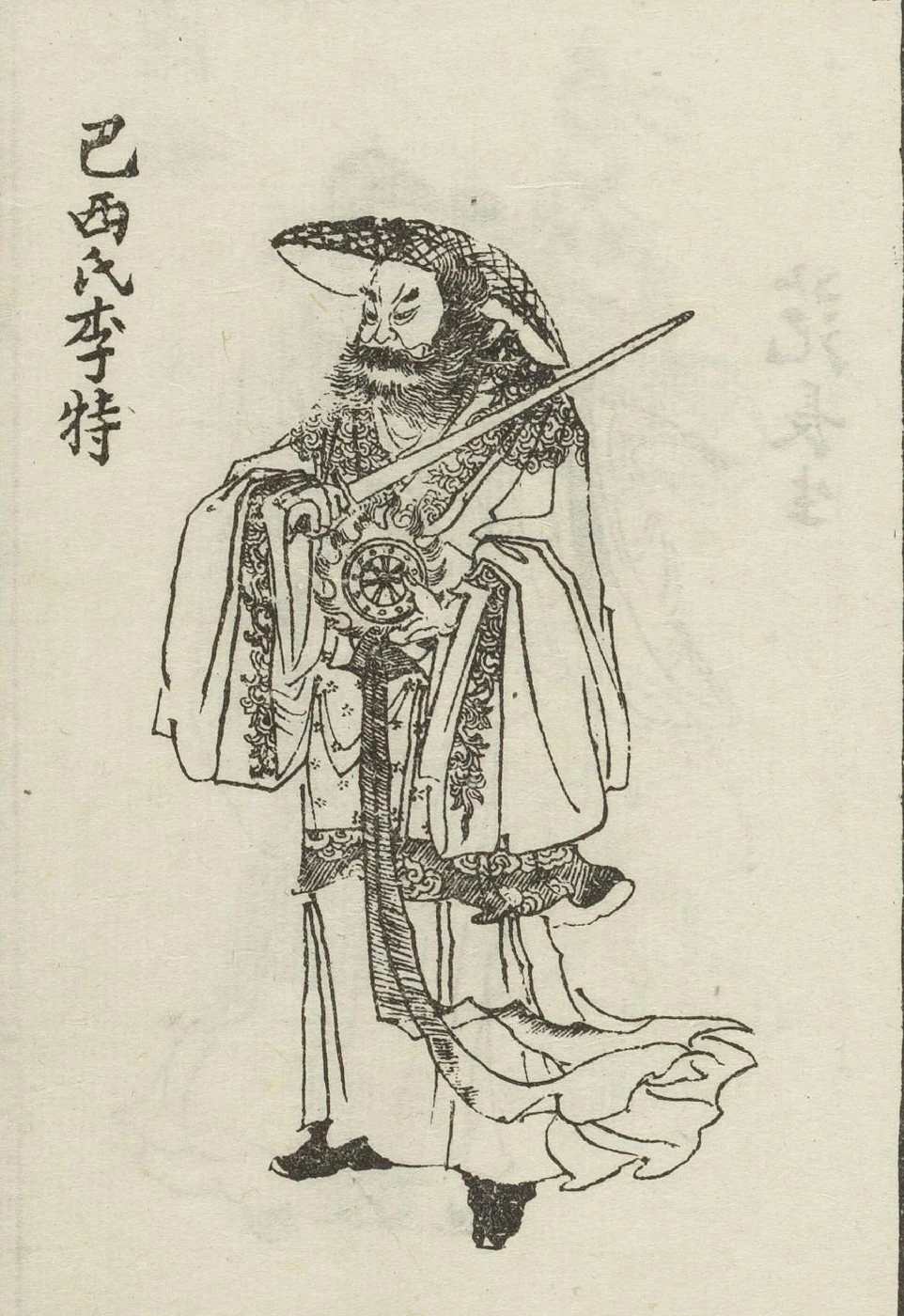
Li Te (latter half of the 3rd century–303), courtesy name Xuanxiu, was from Dangqu in Baxi (present-day Qu County, Sichuan). He was a leader of Ba-Di refugees in the late Western Jin and a founder figure of the Cheng Han regime. His father was Li Mu. Of five brothers, Li Te ranked second. He was said to be eight chi tall, excelled in horsemanship and archery, and was known for military ability. During the Yuankang era,…
约–303 CEWestern Jin
PROFILE
Li Te (latter half of the 3rd century–303), courtesy name Xuanxiu, was from Dangqu in Baxi (present-day Qu County, Sichuan). He was a leader of Ba-Di refugees in the late Western Jin and a founder figure of the Cheng Han regime. His father was Li Mu. Of five brothers, Li Te ranked second. He was said to be eight chi tall, excelled in horsemanship and archery, and was known for military ability. During the Yuankang era, famine in Guanzhong and the rebellion of Qi Wannian led Li Te and his brothers to bring refugees into Shu. When the court later compelled the refugees to return home, Li Te rose against the Jin at Mianzhu in 301, the first year of Yongning, captured Guanghan, and advanced to besiege Chengdu. In 303, the second year of Tai'an, he fell into Luo Shang's ruse of feigned surrender, was defeated, and was killed. His son Li Xiong later established Cheng Han and posthumously honored Li Te as Emperor Jing with the temple name Shizu.
- Courtesy Name
- Xuanxiu
- Era
- Cheng Han
- Dynasty/Regime
- Cheng Han
- Identity
- Leader of a refugee uprising; founder figure of Cheng Han
- Date of Birth
- about 250
- Date of Death
- 303
- Ethnicity/Ethnic Group
- Not reliably confirmed by currently available sources
- Place of Origin
- Dangqu, Baxi (present-day Qu County, Sichuan)
- Place of Birth
- Unknown
- Major Achievements
- Leader of Ba-Di refugees who led a refugee uprising in the late Western Jin and laid the foundations for Cheng Han.
- Courtesy / Art Name
- Xuanxiu
- Dynasty
- Western Jin refugee forces; founding figure later honored by Cheng Han
- Ethnicity
- Di people (V80 established rendering)
- Ancestral Home
- Native place: Lueyang Linwei (present-day Qin’an, Gansu); ancestral origin: Baxi Dangqu (present-day Qu County, Sichuan); specific birthplace unconfirmed
- Place of Death
- Place of death unknown
- Lifespan
- Unknown (not calculated from an estimated birth year)
- Highest Office
- See Biography
- Major Offices
- See Biography
- Posthumous Name
- Li Te was posthumously honoured as Emperor Jing
LIFE TIMELINE
Birth | A native of Dangqu in Baxi, his forebears had moved to Lueyang in the time of Cao Wei.
About age 49 | Entered Shu with refugees due to famine in Guanzhong and the Qi Wannian rebellion; settled in Yi Province
About age 51 | Zhao Xin, Inspector of Yi Province, rebelled against the Jin; Li Te and his brothers served as military vanguard until Zhao murdered Li Xiang
About age 52 | Zhao Xin was crushed; Li Te occupied Chengdu; refused court orders to forcibly repatriate refugees, escalating conflict with Luo Shang
About age 52 | Defeated the attacks of Xin Ran, formally revolted against the Jin dynasty, captured Guanghan, and laid siege to Chengdu
About age 53 | Styled himself Grand General and Inspector of Yi Province, supervising military affairs of Liang and Yi provinces, and instituted the Jianchu era
About age 54 | Fallen into Luo Shang's trap of feigned submission, defeated and slain at Xinfan; his severed head was forwarded to Luoyang
BIOGRAPHY
Biography
Family Background and Early Life Li Te's ancestral home was Dangqu County in Baxi Commandery (present-day Qu County, Sichuan). His ancestors had been relocated during the Cao Wei period to Lueyang (present-day Qin'an, Gansu). He was the second of five brothers. Li Te and his brothers were all skilled horsemen and archers and were known for military ability, attracting followers from their locality. Li Te was said to stand eight chi tall and to possess a forceful, martial character and considerable prestige. Little is known of his early life, but his family evidently possessed influence in the region. ### Flight into Shu In 298, the eighth year of Yuankang, Guanzhong was destabilized by the rebellion of Qi Wannian (296–299) and repeated famine. Li Te and his brothers moved south into Shu with refugees from Guanzhong. At first the court did not allow the refugees to enter Shu and ordered them to remain in Hanzhong, sending Investigating Censor Li Bi to supervise them. After accepting bribes, however, Li Bi memorialized the court and secured permission for the refugees to enter Yi and Liang provinces. Li Te and his brothers were therefore able to settle in Shu. ### Alliance and Break with Zhao Xin In 300, the first year of Yongkang, Zhao Xin, Inspector of Yi Province, feared being implicated through Empress Jia Nanfeng and, seeing the Jin court in disorder, began to harbor separatist ambitions. He opened granaries to relieve the refugees, bought popular support, and treated the Li brothers generously, using them as armed retainers. Relying on Zhao Xin's power, the Li brothers gathered followers and engaged in banditry, becoming a serious concern for the people of Shu. Zhao Xin styled himself Chief Commander, Grand General, and Inspector of Yi Province, and appointed Li Te's younger brother Li Xiang General Who Awes Bandits. Because Li Xiang understood military methods and maintained strict ranks, Zhao Xin became suspicious of him and killed him in 301. Although Zhao Xin appointed the Li brothers as commandants to placate them, they resented him and led their troops north to Mianzhu. Li Te then secretly recruited more than seven thousand men and launched a night attack on Zhao Xin's army, capturing Chengdu. Zhao Xin fled and was killed. Li Te allowed his troops to plunder heavily and sent an envoy to the court explaining Zhao Xin's crimes. ### Winning the Refugees' Support After Zhao Xin's defeat, the court sent Luo Shang, Inspector of Liang Province, to take over as Inspector of Yi Province. Li Te feared Luo Shang and sent his younger brother Li Xiang with valuable gifts to welcome him, which pleased Luo. Guanghan Administrator Xin Ran and others urged Luo Shang to kill Li Liu, but Luo refused. The court then ordered Qin and Yong provinces to recall the refugees to their homes. Because the Central Plains were already in turmoil, Li Te did not wish to return north. He sent Yan Shi to request a postponement from Luo Shang and bribed both Luo Shang and Censor Feng Gai, obtaining a delay until after autumn. For Li Te's role in defeating Zhao Xin, the court made him General Who Proclaims Might and Marquis of Changle Township, but Xin Ran failed to report the refugees' contributions accurately, provoking resentment among them. In the seventh lunar month, Luo Shang pressed the refugees to depart. They were unwilling to leave; their crops had not yet been harvested and they lacked travel funds. Li Te again asked for postponement until winter. On the advice of Xin Ran and Li Bi, Luo Shang refused. Xin Ran intended to kill the refugee leaders and seize their property and began confiscating refugee goods at the passes. Yan Shi warned Li Te to prepare. Because Li Te had repeatedly spoken on behalf of the refugees, they rallied to him. In a short time he gathered more than twenty thousand people in two camps commanded respectively by Li Te and Li Liu. ### Rebellion Against the Jin Soon afterward Xin Ran sent Guanghan Commandant Zeng Yuan, Gate Commander Zhang Xian, and others with thirty thousand troops against Li Te, while Luo Shang also sent Commandant Tian Zuo to assist them. Li Te was prepared. His ambush force struck, inflicted a major defeat, killed Zeng Yuan, Zhang Xian, and Tian Zuo, and sent their heads to Luo Shang. Li Te then openly rebelled against the Jin. The refugees collectively chose him as their leader and petitioned that he exercise the powers of General Who Guards the North and make appointments by delegated imperial authority. Li Te next attacked Guanghan. Xin Ran could not hold it and fled to Deyang. After capturing Guanghan, Li Te advanced to besiege Chengdu. Luo Shang was regarded as greedy and cruel, while Li Te made three simple rules with the people of Shu, distributed relief, treated worthy men with courtesy, and maintained strict discipline. He therefore won local support. Li Te repeatedly defeated Luo Shang, who held out in Chengdu and appealed for help to Liang Province and Li Yi, Commandant of the Southern Yi. ### Formation of a Separatist Regime In 302, the second year of Yongning, Sima Yong, Prince of Hejian, sent Ya Bo and Zhang Wei against Li Te, while Li Yi also dispatched troops to aid Luo Shang. Li Te first defeated Zhang Gui and then ordered Li Dang and Li Xiong to attack Ya Bo, receiving the surrender of Baxi Commandery and Jiameng. In the same year Li Te styled himself Grand General and Inspector of Yi Province, commander of military affairs in Liang and Yi provinces, and established the Jianchu era name. He then attacked Zhang Wei. The first engagement went badly, but Li Dang arrived with reinforcements, fought desperately, routed Zhang Wei, and killed him. Li Te also repeatedly defeated the forces of Luo Shang and Xu Xiong, Inspector of Liang Province, acquiring large quantities of weapons and armor. ### Defeat and Death In 303, the second year of Tai'an, Li Te defeated Luo Shang's naval force and again attacked Chengdu. Xu Jian, Administrator of Shu Commandery, surrendered the Lesser City. After entering, Li Te took only horses and did not plunder. He also changed the era name to Jianchu (note: this duplicates the earlier statement that Jianchu was established in the second year of Yongning; the two references concern the same event, as noted in the source's “Historical Assessments” section). The people of Shu had formed fortified settlements and received Li Te warmly. He sent men to reassure them and allowed the refugees to obtain food in the settlements in order to conserve army provisions. Li Liu and Shangguan Dun warned him that the fortified communities might harbor divided loyalties, but Li Te ignored them. Meanwhile, Zong Dai, Inspector of Jing Province, and Sun Fu, Administrator of Jianping, led a naval force to aid Luo Shang. Li Te sent Li Dang and others to oppose them. Zong Dai's army was strong, and the fortified settlements began to waver. Luo Shang sent Yi Province official Ren Rui to feign surrender and secretly contact the settlement leaders, falsely claiming that Chengdu had run out of grain. In the second lunar month Luo Shang took advantage of Li Te's weakened position and launched a surprise attack; the fortified settlements responded, and Li Te suffered a severe defeat and withdrew to Xinfan. When Li Te saw Luo Shang retreat, he led troops in pursuit but was counterattacked by Luo's main army. Li Te, Li Fu, and Li Yuan were killed. Their bodies were burned, and Li Te's head was sent to Luoyang. His younger brother Li Liu then took command of the remaining followers.
His People, His Early Standing in the Province, and the Refugee Migration into Shu
Li Te was a Di of Dangqu county in Baxi, whose forebears had been moved under the Cao Wei to Linwei in Lüeyang; and because the Ba state levied on the Di a special tax called the cong cloth, the Chinese commonly called the Di "cong men." He was the second of five brothers, all skilled with bow and horse and known for military capacity, so that the men of their district attached themselves to them in numbers. In his youth he held office in the province and his views were most uncommon; eight feet tall, able and martial, a good rider and archer, calm by nature, firm and of large measure, and by temper generous and quick to take up the cause of the wronged, so that all in the province who thought as he did came to him. In the Yuankang years, with Guanzhong unsettled by Qi Wannian's revolt and years of famine besides, the people of six commanderies, Lüeyang and Tianshui among them, fled and migrated, "seeking grain, and those who entered Hanchuan were several tens of thousands of households"; and on the road, where there were many sick and poor, Li Te and his brothers relieved and protected them, and so won men's hearts. When the refugees reached Hanzhong they memorialized asking to be fed in Ba and Shu, and the court refused, sending the investigating censor Li Mi with the staff of authority to comfort and oversee them and to keep them out of the Jiange; but Li Mi, reaching Hanzhong, took bribes from the refugees and memorialized that they numbered more than a hundred thousand and could not be relieved by Hanzhong alone, that to go east to Jingzhou the water was swift and dangerous and there were no boats, and that Shu had stores of grain and a wealthy people where the refugees might be fed; and the court followed his advice, so that from that time the refugees were scattered through Liang and Yi and could not be kept back. When Li Te reached the Jiange and saw the steepness of the ground he sighed that a man who held such a place and yet surrendered to another must be of low and ordinary talent; and Yan Shi, Li Yuan and Ren Hui, who had fled with him, marvelled and thought him no ordinary man.
Attaching Himself to Zhao Xin, the Death of Li Xiang, and the Storming of Chengdu
In the eleventh month of 300 the court summoned the interior secretary of Chengdu, Geng Teng, to replace Zhao Xin as governor of Yizhou. Zhao Xin, being of the kin of Jia Nanfeng and afraid of the summons, and seeing the decline of Jin, already wished to hold Shu, and so opened the granaries to relieve the refugees and buy men's hearts; and because Li Te and his brothers were able and brave and their followers men of Baxi, the same commandery as himself, he treated them very well as his claws. Li Te and the rest, relying on his power, gathered men for robbery, so that the men of Shu hated them; and Geng Teng several times secretly memorialized that "the refugees are fierce and brave and the men of Shu timid and weak, so that the host cannot deal with the guests, and there will surely be disorder; they should be sent back to their own land, for if they are left in the steep country of Shu the calamity of Qin and Yong will be moved to Liang and Yi." Zhao Xin, hearing of it, hated Geng Teng; and when the province, having received the edict, sent more than a thousand officials and soldiers to welcome Geng Teng and he entered the provincial city, Zhao Xin sent his followers against him at the western gate and Geng Teng was beaten and killed. In the same year Zhao Xin styled himself grand commander, general-in-chief and governor of Yizhou, set up his staff, changed the commandery governors and magistrates at will, and none of the officials appointed by Jin dared disobey. Li Te's younger brother Li Xiang with his brothers and his sisters' husbands Li Han, Ren Hui, Shangguan Dun, Li Pan, Fei Tuo, Fu Cheng and Wei Bo brought four thousand cavalry to Zhao Xin, who made Li Xiang general of the conquering bandits and marquis of Yangquan pavilion, treated him as a confidant and had him gather the strong and warlike men of the six commanderies, growing to more than ten thousand to cut the roads from the north; and Li Xiang, brave and popular and called a good general of the eastern Qiang, was gradually envied by Zhao Xin without any open word. In the second month of 301 the secretaries Du Shu and Zhang Can told Zhao Xin that he had but just risen and had hastily put Li Xiang with a great army in the field, that Li Xiang was not of their kind and would never be of one mind with them, and that this was to reverse the spear and hand it to another to strike them, so that means must be found against him at once; and when Li Xiang urged Zhao Xin to take the imperial title, Du Shu and Zhang Can told Zhao Xin that this was monstrous treason, and Li Xiang with more than ten of his sons and nephews was killed. Li Te and Li Liu being then in the field with troops, Zhao Xin sent men to reassure them that what Li Xiang had said deserved death and had nothing to do with his brothers, and made Li Te and Li Liu commanders; but the two, resenting him, took their troops back to Mianzhu. Fearing the court's attack, Zhao Xin sent the secretary Fei Yuan, the governor of Shu commandery Li Bi and the guard commander Chang Jun with more than ten thousand men to cut the northern roads and camp at Shiting in Mianzhu; and Li Te, secretly gathering more than seven thousand men, attacked Fei Yuan's army by night and broke it, burning them so that nine in ten died, and marched on Chengdu. Zhao Xin, hearing that the troops had come, was in such alarm that he knew not what to do; Fei Yuan, Li Mi and the army libationer Zhang Zheng broke out of the gates by night and fled, all the officials scattering, and Zhao Xin with his wife and children fled in a small boat and was killed by his follower Zhu Zhu; and Li Te, entering Chengdu, let his soldiers plunder, killed the protector of the western Yi, Jiang Fa, and the secretary Yuan Zhi with the officers Zhao Xin had appointed, and sent his men Wang Jiao and Li Ji to Luoyang to set out Zhao Xin's crimes.
His Dealings with Luo Shang, the Dispute over Repatriation, and His Rising against Jin
The court made Luo Shang general of the pacified west, protector of the western Yi and governor of Yizhou, with the gate commanders and more than seven thousand men entering Shu. Li Te and the others, hearing that Luo Shang had come, were much afraid and sent his brother Li Xiang to meet him on the road with treasures and antiques, at which Luo Shang was delighted and made Li Xiang commander of the cavalry; and Li Te and his brother feasted Luo Shang at Mianzhu with oxen and wine. Wang Dun and Xin Ran advised Luo Shang to take the occasion to destroy Li Te and the rest, or they would surely be a trouble later, but Luo Shang would not listen; and Xin Ran, who had known Li Te before, told him that for old acquaintance to meet was either fortune or danger, at which Li Te was deeply suspicious and afraid. The court ordered the refugees recalled, with the censors Feng Gai and Zhang Chang to oversee it; and Li Te's elder brother Li Fu, who had stayed at home in Lüeyang, came to Shu on the pretext of fetching his family and told Li Te that the central plain had but lately been in disorder and there was no need to go back, with which Li Te agreed, so that he conceived the design of holding Ba and Shu, and repeatedly had Yan Shi visit Luo Shang to ask that they be allowed to stay until autumn, bribing Luo Shang and Feng Gai, who agreed. The court, reckoning the merit of suppressing Zhao Xin, made Li Te general of declared might and marquis of Changle township and Li Liu general of the fierce might and marquis of Wuyang; and the document reaching Yizhou called for a list of the refugees of the six commanderies who had helped Li Te against Zhao Xin, to be rewarded. But Xin Ran, who had been summoned out of course and wished to take the whole merit of destroying Zhao Xin for himself, did not carry out the court's will nor report truthfully, and all men resented him. Luo Shang sent his officers to press and oversee the sending home of the refugees, fixing the seventh month for their departure; and Xin Ran, greedy and violent, meaning to kill their chiefs and seize their property, told Luo Shang with Li Mi that the refugees had plundered much in Zhao Xin's rebellion and that a proclamation should be issued and barriers set up to collect these goods, and Luo Shang accordingly sent proclamations everywhere ordering the repatriation to begin and sent the governor of Zitong, Zhang Yan, to set barriers at the fords and search for treasure. The refugees, scattered through Liang and Yi and working as hired labour, hearing that the province and commanderies were forcing them home, were full of grief and resentment and knew not what to do; and learning that Li Te and his brothers had repeatedly asked for a delay, they were grateful and depended on them; and since the rains were coming and the crops were not yet harvested and they had no money for the road, they went together to Li Te, who built a great camp at Mianzhu to settle them and wrote to Xin Ran asking grace. Xin Ran in anger sent men to post notices at the fords offering a reward for the capture of Li Te and his brothers; and Li Te, in great fear, took down all the notices, and he and Li Xiang rewrote them to say that whoever brought in the head of one of the magnates of the six commanderies, Li, Ren, Yan, Zhao, Yang and Shangguan, or of a marquis or king of the Di or Sou, would be given a hundred bolts of cloth. At this the refugees were greatly frightened and all came over to Li Te, "on horseback with bows, and in less than a month more than twenty thousand," while Li Liu gathered several thousand more.
The Two Camps at Chizu, the Ambush of Zeng Yuan, and Li Te's Titles
In the tenth month Li Te camped at Chizu in two camps, himself in the northern and Li Liu in the eastern. He sent Yan Shi to Luo Shang to fix a new term, and Yan Shi, seeing that palisades were being built at the fords with a design to seize the refugees, sighed that men's minds were unsettled and that to press the sending home would bring on disorder; and learning that Xin Ran and Li Mi would not change, he took leave of Luo Shang and returned. Luo Shang told him to tell the refugees that his own wish was to allow a delay, and Yan Shi answered that he was blinded by wicked talk and that there was likely no delay to be had, and that the people were lowly but not to be despised, and that to press them unreasonably would be to provoke a wrath no man could withstand, to no small harm; and Luo Shang said that he would not deceive him and that he might go. Yan Shi, back at Mianzhu, told Li Te that Luo Shang's word was not to be trusted, for his authority and punishments were not established while Xin Ran and the others each held strong troops, so that if they rose Luo Shang could not control them, and that they should be fully prepared; and Li Te took his advice. Xin Ran and Li Bi agreed between themselves that Luo Shang was greedy and irresolute and that day by day the refugees' cunning plans were being carried out, that Li Te and his brother were men of martial capacity and that they themselves would certainly be taken by Li Te, and that they should decide the matter themselves without consulting Luo Shang; and they sent the commandant of Guanghan, Zeng Yuan, and the gate commanders Zhang Xian and Liu Bing with thirty thousand foot and horse secretly against Li Te's camp, Luo Shang also sending the guard commander Tian Zuo to help. Li Te, who had known of it, repaired his armour and sharpened his weapons and waited in strict readiness; and when Zeng Yuan came he held his troops and did nothing, and when half of the enemy had entered he fell on them with his ambush, killing Tian Zuo, Zeng Yuan and Zhang Xian, whose heads he sent to Luo Shang and Xin Ran to look at. Luo Shang told his officers that Li Te, that brigand, had at last grown strong and gone, and that the governor of Guanghan, Xin Ran, had not listened to him and had made Li Te's temper worse; and what was to be done now? The refugees of the six commanderies then unanimously made Li Te their chief; and he had his officers Li Han, Ren Zang, Yan Shi, Li Pan, Li Yuan and Yang Bao and others memorialize, asking that after the precedent of Liang Tong's support of Dou Rong Li Te be made acting general of the northern expedition with power to confer office and rank in due form, his brother Li Liu being made general of the eastern expedition and commander of the east to hold one quarter, his elder brother Li Fu general of the flying cavalry and his brother Li Xiang general of the brave cavalry; and he then marched against Xin Ran, whose troops came out and were always beaten. Luo Shang sent Li Mi and Fei Yuan to relieve Xin Ran, but they dared not advance for fear of Li Te, and Xin Ran, at his wit's end in Guanghan, broke out and fled. Li Te entered and held Guanghan, made Li Chao its governor, and marched on Chengdu against Luo Shang; and when Yan Shi answered Luo Shang's letter by reproaching him for trusting slanderers who wished to attack the refugees and setting out how Li Te and his brothers had done service to the royal house to give Yizhou peace, Luo Shang saw that greater designs were afoot and shut himself in the city, asking help of Liang and Ning. Li Te then styled himself commissioner with the staff of authority, grand commander and general of the northern expedition, conferring office by his own authority "entirely after the precedent of Dou Rong in Hexi": Li Fu as general of martial might, his second son Li Dang as general of the garrison, his youngest son Li Xiong as general of the vanguard, Li Han as protector of the western Yi, and Li Han's son, Ren Hui, Li Gong, Shangguan Jing, Li Pan and Fei Tuo as commanders, Ren Zang, Shangguan Dun, Yang Bao, Yang Gui, Wang Da and Qu Xin as guardsmen, Li Yuan, Li Bo, Xi Bin, Yan Cheng, Shangguan Qi, Li Tao and Wang Huai as staff, Yan Shi as chief counsellor and He Shi and Zhao Su as confidants. Luo Shang being always greedy and cruel and a scourge to the people, Li Te made a three-point covenant with the men of Shu, spreading benefits, cancelling labour service, relieving the people, honouring the worthy and raising men of talent who had been passed over, so that army and government were orderly and "the people of Shu were greatly pleased"; and Luo Shang, beaten again and again, built great works and camped along the Pi river with a line seven hundred li long to face him. In 302 the prince of Hejian, Sima Yong, sent Ya Bo and Zhang Wei against Li Te while Li Yi also sent troops to help Luo Shang; and Li Te first broke Zhang Gui and then sent Li Dang and Li Xiong against Ya Bo, receiving the submission of Baxi and Jiameng, and styled himself general-in-chief, governor of Yizhou and commander of military affairs in Liang and Yi, taking the era name Jianchu. In 303 he broke Luo Shang's fleet and attacked Chengdu again, the governor of Shu commandery, Xu Jian, surrendering the lesser city; and entering the city he took only horses and plundered nothing, and the men of Shu gathered in fortified settlements and entertained him, and he sent men to comfort them and let the refugees take food in the settlements to save military grain, while Li Liu and Shangguan Dun urged him to guard against divided loyalty in the settlements and he would not listen. At this time the governor of Jingzhou, Zong Dai, and the governor of Jianping, Sun Fu, came by water to relieve Luo Shang, and Luo Shang sent the Yizhou officer Ren Rui to pretend to surrender and secretly contact the settlement chiefs, falsely saying that the grain in the city was exhausted; and in the second month Luo Shang attacked Li Te in his weakness and the settlements answered him, so that Li Te was heavily beaten and fell back on Xinfan, and pursuing when Luo Shang withdrew he was met by the main army, and Li Te with Li Fu and Li Yuan was killed, their bodies burned and their heads sent to Luoyang, his brother Li Liu taking over his following.
Major Activities
Leadership of the Refugee Uprising Li Te was a central leader of the refugee uprising in the late Western Jin. He used the refugees' fear of forced repatriation and their resentment of government officials to gather more than twenty thousand followers and rise at Mianzhu against the court's compulsory relocation policy. The revolt undermined Western Jin authority in Yi Province and laid the foundations for the later Cheng Han regime. ### Establishment of a Separatist Power After capturing Guanghan and the Lesser City of Chengdu, Li Te styled himself Grand General and Inspector of Yi Province and adopted the Jianchu era name, forming a separatist regime. He promulgated three simple rules, distributed relief, honored capable men, and won support among the people of Shu, bringing a period of stability to the refugee regime. ### Military Activity Li Te repeatedly defeated government forces led by Luo Shang, Xin Ran, Ya Bo, Zhang Wei, and others, including in the Mianzhu ambush, the fighting at Guanghan, and the attacks on Chengdu. His military ability and the refugees' fighting spirit produced repeated early victories, but he was ultimately defeated after underestimating his opponents and falling into a ruse. ### Relations with Contemporaries Li Te rose together with his brothers Li Xiang, Li Liu, Li Xiang, and others. He first cooperated with and then fought Zhao Xin, and was an enemy of Luo Shang and Xin Ran. He was skilled at winning support and maneuvering politically, sending Yan Shi, Li Xiang, and others to negotiate with officials and bribing Luo Shang, Feng Gai, and others in order to gain time.
The Organization of the Refugee Regime, His Methods of Dealing with the Authorities, and the Causes of Its Sudden Fall
Li Te's rising was not a mere local rebellion but a refugee regime whose immediate cause was the Western Jin policy of forced repatriation. Its organization has three verifiable features. First, the clan and the district were its backbone: his brothers Li Xiang, Li Liu, Li Xiang and Li Fu, with his sisters' husbands Li Han, Ren Hui, Shangguan Dun, Li Pan and Fei Tuo, held the chief posts, while the original refugee leaders of the six commanderies as unit commanders, magistrates and commandants were brought into the lists of memorialists and appointments, so that "the refugees" became a commandable military body. Second, he borrowed the court's name and earlier precedents: after first holding the court's titles of general of declared might and marquis of Changle township, he asked, "after the precedent of Liang Tong's support of Dou Rong," to be made acting general of the northern expedition, and in the end styled himself commissioner with the staff of authority, grand commander and general of the northern expedition, conferring office "entirely after the precedent of Dou Rong in Hexi" — that is, dressing a separatist regime in the language of legitimacy. Third, he made a three-point covenant with the men of Shu, spread benefits, cancelled labour service, honoured the worthy and raised the overlooked, so that a regime based on refugees won local support within a short time. Against this, Luo Shang was "always greedy and cruel and a scourge to the people," and the contrast was an important condition of Li Te's repeated victories.
His methods of dealing with the authorities were equally concrete: he sent Yan Shi to Luo Shang several times to ask a delay and bribed Luo Shang and the censor Feng Gai to put off the repatriation from the seventh month to after the autumn; Yan Shi, seeing palisades built at the fords with a design to seize the refugees, urged Li Te to prepare, and afterwards judged that "Luo Shang's authority and punishments are not established, while Xin Ran and the others each hold strong troops," a judgement confirmed when Xin Ran and Li Bi on their own sent Zeng Yuan with thirty thousand men; and Li Te's rewriting of Xin Ran's reward notice as an offer for the heads of the magnates of the six commanderies turned the enemy's intimidation into an instrument of recruitment, so that "in less than a month more than twenty thousand" came over. As to his sudden fall, no single cause accounts for it. He entered Chengdu taking only horses and plundering nothing, yet failed to guard against the fortified settlements into which the men of Shu had gathered, rejecting Li Liu's and Shangguan Dun's warnings of divided loyalty and letting the refugees take food inside them, which was to hand both grain and safety to the local strongholds; Luo Shang exploited exactly this slackness by Ren Rui's pretended surrender, the contacting of the settlement chiefs and the false report that the city's grain was gone; the arrival of Zong Dai's and Sun Fu's fleets changed the balance of strength and the settlements turned; and he pursued when Luo Shang withdrew, meeting the main army and dying at Xinfan, his body burned and his head sent to Luoyang. On the whole, in four years Li Te passed from refugee chief to founder of a separatist regime, leaving clear records of the clan basis of his organization, his borrowing of legitimist language and his cultivation of the people's hearts, while his sudden defeat came directly of his misjudgement of the fortified settlements and his contempt for the enemy in the final pursuit; and that his brother Li Liu and his son Li Xiong continued the work and at last founded Cheng-Han shows that the ground he laid was not lost with his death.
Personal Relations
- Brothers: Li Fu (elder brother), Li Xiang (younger brother), Li Liu (younger brother), Li Xiang (younger brother)
- Wife/Consort: Lady Luo
- Children: Li Shi (eldest son), Li Dang (second son), Li Xiong (youngest son, Emperor Wu of Cheng Han) ### Teachers and Associates - No clear teacher–student relationship is recorded; refugee leaders such as Yan Shi and Shangguan Dun were his colleagues. ### Ruler–Minister Relations - Li Te stood in an adversarial relationship with the Western Jin court and with government commanders including Luo Shang and Xin Ran. ### Conflicts - Zhao Xin: became enemies after Zhao killed Li Xiang.
- Luo Shang: fought repeatedly over the repatriation policy.
- Xin Ran: conflict intensified because of unequal rewards and persecution of the refugees.
Historical Assessment
Jin and Contemporary Assessments - Book of Jin, “Hereditary Houses and Records, No. 20,” described Li Te as “martially imposing and rich in stratagems,” but said that he “did not know how to care for the people and ultimately came to ruin.”
- Officials such as Luo Shang regarded Li Te as a “rebel,” while the people of Shu “largely attached themselves to him,” according to the Comprehensive Mirror in Aid of Governance.
- Refugee groups remembered Li Te's relief distributions and chose him as their leader, according to the Book of Jin. ### Northern and Southern Dynasties through Sui and Tang - Cui Hong of the Northern Wei, in Spring and Autumn Annals of the Sixteen Kingdoms, treated Li Te as a founder figure of Cheng Han and described him as possessing “heroic ability.”
- Fang Xuanling and other Tang compilers of the Book of Jin placed Li Te among the “records” of non-orthodox rulers. Although they treated his regime as illegitimate, they acknowledged that he “won the hearts of the refugees.” ### Song, Yuan, Ming, and Qing Periods - Sima Guang's Comprehensive Mirror in Aid of Governance recorded Li Te's career in detail and assessed that “although he could win followers, he lacked long-range strategy.”
- Wang Fuzhi's Du Tongjian Lun criticized Li Te for “failing to guard against the change of heart among the fortified-settlement leaders,” and attributed his defeat to excessive trust. ### Modern Assessments - Modern historians have described Li Te as “an outstanding leader of a refugee uprising” who laid the foundations for the Cheng Han regime, as in the abridged General History of China.
- Guo Moruo's Draft History of China stated that Li Te “represented the interests of the refugees” and that his failure reflected “the limitations of history.”
- Contemporary scholarship has emphasized the progressive significance of Li Te's “three simple rules,” while also arguing that he “lacked political foresight,” as in Studies of the Sixteen Kingdoms and Northern Dynasties.
FIGURES ASSOCIATED WITH THIS DYNASTY
Bibliography
- Book of Jin*, “Hereditary Houses and Records, No. 20”
- Spring and Autumn Annals of the Sixteen Kingdoms*