Birth | Born into an official family at Sanyuan, Yong Prefecture; grandfather Li Chongyi had been Inspector of Yin Prefecture and father Li Quan later served Sui as governor of Zhao Commandery.
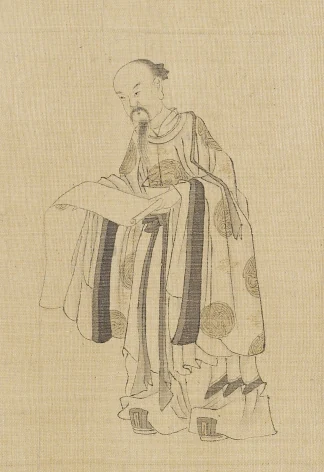
571 CE–649 CE
General
Li Jing
李靖
Li Jing (571–July 2, 649), courtesy name Yaoshi and in one account originally named Yaoshi, was from Sanyuan in Yong Prefecture, with ancestral origins in Didao County of Longxi Commandery. He belonged to the Danyang branch of the Longxi Li clan. An outstanding military strategist of the late Sui and early Tang, he was one of the Twenty-four Meritorious Officials of Lingyan Pavilion, was created Duke of Wei, and was commonly…
571 CE–649 CETang Dynasty
PROFILE
Li Jing (571–July 2, 649), courtesy name Yaoshi and in one account originally named Yaoshi, was from Sanyuan in Yong Prefecture, with ancestral origins in Didao County of Longxi Commandery. He belonged to the Danyang branch of the Longxi Li clan. An outstanding military strategist of the late Sui and early Tang, he was one of the Twenty-four Meritorious Officials of Lingyan Pavilion, was created Duke of Wei, and was commonly called “Duke Li of Wei.”
- Other name
- Duke of Wei
- Courtesy name
- Yaoshi
- Period
- Tang
- Date of Birth
- 571
- Date of Death
- July 2 649
- Dynasty / polity
- Tang Dynasty
- Identity
- General
- Ethnicity / group
- Not recorded in historical sources
- Native place
- Sanyuan, Yong Prefecture (present-day Sanyuan County, Shaanxi)
- Place of birth
- Not recorded in historical sources
- Major achievements
- Leading general of the early Tang; defeated the Eastern Turks and Tuyuhun; associated with Questions and Replies between Emperor Taizong of Tang and Duke Li of Wei
LIFE TIMELINE
Youth | Served as personnel officer of Chang'an County, then palace attendant and vice director in the carriage office; gained the appreciation of Yang Su and Niu Hong.
Middle age | Served as commandery assistant of Mayi, fought the Turks under Li Yuan, discovered Li Yuan's rebellious intentions, disguised himself as a prisoner in an attempt to report to Jiangdu, but was blocked at Chang'an.
Age forty-seven | Captured after Li Yuan took Chang'an; saved from execution after Li Shimin recognized his ability and summoned him into his staff.
Age fifty | Followed Li Shimin east against Wang Shichong; appointed to an opened-office rank for military merit.
Age fifty-one | Submitted ten strategies for destroying Xiao Xian; became campaign commander and chief secretary to Li Xiaogong; directed twelve commands down the Yangzi, took Jiangling in the tenth month, destroyed Xiao Xian's Southern Liang, and was made Supreme Pillar of State and Duke of Yongkang County.
Age fifty-three | Assisted Li Xiaogong in suppressing Fu Gongshi's rebellion.
Age fifty-five | Transferred north to resist Eastern Turkic invasions.
Age fifty-seven | Appointed Minister of Justice and granted a fief of 400 households.
Age fifty-eight | Concurrently served as acting Secretariat Director.
Age fifty-nine | Became Minister of War and in the eleventh month commander-in-chief of the Dingxiang Route, directing six armies against the Eastern Turks.
Age sixty | Made a night attack on Dingxiang, then struck the Yin Mountains, destroyed the Eastern Turks, captured Illig Qaghan, became Right Vice Director of the Department of State Affairs, and was created Duke of Dai.
Age sixty-four | Retired because of a foot ailment but volunteered for service when Tuyuhun raided the frontier.
Age sixty-five | Became commander-in-chief of the Western Sea Route and defeated Tuyuhun; Murong Fuyun died and his son Murong Shun submitted to Tang.
Age sixty-seven | Recreated as Duke of Wei.
Age seventy-three | Listed among the Twenty-four Meritorious Officials of Lingyan Pavilion.
Age seventy-five | Joined Emperor Taizong's campaign against Goguryeo but, seriously ill at Xiang Prefecture, could not continue.
Age seventy-nine | Died; posthumously appointed Minister over the Masses and Area Commander of Bing Prefecture, granted the title Jingwu, and buried near Zhaoling.
BIOGRAPHY
Biography
Family Background and Early Life
Li Jing was born in 571 into an official family at Sanyuan in Yong Prefecture. His family belonged to the Danyang branch of the Longxi Li clan. His grandfather Li Chongyi had served as Inspector of Yin Prefecture and Duke of Yongkang, while his father Li Quan served the Sui and rose to governor of Zhao Commandery. Li Jing was described as physically impressive and, through family influence, showed talent in both civil and military matters. He once told his father that a great man living under an enlightened ruler should establish achievements and seek wealth and honor rather than remain merely a bookish scholar.
His maternal uncle Han Qinhu was a celebrated Sui general who had led the conquest of Chen, entered Jiankang, and captured the Later Ruler of Chen. Whenever Han discussed military affairs with Li Jing, he reportedly applauded and said that Li was the only person with whom he could discuss the methods of Sun Wu and Wu Qi. The Old Book of Tang preserves this anecdote as evidence that his military talent was recognized early.
Li Jing first served as personnel officer of Chang'an County and later as palace attendant and vice director in the carriage office. Though his posts were low, his abilities became known among Sui grandees. Niu Hong, Minister of Personnel, praised him as having the talent to assist a ruler; Yang Su similarly predicted that Li would eventually occupy a high ministerial seat.
The End of the Sui and Joining the Tang
Late in the Daye era, Li Jing served as commandery assistant of Mayi and fought the Turks under Li Yuan. Rebellions were spreading across the empire: Dou Jiande in Hebei, Zhai Rang and Li Mi in Henan, and Du Fuwei and Fu Gongshi in the Jiang-Huai region. Li Yuan, then stationed at Taiyuan, secretly recruited troops. Li Jing discovered his intentions, disguised himself as a prisoner, and attempted to travel to Jiangdu to report to Emperor Yang, but disorder around Chang'an blocked the route.
Soon Li Yuan rose at Taiyuan and captured Chang'an. Li Jing was taken prisoner and was about to be executed when he protested that Li Yuan had raised a righteous army to eliminate disorder and should not kill a brave man out of private resentment before completing the greater task. Li Yuan admired his words and Li Shimin valued his ability and courage, so he was spared and soon entered Li Shimin's staff.
Defeat of Xiao Xian and Fu Gongshi
After the Tang was founded in 618, Li Jing followed Li Shimin east in 620 against Wang Shichong and received an opened-office rank for his service. At the same time Xiao Xian's Southern Liang regime at Jiangling threatened Tang territory in the Yangzi gorges. Li Jing was sent toward Kui Prefecture. Passing Jin Prefecture, he helped Prince Li Yuan defeat a large non-Han force under Deng Shiluo, reversing earlier defeats.
Li was delayed again because Xiao Xian controlled the passes. Li Yuan misread the delay as negligence and secretly ordered Xu Shao to execute him. Xu Shao valued Li's talent and interceded, saving him. Soon the local leader Ran Zhaozhe rebelled and attacked Kui Prefecture. After Li Xiaogong suffered defeat, Li Jing led 800 soldiers in a surprise assault, defeated the rebels, ambushed and killed Ran, and captured more than 5,000 people. Li Yuan then acknowledged that Li Jing had demonstrated his worth and declared that past suspicions would not be pursued.
In 621 Li Jing submitted ten strategies for destroying Xiao Xian. Li Yuan appointed Li Xiaogong commander at Kui Prefecture and made Li Jing campaign commander and chief secretary. Because Li Xiaogong lacked extensive military experience, Li Yuan effectively entrusted Li Jing with the army. Li organized shipbuilding and naval training and advised bringing the sons of tribal chiefs in Ba and Shu to Kui Prefecture, granting posts according to ability while in practice holding them as political guarantees, helping stabilize the newly submitted region.
In the autumn rains of 621 the Yangzi rose sharply. Xiao Xian assumed that the flood and dangerous Three Gorges would prevent a Tang advance and relaxed preparations. Many Tang officers also wanted to wait. Li Jing argued that speed was essential: the army had only just assembled and Xiao Xian did not yet know it; descending with the flood and appearing suddenly before Jiangling would produce the effect of thunder before ears could be covered. Li Xiaogong accepted the plan. More than 2,000 warships moved rapidly downstream, taking Jingmen and Yidu and reaching Yiling.
Xiao Xian's general Wen Shihong led tens of thousands near the Qing River. Li Jing advised waiting until the enemy's edge was blunted, but Li Xiaogong attacked immediately and was defeated. Wen's soldiers then scattered to plunder; seeing their formation dissolve, Li Jing counterattacked, killing or drowning nearly 10,000 and taking more than 400 ships.
Li Jing next led 5,000 light cavalry toward Jiangling, defeated Yang Junmao and Zheng Wenxiu, captured the outer city and water defenses, and seized many vessels. Li Xiaogong had the captured ships released downstream. Li Jing explained that Tang forces were deep in enemy territory and could be trapped if relief armies arrived before Jiangling fell; drifting abandoned ships would make those relief forces think the capital had already been captured and delay them. The deception worked, and downstream reinforcements hesitated.
Xiao Xian, isolated and without relief, surrendered. Li Jing imposed strict discipline and forbade plunder. When other commanders proposed confiscating the property of Xiao's generals to reward Tang troops, Li argued that an army claiming royal authority should pacify the people and punish only guilt, that ordinary inhabitants had been driven into war, and that confiscating surrendered families would encourage other cities to resist to the death. The lenient policy won support, and territories along the Yangzi and Han rivers submitted. Reinforcements numbering over 100,000 arrived only after Xiao Xian's surrender and also laid down their arms after hearing of Tang leniency. The campaign had destroyed the largest southern separatist regime in two months. Li Jing was made Supreme Pillar of State and Duke of Yongkang County and received rich rewards.
Destruction of the Eastern Turks
The Eastern Turks were the Tang's greatest early frontier threat. From 625 Li Jing served on the northern frontier. In 627 he became Minister of Justice; in 628 acting Secretariat Director; and in 629 Minister of War.
In the eleventh month of 629, Emperor Taizong appointed him commander-in-chief of the Dingxiang Route over six armies against the Eastern Turks. In January 630 Li Jing led 3,000 elite cavalry in a night attack on Dingxiang, where Illig Qaghan had his headquarters. The qaghan withdrew north to the Iron Mountains. Li pursued, then used 10,000 elite soldiers in another night attack toward the Yin Mountains. Princess Yicheng was killed and Illig Qaghan captured, bringing the Eastern Turkic polity under Tang control. Emperor Taizong compared the victory to Li Ling's ancient expedition, praising Li Jing for penetrating the enemy court with only 3,000 light cavalry and recovering Dingxiang. Li was created Duke of Dai. The campaign is presented as the pinnacle of his military career.
Defeat of Tuyuhun and Later Years
In 634 Murong Fuyun of Tuyuhun raided the northwest. Though Li Jing had retired because of a foot ailment, he volunteered. Emperor Taizong appointed him commander-in-chief of the Western Sea Route over Tang and allied troops. Murong Fuyun burned grasslands to deny forage. Li Jing accepted Hou Junji's proposal to divide the army: Li himself led Li Daliang and others by the northern route to cut the road toward the Qilian Mountains and turn toward Fusi City west of Qinghai Lake, while Li Daozong and others pursued the southern route. The southern army crossed more than 2,000 li of empty territory and crushed Tuyuhun forces at Wuhai. In 635 Li Jing pursued toward Jishi Mountain and Qiemo, repeatedly defeating the enemy. Fuyun's followers killed him, and his son Murong Shun killed the Tianzhu Prince and submitted to Tang with his people. In 637 Li Jing was created Duke of Wei.
In old age Li Jing was often ill, stayed at home, and avoided politics. He was listed among the Twenty-four Meritorious Officials of Lingyan Pavilion in 643. During Emperor Taizong's 645 campaign against Goguryeo, he initially declined because of illness but agreed after the emperor cited the example of Sima Yi; he could not advance beyond Xiang Prefecture because his condition worsened. In 647 he again volunteered to command against Goguryeo, but the emperor refused because of his age.
Li Jing died in 649 at age seventy-nine. He was posthumously appointed Minister over the Masses and Area Commander of Bing Prefecture, given the title Jingwu, and buried near Zhaoling. His tomb was designed, by analogy with those of Wei Qing and Huo Qubing, to resemble the Iron and Jishi mountains in recognition of his victories.
His Family and Early Years
Li Jing, courtesy name Yaoshi, was a man of Sanyuan in Yongzhou, of the Danyang branch of the Li of Longxi. His grandfather Li Chongyi had been inspector of Yinzhou under the Northern Wei and duke of Yongkang, and his father Li Quan governor of Zhaojun under the Sui. By the Old History of Tang he was of noble appearance and great stature, and from youth had both civil and military capacity, and would say to those close to him that a great man who met the right lord and the right time must establish merit and accomplish deeds to win wealth and honour. His uncle Han Qinhu, famed as a general, whenever he discussed war with him never failed to approve, and stroking him said that the only man with whom one could discuss the arts of Sun Wu was this one. He first served the Sui as an officer of Chang'an county and afterwards as a vice-director of the carriage office, and the president of the left Yang Su and the minister of personnel Niu Hong both thought well of him, Yang Su once striking his own couch and telling Li Jing that he would in the end sit there. In the last years of Daye he rose to be assistant of Mayi commandery; and when the founder of Tang was attacking the Turks beyond the frontier, Li Jing, perceiving that he had designs upon the realm, had himself bound and sent up a report of the matter, meaning to go to Jiangdu, but reaching Chang'an the roads were blocked and he stopped. The founder taking the capital had him seized to be beheaded, and Li Jing cried out that the duke had raised the righteous host to rid the realm of tyranny and would he fail of the great work by beheading a brave man for a private grudge; and the founder admiring his words and Taizong urging it earnestly, he was spared, and Taizong presently called him into his staff.
The Pacification of Xiao Xian
In the third year of Wude, 620, he followed the campaign against Wang Shichong and was made a founding officer for his merit. Xiao Xian then holding Jingzhou, Li Jing was sent to bring him to order; and riding light to Jinzhou he met several tens of thousands of barbarian rebels gathered in the valleys, against whom the prince of Lujiang, Li Yuan, had fought and been beaten several times, and Li Jing with Li Yuan laid plans against them and took much. Reaching Xiazhou he was checked by Xiao Xian and could not advance for long, and the founder, angry at his delay, secretly ordered the governor of Xiazhou, Xu Shao, to behead him; but Xu Shao, prizing his ability, pleaded for him and he escaped. Just then the barbarian chief of Kaizhou, Ran Zeze, rebelled and raided Kuizhou, and the prince of Zhao commandery, Li Xiaogong, fighting him was worsted; but Li Jing with eight hundred men raided and broke his camp, and afterwards laid ambush at a strongpoint and killed Ran Zeze in the field, taking more than five thousand. The founder was much pleased and told his ministers that he had heard that to employ a man of merit was less useful than to employ one who had erred, and that Li Jing had indeed shown his worth; and he sent down a sealed letter praising his wholehearted effort and the special excellence of his service, and a private rescript saying that bygones were bygones and that he had long forgotten the old matter. In the first month of the fourth year of Wude, 621, Li Jing, weighing the situation of both sides, submitted ten measures for the destruction of Xiao Xian; and in the second month the founder made Li Xiaogong commissioner of Kuizhou and raised Li Jing to be commissioner of the marching army and acting senior secretary to Li Xiaogong, and, holding Li Xiaogong unversed in war, gave the command of the three armies wholly to Li Jing, who was thus in effect their commander. He had ships built with all the men and means he could gather and trained his troops in fighting on water; and seeing that Ba and Shu had but lately come over and the tribes were unsettled, he persuaded Li Xiaogong to summon the sons and younger brothers of the tribal chiefs to Kuizhou and give them office according to their ability, keeping them about him, ostensibly to promote them but in truth as hostages, which steadied the government of Ba and Shu. In the ninth month the troops were gathered at Kuizhou, and the autumn rains having swollen the river, Xiao Xian, supposing that with such a flood and the dangers of the Three Gorges the Tang could not come down, rested his soldiers and took no precautions, while the Tang generals too were mostly in awe of the river and asked to wait for the water to fall; but Li Jing overrode them all, saying that in war speed was precious and the moment not to be lost, that the army had only just gathered and Xiao Xian did not yet know of it, so that if they took the flood and went down with the current they would appear before his city as a thunderclap before the ear could be stopped, which was the strategist's best course; and that even if he learned of it, he could not raise troops in haste enough to meet them, so that he must be taken. Li Xiaogong followed his counsel and went down the gorges with more than two thousand warships; and Xiao Xian being wholly unprepared, the Tang took his two garrison towns of Jingmen and Yidu and came to Yiling. There Xiao Xian's bold general Wen Shihong lay with several tens of thousands of picked troops at Qingjiang, and Li Xiaogong on the arrival of the main army wished to attack him; but Li Jing advised that Wen Shihong was Xiao Xian's strong general with keen soldiers, that having just lost Jingmen he had brought out all his troops to fight, which was an army retrieved from defeat and not to be withstood, and that they should moor on the south bank and not contend with his edge but wait until his spirit failed and then strike, when he must be broken. Li Xiaogong would not follow him, left Li Jing to hold the camp and led the troops out himself, and was indeed heavily defeated and fled to the south bank. Wen Shihong, having won, let his troops scatter to plunder, and Li Jing, seeing their ranks disordered, at once led the Tang troops out and broke them, taking or drowning nearly ten thousand and capturing more than four hundred of their ships. Having taken Yiling, Li Jing rode hard with five thousand light horse as van straight for Jiangling, the capital of the Liang, with Li Xiaogong following with the main army; and he defeated Xiao Xian's bold generals Yang Junmao and Zheng Wenxiu, took more than four thousand armored men and carried the outer city, and then the water city, taking many ships, which he had scattered on the river to drift downstream. His generals, puzzled, asked why captured ships, fit for their own use, should be thrown away to help the enemy; and Li Jing answered that Xiao Xian's land stretched south beyond the mountains and east to Dongting, and that with their army deep in hostile country, if the city were not taken and relief came from every side, they would be beset front and rear with no way out, and of what use would ships be then; but that abandoning them to choke the river, the relieving troops would see them and think Jiangling taken and not dare come on, and while they spied and hesitated a month would pass and the city must fall. The ruse worked: the relief troops downstream, seeing the abandoned ships everywhere on the river, thought Jiangling had fallen and hung back in fear. The Tang invested Jiangling closely, and Xiao Xian, cut off within and without with no relief and no strength to hold, opened the gates and surrendered; and Li Jing entering the city kept strict order and took nothing. His generals then holding that Xiao Xian's officers who had resisted the imperial army were gravely guilty, proposed to confiscate their households to reward the troops; and Li Jing at once forbade it, saying that the army of a king exists to comfort the people and punish the guilty, that the people had been driven into war and had not wished to resist, and that a dog barks at any man not his master, so that those who died for Xiao Xian could not be classed with rebels, which was why Kuai Tong had escaped death under the founder of Han; and that Jing and Ying being newly settled, they should show magnanimity to comfort men far and near, and that to confiscate the property of those who had surrendered would not be the way to save men from fire and water, and would only make the enemy commanders elsewhere hold out to the death. His conduct won men's hearts, and the lands of the Jiang and Han came over one after another; and a few days after Xiao Xian's surrender more than a hundred thousand relieving troops arrived and, hearing that he had surrendered and that the Tang had dealt generously, laid down their arms. The war hardly over, the founder raised Li Jing to be acting inspector of Jingzhou and sent him to pacify the prefectures of Lingnan, with leave to grant office on his own authority.
The Pacification of Lingnan and the Defeat of Fu Gongshi
Li Jing crossed the mountains to Guizhou and sent men by various roads to win over the people, and the great chiefs Feng Ang, Li Guangdu and Ning Zhenchang all sent their sons and brothers to him, and he gave them office on his own authority; and so he brought in ninety-six prefectures with more than six hundred thousand households, and was praised by edict and made commissioner of consolation of Lingnan and acting controller of Guizhou. Holding that the south was remote from the court and had received no favour from it since the disorders of the late Sui, and that unless it were led by rites and music and at the same time shown the awe of arms its customs could not be changed, he led his troops south from Guizhou on a progress, and wherever he passed he himself "comforted the elders and asked after their hardships," so that the people supported him, near and far were pleased and submitted, and society was settled. When Fu Gongshi, taking advantage of Du Fuwei's going to court, seized Danyang and rose against the Tang, the founder made Li Xiaogong commander and Li Jing his deputy, with Li Ji and seven other commissioners under them. Fu Gongshi sent his general Feng Huiliang with thirty thousand sailors to hold Dangtu and Chen Zhengdao with twenty thousand foot and horse to hold Qinglin, stretching iron chains across the Yangzi at Liangshan to block the waterway and building a crescent wall more than ten li long in support. Li Xiaogong called his generals to council, and they all said that Feng Huiliang and Chen Zhengdao, holding strong forces with the design of not fighting and their walls and stockades firm, could not be taken at once, and that it were better to go straight for Danyang and fall upon Fu Gongshi's lair, for once Danyang fell Feng Huiliang would surrender of himself; and Li Xiaogong was inclined to follow them. But Li Jing analysed the enemy's position sharply, saying that though Fu Gongshi's picked troops were in the two armies of land and water, the troops he commanded himself were also strong; that if Feng Huiliang's stockades could not yet be taken, Fu Gongshi holding Shitou city could not be lightly plucked either; that if their army reached Danyang and stayed a month, neither could Fu Gongshi be destroyed nor Feng Huiliang be left behind, so that they would be beset front and rear and the plan would not be whole; that Feng Huiliang and Chen Zhengdao were veteran rebels of a hundred battles who would not fear a battle in the field, and only held back because Fu Gongshi had ordered them to be cautious and to wear the Tang army out without fighting; and that to attack their stockades now would take them unawares, and that the moment to destroy the rebels was in this one stroke. Li Xiaogong agreed, and Li Jing with Huang Junhan and others attacked Feng Huiliang first and after hard fighting broke him, with more than ten thousand killed or drowned while Feng Huiliang fled. Li Jing with light troops reached Danyang first, at which Fu Gongshi was greatly afraid; he had first sent his false general Zuo Youxian to hold Kuaiji in support, and Fu Gongshi fled east with his troops to join him, and reaching Wujun Fu Gongshi, Feng Huiliang and Chen Zhengdao were taken one after another and the south of the Yangzi was wholly pacified. Thereupon a travelling office of the southeast was set up and Li Jing made its minister of war, with a thousand pieces of silk, a hundred slaves and a hundred horses; and when the office was abolished that year he became acting senior secretary of the Yangzhou governor-general's office. Danyang, long afflicted by war and its people reduced, was steadied by him, and Wu and Chu were at peace. The founder would say that Li Jing was the mortal disease of Xiao Xian and Fu Gongshi, and that the famous generals of old, Han Xin, Bai Qi, Wei Qing and Huo Qubing, could not compare with him.
His Campaigns against the Turks
In the eighth year of Wude, 625, the Turk Moheduo she raided the frontier and Li Jing was made commissioner of the Lingzhou road; and when the Qaghan Xieli entered Jingyang, Li Jing marched by double stages to Binzhou to cut off his retreat, after which a marriage alliance with the barbarians ended the matter. On Taizong's accession his favour increased, and he was made minister of justice and took part in the government. Afterwards the Turkish tribes falling apart and the court resolving on advance, Li Jing was made commissioner of the Daizhou road and led three thousand picked horse out of Mayi by surprise straight to the Eyangling to press them. The Qaghan Tuli, not expecting Li Jing and seeing the imperial troops suddenly upon him, was greatly afraid and said to one another that unless the Tang had come out with all their strength Li Jing would never have come alone so deep, and they were startled several times a day. Li Jing, learning of it, secretly sent agents to divide his confidants, and his close follower Kang Sumi came over. In the fourth year of Zhenguan, 630, Li Jing attacked and broke Dingxiang, taking Yang Zhengdao, son of the Sui prince of Qi, Yang Jian, and the Sui emperor Yangdi's empress Xiao and sending them to the capital, while the Qaghan barely escaped with his life; and for this Li Jing was enfeoffed as duke of Dai with six hundred pieces of silk and famous horses and precious vessels. Taizong once told him that Li Ling with five thousand foot had not escaped capture by the Xiongnu and yet was written in the records, whereas he with three thousand light horse had gone deep into the barbarian court and recovered Dingxiang, shaking the northern barbarians as none had done in ancient or modern times, enough to wipe out the shame of the Wei river of former years. After Dingxiang the Qaghan Xieli in great fear fell back on Tieshan and sent envoys to apologise and ask to bring his whole realm to submit; and Li Jing was made commissioner of the Dingxiang road to go and receive him, though Xieli, while professing to come to court, secretly hesitated. In the second month of that year Taizong sent the master of ceremonies Tang Jian and the general An Xiuren to reassure him; and Li Jing, guessing his mind, told the general Zhang Gongjin that when the imperial envoy arrived the barbarians would relax, and so chose ten thousand picked horse with twenty days' grain and marched to attack by the Baidao. Zhang Gongjin said that the emperor had granted his surrender and that the envoy was there and they should not attack; and Li Jing answered that this was the moment of war and not to be lost, and that it was thus that Han Xin had broken Qi, and that men like Tang Jian were not worth sparing. He urged the army on; and reaching the Yin mountains they met more than a thousand tents of his scouts and took them all along with the army. Xieli, delighted at the envoy, had no fear of the imperial troops, and only when Li Jing's army was within fifteen li of his tent did the barbarians perceive it; and Xieli in fear of his majesty fled first, so that his troops broke up. Li Jing took more than ten thousand heads and more than a hundred thousand men and women, killed Xieli's wife the Sui princess Yicheng, and pursued Xieli himself, who riding a swift horse meant to flee to the Tuyuhun but was taken by the commissioner of the western road Zhang Baoxiang and sent up, while presently the Qaghan Tuli came over, so that the lands of Dingxiang and Chang'an were recovered and "the frontier was extended from north of the Yin mountains to the great desert." The Turks had been the strongest power of the northwest since the Sui, and the destruction of the eastern Turks by Li Jing and others not only removed the danger from the Tang's northwestern frontier but wiped out the shame of the founder's and Taizong's submission to them; and the Tang's territory being greatly extended, Taizong said with feeling that he had heard that when the lord grieves the minister should feel shame and when the lord is shamed the minister should die, that at the founding of the dynasty the retired emperor had for the people's sake called himself the Turk's vassal, at which he had ever been sick at heart, resolving to destroy the Xiongnu and unable to sit at ease or eat with relish, and that now with a small part of the army put in motion they had won everywhere, the shanyu had come to the frontier, and the shame was wiped out; and he proclaimed a general amnesty and five days of feasting. Afterwards the censor-in-chief Wen Yanbo, envying his merit, slandered him for want of discipline in his army so that rare treasures from the barbarians were scattered among the soldiers, and Taizong reproved him and Li Jing bowed his head in apology; but after a time Taizong told him that men had formerly slandered him and that he now understood, and that he should not take it to heart, giving him two thousand bolts of silk and making him vice-director of the right of the secretariat. Li Jing was of a deep and quiet nature, and in council with the chief ministers of the time he was "modest as one who cannot speak."
The Destruction of the Tuyuhun, His Last Years and His Death
In the tenth month of the eighth year of Zhenguan, 634, Li Jing was made commissioner of the capital region, one of thirteen special envoys to tour the realm and examine its reputation; and soon after he resigned on the ground of a foot ailment, his memorial being most earnest. Taizong, understanding his mind and much admiring the act, sent the vice-president of the secretariat Cen Wenben to tell him that in all history few indeed were those who, being rich and noble, knew when to stop, that wise and foolish alike could not know themselves and would cling to office though unfit and force themselves though ill, and that Li Jing's grasp of the great whole was deeply to be commended, and that he would not merely grant his wish but make him a model for a generation; and he issued a gracious edict giving him the rank of specially advanced, with leave to nurse himself at home, a thousand pieces of silk, two horses from the imperial stables and a staff of longevity for his foot, and the right to attend the chancery and the secretariat every few days for the discussion of government when his illness should be a little better. Before long the Tuyuhun raided the frontier and Taizong said to his attendants that it would be well indeed to have Li Jing for commander; and Li Jing went to Fang Xuanling and said that though old he could still make one campaign, at which Taizong in great joy made him commander-in-chief of the western sea road, with the minister of war, the prince of Rencheng Li Daozong, the governor of Liangzhou Li Daliang, the general of the right guard Li Daoyan and the inspector of Lizhou Gao Zengsheng under him. Li Jing setting out in the depth of winter tramped through ice and snow, eating in the open and sleeping rough. In the intercalary fourth month of the next year the Tang fought the Tuyuhun at Kushan and Li Daozong heavily defeated them, the first victory of the campaign. The Tuyuhun qaghan, falling back west, had the grass burnt to deny fodder to the Tang horses; and the dry grass being burnt and the spring grass not yet up, the generals mostly held that the horses were too lean for a long pursuit, but Hou Junji held that the Tuyuhun were scattered like rats and birds with no scouts left and their lord and ministers parted, father and son separated, and might be taken as easily as picking up a mustard seed, and that not to seize the chance would be repented afterwards; and Li Jing agreeing wholly, they divided the army in two. Li Jing's own northern column went well: his officer Xue Gu'er beat the Tuyuhun at Mantou mountain and killed a famous prince, using the captured cattle and sheep for food, and then Li Jing's main force heavily defeated them twice at Niuxindui and Chishuiyuan, while Hou Junji and Li Daozong with the southern column went more than two thousand li into the desert and, overcoming every hardship, came up with them in the fifth month at Wuhai. Afterwards the Tuyuhun killed their qaghan and came over, and Li Jing set up the prince of Daning, Murong Shun, and returned; and to hold the old Tuyuhun lands the Tang enfeoffed Murong Shun as prince of Xiping and left Li Daliang to help in its defence. In the campaign Li Jing's commissioner of the Yanze road, Gao Zengsheng, had failed to arrive in time and been reproved by him, and resenting it he afterwards, with the senior secretary of the Guangzhou governor-general's office Tang Fengyi, accused Li Jing of treason; and Taizong had the judges try the case, when Gao Zengsheng and the rest were found guilty of false accusation. From this time Li Jing "shut his gates and kept himself, cutting off his guests, so that even his kin could not come in without cause." In the eighteenth year of Zhenguan, 644, Taizong visited his house to ask after his illness, gave him five hundred bolts of silk and raised him to be duke of Wei with the rank of opening office of the same three divisions; and about to march against Liaodong, he summoned Li Jing into the pavilion, gave him a seat before him and asked how it was that he had pacified Wu and Gui in the south, cleared the desert of the Turks in the north and settled Murong in the west, and only in the east was Koguryo unsubdued. Li Jing, though ill and over seventy, said he would go with the army, that he had by the emperor's majesty done some small service and that now in his last years and with his bones rotten he wished for this campaign, and that if the emperor did not reject him his old servant's illness would be cured; but Taizong, pitying his weakness and age, would not allow it. In the twenty-third year of Zhenguan, 649, Li Jing's illness worsened and Taizong, himself gravely ill, came to his sickbed and, seeing him failing, wept and said that Li Jing was his lifelong friend and had laboured for the state, and that his illness grieved him. In the fifth month of that year Li Jing died at seventy-nine, and was given by patent the posts of minister of education and commander of Bingzhou, with a guard of forty swordsmen, plumed canopies and drums, and was buried beside the Zhaoling with the posthumous name Jingwu; his son Li Dejian succeeded him.
Major Activities
Military Contributions
Li Jing is presented as the outstanding commander of the early Tang. His principal achievements included:
Defeat of Xiao Xian (621): submitted ten strategies, effectively directed the army, used the autumn flood to descend rapidly with more than 2,000 warships, and destroyed Southern Liang within two months.
Suppression of Fu Gongshi (623): assisted Li Xiaogong in suppressing Fu Gongshi's rebellion in the south.
Destruction of the Eastern Turks (630): directed six armies, struck Dingxiang at night with 3,000 elite cavalry, then attacked the Yin Mountains with 10,000, captured Illig Qaghan, and ended the Eastern Turkic threat on the northern frontier.
Defeat of Tuyuhun (635): volunteered despite illness, commanded the Western Sea Route, divided the army for a deep pursuit of more than 2,000 li, defeated Murong Fuyun, and forced Tuyuhun's submission.
Military Writings
Works attributed to Li Jing include Military Methods of Duke Li of Wei and Mirror of Li Jing's Six Armies, both lost. The extant Questions and Replies between Emperor Taizong of Tang and Duke Li of Wei presents military discussions between Li Jing and Emperor Taizong and was included among the Seven Military Classics. Its authorship has long been disputed, and many scholars regard it as a later work attributed to Li Jing, possibly associated with the Song scholar Ruan Yi; this uncertainty should be kept in mind.
Political Activity
Li Jing also held civil office. He became Minister of Justice in 627, acting Secretariat Director in 628, Minister of War in 629, and Right Vice Director of the Department of State Affairs after the Eastern Turkic victory, thereby serving as a Grand Councilor. In old age he avoided political involvement and largely preserved his reputation.
Travels and Campaign Geography
His military career stretched across an unusually broad geography: from Mayi in Shanxi to Jiangling in Hubei, from the Yin Mountains in Inner Mongolia to Jishi Mountain in Qinghai, from Dingxiang in Shanxi to Qiemo in Xinjiang.
His Military Thought
Li Jing had both civil and military talent and fought bravely for the unification and security of the Tang, and he also summed up his experience of commanding and fighting so as to enrich and develop Chinese military thought. He held that only with preparation in quiet times could a commander meet the moment and stand unbroken, saying that if troops were unprepared they could not answer a sudden call, and that failing to answer they would lose the moment, and losing the moment fall behind events, and falling behind events would not win but be destroyed. On the plan of victory he said that it lay in weighing the ability of one's generals, examining the strength or weakness of the enemy, judging the shape of the ground and watching what the time allows, so as to win first and then fight and hold the ground without loss; and that a general who fought without plan was no better than one who drove the people into boiling water and fire or drove sheep and cattle to feed wolves and tigers. On attack and defence he held that "attack is the moment of defence and defence the plan of attack, both ending in victory," revealing their mutual relation, and set out the rule that each is fitting according to circumstance and the strategy of a prolonged defence: that though the nature of war is speed, to take the enemy unawares, yet when the enemy's generals are full of stratagem, his troops united, his orders obeyed, his weapons good and his spirit keen and stern, then one should hide one's traces and keep silent, store up fullness and wait for his exhaustion, avoid his edge and hold out long. From the experience of his time he set out systematically and dialectically the doctrine of the regular and the extraordinary, whose essence is their mutual transformation: a commander who knows only the regular or only the extraordinary is not the best, and only he who has both is a good general of the state; and to have both one must know how to use their transformation in practice, showing forms to discover the enemy's weakness and adapting to circumstance, and disposing one's forces according to the enemy's real state, so that "there is nothing not regular and nothing not extraordinary, and the enemy cannot fathom it," and one wins whether by the regular or by the extraordinary. He was also ordered to teach the art of war to Hou Junji, who memorialised that Li Jing meant to rebel since at the subtlest points he would not teach him; and being reproved by Taizong, Li Jing answered that it was Hou Junji who would rebel, for with China at peace what he had taught was enough to keep the four barbarians in order, and that a man who sought all his art had other designs. And afterwards, seeing Hou Junji ride past the gate of the secretariat several paces without noticing, he said to others that Hou Junji's mind was not on men and that he would surely rebel; and in the seventeenth year of Zhenguan Hou Junji did indeed plot with the heir apparent Chengqian and was put to death.
His Worship in Later Ages and His Place in Literature
Li Jing was enfeoffed in his lifetime as duke of Wei and known as Duke Li of Wei; in the seventeenth year of Zhenguan, 643, he was named among the twenty-four meritorious ministers of the Lingyan pavilion, and under Emperor Suzong he was given a place in the temple of the martial king among the ten philosophers. From the late Tang he was gradually made a god, becoming the Pagoda-Bearing Heavenly King of popular belief; and the people of Danyang, grateful for his steadiness after the defeat of Fu Gongshi, built him a shrine, which was given the name Renji in the third year of Chongning of the Song, 1104, and the people worshipped him with care, taking him for their protecting spirit and calling him the Falling Stone King. His mansion stood at Donglibao village in Luqiao town five kilometres north of Sanyuan, covering forty-eight mu, with a study hall, a pavilion of subtle fragrance, a tower for watching the harvest, a cloud-hanging tower, a clear overflow pavilion, an octagonal kiosk, rockeries, fish ponds, a stone boat and a lotus pool. In literature he is one of the chief figures of the Tang tale of the Curly-Bearded Guest, in which the guest, who had meant to contend for the realm, seeing that Li Shimin was no common man and could not be matched, gave his wealth to Li Jing to help him assist Li Shimin to the work, and afterwards went to Fuyu and made himself its king; the Red Whisk girl and the Curly-Bearded Guest being both inventions, the tale's purpose being to show Li Shimin as the destined sovereign, while its portrayal of character is brilliant and its writing delicate and vivid, among the best of the Tang tales.
Personal Relations
- Grandfather: Li Chongyi, inspector of several Northern Zhou prefectures and Duke Wei of Yongkang
- Father: Li Quan, Sui Grandee of Opened Office with the Rank of the Three Excellencies, governor of Zhao Commandery, commander of the Dingxiang Route, and Duke Xiang of Yongkang
- Mother: Lady Han of Henan, daughter of the Northern Zhou general Han Xiong and sister of the Sui general Han Qinhu
- Maternal uncle: Han Qinhu, Sui general and leading commander in the conquest of Chen; early admirer of Li Jing's military ability
- Elder brother: Li Duan, courtesy name Yaowang, Sui general and Duke of Yongkang
- Younger brother: Li Keshi, Tang general of the guards, area commander of You Prefecture, and Duke of Danyang Commandery
- Sons: Li Dejian, Tang official and successor as Duke of Wei; Li Dejiang, inspector of Yan Prefecture and Duke of Wei
- Wife: Zhang Chuchen, the “Red Whisk Woman,” appears only in the Tang tale Biography of the Curly-Bearded Guest and is not recorded in official history; treated as fictional in this text
- Han Qinhu: maternal uncle and early military mentor, who praised Li Jing as someone with whom one could discuss the methods of Sun Wu and Wu Qi
- Yang Su: major Sui statesman who recognized Li Jing's ability
- Niu Hong: Sui Minister of Personnel who praised Li Jing as having the talent to assist a ruler
- Li Yuan, Emperor Gaozu of Tang: moved from intending to execute Li Jing to trusting and employing him
- Li Shimin, Emperor Taizong of Tang: saved Li Jing from execution and entrusted him with major commands
- Li Xiaogong: imperial prince and commander whom Li Jing long assisted; Li Yuan effectively entrusted military direction to Li Jing
- Li Ji: fellow early Tang general and member of the Lingyan Pavilion group
- Hou Junji: learned military matters from Li Jing and later served under him in the Tuyuhun campaign; eventually executed for involvement in a crown prince's rebellion
- Xu Shao: Inspector of Xia Prefecture who interceded to save Li Jing from execution
Historical Assessment
Tang and Contemporary Assessments
- Emperor Taizong praised Li Jing for defeating the Eastern Turks with only 3,000 light cavalry and said such an achievement was unparalleled in ancient and modern times. (Old Book of Tang, biography of Li Jing)
- Emperor Gaozu remarked that employing someone who had erred could produce great service and said Li Jing had indeed proved his effectiveness. (Old Book of Tang)
- Under Emperor Suzong, Li Jing was enshrined in the Temple of King Wucheng among the Ten Worthies alongside Zhang Liang, Sun Wu, Wu Qi, Han Xin, Zhuge Liang, and others.
Song and Yuan Periods
- The Old Book of Tang historical appraisal compared Li Jing's strategic and administrative talents favorably with celebrated generals of antiquity.
- Su Shi wrote that Li Jing of Tang and Cao Bin of Song both knew how to recognize danger in advance and avoid disaster.
- The inclusion of Questions and Replies between Emperor Taizong and Duke Li of Wei among the Seven Military Classics, despite disputed authorship, reflects the high value placed on Li Jing's military thought in the Song.
Ming and Qing Periods
- Gu Zuyu's Essentials of Historical Geography repeatedly analyzed Li Jing's campaigns against Xiao Xian and the Eastern Turks and described his generalship as extraordinary.
- Wang Fuzhi in Du Tongjian Lun argued that Li Jing combined civil and military talent and was capable of more than battlefield command alone.
Modern Period
- The source text records Mao Zedong as praising Li Jing as the most capable early Tang general and commending the Eastern Turkic campaign.
- Ray Huang, in China: A Macro History as cited in the source text, regarded Li Jing as one of the outstanding cavalry commanders of Chinese history.
- Fu Lecheng's General History of China describes him as an extraordinarily skillful commander and the foremost general of the early Tang.
FIGURES ASSOCIATED WITH THIS DYNASTY
Bibliography
- Old Book of Tang, vol. 67, Biography 17, “Li Jing”
- New Book of Tang, vol. 93, Biography 18, “Li Jing”