Birth | Born
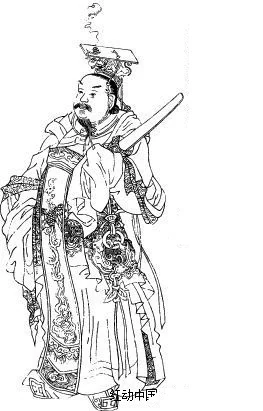
591 CE–640 CE
General
Li Xiaogong
李孝恭
Li Xiaogong (591–June 2, 640), a native of Chengji in Longxi (present-day Qin'an County, Tianshui, Gansu), was an imperial kinsman and prominent general of the Tang dynasty and one of the Twenty-four Meritorious Officials of Lingyan Pavilion. He was a clan nephew of Emperor Gaozu of Tang (Li Yuan), a son of the Sui general Li An, and the younger brother of Li Chen, Prince of Xiangwu Commandery. Li Xiaogong played an important…
591 CE–640 CETang Dynasty
PROFILE
Li Xiaogong (591–June 2, 640), a native of Chengji in Longxi (present-day Qin'an County, Tianshui, Gansu), was an imperial kinsman and prominent general of the Tang dynasty and one of the Twenty-four Meritorious Officials of Lingyan Pavilion. He was a clan nephew of Emperor Gaozu of Tang (Li Yuan), a son of the Sui general Li An, and the younger brother of Li Chen, Prince of Xiangwu Commandery. Li Xiaogong played an important role in the wars that unified the early Tang, campaigning in Bashu, pacifying Jing and Xiang, securing the submission of Lingnan, and sweeping the Jiang-Huai region. He was one of the relatively few imperial kinsmen of the early Tang capable of commanding major operations independently.
- Other names
- Prince of Hejian Commandery (Prince of Zhao Commandery)
- Period
- Tang
- Date of Birth
- 591
- Date of Death
- June 2 640
- Dynasty / regime
- Tang
- Identity
- General
- Ethnicity / ethnic affiliation
- Not recorded in historical sources
- Native place
- Chengji, Longxi (present-day Qin'an County, Tianshui, Gansu)
- Place of birth
- Not recorded in historical sources
- Place of death
- Not recorded in historical sources
- Highest office
- See Biography and Major Deeds
- Major achievements
- A Tang imperial kinsman and leading general of the dynasty's early years; helped pacify Bashu and the southern territories, including the Liang regime of Xiao Xian.
LIFE TIMELINE
After Li Yuan captured Chang'an | After Li Yuan captured Chang'an, appointed Left Grand Master for Splendid Happiness and Commissioner for Pacification and Recruitment of the Shannan Circuit; secured the submission of more than thirty prefectures in Bashu and defeated Zhu Can
Appointed Area Commander of Xinzhou and proposed a plan to defeat Xiao Xian | Appointed Area Commander of Xinzhou and proposed a plan to defeat Xiao Xian
Advanced in title to Prince of Zhao Commandery | Advanced in title to Prince of Zhao Commandery; Xinzhou was renamed Kuizhou and he became Area Commander of Kuizhou; constructed warships and trained naval forces
Commanded the army that defeated Xiao Xian and pacified Jiangling | Commanded the army that defeated Xiao Xian and pacified Jiangling; appointed Grand Area Commander of Jingzhou; established military-agricultural colonies and copper works
Promoted to Left Vice Director of the Department of State Affairs in the Xiangzhou Branch | Promoted to Left Vice Director of the Department of State Affairs in the Xiangzhou Branch Department; sent envoys who secured the submission of forty-nine prefectures in Lingnan; after Fu Gongshi rebelled against the Tang, appointed field marshal to suppress him
Defeated Fu Gongshi | Defeated Fu Gongshi, pacified the south, and was appointed Grand Governor of Yangzhou
Granted a real fief of 1,200 households | Granted a real fief of 1,200 households
Transferred to Minister of the Ministry of Rites | Transferred to Minister of the Ministry of Rites, enfeoffed as Prince of Hejian Commandery, with the right to transmit a prefectural governorship hereditarily
Died suddenly of illness at the nominal age of fifty | Died suddenly of illness at the nominal age of fifty; posthumously granted the offices of Minister of Works and Governor of Yangzhou, given the posthumous name Yuan, and buried with honor at Xianling Mausoleum
BIOGRAPHY
Biography
Family Background and Early Years
Li Xiaogong was born into a core family of the Guanlong military aristocracy. His great-grandfather Li Hu was one of the Eight Pillars of Western Wei and held the title Duke of Tang. His grandfather Li Wei served under Northern Zhou as area commander of Shuozhou and inspector of Xiang, Yan, and Heng prefectures, and held the title Duke of Xiangwu County. His father Li An was a General-in-chief of the Army under the Sui and held the title Duke Huai of Zhao Commandery. Li Xiaogong was a son of Li An, younger brother of Li Chen, Prince of Xiangwu Commandery, and a clan nephew of Li Yuan, later Emperor Gaozu of Tang.
In 617, the first year of the Yining era, Li Yuan rose in arms at Jinyang. After taking Chang'an, he appointed Li Xiaogong Left Grand Master for Splendid Happiness and Commissioner for Pacification and Recruitment of the Shannan Circuit, sending him through Bashu to win over local officials with generous treatment. More than thirty prefectures submitted to the Tang. Li Xiaogong then attacked Zhu Can and defeated his army. Other commanders requested that Zhu Can's surrendered men be buried alive, but Li Xiaogong refused, arguing that many people farther east had not yet submitted and that no one would surrender in the future if they heard that Zhu Can's men had been killed. He therefore released them without punishment. Thereafter, forces in the regions reached by Tang proclamations increasingly submitted.
Operations in Bashu and the Defeat of Xiao Xian
In 619, Li Xiaogong proposed attacking Xiao Xian. Li Yuan approved the plan and appointed him Area Commander of Xinzhou. In 620 he was advanced to Prince of Zhao Commandery; Xinzhou was renamed Kuizhou, and he became its area commander. Li Xiaogong built large numbers of warships and trained his soldiers in naval warfare in preparation for the campaign. He also summoned the sons of prominent local leaders throughout Bashu, publicly claiming that he intended to recommend them for office according to their ability, while in practice keeping them as hostages to secure the rear.
At this time Ran Zhaize, a non-Han local leader in Kaizhou, rebelled and attacked Kuizhou. Li Xiaogong was defeated when he met the attack. Li Jing then led eight hundred soldiers in a surprise assault that broke Ran Zhaize's camp, later set an ambush in which Ran was killed, and captured more than five thousand men.
In 621, Li Jing presented Li Yuan with ten proposals for conquering Xiao Xian. Li Yuan adopted them and appointed Li Jing a field commander and chief of staff to Li Xiaogong. Because Li Xiaogong had not yet commanded a large-scale war, responsibility for the army's major operations was largely entrusted to Li Jing. In the eighth lunar month, Li Jing assembled troops at Kuizhou. Xiao Xian assumed that the autumn floods, the swollen Yangtze, and the danger of the Three Gorges would prevent a Tang advance, so he relaxed his defenses. In the ninth lunar month Li Jing led the fleet downstream. Other commanders proposed waiting for the floodwaters to subside, but Li Jing argued that speed was essential in war. Li Xiaogong accepted the advice and advanced to Yiling.
Xiao Xian's general Wen Shihong held Qingjiang with tens of thousands of elite troops. Li Xiaogong wanted to attack at once, but Li Jing advised avoiding the enemy's initial strength and waiting until their momentum weakened. Li Xiaogong disregarded the advice and was defeated. After Wen Shihong's men broke formation to plunder, Li Jing counterattacked and routed them, capturing more than four hundred vessels.
Li Xiaogong then released the captured ships downstream. When his officers asked why, he explained that Xiao Xian's territory extended south to Lingnan and east to Dongting, and that reinforcements seeing the abandoned ships would suspect Xiao had already been defeated and hesitate to advance, giving the Tang time to take Jiangling. The plan worked: when Xiao Xian's reinforcements reached Baling and saw ships covering the river, they feared that he had fallen and stopped. On the twenty-first day of the tenth lunar month of the fourth year of the Wude era (November 10, 621), surrounded and without relief, Xiao Xian surrendered. Li Yuan was delighted and appointed Li Xiaogong Grand Area Commander of Jingzhou, and ordered court painters to depict the victory over Xiao Xian.
Securing Lingnan and Defeating Fu Gongshi
After Xiao Xian surrendered, Li Xiaogong established military-agricultural colonies and copper works in Jingzhou, contributing to local recovery. In 623 he became Left Vice Director of the Department of State Affairs in the Xiangzhou Branch Department. Although Jing and Xiang were pacified, Lingnan was not yet fully controlled, so Li Xiaogong sent envoys to secure its submission. Forty-nine prefectures accepted Tang authority.
That same year, Fu Gongshi rebelled against the Tang and occupied Shouyang. The court appointed Li Xiaogong field marshal and ordered him to campaign through Jiujiang. Li Jing, Li Ji, Huang Junhan, Zhang Zhenzhou, and Lu Zushang all served under his command. Before departure, Li Xiaogong held a great banquet for the troops. The wine in his cup suddenly appeared to turn to blood, alarming those present. Calmly, he said: "Fortune and disaster have no fixed gate; people summon them by their own conduct. I know that I have wronged no one, so why should you gentlemen be so deeply worried? Fu Gongshi's evils are complete and his calamity is full. We now carry out the court's strategy to punish him; the blood in this cup is a sign that Fu Gongshi will lose his head."
In 624, Li Xiaogong successively defeated Fu Gongshi's forces at Zongyang and Wuhu. Fu sent Feng Huiliang and Chen Dangshi with thirty thousand naval troops to Bowang Mountain, while Chen Zhengtong and Xu Shaozong stationed thirty thousand infantry and cavalry at Qinglin Mountain and blocked the river with chains. Li Xiaogong and Li Jing anchored their fleet at Shuzhou, while Li Ji captured Shouyang. Feng Huiliang refused battle behind fortified defenses, so Li Xiaogong sent a detached force to cut his supplies. Some commanders proposed striking directly at Danyang, but Li Jing argued for first destroying the camps at Bowang Mountain, and Li Xiaogong agreed. He sent older and weaker soldiers to make an initial attack and feign defeat, drawing the enemy into pursuit, then met them with elite troops and routed Feng Huiliang. Kan Leng, governor of Yuezhou, removed his helmet; many of Feng's soldiers had formerly served under Kan and lost the will to fight on seeing him. Feng's army collapsed. Li Xiaogong pursued for more than a hundred li, and both of Fu Gongshi's field forces were destroyed. Li Jing reached Danyang first, and Fu abandoned the city and fled east. Local villagers captured him at Wukang. On the twenty-eighth day of the third lunar month of the seventh year of the Wude era (April 21, 624), Li Xiaogong ordered Fu Gongshi executed and his head sent to Chang'an. The south was pacified.
Later Years and Death
After the pacification of the south, Li Xiaogong was appointed Grand Governor of Yangzhou, exercising authority over the Jiang-Huai region and the prefectures of Lingnan. Because his military power was so extensive, he came under suspicion and was recalled to the capital as Minister of the Imperial Clan. In 626 he received a real fief of 1,200 households. Early in the Zhenguan era he was transferred to Minister of the Ministry of Rites and enfeoffed as Prince of Hejian Commandery, with the right to transmit a prefectural governorship hereditarily. In his later years he indulged in music, dancing, and beautiful women and lived extravagantly, but he remained generous and modest and retained Emperor Taizong's trust.
On the eighth day of the fifth lunar month of the fourteenth year of the Zhenguan era (June 2, 640), Li Xiaogong died suddenly at the nominal age of fifty. Emperor Taizong posthumously granted him the office of Minister of Works, supervisory command over the military affairs of Yang, He, Run, Chang, Xuan, and She prefectures, and the governorship of Yangzhou. The court provided five hundred bolts of cloth and silk for his funeral, covered all funeral expenses, supplied an imperial coffin, and ordered the Minister of the Court of Imperial Sacrifices, Pei Huaijie, to supervise the rites. The emperor also ordered Li Xiaogong to be jointly sacrificed in the ancestral temple of Emperor Gaozu. The Court of Imperial Sacrifices reviewed his life and assigned him the posthumous name Yuan. On the twenty-seventh day of the intercalary tenth lunar month of the same year (December 15, 640), he was buried with honor at Xianling Mausoleum.
Pacifying Ba-Shu, Pardoning Zhu Can's Men, and Preparing at Kuizhou
After Li Yuan took the capital Chang'an he made Li Xiaogong grand master of the palace of light and then commissioner for the pacification of Shannan, sending him from Jinzhou into Ba-Shu, where "he drew men to him by courtesy" and more than thirty zhou came over. He then attacked Zhu Can and broke him, and his generals said, "This is a man-eating brigand whose harm has been deep indeed; we beg you to bury his men alive." Li Xiaogong answered, "That will not do. From here eastward all is hostile ground; if they hear of such a thing, who will ever come over to us again?" and he released all Zhu Can's men unharmed, so that wherever the proclamations and letters of Tang went, one power after another submitted. In 619 he presented Li Yuan with a plan for the destruction of Xiao Xian, which the founder accepted with approval; in the following year he was advanced to prince of Zhao, Xinzhi was renamed Kuizhou and he was made its commander-in-chief, with orders to build many ships and train troops in river fighting against Xiao Xian. He also summoned the sons and younger brothers of the chiefs of Ba-Shu, "employing them according to their ability and keeping them about him, outwardly as promotion and in fact as hostages," so as to steady his rear. It happened that Ran Zeze, a barbarian chief of Kaizhou, rebelled and raided Kuizhou, and Li Xiaogong fought him without success; Li Jing with eight hundred men raided and broke his camp, then set an ambush in a strong place, killed Ran Zeze before the ranks and took more than five thousand prisoners, and the danger to Kuizhou was over.
Destroying Xiao Xian: Speed Above All and the Ships Set Adrift
In 621 Li Jing set out ten policies for taking Xiao Xian; the founder adopted them and made Li Jing general of the marching army and concurrently Li Xiaogong's chief of staff, and because Li Xiaogong had never known a great campaign, "the charge of the three armies was wholly given to Jing." In the eighth month the army was assembled at Kuizhou, and Xiao Xian, thinking that with the autumn floods the river was swollen and the Three Gorges impassable, concluded that the Tang army could not advance and rested his troops without preparation; in the ninth month Li Jing led the army on, and as it was about to descend the gorges the other generals all asked to halt until the water fell, but Li Jing insisted that "in war speed is precious and the moment must not be lost," that with the water high they might appear suddenly beneath the walls like a thunderclap before the ear can stop, which was the highest art of war, and Li Xiaogong accepted his view and advanced to Yiling. Xiao Xian's general Wen Shihong lay at Qingjiang with several tens of thousands of picked troops; Li Xiaogong wished to attack, and Li Jing advised that Wen Shihong was Xiao Xian's stoutest general and his men brave, and that having just lost Jingmen they would come out with all their strength as an army trying to retrieve a defeat and could not be withstood; they should moor on the south bank, not contest the front, and wait until their spirit failed. Li Xiaogong would not listen, left Li Jing to guard the camp and went out himself, and was indeed heavily beaten and fled to the south bank. The rebels plundered at large so that every man was loaded with plunder, and Li Jing, seeing their ranks in disorder, loosed his troops and broke them, killing or drowning nearly ten thousand and taking more than four hundred ships.
Li Xiaogong then had the captured warships set adrift on the river, and his generals asked why he should give away what could serve them and thus help the rebels. He answered that Xiao Xian's territory reached south to the ridges and east to Dongting, with strong ground and many troops, so that if the city were not yet taken and relief arrived they would have enemies within and without, and ships however many would be of no use; that Xiao Xian's garrisons along the river, seeing these vessels thick on the water coming down, must think him already defeated and would not advance at once but would send to inquire back and forth and so lengthen the time, by which time Jiangling would be taken. And so it was: when the relieving troops reached Baling and saw the ships, they doubted and did not advance. On the twenty-first day of the tenth month of 621 Xiao Xian, cut off within and without, came out and surrendered. The founder was delighted, promoted Li Xiaogong to grand commander of Jingzhou, and ordered painters to depict the breaking of Xiao Xian and present it.
Drawing in Lingnan and Destroying Fu Gongshi
After Xiao Xian's surrender Li Xiaogong opened military farms and established copper works at Jingzhou, to the profit of the people. In 623 he was moved to be president of the left of the Xiangzhou branch secretariat, and as Jing and Xiang were settled but Lingnan not yet wholly pacified he sent envoys separately to comfort and draw men in, and the forty-nine zhou of Lingnan all came over. That same year Fu Gongshi rose against Tang in Jiangdong and raided Shouyang, and the court made Li Xiaogong general of the marching army against him, with Li Jing, Li Ji, Huang Junhan, Zhang Zhenzhou and Lu Zushang all under his command. As they were about to set out he feasted his generals and had water brought, and the water in the cup suddenly turned to blood, so that all present changed colour; Li Xiaogong, unmoved, calmly told them that "calamity and blessing have no door, and come only at man's call; I have done nothing to wrong any man, why should you be so troubled for me? Fu Gongshi is ripe in evil and full of crime, and now by the court's plan I go to punish him; the blood in the cup is but the omen of his head being delivered."
Fu Gongshi had already sent his generals Feng Huiliang and Chen Dangshi with thirty thousand marines to hold Bowang mountain, and Chen Zhengtong and Xu Shaozong with horse and foot at Qinglin mountain, chaining the river with iron locks at Liangshan, building a crescent wall more than ten li long and raising ramparts west of the river to hold off the government troops. Li Xiaogong and Li Jing lay with their fleet at Shuzhou, while Li Ji with ten thousand foot crossed the Huai, took Shouyang and halted at Xiashi. Feng Huiliang and the rest kept behind their walls and would not fight, so Li Xiaogong sent a surprise force to cut their grain road; their army short of food, they came by night close to Li Xiaogong's camp, who lay still and made no move. He then gathered his generals to consider the campaign, and they all said that Feng Huiliang held a strong army on strong ground by land and water and could not be dislodged in haste, and that it would be better to go straight for Danyang and surprise Fu Gongshi's lair, after which Feng Huiliang would surrender of himself; and Li Xiaogong was about to accept this, but Li Jing held that Fu Gongshi's own troops were not few, that the stockades at Bowang could not yet be taken and Fu Gongshi, holding the stone city, would not be easy to take, and that if they marched on Danyang and it did not fall within a month, Feng Huiliang and the rest would follow on their rear and they would be attacked front and back, which was a dangerous road; that Feng Huiliang and Chen Zhengtong were old rebels of a hundred battles and did not lack the will to fight, but were held back by Fu Gongshi's plan to wear the government army out — so that to attack their town now and provoke them would break them at a blow. Li Xiaogong agreed, and sent his weak troops to attack the rebel ramparts first while he marshalled his picked men in order to wait: the attacking force was beaten and fled, the rebels came out in pursuit, and after a few li met the main army and were broken. The governor of Yuezhou, Kan Leng, took off his helmet and called to the rebels, "Do you not know me? How dare you come and fight me?" and many of them being his old soldiers they lost all will to fight, some even bowing to him, so that Feng Huiliang was routed and fell back on Liangshan, and Li Xiaogong took the outlying town of Liangshan.
Li Xiaogong and Li Jing pursued the victory for more than a hundred li, the two garrisons of Bowang and Qinglin both broke up, Feng Huiliang and Chen Zhengtong fled, and more than ten thousand were killed or drowned, until no more than five hundred horse got back to Danyang. Li Jing's troops reached Danyang first, and Fu Gongshi in great fear abandoned the city eastward with several tens of thousands of men, meaning to join Zuo Youxian at Kuaiji; Li Ji pursued him, and at Jurong only five hundred men could keep up, and that night he lodged at Changzhou, where his generals Wu Sao and Sun An plotted to seize him. Fu Gongshi, sensing it, left wife and children behind and with a few dozen trusted men cut his way through the pass and fled; and reaching Wukang he was attacked by the country people, Xi Menjunyi was killed, and the peasants seized Fu Gongshi and sent him to Danyang. On the twenty-eighth day of the third month of 624 Li Xiaogong had him beheaded and his head sent to the capital, and Jiangnan was at peace.
The Death of Kan Leng, the False Accusation at Yangzhou, and His Sudden Death
After Fu Gongshi was taken he slandered the governor of Yuezhou, Kan Leng, as having been his fellow conspirator; and where the property at Danyang of Fu Wei, Wang Xiongdan and Kan Leng should have been spared, Li Xiaogong enrolled it all in the government registers, and when Kan Leng pleaded his own case he offended Li Xiaogong, and was put to death for treason. That was the twenty-ninth day of the third month of 624. Afterwards Li Xiaogong was made grand commander of Yangzhou, with the zhou of the Huai and the Yangtze and of Lingnan all under his control. In 626 a man at Yangzhou falsely accused him of treason, and Li Yuan recalled him to the capital and had the offices examine him, sending the general Wu Shiyue by post to inspect the office of the Yangzhou commander's chief of staff; and as no evidence of treason could be found he was pardoned, made imperial clan director, granted twelve hundred households in real fief, and afterwards served as commander of Liangzhou and governor of Jinzhou. In the early Zhenguan years he was moved to be minister of rites, and as a meritorious subject was enfeoffed prince of Hejian and given the governorship of Guanzhou.
Li Xiaogong was by temper lavish and bold and fond of feasting, keeping more than a hundred singing girls and dancers; and "greatly esteeming himself, and wishing to overawe distant places by his name," he built a mansion in the stone city and set watchposts to guard himself. Yet he treated others generously and yielded precedence, with no air of pride or self-praise, so that Taizong was very close to him and no other prince of the clan compared. He once said to those near him, with a sigh, that "the house I live in is a little too grand, which is not my wish; I should sell it and build another that will just serve, and after my death, if my sons have ability, this will be enough for them to keep, and if they have not, I hope it may be spared from falling to others." In 640, while drinking, he was suddenly taken ill and died at the age of fifty; Taizong in plain garments made mourning for him and wept bitterly, and by decree posthumously made him minister of works and commander of Yangzhou with the posthumous name Yuan, to be buried at Xianling and to share in the sacrifices at the temple of the founder.
Major Activities
Military Contributions
Li Xiaogong was one of the most important imperial-clan commanders in the Tang unification wars. He secured the submission of more than thirty prefectures while operating in Bashu, defeated Xiao Xian and captured Jiangling, obtained the allegiance of forty-nine prefectures in Lingnan, and crushed Fu Gongshi to pacify the Jiang-Huai region. He was an able commander who accepted advice readily, repeatedly adopting Li Jing's strategy in major victories. In the campaign against Xiao Xian, he sent captured warships drifting downriver as a deception that caused enemy reinforcements to halt. In the campaign against Fu Gongshi, he accepted Li Jing's advice to destroy the camps at Bowang Mountain first and then exploited the victory to pacify the south.
Political Activity
While serving in Jingzhou, Li Xiaogong established military-agricultural colonies and copper works, contributing to the region's postwar economic recovery. He sent envoys to secure the peaceful submission of forty-nine prefectures in Lingnan, avoiding unnecessary warfare. In later years he served as Minister of the Ministry of Rites and Prince of Hejian Commandery. Although personally extravagant, he remained generous and modest and continued to enjoy Emperor Taizong's confidence.
Relations with Contemporaries
Li Xiaogong worked closely with Li Jing. During the campaigns against Xiao Xian and Fu Gongshi, he repeatedly trusted and adopted Li Jing's military proposals, and their cooperation became a notable example of collaboration between senior commanders in the early Tang. He also served with Li Ji, Huang Junhan, Zhang Zhenzhou, Lu Zushang, and other officers in the campaign against Fu Gongshi.
His Art of War and the Work of Reconstruction
In his campaigns Li Xiaogong's method showed itself in building up strength beforehand, taking advice, and working on the enemy's mind. Against Xiao Xian he first "built many ships and trained the troops in river fighting," making the fleet the precondition of any move on Jiangling; he also summoned the sons of the Ba-Shu chiefs to keep them about him, "outwardly as promotion and in fact as hostages," so that his rear was secure. In the decisive battle he did not force a second fight after being beaten through his own contempt for the enemy, but let Li Jing seize the moment when the rebels were plundering and disordered and strike; and afterwards he turned the captured ships to use by setting them adrift, making the relief force believe Xiao Xian already beaten and so dissolving Jiangling's outside help by a trick of the mind. Against Fu Gongshi he first sent a surprise force to cut the enemy's grain, lay still and made no move when they came against him by night, and then, when his generals urged a stroke at Danyang, adopted Li Jing's plan of breaking the Bowang camps first, luring the enemy out with weak troops while his picked men stood in order — after which he pursued for a hundred li and destroyed both great camps. These methods were mostly concerted with Li Jing, and in practice formed the early Tang pattern of a commander who holds back and a chief of staff who decides: Li Xiaogong, though general of the marching army, gave "the charge of the three armies wholly to Jing," and so won complete victories repeatedly.
In reconstruction, he opened military farms and established copper works at Jingzhou, so that the war-worn region of Jing and Xiang recovered, and after Fu Gongshi's fall he held the zhou of the Huai and the Yangtze and of Lingnan as grand commander of Yangzhou, joining this to his earlier sending of envoys to draw in the forty-nine zhou of Lingnan, so that the southern zhou were attached to Tang with some measure of order and not by force alone. In the general pattern of the imperial clan's commanders in early Tang, since the last years of the Sui the contenders had all been put down by Taizong, whose counsellors and generals were all under his command and few of whom won merit in a theatre of their own — "only Xiaogong achieved merit in a separate theatre, and his fame was very great." He therefore held a special place among the princes of the blood; in the Zhenguan years he ended his life as minister of rites and prince of Hejian, having also governed Guanzhou, and was granted burial at Xianling and a share in the sacrifices at the founder's temple.
Personal Relations
- Great-grandfather: Li Hu, one of the Eight Pillars of Western Wei and Duke of Tang
- Grandfather: Li Wei, Northern Zhou area commander of Shuozhou and Duke of Xiangwu County, later posthumously enfeoffed as Prince Lie of Cai
- Father: Li An, Sui General-in-chief of the Army, posthumously enfeoffed as Prince Huai of Xiping
- Elder brother: Li Chen, Prince of Xiangwu Commandery
- Younger brother: Li Jian, Prince of Jibei Commandery
- Younger brother: Li Gui, Prince of Hanyang Commandery
- Princess consort: Dou Dashi, daughter of Dou Jin
- Eldest son: Li Chongyi, inherited the title Prince of Hejian Commandery and was later reduced to Duke of Qiao
- Second son: Li Hui, posthumously appointed Governor of Youzhou
- Third son: Li Chongzhen, rose to Inspector of Qizhou
- Emperor Gaozu of Tang (Li Yuan): Li Xiaogong's clan uncle; entrusted him with major offices including Commissioner for Pacification and Recruitment of the Shannan Circuit, Area Commander of Kuizhou, Grand Area Commander of Jingzhou, Left Vice Director of the Department of State Affairs in the Xiangzhou Branch Department, and field marshal
- Emperor Taizong of Tang (Li Shimin): placed great trust in Li Xiaogong, enfeoffed him as Prince of Hejian Commandery, and ordered a lavish state funeral after his death in 640
- Li Jing: chief of staff and principal collaborator in the campaigns against Xiao Xian and Fu Gongshi; Li Xiaogong repeatedly adopted his military strategies
- Li Ji: subordinate in the campaign against Fu Gongshi, captured Shouyang and helped pursue Fu
- Huang Junhan, Zhang Zhenzhou, Lu Zushang: subordinate commanders in the campaign against Fu Gongshi
- Kan Leng: governor of Yuezhou who played an important role in defeating Fu Gongshi
Historical Assessment
Tang / Contemporary
- The Old Book of Tang states: "Xiaogong was extravagant and lavish without restraint, yet he was generous, forgiving, deferential, and showed no arrogance or self-praise."
- Emperor Taizong of Tang placed great trust in Li Xiaogong. After his death he ordered a lavish burial, posthumously granted him the offices of Minister of Works and Governor of Yangzhou, gave him the posthumous name Yuan, and ordered him sacrificed in Emperor Gaozu's ancestral temple.
- Court historians described him as "a distinguished general among the Tang imperial clan," regarding his role in the wars of unification as exceptional among imperial kinsmen.
Song–Yuan Period
- The New Book of Tang included him in the biographies of the imperial clan and described his achievements in detail, portraying him as a principal military support of the Tang dynasty.
- Historian Fan Zuyu, discussing the imperial princes of the early Tang in Reflections on the Tang, regarded commanders such as Li Xiaogong as important contributors to Tang unification.
Ming–Qing Period
- Ming thinker Wang Fuzhi, in Commentaries on the Comprehensive Mirror, discussed the early Tang imperial-clan meritorious officials and regarded Li Xiaogong's ability to remain modest despite both kinship with the throne and military merit as particularly noteworthy.
- Qing scholar Zhao Yi, in Notes on the Twenty-Two Histories, listed Li Xiaogong among the Twenty-four Meritorious Officials of Lingyan Pavilion and affirmed his contribution to the pacification of the south.
Modern Period
- Modern historian Cen Zhongmian, in History of the Sui and Tang Dynasties, regarded Li Xiaogong as an important commander in the Tang unification wars and credited him with a key role in the campaigns against Xiao Xian and Fu Gongshi.
- Modern scholarship generally regards Li Xiaogong as an imperial-clan commander who nevertheless listened readily to professional military advice and cooperated effectively with generals such as Li Jing, making him an indispensable figure in the early Tang wars of unification.
FIGURES ASSOCIATED WITH THIS DYNASTY
Bibliography
- Old Book of Tang, vol. 60, Biographies 10
- New Book of Tang, vol. 78, Biographies 3
- Cen Zhongmian, History of the Sui and Tang Dynasties