Born | Born in Wannian County, Jingzhao (present-day Xi'an, Shaanxi).
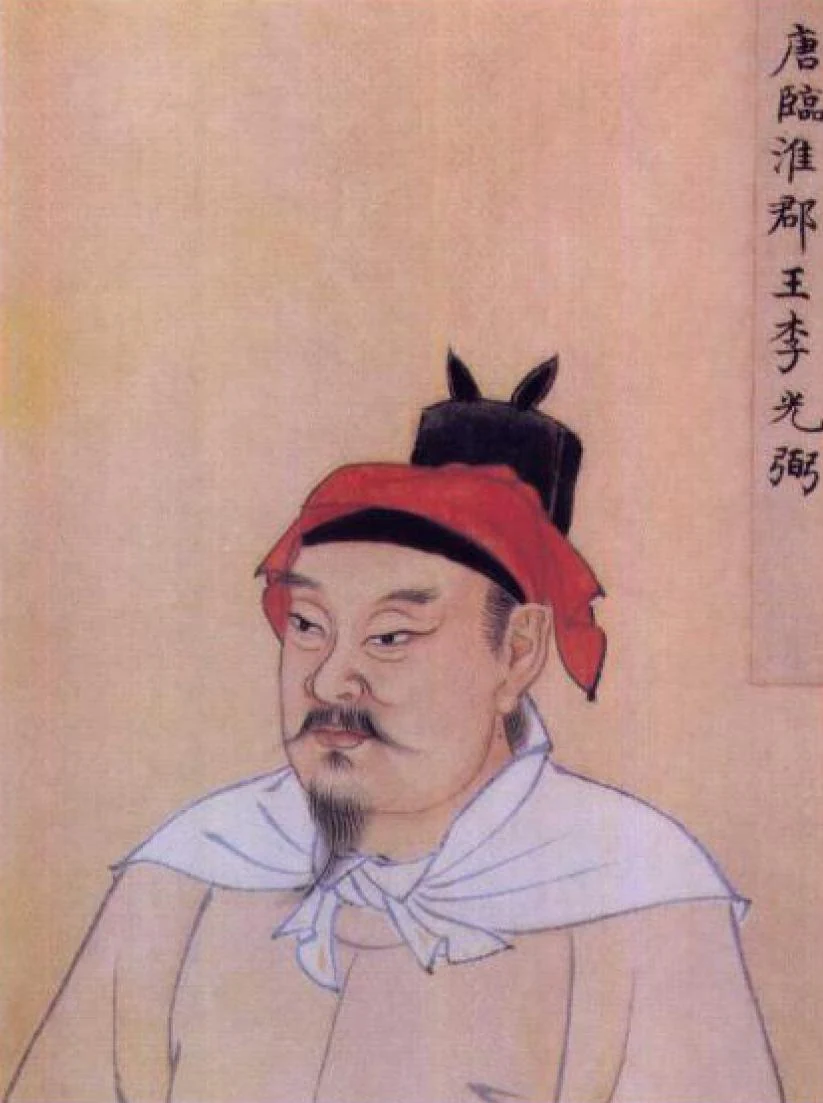
708 CE–764 CE
General
Li Guangbi
李光弼
Li Guangbi (708–August 15, 764), whose ancestral home was Liucheng in Yingzhou (present-day Chaoyang, Liaoning), was born in Wannian County of the Jingzhao region (present-day Xi'an, Shaanxi). He was of Khitan origin and became an outstanding mid-Tang military commander. He was the fourth son of Li Kailuo, General-in-Chief of the Left Feathered Forest Guard. Li Guangbi belonged to the Li clan of Liucheng. He began his career…
708 CE–764 CETang Dynasty
PROFILE
Li Guangbi (708–August 15, 764), whose ancestral home was Liucheng in Yingzhou (present-day Chaoyang, Liaoning), was born in Wannian County of the Jingzhao region (present-day Xi'an, Shaanxi). He was of Khitan origin and became an outstanding mid-Tang military commander. He was the fourth son of Li Kailuo, General-in-Chief of the Left Feathered Forest Guard. Li Guangbi belonged to the Li clan of Liucheng. He began his career as Left Gentleman-of-the-Household of the Left Guard and inherited the title Duke of Ji Commandery.
- Period
- Tang
- Date of Birth
- 708
- Date of Death
- August 15 764
- Dynasty / polity
- Tang
- Identity
- General
- Ethnicity / group
- Khitans
- Native place
- Ancestral home in Liucheng, Yingzhou (present-day Chaoyang, Liaoning)
- Place of birth
- Not recorded in historical sources
- Main achievements
- One of the foremost generals in suppressing the An Lushan Rebellion, famed for defeating Shi Siming through tactical surprise and for the defense of Taiyuan.
LIFE TIMELINE
Youth | Began his career as Left Gentleman-of-the-Household of the Left Guard.
In his thirties | Rose to command of the Left Qingdao Guard while concurrently serving under the Protectorate General of Anbei and as military inspector of Shuofang.
Age thirty-nine | Became military commander under Wang Zhongsi, Military Commissioner of Hexi, and commander of the Chishui Army.
Age forty-two | Promoted to deputy military commissioner of Hexi and enfeoffed as Duke of Ji Commandery.
Age forty-five | Appointed deputy protector-general of the Chanyu Protectorate.
Age forty-seven | Appointed deputy military commissioner of Shuofang and acting administrator; feigned illness and resigned, after which Geshu Han memorialized to have him recalled to the capital.
Age forty-nine | In the first month became deputy military commissioner of Hedong, crossed Jingxing, and recovered Changshan; in the fifth month joined Guo Ziyi and decisively defeated Shi Siming at Jiashan.
Age forty-nine | In the seventh month went to Lingwu to attend Emperor Suzong; appointed Minister of Revenue and Participant in Determining Government Matters, while concurrently serving as administrator of Taiyuan.
Age fifty | Defended Taiyuan in the first month and defeated Shi Siming's army of 100,000; afterward promoted to Minister of Works and created Duke of Wei.
Age fifty-one | Entered court, promoted to Palace Attendant and re-created Duke of Zheng; in the ninth month joined the campaign of nine military commissioners against An Qingxu.
Age fifty-two | Defeated near Anyang in the third month; in the seventh month appointed deputy supreme commander of imperial forces and later directed the Battle of Heyang, defeating Shi Siming.
Age fifty-three | Advanced to Defender-in-chief and Secretariat Director.
Age fifty-four | Forced by Yu Chao'en and Pugu Huai'en into the Battle of Beimang, where the Tang army was defeated; withdrew to Wenxi and was later sent to Linhuai.
Age fifty-five | Promoted to Prince of Linhuai Commandery and dispatched troops to suppress Yuan Chao's uprising in eastern Zhejiang.
Age fifty-seven | Died of illness at Xuzhou; posthumously honored as Minister of Works and given the posthumous name Wumu.
BIOGRAPHY
Biography
Family Background and Early Life
Li Guangbi came from the Khitan Li clan of Liucheng. His father, Li Kailuo, had originally been a Khitan chieftain who submitted to the court during the Wu Zhou period. He rose to deputy military commissioner of Shuofang and was enfeoffed as Duke of Ji, becoming known for courage and decisiveness. Li Kailuo once led elite troops in defeating a Tibetan Empire incursion at Heyuan. Before the battle he reportedly predicted, “When the rebels are pacified, I will not return,” and he did in fact die on the return march. He was posthumously made governor-general of Yingzhou and given the posthumous name Zhonglie. Around the end of the Wu Zhou period, Li Kailuo moved the family to Chang'an. Thus Li Guangbi, though ancestrally from Liucheng in Yingzhou, was born in Wannian County of Jingzhao.
From childhood Li Guangbi was calm, stern, skilled in riding and archery, and fond of reading Ban Gu's Book of Han. He combined physical courage with strategic ability. He entered military service while young and began as Left Gentleman-of-the-Household of the Left Guard. During mourning for his father he strictly observed ritual rules and for three years did not live in the inner rooms of a house. By the early Tianbao era he had risen to command of the Left Qingdao Guard, with concurrent duties in the Anbei Protectorate and Shuofang military establishment, and was beginning to make his reputation on the frontier.
Frontier Experience and Rising Reputation
In 746, the fifth year of Tianbao, Wang Zhongsi was transferred from Shuofang to command Hexi and Longyou and appointed Li Guangbi as one of his military commanders and commander of the Chishui Army. Wang valued him above veteran officers and is recorded as saying that “Guangbi will one day occupy my position.” Li became known for strict discipline and tactical skill. Military successes against the Tibetan Empire and Tuyuhun brought him the honorary general's title Yunhui.
In 749 he was promoted to deputy military commissioner of Hexi and inherited the title Duke of Ji Commandery. In 752 he became deputy protector-general of the Chanyu Protectorate. In 754, An Sishun, Military Commissioner of Shuofang, recommended him as deputy military commissioner and acting administrator. An admired his ability and wanted to marry his daughter to Li. Li, wishing to avoid suspicion, feigned illness and resigned. Geshu Han, Military Commissioner of Longyou, admired his conduct and memorialized Emperor Xuanzong to recall him to the capital. By this time Li Guangbi had accumulated substantial experience in the northwestern frontier commands, which became the foundation for his later role in suppressing the An Lushan Rebellion.
Pillar of the Court during the An Lushan Rebellion
In the eleventh month of 755, the fourteenth year of Tianbao, An Lushan raised an army at Fanyang against the Tang and led 150,000 troops south. Prefectures across Hebei collapsed in rapid succession. Emperor Xuanzong appointed generals including Feng Changqing, Gao Xianzhi, and Geshu Han to defend Tong Pass and ordered Guo Ziyi, Military Commissioner of Shuofang, to gather troops from Hexi. When Xuanzong asked for another capable commander, Guo strongly recommended Li Guangbi as fit for an independent regional command. In the first month of 756 Li was appointed governor of Yunzhong, acting Censor-in-chief, deputy military commissioner of Hedong, and acting military commissioner of Hedong; in the second month he was transferred to govern Wei Commandery and serve as Hebei investigating commissioner.
Leading 5,000 Shuofang troops, Li joined Guo Ziyi and marched east through Jingxing, recovering Changshan from the rebels. He treated the surrendered officer Shi Siyi well, learned details of the rebel disposition from him, and then used rested troops against Shi Siming's 20,000 cavalry. He later laid an ambush that annihilated 5,000 rebels coming from Raoyang. Li and Guo then joined forces and defeated Shi Siming at Jiumen and Jiashan, killing tens of thousands and forcing Shi to flee toward Boling. More than ten Hebei commanderies returned to Tang allegiance, cutting the connection between the rebel base at Fanyang and the Central Plains and briefly transforming the strategic situation.
Defense of Taiyuan and the Heyang Standoff
In the seventh month of 756, after Emperor Suzong took the throne at Lingwu, Li Guangbi and Guo Ziyi were summoned to the imperial headquarters. Li was made Minister of Revenue, Participant in Determining Government Matters, Prefect of Taiyuan, and defender of the northern capital. In the first month of 757, Shi Siming and Cai Xide attacked Taiyuan with 100,000 men. Most of Li's elite troops had already been sent to Shuofang, leaving fewer than 10,000 relatively weak soldiers in the city. When others proposed hurriedly strengthening the walls, Li argued that Taiyuan's circuit of forty li made such work a waste of manpower. Instead he adopted an active defense: tunnels were dug outside the walls to enable surprise attacks, and stone-throwing artillery was mounted on the fortifications, with each shot said to kill or wound scores. Tunnels even reached Shi Siming's camp, and more than 10,000 rebel troops were killed or captured. Shi, alarmed, moved his headquarters farther back. When An Qingxu killed his father and usurped leadership of the rebel state, Shi withdrew toward Fanyang. Li then launched a sortie with picked volunteers, defeated Cai Xide's remaining forces, reportedly took 70,000 heads, and captured large stores of arms and provisions. The defense of Taiyuan became a celebrated example of a smaller Tang force defeating a much larger rebel army and contributed to later recovery of the two capitals. Li was promoted to Minister of Works and created Duke of Wei.
In 758, the first year of Qianyuan, Li, Guo Ziyi, and seven other military commissioners led a force of about 100,000 against An Qingxu. Because Emperor Suzong distrusted the commanders, he appointed no single general-in-chief and instead made the eunuch Yu Chao'en supervisory commissioner over the army. The Tang forces won early victories, recovered Weizhou, and besieged Yecheng (Xiangzhou). In the third month of the following year Shi Siming came to relieve the city. A Tang army said to number 600,000 was defeated near the Anyang River because it lacked unified command, and the various military commissioners returned to their own bases. Li withdrew in good order and was commended by Suzong. In the seventh month of that year he replaced Guo Ziyi as Military Commissioner of Shuofang and deputy supreme commander of imperial forces, effectively becoming the highest operational commander of Tang armies.
In the tenth month of 759 Shi Siming seized Bianzhou and advanced toward Luoyang. Li judged the situation carefully, abandoned Luoyang, and withdrew to Heyang. At the Battle of Heyang, strict discipline and flexible tactics allowed him repeatedly to repel rebel attacks. He personally appeared at the front to encourage his troops, preventing Shi Siming from advancing west. The battle stabilized the approaches to Guanzhong and forced Shi back toward Luoyang.
Later Years and Posthumous Honors
In 761, the second year of Shangyuan, the eunuch Yu Chao'en and general Pugu Huai'en reported that the rebels could easily be destroyed. Emperor Suzong therefore pressed Li to attack Luoyang. Li advanced reluctantly and met Shi Siming at Mount Beimang. Pugu Huai'en did not obey his orders, and the Tang army suffered a major defeat; Heyang and Huaizhou were lost. Li withdrew to Wenxi. Suzong did not punish him but made him deputy supreme commander of Henan while he held the rank of Defender-in-chief and sent him to Linhuai. After Shi Siming was killed by his son Shi Chaoyi and the rebel state fell into internal disorder, Li moved his headquarters to Xuzhou and overawed the regional commanders. In 762, the first year of Baoying, he was promoted to Prince of Linhuai Commandery and sent troops to suppress Yuan Chao's uprising in eastern Zhejiang.
After the rebellion was finally suppressed, Li Guangbi was ranked foremost in military merit for the restoration, granted an iron tally, recorded in the imperial ancestral temple, and portrayed in Lingyan Pavilion. In his later years, however, the eunuchs Cheng Yuanzhen and Yu Chao'en repeatedly slandered him. Although the court summoned him several times, he delayed going, and as a result other commanders gradually ceased to obey him. His reputation suffered. In 764, the second year of Guangde, he died at Xuzhou aged fifty-seven. He was posthumously honored as Minister of Works and given the posthumous name Wumu.
His Family and His Entry into Office
Li Guangbi's ancestral home was Liucheng in Yingzhou and he was born at Wannian in the capital region, of Khitan stock, the fourth son of the left general of the feathered forest, Li Kailuo. He came of the Li of Liucheng, first served as a captain of the left guard, and inherited the rank of duke of Ji commandery. When the rebellion of An Lushan broke out, Feng Changqing and Gao Xianzhi were beaten and beheaded at the Tong pass, and Geshu Han was sent with troops against the rebels; and presently Guo Ziyi was made commissioner of Shuofang and gathered troops in Hexi. The Xuanzong emperor, seeking a good general to entrust with the affairs of Hebei and Hedong, asked Guo Ziyi, and Guo Ziyi recommended Li Guangbi as fit to hold a command. In the first month of the fifteenth year of Tianbao Li Guangbi was made grand administrator of Yunzhong and acting grandee of the censorate, holding the post of deputy commissioner of Hedong and charged with its affairs; and in the second month he was transferred to be grand administrator of Weijun and investigating commissioner of the Hebei circuit, and with five thousand men of Shuofang joined Guo Ziyi's army, went east down the Jingxing pass and recovered Changshan commandery.
The Recovery of Changshan, the Taking of Zhao, and the Great Victory at Jiashan
The rebel general Shi Siming came with several tens of thousands to relieve Changshan, and Li Guangbi pursued and broke him, took more than ten counties including Gaocheng, and marched south against Zhao commandery. At that time Shi Siming was besieging Raoyang, and Li Guangbi therefore treated the captured rebel general An Siyi well, unbound him with his own hands and won his true submission, so that he disclosed the rebels' movements; and the next day Shi Siming with twenty thousand horse pressed up to the wall of Changshan, and Li Guangbi, taking An Siyi's plan of holding the army within and waiting for the enemy's exhaustion, kept the city and did not come out, dividing his troops into four parts and shooting at the enemy in relays with five hundred strong crossbows, so that the rebels moved their camp further off, while Li Guangbi came out on their south and drew up his line across the Hutuo river to threaten them. Shi Siming, relying on the relief that was near at Raoyang, rested his men meaning to fight again; and that same day five thousand rebels of Raoyang did indeed come to relieve him, and Li Guangbi, having learned of their march by spies, took several thousand light horse with flags and drums furled and, waiting until the rebels were at their meal in the open, attacked and all but destroyed them. Shi Siming, hearing of the defeat, was much afraid and withdrew at once, secretly sending a flying column to cut the Tang supply road; and the horses having no fodder, Li Guangbi sent officers to fetch hay at Xingtang, and the rebels fell on them in ambush, and the soldiers fought with doors on their backs and the rebels could not take them. When Guo Ziyi recovered Yunzhong, a decree sent all his force out through the Jingxing pass to join Li Guangbi in striking the rebels west of Jiumen, and Shi Siming was heavily beaten and fled alone to Zhao commandery, Li Lijie dying of a stray arrow and Cai Xide fleeing to Julu. Li Guangbi took ten counties including Gaocheng and marched on Zhao; on the eighth day of the third month he was made concurrently chief secretary of the Fanyang supreme commandery and commissioner of Fanyang, and took Zhao. Since the rebellion began Changshan had been a battlefield with the dead covering the fields, and Li Guangbi poured libations on the corpses and wept over them, freed those whom the rebels had imprisoned, and swore to pacify the troubles and comfort their hearts. The Tang soldiers plundered much on entering the city, and Li Guangbi sat at the watchtower gate, took back the spoil and gave it all back to the people, at which the city rejoiced. At that time Shi Siming entered Boling from Gucheng and killed the local officers who had submitted to the Tang, at which the six commanderies of Jingcheng, Hejian, Xindu, Qinghe, Pingyuan and Boping all made camps and held themselves, turning to Li Guangbi; and Li Guangbi pressed his attack on Zhao and took it in a day, and invested Boling without success. In the sixth month he fought the rebel generals Cai Xide, Shi Siming and Yin Ziqi at Jiashan in Changshan commandery and broke them utterly, beheading more than ten thousand and taking four thousand alive; and Shi Siming fled to Boling with his hair loose and barefoot, and more than ten commanderies of Hebei submitted.
The Battle of Taiyuan
In the first month of the second year of Zhide the rebels Shi Siming and Cai Xide raised a hundred thousand men against Taiyuan, meaning after taking it to seize Lingwu by the northern road. Li Guangbi had at that time fewer than ten thousand weak soldiers, and hearing that Shi Siming was about to attack they were all afraid and wished to raise walls against him; but Li Guangbi said that the city of Taiyuan was forty li round and that to build walls when the enemy was nearly upon them would but waste men's strength. With the forces so unequal Li Guangbi both held the defence and struck from within it: he had the ground dug outside the city and used the earth to make hundreds of thousands of bricks to strengthen the ramparts, had his men dig tunnels from the city to beyond the walls to strike the enemy, mounted stone-throwing engines on the walls to hurl great stones, and dug hidden ditches to swallow the enemy, attacking them continually so that they dared not come near. By the New Tang History, Li Guangbi pulled down the people's houses to make stone-hurling carts which two hundred men drew, and wherever the stones fell several dozen men were killed and the rebels lost two in ten; and Shi Siming made a flying tower screened with wooden curtains and raised an earthen hill against the city, and Li Guangbi had tunnels dug to bring them down; and when Shi Siming feasted below the wall and had actors on a platform point at the Son of Heaven, Li Guangbi had men tunnel up and seize them, at which Shi Siming was much startled and moved his headquarters far off, so that his army all went looking at the ground as they walked. Li Guangbi again secretly ditched the enemy's camp to sink his army and pretended to agree to surrender; and at the time appointed he set armoured men on the wall and sent a subordinate officer out as if to offer submission, at which Shi Siming was delighted; and presently several thousand of the rebels were lost in the trenches and the men on the wall raised a shout and the cavalry charged out on them, taking and killing more than ten thousand. Shi Siming, fearing defeat, went off, leaving Cai Xide to attack Taiyuan; and when An Lushan was killed by his son An Qingxu, who made himself emperor, Shi Siming withdrew to Fanyang, and Cai Xide, left there, was worn out. In the second month of that year Li Guangbi led his desperadoes against the rebels, beheaded more than seventy thousand and took much armour and weapons, and the battle of Taiyuan ended in complete victory, so that he both held Taiyuan and secured the left flank of the Tang armies. He also took the Qingyi and Hengye armies and broke the rebel columns attacking Haoqi and the Daheng pass; and after the battle he was made acting minister over the masses and presently master of works, enfeoffed as duke of Zheng with eight hundred real households.
The Defeat at Xiangzhou and His Taking over Shuofang
In the first year of Qianyuan Li Guangbi came to court and was given the title of palace attendant, and with the nine commissioners invested An Qingxu at Xiangzhou and beat him in a great battle west of Ye. In the first month of the second year of Qianyuan Shi Siming at Weizhou styled himself the great sage of Yan, and Li Guangbi said that Shi Siming, having taken Weizhou, was holding his troops back in order to slacken their own will and then fall on them unawares with picked men, and asked to join the Shuofang army in pressing on Weizhou city and challenging him to battle; for Shi Siming, remembering his defeat at Jiashan, would not dare come out lightly, and so with time they would certainly take Ye, and An Qingxu being dead he would have no pretext for using his men. But because the army inspector Yu Chaoen held it wrong the matter was dropped. In the third month the government army, six hundred thousand foot and horse, was drawn up north of the Anyang river, and Shi Siming with fifty thousand picked men opposed them; and Li Guangbi, Wang Sili, Xu Shuji and Lu Jiong fought him first with about equal loss, Lu Jiong being wounded by a stray arrow; and Guo Ziyi coming behind had not yet formed his line when a great wind rose, blowing sand and tearing up trees, the sky and earth darkened so that one could not tell a thing at arm's length, and both armies were terrified, the government troops breaking south and the rebels north, leaving armour and baggage piled in the road. The commissioners each fell back on their own commands and the soldiers plundered as they passed, the officers being unable to stop them, and it was ten days before order returned; only Li Guangbi and Wang Sili kept their troops in hand and brought them home whole. The emperor forgave the generals and made Li Guangbi concurrently chief secretary of the Youzhou supreme commandery and charged with the affairs of the camp of the several circuits, and then commissioner of Shuofang in place of Guo Ziyi, and presently deputy commander-in-chief of all the forces of the realm. Yu Chaoen, the army inspector, hating Guo Ziyi, made much of his defeat to the emperor; and in the seventh month of autumn the emperor recalled Guo Ziyi to the capital and made Li Guangbi commissioner of Shuofang and commander-in-chief. Li Guangbi wished for a prince of the blood as his deputy, and on the day xinsi the prince of Zhao, Li Xi, was made commander-in-chief of all the forces of the realm with Li Guangbi under him, and Li Guangbi was charged with the camp of the several commissioners.
Having received the charge, Li Guangbi rode to Luoyang with five hundred Hedong horse and entered the Shuofang camp by night; and to guard against the rebels' attack on Luoyang he held that they must hold the Tiger pass and led his troops east to the river. The Shuofang army, used to Guo Ziyi's laxness, feared Li Guangbi's severity, and the commander of the left wing, Zhang Yongji, plotted with the generals to drive Li Guangbi out and bring back Guo Ziyi, and only desisted at the persuasion of the commander-in-chief of the army, Pugu Huai'en, and the commander of the right vanguard, Kang Yuanbao. Li Guangbi with several thousand horse went east from the Si river, and Zhang Yongji came alone to salute him; and Li Guangbi reproved him for not coming at the appointed time and beheaded him before the army, making his officer Xin Jinggao take his place. He then summoned the general Pugu Huai'en, who in fear came early, and Li Guangbi seated him and talked with him; and presently the gatekeeper reported that five hundred horse of the Tibetans and Hun had come, at which Li Guangbi changed colour; and Pugu Huai'en went out and, calling his officers, reproved them falsely for coming when he had told them not to, and Li Guangbi said that soldiers follow their officers and were not to blame, and had beef and wine given them.
The Battle of Heyang
Shi Siming left his son Shi Chaoqing to hold Fanyang and sent his commanderies each with three thousand men in four columns toward Henan; and Li Guangbi, reviewing the camps on the river, heard of it and went back into Bianzhou and told the Bian-Hua commissioner Xu Shuji that if he could hold Bianzhou fifteen days he would bring troops to his relief. Xu Shuji promised, and Li Guangbi returned to Luoyang. When Shi Siming came against Bianzhou, Xu Shuji fought and could not win and went over to the rebels, and Bianzhou fell. Shi Siming, elated by victory, marched west against Zhengzhou, and Li Guangbi brought his army in good order at a slow pace to Luoyang and asked the keeper Wei Zhi what his plan was, since the rebels came elated by victory and it was better to hold still than to fight quickly, and the city of Luo could not be held. Wei Zhi asked leave to keep troops at Shan and fall back on the Tong pass to hold the passes and break the enemy's edge; but Li Guangbi said that when two armies were matched advance was precious and retreat to be feared, and that to abandon five hundred li of ground for nothing would make the rebels the more insolent, and that it was better to move the army to Heyang, joining Zelu in the north, so that if it went well they could advance and if not they could fall back, answering each other within and without, so that the rebels would not dare come west, which was the posture of the ape's arm; that in judging the court's ceremonies he was not Wei Zhi's equal, but that in the business of war Wei Zhi was not his. Wei Zhi had no answer. The assistant Wei Sun asked how he could abandon the eastern capital, the emperor's dwelling; and Li Guangbi said that to hold it they must place troops at the Si river, at the E ridge and at Longmen, and asked whether Wei Sun, as assistant for troops and horses, could hold them. So Li Guangbi sent word to the keeper Wei Zhi to lead the officers of the eastern capital west into the passes, and to the governor of Henan, Li Ruoyou, to lead the officers and people out of the city to avoid the rebels, emptying it. Li Guangbi then had his men carry oil and iron into Heyang to prepare the defence, and himself with five hundred horse brought up the rear. The rebel scouts having already reached the Stone bridge, the generals asked whether they should go north of the city of Luo or by the Stone bridge, and Li Guangbi said by the Stone bridge; and at dusk he had his men go slowly with torches, the ranks firm and heavy, and the rebels followed them but dared not press. Li Guangbi came by night to Heyang with twenty thousand troops and grain for but ten days, and reviewed the defences and disposed the men with all strictness; and Shi Siming entered Luoyang, an empty city, and found nothing, and fearing Li Guangbi at his back did not dare enter the palace but fell back to camp south of the White Horse temple and built a crescent wall south of Heyang against Li Guangbi. So Zheng and Hua and the other prefectures fell one after another.
Shi Siming had more than a thousand good horses, brought out daily to wash at the islet in the river, going round without ceasing to show how many they were; and Li Guangbi had the mares of the army sought, five hundred in all, and tied their foals within the city, and when Shi Siming's horses came to the water he had them all brought out, and the mares neighing without ceasing, Shi Siming's horses all swam across the river and were at once driven into the city. Shi Siming in anger drew up several hundred warships with fire ships in front and the rest behind, meaning to burn the floating bridge with the current; and Li Guangbi had first stored several hundred poles a hundred feet long, mortised into great timbers at the base and capped with felt-wrapped iron forks, and with these met the fire ships and forked them, so that they could not advance and presently burned out; and with the forks he also held off the warships and from the bridge threw stone shot at them, so that those struck all sank, and the rebels went off worsted. Shi Siming again showed troops at Heqing meaning to cut Li Guangbi's supply road, and Li Guangbi camped at the Yeshui ferry to meet it; and at nightfall he returned to Heyang, leaving a thousand men under his officer Yong Xihao to hold the stockade, and telling him that the rebel generals Gao Tinghui, Li Riyue and Yu Wenjing were each a match for ten thousand men, and that Shi Siming would surely send one of them to raid him, and that he himself was going away and Yong Xihao should wait there, and if the rebels came should not fight them, and if they surrendered should bring them along. And Shi Siming did indeed tell Li Riyue that Li Guangbi was good at holding cities and was now out in the open, so that he could be taken, and bade him cross by night with armoured horse and bring him, and not to return without him. Li Riyue with five hundred horse came at dawn under the stockade, and Yong Xihao rested his men behind the moat, singing and looking at one another; and Li Riyue, wondering, asked whether the minister of works was there, and was told that he had gone by night, and asking how many men there were was told a thousand, and who commanded, and was told Yong Xihao; and Li Riyue, reckoning long in silence, told his men that having lost Li Guangbi and taken Yong Xihao he must die if he returned, and that he had better surrender; and so he asked to surrender. Yong Xihao brought him to Li Guangbi, who treated him well and made him his confidant; and Gao Tinghui, hearing of it, surrendered too. Someone asked Li Guangbi why the two generals had surrendered so easily, and he said it was human nature: Shi Siming always regretted that he could not fight him in the field, and hearing that he was outside thought he could surely be taken, and Li Riyue, not getting him, would not dare go back, while Gao Tinghui, braver and abler than Li Riyue, hearing that he was favoured and trusted would wish to take his place.
Afterwards Shi Siming attacked Heyang again, and Li Guangbi asked the Zheng-Chen commissioner Li Baoyu whether he could hold the southern city for him two days; and Li Baoyu asked what if the time passed, and Li Guangbi said that if the time passed and no relief came he might abandon it. Li Baoyu promised and drew up his troops to hold it; and the city being about to fall, Li Baoyu deceived them, saying that his grain was gone and he would surrender in the morning, at which the rebels rejoiced and drew off their troops to await him; and Li Baoyu repaired and completed the defences and the next day asked to fight again, at which the rebels in anger attacked hard, and Li Baoyu sent out a flying column and struck them from within and without, killing and wounding many. At that time Li Guangbi himself camped at Zhongtan, with a stockade outside the city and a ditch outside the stockade two zhang deep and wide; and the rebel general Zhou Zhi left the southern city and attacked Zhongtan with all his force, and Li Guangbi had Li Fei Yuanli bring out picked troops at the sheep-and-horse wall to meet him, while Li Guangbi set a small red flag in the northeastern corner of the city to watch them. The rebels, relying on their numbers, pressed straight to the city with siege engines on carts, urging their men to fill the ditch in eight passages on each of three sides to get the troops across, and broke open the stockade for a gate; and Li Guangbi seeing them press the city sent to ask Yuanli why he sat still while the rebels filled the ditch, opened the stockade and passed their troops. Yuanli asked whether the minister wished to hold or to fight, and Li Guangbi said to fight, and Yuanli said that if he wished to fight then the rebels were filling the ditch for them and why forbid it; and Li Guangbi said that was right and beyond him, and bade him do his best. Yuanli waited for the stockade to be opened and led out his desperadoes in a sally, driving them back several hundred paces; and reckoning that the rebel array was too firm to break at once he drew back again to wait until they were slack and then strike. Li Guangbi, seeing him withdraw, was angry and sent attendants to summon him meaning to behead him; and Yuanli said the fighting was at its height and what was he summoned for, and went back into the stockade, and the rebels did not dare press; and after a long while he came out of the stockade gate with shouting and struck hard and broke them.
Zhou Zhi gathered his troops again and went against the northern city, and Li Guangbi at once led his men into the northern city and looking at the rebels from the wall said that they were many but clamorous and ill-ordered and not to be feared, and that before noon he would break them for them all. He then ordered the generals out to fight, and when the time came and it was still undecided he called them and asked which part of the rebel array was firmest, and was told the northwestern corner, and he set the general Hao Tingyu against it, who asked five hundred horse and was given three hundred; and asking which was next firmest was told the southeastern corner, and he set the general Lun Weizhen against it, who asked three hundred armoured horse and was given two hundred. Li Guangbi ordered the generals to fight by watching his flag, and if he waved it slowly they might fight as they saw advantage, but if he waved it thrice to the ground they must all go in together, life and death together, and any who fell back a little would be beheaded. And he put a short sword in his boot and said that battle was a perilous business, and that he was one of the three excellencies of the state and must not die by a rebel's hand; and that if the battle went ill, and they fell before the enemy, he would cut his own throat there and not let them die alone. The generals went out, and presently Hao Tingyu came running back, and Li Guangbi, seeing it, cried that if Hao Tingyu fled the matter was lost; and he ordered those about him to take Hao Tingyu's head, and Hao Tingyu said that his horse had been struck by an arrow and that he did not dare to retreat, and the messenger galloped back with it, and Li Guangbi had a fresh horse given him and sent him back. Pugu Huai'en and his son Pugu Yang gave back a little in the fighting, and Li Guangbi again ordered their heads taken; and Pugu Huai'en and his son, seeing the messengers coming at the gallop with swords, went forward again to the fight. Li Guangbi waved his flag without ceasing, and the generals pressed forward to the death with shouts that shook heaven and earth, and the rebels broke utterly, with more than ten thousand heads taken, eight thousand taken alive, two thousand horses, and stores and weapons beyond reckoning, and Zhou Zhi, Xu Huangyu and Li Qinshou taken, only An Taiqing getting away. Shi Siming, not knowing that Zhou Zhi and the rest were beaten, still attacked the southern city; and Li Guangbi drove the captives to the river to show them, and killed several dozen to overawe them, and the rest in fear threw themselves into the river for the south bank and Li Guangbi beheaded them all. When the rebels had gone, Li Guangbi took Huaizhou, and Shi Siming coming to its relief he met and beat him on the Qin river; and the defending general An Taiqing held out for more than a month, and Li Guangbi had Pugu Huai'en and Hao Tingyu enter by a tunnel and learn the watchword, and then climbed the wall with a great shout, and the army entered with them and the city was taken, with An Taiqing, Zhou Zhi, Yang Xiwen and others taken alive and sent to the court, and Huaizhou was pacified that day; and for this he was enfeoffed as prince of Linhuai and his real fief raised to fifteen hundred households.
The Defeat at Mangshan and His Command at Linhuai
In the second month of the second year of Shangyuan Emperor Suzong, listening lightly to the eunuch Yu Chaoen's word that the rebels could be destroyed, ordered Li Guangbi to recover Luoyang quickly; but Li Guangbi memorialised again and again that the rebels' edge was still keen and that they should wait for the hour and not advance lightly. But the deputy commissioner of Shuofang, Pugu Huai'en, leaning on Yu Chaoen, also advised advancing at once; and under the court envoys' urging of the battle Li Guangbi had no choice but to leave Li Baoyu to hold Heyang and go himself with Pugu Huai'en and Yu Chaoen against Luoyang. Pugu Huai'en would not obey Li Guangbi's orders, and did not draw up his line north of Luoyang at Mount Mang, so that the rebels came out with all their picked troops and Li Guangbi was beaten and his stores and weapons all taken by the rebels; and Li Baoyu too abandoned Heyang, and Li Guangbi crossed the river and held Wenxi. The court, holding that Pugu Huai'en's disagreement had caused the defeat, recalled him by a gracious decree; and Li Guangbi came to court from Hezhong and memorialised against himself, and was pardoned by decree. He earnestly declined the office of grand commandant, and was made concurrently master of the great horse of the court, palace attendant, governor of Henan and commissioner of the camp, and presently grand commandant again and deputy commander-in-chief of Henan, Huainan, Shannan East and Jingnan, with the palace attendance as before, and went out to command at Linhuai. When Li Guangbi was about to go to Linhuai he travelled by litter, being ill; and the army inspector, because Yuan Chao was then troubling Jianghuai and Li Guangbi had few troops, asked him to hold Runzhou to avoid their edge, and Li Guangbi said that the court had entrusted the safety of the state to him, and that though the rebels were strong they could not measure his numbers, and that if he acted where they did not look for it they would withdraw of themselves; and so he went straight to Sizhou. Before Li Guangbi came to Henan, Tian Shengong, after pacifying Liu Zhan, had lingered at Yangfu, and Shang Heng and Yin Zhongqing were fighting one another in Yan and Yun, and Lai Tian was holding out at Xiangyang, at which the court was troubled; and when Li Guangbi came with light horse to Xuzhou, Shi Chaoyi withdrew, and Tian Shengong at once returned to Henan, and Shang Heng, Yin Zhongqing and Lai Tian, fearing his name, came one after another to court. In the first year of Baoying he was again ordered to lead troops against the rising of Yuan Chao in eastern Zhejiang, and for this was enfeoffed as prince of Linhuai. After the rebellion of An and Shi was put down Li Guangbi's military merit was reckoned the first in the restoration, and he was given the iron warrant, his name was placed in the ancestral temple and his portrait painted in the Lingyan pavilion.
His Last Years and Death
Early in Guangde, when the Tibetans raided the capital region, the Daizong emperor summoned the troops of the realm; and Li Guangbi, not being on good terms with Cheng Yuanzhen, delayed and did not come. In the tenth month the western barbarians violated the capital and Daizong went to Shan. The court, then relying on Li Guangbi for support and fearing to give rise to suspicion, several times sent to inquire after his mother; and when the Tibetans withdrew he was made keeper of the eastern capital, so as to see what he would do. Li Guangbi got wind of it and excused himself on the ground that he had long awaited a decree that did not come, and went back to Xuzhou, wishing to collect the taxes of Jianghuai for his own support. Daizong returning to the capital, in the first month of the second year he sent a palace envoy to comfort him; and Li Guangbi's mother being at Hezhong, a secret decree had Guo Ziyi carry her to the capital. His younger brother Li Guangjin, who with Li Fuguo had charge of the forbidden troops and was entrusted with his heart's confidence, was now made grand guardian of the heir apparent and concurrent grandee of the censorate, duke of Liang and commissioner of Weibei, and the emperor treated him the better. Li Guangbi commanded his troops with severity, so that the realm submitted to his martial fame, and whenever he issued an order the generals dared not look up; and dreading the malice of Yu Chaoen he dared not come to court, so that Tian Shengong and the rest would not obey his commands, and from shame and grief he fell ill, sending his staff officer Sun Zhen with a dying memorial to state his case. In the seventh month of the second year of Guangde he died at Xuzhou at fifty-seven. The court suspended audience three days, gave him posthumously the rank of grand guardian and the name Wumu, and his subordinates escorted the coffin back to the capital; Daizong sent the palace eunuch and master of the great horse Yu Chaoen to condole with his mother at her house, and the governor of the capital region, Di Wuqi, to oversee the funeral, and in the eleventh month he was buried at Sanyuan, with a decree that the chancellors and the hundred officials should escort it beyond the Yanping gate. His spirit-way stele is four point zero three metres high, one point three wide and zero point four thick, its head carved with six dragons descending on either side, its top incised with four lines of seal script, the spirit-way stele of the grand guardian Li of the Tang, and its text in clerical script twenty-two lines of thirty-four characters, upright and flowing, set up in the third month of the third year of Dali of the Daizong emperor, its text recounting his ancestral home and his own life.
Major Activities
Military Contributions
Li Guangbi was a central Tang commander in the suppression of the An Lushan Rebellion, and his military reputation was paired with that of Guo Ziyi in the phrase “Li and Guo.” He excelled at defeating larger or stronger forces through timing and maneuver. At Changshan he used rested troops, ambushes, and surprise attacks against Shi Siming. At Taiyuan he innovatively employed tunnels and stone-throwing artillery, using fewer than 10,000 defenders against an army of 100,000. At Heyang he combined strict discipline with personal leadership to stop Shi Siming's westward movement. Later generations treated these campaigns as examples of the military leadership of the Tang restoration.
Political Activity
During the An Lushan Rebellion Li held major military and civil offices including deputy military commissioner of Hedong, Hebei investigating commissioner, Minister of Revenue, Participant in Determining Government Matters, Palace Attendant, Defender-in-chief, and Secretariat Director. While stationed at Linhuai and Xuzhou he helped control subordinate commanders and stabilize Henan and the Huai River region. His refusal in later years to respond promptly to court summons, although connected with eunuch slander, damaged his political reputation.
Travels and Campaign Geography
Li Guangbi's career took him across much of the Tang realm. He gained early experience in the northwestern commands of Hexi and Shuofang. During the rebellion he marched east through Jingxing and fought around Changshan, Zhao Commandery, Jiashan, and other parts of Hebei. He later defended Taiyuan, then campaigned around Heyang and Luoyang, and in his final years commanded from Linhuai and Xuzhou. His movements closely tracked the principal theaters of the An Lushan Rebellion.
Relations with Contemporaries
Li's closest military relationship was with Guo Ziyi, who recommended him as deputy military commissioner of Hedong. The two repeatedly fought together and became the principal pillars of the Tang restoration. Li also had important ties with frontier commanders such as Wang Zhongsi and Geshu Han; Wang patronized him early in his career, while Geshu Han admired his integrity. By contrast, Li had poor relations with eunuchs Yu Chao'en and Cheng Yuanzhen, whose interference and slander became an important factor in the difficulties of his later years.
His Stern Command of the Army
Li Guangbi commanded his troops with severity. In the eighth month of the first year of Zhide he was made magistrate of Taiyuan and keeper of the northern capital, and at that time the Taiyuan commissioner Wang Chengye neglected his government, and the censor Cui Zhong held troops in Hedong and slighted Wang Chengye, even entering his hall in armour with a spear to make sport of him, at which Li Guangbi was much displeased. Afterwards Cui Zhong was ordered to hand over his troops to Li Guangbi, and Cui Zhong came with his banners and, the standards meeting, did not make way but saluted Li Guangbi with a careless bow, and coming in did not hand over the troops, at which Li Guangbi in anger had him arrested. Presently a palace envoy came, saying that Cui Zhong was appointed grandee of the censorate, and with the decree in his bosom asked where Cui Zhong was, and Li Guangbi said that Cui Zhong was guilty and had long been bound. The envoy showed him the decree, and Li Guangbi said that he would now behead but an attendant censor, but that if the decree were proclaimed he would behead a grandee of the censorate, and if Cui Zhong were made chancellor he would behead a chancellor; and the envoy in fear put the decree away and went back. The next day Li Guangbi had troops surround Cui Zhong and behead him publicly below the stele hall and had his kin come to mourn him, at which he awed the whole army. He also rode to the eastern capital with five hundred Hedong horse and entered the Shuofang camp by night, so that no sooner had he issued his orders than the soldiers, the ramparts, the banners and the whole appearance of the army changed; and he summoned the commander Zhang Yongji by order and beheaded him for not coming at the appointed time, making his officer Xin Jinggao take his place, so that the officers and men of Shuofang all learned how strict the military law was.
His Art of War
Li Guangbi's use of troops was full of strange devices. At Taiyuan he turned the tunnel, which men had used for attacking cities, to the defence of a city, digging tunnels to strike and harass the enemy and do them heavy harm, hurling great stones with stone-hurling carts, bringing down their flying towers and earthen hills with tunnels, seizing their actors up through a tunnel, and drawing them into a false surrender so that several thousand fell into the ditch, so that in Shi Siming's army all went looking at the ground as they walked. At Heyang, when Shi Siming tried to lure him with the daily washing of his horses, Li Guangbi turned the trick against him and took a thousand of his good horses by the device of the mares; and he met the fire ships with long poles and iron forks and sank the warships with stone shot from the bridge, so that the enemy could not burn the bridge with the current; and at the Yeshui ferry, leaving a thousand men behind and foreseeing that Shi Siming would send one of his matchless generals to raid him, he brought Li Riyue and Gao Tinghui over one after the other, and asked why the two generals had surrendered so easily, saying that it was human nature. In battle he attacked the firmest quarter first, used the signal of his flag waved thrice to the ground to send the whole host in together, and carried a short sword in his boot to show that he would not outlive a defeat; and so he could beat the many with the few and the strong with the weak.
Anecdotes
Li Guangbi and Guo Ziyi were at first on bad terms: when An Sishun commanded Shuofang, Guo Ziyi and Li Guangbi were both commanding officers of the gate, and though they ate from the same dish they would glare at one another without a word; and when Guo Ziyi took An Sishun's place, Li Guangbi thought of running away and had not decided when a decree came ordering Guo Ziyi to lead troops east to Zhao and Wei, and Li Guangbi came to see him and said that he would gladly die but begged that his wife and children be spared; and Guo Ziyi stepped down and took him in his arms up into the hall and wept, saying that now the state was in disorder and the sovereign had moved, none but Li Guangbi could go east against the rebels, and that it was no time for private grudges; and they held hands and bowed to one another and took counsel together to destroy the rebels. When Tian Shengong was made commissioner of Ziqing from a Pinglu army officer, his old officers had all been subordinates in his ranks and he received their bows as an equal; but afterwards, while besieging Songzhou, he saw Li Guangbi return the bow of the assistant Zhang Can when he came, and was much startled, and going back to his tent asked the assistant Liu Wei what ceremony it was that the grand commandant returned Zhang Can's bow; and Liu Wei said that an assistant was a guest of the office and that a commissioner had no ceremony of receiving bows from him. Tian Shengong said that he should have been told sooner, and had all the assistants brought in and thanked them, saying that he was a military man risen from the ranks and did not know the court's ceremonies and had wrongly taken their bows, and that since they had not told him the fault was his, and so he bowed to each in turn. Hao Tingyu was skilled at drawing up arrays, and the army inspector Yu Chaoen asked to see him drill; and Hao Tingyu drew up his ranks in the camp, and at the sound of drums and horns marched out and formed into array, spreading and folding like the wings of a bird, now parting and now joining, sitting and rising, advancing and retiring as one man; and Yu Chaoen sighed that in more than ten years about armies he had only now seen General Hao's drilling, and that with such discipline there could be no enemy before them. And Hao Tingyu answered with feeling that this was not his own skill but the legacy of the prince of Linhuai: that the grand commandant had been good at commanding troops, rewarding merit and punishing fault as they deserved, and that on every day of the flag-drill any soldier who disobeyed an order in the least was beheaded as an example, so that all did their utmost of themselves and went to wounds and death and charges with hearts breaking and gall torn, and that since the grand commandant's death there had been no more flag-drills, and that this was not worthy of the army inspector's praise.
Personal Relations
- Father: Li Kailuo, Khitan chieftain, deputy military commissioner of Shuofang, Duke of Ji
- Mother: daughter of Li Kaigu
- Younger brother: Li Guangjin
- Sons: Li Yizhong, Li Xiang, Li Hui
- Grandson: Li An
- Wang Zhongsi: Military Commissioner of Hexi; early patron of Li Guangbi
- Guo Ziyi: Military Commissioner of Shuofang; recommender and long-term comrade-in-arms
- Geshu Han: Military Commissioner of Longyou; admired Li's integrity
- An Sishun: Military Commissioner of Shuofang; wished to marry his daughter to Li, prompting Li to resign on grounds of propriety
- Emperor Xuanzong of Tang: appointed him deputy military commissioner of Hedong
- Emperor Suzong of Tang: appointed him deputy supreme commander of imperial forces and relied on him as a principal commander against the rebellion
- Emperor Daizong of Tang: promoted him to Prince of Linhuai Commandery, granted him an iron tally, and had his portrait placed in Lingyan Pavilion
- Yu Chao'en: eunuch who repeatedly interfered with his military operations and later slandered him
- Cheng Yuanzhen: eunuch with whom he had poor relations and whose accusations contributed to his reluctance to return to court
- Pugu Huai'en: general whose refusal to obey orders contributed to defeat at Beimang
Historical Assessment
Tang / Contemporary Period
- Wang Zhongsi: “Guangbi will one day occupy my position.” (New Book of Tang, “Biography of Li Guangbi”)
- Emperor Suzong, after the defense of Taiyuan, praised him for “using the few against the many and winning through unexpected tactics.” (Old Book of Tang, “Biography of Li Guangbi”)
- Emperor Daizong, after suppression of the rebellion, described his “military merit as foremost in the restoration.” (Old Book of Tang, “Biography of Li Guangbi”)
- Guo Ziyi recommended him to Xuanzong as “fit for an independent regional command.” (Old Book of Tang, “Biography of Li Guangbi”)
Song–Yuan Period
- Song Qi and Ouyang Xiu, compilers of the New Book of Tang, observed that his strategic skill was paired with Guo Ziyi's in the phrase “Li and Guo,” and emphasized that Li's discipline was strict and that he was especially skilled at defeating larger armies with smaller ones.
- Sima Guang's Comprehensive Mirror in Aid of Governance records his campaigns in detail and describes him as having become known for willingness to fight.
- Southern Song scholar Hong Mai, in Spontaneous Essays of the Studio of Forbearance, discussed the restoration generals and placed Li Guangbi alongside Guo Ziyi as a meritorious minister who helped recreate the Tang state.
Ming and Qing Periods
- Wang Fuzhi, in Du Tongjian Lun, praised Li as extraordinarily skillful in war but criticized his failure in later years to clear himself before the court, arguing that his mistake lay in being unable to explain his position.
- Qing historian Zhao Yi, in Notes on the Twenty-Two Histories, discussed Li's later slander and refusal to come to court as an example of the disaster created by eunuch power.
- Wang Mingsheng, in Critical Discussions of the Seventeen Histories, praised the defense of Taiyuan and protection of Heyang as victories of the few over the many and called them the foremost military achievements of the restoration.
Modern Period
- Modern historian Cen Zhongmian, in History of the Sui and Tang, characterized Li as a disciplined commander, capable in both defense and attack, and one of the most outstanding generals of the An Lushan Rebellion.
- Huang Yongnian, in Twelve Lectures on Tang History, argued that Li's military talent was no less than Guo Ziyi's but that his strong personality, difficulty in managing political relations, and eunuch obstruction limited the full exercise of his ability.
- Contemporary military historians commonly regard the defense of Taiyuan as a classic example of urban defensive warfare in premodern China and emphasize Li's tactical innovations.
FIGURES ASSOCIATED WITH THIS DYNASTY
Bibliography
- Old Book of Tang, juan 110, “Biography of Li Guangbi”
- New Book of Tang, juan 136, “Biography of Li Guangbi”
- Cen Zhongmian, History of the Sui and Tang, Zhonghua Book Company
- Huang Yongnian, Twelve Lectures on Tang History, Zhonghua Book Company