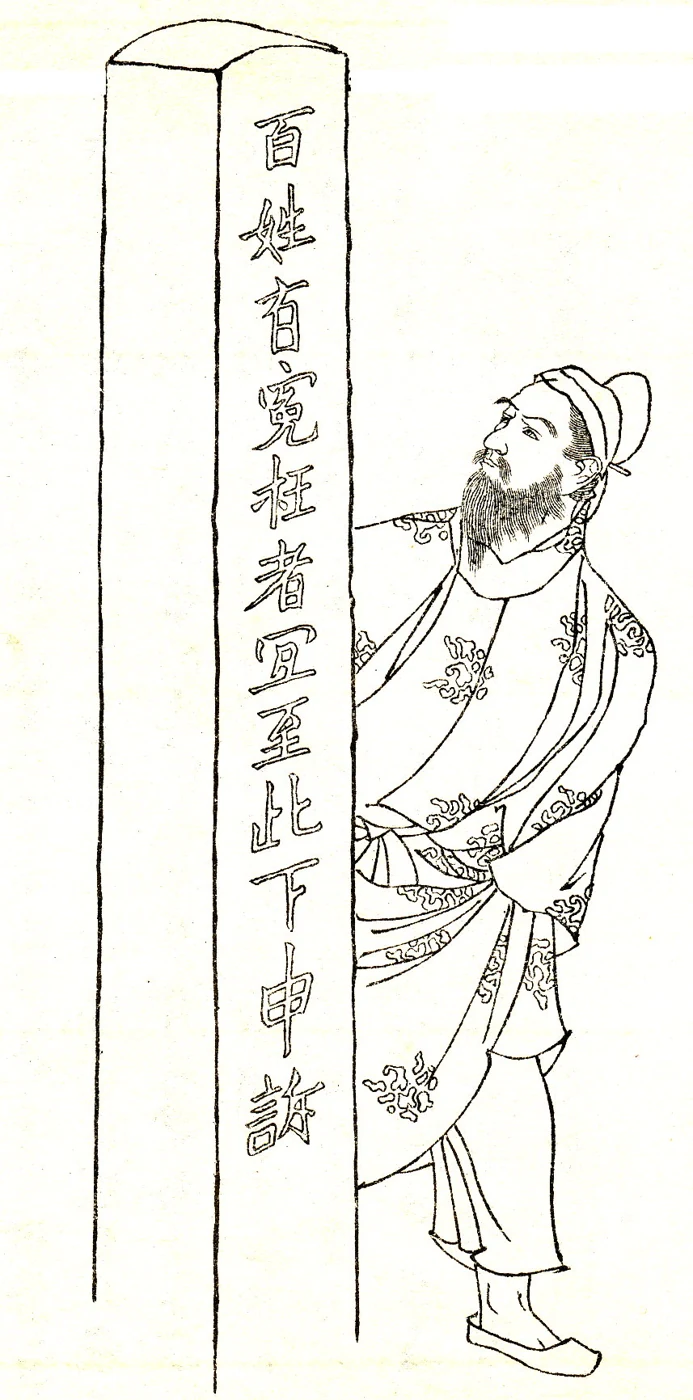
Later artistic depiction of Kibi no Makibi in a historical painting or book illustration.
695 CE–775 CE
Kentōshi ScholarMinister of the Right (Udaijin)Statesman
Kibi no Makibi
吉备真备
Kibi no Makibi (695 – November 3, 775), originally named Shimotsumichi no Makibi, was a preeminent Japanese scholar, diplomat, and statesman of the Nara period. He attained the supreme ministerial rank of Minister of the Right (Udaijin) at the Senior Second Rank, and was posthumously awarded the Senior First Rank. Journeying to Tang China with the imperial embassies (*Kentōshi*) in 717 and 752, he spent nearly nineteen years…
695 CE–775 CETang Dynasty
PROFILE
Kibi no Makibi (695 – November 3, 775), originally named Shimotsumichi no Makibi, was a preeminent Japanese scholar, diplomat, and statesman of the Nara period. He attained the supreme ministerial rank of Minister of the Right (Udaijin) at the Senior Second Rank, and was posthumously awarded the Senior First Rank. Journeying to Tang China with the imperial embassies (*Kentōshi*) in 717 and 752, he spent nearly nineteen years mastering astronomy, mathematics, calendar calculation, music, and military science. He introduced the *Dayan Calendar* and Tang court rites to Japan, fundamentally shaping Nara-era civil and administrative institutions. Returning to high office, he helped suppress the rebellion of Fujiwara no Nakamaro in 764, becoming one of the very few non-aristocratic scholars in Japanese history to reach the pinnacle of state governance.
Era
Tang Dynasty / Nara Period Japan
Dynasty
Nara period of Japan and the Tang dynasty
Identity
Kentōshi Scholar, Minister of the Right (Udaijin), Statesman
Date of Birth
695 CE(1st year of Ri Ben Chi Tong Tian Huang Jiu Nian / Tang Zheng Sheng)
Date of Death
November 3, 775 CE(10th year of the Ribenbaoguiliunian/tangdali era, 10th month, 2nd day)
Ethnicity
Yamato people
Ancestral Home
Shimotsumichi District, Bitchū Province, Japan (present-day Mabi-chō, Kurashiki, Okayama, Japan)
Place of Birth
Shimotsumichi District, Bitchū Province, Japan (present-day Mabi-chō, Kurashiki, Okayama, Japan)
Place of Death
Unknown
Lifespan
81 years old
Highest Office
Minister of the Right (Udaijin, Senior Second Rank), Vice-Governor of Dazaifu
LIFE TIMELINE
Age 1 | Born in Shimotsumichi District, Bitchu Province (modern-day KuOpen
Age 1 | Born in Shimotsumichi District, Bitchu Province (modern-day Kurashiki, Okayama Prefecture); originally named Shimotsumichi no Makibi.
Age 22 | Selected through imperial competitive examination as an officOpen
Age 22 | Selected through imperial competitive examination as an official overseas student for the Kentoshi mission due to his profound mastery of classical literature and history.
Age 23 | Departed Naniwa Port with the ninth Kentoshi flotilla led by Open
Age 23 | Departed Naniwa Port with the ninth Kentoshi flotilla led by Tajihi no Agatamori; arrived in Chang'an and entered the Four Gates Academy under Assistant Instructor Zhao Xuanmo.
Age 40 | Inscribed the 328-character tomb epitaph for the deceased TanOpen
Age 40 | Inscribed the 328-character tomb epitaph for the deceased Tang Honglu Temple ritual protocol official Li Xun in Chang'an, signed "Inscribed by Bi, Courtier of the State of Japan."
Age 41 | Returned to Japan with Ambassador Tajihi no Hironari, presentOpen
Age 41 | Returned to Japan with Ambassador Tajihi no Hironari, presenting the *Tang Rites*, the *Dayan Calendar Scripture*, the *Yaoshu Yaolu*, pitch pipes, and weapons to Emperor Shomu; appointed Junior Eighth Rank Lower and soon named Assistant Master of the State Academy (Daigaku-no-suke).
Age 42 | Promoted to Junior Fifth Rank Lower and appointed Master of tOpen
Age 42 | Promoted to Junior Fifth Rank Lower and appointed Master of the Empress's Household (Chugu-no-suke), winning the deep trust of Empress Komyo.
Age 43 | Elevated to Junior Fifth Rank Upper and appointed Captain of Open
Age 43 | Elevated to Junior Fifth Rank Upper and appointed Captain of the Right Gate Guards (Uemon-no-kami), commanding capital garrison forces.
Age 44 | Appointed Scholar of the Crown Prince's Household (Togu GakusOpen
Age 44 | Appointed Scholar of the Crown Prince's Household (Togu Gakushi), personally lecturing on the *Book of Han* and the *Classic of Rites* to Imperial Princess Abe (the future Empress Koken/Shotoku).
Age 46 | Fujiwara no Hirotsugu submitted an imperial memorial demandinOpen
Age 46 | Fujiwara no Hirotsugu submitted an imperial memorial demanding the banishment of Makibi and the Buddhist master Genbo, launching an armed rebellion in Kyushu; upon the rebellion's suppression, Makibi was assigned as Governor of Chikuzen (Chikuzen-no-kami), visiting Hirotsugu's grave en route to offer sacrifices and construct a memorial shrine.
Age 49 | Promoted to Junior Fourth Rank Lower and named Grand Master oOpen
Age 49 | Promoted to Junior Fourth Rank Lower and named Grand Master of the Crown Prince's Quarters (Togu-no-daibu).
Age 52 | Bestowed the noble aristocratic clan title (kabane) of "Kibi Open
Age 52 | Bestowed the noble aristocratic clan title (kabane) of "Kibi no Ason" by Emperor Shomu, officially changing his surname from Shimotsumichi to Kibi.
Age 55 | Following the enthronement of Empress Koken, Fujiwara no NakaOpen
Age 55 | Following the enthronement of Empress Koken, Fujiwara no Nakamaro seized prime authority and marginalized Makibi, demoting him to Governor of Hizen (Hizen-no-kami).
Age 57 | Maneuvered by Fujiwara no Nakamaro into leaving the capital, Open
Age 57 | Maneuvered by Fujiwara no Nakamaro into leaving the capital, Makibi was appointed Vice-Ambassador of the tenth Kentoshi mission under Ambassador Fujiwara no Kiyokawa.
Age 58 | Arrived in Chang'an, received imperial audience with Emperor Open
Age 58 | Arrived in Chang'an, received imperial audience with Emperor Xuanzong of Tang, and emotionally reunited with Abe no Nakamaro (Chao Heng).
Age 59 | Visited Yanguang Temple in Yangzhou to confer with Master JiaOpen
Age 59 | Visited Yanguang Temple in Yangzhou to confer with Master Jianzhen, finalizing arrangements to transport the blind master's ordination mission to Japan; sailed from Huangsipu in November, encountering a cataclysmic tempest at sea.
Age 60 | Makibi's second vessel miraculously drifted ashore at Yaku IsOpen
Age 60 | Makibi's second vessel miraculously drifted ashore at Yaku Island in Satsuma after extreme privations; safely returned to Heijo-kyo and was appointed Senior Assistant Governor-General of the Dazaifu (Dazai no Daini).
Age 62 | Directed the engineering and fortification of the strategic mOpen
Age 62 | Directed the engineering and fortification of the strategic mountain stronghold Ito Castle in Chikuzen to guard against Silla and potential spillover from the An Lushan Rebellion.
Age 64 | Reorganized coastal defenses, signal beacons, and logistical Open
Age 64 | Reorganized coastal defenses, signal beacons, and logistical supplies at the Dazaifu in preparation for potential continental conflicts.
Age 67 | Concurrently appointed Military Commissioner of the Saikaido Open
Age 67 | Concurrently appointed Military Commissioner of the Saikaido (Saikaido Setsudoshi); instituted the Dayan Calendar at Dazaifu, replacing the antiquated Yifeng calendar.
Age 70 | Fujiwara no Nakamaro instigated an armed rebellion; Makibi waOpen
Age 70 | Fujiwara no Nakamaro instigated an armed rebellion; Makibi was urgently appointed Commander of the Middle Palace Guards (Chue-daisho), ordered the burning of Seta Bridge, trapped and decisively crushed the rebel forces at Katsuno-onie in Omi, executed Nakamaro, and was elevated to Junior Third Rank Sangi.
Age 72 | Appointed Chunagon while retaining command of the Middle PalaOpen
Age 72 | Appointed Chunagon while retaining command of the Middle Palace Guards; in March awarded Second Class Merit Order; in August promoted to Junior Second Rank Dainagon; in October appointed Minister of the Right (Udaijin).
Age 75 | Promoted to Senior Second Rank; conspired with Minister of thOpen
Age 75 | Promoted to Senior Second Rank; conspired with Minister of the Left Fujiwara no Nagate to dispatch Wake no Kiyomaro to Usa Hachiman Shrine, thwarting the monk-chancellor Dokyo's plot to usurp the imperial throne.
Age 76 | Empress Shotoku passed away; Dokyo was banished; Emperor KoniOpen
Age 76 | Empress Shotoku passed away; Dokyo was banished; Emperor Konin ascended the throne; Makibi submitted his resignation, was permitted to step down from the Middle Palace Guards, but was retained as Minister of the Right; completed his fifty-volume family treatise *Shikyo Ruiju*.
Age 77 | Reiterated his petition for retirement due to advanced age; EOpen
Age 77 | Reiterated his petition for retirement due to advanced age; Emperor Konin formally granted his honorable discharge with full pension.
Age 81 | Passed away peacefully on the second day of the tenth month aOpen
Age 81 | Passed away peacefully on the second day of the tenth month at his private residence in Heijo-kyo at the age of eighty-one.
Age 57 | He initially reassigned Makibi to the remote post of GovernorOpen
Age 57 | He initially reassigned Makibi to the remote post of Governor of Hizen (Hizen-no-kami) in 750, and in the following year (Tenpyo-shobu 3, 751), orchestrated a decree appointing the fifty-seven-year-old Makibi as Vice-Ambassador of the tenth Kentoshi mission (with Fujiwara no Kiyokawa serving as Ambassador and Otomo no Komaro as co-Vice-Ambassador).
Age 57 | He initially reassigned Makibi to the remote post of GovernorOpen
Age 57 | He initially reassigned Makibi to the remote post of Governor of Hizen (Hizen-no-kami) in 750, and in the following year (Tenpyo-shobu 3, 751), orchestrated a decree appointing the fifty-seven-year-old Makibi as Vice-Ambassador of the tenth Kentoshi mission (with Fujiwara no Kiyokawa serving as Ambassador and Otomo no Komaro as co-Vice-Ambassador).
Age 58 | Abe no Nakamaro (Chao Heng): Inseparable classmate on the 717Open
Age 58 | Abe no Nakamaro (Chao Heng): Inseparable classmate on the 717 Kentoshi voyage; became Director of the Tang Imperial Library and an intimate friend of Li Bai and Wang Wei; reunited with Makibi in Chang'an in 752.
Age 58 | In the intercalary third month of 752 (Tenpyo-shobu 4), the KOpen
Age 58 | In the intercalary third month of 752 (Tenpyo-shobu 4), the Kentoshi embassy set sail aboard four large vessels.
Age 59 | Master Jianzhen (Ganjin): Patriarch of the Chinese Vinaya schOpen
Age 59 | Master Jianzhen (Ganjin): Patriarch of the Chinese Vinaya school at Damingsi in Yangzhou; personally invited and covertly escorted to Japan by Makibi during the 753 Kentoshi mission.
Age 59 | In the autumn of the fifth year of Tenpyo-shobu (753), the KeOpen
Age 59 | In the autumn of the fifth year of Tenpyo-shobu (753), the Kentoshi mission departed Chang'an and descended south to Yangzhou to prepare for repatriation.
Age 60 | In the spring of 754 (Tenpyo-shobu 6), Makibi accomplished thOpen
Age 60 | In the spring of 754 (Tenpyo-shobu 6), Makibi accomplished the impossible, leading his crew safely back to Heijo-kyo.
Age 60 | In the spring of 754 (Tenpyo-shobu 6), Makibi accomplished thOpen
Age 60 | In the spring of 754 (Tenpyo-shobu 6), Makibi accomplished the impossible, leading his crew safely back to Heijo-kyo.
Age 62 | Engineering Ito Castle: In the eighth year of Tenpyo-shobu (7Open
Age 62 | Engineering Ito Castle: In the eighth year of Tenpyo-shobu (756), Makibi personally surveyed the strategic mountainous passes of Ito District in Chikuzen Province and directed the construction of Ito Castle.
Age 62 | Engineering Ito Castle: In the eighth year of Tenpyo-shobu (7Open
Age 62 | Engineering Ito Castle: In the eighth year of Tenpyo-shobu (756), Makibi personally surveyed the strategic mountainous passes of Ito District in Chikuzen Province and directed the construction of Ito Castle.
Age 64 | Saikaido Military Readiness: In 758 (Tenpyo-hoji 2), as NakamOpen
Age 64 | Saikaido Military Readiness: In 758 (Tenpyo-hoji 2), as Nakamaro entertained grandiose visions of launching an overseas naval punitive expedition against Silla, Makibi systematically prepared coastal defenses, accumulated grain supplies, and organized regional warrior conscripts.
Age 64 | Saikaido Military Readiness: In 758 (Tenpyo-hoji 2), as NakamOpen
Age 64 | Saikaido Military Readiness: In 758 (Tenpyo-hoji 2), as Nakamaro entertained grandiose visions of launching an overseas naval punitive expedition against Silla, Makibi systematically prepared coastal defenses, accumulated grain supplies, and organized regional warrior conscripts.
Age 67 | In 761 (Tenpyo-hoji 5), the court concurrently appointed MakiOpen
Age 67 | In 761 (Tenpyo-hoji 5), the court concurrently appointed Makibi as Military Commissioner of the Saikaido (Saikaido Setsudoshi), granting him supreme military authority over the nine provinces and two islands of Kyushu.
Age 70 | Makibi served as the de facto administrative and military comOpen
Age 70 | Makibi served as the de facto administrative and military commander of Kyushu for an unbroken decade (754–764).
Age 70 | Makibi served as the de facto administrative and military comOpen
Age 70 | Makibi served as the de facto administrative and military commander of Kyushu for an unbroken decade (754–764).
Aged seventy-one | He was granted the second order of merit.Open
Aged seventy-one | He was granted the second order of merit.
Age 72 | In the first month of Tenpyo-jingo 2 (766), Makibi was appoinOpen
Age 72 | In the first month of Tenpyo-jingo 2 (766), Makibi was appointed Chunagon (Middle Councilor) while retaining his military post as Commander of the Middle Palace Guards; in March he was decorated with the Second Class Merit Order; in August he was promoted to Junior Second Rank and named Dainagon (Major Councilor); and on the twentieth day of the tenth month of 766, Empress Shotoku appointed him Minister of the Right (Udaijin)—the second highest executive office in the state beneath the Minister of the Left.
Age 72 | In the first month of Tenpyo-jingo 2 (766), Makibi was appoinOpen
Age 72 | In the first month of Tenpyo-jingo 2 (766), Makibi was appointed Chunagon (Middle Councilor) while retaining his military post as Commander of the Middle Palace Guards; in March he was decorated with the Second Class Merit Order; in August he was promoted to Junior Second Rank and named Dainagon (Major Councilor); and on the twentieth day of the tenth month of 766, Empress Shotoku appointed him Minister of the Right (Udaijin)—the second highest executive office in the state beneath the Minister of the Left.
Age 75 | In the third year of Jingo-keiun (769), Dokyo conspired with Open
Age 75 | In the third year of Jingo-keiun (769), Dokyo conspired with the chief priest of Usa Hachiman Shrine in Kyushu to manufacture a fraudulent divine oracle, declaring: "The Great God Hachiman proclaims that if Dokyo be made Emperor, universal peace and tranquility shall prevail across the realm." Faced with the imminent usurpation of the imperial throne by an outside religious charlatan, Minister of the Right Kibi no Makibi and Minister of the Left Fujiwara no Nagate forged a resolute clandestine alliance to defend the ancestral dynasty.
Age 75 | In the third year of Jingo-keiun (769), Dokyo conspired with Open
Age 75 | In the third year of Jingo-keiun (769), Dokyo conspired with the chief priest of Usa Hachiman Shrine in Kyushu to manufacture a fraudulent divine oracle, declaring: "The Great God Hachiman proclaims that if Dokyo be made Emperor, universal peace and tranquility shall prevail across the realm." Faced with the imminent usurpation of the imperial throne by an outside religious charlatan, Minister of the Right Kibi no Makibi and Minister of the Left Fujiwara no Nagate forged a resolute clandestine alliance to defend the ancestral dynasty.
Age 76 | After narrowly escaping massacre by indigenous coastal tribesOpen
Age 76 | After narrowly escaping massacre by indigenous coastal tribes, Kiyokawa and Nakamaro were forced to trek thousands of miles back to Chang'an; Nakamaro was never destined to see his native Japan again, living out his remaining days in China until his death in 770.
Age 76 | After narrowly escaping massacre by indigenous coastal tribesOpen
Age 76 | After narrowly escaping massacre by indigenous coastal tribes, Kiyokawa and Nakamaro were forced to trek thousands of miles back to Chang'an; Nakamaro was never destined to see his native Japan again, living out his remaining days in China until his death in 770.
Age 77 | In the third month of the second year of Hoki (771), Makibi sOpen
Age 77 | In the third month of the second year of Hoki (771), Makibi submitted a second impassioned petition, reiterating his desire to surrender high office and return to private life.
Age 77 | In the third month of the second year of Hoki (771), Makibi sOpen
Age 77 | In the third month of the second year of Hoki (771), Makibi submitted a second impassioned petition, reiterating his desire to surrender high office and return to private life.
Age 81 | On the second day of the tenth month of the sixth year of HokOpen
Age 81 | On the second day of the tenth month of the sixth year of Hoki (775), having faithfully served six successive emperors (Gensho, Shomu, Koken, Junnin, Shotoku, and Konin), crossed the perilous ocean twice, led imperial armies to crush treasonous rebellions, and imported the crowning cultural achievements of Tang civilization to his homeland, Kibi no Makibi passed away peacefully at his residence at the grand age of eighty-one.
Age 81 | On the second day of the tenth month of the sixth year of HokOpen
Age 81 | On the second day of the tenth month of the sixth year of Hoki (775), having faithfully served six successive emperors (Gensho, Shomu, Koken, Junnin, Shotoku, and Konin), crossed the perilous ocean twice, led imperial armies to crush treasonous rebellions, and imported the crowning cultural achievements of Tang civilization to his homeland, Kibi no Makibi passed away peacefully at his residence at the grand age of eighty-one.
BIOGRAPHY
Biography
Ancestral Heritage and Youthful Classical Studies Kibi no Makibi was born in the ninth year of the reign of Empress Jito (695) in Yata, Shimotsumichi District, Bitchu Province (in modern-day Mabi Town, Kurashiki City, Okayama Prefecture). His family belonged to the Shimotsumichi clan, a prominent regional offshoot of the ancient Kibi clan that had once ruled over the prosperous and strategically vital Kibi domain in western Honshu. His grandfather, Shimotsumichi no Kunikatsu, had served as a district chieftain (gunryo), while his father, Shimotsumichi no Kunikatsu, attained the modest court rank of Junior Eighth Rank Senior and served as Lieutenant of the Right Gate Guards (Uemon-no-shoui). Under the emerging Ritsuryo bureaucratic hierarchy of the centralizing Yamato state, the Shimotsumichi clan occupied the status of middle-to-lower tier provincial aristocracy. His mother hailed from the local notable Yoki clan. From his early childhood, Makibi demonstrated an extraordinary capacity for intellectual inquiry and literary discipline. Although his family resided in the western provinces away from the metropolitan capital, the clan cultivated a rigorous tradition of classical Sinitic learning. The young Makibi devoured Confucian philosophical canons, Chinese dynastic histories, and administrative jurisprudence, developing an incisive analytical mind and an encyclopedic command of structural governance. In the second year of the Reiki era (716), under the reign of Empress Gensho, the imperial court decreed an extensive open examination across the nobility and provincial elite to recruit youths of paramount intellectual caliber for the diplomatic and scholarly mission to Tang China. The twenty-two-year-old Shimotsumichi no Makibi distinguished himself above all competitors through his profound command of the Confucian classics, his astonishing photographic memory, and his lucid treatises on contemporary statecraft. Alongside the young aristocrat Abe no Nakamaro (later renowned as Chao Heng in China), fellow legal scholar Yamato no Nagaoka, and the brilliant Hossō monk Genbo, Makibi was officially designated as an imperial overseas student (ryugakusei) for the eighth (conventionally numbered ninth) Kentoshi embassy. ### The Nineteen-Year Intellectual Odyssey in Tang Chang'an In the third month of the first year of the Yoro era (717), the Kentoshi embassy led by Envoy Counselor Tajihi no Agatamori set sail from Naniwa Port with four ocean-going vessels. Navigating the tempestuous waters of the Eastern Sea with rudimentary nautical guidance, the flotilla survived severe oceanic hazards to make landfall on the shores of Yangzhou before ascending the Grand Canal toward the imperial metropolis. In the autumn of 717, the embassy entered the gates of Chang'an, the glittering cosmopolitan capital of the Tang Empire during the fifth year of Emperor Xuanzong's Kaiyuan era—an epoch representing the pinnacle of Tang geopolitical ascendancy, administrative perfection, and cultural brilliance. Upon arrival, the Court of Imperial Diplomacy (Honglu Temple) enrolled Shimotsumichi no Makibi in the prestigious Four Gates Academy (Shimenxue), one of the premier higher education institutes overseen by the Directorate of National Education (Guozijian). The Tang imperial court appointed Assistant Instructor Zhao Xuanmo to serve as his primary academic preceptor. Immersing himself in the rigorous curriculum of the capital academy, Makibi pursued an exhausting regimen of classical study that continued unbroken across nineteen years. He scrutinized the Thirteen Confucian Classics, specializing in the complex ceremonial and institutional treatises of the *Three Rites* (*Rites of Zhou*, *Etiquette and Ceremonial*, and the *Classic of Rites*), while mastering the foundational historical narratives of Sima Qian's *Records of the Grand Historian* (*Shiji*), Ban Gu's *Book of Han* (*Hanshu*), and Fan Ye's *Book of the Later Han* (*Hou Hanshu*). Yet Makibi's intellectual ambition soared far beyond scholastic book-learning. Recognizing that Japan's burgeoning Ritsuryo state desperately required institutional technologies, applied sciences, and codified mechanisms of governance, he systematically explored every practical discipline available in the Tang metropolis. He apprenticed with imperial astronomers and calendar specialists, deciphering the computational mathematics behind the revolutionary *Dayan Calendar* conceived by the Buddhist polymath Monk Yixing; he studied acoustics, court ceremonial music, and the twelve chromatic pitch pipes at the Court of Imperial Sacrifices (Taichang Temple); he inspected weapon manufacture, cross-bow mechanics, compound archery specifications, and cavalry battle array doctrines within the Ministry of War; and he collected legal compendia, administrative statutes, medical formularies, and yin-yang astrological manuals. While his compatriot Abe no Nakamaro achieved meteoric fame in the literary salons of Chang'an through his dazzling poetic genius—becoming a close intimate of Li Bai and Wang Wei—Makibi established himself as an peerless master of statecraft and empirical science. His towering intellect, austere personal rectitude, and scholarly breadth won him universal esteem among the Tang bureaucratic elite. In the twenty-second year of the Kaiyuan era (734), when Li Xun, a prominent protocol official of the Tang Honglu Temple charged with hosting foreign envoys, passed away in Chang'an, the Tang ritual establishment and the foreign diplomatic corps unanimously invited Makibi to compose and transcribe the official stone mortuary epitaph. Inscribing 328 Chinese characters in the elegant, chiseled regular script modeled after the master calligrapher Chu Suiliang, Makibi concluded the inscription with the distinctive signature: "Inscribed by Bi, Courtier of the State of Japan" (Riben-guo Chaochen Bi Shu). This extraordinary archaeological artifact, unearthed in Luoyang in 2019 and preserved in the Shenzhen Wangye Museum, provides definitive physical evidence of Makibi's flawless mastery of high-Tang calligraphy and Chinese prose. During his extended residence, Emperor Xuanzong summoned Makibi to the Daming Palace for private audiences on multiple occasions. Thoroughly captivated by Makibi's dignified demeanor, encyclopedic grasp of ceremonial propriety, and philosophical depth, Xuanzong famously praised Japan as a "Realm of Exemplary Ritual and Virtuous Gentlemen" (*Liyi Junzi zhi Guo*) and conferred upon Makibi the elevated honorary civil rank of Grand Master of the Silver-Blue Glazed Radiance (Yinqing Guanglu Dafu), granting him imperial clearance to purchase and copy classified archival texts from the imperial libraries. ### Triumphant Return and Domestic Reform under Emperor Shomu In the late autumn of the sixth year of Tenpyo (734), the Kentoshi mission led by Ambassador Tajihi no Hironari finalized preparations to return to Japan. Makibi carefully crated his vast repository of precious texts, scientific apparatus, and ceremonial implements, boarding the ships alongside his fellow repatriates. In the third month of the seventh year of Tenpyo (735), the envoy fleet safely entered Naniwa Port. Summoned to the Daigokuden (Great Hall of State) in Heijo-kyo, Makibi was received in solemn audience by Emperor Shomu and Empress Komyo. Before the assembled court, Makibi unveiled a monumental inventory of Chinese texts and cultural treasures unprecedented in Japanese history:
Statecraft and Institutional Codes: The *Tang Rites* (*Tangli*) in 130 volumes, embodying the definitive compendium of Tang imperial rituals, diplomatic protocols, and court ceremonies; and the rare Han dynastic chronicle *Records of the Eastern Lodge* (*Dongguan Hanji*);
Mathematical Astronomy and Chronometry: The foundational *Dayan Calendar Scripture* (*Dayan Li Jing*) in one volume, the computational tables of the *Dayan Calendar Ephemeris* (*Dayan Li Licheng*) in twelve volumes, and calibrated iron gnomons for measuring solar shadows (sokueitesshaku);
Musicology and Acoustic Instruments: The priceless ten-volume musicological treatise *Key Essentials of Music Treatises* (*Yaoshu Yaolu*—a work subsequently lost in China and preserved uniquely in Japan); twelve standardized bronze pitch pipes (doryukan) establishing absolute chromatic frequencies, an iron fangxiang chime set, and twelve acoustic pitch-tuning scrolls;
Military Weaponry and Equipment: Three masterfully engineered specialized military compound bows (the thread-wrapped lacquered horn bow, the horseback water-drinking lacquered horn bow, and the four-joint exposed horn bow), accompanied by twenty armor-piercing iron arrows (shakōya) and ten flat-flight target arrows (heisha-ya). This staggering array of cultural capital provided the nascent Nara court with the institutional and technological blueprints it desperately required. Emperor Shomu, profoundly impressed by Makibi's achievements, immediately broke aristocratic precedent by conferring upon him the court rank of Junior Eighth Rank Lower and naming him Assistant Master of the State Academy (Daigaku-no-suke). At the Daigaku-ryo (State Academy), Makibi initiated sweeping reforms of the classical educational curriculum. Dismayed by the phonetic corruption of Sinitic character readings caused by the historical entrenchment of southern Six Dynasties "Wu pronunciations" (Go-on), Makibi established an entirely new chair of Chinese Phonology (On'in-gaku). Utilizing the phonological principles of the Tang rhyme dictionaries *Qieyun* and *Tangyun*, he rigorously trained noble disciples in the standard northern pronunciation of Chang'an ("Han pronunciations" or Kan'on), which became the mandatory standard for imperial edicts and state documents. Furthermore, by isolating and adapting individual strokes and radicals from regular script Chinese characters to represent phonetic syllables, Makibi played a pivotal pioneering role in crystallizing the proto-elements of the Japanese katakana syllabary and developing systematic fanqie spelling techniques. Makibi's exceptional administrative competence and versatile polymathy rapidly elevated him through the court hierarchy: in 736 (Tenpyo 8), he was promoted to Junior Fifth Rank Lower and appointed Master of the Empress's Household (Chugu-no-suke) under Empress Komyo; in 737 (Tenpyo 9), he advanced to Junior Fifth Rank Upper and was entrusted with capital garrison security as Captain of the Right Gate Guards (Uemon-no-kami); and in 738 (Tenpyo 10), Emperor Shomu appointed him Scholar of the Crown Prince's Household (Togu Gakushi). In this prestigious capacity, Makibi served as the exclusive personal preceptor to the emperor's daughter and designated heir, Imperial Princess Abe (the future Empress Koken and Empress Shotoku), instructing her in the statecraft of the *Book of Han* and the moral governance of the *Classic of Rites*. This intimate bond between teacher and monarch forged an unshakeable political alliance that would define Makibi's subsequent ascent to the pinnacle of state power. ### The Hirotsugu Rebellion, Reconciliation at the Grave, and the Kibi Surname In the ninth year of Tenpyo (737), a devastating smallpox epidemic swept through the capital, wiping out the leaders of the four branch houses of the Fujiwara clan (Muchimaro, Fusasaki, Umakai, and Maro). In the ensuing political vacuum, Prince Tachibana no Moroe, a prominent imperial royal, assumed supreme control of the Grand Council of State (Daijokan). Moroe placed immense trust in foreign-educated technocrats, relying upon Kibi no Makibi and the monk Genbo as his primary ideological and administrative counselors. Under their guidance, the court pursued aggressive institutional reforms aligned with Tang centralist standards. However, the rapid elevation of these two men provoked deep resentment among the disaffected provincial nobility and the surviving remnants of the Fujiwara clan. In the autumn of the twelfth year of Tenpyo (740), Fujiwara no Hirotsugu, the eldest son of the deceased Fujiwara no Umakai who had been exiled to the post of Junior Assistant Governor-General of Dazaifu (Dazai no Shoni) in northern Kyushu, submitted a fiery memorial to Emperor Shomu. Hirotsugu violently denounced Makibi and Genbo, alleging that crop failures, cosmic omens, and administrative chaos were direct divine punishments for their "seditious subversion of ancestral governance," and demanded their immediate execution or exile. When the court rejected his petition, Hirotsugu mobilized over ten thousand provincial warriors across Kyushu in open rebellion. Emperor Shomu dispatched an imperial punitive expedition under General Ono no Azumahito, which swiftly crushed the rebel forces and captured Hirotsugu, who was subsequently beheaded in Hizen Province. Although the rebellion was decisively suppressed, the political friction between the aristocratic lineages and the meritocratic scholar-officials remained intensely volatile. To de-escalate factional tensions while continuing to honor Makibi's service, Emperor Shomu promoted him to Junior Fourth Rank Lower in 743 and named him Grand Master of the Crown Prince's Quarters (Togu-no-daibu), but subsequently appointed him Governor of Chikuzen (Chikuzen-no-kami) in 746, temporarily transferring him away from the court intrigues of Heijo-kyo. En route to his gubernatorial post in northern Kyushu, Makibi performed an act of profound magnanimity that resonated across the empire. Pausing his journey at the site where his mortal enemy Fujiwara no Hirotsugu had met his violent end, Makibi did not harbor vengeance; instead, displaying the transcendent moral rectitude of a classical sage-statesman, he laid out sumptuous ritual offerings, conducted solemn memorial services for Hirotsugu's tormented soul, and erected an ancestral shrine in his honor. This extraordinary act of spiritual reconciliation disarmed the hostility of the regional Kyushu gentry, stabilized provincial sentiment, and earned Makibi the unbounded admiration of both court and commoners. In the winter of that same year (Tenpyo 18, 746), Emperor Shomu issued an imperial decree commending Makibi's peerless contributions to the state, granting him, his elder brother Shimotsumichi no Mamori, and his younger sister Shimotsumichi no Yuri the prestigious aristocratic kabane of "Kibi no Ason." Henceforth, the former Shimotsumichi lineage was formally immortalized in the court rolls under the illustrious name of Kibi no Makibi. ### Second Embassy to Tang, Alliance with Master Jianzhen, and Oceanic Ordeal In the first year of the Tenpyo-shobu era (749), Emperor Shomu abdicated the throne to enter the Buddhist monastic order, and Makibi's former pupil, Imperial Princess Abe, was enthroned as Empress Koken. Concurrently, Fujiwara no Nakamaro (the second son of Muchimaro and nephew of Empress Dowager Komyo) rapidly concentrated supreme executive authority within his newly created Shibi Chudai (Private Palace Secretariat). Viewing Makibi's formidable intellect and deep personal influence over Empress Koken as the most dangerous threat to his familial hegemony, Nakamaro systematically maneuvered to neutralize him. He initially reassigned Makibi to the remote post of Governor of Hizen (Hizen-no-kami) in 750, and in the following year (Tenpyo-shobu 3, 751), orchestrated a decree appointing the fifty-seven-year-old Makibi as Vice-Ambassador of the tenth Kentoshi mission (with Fujiwara no Kiyokawa serving as Ambassador and Otomo no Komaro as co-Vice-Ambassador). Nakamaro's transparent objective was to exile his brilliant political adversary to the lethal hazards of an ocean crossing, hoping he would perish in the tempestuous seas. In the intercalary third month of 752 (Tenpyo-shobu 4), the Kentoshi embassy set sail aboard four large vessels. Undaunted by the perils, Makibi guided the fleet across the treacherous waters and successfully reached Chang'an. At the Tang court, Emperor Xuanzong warmly welcomed the seasoned diplomat, granting the embassy privileged audiences and showering them with imperial honors. During this second residency, Makibi enjoyed an emotionally overwhelming reunion with Abe no Nakamaro (Chao Heng), who was then serving as Director of the Tang Imperial Library (Mishujian). For thirty-five years, the two cohorts had carried the torch of cultural exchange in disparate realms. In the quiet courtyards of Chang'an, Makibi and Nakamaro spent nights conversing on the geopolitical shifts of East Asia, the spiritual needs of Japan's monastic community, and the urgent imperative of securing an authentic lineage master to transmit the orthodox Vinaya (monastic discipline) to Nara. In the autumn of the fifth year of Tenpyo-shobu (753), the Kentoshi mission departed Chang'an and descended south to Yangzhou to prepare for repatriation. In Yangzhou, the venerable master Jianzhen (Ganjin) of Damingsi, though totally blinded by physical hardships following five catastrophic failed attempts to reach Japan over twelve years, remained passionately resolved to fulfill his sacred vow. Makibi and Ambassador Fujiwara no Kiyokawa traveled secretly to Yanguang Temple to pay homage to the blind master. Drawing upon his profound understanding of both Tang administrative protocol and Buddhist canon, Makibi lucidly explained the crisis facing Japanese Buddhism: while temples flourished, Japanese monks lacked properly ordained masters to administer orthodox, unbroken precepts. Makibi and his colleagues orchestrated an intricate covert logistical plan: circumventing the vigilant Tang maritime port authorities who had repeatedly forbidden Jianzhen's departure, they divided Jianzhen's monastic entourage across the four Kentoshi ships, disguising them among the diplomatic personnel. On the sixteenth day of the eleventh month of 753, the four-ship flotilla weighed anchor from Huangsipu in Suzhou and ventured into the open ocean. Mid-voyage, the flotilla was engulfed by an apocalyptic oceanic typhoon that scattered the vessels across thousands of leagues. The primary ship, carrying Ambassador Fujiwara no Kiyokawa and Abe no Nakamaro, was swept violently south toward the coast of Champa and Annan (modern-day northern Vietnam). After narrowly escaping massacre by indigenous coastal tribes, Kiyokawa and Nakamaro were forced to trek thousands of miles back to Chang'an; Nakamaro was never destined to see his native Japan again, living out his remaining days in China until his death in 770. Meanwhile, Makibi's second vessel suffered catastrophic structural damage: its mainmast snapped, its steering rudders splintered, and its fresh water reserves were exhausted as it drifted helplessly across the mountainous swells for weeks before crashing onto the jagged reefs of Yaku Island off the southern coast of Satsuma. Faced with a hysterical and starving crew on the brink of total collapse, the sixty-year-old Makibi displayed consummate poise and iron leadership. Marshaling his knowledge of astronomy, maritime geography, and survival arts, he restored chain-of-command discipline, organized foraging expeditions to harvest edible flora and fresh water, directed the structural salvage and seaworthy repair of the battered vessel, and successfully navigated the shattered craft through the coastal islands. In the spring of 754 (Tenpyo-shobu 6), Makibi accomplished the impossible, leading his crew safely back to Heijo-kyo. Miraculously, the fourth ship carrying Master Jianzhen likewise survived the tempest, making landfall in southern Kyushu. Thus, after a twelve-year saga of suffering, Jianzhen finally stepped onto Japanese soil to inaugurate the golden age of Buddhist monastic ordination at Todaiji, an achievement made possible by Makibi's resolute diplomatic courage and navigational fortitude. ### Fortifying the Western Frontier, Administrative Governance, and the Crushing of Nakamaro's Rebellion Upon Makibi's triumphant return from the dead, Fujiwara no Nakamaro found himself unable to suppress the veteran scholar's immense prestige. Determined to keep him far from the center of power, Nakamaro arranged for Makibi's immediate deployment to northern Kyushu, appointing him Senior Assistant Governor-General of the Dazaifu (Dazai no Daini). Makibi served as the de facto administrative and military commander of Kyushu for an unbroken decade (754–764). During this critical juncture, East Asia was convulased by titanic geopolitical tremors: in the winter of 755, the catastrophic An Lushan Rebellion erupted in China, tearing the Tang Empire apart and devastating the central plains, while diplomatic relations between Japan and the Korean kingdom of Silla deteriorated into armed confrontation. Stationed at the gateway to the Asian continent, Makibi executed a brilliant three-pronged strategic program of national defense:
Engineering Ito Castle: In the eighth year of Tenpyo-shobu (756), Makibi personally surveyed the strategic mountainous passes of Ito District in Chikuzen Province and directed the construction of Ito Castle. Synthesizing Tang continental fortification architecture with the topography of Kyushu's rugged terrain, he supervised the construction of monumental dry-stone battlements, watchtowers, watergates, and fortified redoubts, transforming Ito Castle into an impregnable bastion against continental invasions;
Saikaido Military Readiness: In 758 (Tenpyo-hoji 2), as Nakamaro entertained grandiose visions of launching an overseas naval punitive expedition against Silla, Makibi systematically prepared coastal defenses, accumulated grain supplies, and organized regional warrior conscripts. In 761 (Tenpyo-hoji 5), the court concurrently appointed Makibi as Military Commissioner of the Saikaido (Saikaido Setsudoshi), granting him supreme military authority over the nine provinces and two islands of Kyushu. He modernized beacon warning networks and drilled provincial troops in Tang infantry and archery array tactics;
Promulgating the Dayan Calendar: Deeply dissatisfied with the obsolescent and mathematically defective Yifeng calendar (the Tang Lindeyi calendar introduced via Baekje), Makibi established an astronomical academy at Dazaifu. Drawing upon the computational tables he had brought from Chang'an, he personally lectured provincial scholars on the advanced mathematics of the *Dayan Calendar*. In 763, following his persuasive memorials, the imperial court officially decreed the nationwide adoption of the *Dayan Calendar*, replacing the ancient lunar tables and inaugurating a century of chronological precision in Japanese science. In the eighth year of Tenpyo-hoji (764), Fujiwara no Nakamaro (now bearing the grand honorary name Emi no Oshikatsu and serving as Taishi/Chancellor) found his monopoly on power crumbling as Retired Empress Koken increasingly favored the charismatic esoteric monk Dokyo. Driven to desperation, on the eleventh day of the ninth month of 764, Nakamaro launched a full-scale armed insurrection, seizing the imperial seal and bells of office and attempting to mobilize the provincial armies of Omi to depose Retired Empress Koken and elevate Emperor Junnin. In this existential crisis, Retired Empress Koken acted with lightning decisiveness: she stripped Nakamaro of all titles, dispatched loyal guards to recover the imperial insignia, and immediately recalled the seventy-year-old Kibi no Makibi to the capital, naming him Commander of the Middle Palace Guards (Chue-daisho) and granting him supreme command over all imperial loyalist forces. Accepting the baton of military command in the hour of supreme peril, the veteran strategist immediately analyzed the battlefield geography. Anticipating that Nakamaro intended to flee along the Tosando road toward his power base in Omi to recruit northern warrior clans, Makibi executed a brilliant preemptive strike: he dispatched an elite detachment of cavalry under Sakanoue no Karitamaro to race through the night and secure the strategic Seta Bridge spanning the Seta River. Makibi ordered the wooden bridge completely incinerated, severing Nakamaro's eastward escape route. Trapped between the river and the advancing imperial army, Nakamaro was forced to detour north toward Echizen along the western shore of Lake Biwa. Makibi orchestrated a textbook pincer campaign, coordinating infantry amphibious landings across Lake Biwa with relentless ground pursuit. At Katsuno-onie in Takashima District, Makibi trapped Nakamaro's exhausted forces against the mountains and launched a devastating general assault. After days of fierce fighting, the rebel army was annihilated; Nakamaro was captured while attempting to escape by boat and beheaded alongside his sons and principal confederates. Through his supreme tactical mastery, Makibi extinguished the greatest rebellion of the Nara era in less than two weeks, preserving the imperial court from catastrophic collapse. In recognition of his heroic service, Retired Empress Koken immediately elevated Makibi to the Senior Third Rank and admitted him to the supreme council as Sangi (Associate Councilor). ### Zenith of Statecraft, Thwarting Dokyo's Ambitions, and Succession Politics Following the annihilation of Nakamaro's faction, Retired Empress Koken deposed Emperor Junnin and re-ascended the imperial throne as Empress Shotoku. Showering her beloved mentor with honors and vast estates, she relied entirely upon Makibi to stabilize the civil administration. In the first month of Tenpyo-jingo 2 (766), Makibi was appointed Chunagon (Middle Councilor) while retaining his military post as Commander of the Middle Palace Guards; in March he was decorated with the Second Class Merit Order; in August he was promoted to Junior Second Rank and named Dainagon (Major Councilor); and on the twentieth day of the tenth month of 766, Empress Shotoku appointed him Minister of the Right (Udaijin)—the second highest executive office in the state beneath the Minister of the Left. For an individual born of a minor provincial gentry family, without imperial royal blood or powerful Fujiwara lineage backing, to attain the office of Minister of the Right was an extraordinary, unprecedented anomaly in the rigid caste society of ancient Japan. Historical chronicles celebrated him alongside the later Heian luminary Sugawara no Michizane as the "Twin Incomparable Scholars Who Rose from Humble Commoner Roots to Supreme Grand Councilorship." During his tenure as Minister of the Right, Makibi joined forces with his former Kentoshi classmate, the legal jurist Yamato no Nagaoka, to undertake a systematic review of the national legal framework. Recognizing that decades of administrative expansion had produced contradictions and ambiguities in the existing legal statutes, they produced the *Sandai Ritsuryo* (Revised Penal and Administrative Codes), excising harsh penalties, standardizing judicial litigation procedures, curbing aristocratic land encroachments on public fields, and establishing institutional safeguards for commoner taxpayers. However, the twilight years of Empress Shotoku's reign were overshadowed by the grotesque political ascendancy of the monk Dokyo, who was named Chancellor-Priest (Dajo Daijin Zenji) and subsequently Pope-King (Hōō), establishing an ecclesiastical shadow government that sought to displace the imperial dynasty. In the third year of Jingo-keiun (769), Dokyo conspired with the chief priest of Usa Hachiman Shrine in Kyushu to manufacture a fraudulent divine oracle, declaring: "The Great God Hachiman proclaims that if Dokyo be made Emperor, universal peace and tranquility shall prevail across the realm." Faced with the imminent usurpation of the imperial throne by an outside religious charlatan, Minister of the Right Kibi no Makibi and Minister of the Left Fujiwara no Nagate forged a resolute clandestine alliance to defend the ancestral dynasty. Operating with immense tactical circumspection to avoid alerting the empress or Dokyo's armed monastic zealots, they sponsored and protected the righteous courtier Wake no Kiyomaro, dispatching him as the secret imperial messenger to Usa Hachiman Shrine to verify the authenticity of the divine revelation. Kiyomaro bravely returned with the authentic oracle of Hachiman: "Since the genesis of our celestial dynasty, sovereign and subject have been eternally demarcated; an imperial prince must ever inherit the imperial sun line; let the treasonous usurper be swiftly cast out!" Armed with this sacred mandate, Makibi, Nagate, and their loyalist allies completely shattered Dokyo's bid for the throne, preserving the unbroken imperial succession. In the eighth month of the fourth year of Jingo-keiun (770), Empress Shotoku passed away without an heir. With her demise, Dokyo was instantly stripped of all ecclesiastical authority and banished to Shimotsuke Province. In the ensuing power vacuum, the imperial court erupted into ferocious succession disputes. Deeply concerned with maintaining the continuity of Emperor Tenmu's direct lineage, Makibi initially favored the candidacy of Prince Funado's brothers, Prince Shirakabe or Prince Ioi, advocating for Prince Nagamine (Prince Wake) or Prince Oichi as rightful heirs. Conversely, Minister of the Left Fujiwara no Nagate and the shrewd conspirator Fujiwara no Momokawa of the Shikike branch aggressively campaigned to enthrone the sixty-two-year-old Prince Shirakabe (a grandson of Emperor Tenji), who was married to Empress Shotoku's sister Imperial Princess Inoe. When it became clear during heated secret conclaves that the Fujiwara coalition had secured overwhelming military and aristocratic backing, Makibi demonstrated the supreme pragmatism of a veteran statesman: rather than fracturing the court into civil war, he bowed gracefully to the political consensus, stepping forward to lead the Grand Council in offering solemn allegiance to Prince Shirakabe, who was formally enthroned as Emperor Konin. ### Final Retirement, Authorship of *Shikyo Ruiju*, and Twilight Legacy Immediately following Emperor Konin's enthronement in the tenth month of 770 (Hoki 1), the seventy-six-year-old Kibi no Makibi submitted a formal memorial requesting permission to retire (kigaikotsu), citing the physical infirmities of advanced age and the need for a new generation of statesmen to guide the reign. Emperor Konin, deeply conscious of Makibi's towering stature and stabilizing influence, issued an exceptionally affectionate rescript declining his total resignation: while relieving him of his demanding military responsibilities as Commander of the Middle Palace Guards, the sovereign insisted that Makibi retain his seat as Minister of the Right. In the third month of the second year of Hoki (771), Makibi submitted a second impassioned petition, reiterating his desire to surrender high office and return to private life. Recognizing the sincerity of his elder statesman's plea, Emperor Konin finally acceded to his request, granting him full honorable discharge with lifelong imperial stipends and royal retinue honors. Retiring to his quiet villa in the outskirts of Heijo-kyo, Makibi devoted the remaining years of his life entirely to intellectual creation and family ethics. Observing with grave concern that the Nara aristocracy had succumbed to rampant luxury, bureaucratic venality, simony, and moral decay, the seventy-six-year-old polymath resolved to bequeath an enduring pedagogical foundation to his descendants and the nation. Drawing direct inspiration from Yan Zhitui's celebrated Northern Qi masterwork *Family Instructions of Master Yan* (*Yanshi Jiaxun*), which Makibi had deeply admired during his two decades in Tang China, he spent several years compiling a monumental fifty-volume ethical treatise entitled *Shikyo Ruiju* (*Private Teachings Classified by Categories*). Recorded in thirty-eight distinct thematic chapters in Toin Kinkata's later medieval encyclopedia *Shukaisho*, *Shikyo Ruiju* represented the first comprehensive, encyclopedic treatise on domestic ethics and practical pedagogy in Japanese history. Makibi discarded sterile metaphysical scholasticism in favor of an organic synthesis of Buddhist morality and Confucian practical ethics:
He harmonized the Buddhist "Five Precepts" (no killing, no stealing, no sexual misconduct, no lying, no intoxication) with the Confucian "Five Constants" (Benevolence, Righteousness, Propriety, Wisdom, Trustworthiness), arguing that inner spiritual cultivation and outer civic duty were fundamentally indivisible;
He excoriated political corruption, extravagant consumption, the purchase of aristocratic offices, and genealogical arrogance, urging youth to ground their lives in filial piety, thrift, and austere self-discipline;
Most innovatively, he championed "Pragmatic Learning" (Jitsugaku), insisting that intellectual scholarship must never be detached from tangible social utility, and mandating that his lineage cultivate mastery across medicine, computational arithmetic, historical philology, divination, and military archery. On the second day of the tenth month of the sixth year of Hoki (775), having faithfully served six successive emperors (Gensho, Shomu, Koken, Junnin, Shotoku, and Konin), crossed the perilous ocean twice, led imperial armies to crush treasonous rebellions, and imported the crowning cultural achievements of Tang civilization to his homeland, Kibi no Makibi passed away peacefully at his residence at the grand age of eighty-one. The imperial court suspended business in mourning, issuing a glowing eulogy that praised his matchless wisdom and posthumously confirming his Second Class Merit Order.
Major Activities
Comprehensive Transmission of Tang Civilization Kibi no Makibi stands as one of the most transformative figures in the history of East Asian cultural exchange. Across nearly two decades of residence in Chang'an, he systematically transferred the crowning institutional, scientific, and artistic achievements of the high-Tang golden age into the foundations of ancient Japanese civilization:
Ritual Institutions and Historiography: The 130-volume *Tang Rites* (*Tangli*) imported by Makibi provided the Nara state with its premier operational blueprint for court etiquette, enthronement rituals, foreign diplomatic receptions, and ancestral sacrifices; his introduction of the *Dongguan Hanji* fundamentally deepened Japanese understanding of classical Chinese imperial governance;
Mathematical Astronomy and the Dayan Calendar: By introducing the theoretical and computational treatises of Monk Yixing's *Dayan Calendar* alongside solar gnomons, Makibi revolutionized Japanese chronometry. After personally proving its computational precision at Dazaifu, he successfully orchestrated its adoption in 763, replacing antiquated calendars with an unbroken century of scientific calculation;
Musicology and Acoustic Preservation: The ten-volume *Yaoshu Yaolu* brought to Japan by Makibi constitutes the world's sole surviving comprehensive treatise on high-Tang court musical theory, scales, and orchestrations, lost in its native China but preserved intact in Japan. Furthermore, his twelve bronze pitch pipes established the absolute chromatic frequency standards for Japanese imperial gagaku court music;
Linguistics, Phonology, and the Birth of Katakana: Makibi revolutionized Japanese linguistics by introducing formal phonology (*On'in-gaku*), establishing the standard northern Chinese Chang'an pronunciation (Kan'on) to purge phonetic confusion. Crucially, his pedagogical use of isolated radicals and components from regular script Chinese characters to transcribe phonetic particles served as the vital catalyst for the invention of the Japanese katakana syllabary and fanqie transcription;
Board Games and Cultural Pastimes: A celebrated master of the game of Go (Igo) in Chang'an, Makibi introduced standardized Tang Go boards, polished stones, and strategic manuals to the Nara court, fostering the game's evolution from a court pastime into a national intellectual art. ### Military Strategy and Pacification of Rebellions Makibi possessed rare genius as both a military engineer and a field commander:
Construction of Ito Castle: Commissioned to defend the western sea against potential invasions from Silla or Tang forces during the An Lushan upheaval, Makibi engineered the mountain stronghold of Ito Castle in Chikuzen, creating an impregnable defensive nexus featuring advanced stone ramparts and water distribution systems;
Saikaido Military Administration: As Military Commissioner of the Saikaido, he modernized coastal beacon networks, stockpiled military provisions, and reorganized Kyushu's garrison troops into disciplined combat units trained in Tang tactical battle formations;
Suppression of Fujiwara no Nakamaro's Rebellion: In 764, at the age of seventy, he executed a masterclass in operational maneuver, burning the Seta Bridge to trap the rebel army in Omi and orchestrating an amphibious and land encirclement at Katsuno-onie that destroyed the insurrection in days. ### Jurisprudence and Constitutional Statecraft 1. Revision of the Yoro Codes: As Minister of the Right, working alongside Yamato no Nagaoka, he authored the *Sandai Ritsuryo*, eliminating statutory contradictions, protecting smallholders against aristocratic exploitation, and formalizing legal trial procedures;
Preservation of the Imperial Line: In the Dokyo crisis of 769, Makibi collaborated with Fujiwara no Nagate to dispatch Wake no Kiyomaro to Usa Hachiman Shrine, securing the historic divine oracle that permanently barred non-imperial usurpers from ascending the chrysanthemun throne;
Pragmatic Dynastic Transition: During the volatile succession struggle following Empress Shotoku's demise in 770, Makibi prioritized domestic tranquility over factional rivalry, gracefully accepting the consensus to crown Emperor Konin and averting civil bloodshed. ### Ethical Philosophy and the *Shikyo Ruiju* Makibi's fifty-volume *Shikyo Ruiju* established a landmark in East Asian educational literature:
It pioneered the structural synthesis of Buddhist moral prohibitions (the Five Precepts) with Confucian cardinal virtues (the Five Constants);
It articulated a resolute condemnation of aristocratic venality, conspicuous consumption, and dynastic hubris;
It established the pedagogical primacy of "Pragmatic Learning" (*Jitsugaku*), dictating that ethical self-cultivation must be reinforced through practical mastery of medicine, arithmetic, administrative law, and martial archery.
Personal Relations
Father: Shimotsumichi no Kunikatsu, attained the rank of Junior Eighth Rank Senior, served as Lieutenant of the Right Gate Guards (Uemon-no-shoui).
Mother: Lady of the Yoki clan, hailing from a distinguished Bitchu regional family.
Brother: Shimotsumichi no Mamori (Kibi no Mamori), shared in the imperial conferral of the noble Kibi no Ason surname in 746.
Sister: Kibi no Yuri (Shimotsumichi no Yuri), appointed to the influential position of Chief of Palace Wardrobe (Tenzo), served as the closest confidante and inner attendant to Empress Shotoku, working in close tandem with Makibi during the Dokyo affair. ### Preceptors, Companions, and Peers - Zhao Xuanmo: Assistant Instructor of the Four Gates Academy (Shimenxue) in Tang Chang'an, served as Makibi's primary preceptor in Confucian classics and dynastic history.
Abe no Nakamaro (Chao Heng): Inseparable classmate on the 717 Kentoshi voyage; became Director of the Tang Imperial Library and an intimate friend of Li Bai and Wang Wei; reunited with Makibi in Chang'an in 752.
Yamato no Nagaoka: Fellow Kentoshi student in 717; lifelong legal collaborator who co-authored the *Sandai Ritsuryo* revisions during Makibi's ministry.
Genbo: Brilliant Hossō monk who accompanied Makibi to Chang'an in 717; returned in 735 with thousands of Buddhist sutras and co-directed court policy under Prince Tachibana no Moroe.
Master Jianzhen (Ganjin): Patriarch of the Chinese Vinaya school at Damingsi in Yangzhou; personally invited and covertly escorted to Japan by Makibi during the 753 Kentoshi mission. ### Imperial Monarchs - Emperor Shomu: Enormously valued Makibi's imported cultural treasures, elevating him from minor gentry to high court office.
Empress Komyo: Patronized Makibi during his service as Master of the Empress's Household.
Empress Koken / Empress Shotoku: Tutored by Makibi in the *Book of Han* and *Classic of Rites* during her youth as Crown Princess; entrusted him with supreme military command in 764 and elevated him to Minister of the Right.
Emperor Konin (Prince Shirakabe): Honored Makibi's elder statesman status, refused his initial retirement petition, and granted him an imperial pension upon his eventual resignation. ### Political Adversaries and Factional Rivals - Fujiwara no Hirotsugu: Junior Assistant Governor-General of Dazaifu; launched the 740 rebellion demanding Makibi's execution; defeated and beheaded, after which Makibi magnanimously built a shrine at his grave.
Fujiwara no Nakamaro (Emi no Oshikatsu): Supreme court favorite and Chancellor; persistently exiled and marginalized Makibi; launched the 764 rebellion and was utterly crushed and executed by Makibi's forces.
Dokyo: Powerful Buddhist monk and Chancellor-Priest who sought to usurp the imperial throne; defeated through the joint resistance of Makibi, Fujiwara no Nagate, and Wake no Kiyomaro.
Fujiwara no Nagate: Minister of the Left; allied with Makibi to govern the state and eliminate Dokyo, though competing against him during the succession debates of 770.
Fujiwara no Momokawa: Shrewd court conspirator of the Shikike branch; outmaneuvered Makibi's succession preferences in 770 to install Emperor Konin.
Historical Assessment
Contemporary and Nara-Heian Assessments - *Shoku Nihongi* (Imperial Chronicle): The official court historians recorded an exalted eulogy: "He studied abroad in Tang China, scrutinizing the classics and histories and mastering every practical art. Within the palace, he harmonized the state's governance; on the frontiers, he repelled foreign threats. Looking upon his stature, none within the court or across the countryside failed to revere his wisdom and valor."
Emperor Xuanzong of Tang: During imperial audience in Chang'an, the Tang emperor remarked: "We have long heard that the state of Japan reveres Confucian ritual and ethical teachings. Now having observed Makibi, We perceive that it is truly a Realm of Exemplary Ritual and Virtuous Gentlemen."
Sugawara no Michizane and Later Scholars: During the Heian period, scholars and statesmen revered Kibi no Makibi as the ultimate historical archetype of an intellectual who ascended to supreme councilorship through pure academic merit. Scholars coined the eternal aphorism: "In classical learning and statecraft, none surpass the twin luminaries Kibi no Makibi and Sugawara no Michizane." ### Literary Lore and Folklore Evolution - *Goudansho* and *Kibi Daijin Monogatari*: During the late Heian and Insei periods, popular lore transformed Makibi's mission to China into an epic saga of wits. Tales recounted how suspicious Tang scholars imprisoned Makibi in a high tower, subjecting him to impossible challenges involving the esoteric texts of the *Wen Xuan* and complex Go puzzles. In these legends, the ghost of Abe no Nakamaro appeared to assist Makibi, who deciphered the texts overnight and defeated the Tang masters at Go, leaving the Tang court awestruck.
*Kibi Daijin Nitto Emaki* (Scroll of Minister Kibi's Journey to Tang, c. late 12th century): Preserved today in the Museum of Fine Arts, Boston, this designated masterpiece of Japanese narrative painting immortalized Makibi's mythological tests in Chang'an across vibrant illustrations and calligraphic prose.
*Fuso Ryakuki*: Recorded the fanciful myth that Tang Emperor Xuanzong, unwilling to allow a genius of Makibi's caliber to return home, attempted to detain him; Makibi utilized yin-yang sorcery to "eclipse the sun and moon" for ten days, causing nationwide panic until the Tang emperor granted his repatriation edict. ### Modern Academic Discoveries and Cultural Commemoration - Meiji Restoration Accolades: Following the Meiji Restoration, as Japan sought the historical roots of national modernization and foreign engagement, the imperial government posthumously confirmed Makibi's Senior Second Rank and Second Class Merit Order. His native district in Okayama was rechristened Mabi Town, and the Ibara Railway established the "Kibi no Makibi Station."
Cultural Legacy of Go: In celebration of his introduction of the game of Go, modern Japan established the national "Kibi no Makibi Cup Children's Shusei Tournament."
The 2019 Li Xun Epitaph Discovery: On December 25, 2019, the Shenzhen Wangye Museum officially unveiled a newly discovered Tang limestone mortuary epitaph excavated in Luoyang, Henan Province. Transcribed in chiseled regular script with the closing signature "Inscribed by Bi, Courtier of the State of Japan" (*Riben-guo Chaochen Bi Shu*), rigorous paleographical analysis by Professor Keigazawa Yasunori of Meiji University confirmed it as Makibi's authentic calligraphy from 734, representing one of the greatest archaeological discoveries in the history of Sino-Japanese cultural exchange.
Sino-Japanese Monument in Xi'an: In 1986, marking the 1,250th anniversary of Makibi's cultural transmissions, the Kibi no Makibi Memorial Park was erected within the Huancheng Park outside the South Gate of Xi'an (the site of the ancient Tang Guozijian). A monument of natural granite bears inscriptions in Chinese and Japanese katakana, standing as an enduring symbol of ancient cultural fraternity.